Supplements · September 29, 2026 · Memios · 12 min read
Vitamin E
Large trials have mostly failed to show benefit from vitamin E supplements, and several found harm.
TLDR
- Limited evidence. Large trials have mostly failed to show benefit from vitamin E supplements, and several found harm.
- What it is: Vitamin E is a group of fat-soluble compounds with antioxidant activity.
- Main use, supported: In the same Cochrane review, one trial in Alzheimer's disease found less decline in daily-living ability with vitamin E, and serious adverse events and deaths did not differ from placebo. (moderate certainty)
- Other use, supported: In the PIVENS trial, vitamin E 800 IU a day for 96 weeks improved nonalcoholic steatohepatitis more often than placebo in non-diabetic adults with biopsy-proven NASH. (moderate certainty)
- Claim NOT supported by research: Vitamin E had no significant effect on total stroke in the same meta-analysis. (moderate certainty)
- Another claim NOT supported: A Cochrane review found no evidence that vitamin E slowed progression from mild cognitive impairment to Alzheimer's dementia over 36 months (moderate-quality evidence). (moderate certainty)
- Recommended dose (official position): RDA (Food and Nutrition Board, as reported by NIH ODS, fact sheet updated 2021): 15 mg alpha-tocopherol a day for people aged 14 and over.
- Studied dose (a trial dose, not a recommendation): SELECT: 400 IU/day of all rac-alpha-tocopheryl acetate. Findings citing that trial: 1 on harm.
- Upper limit: UL (Food and Nutrition Board, as reported by NIH ODS 2021): 1,000 mg a day of supplemental alpha-tocopherol for adults 19 and over, based on the potential for haemorrhagic effects.
- What goes wrong: 8 findings on harm. In the SELECT trial, healthy men given 400 IU a day of synthetic vitamin E had a significantly higher risk of prostate cancer.
- Common myth: As an antioxidant, vitamin E supplements protect the heart.
What it is
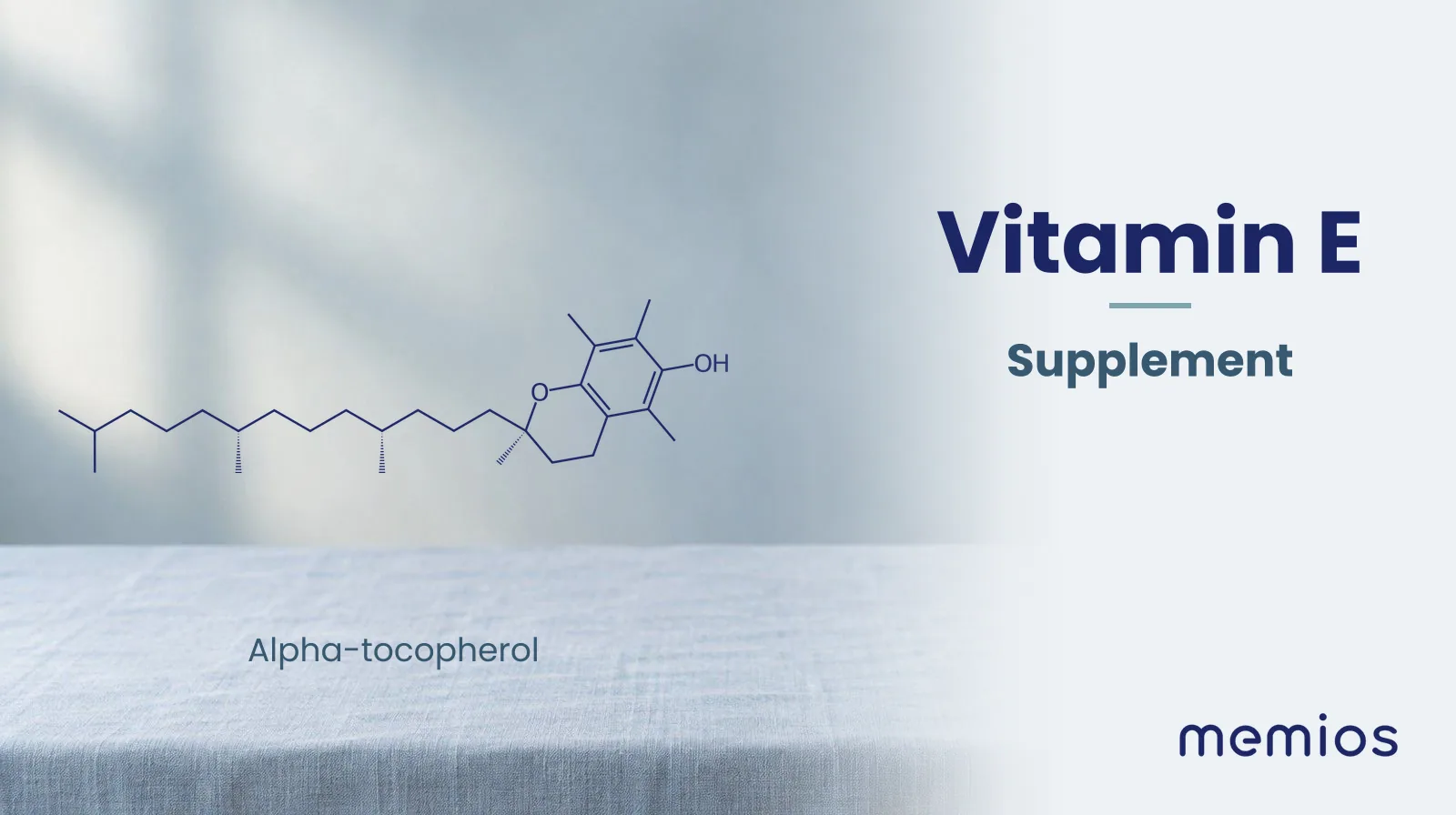
Vitamin E is a group of fat-soluble compounds with antioxidant activity. It exists in eight natural forms, four tocopherols and four tocotrienols. Alpha-tocopherol is the form the body uses to meet its needs.
What the research says
Large trials have mostly failed to show benefit from vitamin E supplements, and several found harm. Supplements did not prevent heart disease in large trials, and the HOPE-TOO trial found more heart failure. In the SELECT trial of 400 IU a day, prostate cancer rose by 17%. A meta-analysis found more haemorrhagic strokes (RR 1.22) alongside fewer ischaemic strokes (RR 0.90). Another meta-analysis linked high-dose trials (400 IU a day or more) to more deaths. There is some positive evidence: 800 IU a day improved fatty liver inflammation in non-diabetic adults with NASH, and in Alzheimer's disease functional decline was slower, but it did not slow progression from mild cognitive impairment to dementia. Vitamin E acetate added to illicit vaping liquids was found in the lungs of almost all EVALI patients tested.
Evidence grade: Limited evidence.
What goes wrong
A meta-analysis of randomised trials found that trials using high-dose vitamin E (400 IU a day or more) had more deaths from any cause, with risk rising above about 150 IU a day. (Source 1)
- Meta-analysis, Low certainty.
- Size: 135,967 participants in 19 trials.
- Who: mostly adults with chronic disease.
- How long: not stated in the fetched abstract.
- Result: 39 additional deaths per 10,000 persons in high-dosage trials.
- Funding: not stated in the fetched abstract.
The pooled all-cause mortality risk difference in the high-dosage vitamin E trials was 39 additional deaths per 10,000 persons.
A meta-analysis of 9 randomised trials found vitamin E increased haemorrhagic stroke and reduced ischaemic stroke, with no effect on total stroke. (Source 2)
- Meta-analysis, Moderate certainty.
- Size: 118,765 participants in 9 trials.
- Who: adults in randomised trials of vitamin E.
- How long: varied by trial.
- Result: haemorrhagic stroke RR 1.22 (95% CI 1.00 to 1.48); ischaemic stroke RR 0.90 (95% CI 0.82 to 0.99); total stroke not significant.
- Funding: not stated.
Statistically significant effects were noted for an increased risk of haemorrhagic stoke (RR 1.22, 95% CI 1.00 to 1.48; five RCTs, no statistical heterogeneity)
In the SELECT trial, healthy men given 400 IU a day of synthetic vitamin E had a significantly higher risk of prostate cancer. (Source 3)
- Randomized trial, High certainty.
- Size: 35,533 men.
- Who: healthy men in the US, Canada and Puerto Rico.
- How long: not stated in the fetched text.
- Result: HR 1.17 (99% CI 1.004 to 1.36; P = .008); absolute increase 1.6 per 1000 person-years.
- Funding: not stated in the fetched text.
620 men in the vitamin E group developed prostate cancer (hazard ratio [HR], 1.17; 99% CI, 1.004-1.36, P = .008)
In HOPE/HOPE-TOO, as summarised by NIH ODS, people taking vitamin E were more likely to develop, and to be hospitalised for, heart failure. (Source 4)
- Official position, Certainty not rated.
- Size: not stated in the fetched summary.
- Who: not stated in the fetched summary.
- How long: not stated.
- Result: 13% more likely to experience and 21% more likely to be hospitalised for heart failure.
- Funding: not stated.
Participants taking vitamin E, however, were 13% more likely to experience, and 21% more likely to be hospitalized for, heart failure
Vitamin E acetate, an additive in illicit THC vaping liquids, was found in lung fluid from 48 of 51 patients with vaping-associated lung injury (EVALI) and not in healthy comparators. This is a contamination and adulteration harm from inhalation, not from vitamin E taken by mouth. (Source 5)
- Case series, Low certainty.
- Size: 51 EVALI patients plus comparators.
- Who: patients with EVALI in 16 US states.
- How long: not applicable.
- Result: vitamin E acetate in BAL fluid of 94% of cases.
- Funding: government (CDC)
Vitamin E acetate was identified in BAL fluid obtained from 48 of 51 case patients (94%)
NIH ODS warns that large doses of vitamin E taken with anticoagulant or antiplatelet drugs such as warfarin can increase bleeding risk. (Source 4)
- Official position, Certainty not rated.
- Size: not applicable.
- Who: people on anticoagulants or antiplatelet drugs.
- How long: not applicable.
- Result: not quantified.
- Funding: government.
Taking large doses with anticoagulant or antiplatelet medications, such as warfarin (Coumadin), can increase the risk of bleeding.
NIH ODS reports that an antioxidant combination including vitamin E blunted the rise in HDL cholesterol in people treated with simvastatin plus niacin. (Source 4)
- Official position, Certainty not rated.
- Size: not stated.
- Who: people on simvastatin and niacin.
- How long: not stated.
- Result: not quantified in the fetched text.
- Funding: government.
This collection of antioxidant ingredients blunted the rise in high-density lipoprotein (HDL) cholesterol levels, especially levels of HDL2, the most cardioprotective HDL component, among people treated with a combination of simvastatin (brand name Zocor) and niacin.
NIH ODS reports that oncologists generally advise against antioxidant supplements during chemotherapy or radiotherapy because they might reduce effectiveness. (Source 4)
- Official position, Certainty not rated.
- Size: not applicable.
- Who: people receiving cancer chemotherapy or radiotherapy.
- How long: not applicable.
- Result: not quantified.
- Funding: government.
Oncologists generally advise against the use of antioxidant supplements during cancer chemotherapy or radiotherapy
What the evidence supports
In the same Cochrane review, one trial in Alzheimer's disease found less decline in daily-living ability with vitamin E, and serious adverse events and deaths did not differ from placebo. (Source 6)
- Systematic review, Moderate certainty.
- Size: 304 people with Alzheimer's disease (one trial)
- Who: people with mild to moderate Alzheimer's disease.
- How long: not stated.
- Result: less functional decline on ADCS-ADL; five deaths in each group.
- Funding: not stated.
People with AD receiving vitamin E showed less functional decline on the Alzheimer's Disease Cooperative Study/Activities of Daily Living Inventory
In the PIVENS trial, vitamin E 800 IU a day for 96 weeks improved nonalcoholic steatohepatitis more often than placebo in non-diabetic adults with biopsy-proven NASH. (Source 7)
- Randomized trial, Moderate certainty.
- Size: 247 randomised across three arms.
- Who: non-diabetic adults with biopsy-proven NASH.
- How long: 96 weeks.
- Result: significantly higher rate of NASH improvement vs placebo (percentages not in fetched page)
- Funding: government (NIDDK)
Vitamin E therapy, as compared with placebo, was associated with a significantly higher rate of improvement in nonalcoholic steatohepatitis
What the evidence does not support
Vitamin E had no significant effect on total stroke in the same meta-analysis. (Source 2)
- Meta-analysis, Moderate certainty.
- Size: 7 trials for total stroke.
- Who: adults in randomised trials.
- How long: varied.
- Result: no statistically significant effect on total stroke.
- Funding: not stated.
There was no statistically significant effect of Vitamin E supplementation on the risk for total stroke (seven RCTs, no statistical heterogeneity).
In the Physicians' Health Study II, as summarised by NIH ODS, vitamin E did not reduce major cardiovascular events, heart attack, stroke or cardiovascular death over 8 years. (Source 4)
- Official position, Certainty not rated.
- Size: not stated in the fetched summary.
- Who: male physicians.
- How long: mean 8 years.
- Result: no effect on major cardiovascular events.
- Funding: not stated.
During a mean follow-up period of 8 years, intake of vitamin E (and/or vitamin C) had no effect on the incidence of major cardiovascular events
In the Women's Health Study, as summarised by NIH ODS, vitamin E did not change overall cardiovascular events or all-cause mortality. (Source 4)
- Official position, Certainty not rated.
- Size: not stated in the fetched summary.
- Who: healthy women.
- How long: not stated.
- Result: no significant differences in cardiovascular events or all-cause mortality.
- Funding: not stated.
The investigators found no significant differences in rates of overall cardiovascular events (combined nonfatal heart attacks, strokes, and cardiovascular deaths) or all-cause mortality between the groups.
A Cochrane review found no evidence that vitamin E slowed progression from mild cognitive impairment to Alzheimer's dementia over 36 months (moderate-quality evidence). (Source 6)
- Systematic review, Moderate certainty.
- Size: 516 people with MCI (one trial)
- Who: people with mild cognitive impairment.
- How long: 36 months.
- Result: no effect on progression to probable Alzheimer's dementia.
- Funding: not stated.
no evidence that vitamin E affected the probability of progression from MCI to probable dementia due to AD over 36 months
Where the evidence is mixed
Reviewers of the mortality meta-analysis said it lacked a quality assessment, and that it may not apply to healthy adults because most trials enrolled people with chronic disease. (Source 1)
- Meta-analysis, Low certainty.
- Size: 19 trials.
- Who: mostly adults with chronic disease.
- How long: not stated.
- Result: not applicable (quality appraisal)
- Funding: not stated.
The apparent absence of a quality assessment and clinical differences across the studies weaken the evidence presented.
Where the research disagrees
Whether high-dose vitamin E is harmful to healthy adults
- Miller and colleagues, 2005 meta-analysis, meta-analysis of 19 randomised trials: High-dose (greater than or equal to 400 IU/day) vitamin E supplements may increase all-cause mortality and should be avoided. (Source 1)
- Centre for Reviews and Dissemination appraisal of that meta-analysis, structured critical appraisal: acknowledged that the generalisability of the findings to healthy adults is uncertain. (Source 1)
How much
- Reference intake: RDA (Food and Nutrition Board, as reported by NIH ODS, fact sheet updated 2021): 15 mg alpha-tocopherol a day for people aged 14 and over. (Source 4)
- Upper limit: UL (Food and Nutrition Board, as reported by NIH ODS 2021): 1,000 mg a day of supplemental alpha-tocopherol for adults 19 and over, based on the potential for haemorrhagic effects. (Source 4)
- Studied: SELECT: 400 IU/day of all rac-alpha-tocopheryl acetate. (Source 3)
- Studied: PIVENS: 800 IU/day vitamin E for 96 weeks. (Source 7)
- Studied: Mortality meta-analysis: high-dosage trials used 400 IU/day or more. (Source 1)
A common belief, and what the research shows
The belief: As an antioxidant, vitamin E supplements protect the heart.
What the research shows: Large trials did not bear this out. NIH ODS summarises: "In general, clinical trials have not provided evidence that routine use of vitamin E supplements prevents cardiovascular disease or reduces its morbidity and mortality."
Questions and answers
What is it?
Vitamin E is a family of eight fat-soluble compounds, the tocopherols and tocotrienols. Alpha-tocopherol is the main form in supplements and the form the body keeps. (Source 4)
What does it do in the body?
It acts as an antioxidant in cell membranes. It stops the chain reaction that damages fats when they oxidise. (Source 4)
Is it good or bad for you?
Getting enough from food is necessary. High-dose supplements have not prevented heart disease or cancer in large trials. They have been linked to more prostate cancer, more haemorrhagic strokes and, in one meta-analysis, more deaths. One trial found benefit in a specific liver disease (NASH). (Source 1)
How do you get more of it?
Vitamin E comes mainly from food, especially nuts, seeds and vegetable oils, and from supplements. It is fat-soluble, so it is absorbed with dietary fat. (Source 4)
If it is harmful, what reduces it?
Vitamin E from food is not considered harmful. Its reported harms come from high-dose supplements, and the most clearly described risk is bleeding in people who also take blood thinners. (Source 4)
Why might someone be low in it or missing it?
Deficiency is mainly seen in people who cannot absorb fat properly, for example with Crohn's disease or cystic fibrosis, and in rare genetic conditions. Healthy people eating little vitamin E have not been found to develop overt deficiency. (Source 4)
Which whole foods contain it or feed it?
Nuts, seeds and vegetable oils are the best sources. Green leafy vegetables and fortified cereals also provide useful amounts. (Source 4)
What happens if you do not have it?
Frank deficiency is rare and has not been seen in healthy people with low intakes. When it happens, usually because of fat malabsorption, NIH ODS describes nerve and muscle problems. (Source 4)
How can you test for it?
A blood test for serum alpha-tocopherol is used. Blood levels depend on the liver and on blood fats, so results are interpreted with that in mind. (Source 4)
References
- Centre for Reviews and Dissemination, NCBI Bookshelf. Meta-analysis: high-dosage vitamin E supplementation may increase all-cause mortality (DARE structured abstract of Miller et al., Ann Intern Med 2005). 2005. PMID 15537682, DOI 10.7326/0003-4819-142-1-200501040-00110. Read the source
- Centre for Reviews and Dissemination, NCBI Bookshelf. Effects of vitamin E on stroke subtypes: meta-analysis of randomised controlled trials (DARE structured abstract of Schürks et al., BMJ 2010;341:c5702). 2010. PMID 21051774, DOI 10.1136/bmj.c5702. Read the source
- JAMA. Vitamin E and the Risk of Prostate Cancer: The Selenium and Vitamin E Cancer Prevention Trial (SELECT). 2011. PMID 21990298, DOI 10.1001/jama.2011.1437. Read the source
- NIH Office of Dietary Supplements. Vitamin E: Fact Sheet for Health Professionals (updated March 26, 2021). 2021. Read the source
- New England Journal of Medicine (author manuscript, CDC Stacks). Vitamin E Acetate in Bronchoalveolar-Lavage Fluid Associated with EVALI. 2020. PMID 31860793, DOI 10.1056/NEJMoa1916433. Read the source
- Cochrane. The use of vitamin E in the treatment of mild cognitive impairment and Alzheimer's disease (AD) (plain language summary and abstract of Farina et al., CD002854.pub4). 2017. DOI 10.1002/14651858.CD002854.pub4. Read the source
- NIDDK Central Repository. Pioglitazone vs Vitamin E vs Placebo for Treatment of Non-Diabetic Patients With Nonalcoholic Steatohepatitis (PIVENS) - study record. 2010. PMID 20427778, DOI 10.1056/NEJMoa0907929. Read the source