Supplements · September 30, 2026 · Memios · 17 min read
Vitamin C
Vitamin C is an essential nutrient, so correcting a deficiency is genuinely curative - untreated scurvy is fatal.
TLDR
- Limited evidence. Vitamin C is an essential nutrient, so correcting a deficiency is genuinely curative - untreated scurvy is fatal.
- What it is: Vitamin C is a water-soluble essential nutrient that humans cannot make and must obtain from food or supplements.
- Main use, supported: In people undergoing extreme short-term physical stress, regular vitamin C roughly halved the risk of a cold. (moderate certainty)
- Other use, supported: Regular vitamin C shortened colds modestly, by about 8% in adults and 14% in children. (moderate certainty)
- Claim NOT supported by research: Regular vitamin C supplementation did not reduce how often people in the general community caught colds. (moderate certainty)
- Another claim NOT supported: Taking vitamin C only after cold symptoms started had no consistent effect on duration or severity. (moderate certainty)
- Recommended dose (official position): US Food and Nutrition Board, National Academies of Sciences, Engineering, and Medicine (as published by the NIH Office of Dietary Supplements): RDAs and AIs for vitamin C range from 90 to 120 mg for adults and from 15 to 115 mg for infants, children and adolescents, depending on age.
- Studied dose (a trial dose, not a recommendation): Cochrane cold review: placebo-controlled trials giving at least 0.2 g (200 mg) per day; trials using less than 0.2 g/day were excluded. Findings citing that trial: 2 for, 2 against.
- Upper limit: US Food and Nutrition Board: the Tolerable Upper Intake Level for vitamin C applies to food and supplement intakes combined and is 2,000 mg per day for adults aged 19 and over (fact sheet Table 3).
- What goes wrong: 4 findings on harm. Men in a Swedish cohort who used high-dose ascorbic acid supplements had about twice the incidence of kidney stones, with a dose-response trend.
- Common myth: Loading up on vitamin C at the first sniffle will stop a cold, or at least cut it short.
What it is
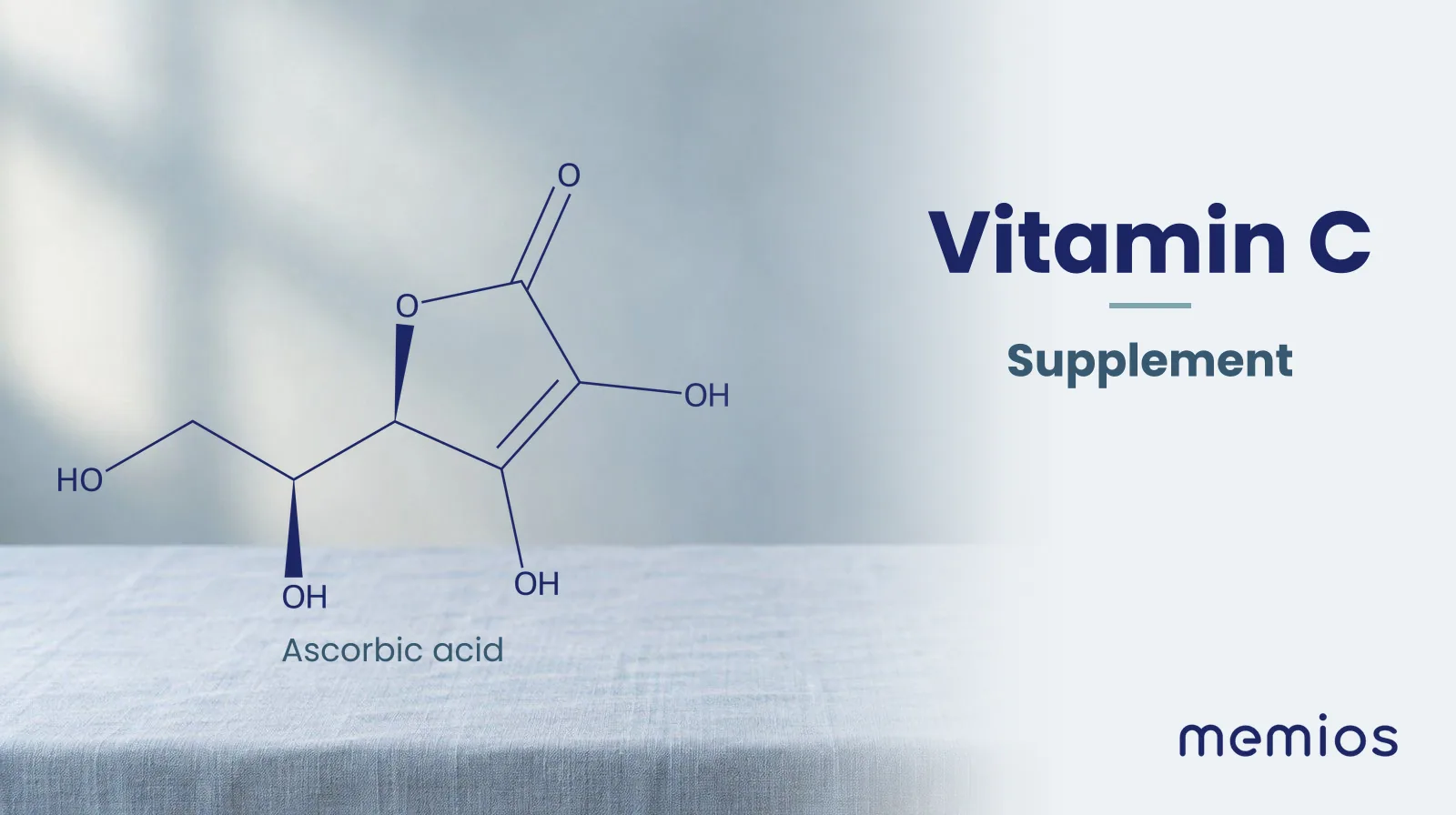
Vitamin C is a water-soluble essential nutrient that humans cannot make and must obtain from food or supplements. Sustained absence of it causes scurvy, a fatal disease if untreated. The NIH Office of Dietary Supplements gives adult reference values of 90 to 120 mg per day, with an additional 35 mg per day for people who smoke, and a Tolerable Upper Intake Level of 2,000 mg per day for adults from food and supplements combined. It is sold as plain ascorbic acid and as mineral ascorbates, in tablets, powders, effervescent forms and, in hospital settings, intravenous infusions.
What the research says
Vitamin C is an essential nutrient, so correcting a deficiency is genuinely curative - untreated scurvy is fatal. What it does in people who already have enough is a different question, and the answer is mostly modest or nothing. Seventy years of placebo-controlled trials show that taking vitamin C every day does not reduce how often ordinary adults catch colds; it does shorten them by about 8% in adults and 14% in children, and it halved cold risk in a small set of trials in marathon runners, skiers and soldiers under extreme physical stress. Starting vitamin C after symptoms appear had no consistent effect at all. For cardiovascular disease prevention, a Cochrane review found no benefit. The harms are real but mostly dose-dependent: diarrhoea and gut upset from unabsorbed vitamin C, a doubled kidney stone risk among Swedish men taking high-dose ascorbic acid supplements, and oxalate nephropathy reported after very high intravenous doses.
Evidence grade: Limited evidence.
What goes wrong
Men in a Swedish cohort who used high-dose ascorbic acid supplements had about twice the incidence of kidney stones, with a dose-response trend. (Source 1)
- Cohort study, Low certainty.
- Size: 23,355 men; 436 first incident kidney stone cases.
- Who: Swedish men in a prospective cohort, comparing ascorbic-acid-only supplement users with non-users.
- How long: 11 years of follow-up.
- Result: Roughly 2-fold increased risk overall; fewer than 7 tablets/week RR 1.66 (95% CI 0.99-2.79) and 7 or more RR 2.23 (95% CI 1.28-3.88) versus non-users, P for trend = .001; multivitamin use not associated (RR 0.86, 95% CI 0.62-1.19). This is observational, so it shows association, not proof of cause.
- Funding: not stated.
Users of only ascorbic acid taking fewer than 7 (median) and 7 or more tablets per week showed increased risks of RR, 1.66 (95% CI, 0.99-2.79) and RR, 2.23 (95% CI, 1.28-3.88), respectively, compared with supplement nonusers in the full multivariate-adjusted model
High oral doses of vitamin C commonly cause diarrhoea and other gastrointestinal upset because unabsorbed vitamin C draws water into the gut. (Source 2)
- Official position, Certainty not rated.
- Size: Not applicable - agency review of the literature.
- Who: People taking high-dose vitamin C supplements.
- How long: Not applicable.
- Result: Diarrhoea, nausea, abdominal cramps and other gastrointestinal disturbances; overall toxicity described as low.
- Funding: independent (US government agency)
The most common complaints are diarrhea, nausea, abdominal cramps, and other gastrointestinal disturbances due to the osmotic effect of unabsorbed vitamin C in the gastrointestinal tract.
An observational subgroup finding linked supplemental vitamin C of at least 300 mg/day to higher cardiovascular death in postmenopausal women with diabetes, but it has not been replicated. (Source 2)
- Cohort study, Very low certainty.
- Size: A subgroup of the Iowa Women's Health Study cohort (numbers not given in the agency summary)
- Who: Postmenopausal women with diabetes.
- How long: Cohort follow-up (not stated in the agency summary)
- Result: Supplemental, but not dietary, vitamin C intake was significantly associated with higher risk of dying from cardiovascular disease; the agency notes the mechanism is unclear and the association is unreplicated.
- Funding: independent (US government agency summary)
No such association has been observed in any other epidemiological study, so the significance of this finding is uncertain.
Continuous high-dose intravenous vitamin C has caused calcium oxalate nephropathy, reported in burn patients and previously in non-burn patients. (Source 3)
- Case series, Very low certainty.
- Size: 2 patients in the burn case series.
- Who: Burn patients receiving high-dose vitamin C infusions as an adjunct to fluid resuscitation.
- How long: 18 and 20 hours of infusion at 66 mg/kg/hr (101 g and 224 g total)
- Result: Acute kidney injury with calcium oxalate crystals identified in renal tubules; the authors note prior reports of worsened acute kidney injury and delayed renal recovery in non-burn patients.
- Funding: not stated.
high-dose and low-dose vitamin C supplementation has been shown to cause secondary calcium oxalate nephropathy, worsen acute kidney injury, and delay renal recovery in non-burn patients
What the evidence supports
In people undergoing extreme short-term physical stress, regular vitamin C roughly halved the risk of a cold. (Source 4)
- Systematic review, Moderate certainty.
- Size: 5 trials, 598 participants.
- Who: Marathon runners, skiers and soldiers on subarctic exercises.
- How long: Periods of severe physical exercise.
- Result: Pooled RR 0.48 (95% CI 0.35 to 0.64)
- Funding: not stated.
Five trials involving a total of 598 marathon runners, skiers and soldiers on subarctic exercises yielded a pooled RR of 0.48 (95% CI 0.35 to 0.64).
Regular vitamin C shortened colds modestly, by about 8% in adults and 14% in children. (Source 4)
- Systematic review, Moderate certainty.
- Size: 31 comparisons, 9,745 cold episodes.
- Who: Adults and children taking vitamin C continuously.
- How long: Continuous daily supplementation.
- Result: Duration reduced by 8% (3% to 12%) in adults and 14% (7% to 21%) in children; in children 1 to 2 g/day shortened colds by 18%.
- Funding: not stated.
In adults the duration of colds was reduced by 8% (3% to 12%) and in children by 14% (7% to 21%).
Deficiency of vitamin C causes scurvy, which appears within about a month of near-zero intake and is fatal if untreated. (Source 5)
- Official position, Certainty not rated.
- Size: Not applicable.
- Who: People with little or no vitamin C intake.
- How long: Signs can appear within one month.
- Result: Fatigue, malaise, gum inflammation, petechiae, ecchymoses, purpura, joint pain, poor wound healing, hyperkeratosis, corkscrew hairs, depression, bleeding gums, tooth loss, iron deficiency anaemia and, in children, bone disease.
- Funding: independent (US government agency)
Acute vitamin C deficiency leads to scurvy. The timeline for the development of scurvy varies, depending on vitamin C body stores, but signs can appear within 1 month of little or no vitamin C intake (below about 10 mg/day).
What the evidence does not support
Regular vitamin C supplementation did not reduce how often people in the general community caught colds. (Source 4)
- Systematic review, Moderate certainty.
- Size: 29 trial comparisons, 11,306 participants; 10,708 in the general community trials.
- Who: General community, adults and children, in placebo-controlled trials using at least 0.2 g/day.
- How long: Continuous daily supplementation over each study period.
- Result: Pooled RR 0.97 (95% CI 0.94 to 1.00) for developing a cold.
- Funding: not stated.
In the general community trials involving 10,708 participants, the pooled RR was 0.97 (95% confidence interval (CI) 0.94 to 1.00).
Taking vitamin C only after cold symptoms started had no consistent effect on duration or severity. (Source 4)
- Systematic review, Moderate certainty.
- Size: 7 comparisons, 3,249 cold episodes.
- Who: People starting vitamin C at the onset of a cold.
- How long: From symptom onset.
- Result: No consistent effect on duration or severity.
- Funding: not stated.
No consistent effect of vitamin C was seen on the duration or severity of colds in the therapeutic trials.
The Cochrane reviewers concluded that routine vitamin C supplementation is not justified in the general population. (Source 6)
- Systematic review, Moderate certainty.
- Size: Across 29 incidence comparisons and 31 duration comparisons.
- Who: General population versus people exposed to brief severe physical exercise.
- How long: Varied.
- Result: Judgement statement by the review authors.
- Funding: not stated.
The failure of vitamin C supplementation to reduce the incidence of colds in the general population indicates that routine vitamin C supplementation is not justified, yet vitamin C may be useful for people exposed to brief periods of severe physical exercise.
Vitamin C supplementation did not reduce major cardiovascular events, death or stroke in the only large trial available to a Cochrane review. (Source 7)
- Systematic review, Low certainty.
- Size: 1 study contributing outcomes, 14,641 participants (review included 8 trials, 15,445 participants)
- Who: Middle-aged and older male physicians in the USA (Physicians' Health Study II)
- How long: Eight years of follow-up.
- Result: Major CVD events HR 0.99 (95% CI 0.89 to 1.10); all-cause mortality HR 1.07 (95% CI 0.97 to 1.18); myocardial infarction HR 1.04 (95% CI 0.87 to 1.24); stroke HR 0.89 (95% CI 0.74 to 1.07); all rated low or very low quality.
- Funding: not stated.
The composite endpoint, major CVD events was not different between the vitamin C and placebo group (hazard ratio (HR) 0.99, 95% confidence interval (CI) 0.89 to 1.10; 1 study; 14,641 participants; low-quality evidence)
Where the evidence is mixed
Whether ordinary vitamin C intakes cause kidney stones remains unsettled, with the clearest risk in people who already have hyperoxaluria. (Source 8)
- Official position, Certainty not rated.
- Size: Studies spanning intakes of 30 mg to 10 g/day.
- Who: General population and people with renal disorders.
- How long: Not applicable.
- Result: Conflicting results on urinary oxalate excretion across studies.
- Funding: independent (US government agency)
The best evidence that vitamin C contributes to kidney stone formation is in patients with pre-existing hyperoxaluria.
The US Office of Dietary Supplements position is that at least 200 mg/day does not reduce cold incidence in the general population, but may help specific groups. (Source 9)
- Official position, Certainty not rated.
- Size: Based on the Cochrane review evidence base.
- Who: General population versus people exposed to extreme exercise or cold, and those with marginal vitamin C status.
- How long: Regular intake.
- Result: No reduction in incidence in the general population; possible benefit in specific exposed groups; no benefit from starting after symptoms begin.
- Funding: independent (US government agency)
When taken after the onset of cold symptoms, vitamin C did not affect cold duration or symptom severity.
Where the research disagrees
Whether a daily vitamin C supplement is worth taking for colds
- Hemila and Chalker, Cochrane review authors (2013), Systematic review of 29 incidence comparisons (11,306 participants) and 31 duration comparisons (9,745 episodes): The failure of vitamin C supplementation to reduce the incidence of colds in the general population indicates that routine vitamin C supplementation is not justified, yet vitamin C may be useful for people exposed to brief periods of severe physical exercise. (Source 6)
- US Office of Dietary Supplements, Agency synthesis of the same trial literature: Overall, the evidence to date suggests that regular intakes of vitamin C at doses of at least 200 mg/day do not reduce the incidence of the common cold in the general population, but such intakes might be helpful in people exposed to extreme physical exercise or cold environments and those with marginal vitamin C status, such as the older adults and people who regularly smoke. (Source 9)
Whether vitamin C supplements raise kidney stone risk
- Thomas and colleagues (2013), Swedish cohort, Prospective cohort of 23,355 men with 436 incident stone cases over 11 years - observational, so confounding cannot be excluded: Ascorbic acid use was associated with a statistically significant 2-fold increased risk (Source 1)
- US Office of Dietary Supplements, Agency review of studies on urinary oxalate excretion across intakes from 30 mg to 10 g/day, which it describes as conflicting: so it is not clear whether vitamin C actually plays a role in the development of kidney stones (Source 8)
How much
- Reference intake: US Food and Nutrition Board, National Academies of Sciences, Engineering, and Medicine (as published by the NIH Office of Dietary Supplements): RDAs and AIs for vitamin C range from 90 to 120 mg for adults and from 15 to 115 mg for infants, children and adolescents, depending on age, sex and life stage; people who smoke require 35 mg more per day. The fact sheet's table gives 90 mg for men aged 19+ and 75 mg for women aged 19+. (Source 10)
- Upper limit: US Food and Nutrition Board: the Tolerable Upper Intake Level for vitamin C applies to food and supplement intakes combined and is 2,000 mg per day for adults aged 19 and over (fact sheet Table 3). The agency states the UL does not apply to people receiving vitamin C as medical treatment under a physician's care. (Source 11)
- Studied: Cochrane cold review: placebo-controlled trials giving at least 0.2 g (200 mg) per day; trials using less than 0.2 g/day were excluded. In children, 1 to 2 g/day shortened colds by 18%. (Source 4)
- Studied: Athlete and cold-exposure trials summarised by NIH ODS used prophylactic vitamin C in doses ranging from 250 mg/day to 1 g/day. (Source 9)
- Studied: Burn resuscitation case series: continuous intravenous vitamin C at 66 mg/kg/hr, totalling 101 g over 18 hours in one patient and 224 g over 20 hours in another. (Source 3)
A common belief, and what the research shows
The belief: Loading up on vitamin C at the first sniffle will stop a cold, or at least cut it short.
What the research shows: Starting vitamin C once symptoms have begun is the version of the claim with the least support. Across seven comparisons covering 3,249 cold episodes, "No consistent effect of vitamin C was seen on the duration or severity of colds in the therapeutic trials." The NIH agency summary agrees: "When taken after the onset of cold symptoms, vitamin C did not affect cold duration or symptom severity." Taking it every day beforehand does shorten colds a little - "In adults the duration of colds was reduced by 8% (3% to 12%) and in children by 14% (7% to 21%)." - but does not stop you catching them, since "In the general community trials involving 10,708 participants, the pooled RR was 0.97 (95% confidence interval (CI) 0.94 to 1.00)."
Questions and answers
What is it?
Vitamin C is L-ascorbic acid, a water-soluble vitamin. The name also covers its oxidised form, dehydroascorbic acid, which the body can turn back into ascorbic acid. (Source 12)
What does it do in the body?
It is best known as an antioxidant, but a 2021 review describes a wider role: it helps the gut absorb iron, is involved in making hormones and carnitine, and plays a part in epigenetic processes (how genes are switched on and off). (Source 13)
Is it good or bad for you?
It is essential, and the absence of it causes scurvy. Beyond treating scurvy, the same 2021 review judges the effects of giving vitamin C for cancer, heart disease and infections in the general population to be small or debatable. High doses carry their own risk (see getRidOf). (Source 13)
How do you get more of it?
Through food or supplements. In a six-week randomised trial in 36 young non-smoking men, half a gold kiwifruit a day and a 50 mg chewable vitamin C tablet raised blood and tissue vitamin C by similar amounts. That trial was small and in a narrow group. (Source 14)
If it is harmful, what reduces it?
Vitamin C from food is not linked to harm; the concern is high-dose supplements. In a cohort of about 197,000 US adults, men taking 1,000 mg a day or more of supplemental vitamin C had a 19% higher rate of kidney stones than non-users, and women showed no link. This is observational, so it does not show that the supplements cause stones or that stopping them lowers the risk. (Source 15)
Why might someone be low in it or missing it?
The main factors are eating little of it (many staple foods, such as grains, contain almost none) and not taking supplements. A 2020 narrative review also lists body weight, pregnancy and breastfeeding, genetic variants, smoking, and illness, from severe infections to heart disease and cancer, as things that affect vitamin C levels. (Source 16)
Which whole foods contain it or feed it?
Fruit and vegetables. Among vegetables, a 2021 review names cruciferous vegetables (especially broccoli and kale) and peppers as rich sources, and says sauerkraut has more than most fresh vegetables. Potatoes contain relatively little but still add up because people eat a lot of them. (Source 17)
What happens if you do not have it?
A lack of vitamin C causes scurvy. Typical symptoms include muscle weakness, swollen and bleeding gums, tooth loss, small bleeds under the skin and bruising, anaemia, poor wound healing, joint and muscle pain, and weight loss. (Source 18)
How can you test for it?
Vitamin C is measured in blood samples, but a 2021 review calls the instability of ascorbic acid the major problem in measuring it. It oxidises rather quickly, and this also happens artificially after the sample has been collected, which is a known pitfall of the test. (Source 19)
References
- JAMA Internal Medicine. Ascorbic Acid Supplements and Kidney Stone Incidence Among Men: A Prospective Study. 2013. PMID 23381591, DOI 10.1001/jamainternmed.2013.2296. Read the source
- NIH Office of Dietary Supplements. Vitamin C - Health Professional Fact Sheet. 2025. Read the source
- Journal of Burn Care & Research. Oxalate Nephropathy After Continuous Infusion of High-Dose Vitamin C as an Adjunct to Burn Resuscitation. 2016. PMID 25812044, DOI 10.1097/BCR.0000000000000233. Read the source
- Cochrane Database of Systematic Reviews. Vitamin C for preventing and treating the common cold. 2013. PMID 23440782, DOI 10.1002/14651858.CD000980.pub4. Read the source
- NIH Office of Dietary Supplements. Vitamin C - Health Professional Fact Sheet. 2025. Read the source
- Cochrane Database of Systematic Reviews. Vitamin C for preventing and treating the common cold. 2013. PMID 23440782, DOI 10.1002/14651858.CD000980.pub4. Read the source
- Cochrane Database of Systematic Reviews (author copy, Warwick Research Archive Portal). Vitamin C supplementation for the primary prevention of cardiovascular disease. 2017. PMID 28301692, DOI 10.1002/14651858.CD011114.pub2. Read the source
- NIH Office of Dietary Supplements. Vitamin C - Health Professional Fact Sheet. 2025. Read the source
- NIH Office of Dietary Supplements. Vitamin C - Health Professional Fact Sheet. 2025. Read the source
- NIH Office of Dietary Supplements. Vitamin C - Health Professional Fact Sheet. 2025. Read the source
- NIH Office of Dietary Supplements. Vitamin C - Health Professional Fact Sheet. 2025. Read the source
- Nutrients. Vitamin C—Sources, Physiological Role, Kinetics, Deficiency, Use, Toxicity, and Determination (Doseděl M et al.) - Introduction. 2021. PMID 33668681, DOI 10.3390/nu13020615. Read the source
- Nutrients. Vitamin C—Sources, Physiological Role, Kinetics, Deficiency, Use, Toxicity, and Determination (Doseděl M et al.). 2021. PMID 33668681, DOI 10.3390/nu13020615. Read the source
- Nutrients. A Randomized Steady-State Bioavailability Study of Synthetic versus Natural (Kiwifruit-Derived) Vitamin C (Carr AC et al.). 2013. PMID 24067392, DOI 10.3390/nu5093684. Read the source
- American Journal of Kidney Diseases. Total, Dietary, and Supplemental Vitamin C Intake and Risk of Incident Kidney Stones (Ferraro PM, Curhan GC, Gambaro G, Taylor EN). 2016. PMID 26463139, DOI 10.1053/j.ajkd.2015.09.005. Read the source
- Nutrients. Factors Affecting Vitamin C Status and Prevalence of Deficiency: A Global Health Perspective (Carr AC, Rowe S). 2020. PMID 32630245, DOI 10.3390/nu12071963. Read the source
- Nutrients. Vitamin C—Sources, Physiological Role, Kinetics, Deficiency, Use, Toxicity, and Determination (Doseděl M et al.) - Sources section. 2021. PMID 33668681, DOI 10.3390/nu13020615. Read the source
- Nutrients. Vitamin C—Sources, Physiological Role, Kinetics, Deficiency, Use, Toxicity, and Determination (Doseděl M et al.) - Deficiency section. 2021. PMID 33668681, DOI 10.3390/nu13020615. Read the source
- Nutrients. Vitamin C—Sources, Physiological Role, Kinetics, Deficiency, Use, Toxicity, and Determination (Doseděl M et al.) - Determination section. 2021. PMID 33668681, DOI 10.3390/nu13020615. Read the source