Medications · September 29, 2026 · Memios · 15 min read
Levothyroxine
Well established. It replaces missing thyroid hormone.
TLDR
- Boxed warning: Thyroid hormones, including SYNTHROID, should not be used for the treatment of obesity or for weight loss.
- Well established. It replaces missing thyroid hormone.
- What it is: Levothyroxine is a synthetic form of thyroxine (T4), a thyroid hormone.
- Main use: Overt hypothyroidism (well supported).
- Uses NOT supported by research: Subclinical hypothyroidism (especially in older adults); Weight loss or obesity.
- Recommended dose (official position): Dosing is set by the prescriber and adjusted to TSH. As a position, the Synthroid label (revised February 2024) gives a full replacement dose of 1.6 mcg/kg/day and notes that some patients need a lower starting dose.
- Studied dose (a trial dose, not a recommendation): TRUST started levothyroxine at 50 micrograms a day (25 micrograms if body weight was under 50 kg or with coronary heart disease), adjusted by TSH. Findings citing that trial: 1 against.
- Upper limit: The label sets no fixed maximum.
- What goes wrong: 8 findings on harm. In older levothyroxine users in Ontario, higher cumulative doses were associated with more atrial fibrillation. This is observational.
- Interactions: 7 recorded, including Calcium carbonate supplements, Iron supplements, Coffee, Soy products (soybean flour), walnuts, dietary fibre.
- Common myth: A slightly high TSH always needs levothyroxine, and it will fix tiredness.
What it is
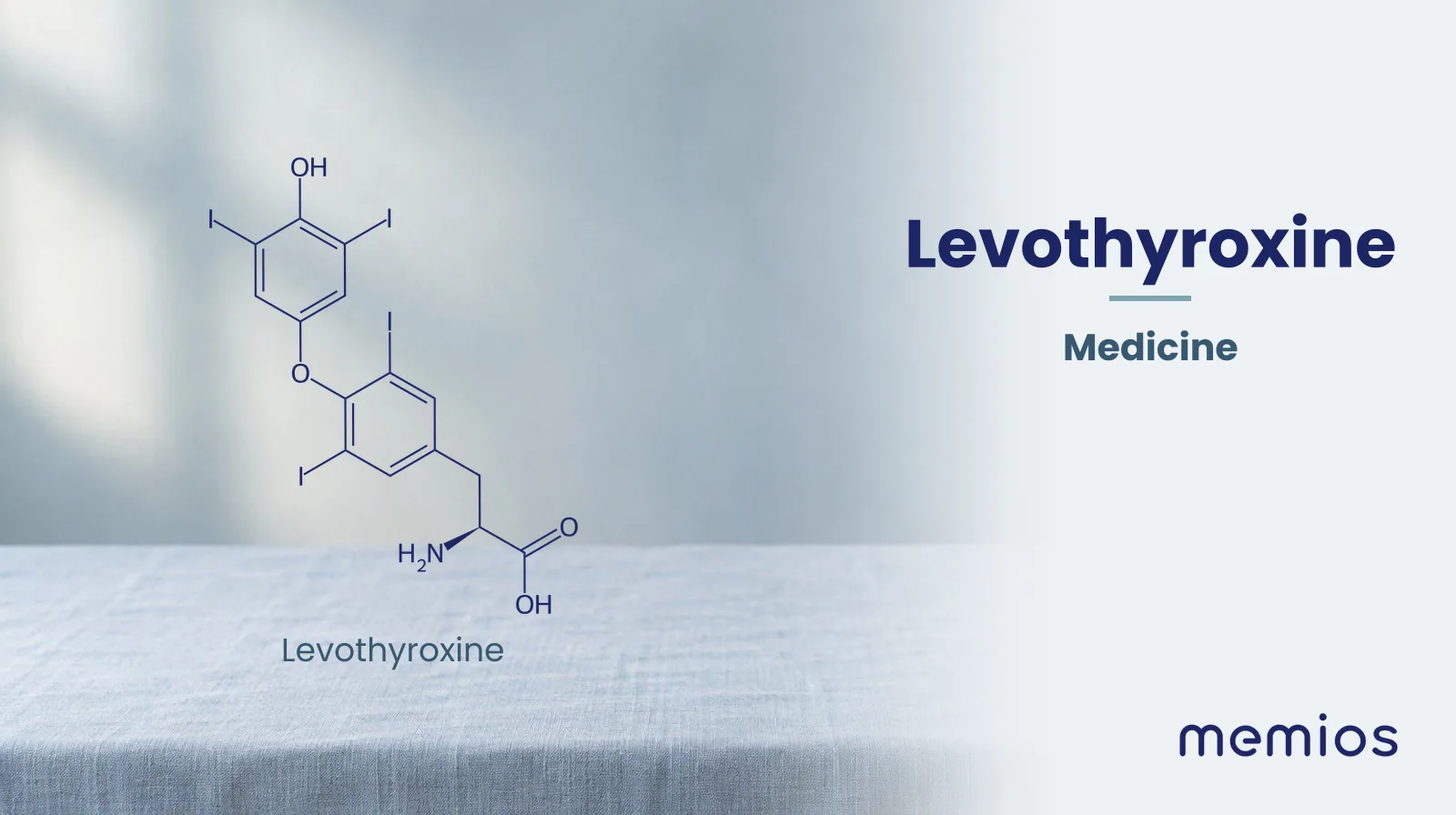
Levothyroxine is a synthetic form of thyroxine (T4), a thyroid hormone. The Synthroid label describes it as synthetic crystalline L-thyroxine sodium salt.
What the research says
It replaces missing thyroid hormone. A 2024 Lancet Seminar calls it the standard treatment for hypothyroidism, one that restores thyroid tests and improves symptoms in most patients. For subclinical hypothyroidism (raised TSH with normal T4), the evidence is negative. In older adults the TRUST trial found no benefit on symptoms or tiredness. A 2018 meta-analysis rated moderate to high quality found no improvement in quality of life or symptoms. Too much levothyroxine is associated with atrial fibrillation and fractures in older people. Calcium, iron, coffee, soy and PPIs can reduce its absorption.
Evidence grade: Well established.
How it works
Drug class: Synthetic thyroid hormone (thyroxine, T4)
Levothyroxine is T4. The label says thyroid hormones act through control of DNA transcription and protein synthesis: T3 and T4 move into the cell nucleus and bind thyroid receptor proteins. (Source 1)
Boxed warning
Thyroid hormones, including SYNTHROID, should not be used for the treatment of obesity or for weight loss. Doses beyond the range of daily hormonal requirements may produce serious or even life-threatening manifestations of toxicity.
(Source 2)
What it is used for
- Levothyroxine monotherapy is the standard treatment. It restores thyroid function tests and improves symptoms in most patients, though about 10% have persistent symptoms. Evidence: established. (Source 3)
- TRUST, in 737 adults aged 65 and over, and a meta-analysis of 21 trials (2192 adults) found no improvement in symptoms or quality of life, even though TSH was brought into range. Evidence: not-supported. (Source 4)
- The boxed warning says thyroid hormones should not be used for weight loss and that doses above requirements can be toxic. Evidence: not-supported. (Source 2)
Interactions
- Calcium carbonate supplements (pharmacokinetic study): In a 20-patient prospective study, calcium carbonate taken with levothyroxine reduced T4 absorption and raised TSH. The authors add that levothyroxine adsorbs to calcium carbonate in an acidic environment, a point the paper tested in a laboratory (in vitro) binding experiment, not in patients. (Source 5)
- Iron supplements (pharmacokinetic study): A systematic review found limited evidence that iron supplements reduce levothyroxine absorption, and says keeping a proper time interval between them is an effective way to avoid the interaction. (Source 6)
- Coffee (pharmacokinetic study): Limited evidence shows coffee reduces levothyroxine absorption. Newer formulations may avoid the problem. (Source 6)
- Soy products (soybean flour), walnuts, dietary fibre (label): These may bind levothyroxine in the gut and reduce absorption. (Source 7)
- Proton pump inhibitors (omeprazole, pantoprazole and similar) (clinical trial): A systematic review found TSH rose significantly when PPIs were taken with levothyroxine. The authors say the small number of studies means more research is needed on how PPIs interfere with its absorption. (Source 8)
- Grapefruit juice (label): The label says grapefruit juice may delay absorption and reduce bioavailability. (Source 9)
- Biotin supplements (label): Biotin does not change levothyroxine itself, but it can distort the thyroid blood tests used to adjust the dose. The label says to stop biotin for at least 2 days before TSH or T4 tests. (Source 10)
Stopping it
- A meta-analysis of 17 observational studies (moderate to high risk of bias) found that about a third of people who stopped levothyroxine stayed euthyroid. This was more common after a subclinical diagnosis (35.6%) than an overt one (11.8%). No study used a structured deprescribing framework. (Source 11)
What goes wrong
In older levothyroxine users in Ontario, higher cumulative doses were associated with more atrial fibrillation. This is observational. (Source 12)
- Case-control study, Low certainty.
- Size: 183,360 levothyroxine users; 30,560 AF cases.
- Who: adults aged 66 or older.
- How long: 2007-2017.
- Result: high vs low dose aOR 1.29 (1.23-1.35); medium vs low aOR 1.08 (1.04-1.11); no association with ischaemic stroke.
- Funding: not stated in abstract read.
Among older persons treated with levothyroxine, levothyroxine at doses >0.075 mg/d is associated with an increased risk of AF compared to lower exposure.
In adults aged 70 or more, current levothyroxine use was associated with more fractures, with a strong dose-response. This is observational. (Source 13)
- Case-control study, Low certainty.
- Size: 213,511 levothyroxine users; 22,236 fractures.
- Who: adults aged 70 or older in Ontario.
- How long: mean 3.8 years.
- Result: current vs remote use aOR 1.88 (1.71-2.05); high vs low cumulative dose 3.45 (3.27-3.65)
- Funding: not stated in abstract read.
Among adults aged 70 or more, current levothyroxine treatment was associated with a significantly increased risk of fracture, with a strong dose-response relation.
The label warns that over-treatment may raise heart rate, heart wall thickness and contractility, and may bring on angina or arrhythmias, particularly in people with cardiovascular disease and in elderly patients. (Source 14)
- Official position, Certainty not rated.
- Funding: label.
Over-treatment with levothyroxine may cause an increase in heart rate, cardiac wall thickness, and cardiac contractility and may precipitate angina or arrhythmias, particularly in patients with cardiovascular disease and in elderly patients.
The label says atrial fibrillation is the most common arrhythmia seen with levothyroxine overtreatment in elderly people. (Source 15)
- Official position, Certainty not rated.
- Funding: label.
Atrial fibrillation is the most common of the arrhythmias observed with levothyroxine overtreatment in the elderly.
The label warns that over-replacement can increase bone resorption and lower bone mineral density. (Source 16)
- Official position, Certainty not rated.
- Funding: label.
Increased bone resorption and decreased bone mineral density may occur as a result of levothyroxine over-replacement.
In a small prospective study, calcium carbonate taken together with levothyroxine reduced T4 absorption and raised TSH. (Source 5)
- Cohort study, Low certainty.
- Size: 20 patients.
- Who: adults on stable long-term levothyroxine, given 1200 mg/day elemental calcium as calcium carbonate.
- How long: 3 months.
- Result: mean free T4 fell during the calcium period; 20% had TSH above normal.
- Funding: not stated in abstract read.
This study of 20 patients receiving long-term levothyroxine replacement therapy indicates that calcium carbonate reduces T4 absorption and increases serum thyrotropin levels.
A systematic review of 63 studies found limited evidence that coffee, soy, fibre, calcium and iron reduce levothyroxine absorption. (Source 6)
- Systematic review, Low certainty.
- Size: 63 studies.
- Who: levothyroxine users.
- Result: direction consistent (decreased absorption); evidence described as limited.
- Funding: not stated in abstract.
We found limited evidence for l-T4 interactions with coffee, soy products, fiber, calcium or iron supplements, and enteral nutrition but interestingly they all resulted in decreased l-T4 absorption.
A systematic review of seven studies found TSH rose when proton pump inhibitors were taken with levothyroxine, significantly so in most studies. The studies differed considerably in design, size and treatment. (Source 17)
- Systematic review, Low certainty.
- Size: 7 studies.
- Who: people with primary hypothyroidism on levothyroxine.
- Result: TSH increased in every included study, significant in most.
- Funding: not stated in abstract read.
There was a considerable heterogeneity among the included studies in design, sample size, inclusion and exclusion criteria, treatment regimen, and baseline demographics. Each of the included studies showed an increase in TSH levels following LT4 and PPI consumption, and in the majority of these, the increase was statistically significant.
What the evidence supports
A 2024 Lancet Seminar describes levothyroxine monotherapy as the standard treatment for hypothyroidism, saying it restores thyroid tests and improves symptoms in most patients. (Source 3)
- Official position, Certainty not rated.
- Size: narrative review (Lancet Seminar), not a systematic review.
- Who: people with hypothyroidism.
- Result: about 10% have persistent symptoms despite normal tests.
- Funding: not stated on page read.
Levothyroxine monotherapy is the standard treatment for hypothyroidism; it is safe and inexpensive, restores thyroid function tests to within the reference range, and improves symptoms in the majority of patients.
What the evidence does not support
TRUST found that levothyroxine gave no apparent benefit over placebo on hypothyroid symptoms or tiredness in adults aged 65 and over with subclinical hypothyroidism. (Source 4)
- Randomized trial, High certainty.
- Size: 737 randomised (368 levothyroxine, 369 placebo)
- Who: adults aged 65 or older with persisting subclinical hypothyroidism (TSH 4.60-19.99 mIU/L)
- How long: 1 year (primary outcomes)
- Result: Hypothyroid Symptoms score difference 0.0 (95% CI -2.0 to 2.1); Tiredness score difference 0.4 (-2.1 to 2.9); minimum important difference 9 points.
- Funding: European Union FP7 and others (as stated in the abstract)
Levothyroxine provided no apparent benefits in older persons with subclinical hypothyroidism.
A meta-analysis of randomised trials found thyroid hormone therapy was not associated with better quality of life or thyroid symptoms in non-pregnant adults with subclinical hypothyroidism. (Source 18)
- Meta-analysis, Moderate certainty.
- Size: 21 trials, 2192 adults.
- Who: non-pregnant adults with subclinical hypothyroidism.
- How long: 3-18 months.
- Result: quality of life SMD -0.11 (95% CI -0.25 to 0.03); symptoms SMD 0.01 (-0.12 to 0.14); the authors rated risk of bias low and GRADE quality moderate to high.
- Funding: not stated on page read.
Among nonpregnant adults with subclinical hypothyroidism, the use of thyroid hormone therapy was not associated with improvements in general quality of life or thyroid-related symptoms.
Where the evidence is mixed
The same review notes that about 10% of treated patients still feel unwell despite normal thyroid tests, and a substantial proportion have TSH outside the reference range. (Source 3)
- Official position, Certainty not rated.
- Size: narrative review.
- Who: levothyroxine users.
- Result: 10% persistent symptoms.
- Funding: not stated.
However, 10% of patients have persistent symptoms of ill health despite normalisation of thyroid function tests biochemically and a substantial proportion of patients on levothyroxine have thyroid-stimulating hormone concentrations outside the reference range.
Where the research disagrees
Whether to treat subclinical hypothyroidism
- Feller et al. meta-analysis (2018), meta-analysis of 21 RCTs: These findings do not support the routine use of thyroid hormone therapy in adults with subclinical hypothyroidism. (Source 18)
- Taylor et al., Lancet Seminar (2024), narrative review: Taken together, these factors have led to intense debate around the treatment thresholds and treatment strategies for hypothyroidism. (Source 3)
How much
- Reference intake: Dosing is set by the prescriber and adjusted to TSH. As a position, the Synthroid label (revised February 2024) gives a full replacement dose of 1.6 mcg/kg/day and notes that some patients need a lower starting dose. (Source 19)
- Upper limit: The label sets no fixed maximum. It advises the minimum dose that achieves the desired clinical and biochemical response. (Source 16)
- Studied: TRUST started levothyroxine at 50 micrograms a day (25 micrograms if body weight was under 50 kg or with coronary heart disease), adjusted by TSH. The median dose was 50 micrograms. (Source 4)
A common belief, and what the research shows
The belief: A slightly high TSH always needs levothyroxine, and it will fix tiredness.
What the research shows: In adults aged 65 and over, TRUST found: 'Levothyroxine provided no apparent benefits in older persons with subclinical hypothyroidism.' A meta-analysis found no improvement in quality of life or thyroid symptoms. Overtreatment in older users is associated with atrial fibrillation and fractures.
Questions and answers
What is it?
Levothyroxine (for example Synthroid) is L-thyroxine (T4), made synthetically as a crystalline sodium salt. (Source 20)
What does it do in the body?
The label says thyroid hormones act by controlling DNA transcription and protein synthesis. T3 and T4 move into the cell nucleus and bind thyroid receptor proteins. (Source 1)
Is it good or bad for you?
A 2024 Lancet review describes levothyroxine as the standard treatment for hypothyroidism: safe, inexpensive, restoring thyroid tests to the reference range and improving symptoms in most patients. It also notes that 10% of patients still feel unwell despite normal tests, and that a substantial share of people on levothyroxine have TSH outside the reference range. (Source 3)
How do you get more of it?
As a label position, levothyroxine is taken as a single daily dose on an empty stomach, 30 to 60 minutes before breakfast, and at least 4 hours before or after drugs known to interfere with its absorption. The dose is set by the prescriber; this is not advice to the reader. (Source 21)
If it is harmful, what reduces it?
Where the concern is too much levothyroxine, the label warns that over-replacement may increase bone resorption and lower bone mineral density, and its position is to give the minimum dose that achieves the desired clinical and biochemical response. (Source 16)
Why might someone be low in it or missing it?
The body's own thyroxine runs low when the thyroid fails. The most common cause is autoimmune (Hashimoto's) thyroiditis. Other causes include drugs such as amiodarone and lithium, radioactive iodine, and thyroid surgery. Historically, severe iodine deficiency was the main cause. (Source 3)
Which whole foods contain it or feed it?
We found no source describing a food that supplies levothyroxine. The label names foods that may bind it in the gut and reduce its absorption: soybean flour, cottonseed meal, walnuts and dietary fibre. (Source 7)
What happens if you do not have it?
Lacking thyroid hormone (hypothyroidism) affects almost every body system. It ranges from no symptoms to, rarely, life-threatening illness. Classic symptoms are fatigue, lethargy, weight gain and feeling cold, but they are non-specific, so diagnosis rests on blood tests. (Source 3)
How can you test for it?
Because the symptoms are non-specific, hypothyroidism is typically diagnosed on blood thyroid function tests. A 2024 Lancet review notes that reference ranges are based on fixed population percentiles, and that there is growing awareness of the need for individualised ranges based on age, sex and circumstances such as pregnancy. (Source 3)
References
- US FDA-approved label via DailyMed (NLM). SYNTHROID (levothyroxine sodium tablets, USP) prescribing information (AbbVie), revised 20 February 2024, section 12.1. 2024. Read the source
- US FDA-approved label via DailyMed (NLM). SYNTHROID (levothyroxine sodium tablets, USP) prescribing information (AbbVie), revised 20 February 2024, boxed warning. 2024. Read the source
- The Lancet (Taylor PN, Medici MM, Hubalewska-Dydejczyk A, Boelaert K), Seminar; summary read on ScienceDirect. Hypothyroidism. 2024. DOI 10.1016/S0140-6736(24)01614-3. Read the source
- New England Journal of Medicine (Stott DJ et al.); abstract read on University of Glasgow Enlighten repository. Thyroid hormone therapy for older adults with subclinical hypothyroidism (TRUST). 2017. PMID 28402245, DOI 10.1056/NEJMoa1603825. Read the source
- JAMA (Singh N, Singh PN, Hershman JM); abstract read on Loma Linda University Faculty Experts portal. Effect of calcium carbonate on the absorption of levothyroxine. 2000. PMID 10838651, DOI 10.1001/jama.283.21.2822. Read the source
- Pharmaceuticals (Wiesner A, Gajewska D, Paśko P); abstract read on DOAJ. Levothyroxine Interactions with Food and Dietary Supplements-A Systematic Review. 2021. PMID 33801406, DOI 10.3390/ph14030206. Read the source
- US FDA-approved label via DailyMed (NLM). SYNTHROID (levothyroxine sodium tablets, USP) prescribing information (AbbVie), revised 20 February 2024, section 7 (food). 2024. Read the source
- Journal of General Internal Medicine (Guzman-Prado Y, Vita R, Samson O). Concomitant Use of Levothyroxine and Proton Pump Inhibitors in Patients with Primary Hypothyroidism: a Systematic Review. 2021. DOI 10.1007/s11606-020-06403-y. Read the source
- US FDA-approved label via DailyMed (NLM). SYNTHROID (levothyroxine sodium tablets, USP) prescribing information (AbbVie), revised 20 February 2024, section 7 (grapefruit). 2024. Read the source
- US FDA-approved label via DailyMed (NLM). SYNTHROID (levothyroxine sodium tablets, USP) prescribing information (AbbVie), revised 20 February 2024, section 2.4. 2024. Read the source
- Thyroid (Burgos N et al.). Clinical Outcomes After Discontinuation of Thyroid Hormone Replacement: A Systematic Review and Meta-Analysis. 2021. PMID 33161885, DOI 10.1089/thy.2020.0679. Read the source
- American Heart Journal (Gong IY et al.); abstract read on ScienceDirect. Levothyroxine dose and risk of atrial fibrillation: A nested case-control study. 2021. DOI 10.1016/j.ahj.2020.09.016. Read the source
- BMJ (Turner MR et al.). Levothyroxine dose and risk of fractures in older adults: nested case-control study. 2011. DOI 10.1136/bmj.d2238. Read the source
- US FDA-approved label via DailyMed (NLM). SYNTHROID (levothyroxine sodium tablets, USP) prescribing information (AbbVie), revised 20 February 2024, section 5.2. 2024. Read the source
- US FDA-approved label via DailyMed (NLM). SYNTHROID (levothyroxine sodium tablets, USP) prescribing information (AbbVie), revised 20 February 2024, section 5.2 (atrial fibrillation sentence). 2024. Read the source
- US FDA-approved label via DailyMed (NLM). SYNTHROID (levothyroxine sodium tablets, USP) prescribing information (AbbVie), revised 20 February 2024, section 5.6. 2024. Read the source
- Journal of General Internal Medicine (Guzman-Prado Y, Vita R, Samson O). Concomitant Use of Levothyroxine and Proton Pump Inhibitors in Patients with Primary Hypothyroidism: a Systematic Review. 2021. DOI 10.1007/s11606-020-06403-y. Read the source
- JAMA (Feller M et al.). Association of Thyroid Hormone Therapy With Quality of Life and Thyroid-Related Symptoms in Patients With Subclinical Hypothyroidism: A Systematic Review and Meta-analysis. 2018. PMID 30285179, DOI 10.1001/jama.2018.13770. Read the source
- US FDA-approved label via DailyMed (NLM). SYNTHROID (levothyroxine sodium tablets, USP) prescribing information (AbbVie), revised 20 February 2024, section 2.3. 2024. Read the source
- US FDA-approved label via DailyMed (NLM). SYNTHROID (levothyroxine sodium tablets, USP) prescribing information (AbbVie), revised 20 February 2024, section 11. 2024. Read the source
- US FDA-approved label via DailyMed (NLM). SYNTHROID (levothyroxine sodium tablets, USP) prescribing information (AbbVie), revised 20 February 2024, section 2.1. 2024. Read the source