Medications · September 29, 2026 · Memios · 10 min read
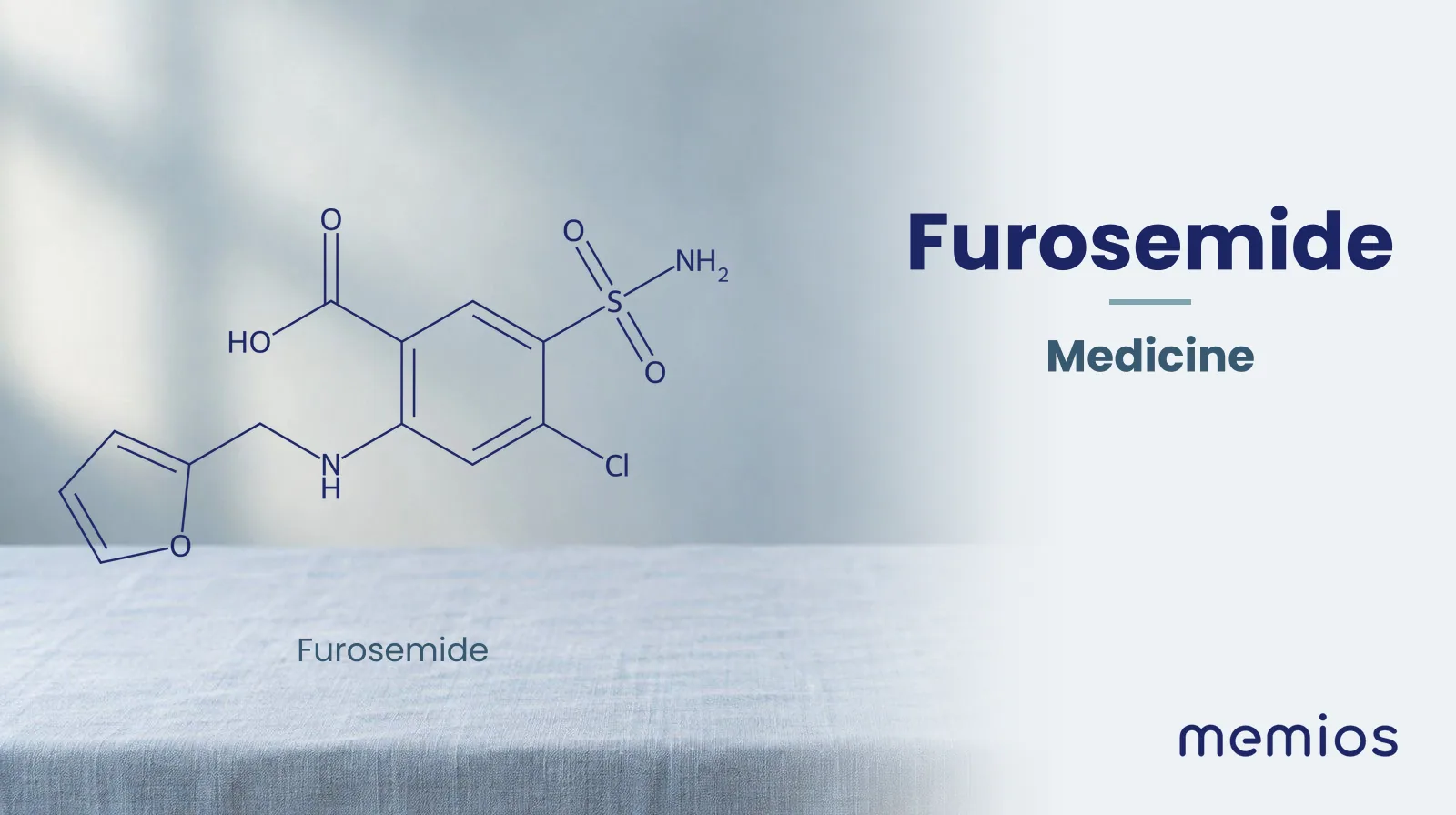
Furosemide
It removes excess fluid quickly and is a mainstay for congestion in heart failure, but most of the trial evidence is old, small and short.
TLDR
- Boxed warning: Therefore, careful medical supervision is required and dose and dose schedule must be adjusted to the individual patient's needs.
- Well established. It removes excess fluid quickly and is a mainstay for congestion in heart failure, but most of the trial evidence is old, small and short.
- What it is: Furosemide is a prescription loop diuretic ('water pill').
- Main use: Edema (fluid overload) in heart failure (limited evidence).
- Other approved uses: Edema from cirrhosis or kidney disease (including nephrotic syndrome) (evidence not rated); High blood pressure (limited evidence).
- Uses NOT supported by research: Preventing or treating acute kidney injury.
- Recommended dose (official position): Dosing is set by the prescriber and adjusted to the individual. As a position, the label allows careful titration for edema.
- Studied dose (a trial dose, not a recommendation): ReBIC-1 withdrew furosemide from stable outpatients who had been taking 40-80 mg daily. No finding here cites that trial.
- Upper limit: The label (label revision October 2022) says the dose may be carefully titrated up to 600 mg/day in clinically severe edematous states.
- What goes wrong: 3 findings on harm. The label reports tinnitus and hearing loss, sometimes irreversible.
- Interactions: 5 recorded, including Alcohol, Licorice (large amounts), Laxatives (prolonged use), Sucralfate.
- Common myth: Furosemide protects the kidneys in acute kidney injury.
What it is
Furosemide is a prescription loop diuretic ('water pill'). The US label (label revision October 2022) approves it for fluid overload (edema) from heart failure, liver cirrhosis and kidney disease, and for high blood pressure.
What the research says
It removes excess fluid quickly and is a mainstay for congestion in heart failure, but most of the trial evidence is old, small and short. A Cochrane review of small trials found fewer deaths and admissions versus placebo in chronic heart failure. For blood pressure, a Cochrane review found a modest fall on low-quality evidence. Swapping to torsemide made no difference to deaths. Its use to prevent or treat acute kidney injury is off-label and not supported. Harms include dehydration, low potassium and hearing damage.
Evidence grade: Well established.
How it works
Drug class: Loop diuretic
Furosemide stops the kidney from reabsorbing sodium and chloride, mainly in the part called the loop of Henle, so much more salt and water leave in the urine. (Source 1)
Boxed warning
Furosemide tablets are a potent diuretic which, if given in excessive amounts, can lead to a profound diuresis with water and electrolyte depletion. Therefore, careful medical supervision is required and dose and dose schedule must be adjusted to the individual patient's needs.
(Source 1)
What it is used for
- A Cochrane review of 14 small, short trials (525 people) found conventional diuretics appeared to reduce death and worsening heart failure versus placebo; long-term data are lacking. Torsemide was no better than furosemide for mortality. Evidence: limited. (Source 2)
- Approved by label position; outcome trials for these uses were not retrieved in this run. Evidence: unknown. (Source 1)
- Cochrane (2015): loop diuretics lowered blood pressure by about 8/4 mmHg in 9 trials of 460 people, but evidence quality was low and harms were poorly reported. Evidence: limited. (Source 3)
- A 2018 meta-analysis of 28 trials found no mortality difference overall; a possible benefit when used preventively came from a subgroup and needs confirmation. Evidence: not-supported. (Source 4)
Interactions
- Alcohol (label): Alcohol can worsen the drop in blood pressure on standing that furosemide can cause. (Source 1)
- Licorice (large amounts) (label): Large amounts of licorice add to furosemide's potassium loss. (Source 1)
- Laxatives (prolonged use) (label): Long-term laxative use adds to potassium loss. (Source 1)
- Sucralfate (label): Taken together, sucralfate can blunt furosemide's effect. (Source 1)
- Indomethacin and other NSAIDs (label): NSAIDs such as indomethacin can reduce furosemide's salt-losing and blood-pressure effect. (Source 1)
Stopping it
- The ReBIC-1 randomised trial tested stopping furosemide in stable, euvolaemic outpatients with mild heart failure. At 90 days breathlessness scores did not differ, and the share of patients who stayed free of extra furosemide did not differ significantly between the groups (74.3% vs 83.8%, OR 1.69, 95% CI 0.82-3.49; the report does not say which figure belongs to which group). The trial was small (188 patients) and not powered for clinical events. This summary comes from a news report of a conference presentation, not the peer-reviewed paper. (Source 5)
What goes wrong
The label reports tinnitus and hearing loss, sometimes irreversible. (Source 1)
- Official position, Certainty not rated.
- Size: case reports (label)
- Who: People taking furosemide.
- How long: not stated.
- Result: No rate given.
- Funding: label.
Cases of tinnitus and reversible or irreversible hearing impairment and deafness have been reported.
The label warns excessive diuresis can cause dehydration, circulatory collapse and clots, especially in older people. (Source 1)
- Official position, Certainty not rated.
- Size: label.
- Who: Especially elderly patients.
- How long: not stated.
- Result: No rate given.
- Funding: label.
Excessive diuresis may cause dehydration and blood volume reduction with circulatory collapse and possibly vascular thrombosis and embolism, particularly in elderly patients.
Low potassium is a recognised harm, more likely with brisk diuresis, low intake, cirrhosis, steroids, laxatives or large amounts of licorice. (Source 1)
- Official position, Certainty not rated.
- Size: label.
- Who: People taking furosemide.
- How long: not stated.
- Result: No rate given.
- Funding: label.
Hypokalemia may develop with Furosemide tablets, especially with brisk diuresis, inadequate oral electrolyte intake, when cirrhosis is present, or during concomitant use of corticosteroids, ACTH, licorice in large amounts, or prolonged use of laxatives.
What the evidence supports
In small placebo-controlled trials in chronic heart failure, diuretics were associated with fewer deaths and fewer admissions for worsening heart failure. (Source 2)
- Systematic review, Low certainty.
- Size: 14 trials, 525 participants (202 in placebo-controlled mortality analysis)
- Who: Adults with chronic heart failure (mean age 59)
- How long: 4 to 24 weeks.
- Result: Death OR 0.24 (95% CI 0.07 to 0.83); worsening HF admission OR 0.07 (95% CI 0.01 to 0.52)
- Funding: Cochrane (independent)
The available data from several small trials show that in patients with chronic heart failure, conventional diuretics appear to reduce the risk of death and worsening heart failure compared to placebo.
What the evidence does not support
After heart failure hospitalisation, switching to torsemide instead of furosemide made no difference to deaths over 12 months. (Source 6)
- Randomized trial, Moderate certainty.
- Size: 2859 patients.
- Who: Patients discharged after heart failure hospitalisation.
- How long: 12 months.
- Result: Death 26.1% vs 26.2%, HR 1.02 (95% CI 0.89-1.18); limited by loss to follow-up, crossover and nonadherence.
- Funding: not stated in the record read (publicly funded by NHLBI per trial registration; not verified here)
Death occurred in 373 of 1431 patients (26.1%) in the torsemide group and 374 of 1428 patients (26.2%) in the furosemide group (hazard ratio, 1.02 [95% CI, 0.89-1.18]).
Off-label bolus furosemide in people with or at risk of acute kidney injury did not change mortality overall. (Source 4)
- Meta-analysis, Low certainty.
- Size: 28 RCTs, 3,228 patients.
- Who: Patients with or at risk of acute kidney injury.
- How long: longest follow-up of each trial.
- Result: Mortality 16% vs 16%, OR 0.84 (95% CI 0.63 to 1.13); preventive subgroup OR 0.62 (95% CI 0.41 to 0.94)
- Funding: independent (Italian Medicines Agency grant)
We found no difference in mortality between the two groups (143/892 [16%] in the furosemide group versus 141/881 [16%] in the control group; odds ratio [OR], 0.84; 95% confidence interval [CI], 0.63 to 1.13; p = 0.25).
Where the evidence is mixed
Loop diuretics produced a modest blood pressure fall in primary hypertension, on low-quality evidence. (Source 3)
- Systematic review, Low certainty.
- Size: 9 trials, 460 participants.
- Who: Adults with primary hypertension.
- How long: short-term trials.
- Result: Systolic -7.9 (-10.4 to -5.4) mmHg; diastolic -4.4 (-5.9 to -2.8) mmHg.
- Funding: Cochrane (independent)
graded the quality of evidence for both systolic and diastolic blood pressure estimates as 'low' due to the high risk of bias of included studies and the high likelihood of publication bias
Short hypertension trials could not estimate how often loop diuretics cause harm. (Source 3)
- Systematic review, Low certainty.
- Size: 9 trials, 460 participants.
- Who: Adults with primary hypertension.
- How long: short-term.
- Result: Withdrawals for adverse effects not significantly different from placebo; harms under-reported.
- Funding: Cochrane (independent)
did not provide a good estimate of the incidence of harms associated with loop diuretics because of the short duration of the trials and the lack of reporting of adverse effects
Where the research disagrees
Whether furosemide helps in acute kidney injury
- Bove et al. 2018 meta-analysis (overall result), meta-analysis of 28 RCTs: We found no difference in mortality between the two groups (Source 4)
- Same meta-analysis, preventive subgroup, subgroup analysis (hypothesis-generating): A significant improvement in survival was found in the subgroup of patients receiving furosemide bolus(es) as a preventive measure (Source 4)
How much
- Reference intake: Dosing is set by the prescriber and adjusted to the individual. As a position, the label allows careful titration for edema. (Source 1)
- Upper limit: The label (label revision October 2022) says the dose may be carefully titrated up to 600 mg/day in clinically severe edematous states. (Source 1)
- Studied: ReBIC-1 withdrew furosemide from stable outpatients who had been taking 40-80 mg daily. (Source 5)
A common belief, and what the research shows
The belief: Furosemide protects the kidneys in acute kidney injury.
What the research shows: A 2018 meta-analysis states: "The off-label administration of furosemide bolus(es) for the prevention or to reverse acute kidney injury (AKI) is widespread but not supported by available evidence."
Questions and answers
What is it?
Furosemide is a prescription 'loop' diuretic, or water pill. It is approved for fluid overload from heart, liver or kidney disease and for high blood pressure. (Source 1)
What does it do in the body?
It blocks salt reabsorption in the kidney, mainly in the loop of Henle, so the body passes much more salt and water in the urine. (Source 1)
Is it good or bad for you?
For fluid overload in heart failure it is useful, though the evidence comes from small, short trials. Too much causes dehydration and salt loss, and it can harm hearing. (Source 2)
How do you get more of it?
Does not apply as a nutrient. It is a prescription medicine whose dose must be set and supervised by a clinician. (Source 1)
If it is harmful, what reduces it?
Stopping is a clinical decision. One small trial in stable mild heart failure found stopping did not worsen breathlessness over 90 days, but it was not large enough to judge hospitalisations or deaths. (Source 5)
Why might someone be low in it or missing it?
Does not apply. Furosemide is a medicine, not something the body needs or makes. (Source 1)
We searched: Label and reviews; deficiency does not apply to a synthetic drug
Which whole foods contain it or feed it?
No food contains furosemide. The documented food interaction is large amounts of licorice, which adds to potassium loss. (Source 1)
What happens if you do not have it?
In small older trials, people with chronic heart failure on placebo instead of diuretics had more deaths and admissions; the evidence is limited by trial size and length. (Source 2)
How can you test for it?
Drug levels are not routinely measured in the sources we read; the label's concern is monitoring fluid and electrolytes such as potassium. (Source 1)
We searched: Furosemide DailyMed label and the reviews cited; no drug-level test described
References
- US FDA label via DailyMed. FUROSEMIDE tablets USP, prescribing information (DailyMed); label text Rev. 09 10/22 (October 2022), DailyMed updated November 11, 2022. 2022. Read the source
- Cochrane Database of Systematic Reviews. Diuretics for heart failure (Faris RF et al.). 2012. PMID 22336795, DOI 10.1002/14651858.CD003838.pub3. Read the source
- Cochrane. Blood pressure-lowering efficacy of loop diuretics for primary hypertension (Musini VM et al.), plain-language evidence page. 2015. PMID 26000442, DOI 10.1002/14651858.CD003825.pub4. Read the source
- PLOS ONE. Intermittent furosemide administration in patients with or at risk for acute kidney injury: Meta-analysis of randomized trials. 2018. DOI 10.1371/journal.pone.0196088. Read the source
- TCTMD. Weaning Off Diuretics in Stable Heart Failure? ReBIC-1 Hints at Possibilities (news report of the ReBIC-1 trial, presented at ESC Heart Failure 2019; published May 28, 2019). 2019. Read the source
- JAMA. Effect of Torsemide vs Furosemide After Discharge on All-Cause Mortality in Patients Hospitalized With Heart Failure: The TRANSFORM-HF Randomized Clinical Trial. 2023. DOI 10.1001/jama.2022.23924. Read the source