Nutrition & Gut · January 28, 2026 · Andrew Wilson · 21 min read
Chili con memios: High-Protein Wagyu and Black Bean Chili
Chili con memios is a whole-food chili with black beans, mushrooms, peppers, and tomatoes, plus per-cup macros and key micronutrients, and a label comparison against top canned chili brands.
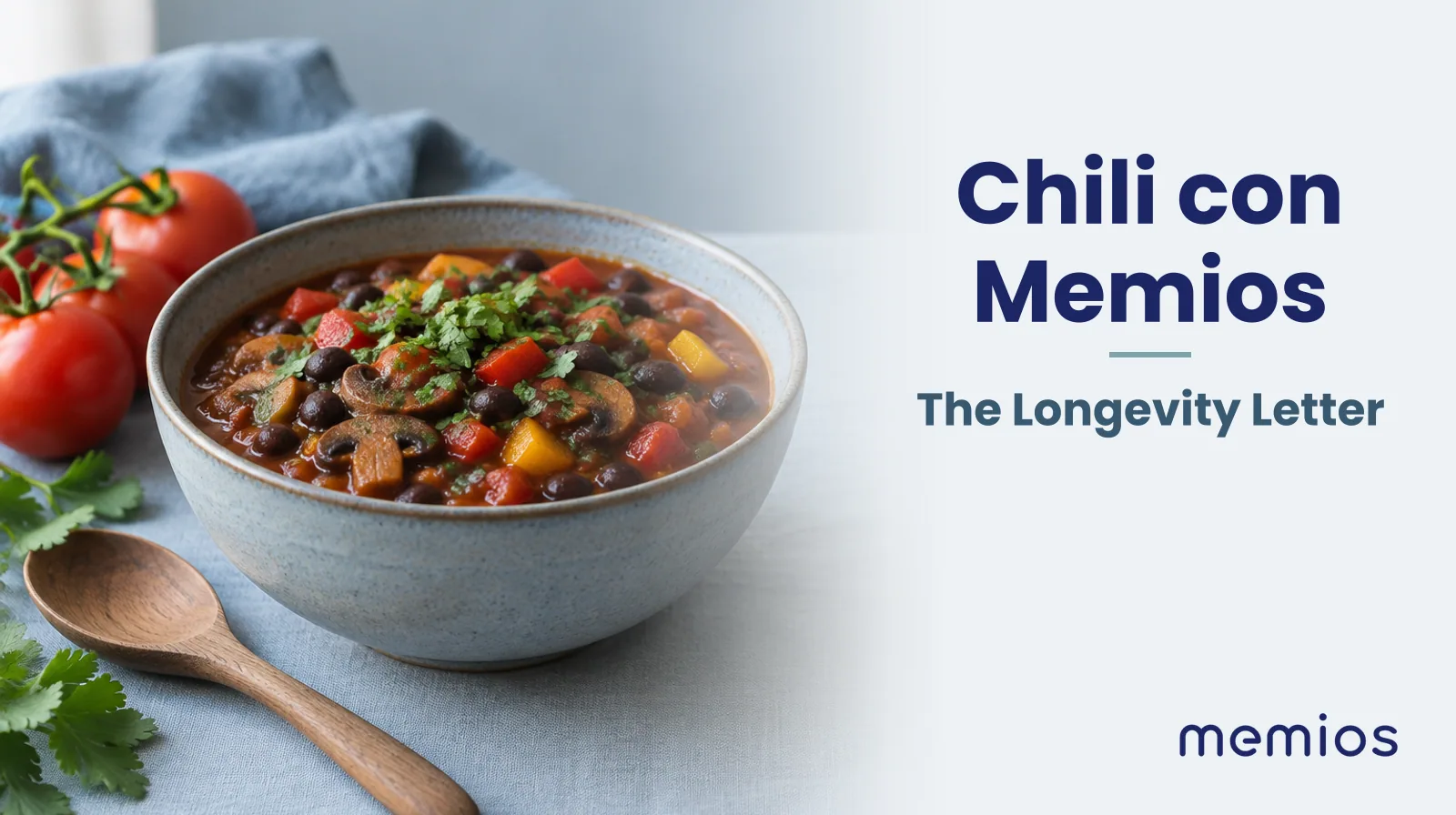
Chili con memios targets people who want a high-protein, high-fiber meal prep chili with whole-food ingredients, clear nutrition per cup, and a simple freezer routine. This homemade chili uses wagyu ground beef, lean ground turkey, black beans, bone broth, Cremini mushrooms, bell peppers, and Roma tomatoes to deliver a dense bowl for protein goals, fiber goals, and nutrient coverage.
This guide breaks down why each ingredient shows up, how each ingredient affects health, and how Chili con memios compares with popular retail chili brands on ingredients and nutrition.
NOTE: I follow the Blood Type Diet. For my blood type, 0+, I need to focus on carnivore type diets. Based on this, I wanted to create a thick, tasty protein packed chili that I can take out of the freezer and quickly heat and eat. This recipe makes about 16 cups of chili. I then put the chili in 2 cup freezer bowls and each through them in a couple of weeks.
By creating meals in batches (cook, portion, freeze, then reheat with a simple topping routine), I get the following benefits:
- Less decision fatigue at dinner
- More protein consistency across the week
- More fiber consistency across the week
- Fewer ultra processed default meals
This post breaks down three things.
- What each ingredient does in Chili con memios, plus the health impacts of each.
- What top retail chili brands put in store shelf products, why they use those ingredients show up, and how the processed foods hurt your longevity.
- A side-by-side nutrient table comparing Chili con memios to popular retail options.
Chili con memios Recipe
Ingredients
- 2 tablespoons extra virgin olive oil
- 2 white onions, chopped
- 2 garlic heads, chopped
- 2 shallots, chopped
- 2 carrots, chopped
- 6 red bell peppers, chopped
- 6 Roma tomatoes, chopped
- 2 lbs Cremini mushrooms, chopped
- 2 tablespoons chili powder
- 1 tablespoon ground cumin
- 1 teaspoon dried oregano
- 1 bay leaf
- 1 tablespoon freshly ground white pepper
- 1 tablespoon cayenne
- 1 tablespoon crushed red pepper flakes
- 1.67 lbs ground turkey, Norbest Fresh Ground Turkey, 93% lean
- 6 lbs wagyu ground beef, Imperial American Wagyu Beef, 75% lean
- 6 cans black beans, 15 oz each, rinsed and drained
- 4 cups chicken stock, Kirkland Organic Chicken Bone Broth
- 1 tablespoon cider or white vinegar
- 1 bunch cilantro, chopped
- 1 bunch green onion, chopped
General Instructions
- Sweat onions, shallots, garlic in olive oil
- Add vegetables, then spices
- Brown meats
- Add beans, broth, vinegar, herbs
- Simmer, then portion and freeze
Detailed Instructions
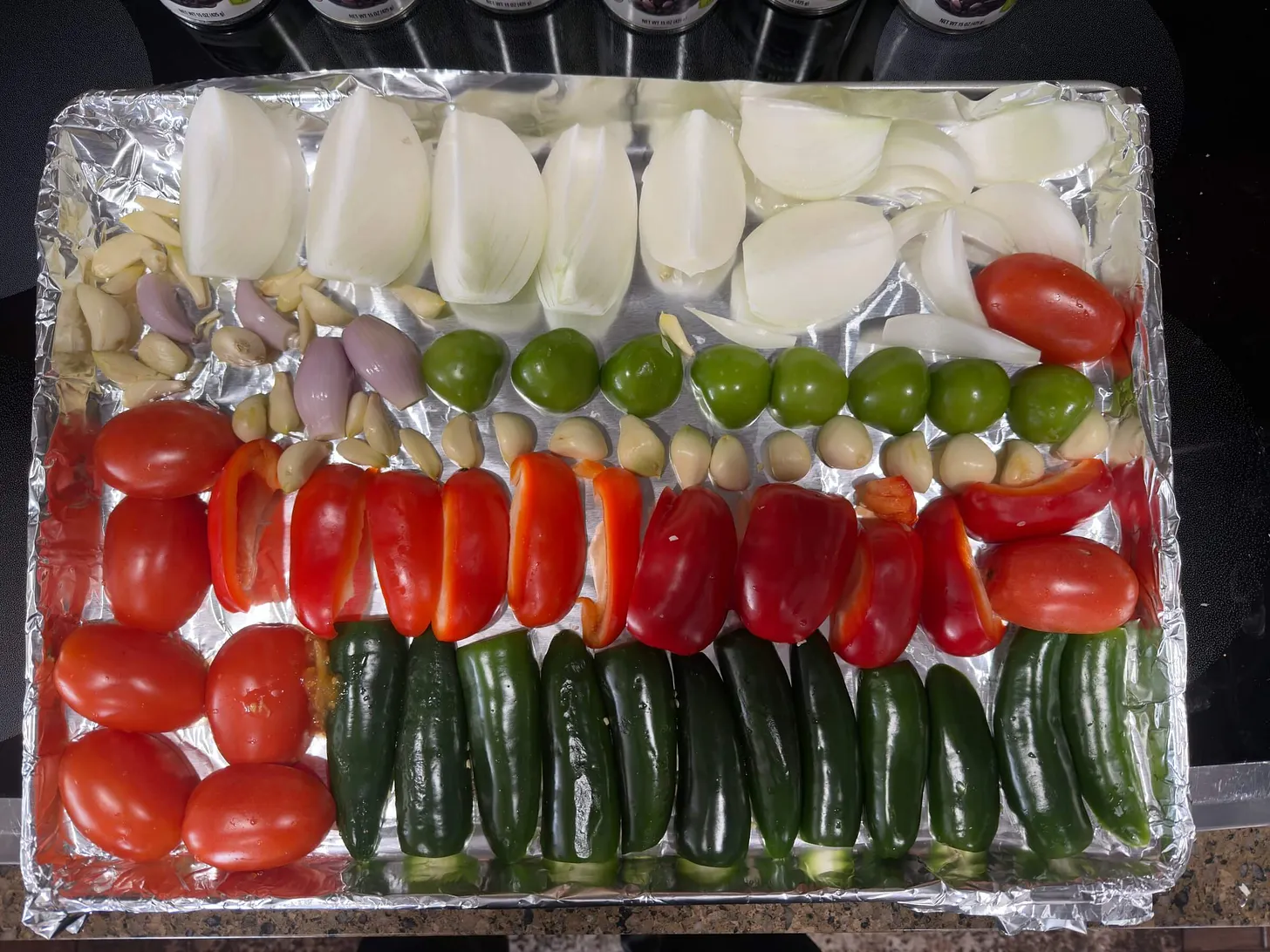
- Slice all produce in half, lay on a baking sheet under the Broil setting until skin is blackened.
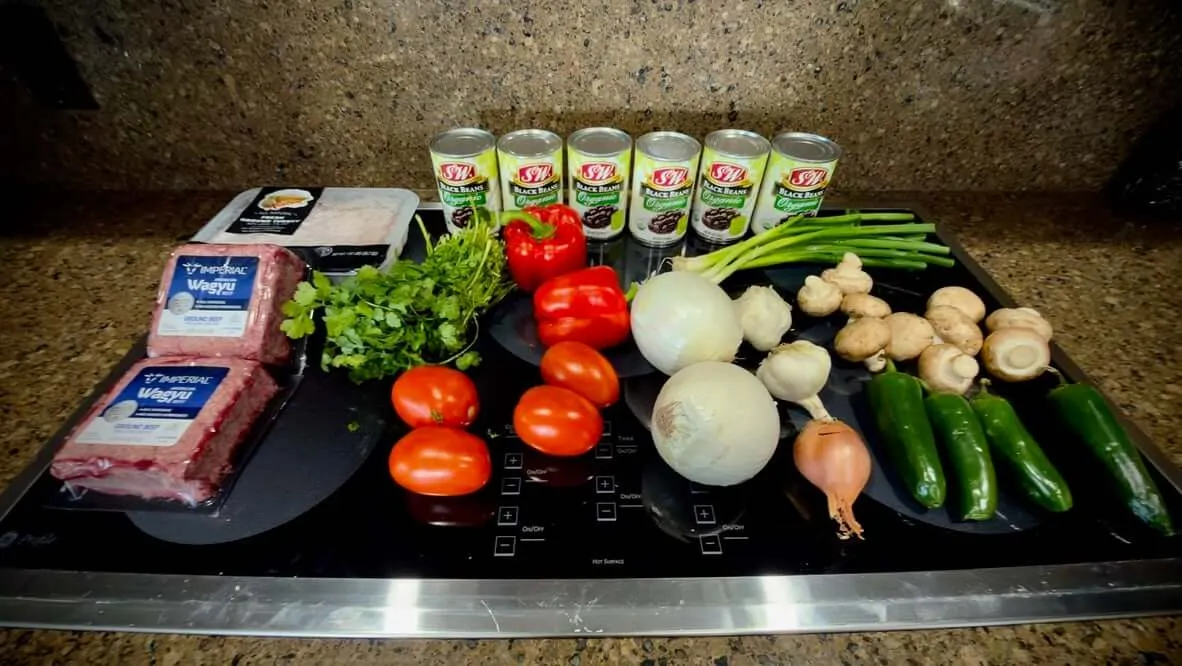
Yes I know I have tomatillos and 2 extra jalapeños in this picture. I also made some spicy black bean dip that isn’t part of this post.
- Chop all indicated ingredients.
- Put a large pot on medium heat.
- Add: onions, shallots, garlic, olive oil
- Stir occasionally for 10 minutes
- Add: carrots, bell peppers, tomatoes, mushrooms
- Add: all seasonings
- Stir occasionally for 10 minutes
- Increase temperature to Medium high
- Add: ground turkey, ground beef
- Break up and stir occasionally for 10 minutes (until meat is brown)
- Add: black beans, chicken stock, cider or vinegar, cilantro, green onion
- Reduce to low heat (simmer)
- Cover for 10 minutes
- Uncover, stir occasionally for 30 minutes
- The longer you simmer, the thicker the chili
- Divide into 2 cup containers, freeze
Nutrition (per 1 cup)
Macro Nutrition
- Calories: 754 kcal
- Protein: 47.1 g
- Total carbs: 29.0 g
- Fiber: 10.7 g
- Net carbs: 18.3 g
- Total fat: 49.6 g
- Saturated fat: 17.6 g
Micro Nutrition
- Sodium: 394 mg
- Potassium: 1,240 mg
- Magnesium: 55.6 mg
- Phosphorus: 515 mg
- Calcium: 108 mg
- Iron: 5.8 mg
- Zinc: 2.68 mg
- Selenium: 23.8 mcg
- Vitamin C: 60.6 mg
- Vitamin A: 154 mcg RAE
- Folate: 43 mcg DFE
- Vitamin B12: 0.62 mcg
- Vitamin B6: 0.39 mg
- Vitamin D: 0.41 mcg
Benefits of Whole Food Ingredients
Extra virgin olive oil, 2 tablespoons
Why add
- Starts the flavor base with gentle heat transfer
- Helps fat soluble flavor compounds from spices spread through the pot
- Supports browning at the start
Health impact
- Raises monounsaturated fat intake
- Adds calories fast, even at 2 tablespoons
- Fits best when most fat comes from olive oil instead of beef fat, yet beef fat dominates total fat in this recipe
White onions, 2
Why add
- Foundational sweetness after sauté
- Adds water and structure for body
Health impact
- Adds potassium and vitamin C in small amounts
- Adds polyphenols and sulfur compounds, though doses per serving stay modest after cooking
Garlic, 2 heads
Why add
- High aroma impact
- Balances rich beef notes
- Keeps vampires at bay
Health impact
- Adds organosulfur compounds linked with vascular support in research literature, strongest with regular intake, not once a month
Shallots, 2
Why add
- Brings onion flavor with more sweetness and less bite
- Adds depth without more chili heat
Health impact
- Like onions, small gains per bowl, useful through frequency
Carrots, 2
Why add
- Adds sweetness to balance spice
- Adds body, carrots soften into the base
Health impact
- Raises carotenoids and vitamin A activity in the bowl
- Supports higher vegetable volume without raising sodium
Red bell peppers, 6
Why add
- Adds sweetness, color, and bulk
- Builds the tomato pepper backbone without extra sugar
Health impact
- Major driver for vitamin C and carotenoids
- Supports potassium intake
- Helps offset iron absorption from beans and meat through vitamin C
Roma tomatoes, 6
Why add
- Adds acidity, body, and umami (new word to me…Umami is one of the basic tastes. You taste it as savory, broth-like depth. It makes food taste fuller and more satisfying).
- Builds base sauce with less need for added starch
Health impact
- Adds potassium and vitamin C
- Adds lycopene, more bioavailable after cooking with fat
Cremini mushrooms, 2 lbs
Why add
- Adds umami without more meat
- Adds texture and bulk
- Helps chili feel hearty with fewer meat bites per spoon
Health impact
- Adds selenium and B vitamins
- Helps lower calorie density versus more beef
- Adds fiber like compounds from fungal cell walls, not counted as classic fiber on labels, still supports gut diversity
Chili powder, cumin, oregano, bay leaf, white pepper, cayenne, red pepper flakes
Why add
- Builds layered spice without extra salt
- Provides aroma, heat, and depth
- Too “hot”? Use less chili powder, cayenne and red chili flakes.
Health impact
- Supports palatability so higher vegetable and bean intake feels easy
- Capsaicin from cayenne and red pepper influences appetite and thermogenesis in some studies, effect size stays small, consistency matters more than dose
Ground turkey, 93% lean
Why add
- Adds lean protein to dilute total saturated fat from beef
- Adds texture and protein density without large flavor shifts
- I have found 100% ground turkey to be very bland.
Health impact
- Supports high protein per cup for muscle retention
- Helps manage calorie load compared to more beef, though beef still drives most calories (and flavor!).
Wagyu ground beef, 75% lean
Why add
- Adds rich mouthfeel, beef flavor, and satisfying texture
- Builds a chili suited for reheating, fat protects texture in freezer meals
Health impact
- Raises saturated fat and total fat per cup
- Raises calories per cup
- Raises iron and zinc
- Works best when portion size stays controlled, or when paired with high fiber sides and daily saturated fat totals stay managed
Black beans, 6 cans, rinsed and drained
Why add
- Adds texture and thickness
- Adds bulk without more meat
- Adds classic chili structure
Health impact
- Big driver for fiber per cup
- Supports potassium, magnesium, and folate
- Helps blunt post meal glucose rise through fiber and protein pairing
- Rinsing reduces sodium exposure from the packing liquid
Chicken stock, Kirkland Organic Chicken Bone Broth, 4 cups
Why add
- Adds liquid for simmer and flavor integration
- Supports thicker mouthfeel when reduced
Health impact
- Adds sodium, degree depends on product
- Adds small amounts of minerals, not a meaningful calcium source
- Helps keep flavor high without more salt added late
Cider or white vinegar, 1 tablespoon
Why add
- Sharpens flavor
- Brightens the finish so chili tastes less heavy
Health impact
- Low calorie acid addition
- Supports appetite satisfaction through flavor contrast
Cilantro and Green Onion
Why add
- Fresh top note, lifts aroma after long simmer
- Adds color and contrast
Health impact
- Adds vitamin K and small vitamin C
- Supports higher herb intake, a marker of diet quality for many people
Sour cream garnish, optional
Why add
- Adds cooling effect against heat
- Adds creamy mouthfeel
Health impact
- Adds saturated fat and calories
- Adds calcium, amount depends on portion
- Greek yogurt works as a swap for more protein and less saturated fat
Popular retail chili brands, ingredients, and why brands include those ingredients
Retail shelf products follow a different set of constraints.
- Long shelf life
- Repeatable texture across batches
- Low cost per serving
- Consistent flavor for a mass audience
Those constraints drive ingredient choices such as starch thickeners, soy protein, sugar, and “flavoring” blends.
Most “health harm” signals from canned chili come from high sodium, refined thickeners, and ultra-processed protein fillers.
Below are five widely sold retail options, with ingredient lists pulled from retail listings or brand pages.
HORMEL Chili with Beans
Ingredients list
- Water, beef and pork, beans, concentrated crushed tomatoes
- 2% or less of: modified cornstarch, textured soy flour, corn flour, salt, chili powder, sugar, flavoring, green chiles, onions, spices, jalapeño peppers, and vinegar.
Why each ingredient shows up, plus health impact
Water
- Reason: low-cost base, sets viscosity target
- Health impact: none, yet water first signals lower meat and vegetable density per spoon than our Chili con memios recipe
Beef and pork
- Reason: classic flavor, fat driven mouthfeel
- Health impact: supports protein, iron, zinc, also raises saturated fat depending on cut and formulation
Beans
- Reason: bulk and texture, cost control
- Health impact: adds fiber and potassium, supports gut health
Concentrated crushed tomatoes
- Reason: acidity, body, color
- Health impact: lycopene, potassium, flavor without more fat
Modified cornstarch and corn flour
- Reason: thickness stability through shipping and reheating
- Health downside: refined starch adds fast-digesting carbohydrate without adding fiber, vitamins, or minerals, so nutrient density per calorie drops.
Textured soy flour
- Reason: boosts protein feel, binds water and fat, lowers cost
- Health downside: ultra-processed filler for many products, plus soy allergy risk for some people.
Salt
- Reason: flavor, shelf stability, brand signature taste
- Health impact: sodium load trends high in store products, watch daily totals
Chili powder, onions, spices, jalapeño peppers, vinegar, green chiles
- Reason: flavor profile consistency
- Health impact: positive from spice variety, small micronutrient contribution
Sugar and flavoring
- Reason: rounds acidity, standardizes taste across tomato lots, helps mass appeal
- Health impact: added sugar adds calories with no micronutrients, pushing daily added sugar totals upward. Flavoring is a broad label category, limiting transparency for ingredient sensitive eaters.
HORMEL nutrition, per 1 cup
- Calories 270,
- fat 10 g,
- saturated fat 4 g,
- carbs 31 g,
- fiber 7 g,
- protein 15 g,
- sodium 990 mg
- Potassium 661.96 mg,
- calcium 69.16 mg,
- iron 3.21 mg,
- magnesium 59.28 mg
WOLF BRAND Mild Chili with Beans
Ingredients list
- Meat ingredients (beef and pork), water, prepared pinto beans, beef broth, tomato puree
- Corn starch, whole rolled oats
- Less than 2% of: textured vegetable protein (soy flour and caramel color), modified corn starch, chili pepper, salt, sugar, caramel color, extractives of paprika, spices, garlic powder, soy lecithin, sodium phosphate
Why each ingredient shows up, plus health impact
Meat ingredients, beef and pork
- Reason: classic Texas style richness, protein base
- Health impact: raises protein, iron, zinc, also raises saturated fat
Prepared pinto beans
- Reason: bulk, thickness, cost control
- Health impact: fiber, potassium, magnesium support, higher satiety
Beef broth and tomato puree
- Reason: flavor backbone and acidity
- Health impact: sodium rises, tomato supports potassium
Corn starch, modified corn starch, oats
- Reason: stable thickness, oats also add body and reduce separation
- Health impact: starch raises refined carbohydrate fraction without fiber, lowering nutrient density per calorie. Oats add beta glucan fiber, dose per bowl unknown, label lists oats ahead of 2% line, so meaningful presence likely
Textured vegetable protein, soy flour, soy lecithin
- Reason: binds moisture, improves texture, stretches meat
- Health impact: ultra-processed protein filler, plus soy allergy risk for some people. Soy Lecithin is a marker of industrial processing
Caramel color, extractives of paprika
- Reason: color standardization
- Health impact: some caramel color processes form 4-MEI. This is neutral for most people, but highlights industrial processing focus
Sodium phosphate
- Reason: texture, water retention, product stability
- Health impact: phosphate additives absorb efficiently and raise phosphate load, a key concern for chronic kidney disease and related cardiovascular risk
WOLF nutrition, per 1 cup
- Calories 360,
- fat 20 g,
- saturated fat 8 g,
- carbs 29 g, fiber 7 g,
- protein 16 g
- Sodium 1000 mg,
- calcium 90 mg,
- iron 3.3 mg,
- potassium 650 mg
STAGG Classic Chili with Beans
Ingredients list
- Water, beef, tomatoes, kidney beans, pink beans, pork, tomato paste, dehydrated onions
- 2% or less of: chili seasoning (spices, sugar, salt, flavoring, paprika), textured vegetable protein (soy flour, caramel color), modified cornstarch, jalapeño peppers (with vinegar, salt, acetic acid), flavoring, salt, dehydrated bell peppers, spices
Why each ingredient shows up, plus health impact
Two bean types, kidney and pink beans
- Reason: texture variety, visual appeal
- Health impact: fiber and minerals, supports satiety
Dehydrated onions and dehydrated bell peppers
- Reason: stable supply chain, flavor without fresh produce logistics
- Health impact: retains some phytonutrients, lower vitamin C than fresh peppers
Textured vegetable protein, soy flour
- Reason: protein and chew, cost control
- Health impact: ultra-processed filler, soy allergy risk, plus caramel color process concerns similar to other products using caramel color
Modified cornstarch
- Reason: stable thickness
- Health impact: refined starch lowers nutrient density per calorie
Chili seasoning with sugar and salt
- Reason: standardized flavor
- Health impact: sugar modest, sodium often high
Flavoring
- Why brands use: taste consistency.
- Health downside: limited transparency for ingredient sensitive eaters.
STAGG nutrition, per 1 cup
- Calories 290,
- fat 13 g,
- saturated fat 4.5 g,
- carbs 26 g,
- fiber 5 g,
- protein 16 g,
- sodium 990 mg
- Calcium 91.39 mg,
- iron 3.95 mg,
- magnesium 64.22 mg,
- potassium 785.46 mg,
- sodium 824.98 mg
Amy’s Organic Medium Chili
Ingredients list
- Organic red beans, organic onions, filtered water, organic tofu (filtered water, organic soybeans, magnesium chloride), organic bell peppers
- Organic sweet rice flour, organic high oleic safflower and or sunflower oil
- Organic garlic, organic spices, organic jalapeño peppers, sea salt, organic black pepper
Why each ingredient shows up, plus health impact
Organic red beans
- Reason: plant-based protein and bulk
- Health impact: fiber, potassium, folate support, better glycemic response than refined starch meals
Tofu
- Reason: boosts protein while staying vegan
- Health impact: soy protein intake, lower saturated fat than beef-based products, allergen exposure
Sweet rice flour
- Reason: thickens broth without wheat. The Magnesium chloride in the tofu acts as a coagulant.
- Health impact: refined carbohydrate thickener, a refined starch, lowers fiber per calorie compared with beans and vegetables
High oleic oil
- Reason: mouthfeel and shelf stability
- Health impact: seed oils with higher monounsaturated fat with omega-6 fear and “industrial processing” concerns. However there is lower saturated fat than beef fat. The added oil raises calorie density, so portions matter
Sea salt
- Reason: flavor and preservation
- Health impact: higher sodium intake links with higher blood pressure risk, so total sodium across the day matters
Amy’s nutrition, per 1 cup
- Calories 310,
- fat 10 g,
- saturated fat 1 g,
- carbs 39 g,
- fiber 8 g,
- protein 16 g
- Sodium 770 mg,
- calcium 100 mg,
- iron 4.1 mg,
- potassium 760 mg,
- vitamin D 0 mcg
Skyline Chili Original
Ingredients list
- Beef, water, tomato paste, corn starch, spices, salt, onion, garlic, paprika and natural flavors
Why each ingredient shows up, plus health impact
Beef
- Reason: signature Cincinnati style texture, high protein feel
- Health impact: protein, iron, zinc, higher saturated fat than bean forward recipes
Corn starch
- Reason: thick body with low bean content
- Health impact: refined starch with low fiber, pushes a lower satiety profile per calorie compared with bean-forward chili
Natural flavors
- Reason: standardizes taste
- Health impact: signals flavor system complexity, health impact hard to quantify from label alone with limited transparency for ingredient sensitive eaters
Skyline nutrition, per 1 cup
- Calories 250,
- fat 15 g,
- saturated fat 6 g,
- carbs 4 g,
- fiber 1 g,
- protein 23 g
- Sodium 1060 mg,
- calcium 24 mg,
- iron 4 mg,
- potassium 469 mg
Why Chili con memios stands out
Chili con memios focuses on whole foods:
- Fresh onions, peppers, tomatoes, mushrooms
- Large bean load
- Fresh herb finish
- Lower added sodium per cup than retail shelf products
Retail shelf products often depend on these additives:
- Water first, then thickeners
- Soy protein systems for texture and cost
- Sugar and flavor systems for consistent taste
- Sodium levels near 770 to 1060 mg per cup across many options
Macro and micro comparison table, per 1 cup serving
Data notes
- WOLF, STAGG, Amy’s, Skyline use retailer nutrition panels.
- HORMEL uses label style for macro and micro nutrients pulled from a database style nutrition entry when label lacks minerals beyond calcium and iron.
- Magnesium, zinc, selenium, vitamin C, vitamin A appear on few retail panels, so many cells show “not listed”.
Interpreting the table for real life decisions
Protein
Chili con memios leads protein per cup at 47.1 g. Store products cluster around 15 to 23 g per cup.
Practical impact:
- One bowl builds a serious chunk of daily protein
- High protein supports lean mass retention, better satiety, and better recovery from resistance training
Tradeoff
- Calories rise with protein here because 75% lean beef pushes fat high
Fiber
Chili con memios’ fiber lands at 10.7 g per cup, higher than most retail options listed, with the runner’s up being Amy’s at 8 g and HORMEL at 7 g.
Practical impact
- Higher fiber supports gut regularity
- Higher fiber supports steadier glucose response
- Higher fiber supports appetite control after the meal
Sodium
Chili con memios’ sodium lands at 394 mg per cup, far below the 770 to 1060 mg range shown on multiple retail products.
Practical impact
- Two cups of many retail chilis push sodium above 1500 mg
- Two cups of Chili con memios stay under 800 mg
This matters for blood pressure control and overall daily sodium management.
Potassium
Chili con memios’ potassium lands at 1,240 mg per cup. Retail products in this set land around 469 to 785 mg per cup.
Practical impact
- Higher potassium supports blood pressure regulation, especially when sodium stays controlled
- Beans, peppers, tomatoes, and mushrooms drive this advantage
Saturated fat and calories
Chili con memios’ saturated fat lands at 17.6 g per cup, with 754 calories per cup.
Retail products range from 1 to 8 g saturated fat per cup and 250 to 360 calories per cup.
Practical impact
- One cup feels more like a full meal than a side
- Two cups turns this into a high calorie meal for many people
- Saturated fat climbs fast across the day if breakfast or lunch also includes higher saturated fat foods
Nutrition analysis for Chili con memios, with practical next steps
Strengths
High protein density
- 47.1 g per cup supports muscle maintenance and satiety.
High fiber
- 10.7 g per cup supports gut health and glucose control.
High potassium
- 1,240 mg per cup supports blood pressure control.
Lower sodium than store products
- 394 mg per cup supports daily sodium control.
High micronutrient coverage
- Iron, zinc, selenium, vitamin C, B vitamins show strong numbers in your per cup breakdown.
Constraints
High calorie density
- 754 calories per cup changes portion planning.
- Most people eat chili in 1.5 to 2 cup bowls, so calories rise fast.
High saturated fat
- 17.6 g saturated fat per cup puts daily saturated fat targets under pressure.
Micronutrient gaps
- Calcium stays low relative to daily targets.
- Vitamin D stays low.
How to keep the recipe identity while improving balance
Option A. Lower saturated fat without losing the chili feel
- Swap half of the 75% lean beef for 90% lean beef.
- Keep turkey the same.
- Keep mushrooms at 2 lbs.
Expected impact
- Lower total fat per cup
- Lower saturated fat per cup
- Similar protein per cup
- Similar fiber per cup
Option B. Keep meats, lower calorie density through volume
- Add 2 more lbs mushrooms or add 2 to 3 lbs zucchini plus mushrooms.
- Add 2 extra peppers and 2 extra tomatoes.
Expected impact
- Lower calories per cup through higher yield
- Higher potassium and vitamin C per cup
- Similar sodium per cup if broth stays constant
Option C. Keep the batch, change serving format
- Serve 1 cup chili over a large bowl of chopped greens.
- Add Greek yogurt instead of sour cream.
Expected impact
- Better calorie control
- Higher protein per meal
- Higher calcium per meal
- Lower saturated fat per meal
Option D. Use “two part meal planning”
- Treat 1 cup as the protein and fiber anchor.
- Add a side based on goals.
For fat loss
- Side: salad, steamed broccoli, cabbage slaw, no bread.
For training fuel
- Side: baked potato, brown rice, quinoa.
- Add fruit if training volume stays high.
How Chili con memios stacks up against store brands in ingredient quality terms
Higher whole food density per spoon
- Fresh peppers, tomatoes, mushrooms, carrots, onions, herbs
- Store products often lead with water, then rely on starch and dehydrated vegetables for body
Lower sodium per cup
- Chile con memios has 394 mg per cup
- Store products often land near 770 to 1060 mg per cup
Higher potassium per cup
- Chili con memios has 1,240 mg per cup
- Store products often land near 469 to 785 mg per cup
Higher saturated fat per cup
- Chili con memios uses 75% lean beef at high total pounds
- Store products often blend meat systems with beans, starch, and water, lowering saturated fat per cup
A practical buying guide for readers who still want store chili sometimes
Use a two question screen.
Question 1. What sodium per cup shows on label
- Aim under 700 mg per cup for frequent use.
- Store products in this set often exceed 900 mg per cup.
Question 2. What fiber per cup shows on label
- Aim for 6 g or higher per cup.
- Beans help, TVP and starch do not replace fiber.
Then run the “ingredient signals” scan.
Better signals
- Beans listed early
- Tomato paste or crushed tomatoes
- Limited added sugar
- Fewer thickener systems
Caution signals
- Multiple starches
- “Flavoring” or “natural flavors” near the end, common across brands, not a red flag alone, still signals a flavor system
- Sodium near 1000 mg per cup
Longevity Plan
Weekly plan
- Cook once on Sunday.
- Freeze in 2 cup containers.
- Use 1 cup per meal, then add a side for goals.
Default serving template
- 1 cup chili
- 2 cups leafy greens or crucifer vegetables
- 2 tablespoons Greek yogurt
- Green onion garnish
A higher calorie template for active days
- 1.5 cups chili
- 1 baked potato
- Greens on the side
A lower saturated fat template
- 1 cup chili
- Skip sour cream
- Add Greek yogurt
- Add avocado slices for monounsaturated fat, small portion
Chili con memios works best inside a weekly rhythm.
- 3 to 5 high protein meals each week
- 25 to 40 g protein per meal target for many adults over 50, individual needs vary
- Fiber at 25 to 35 g per day target range for many adults
- Sodium management across the full day