Medications · September 29, 2026 · Memios · 14 min read
Bupropion
Reviews find bupropion works better than placebo for depression and about as well as other antidepressants in head-to-head trials.
TLDR
- Boxed warning: Advise families and caregivers of the need for close observation and communication with the prescriber.
- Well established. Reviews find bupropion works better than placebo for depression and about as well as other antidepressants in head-to-head trials.
- What it is: Bupropion is a prescription antidepressant of the aminoketone class, taken as immediate-, sustained- or extended-release tablets.
- Main use: Major depressive disorder (well supported).
- Other approved uses: Stopping smoking (well supported); Prevention of seasonal affective disorder (evidence not rated).
- Off-label uses (not on the FDA label): Adding to an SSRI for depression or to counter SSRI sexual side effects (limited evidence).
- Recommended dose (official position): Dosing is set by the prescriber. As a position, the Wellbutrin XL label (revised 11/2025) gives a starting dose of 150 mg once daily for depression, with a target of 300 mg once daily.
- Studied dose (a trial dose, not a recommendation): EAGLES gave bupropion 150 mg twice daily for 12 weeks. No finding here cites that trial.
- Upper limit: As a position, the Wellbutrin XL label states the dose should not exceed 300 mg once daily, because seizure risk is dose-related.
- What goes wrong: 6 findings on harm. Insomnia was the most common side effect of bupropion in EAGLES.
- Interactions: 3 recorded, including Medicines broken down by CYP2D6 (some antidepressants, antipsychotics, beta-blockers, type 1C antiarrhythmics), Alcohol, Heavy alcohol use, sleep deprivation, eating disorders (seizure risk factors).
- Common myth: Zyban still carries a boxed warning about serious mental-health effects when used to quit smoking.
What it is
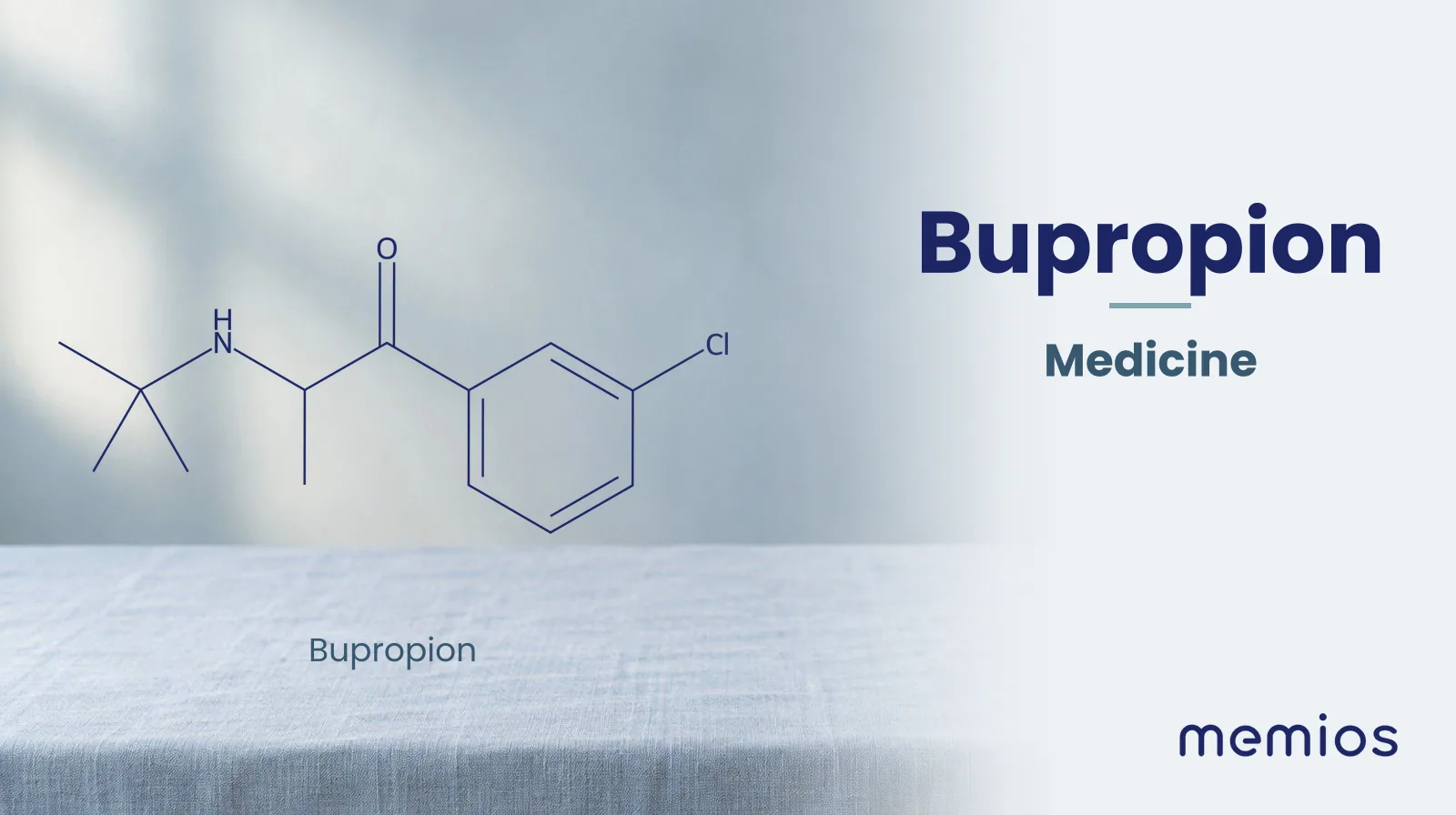
Bupropion is a prescription antidepressant of the aminoketone class, taken as immediate-, sustained- or extended-release tablets. It is also sold as Zyban for stopping smoking.
What the research says
Reviews find bupropion works better than placebo for depression and about as well as other antidepressants in head-to-head trials. For smoking, a Cochrane review finds it makes quitting 49% to 72% more likely than no medicine, about 6 to 8 extra quitters per 100, and the EAGLES trial (8,144 people) found it roughly doubled abstinence versus placebo without a significant rise in serious psychiatric side effects. EAGLES led the FDA in 2016 to remove the smoking-related mental-health wording from the Zyban boxed warning; the general antidepressant suicidality warning remains. Harms include seizures, which rise with dose, insomnia, and more people stopping because of side effects. It causes less sexual dysfunction than SSRIs and tends toward weight loss rather than gain. It strongly inhibits the liver enzyme CYP2D6, which can raise levels of other medicines.
Evidence grade: Well established.
How it works
Drug class: Aminoketone antidepressant; norepinephrine-dopamine reuptake inhibitor
Bupropion weakly blocks the reuptake of the brain messengers norepinephrine and dopamine, and does not act on serotonin; exactly how this relieves depression is not known. (Source 1)
Boxed warning
Antidepressants increased the risk of suicidal thoughts and behavior in children, adolescents, and young adults in short-term trials. These trials did not show an increase in the risk of suicidal thoughts and behavior with antidepressant use in subjects aged 65 and older.
(Source 1)
What it is used for
- A large network meta-analysis found all 21 antidepressants studied beat placebo; a bupropion-specific review found robust trials support it over placebo and similar effectiveness to other antidepressants. Evidence: established. (Source 2)
- Cochrane finds bupropion raises quit rates by 49% to 72% versus no medicine; in EAGLES it roughly doubled abstinence versus placebo but was less effective than varenicline. Evidence: established. (Source 3)
- Approved on the Wellbutrin XL label; we did not reach the seasonal affective disorder trials in this run. Evidence: unknown. (Source 1)
- Most studies of adding bupropion to another antidepressant suggest an extra effect, but many were open-label. Evidence: limited. (Source 4)
Interactions
- Medicines broken down by CYP2D6 (some antidepressants, antipsychotics, beta-blockers, type 1C antiarrhythmics) (pharmacokinetic study): Bupropion blocks CYP2D6, so levels of these medicines can rise; doses may need lowering. (Source 5)
- Alcohol (label): The label advises minimising or avoiding alcohol; heavy alcohol use was present in some people who had bupropion seizures in a case series. (Source 1)
- Heavy alcohol use, sleep deprivation, eating disorders (seizure risk factors) (case reports): These factors were present in some patients who had seizures on bupropion. (Source 6)
Stopping it
- As a position, the label advises stepping down from 300 mg to 150 mg once daily before stopping. We did not reach a trial of bupropion withdrawal symptoms in this run. (Source 1)
What goes wrong
Insomnia was the most common side effect of bupropion in EAGLES. (Source 7)
- Randomized trial, High certainty.
- Size: 2,006 treated with bupropion.
- Who: Smokers.
- How long: 12 weeks treatment.
- Result: Insomnia 12% (245 of 2006)
- Funding: industry-funded (Pfizer and GlaxoSmithKline; funding statement in the Europe PMC abstract record)
insomnia (bupropion, 12% [245 of 2006 participants])
Cochrane reports high-certainty evidence that people on bupropion are more likely to stop because of side effects, and that it may increase serious adverse events. (Source 3)
- Systematic review, High certainty.
- Size: not stated in the summary we read.
- Who: Adult smokers.
- How long: Trial durations.
- Result: Direction reported; numbers not in the summary we read.
- Funding: independent (Cochrane)
There is high-certainty evidence that people using bupropion are more likely to stop taking the medicine because of unpleasant effects
Seizure risk rises with dose: about 0.1% up to 300 mg/day of sustained-release, and about 0.4% at 300-450 mg/day of immediate-release in a large follow-up study (label position summarising studies). (Source 1)
- Official position, Certainty not rated.
- Size: About 3,200 in the immediate-release follow-up study.
- Who: Patients treated for depression.
- How long: not stated.
- Result: 0.1% (1/1000) up to 300 mg SR; 0.4% (13/3200) at 300-450 mg IR.
- Funding: n/a.
In studies using bupropion HCl sustained-release up to 300 mg per day the incidence of seizure was approximately 0.1% (1/1000 patients).
In an emergency-department case series, bupropion was the third leading cause of drug-related new-onset seizures, and all occurred at doses of 450 mg/day or less. (Source 6)
- Case series, Very low certainty.
- Size: 279 new-onset seizures.
- Who: Adults 16+ presenting to one emergency department.
- How long: 4 years.
- Result: 4/279 (1.4%) bupropion-related.
- Funding: not stated.
bupropion (4/279 or 1.4%) was the third leading cause of drug related seizures
Bupropion strongly inhibits the liver enzyme CYP2D6: after 17 days, 6 of 13 people on it tested like genetic 'poor metabolisers'. (Source 5)
- Randomized trial, Low certainty.
- Size: 21 smokers (13 bupropion, 8 placebo)
- Who: Smokers.
- How long: 17 days.
- Result: 6 of 13 converted to poor-metaboliser phenotype vs 0 on placebo.
- Funding: not stated in the abstract we read.
after treatment, 6 of 13 subjects receiving bupropion, but none of those receiving placebo, had metabolic ratios consistent with poor CYP2D6 metabolizers
Position, December 2016: the antidepressant-class boxed warning about suicidality stays on Zyban and other bupropion products. (Source 8)
- Official position, Certainty not rated.
- Size: n/a.
- Who: n/a.
- How long: n/a.
- Result: n/a.
- Funding: n/a.
This language will remain in a boxed warning for Zyban and other bupropion products.
What the evidence supports
Across both cohorts of EAGLES (smokers with and without psychiatric disorders), bupropion roughly doubled the odds of continuous abstinence compared with placebo. (Source 7)
- Randomized trial, High certainty.
- Size: 8,144 randomised.
- Who: Motivated-to-quit smokers with and without psychiatric disorders, 16 countries.
- How long: 12 weeks treatment plus 12 weeks follow-up.
- Result: Continuous abstinence weeks 9-12, all participants: OR 2.07 (1.75 to 2.45) vs placebo.
- Funding: industry-funded (Pfizer and GlaxoSmithKline; funding statement in the Europe PMC abstract record)
Those on bupropion and nicotine patch achieved higher abstinence rates than those on placebo (OR 2·07 [1·75 to 2·45] and 2·15 [1·82 to 2·54], respectively)
A Cochrane review finds bupropion makes quitting smoking 49% to 72% more likely than no medicine, about 6 to 8 extra quitters per 100. (Source 3)
- Systematic review, High certainty.
- Size: not stated in the summary we read.
- Who: Adult smokers.
- How long: 6 months or more.
- Result: 49% to 72% relative increase; 6 to 8 more quitters per 100.
- Funding: independent (Cochrane)
Compared to not using any medication, using the antidepressant bupropion makes it 49% to 72% more likely that a person will successfully stop smoking
A network meta-analysis of 522 trials found every antidepressant studied, bupropion among them, more effective than placebo for acute depression. (Source 2)
- Meta-analysis, Moderate certainty.
- Size: 522 trials, 116,477 participants.
- Who: Adults with major depressive disorder.
- How long: Acute treatment (about 8 weeks)
- Result: ORs versus placebo from 1.37 to 2.13 across drugs (bupropion's own figure not in the text we captured)
- Funding: independent (NIHR, Japan Society for the Promotion of Science)
In terms of efficacy, all antidepressants were more effective than placebo
A systematic review found robust trials support bupropion over placebo for depression and similar effectiveness to other antidepressants, with notable gaps in the evidence. (Source 4)
- Systematic review, Low certainty.
- Size: 51 studies.
- Who: Adults with depression, including other populations.
- How long: Various.
- Result: Narrative synthesis.
- Funding: not stated in the abstract we read.
Methodologically more robust trials support the superiority of bupropion over placebo, and most head-to-head antidepressant trials showed an equivalent effectiveness
The review found bupropion has very low rates of sexual dysfunction and is more likely to cause weight loss than gain. (Source 4)
- Systematic review, Low certainty.
- Size: 51 studies.
- Who: Adults with depression.
- How long: Various.
- Result: Narrative.
- Funding: not stated in the abstract we read.
it has very low rates of sexual dysfunction, and is more likely to cause weight loss than gain
In a cross-sectional study of 6,297 primary-care patients, sexual dysfunction was reported by 22-25% on bupropion versus 36-43% on SSRIs, mirtazapine and venlafaxine XR. (Source 9)
- Survey study, Low certainty.
- Size: 6,297 outpatients (4534 women, 1763 men)
- Who: US primary care patients on antidepressant monotherapy.
- How long: Single assessment.
- Result: Bupropion IR 22%, SR 25% vs SSRIs etc 36%-43%; odds 4 to 6 times greater with SSRIs in a low-risk subgroup.
- Funding: not stated in the source we read.
bupropion IR (22%) and SR (25%) and nefazodone (28%) were associated with the lowest risk for sexual dysfunction
What the evidence does not support
EAGLES did not find a significant increase in moderate or severe neuropsychiatric adverse events with bupropion, including in smokers with psychiatric disorders. (Source 10)
- Randomized trial, High certainty.
- Size: 8,144 randomised.
- Who: Smokers with and without psychiatric disorders.
- How long: 24 weeks.
- Result: Psychiatric cohort: moderate and severe neuropsychiatric adverse events 6.7% (68 of 1017) bupropion vs 4.9% (50 of 1015) placebo; risk difference 1.78 (95% CI -0.24 to 3.81), not significant.
- Funding: industry-funded (Pfizer and GlaxoSmithKline; funding statement in the Europe PMC abstract record)
The study did not show a significant increase in neuropsychiatric adverse events attributable to varenicline or bupropion relative to nicotine patch or placebo.
Varenicline beat bupropion for quitting smoking in EAGLES. (Source 10)
- Randomized trial, High certainty.
- Size: 8,144 randomised.
- Who: Smokers with and without psychiatric disorders.
- How long: 24 weeks.
- Result: Varenicline vs bupropion OR 1.75 (1.52 to 2.01)
- Funding: industry-funded (Pfizer and GlaxoSmithKline; funding statement in the Europe PMC abstract record)
Varenicline was more effective than placebo, nicotine patch, and bupropion in helping smokers achieve abstinence
Cochrane finds no added benefit from combining bupropion with a single form of nicotine replacement. (Source 3)
- Systematic review, Certainty not rated.
- Size: not stated in the summary we read.
- Who: Adult smokers.
- How long: 6 months or more.
- Result: No benefit shown.
- Funding: independent (Cochrane)
The evidence does not suggest a benefit of using bupropion at the same time as a single form of nicotine replacement therapy
Where the evidence is mixed
Position, December 2016: the FDA said it would remove the language about serious mental-health side effects in people quitting smoking from the Zyban (bupropion) boxed warning. (Source 11)
- Official position, Certainty not rated.
- Size: n/a.
- Who: n/a.
- How long: n/a.
- Result: n/a.
- Funding: n/a.
The language describing the serious mental health side effects seen in patients quitting smoking will also be removed from the boxed warning in the Zyban (bupropion) label.
Where the research disagrees
How serious bupropion's harms are for smokers
- EAGLES investigators (2016), RCT, 8,144 participants: The study did not show a significant increase in neuropsychiatric adverse events attributable to varenicline or bupropion relative to nicotine patch or placebo. (Source 10)
- Cochrane review (2023 summary), systematic review of RCTs: Bupropion can help people to quit smoking but may make people more likely to experience serious unwanted effects that could result in people stopping taking it or having to go to the hospital. (Source 3)
How much
- Reference intake: Dosing is set by the prescriber. As a position, the Wellbutrin XL label (revised 11/2025) gives a starting dose of 150 mg once daily for depression, with a target of 300 mg once daily. (Source 1)
- Upper limit: As a position, the Wellbutrin XL label states the dose should not exceed 300 mg once daily, because seizure risk is dose-related. (Source 1)
- Studied: EAGLES gave bupropion 150 mg twice daily for 12 weeks. (Source 12)
- Studied: The CYP2D6 study gave bupropion sustained-release 150 mg twice daily for 17 days. (Source 5)
A common belief, and what the research shows
The belief: Zyban still carries a boxed warning about serious mental-health effects when used to quit smoking.
What the research shows: In December 2016 the FDA said 'The language describing the serious mental health side effects seen in patients quitting smoking will also be removed from the boxed warning in the Zyban (bupropion) label.' The antidepressant-class suicidality warning stays: 'This language will remain in a boxed warning for Zyban and other bupropion products.'
Questions and answers
What is it?
Bupropion is a prescription antidepressant of the aminoketone class. It is sold as Wellbutrin for depression and as Zyban for stopping smoking. (Source 1)
What does it do in the body?
It weakly blocks the recycling of noradrenaline and dopamine in the brain and, unlike SSRIs, does not act on serotonin. How this relieves depression is not fully known. (Source 1)
Is it good or bad for you?
Trials support it for depression and for quitting smoking. It causes less sexual dysfunction than SSRIs and leans toward weight loss, but it can cause insomnia and seizures, especially at higher doses, and more people stop it because of side effects than stop placebo. (Source 4)
How do you get more of it?
Does not apply as a nutrient. Bupropion is a prescription medicine and the dose is set by the prescriber; the label caps the extended-release dose because seizure risk is dose-related. (Source 1)
If it is harmful, what reduces it?
Bupropion is cleared once stopped. As a position, the label advises stepping down before stopping; if a seizure occurs the medicine is stopped for good. (Source 1)
Why might someone be low in it or missing it?
Does not apply: bupropion is not made by the body. It is prescribed for depression, seasonal depression and smoking cessation. (Source 1)
Which whole foods contain it or feed it?
No foods contain bupropion. The label advises keeping alcohol to a minimum or avoiding it. (Source 1)
What happens if you do not have it?
For smokers trying to quit, going without it (or another aid) means lower quit rates: Cochrane estimates 6 to 8 fewer successful quitters per 100 compared with bupropion. (Source 3)
How can you test for it?
Bupropion blood levels are not routinely tested. Research can measure its effect on the CYP2D6 enzyme with a dextromethorphan urine test, but this is a research method, not a routine clinical test. (Source 5)
We searched: Searched for therapeutic drug monitoring of bupropion; found only the research use of a dextromethorphan metabolic ratio in the CYP2D6 study.
References
- DailyMed, US National Library of Medicine (FDA-approved label). WELLBUTRIN XL (bupropion hydrochloride) extended-release tablets, prescribing information (Revised: 11/2025). 2025. Read the source
- Lancet. Comparative efficacy and acceptability of 21 antidepressant drugs for the acute treatment of adults with major depressive disorder: a systematic review and network meta-analysis. 2018. PMID 29477251, DOI 10.1016/S0140-6736(17)32802-7. Read the source
- Cochrane. Do medicines for depression help people to quit smoking? (Cochrane plain language summary of 'Antidepressants for smoking cessation', CD000031). 2023. Read the source
- Therapeutic Advances in Psychopharmacology. Bupropion: a systematic review and meta-analysis of effectiveness as an antidepressant. 2016. DOI 10.1177/2045125316629071. Read the source
- Journal of Clinical Psychopharmacology. Inhibition of CYP2D6 activity by bupropion. 2005. PMID 15876900, DOI 10.1097/01.jcp.0000162805.46453.e3. Read the source
- Journal of Emergency Medicine. Bupropion seizure proportion among new-onset generalized seizures and drug related seizures presenting to an emergency department. 2002. DOI 10.1016/S0736-4679(01)00474-7. Read the source
- Lancet. Neuropsychiatric safety and efficacy of varenicline, bupropion, and nicotine patch in smokers with and without psychiatric disorders (EAGLES): a double-blind, randomised, placebo-controlled clinical trial. 2016. PMID 27116918, DOI 10.1016/S0140-6736(16)30272-0. Read the source
- Psychiatric News Alert (American Psychiatric Association). FDA to Remove, Update Boxed Warnings on Mental Health Side Effects of Chantix, Zyban. 2016. Read the source
- Journal of Clinical Psychiatry. Prevalence of Sexual Dysfunction Among Newer Antidepressants. 2002. PMID 12000211. Read the source
- Lancet. Neuropsychiatric safety and efficacy of varenicline, bupropion, and nicotine patch in smokers with and without psychiatric disorders (EAGLES): a double-blind, randomised, placebo-controlled clinical trial. 2016. PMID 27116918, DOI 10.1016/S0140-6736(16)30272-0. Read the source
- Psychiatric News Alert (American Psychiatric Association). FDA to Remove, Update Boxed Warnings on Mental Health Side Effects of Chantix, Zyban. 2016. Read the source
- Lancet. Neuropsychiatric safety and efficacy of varenicline, bupropion, and nicotine patch in smokers with and without psychiatric disorders (EAGLES): a double-blind, randomised, placebo-controlled clinical trial. 2016. PMID 27116918, DOI 10.1016/S0140-6736(16)30272-0. Read the source