Supplements · September 30, 2026 · Memios · 11 min read
Andrographis
A systematic review of 33 trials (7,175 patients) found it improved cough, sore throat and overall symptoms of acute respiratory infections, but the trials were of poor quality.
TLDR
- Limited evidence. A systematic review of 33 trials (7,175 patients) found it improved cough, sore throat and overall symptoms of acute respiratory infections, but the trials were of poor quality.
- What it is: Andrographis paniculata is a herb traditionally used in Indian and Chinese medicine for cough, cold and influenza.
- Main use, supported: In a randomised trial in ulcerative colitis, the 1,800 mg daily dose improved clinical response at 8 weeks, while 1,200 mg did not. (moderate certainty)
- Other use, supported: A systematic review and meta-analysis found andrographis improved overall symptoms of acute respiratory tract infections compared with placebo, usual care and other herbs. (low certainty)
- Claim NOT supported by research: In the same trial, neither dose significantly increased clinical remission. (moderate certainty)
- Another claim NOT supported: In a double-blind randomised trial in mild or asymptomatic COVID-19, andrographis extract did not reduce disease progression compared with placebo. (low certainty)
- Recommended dose: not established. No reference intake exists. Andrographis is a herbal product, not a nutrient.
- Studied dose (a trial dose, not a recommendation): The COVID-19 trial gave extract containing 60 mg andrographolide three times a day (180 mg/day) for 5 days. No finding here cites that trial.
- Upper limit: No upper limit has been set.
- What goes wrong: 9 findings on harm. Adverse events in the ulcerative colitis trial were as common on placebo as on andrographis.
- Common myth: A herbal cold remedy like andrographis carries no serious risk.
What it is
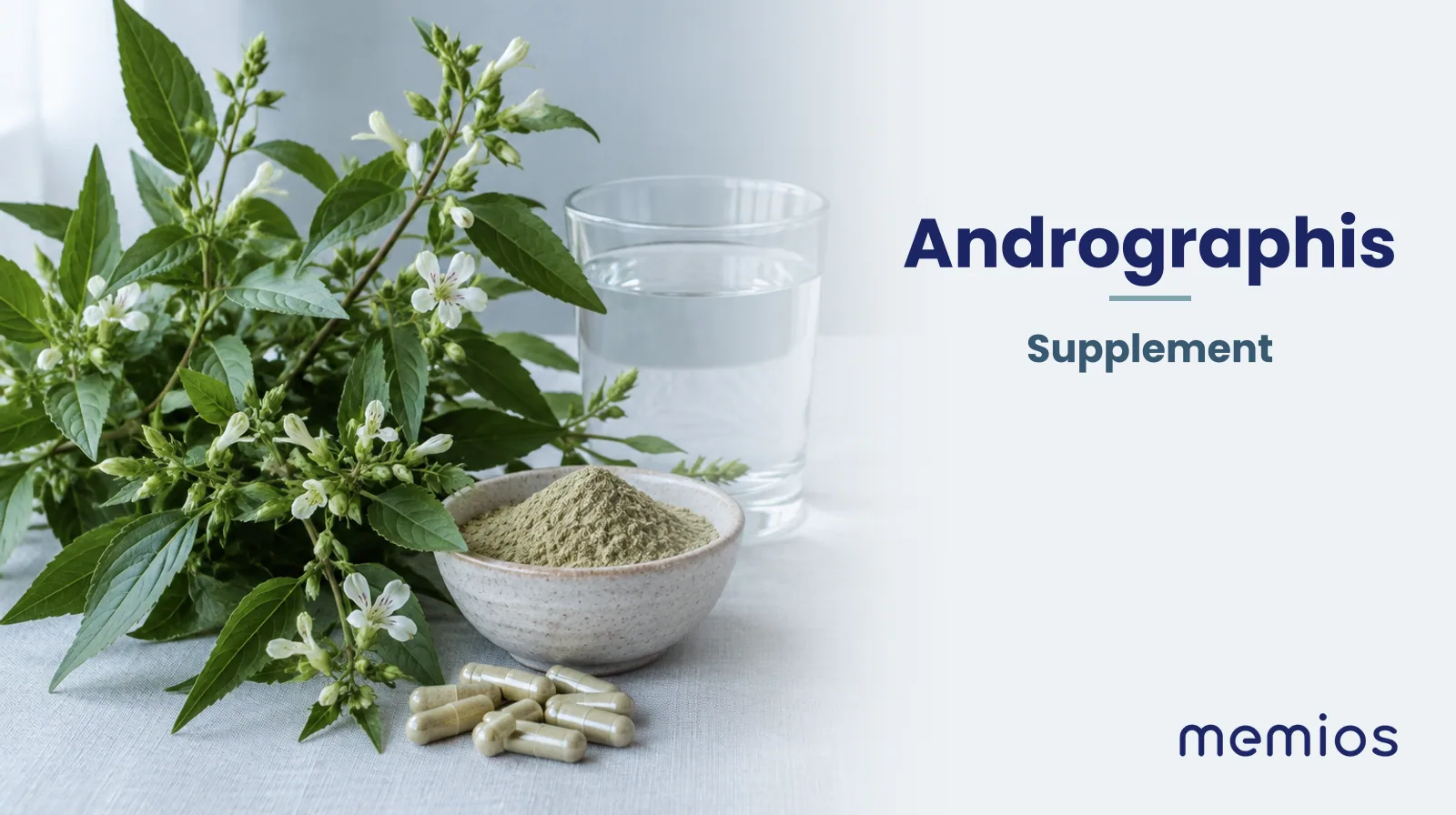
Andrographis paniculata is a herb traditionally used in Indian and Chinese medicine for cough, cold and influenza. Its main active compound is andrographolide, and products are often standardised to it.
What the research says
A systematic review of 33 trials (7,175 patients) found it improved cough, sore throat and overall symptoms of acute respiratory infections, but the trials were of poor quality. A COVID-19 trial found it did not slow disease progression. In ulcerative colitis, the higher dose improved clinical response but not remission. The main safety signal is anaphylaxis: Australia's regulator has received 254 reports, including a death, and concluded in 2026 that the risk is inconsistent with the low-risk listed-medicine framework. Laboratory and animal work shows it can alter drug-metabolising enzymes.
Evidence grade: Limited evidence.
What goes wrong
Adverse events in the ulcerative colitis trial were as common on placebo as on andrographis. (Source 1)
- Randomized trial, Moderate certainty.
- Size: 224 adults.
- Who: Adults with mild-to-moderate ulcerative colitis.
- How long: 8 weeks.
- Result: Adverse events 60% (1,200 mg), 53% (1,800 mg), 60% placebo.
- Funding: not stated.
Adverse events developed in 60 and 53% of patients in the A. paniculata 1,200 mg and 1,800 mg daily groups, respectively, and 60% in the placebo group.
In the COVID-19 trial, mild diarrhoea was the commonest side effect, with no liver or kidney toxicity over 5 days. (Source 2)
- Randomized trial, Low certainty.
- Size: 165 patients.
- Who: Adults with asymptomatic or mild COVID-19.
- How long: 5 days.
- Result: Mild diarrhoea, resolved within a few days.
- Funding: not stated.
Mild diarrhea was the most common side effect with a high dose that resolved within a few days.
The respiratory infection review found no major adverse events and mainly gastrointestinal minor ones. (Source 3)
- Meta-analysis, Low certainty.
- Size: 33 RCTs.
- Who: Acute respiratory infections.
- How long: Varied.
- Result: No major AEs; minor AEs mainly gastrointestinal.
- Funding: not stated.
No major AEs were reported and minor AEs were mainly gastrointestinal.
Australia's Therapeutic Goods Administration (March 2026) has received 254 reports of anaphylaxis linked to andrographis-containing medicines between 2005 and 31 December 2024. (Source 4)
- Official position, Certainty not rated.
- Size: 254 spontaneous reports to 31 December 2024.
- Who: Australian consumers.
- How long: 2005 to 2024.
- Result: 254 spontaneous reports of anaphylaxis, 2005 to 31 December 2024.
- Funding: independent (Australian government)
the TGA has received 254 reports of anaphylaxis associated with Andrographis.
The TGA reports that it has kept receiving a high number of anaphylaxis reports linked to andrographis medicines since a large increase in 2019. (Source 5)
- Official position, Certainty not rated.
- Size: Spontaneous reports to 31 December 2024.
- Who: Australian consumers.
- How long: 2019 to 2024.
- Result: Sustained high number of reports since a large increase in 2019.
- Funding: independent (Australian government)
The TGA has continued to receive a sustained high number of reports of anaphylaxis associated with Andrographis‑containing medicines following a large increase in 2019.
In June 2024 the TGA received a report of a fatal anaphylaxis case linked to a product containing andrographis. (Source 6)
- Official position, Certainty not rated.
- Size: One spontaneous report.
- Who: Australian consumers.
- How long: June 2024.
- Result: One fatal case of anaphylaxis.
- Funding: independent (Australian government)
In June 2024, the TGA received a report of fatal anaphylaxis associated with the use of a product containing Andrographis.
The TGA (March 2026) concluded that the risk of life-threatening anaphylaxis is inconsistent with the low-risk listed-medicine framework, even with extra risk mitigation. (Source 7)
- Official position, Certainty not rated.
- Size: Not applicable.
- Who: Australian consumers.
- How long: Not applicable.
- Result: Not applicable.
- Funding: independent (Australian government)
the risk of life-threatening anaphylaxis associated with Andrographis is inconsistent with the low-risk regulatory framework of listed medicines.
Most Australian anaphylaxis reports involved products that combined andrographis with echinacea. (Source 4)
- Official position, Certainty not rated.
- Size: 254 reports.
- Who: Australian consumers.
- How long: 2005 to 2024.
- Result: 81% with echinacea vs 19% without.
- Funding: independent (Australian government)
Of these, a higher proportion were for products also containing Echinacea compared to products without Echinacea (81% vs 19%).
A systematic review of 12 mostly animal studies found andrographis and andrographolide can change the handling of drugs such as warfarin, theophylline, NSAIDs and diabetes medicines, mainly by altering cytochrome P450 enzymes. (Source 8)
- Systematic review, Very low certainty.
- Size: 12 studies.
- Who: Mostly animal studies.
- How long: Not applicable.
- Result: Pharmacokinetic and pharmacodynamic interactions reported.
- Funding: not stated.
The HDI mechanism involving the inhibition or induction of cytochrome P450 enzyme expression was dominant
What the evidence supports
A systematic review and meta-analysis found andrographis improved overall symptoms of acute respiratory tract infections compared with placebo, usual care and other herbs. (Source 3)
- Meta-analysis, Low certainty.
- Size: 7,175 patients in 33 RCTs.
- Who: Adults and children with acute respiratory tract infections.
- How long: Varied.
- Result: Cough SMD -0.39 (95% CI -0.67 to -0.10, n = 596); sore throat SMD -1.13 (95% CI -1.37 to -0.89, n = 314) versus placebo.
- Funding: not stated; review reports trials seldom reported manufacturing or quality control.
has a statistically significant effect in improving overall symptoms of ARTIs when compared to placebo, usual care, and other herbal therapies
In a randomised trial in ulcerative colitis, the 1,800 mg daily dose improved clinical response at 8 weeks, while 1,200 mg did not. (Source 1)
- Randomized trial, Moderate certainty.
- Size: 224 adults.
- Who: Adults with mild-to-moderate ulcerative colitis.
- How long: 8 weeks.
- Result: Clinical response 45% (1,200 mg) and 60% (1,800 mg) vs 40% placebo; P=0.5924 and P=0.0183.
- Funding: not stated in abstract; HMPL-004 is a proprietary extract.
were in clinical response at week 8, compared with 40% of those who received placebo (P=0.5924 for 1,200 mg vs. placebo and P=0.0183 for 1,800 mg vs. placebo)
What the evidence does not support
In a double-blind randomised trial in mild or asymptomatic COVID-19, andrographis extract did not reduce disease progression compared with placebo. (Source 9)
- Randomized trial, Low certainty.
- Size: 165 patients completed (83 extract, 82 placebo)
- Who: Adults with asymptomatic or mild COVID-19.
- How long: 5 days.
- Result: No significant difference between groups in symptoms or WHO progression scale; headache and loss of smell relieved earlier.
- Funding: not stated.
APE at 180 mg/day for 5 days did not reduce COVID-19 progression in asymptomatic or mildly afflicted COVID-19 patients
In the same trial, neither dose significantly increased clinical remission. (Source 1)
- Randomized trial, Moderate certainty.
- Size: 224 adults.
- Who: Adults with mild-to-moderate ulcerative colitis.
- How long: 8 weeks.
- Result: Remission 34% and 38% vs 25% placebo; P=0.2582 and P=0.1011.
- Funding: not stated.
were in clinical remission at week 8, compared with 25% of those who received placebo (P=0.2582 for 1,200 mg vs. placebo and P=0.1011 for 1,800 mg vs. placebo)
Where the evidence is mixed
The same review rated the methodological quality of the included trials as poor overall. (Source 3)
- Meta-analysis, Low certainty.
- Size: 33 RCTs.
- Who: Acute respiratory infections.
- How long: Not applicable.
- Result: Cochrane risk of bias: poor overall.
- Funding: not stated.
The methodological quality of included trials was overall poor.
Where the research disagrees
Whether andrographis is safe for colds and respiratory infections
- Authors of a 2017 systematic review, meta-analysis of 33 RCTs of poor quality: "No major AEs were reported and minor AEs were mainly gastrointestinal." (Source 3)
- Australian TGA, March 2026, post-marketing review of 254 spontaneous reports: "the risk of life-threatening anaphylaxis associated with Andrographis is inconsistent with the low-risk regulatory framework of listed medicines." (Source 7)
How much
- Reference intake: No reference intake exists. Andrographis is a herbal product, not a nutrient. (Source 10)
- Upper limit: No upper limit has been set. The Australian TGA (2026) concluded that its anaphylaxis risk is inconsistent with low-risk listed medicines. (Source 7)
- Studied: The COVID-19 trial gave extract containing 60 mg andrographolide three times a day (180 mg/day) for 5 days. (Source 11)
- Studied: The ulcerative colitis trial gave HMPL-004 extract at 1,200 mg or 1,800 mg daily for 8 weeks. (Source 1)
A common belief, and what the research shows
The belief: A herbal cold remedy like andrographis carries no serious risk.
What the research shows: Trials are too small to detect rare reactions. Australia's regulator reports "A fatal case was reported in June 2024." and concludes that "the risk of life-threatening anaphylaxis associated with Andrographis is inconsistent with the low-risk regulatory framework of listed medicines."
Questions and answers
What is it?
Andrographis paniculata is a bitter herb long used in Indian and Chinese traditional medicine. Its main active compound is andrographolide. (Source 10)
What does it do in the body?
It is used mainly for cold and flu symptoms. Low-quality trials suggest it eases cough and sore throat and shortens symptoms; it did not slow COVID-19 progression, and in ulcerative colitis only the higher dose improved response. (Source 3)
Is it good or bad for you?
It may modestly help respiratory symptoms, and trials report mostly mild stomach side effects. However, it can cause anaphylaxis, a severe allergic reaction, including one death reported in Australia, and it may interact with some medicines. (Source 7)
How do you get more of it?
It is taken only as a herbal product. In the COVID-19 trial, participants received an extract containing 60 mg of andrographolide three times a day for five days. (Source 11)
If it is harmful, what reduces it?
Does not apply. The body does not make it; it is present only if someone takes it. (Source 10)
We searched: 2017 systematic review, COVID-19 and ulcerative colitis trials, TGA 2026 safety review; none address removal
Why might someone be low in it or missing it?
Does not apply. Andrographis is not a nutrient, so no one is deficient in it. (Source 10)
We searched: 2017 systematic review and TGA 2026 safety review
Which whole foods contain it or feed it?
It is not part of a normal Western diet, and no source we read lists a whole-food source. (Source 10)
We searched: 2017 systematic review and TGA 2026 safety review
What happens if you do not have it?
Nothing is known to go wrong from not taking it. It is not an essential nutrient. (Source 10)
We searched: 2017 systematic review and the included trials
How can you test for it?
No clinical test for andrographis in the body exists in the literature we searched. Allergy testing for andrographis reactions was not addressed in the sources we read. (Source 7)
We searched: TGA 2026 anaphylaxis review, 2017 systematic review, 2022 herb-drug interaction review
References
- The American Journal of Gastroenterology. Andrographis paniculata extract (HMPL-004) for active ulcerative colitis. 2013. PMID 23044768, DOI 10.1038/ajg.2012.340. Read the source
- Research in Pharmaceutical Sciences. Andrographis paniculata extract versus placebo in the treatment of COVID-19: a double-blinded randomized control trial. 2023. PMID 39005565, DOI 10.4103/1735-5362.389947. Read the source
- PLoS One. Andrographis paniculata (Chuān Xīn Lián) for symptomatic relief of acute respiratory tract infections in adults and children: A systematic review and meta-analysis. 2017. PMID 28783743, DOI 10.1371/journal.pone.0181780. Read the source
- Therapeutic Goods Administration, Australian Government. Andrographis paniculata (Andrographis) and anaphylaxis: Updated safety review with adverse event data to 31 December 2024 (Version 1.0, March 2026). 2026. Read the source
- Therapeutic Goods Administration, Australian Government. Andrographis paniculata (Andrographis) and anaphylaxis: Updated safety review with adverse event data to 31 December 2024 (Version 1.0, March 2026) (Summary). 2026. Read the source
- Therapeutic Goods Administration, Australian Government. Andrographis paniculata (Andrographis) and anaphylaxis: Updated safety review with adverse event data to 31 December 2024 (Version 1.0, March 2026) (Background). 2026. Read the source
- Therapeutic Goods Administration, Australian Government. Andrographis paniculata (Andrographis) and anaphylaxis: Updated safety review with adverse event data to 31 December 2024 (Version 1.0, March 2026). 2026. Read the source
- Journal of HerbMed Pharmacology. Potential pharmacokinetic and pharmacodynamic herb-drug interactions of Andrographis paniculata (Burm. f.) and andrographolide: A systematic review. 2022. DOI 10.34172/jhp.2022.20. Read the source
- Research in Pharmaceutical Sciences. Andrographis paniculata extract versus placebo in the treatment of COVID-19: a double-blinded randomized control trial. 2023. PMID 39005565, DOI 10.4103/1735-5362.389947. Read the source
- PLoS One. Andrographis paniculata (Chuān Xīn Lián) for symptomatic relief of acute respiratory tract infections in adults and children: A systematic review and meta-analysis. 2017. PMID 28783743, DOI 10.1371/journal.pone.0181780. Read the source
- Research in Pharmaceutical Sciences. Andrographis paniculata extract versus placebo in the treatment of COVID-19: a double-blinded randomized control trial. 2023. PMID 39005565, DOI 10.4103/1735-5362.389947. Read the source