Supplements · September 29, 2026 · Memios · 17 min read
Vitamin D
Disputed. The strongest human evidence is negative rather than positive.
TLDR
- Disputed. The strongest human evidence is negative rather than positive.
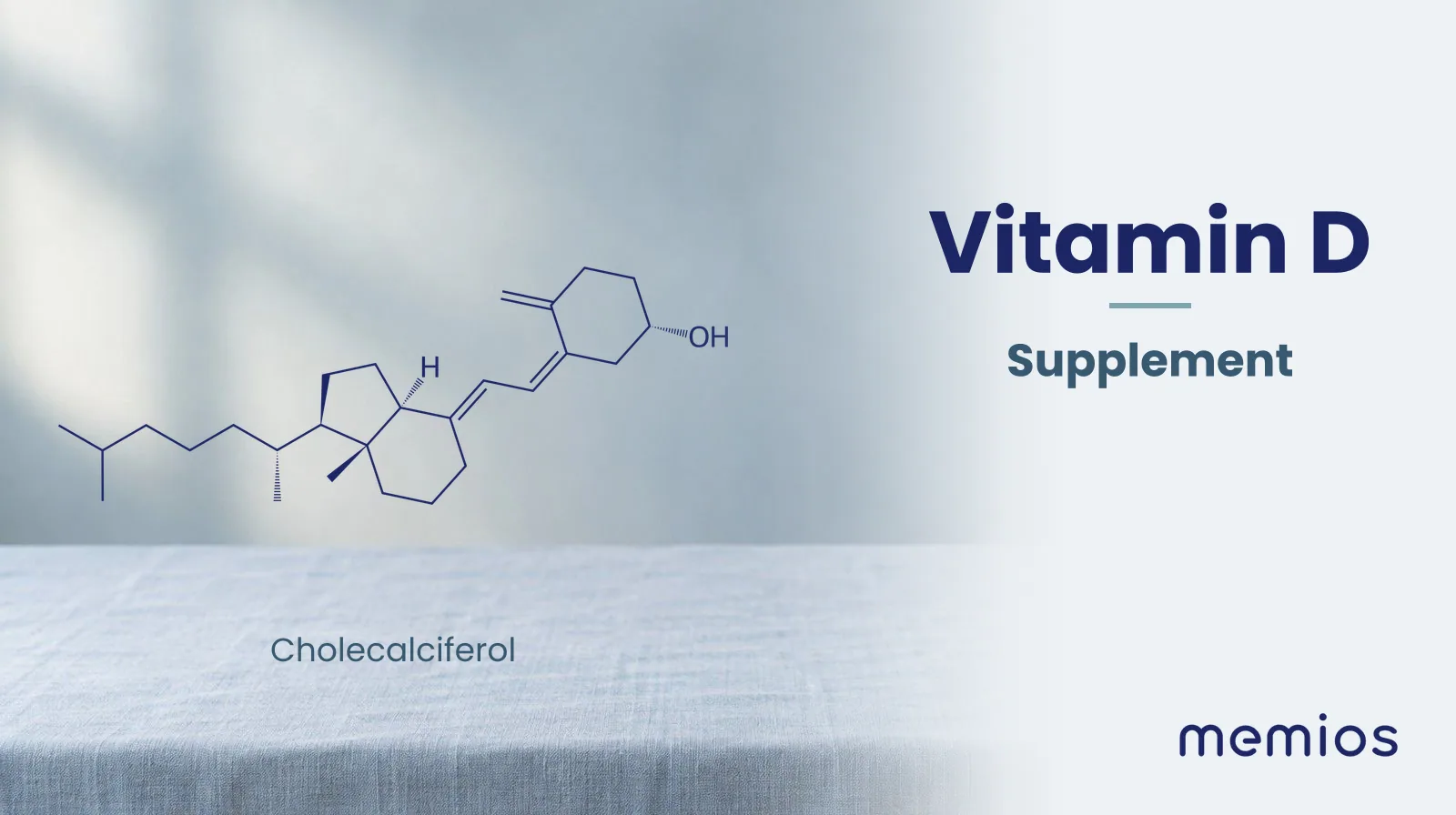
- What it is: Vitamin D is a fat-soluble vitamin that supplements supply as either D3 (cholecalciferol) or D2 (ergocalciferol), two forms that differ only in their side chains.
- Main use, supported: In a Cochrane review, vitamin D given together with calcium produced a small reduction in hip fracture, while vitamin D alone did not. (high certainty)
- Other use, supported: An individual-participant-data meta-analysis found vitamin D supplementation modestly reduced the risk of acute respiratory tract infection. (high certainty)
- Claim NOT supported by research: In the VITAL trial, 2000 IU of vitamin D3 daily did not lower the incidence of invasive cancer or major cardiovascular events. (high certainty)
- Another claim NOT supported: The D-Health trial found monthly 60,000 IU vitamin D3 did not reduce all-cause mortality in older adults who were not screened for deficiency. (high certainty)
- Recommended dose (official position): The US Food and Nutrition Board's Recommended Dietary Allowances, as summarised by the NIH Office of Dietary Supplements, are 15 to 20 mcg (600-800 IU) per day for adults.
- Studied dose (a trial dose, not a recommendation): VITAL gave 2000 IU (50 mcg) of vitamin D3 daily for a median of 5.3 years. No finding here cites that trial.
- Upper limit: The Food and Nutrition Board's Tolerable Upper Intake Level ranges from 25 to 100 mcg (1,000-4,000 IU) per day depending on age; for adults aged 19 and over it is 100 mcg (4,000 IU).
- What goes wrong: 4 findings on harm. Across Cochrane's included trials, vitamin D or its analogues roughly doubled the rate of hypercalcaemia, and vitamin D with calcium increased gastrointestinal symptoms and renal disease.
- Common myth: Taking vitamin D protects healthy adults from cancer, heart disease and broken bones.
What it is
Vitamin D is a fat-soluble vitamin that supplements supply as either D3 (cholecalciferol) or D2 (ergocalciferol), two forms that differ only in their side chains. Neither form is active as swallowed: the liver converts it to 25-hydroxyvitamin D, the form measured in blood, and the kidney then makes the active hormone 1,25-dihydroxyvitamin D. Skin exposed to ultraviolet light also makes vitamin D, and few foods contain much of it.
What the research says
The strongest human evidence is negative rather than positive. In large placebo-controlled trials in people who were mostly not deficient (VITAL, D-Health, DO-HEALTH, ViDA) and in meta-analyses of 81 trials, supplements did not reduce cancer, cardiovascular events, deaths, fractures or falls. Supplementation does correct deficiency states such as rickets and osteomalacia; with calcium it slightly reduced hip fracture in a Cochrane review, and daily or weekly dosing modestly reduced acute respiratory infections, with the largest effect in people who were severely deficient at baseline. Very high intermittent doses have increased falls and fractures in one trial.
Evidence grade: Disputed.
What goes wrong
A single annual 500,000 IU oral dose of cholecalciferol increased falls and fractures in older women. (Source 1)
- Randomized trial, Moderate certainty.
- Size: 2,256 community-dwelling women.
- Who: Women aged 70 or older at high risk of fracture; median baseline 25(OH)D 49 nmol/L, fewer than 3% below 25 nmol/L.
- How long: 3 to 5 years of annual dosing.
- Result: Falls incidence rate ratio 1.15 (95% CI 1.02-1.30, P=.03); fracture incidence rate ratio 1.26 (95% CI 1.00-1.59, P=.047); 171 versus 135 fractures.
- Funding: not stated in the abstract.
Among older community-dwelling women, annual oral administration of high-dose cholecalciferol resulted in an increased risk of falls and fractures.
Across Cochrane's included trials, vitamin D or its analogues roughly doubled the rate of hypercalcaemia, and vitamin D with calcium increased gastrointestinal symptoms and renal disease. (Source 2)
- Systematic review, High certainty.
- Size: 21 trials, 17,124 participants (hypercalcaemia); 11 trials, 46,548 participants (renal disease)
- Who: Post-menopausal women and older men.
- How long: Trials of varying length.
- Result: Hypercalcaemia RR 2.28 (95% CI 1.57 to 3.31), usually mild at 2.6 to 2.8 mmol/L; calcitriol RR 4.41 (2.14 to 9.09); renal disease RR 1.16 (1.02 to 1.33); the same review reported that mortality was not adversely affected by either vitamin D or vitamin D plus calcium (29 trials, 71,032 participants, RR 0.97, 95% CI 0.93 to 1.01)
- Funding: not stated in the abstract.
Hypercalcaemia, which was usually mild (2.6 to 2.8 mmol/L), was more common in people receiving vitamin D or an analogue, with or without calcium (21 trials, 17,124 participants, RR 2.28, 95% CI 1.57 to 3.31)
In D-Health, exploratory analyses that excluded the first two years showed a numerically higher hazard of cancer death in the vitamin D group. (Source 3)
- Randomized trial, Low certainty.
- Size: 21,315 participants, 1,100 deaths.
- Who: Australians aged 60 or older.
- How long: 5 years of intervention, median follow-up 5.7 years.
- Result: Cancer mortality HR 1.24 (95% CI 1.01-1.54, p=0.05) in the exploratory analysis; primary cancer mortality HR 1.15 (0.96 to 1.39, p=0.13)
- Funding: not stated in the abstract.
In exploratory analyses excluding the first 2 years of follow-up, those randomly assigned to receive vitamin D had a numerically higher hazard of cancer mortality than those in the placebo group (HR 1·24 [95% CI 1·01–1·54]; p=0·05).
Excessive vitamin D intake causes hypercalcaemia and, in extreme cases, kidney failure and soft-tissue calcification, according to the NIH Office of Dietary Supplements. (Source 4)
- Official position, Certainty not rated.
- Size: Not applicable - agency review.
- Who: General population.
- How long: Not applicable.
- Result: Toxicity is described at serum 25(OH)D typically above 375 nmol/L (150 ng/mL) with total calcium above 11.1 mg/dL.
- Funding: US government agency.
Because vitamin D increases calcium absorption in the gastrointestinal tract, vitamin D toxicity results in marked hypercalcemia
What the evidence supports
In a Cochrane review, vitamin D given together with calcium produced a small reduction in hip fracture, while vitamin D alone did not. (Source 2)
- Systematic review, High certainty.
- Size: 53 trials, 91,791 participants (hip fracture analysis: nine trials, 49,853 participants)
- Who: Post-menopausal women and older men, community, nursing home and hospital populations.
- How long: Trials of varying length, mostly 1-5 years.
- Result: Vitamin D plus calcium versus control for hip fracture RR 0.84, 95% CI 0.74 to 0.96, P=0.01; equates to one fewer hip fracture per 1000 community-dwelling older adults per year (95% CI 0 to 2)
- Funding: not stated in the abstract.
There is high quality evidence that vitamin D plus calcium results in a small reduction in hip fracture risk (nine trials, 49,853 participants; RR 0.84, 95% confidence interval (CI) 0.74 to 0.96; P value 0.01).
An individual-participant-data meta-analysis found vitamin D supplementation modestly reduced the risk of acute respiratory tract infection. (Source 5)
- Meta-analysis, High certainty.
- Size: 25 randomised controlled trials, 11,321 participants (IPD for 10,933)
- Who: Participants aged 0 to 95 years.
- How long: Trials of any duration.
- Result: Adjusted odds ratio 0.88, 95% CI 0.81 to 0.96.
- Funding: not stated in the abstract.
Vitamin D supplementation reduced the risk of acute respiratory tract infection among all participants (adjusted odds ratio 0.88, 95% confidence interval 0.81 to 0.96; P for heterogeneity <0.001).
The respiratory-infection benefit was concentrated in people who were severely deficient at baseline and in daily or weekly rather than bolus dosing. (Source 5)
- Meta-analysis, High certainty.
- Size: Subgroups within the same 25 trials.
- Who: Participants with baseline 25-hydroxyvitamin D below and above 25 nmol/L.
- How long: Trials of any duration.
- Result: Baseline 25(OH)D <25 nmol/L: adjusted OR 0.30 (0.17 to 0.53); baseline >=25 nmol/L: OR 0.75 (0.60 to 0.95), P for interaction=0.006; bolus dosing OR 0.97 (0.86 to 1.10)
- Funding: not stated in the abstract.
protective effects were stronger in those with baseline 25-hydroxyvitamin D levels <25 nmol/L (adjusted odds ratio 0.30, 0.17 to 0.53)
What the evidence does not support
In the VITAL trial, 2000 IU of vitamin D3 daily did not lower the incidence of invasive cancer or major cardiovascular events. (Source 6)
- Randomized trial, High certainty.
- Size: 25,871 participants.
- Who: US men aged 50 and older and women aged 55 and older, not selected for deficiency.
- How long: Median follow-up 5.3 years.
- Result: Cancer HR 0.96 (95% CI 0.88 to 1.06, P=0.47); major cardiovascular event HR 0.97 (95% CI 0.85 to 1.12, P=0.69); death from any cause HR 0.99 (95% CI 0.87 to 1.12)
- Funding: Funded by the National Institutes of Health and others.
Limit of this finding: VITAL tested two supplements at once in a two-by-two factorial design: vitamin D3 2000 IU a day and marine omega-3 fatty acids 1 g a day. This result is the vitamin D comparison against placebo only. It says nothing about doses other than 2000 IU a day, and nothing about people who were selected for vitamin D deficiency, because the trial did not screen for it.
Supplementation with vitamin D was not associated with a lower risk of either of the primary end points.
The D-Health trial found monthly 60,000 IU vitamin D3 did not reduce all-cause mortality in older adults who were not screened for deficiency. (Source 3)
- Randomized trial, High certainty.
- Size: 21,315 participants.
- Who: Australians aged 60 years or older recruited from the electoral roll; mean achieved 25(OH)D 115 nmol/L versus 77 nmol/L on placebo.
- How long: 5 years of intervention, median follow-up 5.7 years.
- Result: All-cause mortality HR 1.04 (95% CI 0.93 to 1.18, p=0.47); cardiovascular mortality HR 0.96 (0.72 to 1.28); cancer mortality HR 1.15 (0.96 to 1.39)
- Funding: not stated in the abstract.
Administering vitamin D3 monthly to unscreened older people did not reduce all-cause mortality.
In DO-HEALTH, 2000 IU/day of vitamin D3 showed no benefit on blood pressure, physical performance, cognition, infections or non-vertebral fractures. (Source 7)
- Randomized trial, High certainty.
- Size: 2,157 participants.
- Who: Adults aged 70 or older without major health events in the preceding 5 years, with good mobility and cognition.
- How long: 3 years (median follow-up 2.99 years)
- Result: Systolic blood pressure difference with vitamin D -0.8 mm Hg (99% CI -2.1 to 0.5); no effect on SPPB, MoCA or non-vertebral fractures.
- Funding: not stated in the abstract.
Overall, there were no statistically significant benefits of any intervention individually or in combination for the 6 end points at 3 years.
The ViDA trial found monthly high-dose vitamin D did not prevent cardiovascular disease, including in participants who were deficient at baseline. (Source 8)
- Randomized trial, Moderate certainty.
- Size: 5,108 participants analysed.
- Who: New Zealand community adults aged 50 to 84; 24.9% vitamin D deficient at baseline.
- How long: Median 3.3 years (range 2.5-4.2 years)
- Result: CVD in 303 (11.8%) vitamin D versus 293 (11.5%) placebo; adjusted HR 1.02 (95% CI 0.87-1.20)
- Funding: not stated in the abstract.
The primary outcome of CVD occurred in 303 participants (11.8%) in the vitamin D group and 293 participants (11.5%) in the placebo group, yielding an adjusted hazard ratio of 1.02 (95% CI, 0.87-1.20).
A meta-analysis with trial sequential analysis of 81 trials found vitamin D did not reduce total fractures, hip fractures or falls, at high or low doses. (Source 9)
- Meta-analysis, High certainty.
- Size: 81 randomised controlled trials, 53,537 participants.
- Who: Adults over 18.
- How long: Trials of 1-5 years for bone density outcomes.
- Result: Total fracture RR 1.00 (95% CI 0.93-1.07); hip fracture 1.11 (0.97-1.26); falls 0.97 (0.93-1.02); bone density differences -0.16% to 0.76%.
- Funding: Health Research Council of New Zealand.
In pooled analyses, vitamin D had no effect on total fracture (36 trials; n=44 790, relative risk 1·00, 95% CI 0·93-1·07), hip fracture (20 trials; n=36 655, 1·11, 0·97-1·26), or falls (37 trials; n=34 144, 0·97, 0·93-1·02).
Cochrane rated as high quality the evidence that vitamin D on its own does not prevent hip or any new fracture. (Source 2)
- Systematic review, High certainty.
- Size: 11 trials, 27,693 participants (hip); 15 trials, 28,271 participants (any fracture)
- Who: Post-menopausal women and older men.
- How long: Trials of varying length.
- Result: Hip fracture RR 1.12 (95% CI 0.98 to 1.29); any new fracture RR 1.03 (95% CI 0.96 to 1.11)
- Funding: not stated in the abstract.
There is high quality evidence that vitamin D alone, in the formats and doses tested, is unlikely to be effective in preventing hip fracture (11 trials, 27,693 participants; risk ratio (RR) 1.12, 95% confidence intervals (CI) 0.98 to 1.29)
Where the evidence is mixed
A systematic review of 290 cohort studies and 172 trials concluded that the gap between observational associations and trial results is best explained by low vitamin D being a marker of ill health rather than its cause. (Source 10)
- Systematic review, Moderate certainty.
- Size: 290 prospective cohort studies and 172 randomised trials.
- Who: Adults aged 18 or older.
- How long: Varied.
- Result: Cohorts reported moderate to strong inverse associations with cardiovascular disease, infections, cognitive decline and all-cause mortality; intervention studies showed no effect on disease occurrence.
- Funding: not stated in the abstract.
The discrepancy between observational and intervention studies suggests that low 25(OH)D is a marker of ill health.
Where the research disagrees
Whether low vitamin D causes disease or simply marks it, and therefore whether supplements should help
- Autier and colleagues (systematic review of 290 cohorts and 172 trials), systematic-review: The discrepancy between observational and intervention studies suggests that low 25(OH)D is a marker of ill health. (Source 10)
- Prospective cohort investigators summarised in the same review, cohort: Investigators of most prospective studies reported moderate to strong inverse associations between 25(OH)D concentrations and cardiovascular diseases, serum lipid concentrations, inflammation, glucose metabolism disorders, weight gain, infectious diseases, multiple sclerosis, mood disorders, declining cognitive function, impaired physical functioning, and all-cause mortality. (Source 10)
Whether vitamin D supplements help bone
- Bolland and colleagues, 81-trial meta-analysis, meta-analysis: There is little justification to use vitamin D supplements to maintain or improve musculoskeletal health. (Source 9)
- Cochrane review (Avenell and colleagues), systematic-review: There is high quality evidence that vitamin D plus calcium results in a small reduction in hip fracture risk (nine trials, 49,853 participants; RR 0.84, 95% confidence interval (CI) 0.74 to 0.96; P value 0.01). (Source 2)
How much
- Reference intake: The US Food and Nutrition Board's Recommended Dietary Allowances, as summarised by the NIH Office of Dietary Supplements, are 15 to 20 mcg (600-800 IU) per day for adults. (Source 11)
- Upper limit: The Food and Nutrition Board's Tolerable Upper Intake Level ranges from 25 to 100 mcg (1,000-4,000 IU) per day depending on age; for adults aged 19 and over it is 100 mcg (4,000 IU). (Source 12)
- Studied: VITAL gave 2000 IU (50 mcg) of vitamin D3 daily for a median of 5.3 years. (Source 13)
- Studied: D-Health gave 60,000 IU of vitamin D3 once a month for 5 years. (Source 3)
- Studied: ViDA gave an initial 200,000 IU followed by monthly 100,000 IU for a median of 3.3 years. (Source 8)
- Studied: Sanders 2010 gave a single annual oral dose of 500,000 IU of cholecalciferol for 3 to 5 years. (Source 1)
A common belief, and what the research shows
The belief: Taking vitamin D protects healthy adults from cancer, heart disease and broken bones.
What the research shows: Large placebo-controlled trials in people who were mostly replete found nothing of the sort. VITAL reported that "Supplementation with vitamin D was not associated with a lower risk of either of the primary end points." and a meta-analysis of 81 trials reported that "vitamin D had no effect on total fracture". Benefit is clearest where deficiency is being corrected, and very large intermittent doses increased falls and fractures in one trial.
Questions and answers
What is it?
Vitamin D is a fat-soluble vitamin sold as D3 (cholecalciferol) or D2 (ergocalciferol); the two differ only in their side chains. Neither is active when swallowed. The liver turns it into 25-hydroxyvitamin D, which is what blood tests measure, and the kidney makes the active hormone. (Source 14)
What does it do in the body?
Its established job is in calcium handling and bone mineralisation: it increases calcium absorption from the gut, and without enough of it bone fails to mineralise properly. Trials in replete people show that adding more does not change cancer, cardiovascular or fracture outcomes. (Source 4)
Is it good or bad for you?
It depends on the starting point and the dose. Correcting deficiency matters, and daily or weekly dosing modestly reduced respiratory infections, most of all in people who were severely deficient. In people who are already replete, large trials found no benefit, and a single 500,000 IU annual dose increased falls and fractures. (Source 1)
How do you get more of it?
Sunlight on skin, a few foods, fortified foods and supplements are the studied routes. Oily fish and fish liver oils are the richest natural food sources, and in the United States fortified milk and other fortified foods supply most dietary vitamin D. Trials have used anything from 400 IU a day to 500,000 IU once a year. (Source 15)
If it is harmful, what reduces it?
Too much vitamin D is harmful, and the harm comes through calcium. The NIH Office of Dietary Supplements describes toxicity from supplements taken in excessive amounts, producing hypercalcaemia, hypercalciuria and very high blood 25(OH)D; in extreme cases kidney failure and calcification of soft tissue. Management of that state is a medical matter, not a self-treatment one. (Source 4)
Why might someone be low in it or missing it?
Low status tracks sunlight, skin pigmentation, age, fat absorption and body size. The NIH Office of Dietary Supplements says getting enough vitamin D from unfortified food alone is difficult, that fortified foods and some sun exposure matter for most people, and that some groups might need supplements to meet their requirements. The fact sheet then sets out the groups most likely to have inadequate status under separate headings: breastfed infants, older adults, people with limited sun exposure, people with dark skin, people with conditions that limit fat absorption, and people with obesity or who have undergone gastric bypass surgery. (Source 16)
Which whole foods contain it or feed it?
Oily fish such as trout, salmon, tuna and mackerel, and fish liver oils, are the best natural sources; beef liver, egg yolks and cheese contain small amounts. Fortified foods, especially milk, supply most of the vitamin D in American diets. (Source 15)
What happens if you do not have it?
Severe, prolonged deficiency stops bone mineralising. In children this is rickets, with soft bones, skeletal deformity, pain and in severe cases seizures from low calcium; in adults and adolescents the equivalent is osteomalacia. These are the deficiency diseases the supplement genuinely prevents and treats. (Source 17)
How can you test for it?
The test is serum 25-hydroxyvitamin D, the main indicator of status. It is imperfect: results vary between assays and laboratories, so the same blood can read falsely low or falsely high depending on the method used. (Source 18)
References
- JAMA. Annual high-dose oral vitamin D and falls and fractures in older women: a randomized controlled trial.. 2010. PMID 20460620, DOI 10.1001/jama.2010.594. Read the source
- Cochrane Database of Systematic Reviews. Vitamin D and vitamin D analogues for preventing fractures in post-menopausal women and older men.. 2014. PMID 24729336, DOI 10.1002/14651858.CD000227.pub4. Read the source
- The Lancet Diabetes & Endocrinology. The D-Health Trial: a randomised controlled trial of the effect of vitamin D on mortality. 2022. PMID 35026158, DOI 10.1016/S2213-8587(21)00345-4. Read the source
- NIH Office of Dietary Supplements. Vitamin D - Health Professional Fact Sheet. 2025. Read the source
- BMJ. Vitamin D supplementation to prevent acute respiratory tract infections: systematic review and meta-analysis of individual participant data.. 2017. PMID 28202713, DOI 10.1136/bmj.i6583. Read the source
- New England Journal of Medicine. Vitamin D Supplements and Prevention of Cancer and Cardiovascular Disease.. 2019. PMID 30415629, DOI 10.1056/NEJMoa1809944. Read the source
- JAMA. Effect of Vitamin D Supplementation, Omega-3 Fatty Acid Supplementation, or a Strength-Training Exercise Program on Clinical Outcomes in Older Adults: The DO-HEALTH Randomized Clinical Trial.. 2020. PMID 33170239, DOI 10.1001/jama.2020.16909. Read the source
- JAMA Cardiology. Effect of Monthly High-Dose Vitamin D Supplementation on Cardiovascular Disease in the Vitamin D Assessment Study: A Randomized Clinical Trial.. 2017. PMID 28384800, DOI 10.1001/jamacardio.2017.0175. Read the source
- The Lancet Diabetes & Endocrinology. Effects of vitamin D supplementation on musculoskeletal health: a systematic review, meta-analysis, and trial sequential analysis.. 2018. PMID 30293909, DOI 10.1016/S2213-8587(18)30265-1. Read the source
- The Lancet Diabetes & Endocrinology. Vitamin D status and ill health: a systematic review.. 2014. PMID 24622671, DOI 10.1016/S2213-8587(13)70165-7. Read the source
- NIH Office of Dietary Supplements. Vitamin D - Health Professional Fact Sheet. 2025. Read the source
- NIH Office of Dietary Supplements. Vitamin D - Health Professional Fact Sheet. 2025. Read the source
- New England Journal of Medicine. Vitamin D Supplements and Prevention of Cancer and Cardiovascular Disease.. 2019. PMID 30415629, DOI 10.1056/NEJMoa1809944. Read the source
- NIH Office of Dietary Supplements. Vitamin D - Health Professional Fact Sheet. 2025. Read the source
- NIH Office of Dietary Supplements. Vitamin D - Health Professional Fact Sheet. 2025. Read the source
- NIH Office of Dietary Supplements. Vitamin D - Health Professional Fact Sheet. 2025. Read the source
- NIH Office of Dietary Supplements. Vitamin D - Health Professional Fact Sheet. 2025. Read the source
- NIH Office of Dietary Supplements. Vitamin D - Health Professional Fact Sheet. 2025. Read the source