Medications · September 29, 2026 · Memios · 24 min read
Tramadol
Tramadol is approved for pain, but the outcome evidence for chronic pain is weaker than its wide use suggests.
TLDR
- Boxed warning: Serious, life-threatening, or fatal respiratory depression may occur.
- Disputed. Tramadol is approved for pain, but the outcome evidence for chronic pain is weaker than its wide use suggests.
- What it is: Tramadol is a synthetic painkiller taken by mouth as immediate-release or extended-release tablets and capsules, or as a liquid, and is also sold combined with acetaminophen. It is a controlled substance in the United States.
- Main use: Moderate to moderately severe pain, including osteoarthritis pain (disputed).
- Off-label uses (not on the FDA label): Neuropathic pain (limited evidence); Premature ejaculation (limited evidence).
- Recommended dose: not established. There is no reference intake for a prescription analgesic; the dose is set by the prescriber.
- Studied dose (a trial dose, not a recommendation): The Cochrane osteoarthritis review pooled trials of oral tramadol alone or combined with acetaminophen in 3871 randomised participants; the abstract we read does not state the doses given. Findings citing that trial: 1 against.
- Upper limit: As a position, the same prescribing information caps the total at 400 mg per day — "not to exceed 400 mg per day".
- What goes wrong: 8 findings on harm. Adverse events were substantially more common with tramadol than placebo in osteoarthritis trials.
- Interactions: 5 recorded, including Alcohol, Benzodiazepines and other central nervous system depressants, St John's wort (Hypericum perforatum), Antidepressants and other serotonergic drugs (SSRIs, SNRIs such as venlafaxine, triptans, lithium, tryptophan).
- Common myth: Tramadol is a mild, non-addictive painkiller, safer than a real opioid.
What it is
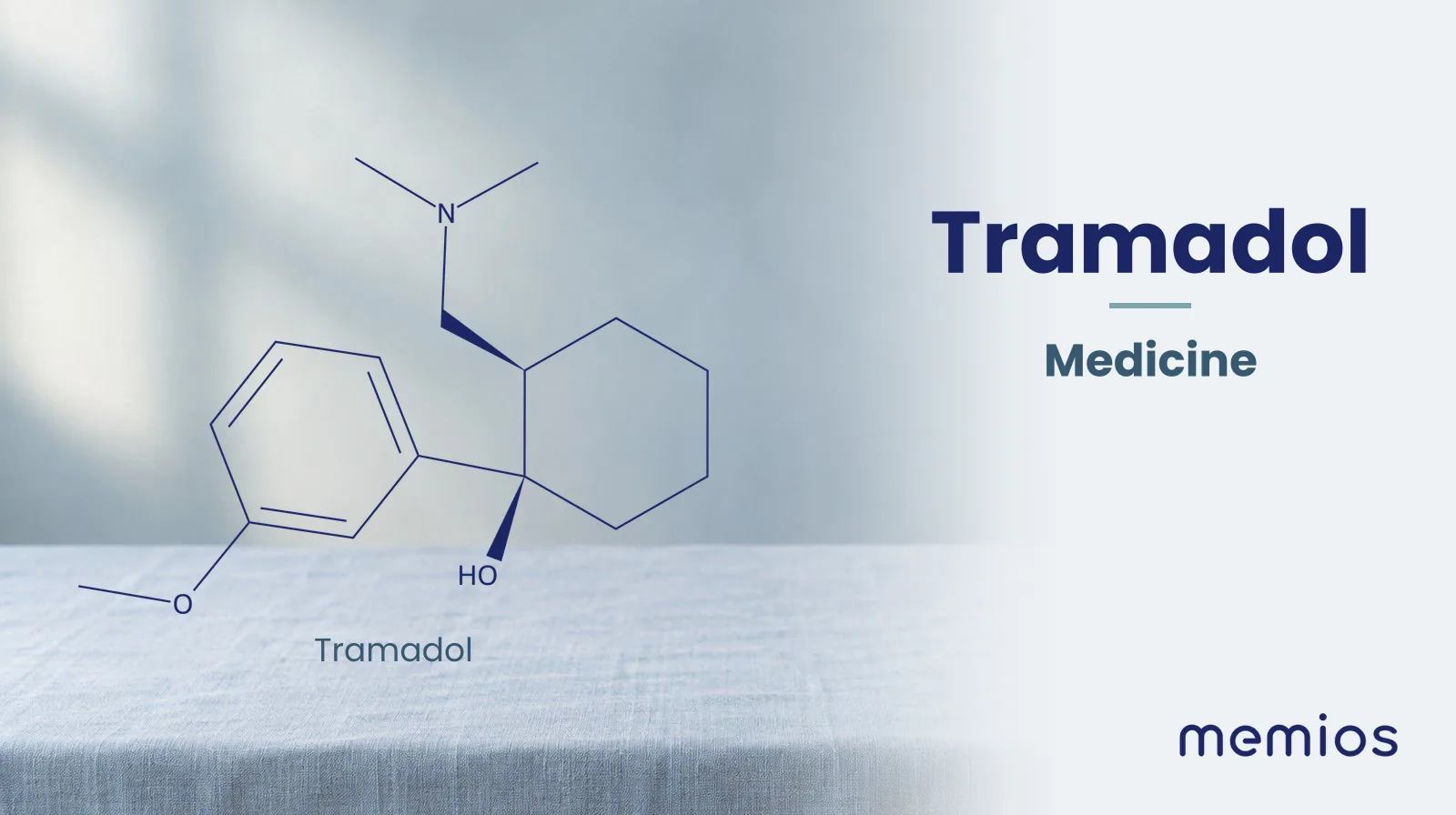
Tramadol is a synthetic painkiller taken by mouth as immediate-release or extended-release tablets and capsules, or as a liquid, and is also sold combined with acetaminophen. It is a controlled substance in the United States. It works in two ways at once: it binds weakly to mu-opioid receptors and it blocks the reuptake of noradrenaline and serotonin. The liver converts it to a metabolite called M1, which binds opioid receptors far more strongly than tramadol itself, so the amount of pain relief depends partly on how fast a person's liver makes M1.
What the research says
Tramadol is approved for pain, but the outcome evidence for chronic pain is weaker than its wide use suggests. A Cochrane review of 22 randomised trials in osteoarthritis found no important benefit on average pain or function versus placebo: about 15 in 100 people on tramadol had a clinically important pain improvement against 10 in 100 on placebo, a 5% absolute difference, while adverse events rose 17% in absolute terms and withdrawals for side effects rose 12%. In neuropathic pain the benefit looked larger, with a number needed to treat of 4.4, but Cochrane graded the evidence low to very low quality. Used off-label for premature ejaculation, pooled trials show it lengthens time to ejaculation but with many more side effects and no assessment of addiction risk. A large propensity-matched cohort found higher one-year mortality with tramadol than with several NSAIDs, though the authors warned this may be confounding by indication. It carries an eight-part boxed warning covering addiction, respiratory depression, deaths in children, neonatal withdrawal and combination with benzodiazepines or alcohol.
Evidence grade: Disputed.
How it works
Drug class: Centrally acting opioid analgesic that is also a serotonin-norepinephrine reuptake inhibitor
Tramadol dampens pain in two ways at once. It binds, weakly, to the mu-opioid receptors that morphine-type drugs act on, and it stops nerve endings reabsorbing noradrenaline and serotonin, which strengthens the body's own pain-damping pathways. Most of the opioid effect comes not from tramadol itself but from M1, the product the liver makes from it, which grips the opioid receptor much more tightly. (Source 1)
Boxed warning
ADDICTION, ABUSE, AND MISUSE; RISK EVALUATION AND MITIGATION STRATEGY (REMS); LIFE-THREATENING RESPIRATORY DEPRESSION; ACCIDENTAL INGESTION; ULTRA-RAPID METABOLISM OF TRAMADOL AND OTHER RISK FACTORS FOR LIFE-THREATENING RESPIRATORY DEPRESSION IN CHILDREN; NEONATAL OPIOID WITHDRAWAL SYNDROME; INTERACTIONS WITH DRUGS AFFECTING CYTOCHROME P450 ISOENZYMES; HEPATOTOXICITY; and RISKS FROM CONCOMITANT USE WITH BENZODIAZEPINES OR OTHER CNS DEPRESSANTS ULTRAM exposes users to the risks of addiction, abuse and misuse, which can lead to overdose and death. Serious, life-threatening, or fatal respiratory depression may occur. Accidental ingestion of ULTRAM, especially by children, can result in a fatal overdose of tramadol. Life-threatening respiratory depression and death have occurred in children who received tramadol. ULTRAM is contraindicated in children younger than 12 years of age and in children younger than 18 years of age following tonsillectomy and/or adenoidectomy. Prolonged use of ULTRAM, during pregnancy can result in neonatal opioid withdrawal syndrome, which may be life threatening if not recognized and treated. Concomitant use of opioids with benzodiazepines or other central nervous system (CNS) depressants, including alcohol, may result in profound sedation, respiratory depression, coma, and death.
(Source 2)
What it is used for
- A Cochrane review of 22 trials found that against placebo, tramadol probably has no important benefit on average pain or physical function in osteoarthritis, with a 4% absolute improvement in pain scores. Slightly more people reached a 20% improvement (15 in 100 versus 10 in 100), while adverse events and withdrawals for side effects were substantially more common. Most of the included trials were industry-funded. Evidence: disputed. (Source 3)
- In six small double-blind trials, 53% on tramadol got at least half their pain relieved versus 30% on placebo, a number needed to treat of 4.4. Cochrane downgraded this to low or very low quality because the studies were small, short and had few events, and warned the true effect may be very different. Evidence: limited. (Source 4)
- Pooled evidence from four randomised trials in 721 men found tramadol lengthened intravaginal ejaculatory latency more than placebo over 8 to 12 weeks, but with high heterogeneity, unclear trial quality, and significantly more side effects. The reviewers noted addiction potential was never assessed in these trials. Evidence: limited. (Source 5)
Interactions
- Alcohol (label): Drinking while taking tramadol adds two depressant effects together. The label's boxed warning states this combination can cause profound sedation, slowed breathing, coma and death, and tells patients to limit alcohol. (Source 2)
- Benzodiazepines and other central nervous system depressants (label): Combining tramadol with benzodiazepines, sedatives or other CNS depressants carries the same risk of deep sedation, suppressed breathing, coma and death; this is one of the eight components of the boxed warning. (Source 2)
- St John's wort (Hypericum perforatum) (case reports): St John's wort raises serotonin signalling, and Medsafe, the New Zealand medicines safety authority, named tramadol specifically as a serotonergic drug that interacts with it in the same way as SSRIs; the documented consequence is serotonin syndrome. This rests on a regulator's case-report summary rather than a study: the reported case was serotonin syndrome after citalopram was taken a day after a St John's wort tea, so the risk to someone taking tramadol is inferred from the shared mechanism that Medsafe describes, not observed in that case. (Source 6)
- Antidepressants and other serotonergic drugs (SSRIs, SNRIs such as venlafaxine, triptans, lithium, tryptophan) (label): Tramadol itself blocks serotonin reuptake, so adding it to a serotonergic antidepressant increases the risk of serotonin syndrome. The venlafaxine label names tramadol explicitly in its list of serotonergic drugs that raise this risk. (Source 7)
- Drugs affecting cytochrome P450 isoenzymes (label): Tramadol has to be converted by liver enzymes into its active metabolite M1. Drugs that speed up or block those enzymes change how much M1 is made, which can mean either too little pain relief or too much opioid effect. This is named as one of the eight headings of the boxed warning. (Source 2)
Stopping it
- Tramadol produces opioid physical dependence. A systematic review of human laboratory studies found that abuse-related effects fall away once opioid physical dependence has developed, and that people may be less likely than with other opioids to escalate doses or switch routes. (Source 8)
- Dependence also passes to a fetus: the label's boxed warning states that prolonged use in pregnancy can cause neonatal opioid withdrawal syndrome, which can be life threatening if it is not recognised and treated. (Source 2)
- Side effects are themselves a common reason tramadol is stopped: in the osteoarthritis trials, withdrawal because of adverse events was more than twice as likely on tramadol as on placebo, a 12% absolute increase. (Source 9)
What goes wrong
Adverse events were substantially more common with tramadol than placebo in osteoarthritis trials. (Source 9)
- Systematic review, Moderate certainty.
- Size: 2039 participants across 4 studies for adverse events; 4533 across 9 studies for withdrawals.
- Who: adults with osteoarthritis.
- How long: not stated in the abstract read.
- Result: Adverse events RR 1.34 (95% CI 1.24 to 1.46), a 17% absolute increase (95% CI 12% to 23%). Withdrawal because of adverse events RR 2.64 (95% CI 2.17 to 3.20), a 12% absolute increase (95% CI 9% to 16%). Most frequent: nausea, dizziness, tiredness.
- Funding: industry-funded (most included trials)
Limit of this finding: This passage of the review contains a wording error of its own: for the tramadol-plus-acetaminophen withdrawal result it says "a 8% absolute improvement" when the figure it describes is an 8% absolute increase in people stopping the drug because of side effects — a harm, not an improvement. We have quoted the review as printed rather than repairing it. Read every "increase" in this passage as more side effects on tramadol than on placebo; nothing here shows a benefit.
This corresponded to a 17% increase (95% CI 12% to 23%) with tramadol alone and 22% increase (95% CI 8% to 41%) with tramadol in combination with acetaminophen.
Serious adverse events were more common with tramadol than placebo, though the estimate is imprecise. (Source 10)
- Systematic review, Low certainty.
- Size: 3612 participants across 7 studies.
- Who: adults with osteoarthritis.
- How long: not stated in the abstract read.
- Result: 110/2459 on tramadol versus 22/1153 on placebo; RR 1.78 (95% CI 1.11 to 2.84), corresponding to a 1% absolute increase (95% CI 0% to 4%).
- Funding: industry-funded (most included trials)
Low quality evidence (downgraded due to risk of bias and imprecision) indicated that there was a greater risk of developing serious adverse events with tramadol alone compared to placebo (110/2459 participants with tramadol compared to 22/1153 participants with placebo; RR 1.78, 95% CI 1.11 to 2.84; 7 studies, 3612 participants), which corresponded to a 1% increase (95% CI 0% to 4%).
In the same neuropathic pain trials, adverse events and withdrawals because of them were far more common with tramadol than placebo. (Source 4)
- Systematic review, Very low certainty.
- Size: 266 participants across 4 studies for any adverse event; 485 across 6 studies for withdrawals.
- Who: adults with neuropathic pain.
- How long: limited duration studies.
- Result: Any adverse event 58% versus 34%; RR 1.6 (95% CI 1.2 to 2.1); number needed to harm 4.2 (95% CI 2.8 to 8.3). Withdrawal for adverse events 16% versus 3%; RR 4.1 (95% CI 2.0 to 8.4); NNH 8.2 (95% CI 5.8 to 14).
- Funding: not stated in the abstract read.
Adverse event withdrawal was higher with tramadol (16%) than placebo (3%) (6 studies, 485 participants, 45 events; RR 4.1 (95% CI 2.0 to 8.4); NNH 8.2 (95% CI 5.8 to 14)).
In a propensity-matched cohort of people over 50 with osteoarthritis, one-year mortality was higher after an initial tramadol prescription than after naproxen, diclofenac, celecoxib or etoricoxib. (Source 11)
- Cohort study, Low certainty.
- Size: 88,902 patients after propensity score matching (mean age 70.1 years, 61.2% women)
- Who: patients aged 50 and older with osteoarthritis in a UK primary care database.
- How long: 1 year.
- Result: Tramadol 23.5 versus naproxen 13.8 deaths per 1000 person-years; rate difference 9.7 per 1000 person-years (95% CI 6.3 to 13.2); HR 1.71 (95% CI 1.41 to 2.07). Versus diclofenac HR 1.88, celecoxib HR 1.70, etoricoxib HR 2.04. No difference versus codeine (HR 0.94, 95% CI 0.83 to 1.05).
- Funding: not stated in the abstract read.
During the 1-year follow-up, 278 deaths (23.5/1000 person-years) occurred in the tramadol cohort and 164 (13.8/1000 person-years) occurred in the naproxen cohort (rate difference, 9.7 deaths/1000 person-years [95% CI, 6.3-13.2]; hazard ratio [HR], 1.71 [95% CI, 1.41-2.07])
Analysis of more than twelve million FDA adverse event reports found hypoglycaemia reported disproportionately often with tramadol compared with other opioids, SNRIs and NMDA-acting drugs. (Source 12)
- Survey study, Very low certainty.
- Size: over twelve million reports in the FDA Adverse Event Reporting System.
- Who: people whose adverse events were reported to FAERS.
- How long: not applicable.
- Result: The abstract reports a greater propensity for hypoglycaemia with tramadol than the comparator drug classes, and finds only methadone behaves similarly. It does not give disproportionality ratios in the abstract text.
- Funding: not stated in the abstract read.
Adverse Event Reporting System and provided evidence of increased propensity for hypoglycemia in patients taking tramadol when compared to patients taking other opioids, serotonin-norepinephrine reuptake inhibitors, and drugs affecting NMDAR activity.
The review says the trials do not allow any safe and effective minimum daily dose to be identified, and that long-term effects and addiction potential in men using tramadol for premature ejaculation have not been studied. (Source 5)
- Meta-analysis, Low certainty.
- Size: eight RCTs.
- Who: men with premature ejaculation.
- How long: 8 to 12 weeks.
- Result: Significantly more erectile dysfunction, constipation, nausea, headache, somnolence, dry mouth, dizziness, pruritus and vomiting than placebo or behavioural therapy. No rates are given in the abstract.
- Funding: not stated in the abstract read.
The variability across placebo-controlled trials in terms of the tramadol dose evaluated and the treatment duration does not permit any assessment of a safe and effective minimum daily dose. The long-term effects and side effects, including addiction potential, for men with PE have not been evaluated in the current evidence base.
The FDA-approved label carries a boxed warning that tramadol exposes users to addiction, abuse and misuse that can lead to overdose and death. (Source 2)
- Official position, Certainty not rated.
- Size: not applicable.
- Who: all users of the drug.
- How long: not applicable.
- Result: The warning also covers life-threatening respiratory depression, fatal overdose from accidental ingestion, deaths in children, neonatal opioid withdrawal syndrome, cytochrome P450 interactions, hepatotoxicity, and the danger of combining tramadol with benzodiazepines, other CNS depressants or alcohol. No rates are given.
- Funding: regulatory position, U.S. Food and Drug Administration, ULTRAM label revised 04/2019.
ULTRAM exposes users to the risks of addiction, abuse and misuse, which can lead to overdose and death.
Because some children convert tramadol to its active metabolite unusually fast, the label contraindicates it under 12 years and under 18 after tonsil or adenoid surgery. (Source 2)
- Official position, Certainty not rated.
- Size: not applicable.
- Who: children.
- How long: not applicable.
- Result: The boxed warning states that life-threatening respiratory depression and death have occurred in children who received tramadol. No incidence is given.
- Funding: regulatory position, U.S. Food and Drug Administration, ULTRAM label revised 04/2019.
Life-threatening respiratory depression and death have occurred in children who received tramadol.
What the evidence supports
Pooled trials found tramadol lengthened time to ejaculation more than placebo in premature ejaculation, with high heterogeneity and unclear trial quality. (Source 5)
- Meta-analysis, Low certainty.
- Size: eight RCTs included; four RCTs with 721 participants in the pooled placebo comparison.
- Who: men with premature ejaculation.
- How long: 8 to 12 weeks.
- Result: Significantly greater increase in intravaginal ejaculatory latency time than placebo (p = 0.0007), with I-squared = 74%. The abstract does not give a pooled mean difference in seconds.
- Funding: not stated in the abstract read.
Pooled evidence (four RCTs, 721 participants), suggests that tramadol is significantly more effective than placebo at increasing IELT over eight to 12 weeks (p = 0.0007).
What the evidence does not support
Against placebo, tramadol probably has no important benefit on average osteoarthritis pain; only about 5 more people in 100 reach a clinically important improvement. (Source 3)
- Systematic review, Moderate certainty.
- Size: 3871 participants randomised to tramadol and 2625 to placebo or active control, across 21 RCTs in meta-analysis (22 RCTs included)
- Who: adults with osteoarthritis.
- How long: not stated in the abstract read.
- Result: Tramadol alone: 4% absolute improvement in pain (95% CI 3% to 5%; 8 studies, 3972 participants). 15/100 on tramadol improved by 20% versus 10/100 on placebo, a 5% absolute improvement. Function: 4% absolute improvement; 21/100 versus 16/100 reaching a 20% improvement.
- Funding: industry-funded (the review states most included trials were funded by the pharmaceutical industry)
Fifteen out of 100 people in the tramadol group improved by 20% (which corresponded to a clinically important difference in pain) compared to 10/100 in the placebo group (5% absolute improvement).
The Cochrane reviewers concluded tramadol probably has no important benefit on mean pain or function in osteoarthritis, while side effects drive substantially more people off the drug. (Source 13)
- Systematic review, Moderate certainty.
- Size: 22 RCTs.
- Who: adults with osteoarthritis.
- How long: not stated in the abstract read.
- Result: See the pooled absolute figures above; the reviewers note the increase in serious adverse events is less certain because of the small number of events.
- Funding: industry-funded (the review states: most of the trials were funded by the pharmaceutical industry)
Moderate quality evidence indicates that compared to placebo, tramadol alone or in combination with acetaminophen probably has no important benefit on mean pain or function in people with osteoarthritis, although slightly more people in the tramadol group report an important improvement (defined as 20% or more).
Where the evidence is mixed
In neuropathic pain, more people got at least half their pain relieved with tramadol than placebo, but the evidence is low to very low quality. (Source 4)
- Systematic review, Very low certainty.
- Size: 438 participants across six randomised double-blind studies; 265 participants in the pain-relief analysis.
- Who: adults with characterised neuropathic pain.
- How long: limited duration studies.
- Result: 70/132 (53%) with tramadol versus 40/133 (30%) with placebo achieved at least 50% pain relief; RR 2.2 (95% CI 1.02 to 4.6); NNT 4.4 (95% CI 2.9 to 8.8).
- Funding: not stated in the abstract read.
70/132 (53%) had at least 50% pain relief with tramadol, and 40/133 (30%) with placebo; the risk ratio (RR) was 2.2 (95% confidence interval (CI) 1.02 to 4.6).
This mortality association is observational and the authors say it may not be causal. (Source 11)
- Cohort study, Low certainty.
- Size: 88,902 matched patients.
- Who: patients aged 50 and older with osteoarthritis.
- How long: 1 year.
- Result: The authors flag confounding by indication as a possible explanation and call for further research to establish causality.
- Funding: not stated in the abstract read.
However, these findings may be susceptible to confounding by indication, and further research is needed to determine if this association is causal.
A large nested case-control study found no overall increase in seizure risk with tramadol versus codeine, but a significant increase when a stricter seizure definition was used. (Source 14)
- Case-control study, Low certainty.
- Size: 96,753 patients with seizure and 888,540 matched controls.
- Who: US patients with employer-sponsored health benefits.
- How long: not stated in the abstract read.
- Result: Primary analysis OR 1.03 (95% CI 0.93 to 1.15); secondary analysis with a more specific seizure definition OR 1.41 (95% CI 1.11 to 1.79).
- Funding: not stated in the abstract read.
In the primary analysis, we found no association between risk of seizure and exposure to tramadol compared with codeine (OR 1.03, 95% CI 0.93 to 1.15).
In laboratory abuse-liability studies tramadol scored lower than the opioids it was compared with on most measures, but in the one study that measured self-administration people took it more often than the comparison opioid. (Source 8)
- Systematic review, Low certainty.
- Size: 13 studies, all within-subject double-blind placebo-controlled human laboratory comparisons.
- Who: human volunteers, with and without opioid physical dependence.
- How long: laboratory sessions.
- Result: The review reports no pooled numbers. Tramadol produced substantial negative ratings, a slower onset of effects and was less often identified as an opioid than the comparators, "though it did produce a higher rate of self-administration relative to other opioids in the one study reporting that outcome". The authors hedge their overall reading as "Results suggest that the abuse potential of tramadol is highest when it is administered orally to non-dependent individuals".
- Funding: not stated in the abstract read.
Results indicated the relative abuse potential of tramadol was lower than the opioids to which it was compared. Tramadol produced highest positive effect ratings when administered orally to persons with no opioid physical dependence. Relative to other opioids, it produced substantial negative ratings, generally demonstrated a slower onset of effects, and was less likely to be identified by participants as an opioid, though it did produce a higher rate of self-administration relative to other opioids in the one study reporting that outcome.
Where the research disagrees
How much addiction and abuse risk tramadol really carries
- Systematic review of human abuse-liability laboratory studies (2019), systematic review of 13 within-subject, double-blind, placebo-controlled human laboratory studies: the human abuse potential of tramadol appears to be different from and lower than other opioid analgesic medications. (Source 8)
- U.S. Food and Drug Administration, ULTRAM boxed warning (label revised 04/2019), regulatory position, not a study: ULTRAM exposes users to the risks of addiction, abuse and misuse, which can lead to overdose and death. (Source 2)
Whether tramadol's benefit in osteoarthritis is worth having
- Cochrane review of tramadol for osteoarthritis (2019), systematic review of 22 randomised trials, most industry-funded: Moderate quality evidence indicates that compared to placebo, tramadol alone or in combination with acetaminophen probably has no important benefit on mean pain or function in people with osteoarthritis, although slightly more people in the tramadol group report an important improvement (defined as 20% or more). (Source 13)
- The same review's pooled neuropathic-pain counterpart (Cochrane 2017), systematic review of six small double-blind trials, graded low to very low quality: 70/132 (53%) had at least 50% pain relief with tramadol, and 40/133 (30%) with placebo; the risk ratio (RR) was 2.2 (95% confidence interval (CI) 1.02 to 4.6). (Source 4)
How much
- Reference intake: There is no reference intake for a prescription analgesic; the dose is set by the prescriber. As a position, the FDA prescribing information for tramadol hydrochloride tablets (DailyMed version 2, effective 1 October 2025) states that treatment is initiated at the lowest dose needed and that "After titration, tramadol hydrochloride tablets 50 to 100 mg can be administered as needed for pain relief every 4 to 6 hours not to exceed 400 mg/day." (Source 15)
- Upper limit: As a position, the same prescribing information caps the total at 400 mg per day — "not to exceed 400 mg per day". This is a regulator’s ceiling, not a trial-derived limit. The 04/2019 ULTRAM label we quote elsewhere carries the same 400 mg/day maximum. (Source 15)
- Studied: The Cochrane osteoarthritis review pooled trials of oral tramadol alone or combined with acetaminophen in 3871 randomised participants; the abstract we read does not state the doses given. (Source 3)
- Studied: The Cochrane neuropathic pain review pooled six double-blind studies in 438 participants; the abstract we read does not state the doses given. (Source 4)
- Studied: The premature ejaculation trials used on-demand dosing before intercourse over 8 to 12 weeks; the review abstract does not state the milligram doses. (Source 5)
A common belief, and what the research shows
The belief: Tramadol is a mild, non-addictive painkiller, safer than a real opioid.
What the research shows: It is an opioid, and its US label carries a boxed warning stating that "ULTRAM exposes users to the risks of addiction, abuse and misuse, which can lead to overdose and death." Laboratory studies do suggest its abuse potential is "lower than the opioids to which it was compared", but that is a comparison, not an absence of risk. In an observational cohort of 88,902 matched patients with osteoarthritis, one-year mortality was higher after tramadol than after several NSAIDs (23.5 versus 13.8 deaths per 1000 person-years against naproxen), although the authors warned this may reflect confounding by indication.
Questions and answers
What is it?
Tramadol is a prescription painkiller, a controlled substance, taken as tablets, capsules or liquid, alone or combined with acetaminophen. It is unusual in being two drugs in one action: a weak opioid and an antidepressant-like reuptake blocker. (Source 1)
What does it do in the body?
It reduces pain by binding to mu-opioid receptors and by stopping nerve endings reabsorbing noradrenaline and serotonin, which strengthens the body's own pain-damping pathways. Most of the opioid effect comes from M1, the metabolite the liver makes from it, which binds the receptor much more strongly than tramadol itself. (Source 1)
Is it good or bad for you?
It depends heavily on the condition. For osteoarthritis, Cochrane found no important average benefit over placebo while side effects drove substantially more people to stop. For neuropathic pain the benefit looked real (number needed to treat 4.4) but the evidence was low to very low quality. Set against any benefit are addiction, respiratory depression, seizure signals, hypoglycaemia reports, and a cohort finding of higher one-year mortality than several NSAIDs. (Source 13)
How do you get more of it?
This question does not apply in the nutrient sense, and the literature points the other way. Tramadol is not in food, is prescription-only and is a controlled substance; the amount in the body is set by the prescribed dose. Its label warns explicitly about the risk that arises when people take more than prescribed. (Source 2)
If it is harmful, what reduces it?
Coming off tramadol is a prescriber's decision, because the body develops opioid physical dependence with continued use. The published human laboratory work describes that dependence directly, and notes that once it has developed the drug's rewarding effects fall away while stopping abruptly is the point at which withdrawal appears. (Source 8)
Why might someone be low in it or missing it?
Does not apply: tramadol is not something a person can be deficient in. What does vary between people is how much of the active metabolite M1 their liver makes, and drugs affecting the cytochrome P450 enzymes shift that either way. Tramadol is one of the most widely prescribed analgesics in the world, which is part of why its harms matter. (Source 12)
Which whole foods contain it or feed it?
No food contains tramadol. Food matters only through interaction: alcohol is the important one, because it adds to tramadol's depressant effect on breathing. St John's wort, a herbal supplement, is the other, because it adds to tramadol's serotonin effect. (Source 2)
What happens if you do not have it?
Not taking tramadol has no consequence for a healthy person; it is not a nutrient. For someone with osteoarthritis pain, the Cochrane figures give the size of what is forgone: about 15 in 100 people on tramadol reached a clinically important pain improvement against 10 in 100 on placebo. For someone physically dependent on it, stopping abruptly brings opioid withdrawal. (Source 3)
How can you test for it?
There is no validated test of whether a person has the right amount of tramadol; blood concentrations are measured in poisoning and forensic work, not in routine care, and none of the sources we read describe a clinically validated test. CYP2D6 genotyping predicts how much active metabolite is made but is not a test of the drug's effect. (Source 8)
We searched: Searched for tramadol therapeutic drug monitoring, tramadol plasma concentration validated assay and tramadol CYP2D6 phenotype testing alongside the systematic reviews and the FDA label; none of the sources retrieved describe a validated clinical test.
References
- U.S. Food and Drug Administration. ULTRAM (tramadol hydrochloride) Tablets — 12.1 Mechanism of Action (FDA-approved prescribing information). 2019. Read the source
- U.S. Food and Drug Administration. ULTRAM (tramadol hydrochloride) Tablets — BOXED WARNING (FDA-approved prescribing information). 2019. Read the source
- Cochrane Library. Tramadol for osteoarthritis — Main results: pain and physical function (Cochrane Database of Systematic Reviews, CD005522). 2019. DOI 10.1002/14651858.CD005522.pub3. Read the source
- Cochrane Library. Tramadol for neuropathic pain in adults (Cochrane Database of Systematic Reviews, CD003726). 2017. DOI 10.1002/14651858.CD003726.pub4. Read the source
- BMC Urology. Tramadol for premature ejaculation: a systematic review and meta-analysis. 2015. PMID 25636495, DOI 10.1186/1471-2490-15-6. Read the source
- Medsafe, New Zealand Medicines and Medical Devices Safety Authority. Complementary Corner: St John's Wort and Serotonin Syndrome (Prescriber Update). 2012. Read the source
- REMEDYREPACK INC. (repackager label hosted on DailyMed, U.S. National Library of Medicine). Venlafaxine Tablets, USP — Contraindications and Warnings: MAOIs and other serotonergic drugs (FDA prescribing information, DailyMed version 13, effective 28 July 2026). 2026. Read the source
- Frontiers in Psychiatry. A Systematic Review of Laboratory Evidence for the Abuse Potential of Tramadol in Humans. 2019. DOI 10.3389/fpsyt.2019.00704. Read the source
- Cochrane Library. Tramadol for osteoarthritis — Main results: adverse events and withdrawals (Cochrane Database of Systematic Reviews, CD005522). 2019. DOI 10.1002/14651858.CD005522.pub3. Read the source
- Cochrane Library. Tramadol for osteoarthritis — Main results: serious adverse events (Cochrane Database of Systematic Reviews, CD005522). 2019. DOI 10.1002/14651858.CD005522.pub3. Read the source
- JAMA. Association of Tramadol With All-Cause Mortality Among Patients With Osteoarthritis. 2019. PMID 30860559, DOI 10.1001/jama.2019.1347. Read the source
- Scientific Reports. Retrospective analysis reveals significant association of hypoglycemia with tramadol and methadone in contrast to other opioids. 2019. DOI 10.1038/s41598-019-48955-y. Read the source
- Cochrane Library. Tramadol for osteoarthritis — Authors' conclusions and funding of included trials (Cochrane Database of Systematic Reviews, CD005522). 2019. DOI 10.1002/14651858.CD005522.pub3. Read the source
- BMJ Open. Tramadol and the risk of seizure: nested case-control study of US patients with employer-sponsored health benefits. 2019. PMID 30872555, DOI 10.1136/bmjopen-2018-026705. Read the source
- Preferred Pharmaceuticals Inc. (label hosted on DailyMed, U.S. National Library of Medicine). TRAMADOL HYDROCHLORIDE tablet — 2.3 Initial Dosage (FDA prescribing information, DailyMed version 2, effective 1 October 2025). 2025. Read the source