Medications · September 29, 2026 · Memios · 31 min read
Topiramate
Well established. For the two uses it is licensed for, the randomised evidence is good.
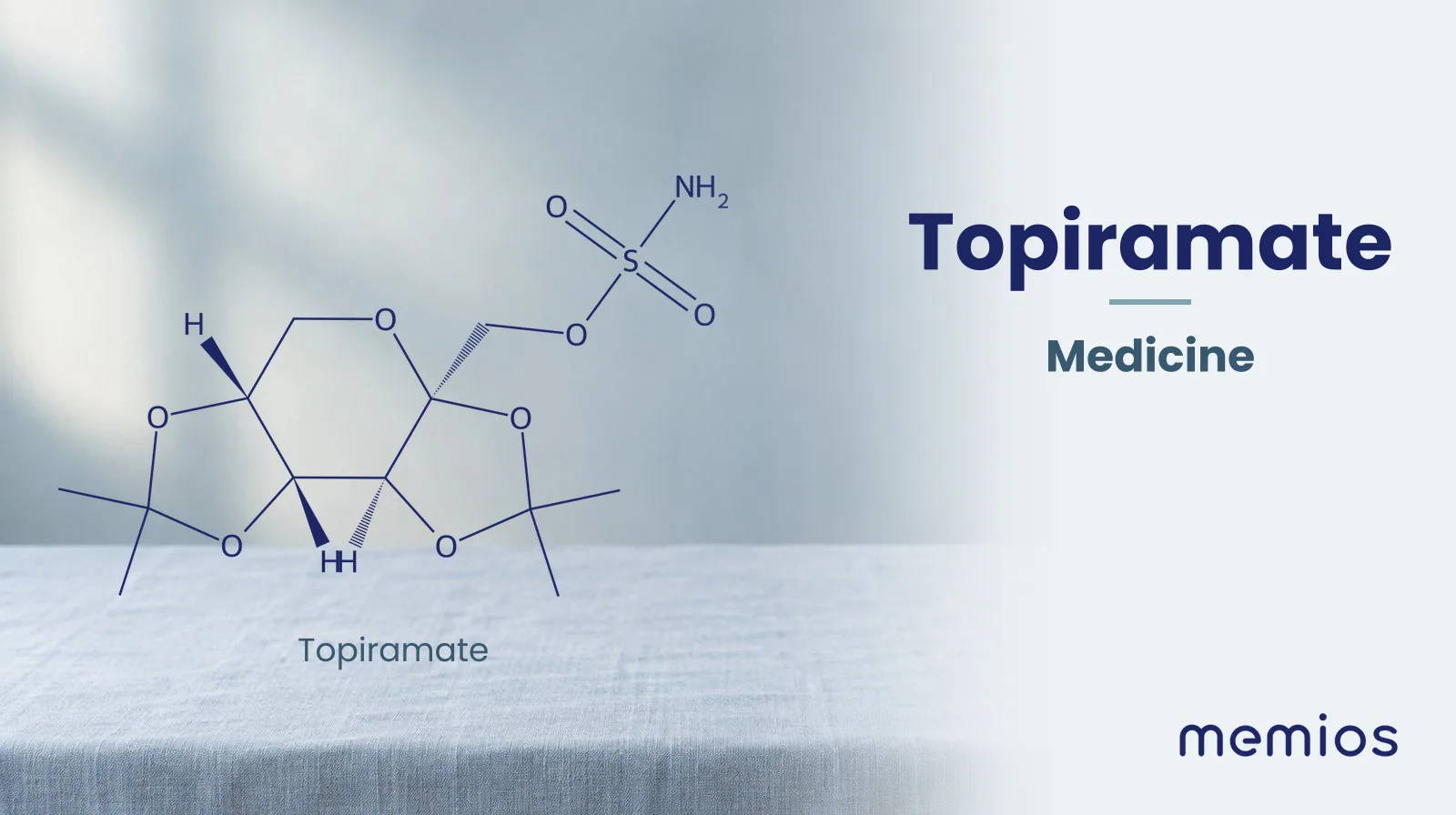
TLDR
- Well established. For the two uses it is licensed for, the randomised evidence is good.
- What it is: Topiramate is an oral prescription antiseizure drug, licensed in the United States for epilepsy and for preventing migraine.
- Main use: Add-on treatment of drug-resistant focal (partial-onset) epilepsy (well supported).
- Other approved uses: Preventive treatment of episodic migraine in adults (well supported); Initial monotherapy for partial-onset or primary generalised tonic-clonic seizures, and adjunctive therapy for Lennox-Gastaut syndrome (evidence not rated).
- Off-label uses (not on the FDA label): Alcohol use disorder (reducing heavy drinking) (limited evidence).
- Recommended dose (official position): There is no reference intake: topiramate is a prescription medicine and the dose is titrated by the prescriber for the condition treated.
- Studied dose (a trial dose, not a recommendation): The migraine meta-analysis compared 50, 100 and 200 mg a day; 100 mg a day was the dose the reviewers identified as effective and reasonably tolerated. No finding here cites that trial.
- Upper limit: There is no tolerable upper intake level of the kind set for nutrients.
- What goes wrong: 9 findings on harm. The epilepsy review found people on add-on topiramate more than twice as likely to stop treatment, and cognitive adverse effects several times commoner than on placebo.
- Interactions: 6 recorded, including Hormonal contraceptives containing oestrogen, Valproic acid (valproate, sodium valproate), Other carbonic anhydrase inhibitors (acetazolamide, zonisamide), Alcohol and other central nervous system depressants.
- Common myth: Topiramate is a mild drug for headaches, so a low dose is harmless and you can just stop when you have had enough.
What it is
Topiramate is an oral prescription antiseizure drug, licensed in the United States for epilepsy and for preventing migraine. It is also a carbonic anhydrase inhibitor, which is why it acidifies the blood and promotes kidney stones. It is widely used off label, particularly for alcohol use disorder and for weight loss, and it is one component of the combination weight-loss product phentermine/topiramate.
What the research says
For the two uses it is licensed for, the randomised evidence is good. Added to other drugs in drug-resistant focal epilepsy, a Cochrane review of 12 trials in 1650 people rated the evidence for seizure reduction as high certainty. For preventing migraine in adults, 100 mg a day cut attacks by about 1.2 per 28 days and doubled the chance of a 50% reduction in headache frequency, with a number needed to treat of 4. Off label, a randomised trial in alcohol use disorder found heavy drinking days about 1.67 times more frequent on placebo than on topiramate. The cost is substantial and well quantified: people on add-on topiramate were more than twice as likely to stop treatment, concentration difficulties and abnormal thinking were several times commoner than on placebo, about 10% of children in one prospective cohort developed kidney stones or nephrocalcinosis, and in a Nordic cohort of 4.5 million children, prenatal topiramate exposure was associated with 4.3% autism and 3.1% intellectual disability by age 8 against 1.5% and 0.8% in unexposed children of mothers with epilepsy.
Evidence grade: Well established.
How it works
Drug class: Antiseizure medication (sulfamate-substituted monosaccharide); also a carbonic anhydrase inhibitor
Topiramate damps down excessive electrical activity in the brain, which is how it reduces seizures and, probably, migraine attacks. It is also a carbonic anhydrase inhibitor, and this second action explains several of its side effects: inhibiting the kidney enzyme causes a mild acid build-up in the blood and more calcium in the urine, which is how it causes kidney stones. Pharmacogenetic work on drinking behaviour has focused on GRIK1, which encodes the kainate GluK1 glutamate receptor subunit, pointing to glutamate signalling as one of its targets, but we did not retrieve a pharmacology review setting out the full mechanism verbatim. (Source 1)
What it is used for
- A Cochrane review of 12 randomised placebo-controlled trials in 1650 people found add-on topiramate roughly tripled the chance of a 50% or greater reduction in seizures (RR 2.71, 95% CI 2.05 to 3.59, high certainty) and raised the chance of seizure freedom (RR 3.67, 1.79 to 7.54, moderate certainty). It also more than doubled the chance of withdrawing from treatment. Evidence: established. (Source 2)
- Pooled across nine placebo-controlled trials in 1737 participants, topiramate cut headache frequency by 1.2 attacks per 28 days and doubled the proportion of people achieving a 50% or greater reduction (RR 2.02, 95% CI 1.57 to 2.60), with a number needed to treat of 4. 100 mg a day was better than 50 mg and no worse than 200 mg. Evidence: established. (Source 3)
- These sit in the FDA label's indication list, a regulatory position dated 3/2026. The Cochrane review we reached covered add-on therapy in drug-resistant focal epilepsy only, and noted that just one of its trials studied children, so we record the label position and no evidence grade of our own for monotherapy or for Lennox-Gastaut syndrome. Evidence: unknown. (Source 4)
- In a 12-week double-blind randomised trial of 170 people with DSM-5 alcohol use disorder who wanted to cut down, heavy drinking days were 1.67 times more frequent on placebo than on topiramate, supported by a greater fall in the liver enzyme gamma-glutamyltransferase. Adverse events were near universal in both arms but more numerous on topiramate. Evidence: limited. (Source 5)
Interactions
- Hormonal contraceptives containing oestrogen (label): Topiramate can lower the blood level of the contraceptive hormone, so the contraceptive may fail and breakthrough bleeding may occur. This matters more than usual with this drug because of its effects on a pregnancy. (Source 4)
- Valproic acid (valproate, sodium valproate) (label): Taken together they can cause a drop in body temperature and a rise in blood ammonia, sometimes with confusion or drowsiness. (Source 4)
- Other carbonic anhydrase inhibitors (acetazolamide, zonisamide) (label): Adding a second carbonic anhydrase inhibitor deepens the acid build-up in the blood and raises the chance of kidney stones further. (Source 4)
- Alcohol and other central nervous system depressants (label): Topiramate itself slows the central nervous system and blunts concentration; alcohol adds to that. The label calls for extreme caution when the two are combined. Note the tension with the off-label use: the drug is also studied as a treatment to reduce heavy drinking, and in that trial participants were actively drinking. (Source 4)
- Ketogenic diet (theoretical): A ketogenic diet acidifies the blood in the same direction topiramate does, so combining them would be expected to compound the acid load and the stone risk. The evidence here is indirect: the paediatric stone cohort deliberately noted that none of its patients was on a ketogenic diet, so its 10% stone rate cannot be blamed on diet, and by the same token the combination has not been quantified. (Source 1)
- Citrate in the urine (dietary and supplemental citrate) (case-series): Topiramate lowers urinary citrate, the body's natural inhibitor of calcium stone formation. In the paediatric cohort, two of the children who formed stones had urinary citrate-to-creatinine ratios well below normal while on the drug. This is the mechanistic reason citrate is discussed in stone prevention, though no trial of citrate supplementation with topiramate was retrieved. (Source 1)
Stopping it
- Topiramate is not a controlled substance and no dependence syndrome is described for it, but it must not be stopped abruptly when it is being used for seizures. The FDA label instructs gradual withdrawal for anyone taking it, with or without a seizure history, because stopping suddenly can provoke seizures or make them more frequent. (Source 4)
- For migraine prevention, stopping has been tested directly. In the PROMPT trial people took topiramate openly for six months and were then randomised to continue it or switch to placebo for six more months. Compared with continuing, stopping produced a small but sustained rise in migraine days rather than a rebound. (Source 6)
- A post hoc analysis of more than 40 candidate variables from that trial could not find patient characteristics or baseline migraine frequency that predicted who would relapse after stopping, so there is no reliable way to pick out who can safely come off. (Source 6)
- Stopping resolves at least one harm. In the paediatric cohort, the kidney stones and nephrocalcinosis that developed on topiramate went away once the drug was discontinued. (Source 1)
- Many people stop because of side effects rather than by plan: the Cochrane review found add-on topiramate more than doubled the rate of withdrawal from treatment, and rated that finding high certainty. (Source 2)
What goes wrong
The epilepsy review found people on add-on topiramate more than twice as likely to stop treatment, and cognitive adverse effects several times commoner than on placebo. (Source 2)
- Systematic review, High certainty.
- Size: 12 trials, 1650 participants.
- Who: People with drug-resistant focal epilepsy.
- How long: Short-term add-on trials.
- Result: Withdrawal from treatment RR 2.37 (95% CI 1.66 to 3.37), high certainty; concentration difficulties RR about 7.81, abnormal thinking RR about 5.70, weight loss RR about 3.99, paraesthesia RR about 3.65, somnolence RR about 2.44, ataxia RR about 2.29, fatigue RR about 2.08, dizziness RR about 1.52.
- Funding: not stated.
People taking add-on topiramate were also more than twice as likely to withdraw from treatment
The FDA label records an increased risk of major congenital malformations including cleft lip and palate, and of being small for gestational age, after exposure in the womb. (Source 4)
- Official position, Certainty not rated.
- Size: Pregnancy registries; no numbers in the label text retrieved.
- Who: Infants exposed to topiramate in utero.
- How long: Not applicable.
- Result: No rates given in the label text retrieved.
- Funding: Manufacturer label submitted to FDA, revised 3/2026.
Data from pregnancy registries indicate that infants exposed to topiramate in utero have an increased risk of major congenital malformations, including but not limited to cleft lip and/or cleft palate (oral clefts), and of being small for gestational age (SGA).
The label records a 1.5% rate of kidney stones in adults in the adjunctive epilepsy trials, two to four times the expected background rate. (Source 4)
- Official position, Certainty not rated.
- Size: Adults in the adjunctive epilepsy trial programme.
- Who: Adults treated with topiramate as add-on therapy.
- How long: Trial duration not stated in the label text retrieved.
- Result: 1.5% risk of kidney stones, an incidence about 2 to 4 times greater than expected in a similar untreated population.
- Funding: Manufacturer label submitted to FDA, revised 3/2026.
During adjunctive epilepsy trials, the risk for kidney stones in TOPAMAX-treated adults was 1.5%, an incidence about 2 to 4 times greater than expected in a similar, untreated population.
The label also records acute myopia with secondary angle closure glaucoma, reduced sweating with raised body temperature, metabolic acidosis, cognitive and neuropsychiatric reactions, and an increased risk of suicidal thoughts or behaviour. (Source 4)
- Official position, Certainty not rated.
- Size: Not applicable.
- Who: All users of the product.
- How long: Not applicable.
- Result: No rates given in the label text retrieved for these reactions.
- Funding: Manufacturer label submitted to FDA, revised 3/2026.
A syndrome consisting of acute myopia associated with secondary angle closure glaucoma has been reported in patients receiving TOPAMAX. Symptoms include acute onset of decreased visual acuity and/or ocular pain.
The same network meta-analysis rated as moderate certainty the evidence that topiramate increases adverse events leading to people stopping treatment, compared with placebo. (Source 7)
- Meta-analysis, Moderate certainty.
- Size: 74 eligible trials reporting on 32,990 patients across all preventive drugs.
- Who: Adults receiving pharmacological treatments for migraine prophylaxis.
- How long: Not stated in the abstract retrieved.
- Result: The abstract reports the GRADE rating rather than a point estimate: moderate certainty that topiramate, beta-blockers and gabapentin increase adverse events leading to discontinuation, against high certainty that valproate and amitriptyline lead to substantial adverse events leading to discontinuation, and moderate to high certainty that CGRP monoclonal antibodies and gepants do not increase adverse events. No numeric estimate for topiramate appears in the abstract retrieved.
- Funding: Not stated in the abstract retrieved.
moderate certainty evidence that topiramate, beta-blockers, and gabapentin increase adverse events leading to discontinuation
In a Nordic registry cohort of about 4.5 million children, prenatal exposure to topiramate monotherapy was associated with roughly three times the rate of autism spectrum disorder and of intellectual disability seen in unexposed children of mothers with epilepsy. (Source 8)
- Cohort study, Low certainty.
- Size: 4 494 926 children; comparison group 21 634 unexposed children of mothers with epilepsy.
- Who: Population-based register cohort from Denmark, Finland, Iceland, Norway and Sweden, 1996 to 2017; 51.3% male.
- How long: Median (IQR) age at end of follow-up 8 (4.0 to 12.1) years; cumulative incidence estimated at age 8.
- Result: By age 8, autism spectrum disorder in 4.3% and intellectual disability in 3.1% of children exposed to topiramate monotherapy, against 1.5% and 0.8% in unexposed children of mothers with epilepsy. Adjusted hazard ratios after topiramate exposure 2.8 (95% CI 1.4 to 5.7) for autism spectrum disorder and 3.5 (95% CI 1.4 to 8.6) for intellectual disability. These are adjusted observational associations with wide intervals, not evidence of cause. The paper states that the numerators behind the 0.8% intellectual disability figure were not available because of personal data regulations in Denmark.
- Funding: Not stated on the abstract page retrieved.
The aHRs for ASD and ID after topiramate exposure were 2.8 (95% CI, 1.4-5.7) and 3.5 (95% CI, 1.4-8.6), respectively
In the alcohol use disorder trial, nearly everyone on both arms reported at least one adverse event, but the people on topiramate reported more of them and more that were moderate or severe. (Source 9)
- Randomized trial, Moderate certainty.
- Size: 170 participants (topiramate n = 85, placebo n = 85)
- Who: Adults with DSM-5 alcohol use disorder seeking to reduce or stop drinking.
- How long: 12 weeks.
- Result: At least one adverse event in 80 (94.1%) on topiramate and 76 (89.4%) on placebo (p = 0.26). Among those reporting at least one, mean 3.5 (SD 1.7) events on topiramate versus 2.6 (SD 1.3) on placebo (p = 0.003); moderate or severe events mean 1.0 (SD 1.6) versus 0.4 (SD 0.8) (p = 0.002). Of all events reported, 85.7% were rated mild, 13.7% moderate and 0.7% severe.
- Funding: Supported by grant AA023192 from the National Institute on Alcohol Abuse and Alcoholism and by the Mental Illness Research, Education, and Clinical Center of Veterans Integrated Service Network 4, US Department of Veterans Affairs, as stated on the page retrieved.
Among patients reporting at least 1 AE, topiramate patients reported significantly more AEs (mean = 3.5, SD = 1.7) than placebo patients (mean = 2.6, SD = 1.3)
In the peer-reviewed cohort study of United States insurance and Medicare claims covering 1.1 million people, symptomatic kidney stone events were more than twice as common among topiramate users as among non-users, though the adjusted hazard ratios of 1.58 and 1.22 count topiramate and zonisamide users together rather than topiramate alone. (Source 10)
- Cohort study, Low certainty.
- Size: 1,122,301 participants, 187,032 of whom filled a prescription for topiramate or zonisamide during the study period.
- Who: adults in Optum's deidentified Clinformatics Data Mart Database (CDM) and Medicare enrollees who filled at least 1 prescription for topiramate or zonisamide between January 1, 2011, and September 30, 2019, compared with age- and sex-matched controls.
- How long: symptomatic stone events counted between 3 months and 3 years after the first filled prescription.
- Result: unadjusted cumulative incidence of a symptomatic stone event 2.9% and 2.0% among topiramate and zonisamide users versus 1.2% and 1.3% among non-users in the CDM and Medicare cohorts (P < 0.001 for each); adjusted hazard ratio for users versus non-users 1.58 (95% CI 1.49-1.68) in CDM and 1.22 (95% CI 1.11-1.34) in Medicare, both pooling topiramate with zonisamide; the hazard rose with higher topiramate doses. This is an observational association, not proof of cause.
- Funding: not stated in the abstract retrieved.
Limit of this finding: This is the peer-reviewed version, published in the American Journal of Kidney Diseases in 2025, of the work that was previously cited here as an SSRN preprint. The pooling problem remains in the published paper: the two adjusted hazard ratios, 1.58 and 1.22, were calculated for people taking either topiramate or zonisamide together, so neither is an estimate of the risk from topiramate on its own. The unadjusted 2.9% versus 1.2% comparison is the topiramate-specific figure. The authors also list the study's own limits, including unmeasured differences between users and non-users and the possibility that some participants already had stone disease before the study period.
The unadjusted cumulative incidence of symptomatic stone events between 3 months and 3 years after the first filled prescription were 2.9% and 2.0% among users of topiramate or zonisamide versus 1.2% and 1.3% among nonusers in the CDM and Medicare cohorts, respectively (P < 0.001 for each comparison).
The published authors state plainly that the adjusted association they found is for topiramate or zonisamide use, and they list unmeasured differences between users and non-users, and pre-existing stone disease, as limits on it. (Source 10)
- Cohort study, Low certainty.
- Size: 1,122,301 participants across the two claims cohorts.
- Who: topiramate or zonisamide users and matched non-users in commercial claims and Medicare.
- How long: 3 months to 3 years after the first filled prescription.
- Result: the authors' stated conclusion is an increased hazard of symptomatic stone events for users of either drug; the stated limitations are potential bias from unmeasured differences and possible pre-existing kidney stone disease.
- Funding: not stated in the abstract retrieved.
Potential bias in unmeasured differences between users of topiramate or zonisamide and nonusers. Participants may have been diagnosed with kidney stone disease before the study period.
What the evidence supports
Added to existing treatment in drug-resistant focal epilepsy, topiramate roughly tripled the chance of halving seizure frequency, on high-certainty evidence. (Source 2)
- Systematic review, High certainty.
- Size: 12 randomised placebo-controlled trials, 1650 participants.
- Who: People with drug-resistant focal epilepsy already taking other antiseizure drugs; only one trial studied children.
- How long: Short-term trials; the review states the long-term effects were not examined.
- Result: 50% or greater seizure reduction RR 2.71 (95% CI 2.05 to 3.59), high certainty; seizure freedom RR 3.67 (1.79 to 7.54), moderate certainty; dose regression odds ratio about 1.45 per 200 mg/day increase.
- Funding: not stated.
topiramate is almost three times more effective, when used with other drugs, at reducing the number of seizures
A network meta-analysis of 74 randomised migraine-prevention trials rated as high certainty the evidence that topiramate increases the proportion of people who get at least a 50% reduction in monthly migraine days compared with placebo. (Source 7)
- Meta-analysis, High certainty.
- Size: 74 eligible trials reporting on 32,990 patients (all preventive drugs; the abstract does not state how many were topiramate trials)
- Who: Adults receiving pharmacological treatments for migraine prophylaxis.
- How long: Not stated in the abstract retrieved.
- Result: The abstract reports the GRADE rating rather than a point estimate for topiramate: high certainty that topiramate increases the proportion of patients with a 50% or more reduction in monthly migraine days versus placebo. No numeric estimate or confidence interval for topiramate appears in the abstract retrieved.
- Funding: Not stated in the abstract retrieved.
We found high certainty evidence that monoclonal antibodies acting on the calcitonin gene related peptide or its receptor (CGRP(r)mAbs), gepants, and topiramate increase the proportion of patients who experience a 50% or more reduction in monthly migraine days, compared to placebo.
In a pooled analysis of three double-blind dose-ranging trials, 46.3% of people taking topiramate 100 mg a day reached at least a 50% reduction in monthly migraine frequency against 22.8% on placebo. (Source 11)
- Meta-analysis, Moderate certainty.
- Size: topiramate 100 mg/day n = 386 versus placebo n = 372, pooled from three placebo-controlled dose-ranging trials.
- Who: Adults with migraine enrolled in three large placebo-controlled dose-ranging trials.
- How long: Not stated in the abstract retrieved.
- Result: 46.3% of patients on topiramate achieved at least a 50% reduction in monthly migraine period frequency versus 22.8% on placebo (p < 0.001); topiramate also superior on mean monthly migraine frequency, monthly migraine days, monthly migraine duration and acute medication use (p < 0.001). No confidence intervals are given in the abstract. The most common adverse effect reported was paraesthesia.
- Funding: Not stated in the abstract retrieved. This is a pooled analysis of the manufacturer's pivotal trial programme and a reviewer should check the funding and author affiliations in the full paper.
for example 46.3% of patients on topiramate achieved at least 50% reduction in monthly migraine period frequency compared with 22.8% on placebo (p < 0.001).
In a 12-week randomised placebo-controlled trial in alcohol use disorder, people on placebo had 1.67 times as many heavy drinking days per week as people on topiramate. (Source 12)
- Randomized trial, Moderate certainty.
- Size: 170 participants (topiramate n = 85, placebo n = 85)
- Who: European-American adults with DSM-5 alcohol use disorder who sought to reduce or stop drinking, 71.2% male, randomisation stratified on GRIK1 rs2832407 genotype.
- How long: 12 weeks, with brief counselling at each of nine treatment visits.
- Result: Mean heavy drinking days per week 1.67 times greater on placebo than topiramate (95% CI 1.29 to 2.16, p = 0.0001), with a greater fall in gamma-glutamyltransferase and lower alcohol-related problems score on topiramate. Treatment completion was 91.8% in both groups. Maximal daily dosage 200 mg.
- Funding: Supported by grant AA023192 from the National Institute on Alcohol Abuse and Alcoholism and by the Mental Illness Research, Education, and Clinical Center of Veterans Integrated Service Network 4, US Department of Veterans Affairs, as stated on the page retrieved.
The mean number of HDDs per week in the placebo group was 1.67 (95% CI = (1.29, 2.16), p = 0.0001) times greater than in the topiramate group
What the evidence does not support
The Cochrane epilepsy reviewers flagged two gaps: no long-term data, and almost no data in children. (Source 2)
- Systematic review, High certainty.
- Size: 12 trials, 1650 participants.
- Who: Mostly adults with drug-resistant focal epilepsy.
- How long: Short-term add-on trials only.
- Result: No long-term outcomes assessed; one trial in children.
- Funding: not stated.
trials included in this review did not examine the long-term effects
In a randomised trial with propranolol as an active control, topiramate 100 mg a day was no better than propranolol on any efficacy measure, and the higher 200 mg dose was tolerated worse than 100 mg. (Source 13)
- Randomized trial, Moderate certainty.
- Size: 575 subjects enrolled from 61 centres in 13 countries, randomised to topiramate 100 mg/d, topiramate 200 mg/d, propranolol 160 mg/d or placebo.
- Who: Adults with episodic migraine with and without aura.
- How long: Not stated in the abstract retrieved.
- Result: Topiramate 100 mg/d and propranolol 160 mg/d were similar on reduction in migraine frequency, responder rate, migraine days and daily rescue medication use. Topiramate 100 mg/d was better tolerated than topiramate 200 mg/d and generally comparable to propranolol. The abstract retrieved reports no numeric estimates or confidence intervals.
- Funding: Not stated in the abstract retrieved.
The TPM 100 mg/d and PROP groups were similar with respect to reductions in migraine frequency, responder rate, migraine days, and daily rescue medication usage. TPM 100 mg/d was better tolerated than TPM 200 mg/d, and was generally comparable to PROP.
The same trial, which was designed to test it prospectively, did not reproduce an earlier finding that GRIK1 rs2832407 genotype predicts who responds to topiramate for drinking. (Source 12)
- Randomized trial, Moderate certainty.
- Size: 170 participants, randomisation stratified on rs2832407 genotype.
- Who: European-American adults with DSM-5 alcohol use disorder seeking to reduce or stop drinking.
- How long: 12 weeks.
- Result: No significant difference in topiramate's effect on heavy drinking days between genotype groups. The abstract reports no effect estimate for the genotype interaction.
- Funding: Supported by grant AA023192 from the National Institute on Alcohol Abuse and Alcoholism and by the Mental Illness Research, Education, and Clinical Center of Veterans Integrated Service Network 4, US Department of Veterans Affairs, as stated on the page retrieved.
There was no significant difference in topiramate's effect on HDDs between genotype groups.
A nationwide Taiwanese cohort study of topiramate users alone, with no zonisamide pooled in, found no significant difference in urolithiasis compared with matched controls. (Source 14)
- Cohort study, Very low certainty.
- Size: 2,754 people: 1,377 receiving topiramate and 1,377 age- and gender-matched controls.
- Who: patients in a nationwide Taiwanese population-based dataset who received topiramate between 1997 and 2008, and age- and gender-matched patients who did not.
- How long: median follow-up of two years (interquartile range 1.2 to 4.2 years)
- Result: 79 of 2,754 patients (2.9%) developed urolithiasis; the proportion developing urolithiasis did not differ between topiramate and control patients (p = 0.138), urolithiasis-free survival did not differ (p = 0.168), and neither duration nor total dose of topiramate was associated with risk (p = 0.482 and p = 0.751)
- Funding: not stated in the abstract retrieved; the article credits Taiwanese government and university hospital research grants rather than a manufacturer.
Limit of this finding: This is the topiramate-alone estimate the group asked for, and it points the other way from the claims study. It is smaller (2,754 people against 1.1 million), shorter, and drawn from a different health system, and the authors themselves only claim that topiramate 'may not' increase the risk rather than that it does not. It does not cancel the larger study; the two together mean the size of any topiramate-specific stone risk is still unsettled.
The proportion of patients who developed urolithiasis in the patients receiving topiramate was not different from that of the control patients ( p = 0.138, χ 2 test).
Where the research disagrees
Whether a genetic test can pick out who will respond to topiramate for heavy drinking
- Kranzler et al. 2014, the original finding as described in the 2021 report, Earlier randomised controlled trial, described in the 2021 paper's abstract: topiramate reduced heavy drinking among individuals who sought to reduce their drinking, with the effect moderated by a single nucleotide polymorphism (SNP; rs2832407) in GRIK1, which encodes the kainate GluK1 receptor subunit (Source 5)
- Kranzler et al. 2021, the prospective replication attempt, Genotype-stratified double-blind randomised trial, 170 participants, 12 weeks: the prior finding of a moderating effect of rs2832407 genotype was not replicated in this prospective trial (Source 5)
How to weigh a well-evidenced migraine benefit against the pregnancy risk in women of childbearing age
- Cochrane migraine reviewers, as reported in American Family Physician, Systematic review of 17 controlled trials, alongside an NNT of 4 for a 50% reduction in headaches: Topiramate is known to cause birth defects if taken during pregnancy, and should be used with caution in women of childbearing age. (Source 3)
- Bjork et al., Nordic register cohort, Population-based cohort of 4,494,926 children with adjusted hazard ratios of 2.8 for autism and 3.5 for intellectual disability: prenatal exposure to topiramate, valproate, and several duotherapies were associated with increased risks of neurodevelopmental disorders (Source 15)
How much
- Reference intake: There is no reference intake: topiramate is a prescription medicine and the dose is titrated by the prescriber for the condition treated. As a position, the FDA label (revised 3/2026) gives 100 mg a day in two divided doses for migraine prevention from age 12, and 200 to 400 mg a day for adjunctive treatment of partial-onset seizures in adults. (Source 4)
- Upper limit: There is no tolerable upper intake level of the kind set for nutrients. The highest recommended dose in the FDA label (revised 3/2026) is 400 mg a day in two divided doses, for monotherapy in adults and children aged 10 and over. (Source 4)
- Studied: The migraine meta-analysis compared 50, 100 and 200 mg a day; 100 mg a day was the dose the reviewers identified as effective and reasonably tolerated. (Source 3)
- Studied: The alcohol use disorder trial titrated to a maximal daily dosage of 200 mg over 12 weeks. (Source 5)
- Studied: The Cochrane epilepsy review analysed dose as a continuous variable, reporting an increasing effect for each 200 mg/day increment of add-on topiramate. (Source 2)
A common belief, and what the research shows
The belief: Topiramate is a mild drug for headaches, so a low dose is harmless and you can just stop when you have had enough.
What the research shows: Neither half holds. The harms are common and measurable rather than exotic: in the migraine trials all adverse effects except nausea were significantly more common in persons taking 100 mg of topiramate daily vs. placebo, and in epilepsy the Cochrane reviewers found that people taking add-on topiramate were also more than twice as likely to withdraw from treatment. On stopping, the label is explicit that antiepileptic drugs, including TOPAMAX, should be gradually withdrawn to minimize the potential for seizures or increased seizure frequency, and it says this applies in patients with or without a history of seizures or epilepsy. In migraine, stopping after six months produced a small but sustained increase in migraine frequency after discontinuation compared with continuation of prophylactic therapy, and no patient characteristic predicted who would relapse.
Questions and answers
What is it?
Topiramate is a prescription tablet or sprinkle capsule, sold as Topamax among other names, developed as an antiseizure drug and also licensed to prevent migraine. It is a sulfamate-substituted sugar derivative that happens to inhibit the enzyme carbonic anhydrase. It is not a supplement, a painkiller for an attack in progress, or a controlled substance. (Source 4)
What does it do in the body?
Topiramate acts on nerve cells in several ways at once rather than through one target. A pharmacology review describes it potentiating GABA-A currents, which are the brain's main calming signal, and blocking the AMPA/kainate type of glutamate receptor, which carries excitatory signals; it also damps the sustained rapid firing of nerve cells in a way similar to sodium-channel blockers such as phenytoin and carbamazepine. The same review says the selective block of AMPA/kainate receptors is unusual among antiseizure drugs. It also notes that although topiramate contains a sulfamate group, its effect on carbonic anhydrase is weak and was not thought to be a major part of how it stops seizures, which is worth weighing against the common description of topiramate as simply a carbonic anhydrase inhibitor. (Source 16)
Is it good or bad for you?
It depends entirely on what it is being used for and on what the person is willing to put up with. A 2023 network meta-analysis of 74 migraine-prevention trials in 32,990 patients rated as high certainty the evidence that topiramate increases the share of people who get at least a 50% reduction in monthly migraine days compared with placebo, so for that use the benefit is well established. The same review rated as moderate certainty the evidence that topiramate increases adverse events serious enough to make people stop the drug, unlike the newer CGRP antibodies and gepants. So on this evidence topiramate works, and it is harder to tolerate than some alternatives. (Source 7)
How do you get more of it?
Only by prescription, and normally by slow upward titration rather than starting at the target dose. The label positions are 100 mg a day in two divided doses for migraine from age 12, 200 to 400 mg a day for adjunctive epilepsy treatment in adults, and 400 mg a day for monotherapy. The alcohol use disorder trial titrated to a maximum of 200 mg a day. No food or supplement supplies it. (Source 4)
If it is harmful, what reduces it?
Topiramate is not stored in the body and is not broken down much: a pharmacology review reports that 75 to 80% of a dose leaves unchanged in the urine when it is taken on its own, with an elimination half-life of about 20 to 30 hours when no enzyme-inducing drugs are present. On those figures the drug clears from the blood over a few days once dosing stops, and the kidneys do most of the work of removing it. Nothing a person eats or takes is described in this source as speeding that up. Whether and how to stop is a prescriber's decision, and we did not obtain a source in this run on tapering or withdrawal effects. (Source 17)
Why might someone be low in it or missing it?
The commonest reason someone who could take topiramate is not taking it is that they could not tolerate it. The Cochrane epilepsy review rated the excess of treatment withdrawal as high certainty, with concentration difficulties, abnormal thinking, tingling, weight loss and drowsiness all substantially commoner than on placebo. Pregnancy or the possibility of it is another reason to avoid it, and the interaction with oestrogen-containing contraceptives complicates that further. (Source 2)
Which whole foods contain it or feed it?
No whole food contains topiramate. It is a synthetic sulfamate-substituted monosaccharide made as a medicine, so there is nothing to eat that supplies it and nothing that feeds it. Food does not appear to matter much for how much of a dose gets in either: a pharmacology review reports bioavailability above 80% after an oral dose, not significantly affected by food. That is about absorption only and says nothing about foods that might interact with topiramate's other effects. (Source 18)
What happens if you do not have it?
Topiramate is a medicine, so absence means the epilepsy or migraine is managed differently or not at all. For epilepsy the risk of going without is concrete, and the label warns that stopping an antiseizure drug abruptly can provoke seizures or make them more frequent. For migraine there are alternatives: head-to-head trials suggest topiramate is about as effective as propranolol and valproate rather than better, and in the Cochrane review relaxation therapy improved migraine-specific quality of life more than topiramate did. (Source 4)
How can you test for it?
There is a blood test. Topiramate concentrations can be measured in plasma, and therapeutic drug monitoring guidelines ask for a trough sample taken 12 to 16 hours after the dose. Its reliability depends heavily on when the blood is drawn: a 2026 pharmacokinetic study notes that samples in practice are often taken at random times rather than at trough, which makes the number hard to interpret, and that study built and validated a conversion tool against 183 paired samples to estimate a standardised 14-hour trough from a random level. So a single unstandardised topiramate level is a weak measurement, and there is no routine test that tells a person whether the drug is working for them. (Source 19)
References
- Kidney International Reports. Nephrolithiasis and Nephrocalcinosis From Topiramate Therapy in Children With Epilepsy. 2018. PMID 29988929, DOI 10.1016/j.ekir.2018.01.003. Read the source
- Cochrane Database of Systematic Reviews (cochrane.org evidence summary page). Topiramate add-on therapy for drug-resistant focal epilepsy (Cochrane Review CD001417, plain-language summary and key results). 2019. PMID 31642054, DOI 10.1002/14651858.CD001417.pub4. Read the source
- American Family Physician. Topiramate for the Prophylaxis of Episodic Migraine in Adults (Cochrane for Clinicians, on Linde M et al., Cochrane Review CD010610). 2014. DOI 10.1002/14651858.CD010610. Read the source
- US Food and Drug Administration (Drugs@FDA); labeller Janssen Pharmaceuticals. TOPAMAX (topiramate) tablets, for oral use; TOPAMAX (topiramate) capsules, for oral use - Highlights of Prescribing Information. 2026. Read the source
- Neuropsychopharmacology. Prospective randomized pharmacogenetic study of topiramate for treating alcohol use disorder. 2021. PMID 33235300, DOI 10.1038/s41386-020-00945-9. Read the source
- Cephalalgia. Factors predicting the probability of relapse after discontinuation of migraine preventive treatment with topiramate. 2010. PMID 20959424, DOI 10.1177/0333102409359709. Read the source
- The Journal of Headache and Pain. The comparative effectiveness of migraine preventive drugs: a systematic review and network meta-analysis. 2023. PMID 37208596, DOI 10.1186/s10194-023-01594-1. Read the source
- JAMA Neurology. Association of Prenatal Exposure to Antiseizure Medication With Risk of Autism and Intellectual Disability. 2022. PMID 35639399, DOI 10.1001/jamaneurol.2022.1269. Read the source
- Neuropsychopharmacology. Prospective randomized pharmacogenetic study of topiramate for treating alcohol use disorder (Results, 'Adverse effects' subsection). 2021. PMID 33568796, DOI 10.1038/s41386-020-00945-9. Read the source
- American Journal of Kidney Diseases (official journal of the National Kidney Foundation); 2025;85(6):687-694.e1. Associations of Topiramate and Zonisamide Use With Kidney Stones: A Retrospective Cohort Study. 2025. DOI 10.1053/j.ajkd.2024.12.009. Read the source
- International Journal of Clinical Practice (PDF copy read on Semantic Scholar). Topiramate 100 mg/day in migraine prevention: a pooled analysis of double-blind randomised controlled trials. 2005. DOI 10.1111/j.1368-5031.2005.00612.x. Read the source
- Neuropsychopharmacology. Prospective randomized pharmacogenetic study of topiramate for treating alcohol use disorder. 2021. PMID 33568796, DOI 10.1038/s41386-020-00945-9. Read the source
- Journal of Neurology. Topiramate in migraine prophylaxis. 2004. DOI 10.1007/s00415-004-0464-6. Read the source
- Seizure: European Journal of Epilepsy (Elsevier), volume 29, pages 86-89. Topiramate may not increase risk of urolithiasis: A nationwide population-based cohort study. 2015. DOI 10.1016/j.seizure.2015.03.009. Read the source
- JAMA Neurology. Association of Prenatal Exposure to Antiseizure Medication With Risk of Autism and Intellectual Disability. 2022. PMID 35486394, DOI 10.1001/jamaneurol.2022.1269. Read the source
- Canadian Journal of Neurological Sciences. Topiramate: Pharmacokinetics and Pharmacodynamics (mechanisms of action section). 1998. Read the source
- Canadian Journal of Neurological Sciences. Topiramate: Pharmacokinetics and Pharmacodynamics (pharmacokinetics section, metabolism and elimination). 1998. Read the source
- Canadian Journal of Neurological Sciences. Topiramate: Pharmacokinetics and Pharmacodynamics (pharmacokinetics section, absorption and distribution). 1998. Read the source
- Frontiers in Pharmacology. Development and validation of a pharmacokinetic tool to convert random topiramate concentrations to standardized trough levels in bipolar disorder. 2026. DOI 10.3389/fphar.2026.1867058. Read the source