Medications · September 29, 2026 · Memios · 17 min read
Testosterone
Where a man genuinely has low testosterone from testicular or pituitary disease, replacement raises the hormone level and improves sexual function and quality of life; that part is consistently found in meta-analyses.
TLDR
- Boxed warning: WARNING: SECONDARY EXPOSURE TO TESTOSTERONE.
- Well established. Where a man genuinely has low testosterone from testicular or pituitary disease, replacement raises the hormone level and improves sexual function and quality of life; that part is consistently found in meta-analyses.
- What it is: Testosterone is the main male sex hormone, made mostly in the testes, and an androgen that also circulates in women at much lower levels.
- Main use: Replacement in men with primary hypogonadism (testicular failure) (well supported).
- Other approved uses: Replacement in men with hypogonadotropic hypogonadism (pituitary or hypothalamic failure) (well supported).
- Off-label uses (not on the FDA label): Erectile dysfunction and sexual symptoms in age-related ('late-onset') low testosterone (limited evidence).
- Uses NOT supported by research: Improving prostate symptoms or urinary flow.
- Recommended dose (official position): There is no dietary reference intake for testosterone; it is a hormone medicine and a controlled substance, and the dose is set by the prescriber.
- Studied dose (a trial dose, not a recommendation): The TestES evidence synthesis pooled 35 placebo-controlled trials of any testosterone formulation in 5,601 randomised men. Findings citing that trial: 1 for, 1 against, 1 mixed.
- Upper limit: No upper limit is set by a nutrition body.
- What goes wrong: 4 findings on harm. Testosterone therapy has a boxed warning because the gel can transfer to other people by skin contact and has virilised children.
- Interactions: 4 recorded, including Warfarin and other anticoagulants, Corticosteroids and ACTH, Insulin and other diabetes treatment, Iron supplements and anything else that supports red cell production.
- Common myth: Testosterone is a general tonic for tiredness and ageing in men, and a low-ish reading means you need it.
What it is
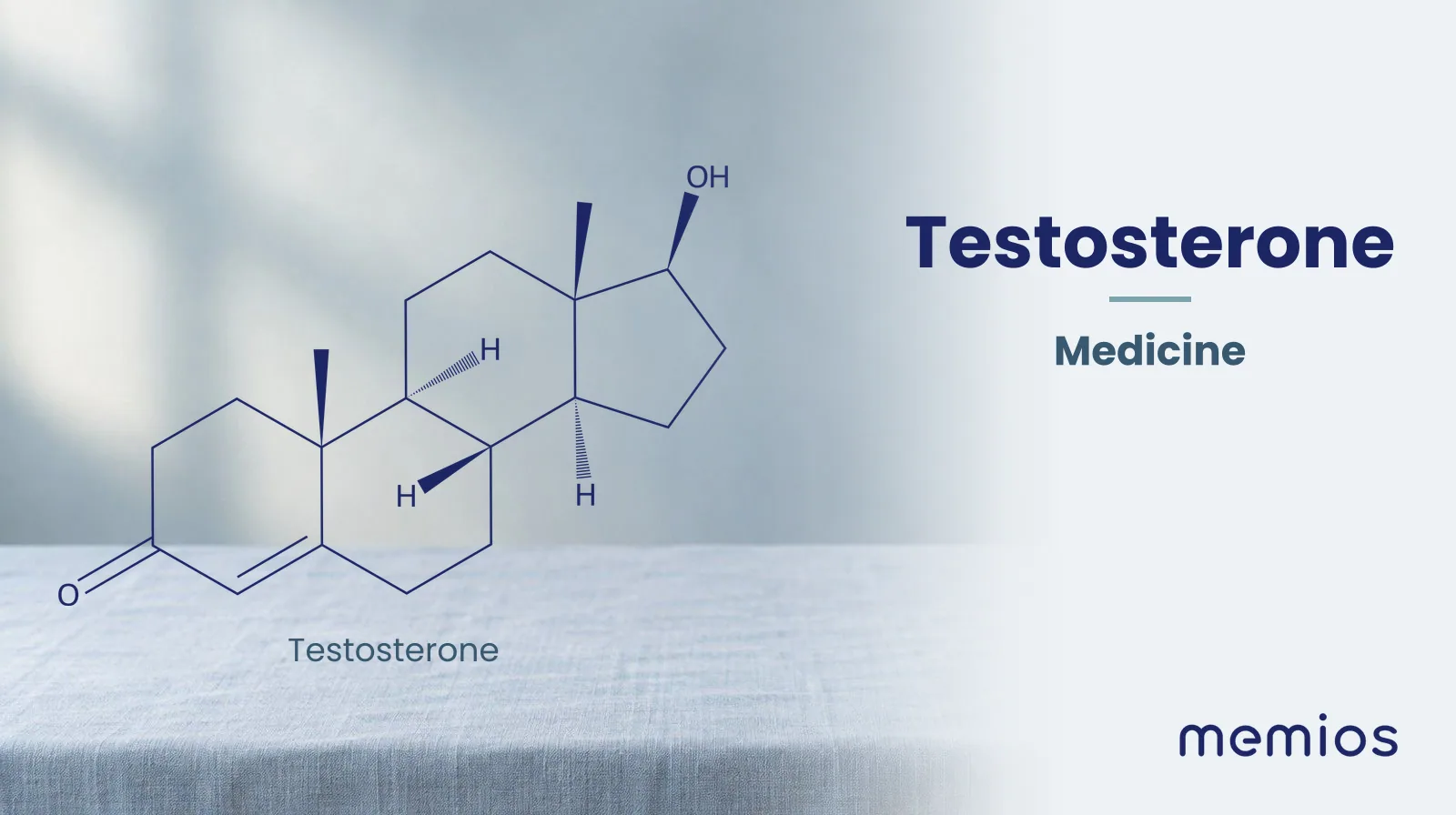
Testosterone is the main male sex hormone, made mostly in the testes, and an androgen that also circulates in women at much lower levels. As a medicine it is given as an injection, a skin gel or patch, an oral capsule or an implanted pellet. In the United States it is a Schedule III controlled substance. It is licensed as replacement therapy in adult males whose bodies do not make enough of it.
What the research says
Where a man genuinely has low testosterone from testicular or pituitary disease, replacement raises the hormone level and improves sexual function and quality of life; that part is consistently found in meta-analyses. What the evidence does not show is a broad rejuvenating effect: the largest individual-participant meta-analysis found no effect on blood pressure, lipids or glucose markers, and no excess of cardiovascular events but too few deaths to judge mortality. The most reliable harm is a rise in red cell mass. Testosterone is also abused at supraphysiological doses, and stopping after that leaves a withdrawal state that can take months to years to resolve.
Evidence grade: Well established.
How it works
Drug class: Androgen (anabolic-androgenic steroid); Schedule III controlled substance in the United States
Testosterone and its more potent derivative dihydrotestosterone act on androgen receptors throughout the body. They drive the growth and maintenance of male sex organs and secondary sexual characteristics, and they also act on muscle, fat distribution, bone and the bone marrow, where they push up red blood cell production. Given as a medicine, testosterone also suppresses the body's own production by feeding back on the hypothalamus and pituitary. (Source 1)
Boxed warning
WARNING: SECONDARY EXPOSURE TO TESTOSTERONE
(Source 2)
What it is used for
- This is the licensed use. In pooled randomised trials, testosterone improved sexual function and quality of life in almost all patient subgroups, and did not worsen blood pressure, lipids or glucose markers. Evidence: established. (Source 3)
- Also a licensed use, covered by the same trial evidence; the label distinguishes it from primary hypogonadism by the pattern of gonadotropins rather than by a different evidence base. Evidence: established. (Source 3)
- A 2024 meta-analysis of 28 randomised trials in 3,461 men found erectile function scores improved by a mean difference of 3.26 points on the IIEF. The US label explicitly says safety and efficacy in age-related hypogonadism have not been established, so this common use is off-label. Evidence: limited. (Source 4)
- The same meta-analysis found no significant change in prostate symptom score, prostate volume, urinary flow rate, residual urine volume or PSA. Testosterone neither helps nor, on these measures, harms the prostate over the trial durations studied. Evidence: not-supported. (Source 4)
Interactions
- Warfarin and other anticoagulants (label): Androgens can change how strongly an anticoagulant works, so INR and prothrombin time need watching more closely when testosterone is started or stopped. (Source 5)
- Corticosteroids and ACTH (label): Taken together with testosterone these can cause more fluid retention, which matters most for people with heart, kidney or liver disease. (Source 5)
- Insulin and other diabetes treatment (label): Androgens can lower blood glucose and reduce how much insulin a person needs, so diabetes treatment may need adjusting. (Source 5)
- Iron supplements and anything else that supports red cell production (theoretical): Testosterone raises red cell mass and haematocrit, partly by lowering hepcidin and so freeing up iron for red cell production. That is the pathway an iron supplement also feeds, and raised haematocrit is where the thrombotic concern comes from. The literature describes the mechanism; there is no trial of iron supplements taken with testosterone. (Source 6)
Stopping it
- Testosterone is a Schedule III controlled substance in the United States, which reflects its abuse potential rather than dependence at replacement doses. (Source 7)
- After supraphysiological use, stopping leaves the body's own testosterone production suppressed. A 2023 scoping review found biochemical recovery generally takes months, with gonadotropins recovering over three to six months, while some physical changes take far longer or do not reverse. (Source 8)
- The psychological side of withdrawal is poorly characterised: the same review found the data insufficient and conflicting, describing a transient withdrawal period possibly followed by milder persisting symptoms. (Source 8)
- The label also describes stopping for a specific safety reason: if haematocrit rises, therapy is stopped until it comes down. (Source 9)
What goes wrong
A thickening of the blood (erythrocytosis) is a common effect of testosterone therapy and carries thrombotic risk. (Source 6)
- Expert review, not systematic, Low certainty.
- Size: not a pooled estimate; this is a narrative review of mechanism and management.
- Who: Men on testosterone therapy for hypogonadism.
- How long: Ongoing therapy.
- Result: No pooled incidence is given in this review; it states erythrocytosis is common and that evidence shows an increased thrombotic risk associated with it.
- Funding: not stated.
Erythrocytosis, or elevated hematocrit, is a common side effect of testosterone therapy (TTh) in male hypogonadism.
Testosterone therapy has a boxed warning because the gel can transfer to other people by skin contact and has virilised children. (Source 2)
- Official position, Moderate certainty.
- Size: not quantified in the label.
- Who: Children in contact with men using testosterone gel.
- How long: not applicable.
- Result: No rate is given; the label records reported cases of virilization from secondary exposure.
- Funding: FDA-approved labelling.
Virilization has been reported in children who were secondarily exposed to testosterone gel
Stopping testosterone after supraphysiological (abuse-level) exposure leaves a hypogonadal state whose recovery is slow and variable, and the controlled evidence on it is thin. (Source 8)
- Systematic review, Very low certainty.
- Size: a scoping review of observational and interventional studies; no pooled n.
- Who: People recovering from anabolic-androgenic steroid use.
- How long: Months to years.
- Result: Testicular atrophy and spermatogenesis recover over months to years; libido returns over several months; gynaecomastia is unlikely to resolve; gonadotropins recover over 3-6 months.
- Funding: not stated.
The duration and degree of recovery from anabolic steroid-induced hypogonadism (ASIH) is immensely variable, and there is a paucity of prospective controlled data characterising the trajectory of natural recovery following cessation.
The commonest reported adverse reactions on the gel, at 5% or more, are skin and prostate related. (Source 10)
- Official position, Low certainty.
- Size: not stated in the label text.
- Who: Men in the product's clinical trials.
- How long: not stated.
- Result: Acne, application site reaction, abnormal lab tests and prostatic disorders at an incidence of 5% or more; no placebo comparison is given in this sentence.
- Funding: FDA-approved labelling.
Most common adverse reactions (incidence greater than or equal to 5%) are acne, application site reaction, abnormal lab tests, and prostatic disorders.
What the evidence supports
In the largest individual-participant meta-analysis, testosterone improved quality of life and sexual function across almost all subgroups of men with hypogonadism. (Source 3)
- Meta-analysis, Moderate certainty.
- Size: 35 trials, 5,601 randomised participants; 17 trials with individual participant data covering 3,431 participants.
- Who: Men with hypogonadism in placebo-controlled randomised trials.
- How long: Short to medium term; trials searched from 1992 to February 2021.
- Result: Improvement in quality of life and sexual function; no adverse effect on blood pressure, serum lipids or glycaemic markers.
- Funding: independent (NIHR Health Technology Assessment programme)
Testosterone replacement therapy improved quality of life and sexual function in almost all patient subgroups.
Testosterone improves erectile function scores in men with late-onset hypogonadism. (Source 4)
- Meta-analysis, Low certainty.
- Size: 28 randomised controlled trials, 3,461 patients.
- Who: Men with aging-related late-onset hypogonadism.
- How long: 11 trials 12 months or longer, 18 trials under 12 months.
- Result: IIEF weighted mean difference 3.26, 95% CI 1.65 to 4.88, P<0.0001.
- Funding: not stated in the abstract.
Limit of this finding: The paper's own trial counts do not add up: it states that 28 randomised trials were included, but then describes 11 long-term trials (12 months or more) and 18 short-term trials, which comes to 29. That inconsistency is in the published paper, not a transcription error here. Read it as meaning the pooled result covers roughly 28 to 29 trials; it does not tell you which trials or results are miscounted, and it is a reason to treat the exact pooled figures with some caution rather than to dismiss them.
International Index of Erectile Function (IIEF) (Weighted Mean difference (WMD) 3.26; 95%; 95% confidence interval (CI) 1.65-4.88; P<0.0001) was obviously improved in the TRT group.
What the evidence does not support
The same meta-analysis found no difference between testosterone and placebo in cardiovascular or cerebrovascular events. (Source 3)
- Meta-analysis, Moderate certainty.
- Size: 13 studies contributing events; 1,601 on testosterone and 1,519 on placebo.
- Who: Men with hypogonadism.
- How long: Short-to-medium term.
- Result: 120/1601 (7.5%) on testosterone vs 110/1519 (7.2%) on placebo; odds ratio 1.07, 95% CI 0.81 to 1.42, p = 0.62. Absolute difference about 0.3 percentage points, not significant.
- Funding: independent (NIHR)
There was no difference between the testosterone replacement therapy group (120/1601, 7.5%) and placebo group (110/1519, 7.2%) in the incidence of cardiovascular and/or cerebrovascular events (13 studies, odds ratio 1.07, 95% confidence interval 0.81 to 1.42; p = 0.62).
The same meta-analysis found no effect on any prostate or urinary measure, including PSA. (Source 4)
- Meta-analysis, Low certainty.
- Size: 28 trials, 3,461 patients.
- Who: Men with late-onset hypogonadism.
- How long: Up to and beyond 12 months.
- Result: IPSS WMD 0.00 (95% CI -0.45 to 0.45, P=1.0); prostate volume WMD 0.38 (P=0.46); Qmax WMD 1.86 (P=0.20); PVR WMD 3.20 (P=0.49); PSA WMD 0.08 (P=0.06)
- Funding: not stated in the abstract.
Limit of this finding: The paper's own trial counts do not add up: it states that 28 randomised trials were included, but then describes 11 long-term trials (12 months or more) and 18 short-term trials, which comes to 29. That inconsistency is in the published paper, not a transcription error here. Read it as meaning the pooled result covers roughly 28 to 29 trials; it does not tell you which trials or results are miscounted, and it is a reason to treat the exact pooled figures with some caution rather than to dismiss them.
International Prostate Symptom Score (IPSS) (WMD 0.00; 95% CI -0.45-0.45; P=1.0), Prostate Volume (PV) (WMD 0.38; 95% CI -0.64-1.41; P=0.46), Maximum Flow Rate (Qmax) (WMD 1.86; 95% CI -0.98-4.69; P=0.20), Postvoid Residual Urine Volume (PVR) (WMD 3.20; 95% CI -5.87-12.28; P=0.49) and Prostate-Specific Antigen (PSA) (WMD 0.08; 95% CI -0.00-0.17; P=0.06) were not significantly statistical between two groups.
Where the evidence is mixed
That reassurance has an explicit limit: there were too few deaths to say anything about mortality. (Source 3)
- Meta-analysis, Low certainty.
- Size: 35 trials, 5,601 participants.
- Who: Men with hypogonadism.
- How long: Short-to-medium term.
- Result: No usable mortality estimate; definitions of cardiovascular events and of testosterone measurement varied between trials.
- Funding: independent (NIHR)
A meaningful evaluation of mortality was hampered by the limited number of defined events.
The standard remedy for that thickening, therapeutic phlebotomy, is itself unsupported by evidence. (Source 6)
- Expert review, not systematic, Very low certainty.
- Size: not applicable.
- Who: Men on testosterone with raised haematocrit.
- How long: not applicable.
- Result: The review finds no evidence for the efficacy or safety of phlebotomy in this setting and notes it depletes iron and lowers tissue oxygen, which could itself raise thrombotic risk.
- Funding: not stated.
However, evidence supporting the efficacy or safety of therapeutic phlebotomy in lowering hematocrit in TTh-induced erythrocytosis is lacking.
Where the research disagrees
Whether testosterone therapy raises cardiovascular risk
- TestES evidence synthesis (NIHR, 2024), individual participant data meta-analysis of 35 randomised trials: Our findings do not support a relationship between testosterone replacement therapy and cardiovascular/cerebrovascular events in the short-to-medium term. (Source 3)
- Authors of the 2024 Endocrine Connections review on erythrocytosis, narrative review of mechanism and observational data on raised haematocrit: Evidence shows an increased thrombotic risk associated with TTh-induced erythrocytosis. (Source 6)
How much
- Reference intake: There is no dietary reference intake for testosterone; it is a hormone medicine and a controlled substance, and the dose is set by the prescriber. As a position, the Dosing and Dose Adjustment section of the US testosterone gel, 1% label (DailyMed, revised 10/2025) gives a recommended starting dose of 50 mg applied topically once daily in the morning to the shoulders and upper arms and/or abdomen area. (Source 11)
- Upper limit: No upper limit is set by a nutrition body. As a position, the same section of the US label sets the dose by titration to serum testosterone rather than by a fixed maximum: the daily dose may be increased from 50 mg to 75 mg and from 75 mg to 100 mg as instructed by the physician, decreased if concentrations exceed the normal range, and discontinued if they consistently exceed it at 50 mg. (Source 11)
- Studied: The TestES evidence synthesis pooled 35 placebo-controlled trials of any testosterone formulation in 5,601 randomised men. (Source 3)
- Studied: The 2024 erectile-function meta-analysis pooled 28 randomised trials using injected, oral and transdermal testosterone in 3,461 men. (Source 4)
A common belief, and what the research shows
The belief: Testosterone is a general tonic for tiredness and ageing in men, and a low-ish reading means you need it.
What the research shows: The US label is explicit that this has not been shown: "Safety and efficacy of testosterone gel, 1% in men with "age-related hypogonadism" (also referred to as "late-onset hypogonadism") have not been established." The largest pooled analysis found real gains in sexual function and quality of life but states "Testosterone replacement therapy improves sexual function and quality of life without adverse effects on blood pressure, serum lipids or glycaemic markers" - improvement in symptoms, not metabolic rejuvenation. It also notes that "methods for testosterone measurement varied across trials", which is part of why a single low reading is a weak basis for anything.
Questions and answers
What is it?
Testosterone is the main androgen hormone, made chiefly in the testes and in much smaller amounts in women. As a medicine it is given by injection, skin gel or patch, oral capsule or implanted pellet, and in the United States it is a Schedule III controlled substance. (Source 1)
What does it do in the body?
It acts on androgen receptors to build and maintain male sexual characteristics, and it also affects muscle, fat distribution and the bone marrow, where it drives red blood cell production. In trials, replacement in men with hypogonadism improves sexual function and quality of life without changing blood pressure, lipids or glucose markers. (Source 3)
Is it good or bad for you?
It depends heavily on context. In men with genuine testicular or pituitary failure it is replacement for something missing, and pooled trials show benefit without an excess of cardiovascular events. In men with an age-related dip, the label says safety and efficacy have not been established. At abuse-level doses it suppresses the body's own production and is a Schedule III controlled substance. The most consistent physiological harm at any dose is a rise in red cell mass. (Source 6)
How do you get more of it?
Testosterone as a medicine is prescription-only and controlled; the amount is set by a prescriber and titrated to blood levels, not chosen by the person taking it. As the manufacturer's position, the label records a recommended starting dose for the 1% gel of 50 mg applied topically once daily in the morning to the shoulders and upper arms and/or abdomen area. No food or over-the-counter supplement supplies testosterone itself. (Source 11)
If it is harmful, what reduces it?
Where testosterone is causing harm the action described in the literature is to reduce or stop it. The label says a rising haematocrit may require lowering or stopping the drug. After heavy non-medical use, the body's own production recovers, but slowly and variably - months for hormone levels, months to years for some physical changes. (Source 9)
Why might someone be low in it or missing it?
Low testosterone comes from failure of the testes themselves - undescended testes, torsion, mumps orchitis, surgical removal, Klinefelter's syndrome, chemotherapy, or toxic damage - or from failure of the pituitary or hypothalamus to send the signal, after a tumour, injury or radiation. Past anabolic steroid use is another cause, because supraphysiological androgen shuts the body's own production down. (Source 12)
Which whole foods contain it or feed it?
No whole food contains meaningful testosterone, and the literature we searched does not identify foods that raise it to a clinically useful degree. What the label does record is that toxic damage from alcohol is one route to testicular failure, which is the opposite direction. We found no dietary intervention with trial evidence for raising testosterone in this search. (Source 12)
We searched: Searched for systematic reviews and randomised trials of dietary or whole-food interventions raising serum testosterone, alongside the testosterone meta-analyses and the FDA label; nothing usable on foods was reachable within budget.
What happens if you do not have it?
Genuine deficiency in adult men shows up as loss of sexual function, low mood and reduced quality of life - the things replacement improves in trials. The label frames the licensed use as replacement for a deficiency or absence of the body's own testosterone. What the evidence does not establish is that a modest age-related fall carries the same consequences. (Source 12)
How can you test for it?
It is measured with a blood test for serum testosterone, usually in the morning and usually repeated, with gonadotropins (LH and FSH) to tell testicular failure from pituitary failure. Reliability is a real problem: the TestES synthesis found that the way testosterone was measured varied across trials, which is one reason a single borderline result should not settle anything. (Source 3)
References
- DailyMed, US National Library of Medicine. TESTOSTERONE GEL, 1% gel - US prescribing information, DailyMed, revised 10/2025 (Section 12.1, Mechanism of Action). 2025. Read the source
- DailyMed, US National Library of Medicine. TESTOSTERONE GEL, 1% gel - US prescribing information, DailyMed, revised 10/2025 (Boxed Warning: WARNING: SECONDARY EXPOSURE TO TESTOSTERONE). 2025. Read the source
- Health Technology Assessment (NIHR), record read on the University of Aberdeen research portal. The effects and safety of testosterone replacement therapy for men with hypogonadism: The TestES evidence synthesis and economic evaluation. 2024. PMID 39248210, DOI 10.3310/JRYT3981. Read the source
- Frontiers in Endocrinology. An updated systematic review and meta-analysis of the effects of testosterone replacement therapy on erectile function and prostate. 2024. DOI 10.3389/fendo.2024.1335146. Read the source
- DailyMed, US National Library of Medicine. TESTOSTERONE GEL, 1% gel - US prescribing information, DailyMed, revised 10/2025 (Section 7, Drug Interactions). 2025. Read the source
- Endocrine Connections. Testosterone therapy-induced erythrocytosis: can phlebotomy be justified?. 2024. PMID 39212549, DOI 10.1530/EC-24-0283. Read the source
- DailyMed, US National Library of Medicine. TESTOSTERONE GEL, 1% gel - US prescribing information, DailyMed, revised 10/2025 (Section 9, Drug Abuse and Dependence). 2025. Read the source
- Endocrine Connections. Physical, psychological and biochemical recovery from anabolic steroid-induced hypogonadism: a scoping review. 2023. PMID 37855241, DOI 10.1530/EC-23-0358. Read the source
- DailyMed, US National Library of Medicine. TESTOSTERONE GEL, 1% gel - US prescribing information, DailyMed, revised 10/2025 (Section 5.3, Polycythemia). 2025. Read the source
- DailyMed, US National Library of Medicine. TESTOSTERONE GEL, 1% gel - US prescribing information, DailyMed, revised 10/2025 (HIGHLIGHTS OF PRESCRIBING INFORMATION, Adverse Reactions). 2025. Read the source
- DailyMed, US National Library of Medicine. TESTOSTERONE GEL, 1% gel - US prescribing information, DailyMed, revised 10/2025 (Section 2.1, Dosing and Dose Adjustment). 2025. Read the source
- DailyMed, US National Library of Medicine. TESTOSTERONE GEL, 1% gel - US prescribing information, DailyMed, revised 10/2025 (Section 1, Indications and Usage, including Limitations of use). 2025. Read the source