Supplements · September 30, 2026 · Memios · 18 min read
Taurine
Pooled randomised trials show modest average reductions in blood pressure and triglycerides with taurine supplements.
TLDR
- Limited evidence. Pooled randomised trials show modest average reductions in blood pressure and triglycerides with taurine supplements.
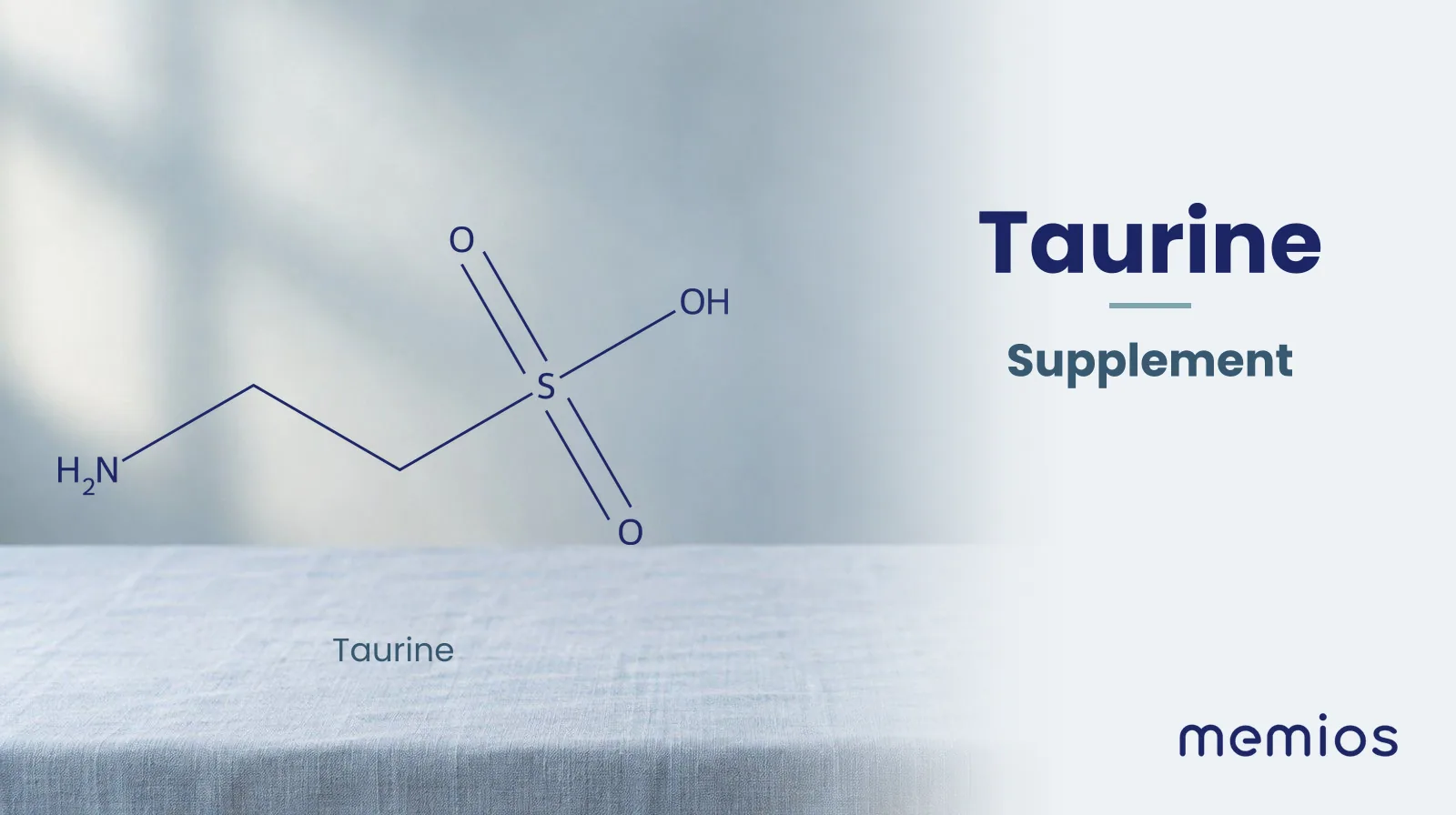
- What it is: Taurine is a small sulphur-containing compound whose IUPAC name is 2-aminoethanesulfonic acid.
- Main use, supported: A meta-analysis of 25 randomised trials found taurine supplementation lowered systolic and diastolic blood pressure, fasting glucose and triglycerides on average. (low certainty)
- Other use, supported: An earlier meta-analysis of 12 trials also found significant reductions in blood pressure, total cholesterol and triglycerides, in a population that was mostly patients with liver or metabolic disease. (low certainty)
- Claim NOT supported by research: An NIH news release reporting an NIH-led study in Science says that across humans, monkeys and mice circulating taurine often rose or stayed constant with age and was inconsistently related to health outcomes. (moderate certainty)
- Another claim NOT supported: The same pooled analysis, in the same population of patients with liver or metabolic dysregulation, found taurine had no effect on fasting blood glucose, HDL cholesterol, LDL cholesterol, body mass index or body weight. (low certainty)
- Recommended dose: not established. No recommended dietary allowance or adequate intake has been set for taurine by the bodies we reached; it is usually described as conditionally essential because adults synthesise it.
- Studied dose (a trial dose, not a recommendation): Trials in the 25-study meta-analysis used 0.5 g to 6 g a day for between 5 and 365 days. Findings citing that trial: 2 for, 1 against.
- Upper limit: No tolerable upper intake level exists.
- What goes wrong: 2 findings on harm. A 2025 Nature study found that leukaemia stem cells depend on taurine uptake, and that blocking taurine supply or its transporter slowed myeloid leukaemia in mice and in patient-derived cells.
- Common myth: Taurine is the stimulant in energy drinks, and because taurine drops as you age, topping it up slows ageing.
What it is
Taurine is a small sulphur-containing compound whose IUPAC name is 2-aminoethanesulfonic acid. Unlike the amino acids in protein it carries a sulphonic acid group rather than a carboxylic acid group and is not built into proteins; it circulates and accumulates free inside cells. The body makes it from cysteine - roughly 50 to 125 mg a day in adults - and also takes it in from food, mainly meat and seafood, with dietary intake estimated at 40 to 400 mg a day. It is involved in forming bile salts and a range of other physiological processes, and is excreted mostly in urine.
What the research says
Pooled randomised trials show modest average reductions in blood pressure and triglycerides with taurine supplements, but the same meta-analyses find no effect on several other outcomes - HDL cholesterol, LDL cholesterol, body mass index and body weight - and most of the trials were done in people who already had liver or metabolic disease rather than in healthy adults. The high-profile anti-ageing claim is contested: a 2023 Science paper reported that circulating taurine falls with age in mice, monkeys and humans and that supplementation extended lifespan in mice, while a 2025 NIH-led study found taurine levels often rose or stayed flat with age and concluded it is not a reliable ageing biomarker. Human trials report few adverse effects at the doses tested, but a 2025 Nature paper identified taurine uptake as something leukaemia stem cells depend on, which is a caution rather than a demonstrated risk to people taking supplements.
Evidence grade: Limited evidence.
What goes wrong
A 2025 Nature study found that leukaemia stem cells depend on taurine uptake, and that blocking taurine supply or its transporter slowed myeloid leukaemia in mice and in patient-derived cells. (Source 1)
- Animal study, Low certainty.
- Size: mouse leukaemia models, patient-derived AML cells and patient-derived xenografts.
- Who: mice and human leukaemia cells in culture and xenograft, not people taking supplements.
- How long: not applicable - laboratory study.
- Result: Taurine-taurine transporter (TAUT) axis identified as a critical dependency of aggressive myeloid leukaemias; blocking taurine biosynthesis in osteolineage cells impaired leukaemia stem cell growth and improved survival; TAUT inhibition synergised with venetoclax against primary human AML cells. This is a mechanistic signal in the direction of caution about taurine supplements in myeloid malignancy, not evidence that supplements cause leukaemia in people.
- Funding: not stated in the abstract we read.
These analyses identify the taurine–taurine transporter (TAUT) axis as a critical dependency of aggressive myeloid leukaemias.
Norway's food safety committee (VKM) concluded that a daily taurine intake of 2000 mg may represent a risk of adverse health effects in adolescents aged 14 to under 18 and in adults aged 18 and over. (Source 2)
- Official position, Certainty not rated.
- Size: not applicable - regulatory risk assessment.
- Who: children aged 10 to under 14, adolescents and adults in Norway.
- How long: position published 2015.
- Result: VKM's conclusion: a daily intake of 2000 mg of taurine may represent a risk of adverse health effects in adolescents (14 to under 18 years) and adults (18 years and over). The committee reached the same conclusion for 1000 mg and 2000 mg a day in children aged 10 to under 14. It also recorded, citing EFSA, a rat no-observed-adverse-effect level of 1000 mg/kg bw per day for pathological changes and 1500 mg/kg bw per day for behavioural effects.
- Funding: not applicable - government body.
VKM concludes that a daily intake of 2000 mg of taurine may represent a risk of adverse health effects in adolescents (14 to <18 years) and adults (≥18 years).
What the evidence supports
A meta-analysis of 25 randomised trials found taurine supplementation lowered systolic and diastolic blood pressure, fasting glucose and triglycerides on average. (Source 3)
- Meta-analysis, Low certainty.
- Size: 1,024 participants across 25 randomised controlled trials.
- Who: adults, largely with metabolic syndrome components or related conditions.
- How long: follow-up ranged from 5 to 365 days.
- Result: Systolic blood pressure -3.999 mmHg (95% CI -7.293 to -0.706, p = 0.017); diastolic -1.509 mmHg (95% CI -2.479 to -0.539, p = 0.002); fasting glucose -5.882 mg/dL (95% CI -10.747 to -1.018, p = 0.018); triglycerides -18.315 mg/dL (95% CI -25.628 to -11.002, p < 0.001)
- Funding: not stated in the abstract we read.
Our analysis included 1024 participants from 25 RCTs.
An earlier meta-analysis of 12 trials also found significant reductions in blood pressure, total cholesterol and triglycerides, in a population that was mostly patients with liver or metabolic disease. (Source 4)
- Meta-analysis, Low certainty.
- Size: 12 eligible peer-reviewed studies.
- Who: patients with liver or metabolic dysregulation - diabetes, hepatitis, fatty liver, obesity, cystic fibrosis, chronic alcoholism and cardiac surgery.
- How long: 15 days to 6 months, doses 0.5 to 6 g/day.
- Result: Systolic blood pressure -4.67 mmHg (95% CI -9.10 to -0.25); diastolic -2.90 mmHg (95% CI -4.29 to -1.52); total cholesterol -10.87 mg/dl (95% CI -16.96 to -4.79); triglycerides -13.05 mg/dl (95% CI -25.88 to -0.22)
- Funding: not stated in the abstract we read.
Limit of this finding: This meta-analysis is internally inconsistent in ways a reader should know about. Its title says randomised controlled trials, but the abstract describes “12 eligible peer-reviewed studies”, which is a looser category. The abstract also states that its main objective was liver markers and that anthropometric measures were explored only secondarily, so the blood pressure and lipid results quoted here were not the analysis's primary question. And most of the included studies were in patients with liver or metabolic disease - diabetes, hepatitis, fatty liver, obesity, cystic fibrosis, chronic alcoholism and cardiac surgery - so these numbers should not be read as effects in healthy adults.
Pooled effect sizes suggested a significant effect of taurine administration on systolic blood pressure (weighted mean difference (WMD): -4.67 mm Hg; 95%CI, -9.10 to -0.25), diastolic blood pressure (WMD: -2.90 mm Hg; 95%CI, -4.29 to -1.52)
The headline lifespan result behind the taurine anti-ageing claim is animal work: supplementation extended lifespan in mice and worms and health span in monkeys, and the authors themselves called for human trials. (Source 5)
- Animal study, Low certainty.
- Size: mice, rhesus monkeys, worms, plus human observational correlations.
- Who: laboratory animals, with correlational human data alongside.
- How long: lifespan studies in mice and worms; health span measures in monkeys.
- Result: Taurine supplementation increased health span and life span in mice and health span in monkeys; in humans, lower taurine concentrations correlated with several age-related diseases. No human lifespan or health-span trial was performed.
- Funding: not stated in the record we read.
A reversal of this decline through taurine supplementation increased the health span (the period of healthy living) and life span in mice and health span in monkeys.
Trials in the 25-study meta-analysis reported no significant adverse effects of taurine compared with control, which is the reassuring side of the safety picture and is limited by short follow-up. (Source 3)
- Meta-analysis, Low certainty.
- Size: 1,024 participants across 25 randomised controlled trials.
- Who: adults, mostly with metabolic conditions.
- How long: follow-up 5 to 365 days, doses 0.5 to 6 g/day.
- Result: No significant adverse effects observed versus control. Most trials were short, so this speaks to short-term tolerability rather than long-term safety.
- Funding: not stated in the abstract we read.
No significant adverse effects were observed compared to the control group.
Two siblings with an inherited defect in the taurine transporter had almost undetectable plasma taurine, childhood retinal degeneration and cardiomyopathy, and both conditions improved on long-term oral taurine. (Source 6)
- Case report, Certainty not rated.
- Size: 2 affected individuals in one consanguineous family.
- Who: children with a homozygous Gly399Val variant in SLC6A6 reducing transport capacity to about 15% of normal.
- How long: 24 months of supplementation.
- Result: Oral taurine 100 mg/kg/day maintained normal blood taurine; after 24 months the cardiomyopathy was corrected in both siblings and in the 6-year-old the retinal degeneration was arrested with clinically improved vision.
- Funding: not stated in the abstract we read.
Limit of this finding: This is a report of two siblings in a single family with an inherited defect in the taurine transporter gene SLC6A6, whose plasma taurine was almost undetectable. It is uncontrolled and open-label, with two people. It says nothing about what taurine supplements do for retinal or heart disease in people whose taurine transport is normal.
The affected individuals presented with rapidly progressive childhood retinal degeneration, cardiomyopathy and almost undetectable plasma taurine levels.
The same committee concluded that it is unlikely that daily taurine intakes of 750, 800, 900 or 1000 mg cause adverse health effects in adolescents aged 14 to under 18 and in adults aged 18 and over. (Source 7)
- Official position, Certainty not rated.
- Size: not applicable - regulatory risk assessment.
- Who: adolescents (14 to under 18 years) and adults (18 years and over) in Norway.
- How long: position published 2015.
- Funding: not applicable - government body.
VKM concludes that it is unlikely that a daily intake of 750, 800, 900 or 1000 mg of taurine causes adverse health effects in adolescents (14 to <18 years) and adults (≥18 years).
What the evidence does not support
The same pooled analysis, in the same population of patients with liver or metabolic dysregulation, found taurine had no effect on fasting blood glucose, HDL cholesterol, LDL cholesterol, body mass index or body weight. (Source 4)
- Meta-analysis, Low certainty.
- Size: 12 trials.
- Who: patients with liver or metabolic dysregulation.
- How long: 15 days to 6 months.
- Result: Fasting blood glucose WMD 0.06 mg/dl; HDL-C 0.90 mg/dl; LDL-C -6.17 mg/dl; body mass index -0.46 kg/m2; body weight -0.47 kg - none significant. Note this contradicts the later meta-analysis on fasting glucose.
- Funding: not stated in the abstract we read.
Limit of this finding: This meta-analysis is internally inconsistent in ways a reader should know about. Its title says randomised controlled trials, but the abstract describes “12 eligible peer-reviewed studies”, which is a looser category. The abstract also states that its main objective was liver markers and that anthropometric measures were explored only secondarily, so the blood pressure and lipid results quoted here were not the analysis's primary question. And most of the included studies were in patients with liver or metabolic disease - diabetes, hepatitis, fatty liver, obesity, cystic fibrosis, chronic alcoholism and cardiac surgery - so these numbers should not be read as effects in healthy adults.
however, it had no effect on fasting blood glucose (WMD: 0.06 mg/dl), HDL-C (WMD: 0.90 mg/dl), LDL-C (WMD: -6.17 mg/dl), as well as on body mass index (WMD: -0.46 kg/m2) and body weight (WMD: -0.47 kg) as the anthropometric measures.
The 25-trial meta-analysis found no significant effect of taurine on HDL cholesterol. (Source 3)
- Meta-analysis, Low certainty.
- Size: 1,024 participants across 25 randomised controlled trials.
- Who: adults with metabolic syndrome components or related conditions.
- How long: 5 to 365 days.
- Result: HDL-C weighted mean difference 0.644 mg/dl (95% CI -0.244 to 1.532), p = 0.155.
- Funding: not stated in the abstract we read.
but not in HDL-C (WMD: 0.644 mg/dl, 95% CI: −0.244 to 1.532, p = 0.155).
An NIH news release reporting an NIH-led study in Science says that across humans, monkeys and mice circulating taurine often rose or stayed constant with age and was inconsistently related to health outcomes, undercutting the idea that declining taurine drives ageing. (Source 8)
- Cohort study, Moderate certainty.
- Size: longitudinal and cross-sectional blood samples from human, monkey and mouse cohorts (numbers not given in the release we read)
- Who: humans, rhesus monkeys and mice across the lifespan.
- How long: longitudinal follow-up.
- Result: Taurine levels often increased or remained constant with age; within-individual differences often exceeded age-related changes; associations with health outcomes were inconsistent across age, species and cohorts. This is observational data, so it argues against taurine being a usable ageing marker rather than proving taurine is irrelevant.
- Funding: independent (National Institutes of Health intramural research)
Limit of this finding: The words quoted here are the National Institutes of Health press office's, from a news release, not the study's own text. The release is a fair plain-language summary, but anyone relying on the numbers or the statistical detail should go to the underlying paper in Science rather than to this page.
In blood samples from humans, monkeys, and mice, scientists found that circulating taurine levels often increased or remained constant with age.
Where the research disagrees
Whether falling taurine drives human ageing
- Singh and colleagues, Science (2023), animal lifespan and health-span experiments plus human observational correlations: that concentrations of circulating taurine decline with aging in mice, monkeys, and humans. A reversal of this decline through taurine supplementation increased the health span (the period of healthy living) and life span in mice and health span in monkeys. (Source 5)
- NIH intramural researchers (2025), reporting in Science, longitudinal human, monkey and mouse cohort data: circulating taurine levels often increased or remained constant with age. Analysis of longitudinal data showed that within individual differences in taurine levels often exceeded age-related changes. (Source 8)
Whether taurine supplements change fasting blood glucose
- Meta-analysis of 25 RCTs (Nutrition & Diabetes, 2024), meta-analysis of 25 randomised controlled trials, 1,024 participants: FBG (WMD: −5.882 mg/dL, 95% CI: −10.747 to −1.018, p = 0.018) (Source 3)
- Meta-analysis of 12 RCTs (European Journal of Pharmacology, 2020), meta-analysis of 12 randomised controlled trials: however, it had no effect on fasting blood glucose (WMD: 0.06 mg/dl) (Source 4)
How much
- Reference intake: No recommended dietary allowance or adequate intake has been set for taurine by the bodies we reached; it is usually described as conditionally essential because adults synthesise it. VKM (2015) records that adults synthesise roughly 0.4 to 1.0 mmol a day, about 50 to 125 mg, and that dietary intake has been estimated at 40 to 400 mg a day. (Source 9)
- Upper limit: No tolerable upper intake level exists. VKM (2015) concluded that it is unlikely that adolescent and adult daily intakes of 750, 800, 900 or 1000 mg of taurine cause adverse health effects, and that a daily intake of 2000 mg may represent a risk of adverse health effects; the same report records, citing EFSA, a rat no-observed-adverse-effect level of 1000 mg/kg body weight per day for pathological changes and 1500 mg/kg body weight per day for behavioural effects. (Source 2)
- Studied: Trials in the 25-study meta-analysis used 0.5 g to 6 g a day for between 5 and 365 days. (Source 3)
- Studied: The earlier 12-study meta-analysis covered doses of 0.5 to 6 g a day for 15 days to 6 months. (Source 4)
- Studied: Two children with SLC6A6 taurine transporter deficiency were given 100 mg per kg of body weight a day for 24 months. (Source 6)
A common belief, and what the research shows
The belief: Taurine is the stimulant in energy drinks, and because taurine drops as you age, topping it up slows ageing.
What the research shows: Taurine is not a stimulant: it is a sulphur compound the body makes from cysteine, involved in bile salt formation, that "participates in the formation of bile salts, and is involved in a number of crucial physiological processes". The ageing story rests mainly on animals - supplementation "increased the health span (the period of healthy living) and life span in mice and health span in monkeys" - and the premise has since been challenged, with an NIH-led analysis finding "circulating taurine levels often increased or remained constant with age". The NIH release is blunt that "there is no solid clinical data that shows its supplementation benefits humans" for ageing. What human trials do show is smaller and more specific: average blood pressure and triglyceride reductions, with no effect on HDL cholesterol, body mass index or body weight.
Questions and answers
What is it?
Taurine is a small sulphur-containing molecule, IUPAC name 2-aminoethanesulfonic acid. It is often called an amino acid but it is not built into proteins - it stays free inside cells and in the blood. Adults make it from cysteine and also get it from food, and it helps form the bile salts used to digest fat. (Source 10)
What does it do in the body?
It is concentrated in heart, muscle, retina and brain, and contributes to bile salt formation and a range of other processes. In supplement trials its measurable effects in people are modest: pooled randomised trials show small average falls in blood pressure, fasting glucose and triglycerides. (Source 3)
Is it good or bad for you?
Amount and context decide it. Norway's food safety committee concluded that daily supplement intakes of 750 to 1000 mg are unlikely to cause adverse health effects in adolescents and adults, and separately concluded that 2000 mg a day may represent a risk of adverse health effects, with the same warning applying from 1000 mg a day in children aged 10 to under 14. Short trials report no significant adverse effects, but follow-up is mostly weeks to months, and a 2025 laboratory study found leukaemia stem cells depend on taurine uptake. (Source 7)
How do you get more of it?
Taurine comes from the diet, mainly animal foods, and from what the body synthesises; supplement trials used 0.5 to 6 grams a day. Dietary intake has been estimated at 40 to 400 mg a day, against endogenous synthesis of roughly 50 to 125 mg a day in adults. This describes what has been measured and tested, not a recommendation. (Source 11)
If it is harmful, what reduces it?
Reducing taurine is not a recognised goal in healthy people, and no treatment to lower it exists. The only quantitative statements about too much are intake thresholds: a Norwegian risk assessment concluded that 2000 mg a day from supplements may represent a health risk in adults, so the lever described in the literature is supplement intake rather than removal. Taurine is cleared mainly in urine. (Source 12)
Why might someone be low in it or missing it?
Low taurine can come from low intake, because dietary taurine is concentrated in meat and seafood, or from reduced synthesis, since the body makes only about 50 to 125 mg a day in adults. It can also be genetic: a defect in the SLC6A6 taurine transporter left two siblings with almost undetectable plasma taurine. (Source 6)
Which whole foods contain it or feed it?
Meat and seafood are the main dietary sources; plant foods contain very little, which is why intake varies so widely between diets. Estimated dietary intake ranges from 40 to 400 mg a day. (Source 11)
What happens if you do not have it?
In the general population there is no defined deficiency disease, because adults synthesise taurine. Where transport into cells genuinely fails, the consequences are serious: two siblings with an SLC6A6 transporter defect developed rapidly progressive childhood retinal degeneration and cardiomyopathy, and both improved on long-term oral taurine. (Source 6)
How can you test for it?
Taurine can be measured in plasma and in urine, and plasma taurine is what identified the transporter defect above and what the ageing studies tracked. The reliability caveat is large: an NIH-led longitudinal analysis found that differences within the same person over time often exceeded age-related differences, so a single plasma taurine reading is a poor guide to status or to ageing. (Source 8)
References
- Nature. Taurine from tumour niche drives glycolysis to promote leukaemogenesis. 2025. PMID 40369079, DOI 10.1038/s41586-025-09018-7. Read the source
- Norwegian Scientific Committee for Food Safety (VKM). Risk assessment of "other substances" – Taurine (VKM Report 2015:22) – VKM conclusion on a daily intake of 2000 mg. 2015. Read the source
- Nutrition & Diabetes. Taurine reduces the risk for metabolic syndrome: a systematic review and meta-analysis of randomized controlled trials (abstract Results section). 2024. DOI 10.1038/s41387-024-00289-z. Read the source
- European Journal of Pharmacology. The effects of taurine supplementation on obesity, blood pressure and lipid profile: A meta-analysis of randomized controlled trials. 2020. DOI 10.1016/j.ejphar.2020.173533. Read the source
- Science. Taurine deficiency as a driver of aging. 2023. PMID 37289866, DOI 10.1126/science.abn9257. Read the source
- Human Molecular Genetics. Taurine treatment of retinal degeneration and cardiomyopathy in a consanguineous family with SLC6A6 taurine transporter deficiency (abstract; a report of two affected siblings in one family). 2020. DOI 10.1093/hmg/ddz303. Read the source
- Norwegian Scientific Committee for Food Safety (VKM). Risk assessment of "other substances" – Taurine (VKM Report 2015:22) – VKM conclusion on daily intakes of 750 to 1000 mg. 2015. Read the source
- National Institutes of Health (news release on Fernandez et al., Science 2025). NIH researchers conclude that taurine is unlikely to be a good aging biomarker (news release reporting Fernandez et al., Science 2025; the wording below is the NIH press office's, not the paper's). 2025. Read the source
- Norwegian Scientific Committee for Food Safety (VKM). Risk assessment of "other substances" – Taurine (VKM Report 2015:22) – endogenous synthesis in adults. 2015. Read the source
- Norwegian Scientific Committee for Food Safety (VKM). Risk assessment of "other substances" – Taurine (VKM Report 2015:22) – what taurine does in the body. 2015. Read the source
- Norwegian Scientific Committee for Food Safety (VKM). Risk assessment of "other substances" – Taurine (VKM Report 2015:22) – dietary sources and estimated dietary intake. 2015. Read the source
- Norwegian Scientific Committee for Food Safety (VKM). Risk assessment of "other substances" – Taurine (VKM Report 2015:22) – excretion. 2015. Read the source