Medications · September 30, 2026 · Memios · 24 min read
Spironolactone
Well established. The evidence differs sharply by use.
TLDR
- Boxed warning: Unnecessary use of this drug should be avoided.
- Well established. The evidence differs sharply by use.
- What it is: Spironolactone is a prescription steroidal drug that blocks the hormone aldosterone at its receptor in the kidney.
- Main use: Severe heart failure (NYHA class III-IV) with reduced ejection fraction, added to standard therapy (well supported).
- Other approved uses: Essential hypertension, in particular drug-resistant hypertension as an added fourth agent (well supported); Primary hyperaldosteronism; oedema in congestive heart failure, cirrhosis with ascites, and nephrotic syndrome; hypokalaemia (evidence not rated).
- Off-label uses (not on the FDA label): Acne vulgaris in adult women (limited evidence); Hirsutism (unwanted hair growth) in women, including in polycystic ovary syndrome (limited evidence).
- Uses NOT supported by research: Heart failure with preserved ejection fraction (HFpEF).
- Recommended dose: not established. There is no reference intake for a prescription medicine; dose is set by the prescriber and differs by condition. As a position, the US label (DailyMed, spironolactone tablets USP.
- Studied dose (a trial dose, not a recommendation): The trial summaries we could reach (RALES, PATHWAY-2, TOPCAT, SAFA) did not state the doses used in the passages we recorded verbatim. No finding here cites that trial.
- Upper limit: The label does not state a single maximum dose across all uses.
- What goes wrong: 5 findings on harm. Gynaecomastia or breast pain affected ten times as many men on spironolactone as on placebo in RALES.
- Interactions: 7 recorded, including Potassium supplements, Potassium-rich diet and potassium-containing salt substitutes (LoSalt-type products), Non-steroidal anti-inflammatory drugs (ibuprofen, indomethacin and similar), ACE inhibitors and angiotensin II receptor blockers.
- Common myth: Spironolactone is just a water tablet, so it is interchangeable across heart conditions and harmless as long as you drink enough.
What it is
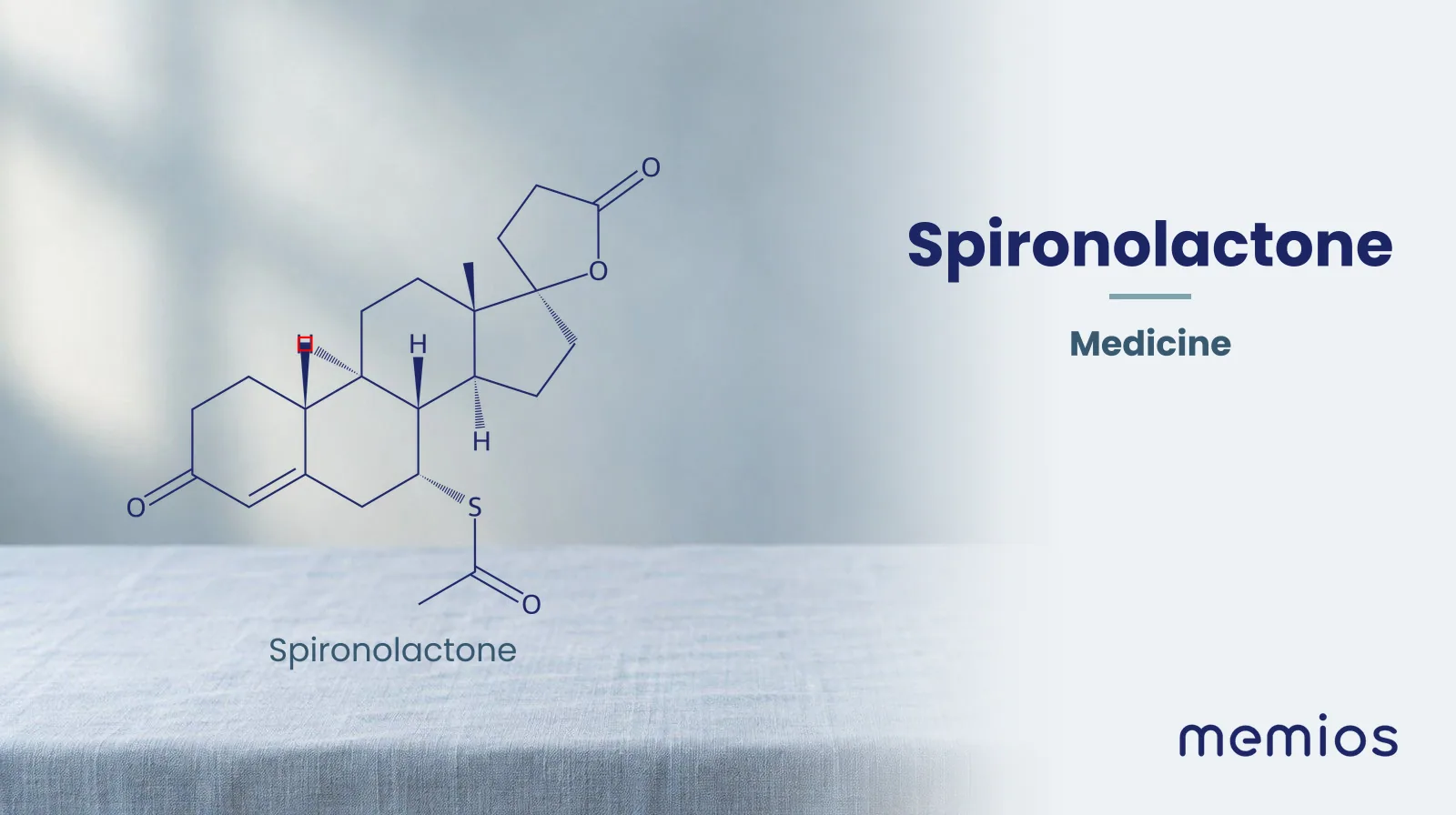
Spironolactone is a prescription steroidal drug that blocks the hormone aldosterone at its receptor in the kidney. It acts as a potassium-sparing diuretic: the kidney passes out more sodium and water while holding on to potassium. It is a mineralocorticoid receptor antagonist, and because the receptor it blocks resembles the androgen receptor it also has anti-androgen effects, which is the basis of its off-label use in acne and hirsutism. The US label carries a boxed warning about tumours in rats.
What the research says
The evidence differs sharply by use. In severe heart failure with reduced ejection fraction the RALES trial cut deaths from 46% on placebo to 35% on spironolactone (relative risk 0.70, p<0.001), an absolute reduction of about 11 percentage points. In drug-resistant hypertension PATHWAY-2 found it lowered home systolic pressure 8.70 mmHg more than placebo. For heart failure with preserved ejection fraction, TOPCAT missed its primary endpoint (18.4% versus 20.4%, hazard ratio 0.89, 95% CI 0.77 to 1.04, p=0.138). For acne in women the SAFA trial showed benefit that was clear by 24 weeks. For hirsutism the pooled antiandrogen trials were of low quality and the reviewers called the evidence weak. The costs are hyperkalaemia (18.7% versus 9.1% in TOPCAT) and gynaecomastia or breast pain in men (10% versus 1% in RALES).
Evidence grade: Well established.
How it works
Drug class: Mineralocorticoid receptor antagonist (aldosterone antagonist); potassium-sparing diuretic with anti-androgen activity
Aldosterone is a hormone that tells the kidney to hold on to sodium and water and to dump potassium. Spironolactone competes with aldosterone for its receptor in the distal part of the kidney tubule, so more sodium and water leave in the urine while potassium is kept in the body. That is why it lowers blood pressure and relieves fluid overload, and also why the main danger is potassium building up too high. (Source 1)
Boxed warning
Spironolactone has been shown to be a tumorigen in chronic toxicity studies in rats (see PRECAUTIONS). Spironolactone should be used only in those conditions described under INDICATIONS AND USAGE. Unnecessary use of this drug should be avoided.
(Source 2)
What it is used for
- RALES was stopped early because spironolactone reduced all-cause death: 46% on placebo versus 35% on spironolactone (relative risk 0.70, p<0.001), with hospitalisation for worsening heart failure 35% lower. That is an absolute mortality reduction of about 11 percentage points, roughly one death avoided for every nine patients treated over the trial. Evidence: established. (Source 3)
- In the PATHWAY-2 crossover trial spironolactone lowered home systolic blood pressure 8.70 mmHg more than placebo and about 4 mmHg more than bisoprolol or doxazosin, with serious adverse events no more common than on placebo. The trial measured blood pressure, not heart attacks or strokes. Evidence: established. (Source 4)
- These are long-standing label indications resting largely on physiology and older studies. We did not reach outcome trials or systematic reviews for them in this run, so we record the label as a position with its date rather than as evidence. Evidence: unknown. (Source 2)
- TOPCAT missed its primary composite endpoint: 18.4% of the spironolactone group versus 20.4% of the placebo group over a mean 3.3 years, hazard ratio 0.89 (0.77 to 1.04), p=0.138, while hyperkalaemia doubled. Evidence: not-supported. (Source 5)
- The SAFA randomised trial found quality-of-life symptom scores better on spironolactone, with the difference small and of uncertain importance at week 12 (1.27, 95% CI 0.07 to 2.46) but larger at week 24 (3.45, 95% CI 2.16 to 4.75); 82% versus 63% reported improvement at week 24. Headaches were more common (20% versus 12%). Evidence: limited. (Source 6)
- Pooled antiandrogen trials including spironolactone lowered hirsutism scores versus placebo (weighted mean difference -3.9, 95% CI -5.4 to -2.3, NNT 3), but trial quality was low and the reviewers described the evidence as weak. Added to an oral contraceptive, antiandrogens showed no significant extra benefit. Evidence: limited. (Source 7)
Interactions
- Potassium supplements (label): Spironolactone makes the kidney hold potassium; adding a potassium supplement can push potassium to dangerous levels. The label says no potassium supplement should ordinarily be given with it. (Source 8)
- Potassium-rich diet and potassium-containing salt substitutes (LoSalt-type products) (label): A diet high in potassium, or a salt substitute in which the sodium is replaced with potassium, adds to the potassium retained by spironolactone and can cause severe hyperkalaemia. (Source 8)
- Non-steroidal anti-inflammatory drugs (ibuprofen, indomethacin and similar) (label): NSAIDs blunt the diuretic and blood-pressure-lowering effect and, combined with potassium-sparing diuretics, have caused severe hyperkalaemia. (Source 9)
- ACE inhibitors and angiotensin II receptor blockers (label): These also raise potassium, so combining them with spironolactone has caused severe hyperkalaemia; the combination is common in heart failure and needs potassium monitoring. (Source 10)
- Digoxin (label): Spironolactone lengthens how long digoxin stays in the body, which can raise digoxin levels and cause digitalis toxicity. (Source 11)
- Lithium (label): Diuretics including spironolactone reduce how fast the kidney clears lithium, creating a high risk of lithium toxicity. (Source 12)
- Alcohol (also barbiturates and opioid painkillers) (label): Alcohol can add to the drop in blood pressure on standing that spironolactone causes, making dizziness and fainting more likely. (Source 13)
Stopping it
- The label gives no tapering schedule for spironolactone and does not describe a withdrawal syndrome. It does state that gynaecomastia, one of the commonest reasons people stop it, usually reverses after it is discontinued, though breast enlargement can occasionally persist. (Source 14)
- In severe heart failure the benefit is tied to continued treatment: RALES compared continued spironolactone with placebo and found 46% dead on placebo against 35% on spironolactone, so stopping returns a patient to the untreated risk seen in that trial. We found no trial of planned withdrawal or deprescribing of spironolactone in heart failure. (Source 3)
What goes wrong
Gynaecomastia or breast pain affected ten times as many men on spironolactone as on placebo in RALES. (Source 3)
- Randomized trial, High certainty.
- Size: men within the RALES population.
- Who: men with severe heart failure.
- How long: mean follow-up about 24 months.
- Result: gynaecomastia or breast pain in 10% of men on spironolactone versus 1% on placebo, p<0.001.
- Funding: not stated in the summary we read.
Gynecomastia or breast pain was reported in 10% of men treated with spironolactone vs 1% of men in the placebo group (p<0.001). No other differences in safety or adverse event reports were observed.
Hyperkalaemia was roughly twice as common on spironolactone as on placebo in TOPCAT, and doubling of creatinine about 50% more likely. (Source 15)
- Randomized trial, High certainty.
- Size: 3,445 patients.
- Who: patients with heart failure and preserved ejection fraction, with protocol potassium monitoring.
- How long: mean 3.3 years.
- Result: hyperkalaemia 322 (18.7%) versus 157 (9.1%), p<0.001 — an absolute excess of about 9.6 percentage points, about one extra case per 10 treated; doubling of creatinine above the upper limit of normal HR 1.49 (1.18 to 1.87), p<0.001; no deaths related to hyperkalaemia.
- Funding: publicly funded trial; commentary independent.
Hyperkalemia was more common in patients receiving spironolactone [322 (18.7%) vs. 157 (9.1%) for placebo, p < 0.001], but there were no deaths related to hyperkalemia. Patients in the spironolactone group were also almost 50% more likely to experience doubling of creatinine above the upper limit of normal [HR 1.49 (1.18–1.87), p < 0.001].
Headaches were significantly more common on spironolactone than placebo in the acne trial, though no serious adverse reactions occurred. (Source 6)
- Randomized trial, Moderate certainty.
- Size: 410 randomised.
- Who: women with persistent facial acne.
- How long: 24 weeks.
- Result: headaches 20% versus 12%, p=0.02; no serious adverse reactions reported.
- Funding: publicly funded (NIHR HTA)
Adverse reactions were slightly more common in the spironolactone group with more headaches reported (20% v 12%; p=0.02). No serious adverse reactions were reported.
The label's boxed warning rests on tumour findings in rats, not on human outcome data, and instructs that unnecessary use be avoided. (Source 2)
- Animal study, Certainty not rated.
- Size: chronic toxicity studies in rats; no human incidence given in the boxed warning.
- Who: rats.
- How long: chronic toxicity studies.
- Result: tumorigenicity in rats; no quantified human risk stated in the warning.
- Funding: manufacturer's FDA-approved labelling.
Spironolactone should be used only in those conditions described under INDICATIONS AND USAGE. Unnecessary use of this drug should be avoided.
The label warns that hyperkalaemia in people with impaired kidney function or high potassium intake can cause fatal cardiac irregularities. (Source 16)
- Official position, Certainty not rated.
- Size: regulatory labelling.
- Who: patients taking spironolactone, especially with renal impairment.
- How long: not applicable.
- Result: cardiac irregularities which may be fatal; no potassium supplement should ordinarily be given.
- Funding: manufacturer's FDA-approved labelling.
Hyperkalemia may occur in patients with impaired renal function or excessive potassium intake and can cause cardiac irregularities, which may be fatal. Consequently, no potassium supplement should ordinarily be given with spironolactone.
What the evidence supports
In severe heart failure with reduced ejection fraction, spironolactone reduced all-cause death from 46% to 35% and cut heart failure hospitalisation by 35%. (Source 3)
- Randomized trial, High certainty.
- Size: 1,663 patients (RALES), as summarised by the American College of Cardiology.
- Who: patients with severe (NYHA class III-IV) heart failure and reduced ejection fraction on standard therapy.
- How long: trial stopped early; mean follow-up about 24 months.
- Result: mortality 46% placebo versus 35% spironolactone (RR 0.70, p<0.001), an absolute difference of about 11 percentage points; hospitalisation for worsening heart failure RR 0.65, p<0.001; NYHA class improvement 41% versus 33%, p<0.001.
- Funding: not stated in the summary we read (the original trial was supported by Searle)
Mortality was 46% in the placebo group and 35% in the spironolactone group (RR, 0.70, p<0.001). Most of the 30% mortality reduction in the spironolactone group was due to a lower risk of both death from progressive heart failure and sudden death from cardiac causes.
In drug-resistant hypertension spironolactone lowered home systolic blood pressure more than placebo and more than bisoprolol or doxazosin. (Source 4)
- Randomized trial, High certainty.
- Size: 335 patients randomised in a double-blind crossover design (PATHWAY-2), as summarised by the American College of Cardiology.
- Who: adults with drug-resistant hypertension already on three antihypertensives.
- How long: 12-week treatment cycles in rotation.
- Result: home systolic BP difference versus placebo -8.70 mmHg (p<0.001); versus bisoprolol/doxazosin -4.26 mmHg (p<0.001); home systolic 135 mmHg on spironolactone versus 144 mmHg on placebo.
- Funding: not stated in the summary we read (the trial was funded by the British Heart Foundation and the NIHR)
Limit of this finding: The last sentence of this American College of Cardiology summary reports the open-label amiloride phase as 'r = 0.64, p < 0.0001'. A correlation coefficient is not a measure of how far blood pressure fell, so that figure cannot be read as an amiloride effect size and nothing here is built on it. It is the ACC summary's own wording rather than the Lancet paper's, so any figure for amiloride should be taken from Williams B and colleagues, Lancet 2015.
∆ in home systolic blood pressure (SBP) between spironolactone and placebo: -8.70 mm Hg (p < 0.001)
Serious adverse events in PATHWAY-2 were no more frequent on spironolactone than on placebo over the treatment cycles. (Source 4)
- Randomized trial, Moderate certainty.
- Size: 335 patients.
- Who: adults with drug-resistant hypertension.
- How long: 12-week cycles.
- Result: serious adverse events 2.3% spironolactone, 1.7% doxazosin, 2.6% bisoprolol, 1.7% placebo.
- Funding: not stated in the summary we read.
Limit of this finding: The last sentence of this American College of Cardiology summary reports the open-label amiloride phase as 'r = 0.64, p < 0.0001'. A correlation coefficient is not a measure of how far blood pressure fell, so that figure cannot be read as an amiloride effect size and nothing here is built on it. It is the ACC summary's own wording rather than the Lancet paper's, so any figure for amiloride should be taken from Williams B and colleagues, Lancet 2015.
Serious adverse events were 2.3% with spironolactone, 1.7% with doxazosin, 2.6% with bisoprolol, and 1.7% with placebo.
In women with persistent acne, spironolactone improved acne-specific quality of life, with the benefit clearer at 24 weeks than at 12 weeks. (Source 6)
- Randomized trial, Moderate certainty.
- Size: 410 randomised, 342 in the primary analysis.
- Who: women aged 18 and over with facial acne persisting at least 6 months warranting oral antibiotics.
- How long: 24 weeks.
- Result: Acne-QoL symptom subscale difference favouring spironolactone 1.27 (95% CI 0.07 to 2.46) at week 12 and 3.45 (95% CI 2.16 to 4.75) at week 24; participant-reported improvement 72% versus 68% at week 12 (OR 1.16, 0.70 to 1.91, not significant) and 82% versus 63% at week 24 (OR 2.72, 1.50 to 4.93); investigator-assessed treatment success at week 12 in 31/168 (19%) versus 9/160 (6%), OR 5.18 (2.18 to 12.28)
- Funding: publicly funded (NIHR Health Technology Assessment programme), per the published trial.
Scores at week 24 were 21.2 (5.9) for spironolactone and 17.4 (5.8) for placebo (difference 3.45 (95% confidence interval 2.16 to 4.75), adjusted).
What the evidence does not support
In heart failure with preserved ejection fraction, spironolactone did not significantly reduce the primary composite outcome. (Source 5)
- Randomized trial, High certainty.
- Size: 3,445 patients (TOPCAT), 1,722 spironolactone versus 1,723 placebo as reported.
- Who: patients with symptomatic heart failure and ejection fraction of 45% or more.
- How long: mean follow-up 3.3 years.
- Result: primary endpoint in 320 (18.4%) versus 351 (20.4%); HR 0.89 (0.77 to 1.04), p=0.138 — an absolute difference of about 2 percentage points that was not statistically significant.
- Funding: publicly funded trial (NHLBI); commentary independent.
After a mean follow-up period of 3.3 years, the primary endpoint occurred in 320 (18.4%) and 351 (20.4%) of patients in the spironolactone and placebo groups respectively [HR = 0.89 (0.77–1.04), p = 0.138].
The hirsutism reviewers described trial quality as low: only one trial reported adequate allocation concealment and only half clearly reported blinded outcome assessment. (Source 7)
- Systematic review, Low certainty.
- Size: 12 RCTs.
- Who: women with hirsutism.
- How long: median loss to follow up four per cent (range 0 to 42 per cent)
- Result: only one RCT reported adequate allocation concealment; only half clearly reported blinded outcome assessment.
- Funding: not stated.
Trial quality was low. Only one RCT reported adequate allocation concealment and only half clearly reported blinded outcome assessment.
Where the evidence is mixed
For hirsutism, pooled antiandrogen trials including spironolactone showed a modest reduction in hair scores, a weighted mean difference of -3.9 points with a number needed to treat of 3 across five comparisons. (Source 7)
- Systematic review, Low certainty.
- Size: 12 RCTs (18 comparisons), total sample size over 506.
- Who: women with hirsutism.
- How long: not stated in the abstract we read.
- Result: antiandrogens versus placebo: hirsutism score weighted mean difference -3.9 (95% CI -5.4 to -2.3), NNT 3, five comparisons, no heterogeneity; no significant difference between spironolactone, flutamide and finasteride on subgroup analysis; adding antiandrogens to an oral contraceptive gave no significant extra benefit.
- Funding: not stated.
Hirsutism scores were significantly lower in the intervention group (WMD -3.9, 95% CI: -5.4, -2.3, NNT=3, five comparisons); there was no heterogeneity.
The reviewers' own stated conclusion was that the evidence that antiandrogens help hirsutism is weak and the effect mild. (Source 17)
- Systematic review, Low certainty.
- Size: 12 RCTs (18 comparisons), total sample size over 506.
- Who: women with hirsutism.
- How long: not stated in the abstract we read.
- Result: stated as a qualitative conclusion, with no pooled figure attached to it.
- Funding: not stated.
Limit of this finding: This closing sentence is the commentary of the reviewers at the Centre for Reviews and Dissemination who wrote this structured abstract, not a sentence from the original authors' own conclusions, so read it as an independent summary of the trials rather than as what the trial authors claimed.
There was weak evidence that antiandrogens were mildly effective for treating hirsutism.
Where the research disagrees
Whether spironolactone should still be used in heart failure with preserved ejection fraction after TOPCAT missed its primary endpoint
- The TOPCAT trial result as reported in Global Cardiology Science and Practice, randomised, double-blind, placebo-controlled trial, 3,445 patients: After a mean follow-up period of 3.3 years, the primary endpoint occurred in 320 (18.4%) and 351 (20.4%) of patients in the spironolactone and placebo groups respectively [HR = 0.89 (0.77–1.04), p = 0.138]. (Source 5)
- The same commentary, on the harm side of the ledger, same trial, safety outcomes: Hyperkalemia was more common in patients receiving spironolactone [322 (18.7%) vs. 157 (9.1%) for placebo, p < 0.001], but there were no deaths related to hyperkalemia. (Source 15)
How much
- Reference intake: There is no reference intake for a prescription medicine; dose is set by the prescriber and differs by condition. As a position, the US label (DailyMed, spironolactone tablets USP, read 22 September 2026) states that for adults with essential hypertension an initial daily dosage of 50 to 100 mg of spironolactone, in single or divided doses, is recommended. (Source 18)
- Upper limit: The label does not state a single maximum dose across all uses. For severe heart failure it states that treatment should be initiated at 25 mg once daily if serum potassium is 5.0 mEq/L or less and serum creatinine is 2.5 mg/dL or less, that patients who tolerate 25 mg once daily may have the dosage increased to 50 mg once daily as clinically indicated, and that patients who do not tolerate 25 mg once daily may have it reduced to 25 mg every other day. (Source 19)
- Studied: The trial summaries we could reach (RALES, PATHWAY-2, TOPCAT, SAFA) did not state the doses used in the passages we recorded verbatim. The label's severe heart failure regimen, 25 mg once daily increasing to 50 mg once daily, corresponds to the population RALES studied. (Source 19)
A common belief, and what the research shows
The belief: Spironolactone is just a water tablet, so it is interchangeable across heart conditions and harmless as long as you drink enough.
What the research shows: Its evidence is condition-specific, and its main danger is potassium, not dehydration. In severe heart failure with reduced ejection fraction "Mortality was 46% in the placebo group and 35% in the spironolactone group (RR, 0.70, p<0.001)." In heart failure with preserved ejection fraction the same drug missed its target: "the primary endpoint occurred in 320 (18.4%) and 351 (20.4%) of patients in the spironolactone and placebo groups respectively [HR = 0.89 (0.77–1.04), p = 0.138]." And the label warns "Hyperkalemia may occur in patients with impaired renal function or excessive potassium intake and can cause cardiac irregularities, which may be fatal."
Questions and answers
What is it?
Spironolactone is a prescription tablet that blocks the hormone aldosterone at its receptor in the kidney. That makes it a potassium-sparing diuretic: more sodium and water leave in the urine while potassium is retained. Because the receptor it blocks resembles the male hormone receptor, it also has anti-androgen effects. (Source 1)
What does it do in the body?
By blocking aldosterone it makes the kidney pass out sodium and water while holding potassium, which lowers blood pressure and reduces fluid overload. In severe heart failure that same blockade reduced deaths in the RALES trial. The potassium-retaining effect is also the source of its main danger. (Source 1)
Is it good or bad for you?
It depends entirely on the condition. In severe heart failure with a weak pumping chamber it reduced deaths from 46% to 35% in RALES, and in drug-resistant hypertension it lowered blood pressure more than the alternatives tested. In heart failure with a preserved ejection fraction it missed its endpoint while doubling hyperkalaemia, and in men 10% got breast tenderness or enlargement versus 1% on placebo. (Source 15)
How do you get more of it?
Spironolactone is available only on prescription and the dose is chosen by the prescriber for the specific condition. As a position, the label starts severe heart failure at 25 mg once daily, conditional on potassium and creatinine being within limits, and essential hypertension at 50 to 100 mg daily. No food or supplement supplies it. (Source 19)
If it is harmful, what reduces it?
When spironolactone itself is causing the problem, the documented remedy is dose reduction or stopping. The label says gynaecomastia is dose- and duration-related and normally reverses after stopping, and that dose can be halved or given alternate-day in heart failure if 25 mg daily is not tolerated. For high potassium, the label directs removing added potassium sources. (Source 14)
Why might someone be low in it or missing it?
Someone with an indication may not be on it because of kidney impairment or a high potassium level, which the label makes a condition of starting and a reason to stop. Others stop because of breast tenderness or enlargement, which affected 10% of men in RALES versus 1% on placebo, or because of headaches in the acne setting. (Source 16)
Which whole foods contain it or feed it?
No whole food contains spironolactone. Food matters in the other direction: potassium-rich foods and potassium-based salt substitutes add to the potassium spironolactone retains and are listed on the label as sources that can cause severe hyperkalaemia. Alcohol can worsen the drop in blood pressure on standing. (Source 8)
What happens if you do not have it?
Spironolactone is not a nutrient, so there is no deficiency. What the trials show is what happens to outcomes without it: in severe heart failure the placebo group's mortality was 46% against 35% on spironolactone, and hospitalisation for worsening heart failure was 35% higher. In heart failure with preserved ejection fraction, going without it made no significant difference to the primary outcome. (Source 3)
How can you test for it?
There is no test for spironolactone itself in routine use. What is monitored is its effect: serum potassium and serum creatinine. The label makes starting in severe heart failure conditional on potassium of 5.0 mEq/L or less and creatinine of 2.5 mg/dL or less, and these blood tests are repeated because hyperkalaemia can be fatal. Both are standard, reliable laboratory measurements. (Source 19)
References
- DailyMed, US National Library of Medicine (manufacturer's FDA-approved label). Spironolactone Tablets, USP 25 mg, 50 mg, 100 mg - FDA-approved prescribing information (read 22 September 2026). Passages recorded from the boxed WARNING, INDICATIONS AND USAGE, CLINICAL PHARMACOLOGY, PRECAUTIONS (General, Drug Interactions) and DOSAGE AND ADMINISTRATION. not dated in the text we read; accessed 2026-09-22. Read the source
- DailyMed, US National Library of Medicine (manufacturer's FDA-approved label). Spironolactone Tablets, USP 25 mg, 50 mg, 100 mg - FDA-approved prescribing information (read 22 September 2026). Passages recorded from the boxed WARNING, INDICATIONS AND USAGE, CLINICAL PHARMACOLOGY, PRECAUTIONS (General, Drug Interactions) and DOSAGE AND ADMINISTRATION. not dated in the text we read; accessed 2026-09-22. Read the source
- American College of Cardiology, Latest in Cardiology / Clinical Trials. Randomized Aldactone Evaluation Study - RALES (trial summary, Principal Findings) - summarising Pitt B et al., The Effect of Spironolactone on Morbidity and Mortality in Patients with Severe Heart Failure, New England Journal of Medicine 1999. 1999 trial; ACC summary page dated 2014. PMID 10471456, DOI 10.1056/NEJM199909023411001. Read the source
- American College of Cardiology, Latest in Cardiology / Clinical Trials. Prevention And Treatment of Hypertension With Algorithm based therapY-2 (PATHWAY-2) trial summary, Results - summarising Williams B et al., Lancet 2015. 2015. DOI 10.1016/S0140-6736(15)00257-3. Read the source
- Global Cardiology Science and Practice. TOPCAT misses its primary endpoint: Should spironolactone be abandoned in HFpEF?. 2014. Read the source
- The BMJ (author accepted version hosted by University of Southampton ePrints). Effectiveness of spironolactone for women with acne vulgaris (SAFA) in England and Wales: pragmatic, multicentre, phase 3, double blind, randomised controlled trial. 2023. PMID 37192767, DOI 10.1136/bmj-2022-074349. Read the source
- Database of Abstracts of Reviews of Effects (DARE), Centre for Reviews and Dissemination; hosted on NCBI Bookshelf. Antiandrogens for the treatment of hirsutism: a systematic review and metaanalyses of randomized controlled trials (DARE structured abstract). not stated on the page we read. Read the source
- DailyMed, US National Library of Medicine (manufacturer's FDA-approved label). Spironolactone Tablets, USP 25 mg, 50 mg, 100 mg - FDA-approved prescribing information (read 22 September 2026). Passages recorded from the boxed WARNING, INDICATIONS AND USAGE, CLINICAL PHARMACOLOGY, PRECAUTIONS (General, Drug Interactions) and DOSAGE AND ADMINISTRATION. not dated in the text we read; accessed 2026-09-22. Read the source
- DailyMed, US National Library of Medicine (manufacturer's FDA-approved label). Spironolactone Tablets, USP 25 mg, 50 mg, 100 mg - FDA-approved prescribing information (read 22 September 2026). Passages recorded from the boxed WARNING, INDICATIONS AND USAGE, CLINICAL PHARMACOLOGY, PRECAUTIONS (General, Drug Interactions) and DOSAGE AND ADMINISTRATION. not dated in the text we read; accessed 2026-09-22. Read the source
- DailyMed, US National Library of Medicine (manufacturer's FDA-approved label). Spironolactone Tablets, USP 25 mg, 50 mg, 100 mg - FDA-approved prescribing information (read 22 September 2026). Passages recorded from the boxed WARNING, INDICATIONS AND USAGE, CLINICAL PHARMACOLOGY, PRECAUTIONS (General, Drug Interactions) and DOSAGE AND ADMINISTRATION. not dated in the text we read; accessed 2026-09-22. Read the source
- DailyMed, US National Library of Medicine (manufacturer's FDA-approved label). Spironolactone Tablets, USP 25 mg, 50 mg, 100 mg - FDA-approved prescribing information (read 22 September 2026). Passages recorded from the boxed WARNING, INDICATIONS AND USAGE, CLINICAL PHARMACOLOGY, PRECAUTIONS (General, Drug Interactions) and DOSAGE AND ADMINISTRATION. not dated in the text we read; accessed 2026-09-22. Read the source
- DailyMed, US National Library of Medicine (manufacturer's FDA-approved label). Spironolactone Tablets, USP 25 mg, 50 mg, 100 mg - FDA-approved prescribing information (read 22 September 2026). Passages recorded from the boxed WARNING, INDICATIONS AND USAGE, CLINICAL PHARMACOLOGY, PRECAUTIONS (General, Drug Interactions) and DOSAGE AND ADMINISTRATION. not dated in the text we read; accessed 2026-09-22. Read the source
- DailyMed, US National Library of Medicine (manufacturer's FDA-approved label). Spironolactone Tablets, USP 25 mg, 50 mg, 100 mg - FDA-approved prescribing information (read 22 September 2026). Passages recorded from the boxed WARNING, INDICATIONS AND USAGE, CLINICAL PHARMACOLOGY, PRECAUTIONS (General, Drug Interactions) and DOSAGE AND ADMINISTRATION. not dated in the text we read; accessed 2026-09-22. Read the source
- DailyMed, US National Library of Medicine (manufacturer's FDA-approved label). Spironolactone Tablets, USP 25 mg, 50 mg, 100 mg - FDA-approved prescribing information (read 22 September 2026). Passages recorded from the boxed WARNING, INDICATIONS AND USAGE, CLINICAL PHARMACOLOGY, PRECAUTIONS (General, Drug Interactions) and DOSAGE AND ADMINISTRATION. not dated in the text we read; accessed 2026-09-22. Read the source
- Global Cardiology Science and Practice. TOPCAT misses its primary endpoint: Should spironolactone be abandoned in HFpEF?. 2014. Read the source
- DailyMed, US National Library of Medicine (manufacturer's FDA-approved label). Spironolactone Tablets, USP 25 mg, 50 mg, 100 mg - FDA-approved prescribing information (read 22 September 2026). Passages recorded from the boxed WARNING, INDICATIONS AND USAGE, CLINICAL PHARMACOLOGY, PRECAUTIONS (General, Drug Interactions) and DOSAGE AND ADMINISTRATION. not dated in the text we read; accessed 2026-09-22. Read the source
- Database of Abstracts of Reviews of Effects (DARE), Centre for Reviews and Dissemination; hosted on NCBI Bookshelf. Antiandrogens for the treatment of hirsutism: a systematic review and metaanalyses of randomized controlled trials (DARE structured abstract). not stated on the page we read. Read the source
- DailyMed, US National Library of Medicine (manufacturer's FDA-approved label). Spironolactone Tablets, USP 25 mg, 50 mg, 100 mg - FDA-approved prescribing information (read 22 September 2026). Passages recorded from the boxed WARNING, INDICATIONS AND USAGE, CLINICAL PHARMACOLOGY, PRECAUTIONS (General, Drug Interactions) and DOSAGE AND ADMINISTRATION. not dated in the text we read; accessed 2026-09-22. Read the source
- DailyMed, US National Library of Medicine (manufacturer's FDA-approved label). Spironolactone Tablets, USP 25 mg, 50 mg, 100 mg - FDA-approved prescribing information (read 22 September 2026). Passages recorded from the boxed WARNING, INDICATIONS AND USAGE, CLINICAL PHARMACOLOGY, PRECAUTIONS (General, Drug Interactions) and DOSAGE AND ADMINISTRATION. not dated in the text we read; accessed 2026-09-22. Read the source