Medications · September 29, 2026 · Memios · 15 min read
Rosuvastatin
Rosuvastatin lowers LDL cholesterol substantially: by 50% at 20 mg in JUPITER and 26.5% at 10 mg in HOPE-3.
TLDR
- Well established. Rosuvastatin lowers LDL cholesterol substantially: by 50% at 20 mg in JUPITER and 26.5% at 10 mg in HOPE-3.
- What it is: Rosuvastatin is a prescription statin, sold as Crestor and generics.
- Main use: Primary prevention in people with normal LDL but raised CRP (JUPITER population) (disputed).
- Other approved uses: Primary prevention in intermediate-risk people without cardiovascular disease (well supported).
- Uses NOT supported by research: People on maintenance haemodialysis; Older people with ischaemic systolic heart failure.
- Recommended dose (official position): Dosing is set by the prescriber. As a position, the Crestor label (revised 2026) gives an adult dose range of 5 to 40 mg once daily, with a 5 mg starting dose for Asian patients.
- Studied dose (a trial dose, not a recommendation): JUPITER: rosuvastatin 20 mg daily versus placebo. Findings citing that trial: 1 for, 1 on harm.
- Upper limit: The label's maximum is 40 mg once daily.
- What goes wrong: 7 findings on harm. HOPE-3 found no excess of diabetes, but did find more cataract surgery and more muscle symptoms on rosuvastatin.
- Interactions: 5 recorded, including Aluminium and magnesium hydroxide antacids, Niacin at lipid-modifying doses (1 g/day or more), Warfarin, Gemfibrozil.
- Common myth: Muscle aches on a statin mean the statin is causing them.
What it is
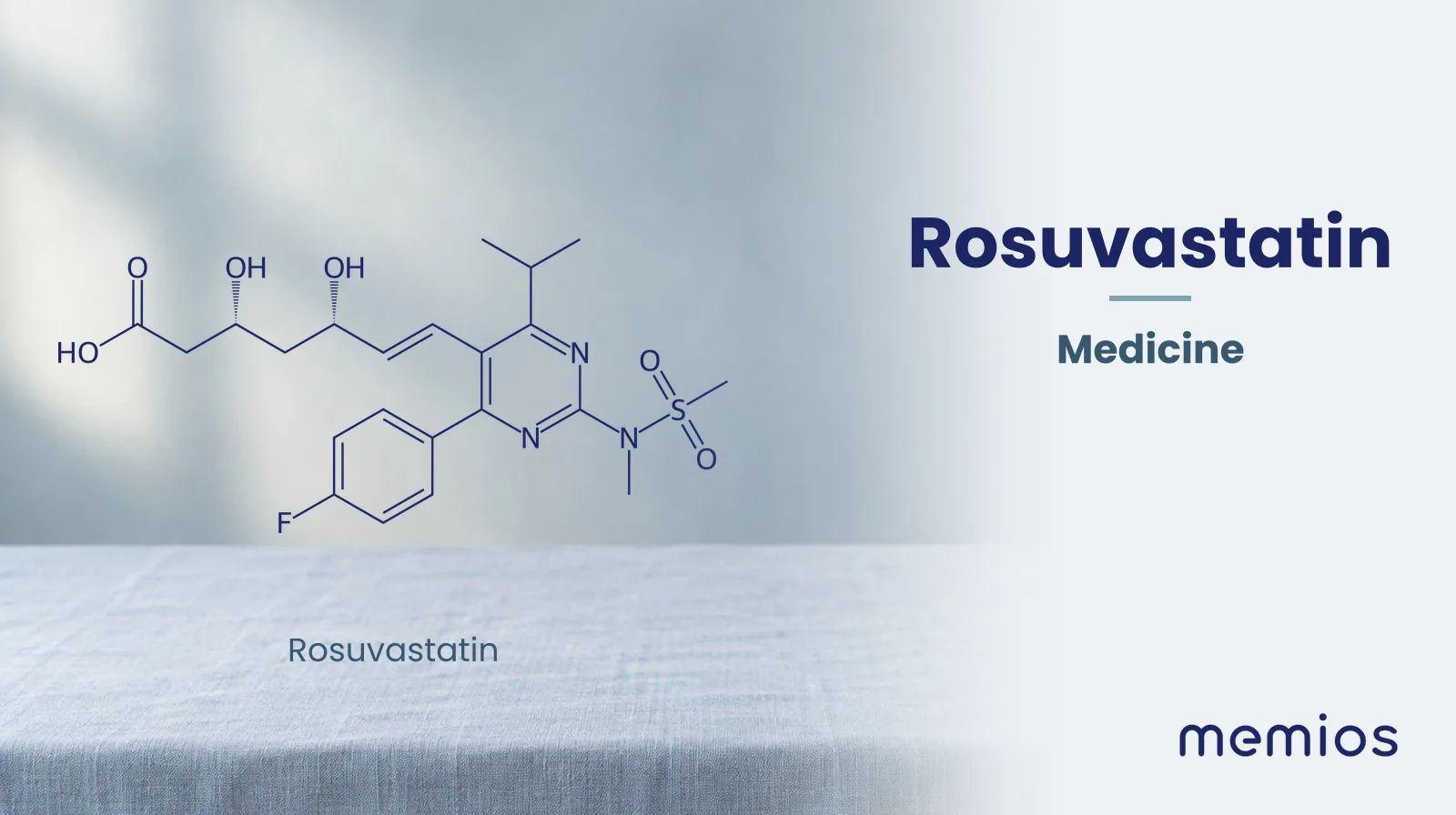
Rosuvastatin is a prescription statin, sold as Crestor and generics. It blocks HMG-CoA reductase, the enzyme that controls a key step in the liver's cholesterol production. The label's adult dose range is 5 to 40 mg once daily.
What the research says
Rosuvastatin lowers LDL cholesterol substantially: by 50% at 20 mg in JUPITER and 26.5% at 10 mg in HOPE-3. In people without heart disease, it reduced heart attacks and strokes in two large trials. JUPITER, in people with normal cholesterol but raised CRP, was stopped early. HOPE-3, in intermediate-risk people, showed a smaller absolute benefit over 5.6 years. It did not reduce cardiovascular events in people on dialysis (AURORA) or with heart failure (CORONA). Harms include a small increase in new diabetes, a small excess of muscle symptoms mainly in the first year, and kidney signals (blood and protein in urine, more common at 40 mg). People of Asian ancestry have about twice the blood exposure.
Evidence grade: Well established.
How it works
Drug class: HMG-CoA reductase inhibitor (statin)
Rosuvastatin blocks HMG-CoA reductase, the enzyme that controls a key step in the liver's cholesterol production. With less cholesterol made inside it, the liver pulls more LDL ('bad') cholesterol out of the blood. (Source 1)
What it is used for
- JUPITER reported a 44% relative reduction in major cardiovascular events (0.77 vs 1.36 per 100 person-years), but the trial stopped early at 1.9 years. A published critique of the trial could not be verified in this run and is held. Evidence: disputed. (Source 2)
- In HOPE-3, rosuvastatin 10 mg reduced the main composite outcome from 4.8% to 3.7% over a median 5.6 years (hazard ratio 0.76), in an ethnically diverse population. Evidence: established. (Source 3)
- In AURORA, rosuvastatin lowered LDL but had no significant effect on cardiovascular death, heart attack or stroke (hazard ratio 0.96). Evidence: not-supported. (Source 4)
- In CORONA, rosuvastatin did not reduce cardiovascular death, heart attack or stroke (hazard ratio 0.92, not significant). Evidence: not-supported. (Source 5)
Interactions
- Aluminium and magnesium hydroxide antacids (label): The label advises taking rosuvastatin at least 2 hours before an aluminium and magnesium hydroxide antacid when both are used. (Source 1)
- Niacin at lipid-modifying doses (1 g/day or more) (case reports): Cases of myopathy and rhabdomyolysis have been reported when high-dose niacin is combined with rosuvastatin. (Source 1)
- Warfarin (label): Rosuvastatin can alter the INR; the label advises checking INR when starting, changing or stopping it. (Source 1)
- Gemfibrozil (label): The label says to avoid the combination; if unavoidable, start at 5 mg and do not exceed 10 mg. (Source 1)
- Grapefruit (theoretical): Unlike simvastatin, atorvastatin and lovastatin, rosuvastatin is not expected to interact meaningfully with grapefruit; this rests on its metabolism rather than a pharmacokinetic study we could reach. (Source 6)
Stopping it
- In a randomised trial in people with advanced, life-limiting illness, stopping statins did not significantly change 60-day death (though it missed its non-inferiority target) and improved quality of life. This trial covered statins generally, not rosuvastatin specifically, and does not apply to healthy people using statins for prevention. (Source 7)
- For people whose muscle complaints lead them to stop, blinded-trial data suggest most such symptoms are not caused by the statin. (Source 8)
What goes wrong
JUPITER itself reported a higher incidence of physician-reported diabetes on rosuvastatin. (Source 2)
- Randomized trial, Moderate certainty.
- Size: 17,802 participants.
- Who: Apparently healthy adults with raised CRP.
- How long: Median 1.9 years.
- Result: Not quantified in the abstract.
- Funding: Not stated in the fetched abstract.
The rosuvastatin group did not have a significant increase in myopathy or cancer but did have a higher incidence of physician-reported diabetes.
HOPE-3 found no excess of diabetes, but did find more cataract surgery and more muscle symptoms on rosuvastatin. (Source 3)
- Randomized trial, High certainty.
- Size: 12,705 participants.
- Who: Intermediate-risk adults.
- How long: Median 5.6 years.
- Result: Cataract surgery 3.8% vs 3.1% (P=0.02); muscle symptoms 5.8% vs 4.7% (P=0.005)
- Funding: Funded by the Canadian Institutes of Health Research and AstraZeneca.
In the rosuvastatin group, there was no excess of diabetes or cancers, but there was an excess of cataract surgery (in 3.8% of the participants, vs. 3.1% in the placebo group; P=0.02) and muscle symptoms (in 5.8% of the participants, vs. 4.7% in the placebo group; P=0.005).
Across 13 statin trials, statin therapy was associated with a 9% higher risk of new diabetes, about one extra case per 255 people treated for 4 years. (Source 9)
- Meta-analysis, High certainty.
- Size: 13 trials, 91,140 participants.
- Who: Participants in randomised statin endpoint trials.
- How long: Mean 4 years.
- Result: OR 1.09 (95% CI 1.02 to 1.17); number needed to harm 255 (95% CI 150 to 852) over 4 years.
- Funding: Funding: none.
Treatment of 255 (95% CI 150-852) patients with statins for 4 years resulted in one extra case of diabetes.
In an individual-participant meta-analysis of blinded statin trials, statins caused a small relative increase in muscle pain or weakness in the first year. Only about 1 in 15 muscle complaints among statin users was actually due to the drug. (Source 8)
- Meta-analysis, High certainty.
- Size: 19 statin-vs-placebo trials (n=123,940) plus 4 intensive-vs-less-intensive trials.
- Who: Participants in large double-blind statin trials.
- How long: Median follow-up several years; excess confined to year 1.
- Result: Year 1 RR 1.07 (1.04 to 1.10); absolute excess 11 (6 to 16) per 1000 person-years.
- Funding: not stated in excerpts.
only one in 15 ([1·07–1·00]/1·07) of these muscle-related reports by participants allocated to statin therapy were actually due to the statin
In a large US health-record cohort, new users of rosuvastatin had a higher risk of blood in the urine, protein in the urine and kidney failure needing dialysis or transplant than new atorvastatin users. The risk rose with dose, and 44% of people with severe kidney disease were prescribed doses above the label maximum for them. (Source 10)
- Cohort study, Low certainty.
- Size: 152,101 rosuvastatin and 795,799 atorvastatin new users.
- Who: US adults starting a statin, 2011 to 2019.
- How long: Median 3.1 years.
- Result: Hematuria HR 1.08 (1.04 to 1.11); proteinuria HR 1.17 (1.10 to 1.25); kidney failure with replacement therapy HR 1.15 (1.02 to 1.30)
- Funding: not stated in the abstract.
Compared with atorvastatin, rosuvastatin was associated with increased risk of hematuria (HR, 1.08; 95% confidence interval [95% CI], 1.04–1.11), proteinuria (HR, 1.17; 95% CI, 1.10–1.25), and KFRT (HR, 1.15; 1.02–1.30).
Pharmacokinetic studies cited in the label found roughly twice the blood exposure to rosuvastatin in Asian subjects compared with White subjects, and the label recommends a lower starting dose. (Source 1)
- Official position, Certainty not rated.
- Size: Label summary of pharmacokinetic studies.
- Who: Asian and White subjects.
- How long: Not applicable.
- Result: Approximately 2-fold higher median AUC and Cmax.
- Funding: Regulatory label.
an approximate 2 fold elevation in median exposure (AUC and Cmax) in Asian subjects when compared with a White control group
The label reports that myopathy risk is greater at 40 mg daily than at lower doses, and lists age 65 or over, untreated hypothyroidism, kidney impairment and some other drugs as risk factors. (Source 1)
- Official position, Certainty not rated.
- Size: Label.
- Who: Patients taking rosuvastatin.
- How long: Not applicable.
- Result: Not quantified.
- Funding: Regulatory label.
The myopathy risk is greater in patients taking CRESTOR 40 mg daily compared with lower CRESTOR dosages.
What the evidence supports
In JUPITER, rosuvastatin 20 mg reduced major cardiovascular events in apparently healthy people with normal LDL cholesterol and raised CRP. In absolute terms, events fell from 1.36 to 0.77 per 100 person-years. (Source 2)
- Randomized trial, Moderate certainty.
- Size: 17,802 participants.
- Who: Apparently healthy adults with LDL below 130 mg/dL and hs-CRP of 2.0 mg/L or higher.
- How long: Median 1.9 years (stopped early)
- Result: Primary endpoint 0.77 vs 1.36 per 100 person-years; HR 0.56 (95% CI 0.46 to 0.69); all-cause death HR 0.80 (0.67 to 0.97)
- Funding: Not stated in the fetched abstract; stopped early.
The rates of the primary end point were 0.77 and 1.36 per 100 person-years of follow-up in the rosuvastatin and placebo groups, respectively (hazard ratio for rosuvastatin, 0.56; 95% confidence interval [CI], 0.46 to 0.69; P<0.00001)
In HOPE-3, rosuvastatin 10 mg reduced cardiovascular death, heart attack or stroke in intermediate-risk people without cardiovascular disease, an absolute reduction of about 1.1 percentage points over 5.6 years. (Source 3)
- Randomized trial, High certainty.
- Size: 12,705 participants in 21 countries.
- Who: Intermediate-risk adults without cardiovascular disease, ethnically diverse.
- How long: Median 5.6 years.
- Result: 235 (3.7%) vs 304 (4.8%); HR 0.76 (95% CI 0.64 to 0.91); LDL 26.5% lower.
- Funding: Funded by the Canadian Institutes of Health Research and AstraZeneca.
The first coprimary outcome occurred in 235 participants (3.7%) in the rosuvastatin group and in 304 participants (4.8%) in the placebo group (hazard ratio, 0.76; 95% confidence interval [CI], 0.64 to 0.91; P=0.002).
What the evidence does not support
The same meta-analysis found no significant excess of muscle symptoms after the first year of statin treatment. (Source 8)
- Meta-analysis, High certainty.
- Size: 19 statin-vs-placebo trials (n=123,940)
- Who: Participants in large double-blind statin trials.
- How long: After year 1.
- Result: No significant excess.
- Funding: not stated in excerpts.
After year 1, there was no significant excess in first reports of muscle pain or weakness
In people on maintenance haemodialysis, rosuvastatin lowered LDL by 43% but did not reduce cardiovascular death, heart attack or stroke, or all-cause mortality. (Source 4)
- Randomized trial, High certainty.
- Size: 2,776 patients aged 50 to 80.
- Who: Patients on maintenance haemodialysis.
- How long: Median 3.8 years.
- Result: Primary endpoint 9.2 vs 9.5 per 100 patient-years; HR 0.96 (95% CI 0.84 to 1.11); all-cause mortality HR 0.96.
- Funding: not stated in the fetched abstract.
In patients undergoing hemodialysis, the initiation of treatment with rosuvastatin lowered the LDL cholesterol level but had no significant effect on the composite primary end point
In older people with ischaemic systolic heart failure, rosuvastatin 10 mg did not reduce cardiovascular death, heart attack or stroke (CORONA). (Source 5)
- Randomized trial, High certainty.
- Size: 5,011 patients (2,514 rosuvastatin, 2,497 placebo)
- Who: Adults aged 60 or over with NYHA II-IV ischaemic systolic heart failure.
- How long: Median 32.8 months.
- Result: Primary endpoint 11.4 vs 12.3 per 100 years of follow-up; HR 0.92 (95% CI 0.83 to 1.02); p = 0.12.
- Funding: not stated in the summary.
The primary endpoint of cardiovascular (CV) death, MI, or stroke did not differ significantly between groups (11.4 for rosuvastatin vs. 12.3 for placebo per 100 years of follow-up, hazard ratio [HR] 0.92, 95% confidence interval [CI] 0.83-1.02; p = 0.12).
Where the evidence is mixed
A dose-response model built from 36 trials found Asian patients get the same LDL lowering at about half the dose. The authors concluded the higher exposure does not change the relationship between blood level and effect. (Source 11)
- Meta-analysis, Low certainty.
- Size: 36 trials (14 dose-ranging used for modelling, 22 for validation)
- Who: Western and Asian patients with high cholesterol.
- How long: Trials of at least 4 weeks.
- Result: Approximately twofold difference in ED50 between Westerners and Asians.
- Funding: not stated.
The race differences in the pharmacodynamics of rosuvastatin are consistent with those observed in the pharmacokinetics of the drug, confirming that there is no significant difference in the exposure-response relationship for LDL-C reduction between Westerners and Asians.
Where the research disagrees
Whether JUPITER shows that rosuvastatin benefits healthy people with normal cholesterol and raised CRP
- JUPITER investigators (Ridker et al., 2008), Randomised placebo-controlled trial, 17,802 participants, stopped early: In this trial of apparently healthy persons without hyperlipidemia but with elevated high-sensitivity C-reactive protein levels, rosuvastatin significantly reduced the incidence of major cardiovascular events. (Source 2)
How much
- Reference intake: Dosing is set by the prescriber. As a position, the Crestor label (revised 2026) gives an adult dose range of 5 to 40 mg once daily, with a 5 mg starting dose for Asian patients. (Source 1)
- Upper limit: The label's maximum is 40 mg once daily. The label notes higher myopathy risk at 40 mg, and a 5 mg ceiling with cyclosporine and a 10 mg ceiling with gemfibrozil. (Source 1)
- Studied: JUPITER: rosuvastatin 20 mg daily versus placebo. (Source 2)
- Studied: HOPE-3: rosuvastatin 10 mg per day versus placebo. (Source 3)
- Studied: AURORA: rosuvastatin 10 mg daily in haemodialysis patients. (Source 4)
A common belief, and what the research shows
The belief: Muscle aches on a statin mean the statin is causing them.
What the research shows: In blinded trials involving more than 120,000 people, statins added only a small excess of muscle complaints, mostly in the first year: 'only one in 15 ([1·07–1·00]/1·07) of these muscle-related reports by participants allocated to statin therapy were actually due to the statin'.
Questions and answers
What is it?
Rosuvastatin is a prescription statin (brand name Crestor) used to lower LDL cholesterol and cardiovascular risk. The label's adult dose range is 5 to 40 mg once daily. (Source 1)
What does it do in the body?
It blocks the liver enzyme that controls cholesterol production, which lowers LDL cholesterol. In JUPITER, 20 mg lowered LDL by 50% and CRP, a marker of inflammation, by 37%. (Source 2)
Is it good or bad for you?
In people at raised risk who have not had a heart attack or stroke, trials show fewer heart attacks and strokes, with modest absolute benefit. In dialysis and heart failure trials it showed no benefit. Harms include a small rise in new diabetes (about 1 extra case per 255 treated for 4 years), a small excess of muscle symptoms, and kidney signals at higher doses. (Source 9)
How do you get more of it?
Does not apply: it is a prescription drug and the dose is set by the prescriber. Blood exposure is about twice as high in people of Asian ancestry, which is why the label starts them at 5 mg. (Source 1)
If it is harmful, what reduces it?
Harms concentrate at higher doses and in kidney disease: kidney and muscle risks rose with dose. A trial in people with advanced illness found stopping statins did not significantly change 60-day survival and improved quality of life. That setting does not apply to healthy people. (Source 10)
Why might someone be low in it or missing it?
Does not apply as a deficiency: rosuvastatin is a synthetic drug, not something the body makes or needs. (Source 1)
We searched: Crestor label; no deficiency concept exists for a drug
Which whole foods contain it or feed it?
No food contains rosuvastatin. Grapefruit is not expected to interact with it, unlike some other statins. The label advises taking it at least 2 hours before an aluminium and magnesium hydroxide antacid. (Source 1)
What happens if you do not have it?
For intermediate-risk people in HOPE-3, not taking it meant a 4.8% rather than 3.7% rate of cardiovascular death, heart attack or stroke over about 5.6 years. For people on dialysis or with ischaemic heart failure, trials found no difference. (Source 3)
How can you test for it?
Rosuvastatin blood levels are not measured in routine care. Its effect is tracked with an LDL cholesterol blood test, and trials report LDL falls of 26.5% to 50% depending on dose. The kidney study used urine findings (blood, protein) and kidney function (eGFR) to track harm. (Source 3)
References
- U.S. National Library of Medicine DailyMed (FDA-approved labeling). CRESTOR (rosuvastatin) tablets - prescribing information. 2026. Read the source
- New England Journal of Medicine. Rosuvastatin to Prevent Vascular Events in Men and Women with Elevated C-Reactive Protein (JUPITER). 2008. PMID 18997196, DOI 10.1056/NEJMoa0807646. Read the source
- New England Journal of Medicine. Cholesterol Lowering in Intermediate-Risk Persons without Cardiovascular Disease (HOPE-3). 2016. PMID 27040132, DOI 10.1056/NEJMoa1600176. Read the source
- New England Journal of Medicine. Rosuvastatin and cardiovascular events in patients undergoing hemodialysis (AURORA). 2009. PMID 19332456, DOI 10.1056/NEJMoa0810177. Read the source
- American College of Cardiology. Controlled Rosuvastatin Multinational Trial in Heart Failure (CORONA) - ACC clinical trial summary of Kjekshus J et al., NEJM 2007. 2007. PMID 17984166, DOI 10.1056/NEJMoa0706201. Read the source
- American Family Physician. The Grapefruit-Drug Interaction Debate: Role of Statins (letter). 2007. Read the source
- JAMA Internal Medicine. Safety and Benefit of Discontinuing Statin Therapy in the Setting of Advanced, Life-Limiting Illness: A Randomized Clinical Trial. 2015. PMID 25798575, DOI 10.1001/jamainternmed.2015.0289. Read the source
- The Lancet. Effect of statin therapy on muscle symptoms: an individual participant data meta-analysis of large-scale, randomised, double-blind trials (Cholesterol Treatment Trialists' Collaboration). 2022. PMID 36049498, DOI 10.1016/S0140-6736(22)01545-8. Read the source
- The Lancet. Statins and risk of incident diabetes: a collaborative meta-analysis of randomised statin trials. 2010. PMID 20167359, DOI 10.1016/S0140-6736(09)61965-6. Read the source
- Journal of the American Society of Nephrology. Association of Rosuvastatin Use with Risk of Hematuria and Proteinuria. 2022. PMID 35853713, DOI 10.1681/ASN.2022020135. Read the source
- Acta Pharmacologica Sinica. Race differences: modeling the pharmacodynamics of rosuvastatin in Western and Asian hypercholesterolemia patients. 2011. DOI 10.1038/aps.2010.169. Read the source