Medications · September 30, 2026 · Memios · 17 min read
Pravastatin
For people who have not yet had a cardiovascular event, the Cochrane review of statins as a class found reductions in death from any cause (OR 0.86).
TLDR
- Well established. For people who have not yet had a cardiovascular event, the Cochrane review of statins as a class found reductions in death from any cause (OR 0.86), in fatal and non-fatal cardiovascular disease (RR 0.75) and in stroke (RR 0.78), with no evidence of serious harm.
- What it is: Pravastatin is a statin taken as a daily tablet to lower LDL cholesterol and reduce cardiovascular events.
- Main use: Reducing the risk of a first coronary event in people with raised cholesterol and no known coronary heart disease (primary prevention) (well supported).
- Other approved uses: Lowering total and LDL cholesterol (well supported).
- Off-label uses (not on the FDA label): Preventing preeclampsia in high-risk pregnancy (limited evidence).
- Recommended dose (official position): There is no reference intake for a prescription medicine. Dosing is set by the prescriber.
- Studied dose (a trial dose, not a recommendation): WOSCOPS compared pravastatin with placebo in men with hypercholesterolaemia and no known coronary heart disease. Findings citing that trial: 1 for.
- Upper limit: The same label's stated dosage range tops out at 80 mg once daily: "The recommended starting dosage is pravastatin sodium tablets 40 mg to 80 mg once daily."
- What goes wrong: 2 findings on harm. Red yeast rice supplements contain monacolin K, which is the same molecule as the statin lovastatin, so taking them alongside a statin stacks two statin doses.
- Interactions: 6 recorded, including Red yeast rice, Red yeast rice, on why it behaves like a statin, Niacin (nicotinic acid), including high-dose niacin supplements, Fibrates (gemfibrozil, fenofibrate).
- Common myth: Statins commonly cause muscle pain, and red yeast rice is a natural alternative that avoids the problem.
What it is
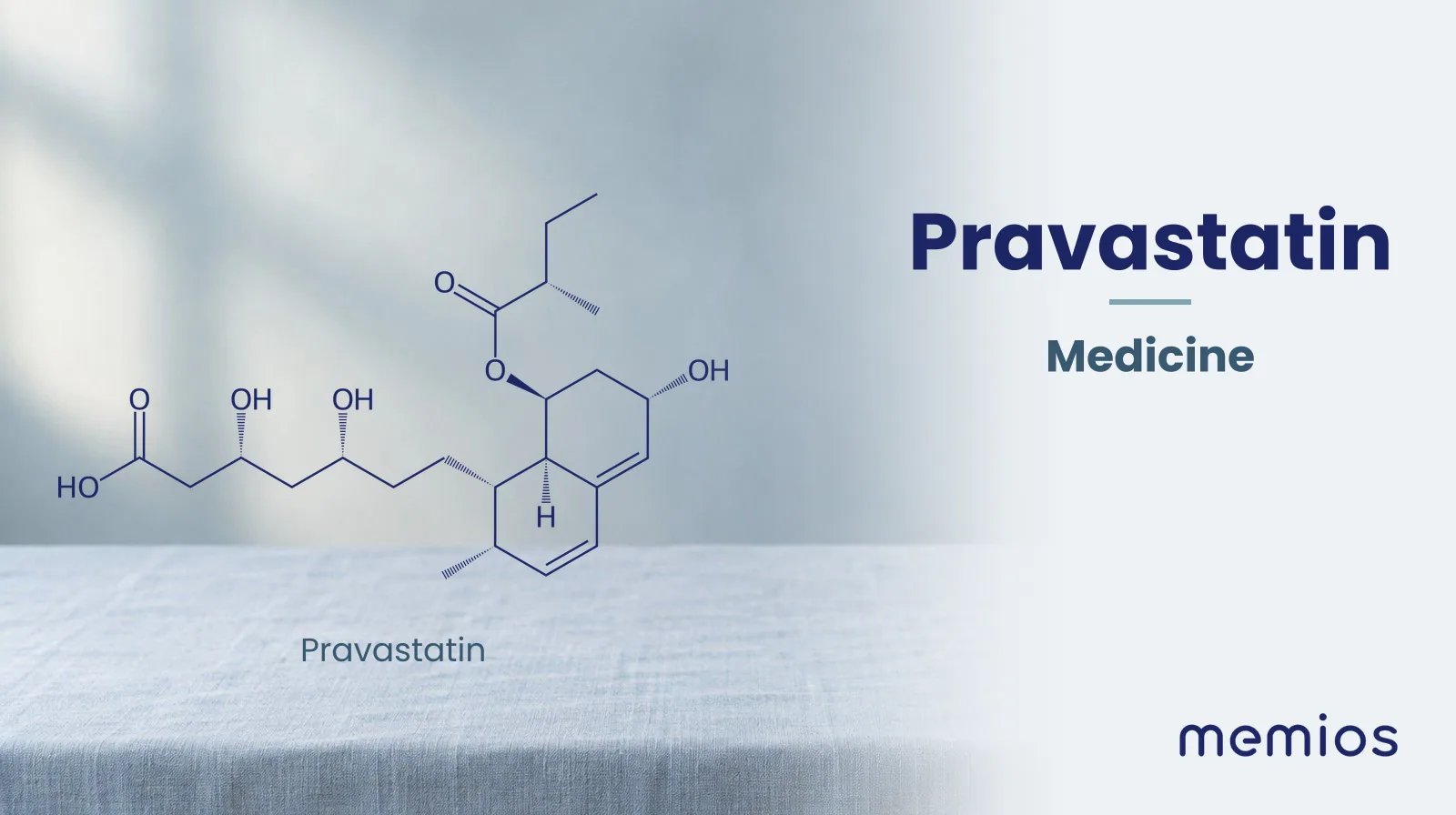
Pravastatin is a statin taken as a daily tablet to lower LDL cholesterol and reduce cardiovascular events. It blocks HMG-CoA reductase, the rate-limiting enzyme in the body's own cholesterol production. It is water-soluble rather than fat-soluble, and its US label reports that food lowers its blood levels substantially without changing how much it lowers lipids.
What the research says
For people who have not yet had a cardiovascular event, the Cochrane review of statins as a class found reductions in death from any cause (OR 0.86), in fatal and non-fatal cardiovascular disease (RR 0.75) and in stroke (RR 0.78), with no evidence of serious harm. Pravastatin's own primary prevention trial, WOSCOPS, cut first coronary events by 31%, from 248 events on placebo to 174 on pravastatin. But the picture is not uniform: in ALLHAT-LLT, pravastatin made no difference to death from any cause or to fatal coronary heart disease plus non-fatal heart attack compared with usual care. Statin muscle symptoms, the most talked-about harm, did not separate from placebo in a series of n-of-1 trials in people who had previously reported severe muscle symptoms.
Evidence grade: Well established.
How it works
Drug class: HMG-CoA reductase inhibitor (statin); a hydrophilic statin that, unlike simvastatin or atorvastatin, is not mainly cleared by CYP3A4
Your liver makes most of your cholesterol using an enzyme called HMG-CoA reductase. Pravastatin blocks that enzyme reversibly, so the liver makes less cholesterol and pulls more LDL out of the blood. (Source 1)
What it is used for
- In WOSCOPS, pravastatin reduced first coronary events by 31%, with 248 events on placebo versus 174 on pravastatin. The Cochrane review of statins for primary prevention, covering 56,934 people in 18 trials, found lower all-cause mortality and fewer cardiovascular events with no evidence of serious harm. ALLHAT-LLT, however, found no difference between pravastatin and usual care. Evidence: established. (Source 2)
- Statins lowered total and LDL cholesterol in every trial in the Cochrane primary prevention review, though the size of the effect varied between trials. Evidence: established. (Source 3)
- A 2022 meta-analysis of five trials in which treatment began before 20 weeks reported a 61% lower incidence of preeclampsia and fewer preterm births, growth restriction and neonatal intensive care admissions. These are relative reductions only; the abstract we recorded gives no absolute rates and no confidence intervals, so the finding should be treated as preliminary. Evidence: limited. (Source 4)
Interactions
- Red yeast rice (case reports): Red yeast rice contains monacolin K, which is chemically the same as the statin lovastatin. Taking it with a prescribed statin means taking two statins at once, which raises the chance of overdosing and side effects. (Source 5)
- Red yeast rice, on why it behaves like a statin (case reports): The active ingredient of red yeast rice is identical to lovastatin, which is why it lowers cholesterol and why it can cause statin-type muscle problems. (Source 6)
- Niacin (nicotinic acid), including high-dose niacin supplements (case reports): Cases of muscle injury, including rhabdomyolysis, have been reported when niacin is taken with pravastatin. (Source 7)
- Fibrates (gemfibrozil, fenofibrate) (label): Fibrates can cause muscle injury on their own, and combining them with pravastatin increases the risk of myopathy and rhabdomyolysis. (Source 8)
- Food (any meal) (pharmacokinetic study): Food cuts how much pravastatin reaches the blood by about a third for total exposure and about half for the peak, but the cholesterol-lowering effect is the same whether it is taken with a meal or an hour before one. (Source 9)
- Strong CYP3A4 inhibitors (relevant mainly to red yeast rice, which is cleared by CYP3A4) (pharmacokinetic study): Monacolin K from red yeast rice is broken down by CYP3A4, so a strong CYP3A4 inhibitor raises its blood level and the risk of muscle injury. Pravastatin itself is not mainly a CYP3A4 substrate, which is why this pathway matters more for the supplement than for the drug. (Source 10)
Stopping it
- In the only randomised trial of deliberately stopping statins that we reached, 381 adults with advanced life-limiting illness were randomised to stop or continue. Deaths within 60 days were 23.8% in the stop group versus 20.3% in the continue group, a difference that did not reach statistical significance but also did not meet the trial's non-inferiority threshold. (Source 11)
- In the same trial, quality of life was slightly better in the group that stopped, and cardiovascular events were similar in both groups. (Source 11)
- People who stop a statin because of muscle symptoms often turn out to tolerate it: in the StatinWISE n-of-1 trials, two thirds of those who completed the trial said they would restart long-term statin treatment. (Source 12)
What goes wrong
The US label records, as a regulatory position, that combining pravastatin with a fibrate raises the risk of myopathy and rhabdomyolysis. (Source 8)
- Official position, Certainty not rated.
- Size: Not applicable.
- Who: Patients taking pravastatin together with a fibrate.
- How long: Label revised 11/2024.
- Result: No rates given.
- Funding: Regulatory document (FDA-approved labelling, Accord Healthcare, Inc.)
The risk of myopathy and rhabdomyolysis is increased with concomitant use of fibrates with pravastatin.
Red yeast rice supplements contain monacolin K, which is the same molecule as the statin lovastatin, so taking them alongside a statin stacks two statin doses. (Source 5)
- Expert review, not systematic, Low certainty.
- Size: Not applicable (review of product safety)
- Who: People taking red yeast rice products.
- How long: Not applicable.
- Result: No rates given; the review notes CYP-3A4 inhibitors raise plasma concentration and myopathy risk.
- Funding: not stated.
Finally, it should also be noted that taking red yeast rice products and statins at the same time can easily lead to overdosing and side effects.
What the evidence supports
In WOSCOPS, pravastatin reduced the rate of a first coronary event by 31% compared with placebo. (Source 2)
- Randomized trial, High certainty.
- Size: 248 events on placebo versus 174 on pravastatin (participant total not in the recorded passage)
- Who: Men with hypercholesterolaemia and no known coronary heart disease.
- How long: Not stated in the recorded passage (the trial ran about five years)
- Result: 31% relative reduction; placebo 248 events (CHD death=44, nonfatal MI=204) versus pravastatin 174 events (CHD death=31, nonfatal MI=143), p=0.0001.
- Funding: Reported in FDA-approved labelling submitted by the manufacturer; original trial was industry-funded.
Pravastatin significantly reduced the rate of first coronary events (either CHD death or nonfatal MI) by 31% (248 events in the placebo group [CHD death=44, nonfatal MI=204] versus 174 events in the pravastatin group [CHD death=31, nonfatal MI=143], p=0.0001 [see figure below]).
Across 18 primary prevention trials of statins, all-cause mortality and cardiovascular events were lower on a statin. (Source 3)
- Systematic review, Moderate certainty.
- Size: 56,934 participants in 18 randomised controlled trials (19 trial arms)
- Who: People without established cardiovascular disease; 14 of the trials recruited people with raised lipids, diabetes, hypertension or microalbuminuria.
- How long: Varies by trial.
- Result: All-cause mortality OR 0.86 (95% CI 0.79 to 0.94); fatal and non-fatal CVD RR 0.75 (95% CI 0.70 to 0.81); CHD events RR 0.73 (95% CI 0.67 to 0.80); stroke RR 0.78 (95% CI 0.68 to 0.89); revascularisation RR 0.62 (95% CI 0.54 to 0.72)
- Funding: not stated in the recorded passage; many of the included trials were industry-funded.
All-cause mortality was reduced by statins (OR 0.86, 95% CI 0.79 to 0.94); as was combined fatal and non-fatal CVD RR 0.75 (95% CI 0.70 to 0.81), combined fatal and non-fatal CHD events RR 0.73 (95% CI 0.67 to 0.80) and combined fatal and non-fatal stroke (RR 0.78, 95% CI 0.68 to 0.89).
The same Cochrane review reported no evidence of serious harm from statin prescription. (Source 3)
- Systematic review, Moderate certainty.
- Size: 56,934 participants in 18 trials.
- Who: People without established cardiovascular disease.
- How long: Varies by trial.
- Result: No excess of adverse events reported.
- Funding: not stated in the recorded passage.
There was no evidence of any serious harm caused by statin prescription.
A meta-analysis of five trials starting before 20 weeks of pregnancy reported large relative reductions in preeclampsia and neonatal problems with pravastatin, but reported no absolute rates or confidence intervals in the abstract. (Source 4)
- Meta-analysis, Low certainty.
- Size: Five articles in the preeclampsia-prevention analysis, out of 14 studies published 2003-2022 covering 1,570 pregnant women (797 pravastatin, 773 placebo)
- Who: Pregnant women at risk of preeclampsia, treated before the 20th gestational week.
- How long: Pregnancy.
- Result: 61% reduction in preeclampsia; 45% reduction in premature birth; 45% reduction in intrauterine growth retardation; 77% reduction in NICU admissions. No confidence intervals or absolute rates are given in the abstract we recorded.
- Funding: not stated.
Pravastatin treatment reduced the incidence of preeclampsia by 61% and premature birth by 45%. Among the newborns, there was a 45% reduction in intrauterine growth retardation (IUGR) in the treated group, as well as a 77% reduction in those receiving neonatal intensive care units (NICU) admissions.
What the evidence does not support
In ALLHAT-LLT, pravastatin made no difference to death from any cause or to fatal coronary heart disease plus non-fatal myocardial infarction compared with usual care, a null result the review's authors attribute to the very small difference in cholesterol actually achieved between the two arms. (Source 13)
- Expert review, not systematic, Low certainty.
- Size: Not given in the recorded passage.
- Who: Moderately hypercholesterolaemic, hypertensive patients.
- How long: Not given in the recorded passage.
- Result: No differences in all-cause mortality, cardiovascular deaths, noncardiovascular deaths, or the composite of fatal CHD plus non-fatal MI. The authors report that total cholesterol differed between the arms by only 9.6% after a mean 4.8 years, and say the trial is therefore not inconsistent with previous statin trials.
- Funding: not stated.
No differences were observed between the pravastatin and usual-care groups with respect to all-cause mortality, cardiovascular deaths, noncardiovascular deaths, and a composite endpoint of fatal coronary heart disease plus nonfatal myocardial infarction. Despite these null findings, the results of ALLHAT-LLT are not inconsistent with previous trials because of the very small lipid differences in the two arms.
In a series of blinded n-of-1 trials in people who had previously reported severe statin muscle symptoms, muscle symptom scores were no different on statin than on placebo. (Source 14)
- Randomized trial, Moderate certainty.
- Size: 200 participants randomised in the StatinWISE series (numbers of withdrawals reported as 18 and 13)
- Who: Adults who had previously reported severe muscle symptoms on a statin.
- How long: Six two-month treatment periods per participant.
- Result: Mean difference statin minus placebo −0.11 (95% CI −0.36 to 0.14); P=0.40. Withdrawals for intolerable symptoms: 18 (9%) in statin periods versus 13 (7%) in placebo periods.
- Funding: not stated in the recorded passage; the trial was publicly funded in the UK.
no difference in muscle symptom scores was found between the statin and placebo periods (mean difference statin minus placebo −0.11, 95% confidence interval −0.36 to 0.14; P=0.40).
Where the evidence is mixed
Stopping statins in people with advanced life-limiting illness did not meet the trial's non-inferiority mark for 60-day deaths, but quality of life was better in the group that stopped. (Source 11)
- Randomized trial, Moderate certainty.
- Size: 381 patients (189 discontinue, 192 continue)
- Who: Adults with advanced, life-limiting illness; mean age 74.1 years, 48.8% had cancer.
- How long: 60 days for the primary outcome.
- Result: Death within 60 days 23.8% versus 20.3% (90% CI, -3.5% to 10.5%; P=.36), which did not meet the noninferiority end point; total McGill quality-of-life score 7.11 versus 6.85 (P=.04); cardiovascular events 13 versus 11.
- Funding: not stated in the recorded abstract.
The proportion of participants in the discontinuation vs continuation groups who died within 60 days was not significantly different (23.8% vs 20.3%; 90% CI, -3.5% to 10.5%; P=.36) and did not meet the noninferiority end point.
Where the research disagrees
Whether pravastatin prevents events in people who have not had a cardiovascular event
- Cochrane review of statins for primary prevention (Taylor and colleagues, 2013), systematic-review of 18 randomised trials, 56,934 participants: Reductions in all-cause mortality, major vascular events and revascularisations were found with no excess of adverse events among people without evidence of CVD treated with statins. (Source 15)
- Authors reviewing ALLHAT-LLT (Current Atherosclerosis Reports, 2004), narrative-review of a large open-label randomised trial against usual care: No differences were observed between the pravastatin and usual-care groups with respect to all-cause mortality, cardiovascular deaths, noncardiovascular deaths, and a composite endpoint of fatal coronary heart disease plus nonfatal myocardial infarction. Despite these null findings, the results of ALLHAT-LLT are not inconsistent with previous trials because of the very small lipid differences in the two arms. (Source 13)
How much
- Reference intake: There is no reference intake for a prescription medicine. Dosing is set by the prescriber. As a regulatory position, the US label (revised 11/2024) states: "The recommended starting dosage is pravastatin sodium tablets 40 mg to 80 mg once daily." (Source 16)
- Upper limit: The same label's stated dosage range tops out at 80 mg once daily: "The recommended starting dosage is pravastatin sodium tablets 40 mg to 80 mg once daily." Recorded as a regulatory position, not as a recommendation to any reader. (Source 16)
- Studied: WOSCOPS compared pravastatin with placebo in men with hypercholesterolaemia and no known coronary heart disease; 248 first coronary events occurred on placebo and 174 on pravastatin. The dose is not stated in the label passage we recorded. (Source 2)
- Studied: The StatinWISE n-of-1 series used atorvastatin 20 mg rather than pravastatin, so its muscle-symptom result applies to statins as a class and not specifically to pravastatin. (Source 17)
A common belief, and what the research shows
The belief: Statins commonly cause muscle pain, and red yeast rice is a natural alternative that avoids the problem.
What the research shows: In a blinded n-of-1 series in people who had previously reported severe statin muscle symptoms, "no difference in muscle symptom scores was found between the statin and placebo periods (mean difference statin minus placebo −0.11, 95% confidence interval −0.36 to 0.14; P=0.40)." and "Two thirds of those completing the trial reported restarting long term treatment with statins." Red yeast rice is not an alternative to a statin: it contains "monacolin K which is identical to the statin drug lovastatin", so combining it with a prescribed statin doubles up rather than substitutes.
Questions and answers
What is it?
Pravastatin is a statin: a daily tablet that lowers cholesterol by blocking the enzyme the liver uses to make it. It is water-soluble, unlike some other statins, and is not cleared mainly through the CYP3A4 enzyme. (Source 1)
What does it do in the body?
It reduces the amount of cholesterol the liver makes, which lowers total and LDL cholesterol in the blood. In the Cochrane review of primary prevention trials, statins lowered both in every trial, though by varying amounts. (Source 3)
Is it good or bad for you?
Mostly good for the right people, and the size of the benefit depends on the starting risk. Across 18 primary prevention trials, statins lowered death from any cause and cardiovascular events with no evidence of serious harm. But ALLHAT-LLT found no difference between pravastatin and usual care, and in advanced life-limiting illness stopping a statin improved quality of life slightly. (Source 3)
How do you get more of it?
Pravastatin is prescription-only and there is no food source for it. The label's stated dosage range is a regulatory position, not advice: the dose a person takes is set by their prescriber. (Source 16)
If it is harmful, what reduces it?
If pravastatin is doing more harm than good it is simply stopped; there is no withdrawal syndrome and no taper described in the sources we reached. The randomised trial of stopping statins in advanced illness found similar cardiovascular events and slightly better quality of life in the group that stopped, but it did not prove stopping was safe on the trial's own terms. (Source 11)
Why might someone be low in it or missing it?
This question does not apply in the nutrient sense: pravastatin is a manufactured drug, not something the body makes or needs. What does change its level in the blood is food, which cuts total exposure by about a third and the peak by about half, without changing how much it lowers lipids. (Source 9)
Which whole foods contain it or feed it?
No whole food contains pravastatin. One fermented food product is relevant in the opposite direction: red yeast rice contains monacolin K, which is the same molecule as the statin lovastatin, so it is effectively a statin sold as a supplement. (Source 6)
What happens if you do not have it?
Nothing happens to someone who never needed it. For people at raised cardiovascular risk, not taking a statin means forgoing the reductions seen in the trials: in WOSCOPS there were 248 first coronary events on placebo against 174 on pravastatin, a 31% relative reduction. (Source 2)
How can you test for it?
What is tested is the effect, not the drug: a blood lipid panel measures total and LDL cholesterol, which fell in every trial in the Cochrane review. There is no routine blood test for pravastatin itself. Creatine kinase is measured when muscle injury is suspected, which the label ties to combining pravastatin with fibrates or niacin. (Source 3)
References
- DailyMed, U.S. National Library of Medicine (FDA Structured Product Label). PRAVASTATIN SODIUM tablet - CLINICAL PHARMACOLOGY, Mechanism of Action (Accord Healthcare, Inc.). 2024. Read the source
- DailyMed, U.S. National Library of Medicine (FDA Structured Product Label). PRAVASTATIN SODIUM tablet - Clinical Studies, West of Scotland Coronary Prevention Study (Accord Healthcare, Inc.). 2024. Read the source
- Cochrane Database of Systematic Reviews. Statins for the primary prevention of cardiovascular disease (Main results). 2013. DOI 10.1002/14651858.CD004816.pub5. Read the source
- Frontiers in Medicine. Pravastatin in preeclampsia: A meta-analysis and systematic review (abstract, Results). 2022. PMID 36714131, DOI 10.3389/fmed.2022.1076372. Read the source
- International Journal of General Medicine (Dove Medical Press). Mini-review: medication safety of red yeast rice products (variability of monacolin content). 2019. Read the source
- International Journal of General Medicine (Dove Medical Press). Mini-review: medication safety of red yeast rice products (what red yeast rice is). 2019. Read the source
- DailyMed, U.S. National Library of Medicine (FDA Structured Product Label). PRAVASTATIN SODIUM tablet - DRUG INTERACTIONS, niacin (Accord Healthcare, Inc.). 2024. Read the source
- DailyMed, U.S. National Library of Medicine (FDA Structured Product Label). PRAVASTATIN SODIUM tablet - DRUG INTERACTIONS, table row “Fibrates (other than Gemfibrozil)”, Clinical Impact cell (Accord Healthcare, Inc.). 2024. Read the source
- DailyMed, U.S. National Library of Medicine (FDA Structured Product Label). PRAVASTATIN SODIUM tablet - CLINICAL PHARMACOLOGY, Pharmacokinetics, Absorption (Accord Healthcare, Inc.). 2024. Read the source
- International Journal of General Medicine (Dove Medical Press). Mini-review: medication safety of red yeast rice products (metabolism and CYP-3A4 interactions). 2019. Read the source
- JAMA Internal Medicine. Safety and benefit of discontinuing statin therapy in the setting of advanced, life-limiting illness: a randomized clinical trial. 2015. DOI 10.1001/jamainternmed.2015.0289. Read the source
- The BMJ. Statin treatment and muscle symptoms: series of randomised, placebo controlled n-of-1 trials (Results, restarting statins). 2021. DOI 10.1136/bmj.n135. Read the source
- Current Atherosclerosis Reports. ALLHAT-LLT: Questions, questions, and more questions (and some answers). 2004. DOI 10.1007/s11883-004-0049-y. Read the source
- The BMJ. Statin treatment and muscle symptoms: series of randomised, placebo controlled n-of-1 trials (Results, muscle symptom scores). 2021. DOI 10.1136/bmj.n135. Read the source
- Cochrane Database of Systematic Reviews. Statins for the primary prevention of cardiovascular disease (Authors' conclusions). 2013. DOI 10.1002/14651858.CD004816.pub5. Read the source
- DailyMed, U.S. National Library of Medicine (FDA Structured Product Label). PRAVASTATIN SODIUM tablet - 2.2 Recommended Dosage in Adult Patients (Accord Healthcare, Inc.). 2024. Read the source
- The BMJ. Statin treatment and muscle symptoms: series of randomised, placebo controlled n-of-1 trials (Conclusions). 2021. DOI 10.1136/bmj.n135. Read the source