Supplements · September 29, 2026 · Memios · 22 min read
Omega-3 fatty acids
This is the ingredient where the marketing and the trial evidence part company most sharply.
TLDR
- Disputed. This is the ingredient where the marketing and the trial evidence part company most sharply.
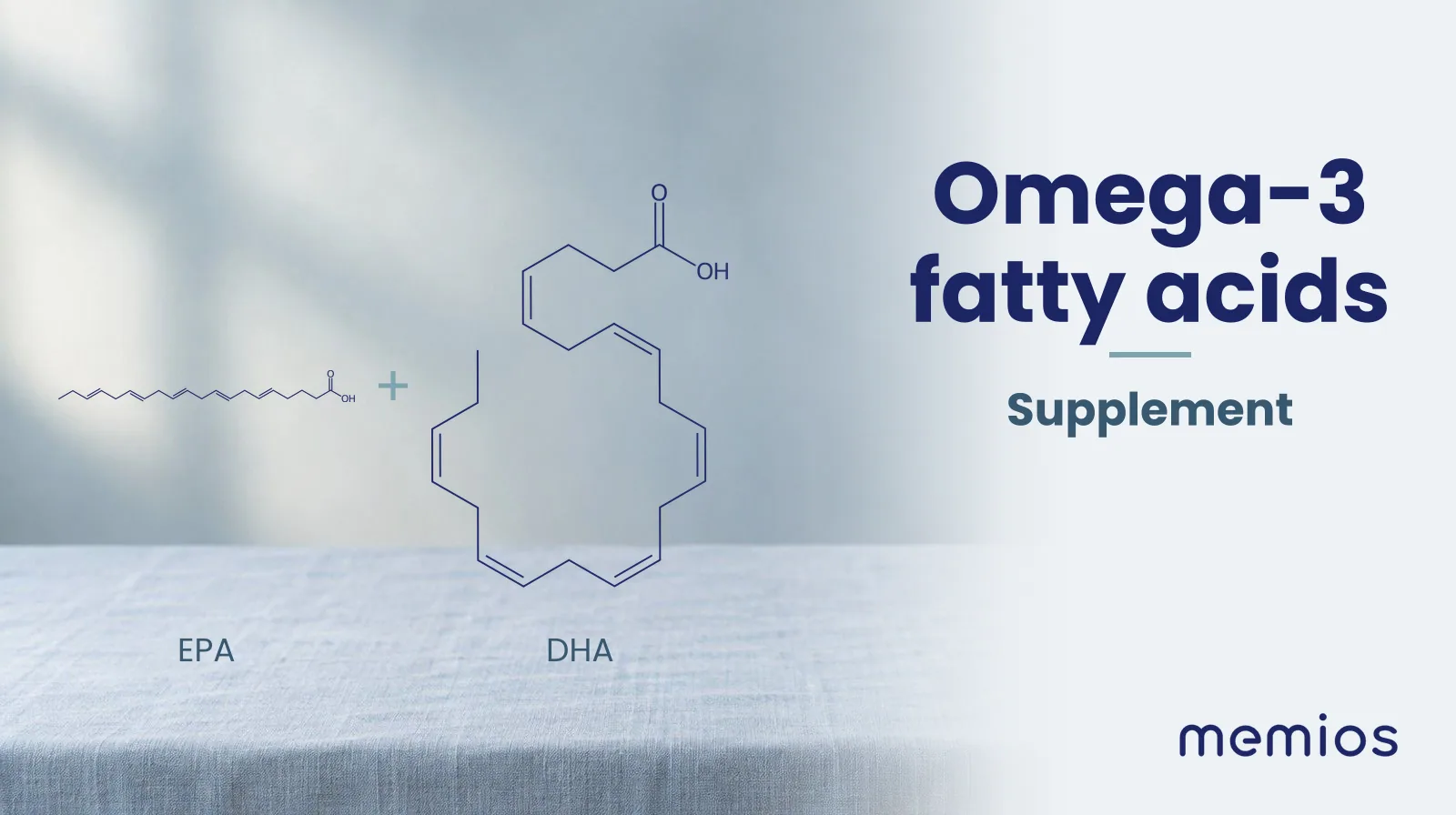
- What it is: EPA (eicosapentaenoic acid) and DHA (docosahexaenoic acid) are long-chain omega-3 polyunsaturated fatty acids found in oily fish, fish oils, some milk products and cultivated marine algae, and added to foods or sold as supplements.
- Main use, supported: In REDUCE-IT, 4 g/day of icosapent ethyl (EPA only) reduced a composite of ischaemic events by about a quarter in statin-treated patients with raised triglycerides. (moderate certainty)
- Other use, supported: Long-term prospective cohort studies consistently associate higher fish and EPA/DHA intake with lower cardiovascular risk - an association, not a demonstrated effect of supplements. (low certainty)
- Claim NOT supported by research: In VITAL, 1 g/day of marine n-3 did not reduce major cardiovascular events or invasive cancer in a general US population. (high certainty)
- Another claim NOT supported: In ASCEND, 1 g/day of n-3 fatty acids did not reduce serious vascular events in people with diabetes and no cardiovascular disease. (high certainty)
- Recommended dose (official position): EFSA's NDA Panel concluded that 250 mg a day of EPA plus DHA is an adequate intake for maintenance of general cardiovascular health in healthy adults and children, and that 2 g to 4 g a day are needed for the blood pressure and triglyceride claims.
- Studied dose (a trial dose, not a recommendation): VITAL gave 1 g per day of marine n-3 fatty acids to 25,871 participants for a median 5.3 years. Findings citing that trial: 1 against.
- Upper limit: EFSA (2012) concluded the available data were not sufficient to establish a tolerable upper intake level for EPA, DHA or DPA for any population, but that supplemental EPA plus DHA up to 5 g a day do not raise safety concerns for adults.
- What goes wrong: 8 findings on harm. In STRENGTH, gastrointestinal adverse events were more common on 4 g/day omega-3 carboxylic acids than on corn oil.
- Common myth: Fish oil capsules protect your heart, so more is better.
What it is
EPA (eicosapentaenoic acid) and DHA (docosahexaenoic acid) are long-chain omega-3 polyunsaturated fatty acids found in oily fish, fish oils, some milk products and cultivated marine algae, and added to foods or sold as supplements. They are also formulated as prescription medicines - omega-3-acid ethyl esters and the EPA-only ester icosapent ethyl - used to lower blood triglycerides. They are distinct from ALA, the shorter-chain plant omega-3.
What the research says
This is the ingredient where the marketing and the trial evidence part company most sharply. Observational cohort studies consistently link higher fish and EPA/DHA intake to less cardiovascular disease. The large randomised outcome trials mostly did not reproduce that. VITAL (25,871 people), ASCEND (15,480 people with diabetes) and STRENGTH (13,078 high-risk people) all missed their primary endpoints. One high-dose EPA-only trial, REDUCE-IT, did show a large benefit, but its mineral-oil comparator is contested. Meanwhile a consistent harm signal has emerged: pooled trials show more atrial fibrillation on omega-3, and European regulators have added atrial fibrillation as a common adverse reaction for prescription omega-3-acid ethyl esters. EFSA accepts that intakes of 2 g to 4 g a day are needed for claimed effects on blood pressure and triglyceride levels.
Evidence grade: Disputed.
What goes wrong
In STRENGTH, gastrointestinal adverse events were more common on 4 g/day omega-3 carboxylic acids than on corn oil. (Source 1)
- Randomized trial, High certainty.
- Size: 13,078 treated patients at 675 hospitals in 22 countries.
- Who: Statin-treated patients at high cardiovascular risk with hypertriglyceridaemia and low HDL-C (mean age 62.5, 35% women, 70% with diabetes)
- How long: Terminated early after 1384 of a planned 1600 primary end point events.
- Result: Gastrointestinal adverse events 24.7% (omega-3 CA) vs 14.7% (corn oil)
- Funding: Industry-funded: AstraZeneca BioPharmaceuticals R&D.
A greater rate of gastrointestinal adverse events was observed in the omega-3 CA group (24.7%) compared with corn oil-treated patients (14.7%).
Pooled across seven large cardiovascular outcome trials, marine omega-3 supplementation increased the risk of atrial fibrillation by about 25%, with the risk greater above 1 g/day. (Source 2)
- Meta-analysis, Moderate certainty.
- Size: 81,210 patients from 7 trials; 2,905 atrial fibrillation events.
- Who: Mean age 65 years, 39% female, mostly with cardiovascular disease or risk factors.
- How long: Weighted average follow-up 4.9 years.
- Result: HR 1.25 (95% CI 1.07-1.46), P=0.013 overall; HR 1.49 (95% CI 1.04-2.15), P=0.042 in trials testing >1 g/d versus HR 1.12 (95% CI 1.03-1.22), P=0.024 at 1 g/d or less, P for interaction <0.001; meta-regression HR 1.11 (95% CI 1.06-1.15) per 1 g higher dose.
- Funding: Funding sources stated to have had no role in design, conduct, analysis or decision to submit.
In meta-analysis, the use of marine ω-3 fatty acid supplements was associated with an increased risk of AF (n=2905; HR, 1.25 [95% CI, 1.07–1.46]; P=0.013).
The European Medicines Agency's safety committee concluded in 2023 that omega-3-acid ethyl ester medicines carry a dose-dependent increased risk of atrial fibrillation, highest at 4 g/day. (Source 3)
- Official position, Moderate certainty.
- Size: More than 80,000 patients across the randomised controlled trials assessed by PRAC.
- Who: Patients with established cardiovascular disease or cardiovascular risk factors.
- How long: Long-term outcome trials.
- Result: Dose-dependent increase in atrial fibrillation versus placebo; risk highest at 4 g/day.
- Funding: European Medicines Agency and marketing authorisation holders (regulatory)
Data from these studies showed a dose-dependent increased risk of atrial fibrillation (AF) in patients with established cardiovascular diseases or cardiovascular risk factors who were treated with omega-3-acid ethyl ester medicines compared to those treated with placebo.
As a result, the EMA had atrial fibrillation added to the product information of omega-3-acid ethyl ester medicines as a common adverse reaction. (Source 4)
- Official position, Moderate certainty.
- Size: More than 80,000 patients across the randomised controlled trials assessed by PRAC.
- Who: Patients with established cardiovascular disease or cardiovascular risk factors.
- How long: Long-term outcome trials.
- Result: Atrial fibrillation listed as an adverse reaction with a frequency of common.
- Funding: European Medicines Agency and marketing authorisation holders (regulatory)
EMA recommended that the product information of omega-3-acid ethyl ester medicines should be updated to reflect data regarding the risk of atrial fibrillation from these studies and also to include atrial fibrillation as an adverse reaction with a frequency of common.
The EMA tells healthcare professionals to advise patients to seek medical attention for symptoms of atrial fibrillation such as light-headedness, weakness (asthenia), palpitations or shortness of breath. (Source 5)
- Official position, Moderate certainty.
- Size: More than 80,000 patients across the randomised controlled trials assessed by PRAC.
- Who: Patients with established cardiovascular disease or cardiovascular risk factors.
- How long: Long-term outcome trials.
- Result: Symptoms named: light-headedness, asthenia, palpitations, shortness of breath.
- Funding: European Medicines Agency and marketing authorisation holders (regulatory)
Healthcare professionals should advise patients to seek medical attention in case of symptoms of atrial fibrillation such as light-headedness, asthenia, palpitations or shortness of breath.
If atrial fibrillation develops on an omega-3-acid ethyl ester medicine, the EMA says treatment should be permanently discontinued. (Source 5)
- Official position, Moderate certainty.
- Size: More than 80,000 patients across the randomised controlled trials assessed by PRAC.
- Who: Patients with established cardiovascular disease or cardiovascular risk factors.
- How long: Long-term outcome trials.
- Result: Treatment to be permanently discontinued if atrial fibrillation develops.
- Funding: European Medicines Agency and marketing authorisation holders (regulatory)
If atrial fibrillation develops, treatment should be permanently discontinued.
In a case-cohort study nested in the SELECT trial, men with the highest plasma long-chain omega-3 concentrations had a higher risk of prostate cancer. (Source 6)
- Case-control study, Low certainty.
- Size: 834 prostate cancer case subjects (156 high-grade) and a subcohort of 1,393 men.
- Who: Men enrolled in the Selenium and Vitamin E Cancer Prevention Trial.
- How long: Trial follow-up period; single baseline blood measurement.
- Result: Highest versus lowest quartile of long-chain omega-3: low-grade HR = 1.44 (95% CI 1.08 to 1.93), high-grade HR = 1.71 (95% CI 1.00 to 2.94), total prostate cancer HR = 1.43 (95% CI 1.09 to 1.88)
- Funding: not stated in the abstract; SELECT was publicly funded.
Compared with men in the lowest quartiles of LCω-3PUFA, men in the highest quartile had increased risks for low-grade (HR = 1.44, 95% CI = 1.08 to 1.93), high-grade (HR = 1.71, 95% CI = 1.00 to 2.94), and total prostate cancer (HR = 1.43, 95% CI = 1.09 to 1.88).
Fish oil supplements are chemically fragile and a measurable share of marketed products exceed oxidation quality limits. (Source 7)
- Survey study, Low certainty.
- Size: 44 fish oil supplements.
- Who: Fish oil supplements available in the United Arab Emirates.
- How long: n/a (single laboratory analysis)
- Result: Average peroxide value 6.4 (95% CI 4.2-8.7) against a maximum allowable limit of 5 meq/kg; average anisidine value 11 (95% CI 7.8-14.2) against a limit of 20; average TOTOX 23.8 meq/kg (95% CI 17.4-30.3) against a limit of 26.
- Funding: The authors received no specific funding for this work.
The estimate for the average PV value was 6.4 with a 95% confidence interval (CI) [4.2–8.7] compared to the maximum allowable limit of 5 meq/kg.
What the evidence supports
In REDUCE-IT, 4 g/day of icosapent ethyl (EPA only) reduced a composite of ischaemic events by about a quarter in statin-treated patients with raised triglycerides. (Source 8)
- Randomized trial, Moderate certainty.
- Size: 8,179 patients (70.7% secondary prevention)
- Who: Patients with established cardiovascular disease, or diabetes plus risk factors, on statins with fasting triglycerides 135-499 mg/dL.
- How long: Median 4.9 years.
- Result: Primary endpoint 17.2% vs 22.0%, hazard ratio 0.75 (95% CI 0.68 to 0.83), P<0.001.
- Funding: Industry-funded: Amarin Pharma.
A primary end-point event occurred in 17.2% of the patients in the icosapent ethyl group, as compared with 22.0% of the patients in the placebo group (hazard ratio, 0.75; 95% confidence interval [CI], 0.68 to 0.83; P<0.001).
Long-term prospective cohort studies consistently associate higher fish and EPA/DHA intake with lower cardiovascular risk - an association, not a demonstrated effect of supplements. (Source 9)
- Cohort study, Low certainty.
- Size: Narrative review of the cohort literature; individual cohort sizes not pooled.
- Who: General populations in long-term prospective cohorts.
- How long: Long-term follow-up.
- Result: No pooled estimate; the review reports a consistent inverse association, while noting randomised evidence for primary prevention is relatively weak.
- Funding: not stated.
Long-term prospective cohort studies consistently demonstrate an association between higher intakes of fish, fatty fish and marine n-3 fatty acids (EPA + DHA) or higher levels of EPA and DHA in the body and lower risk of developing cardiovascular disease (CVD)
What the evidence does not support
In VITAL, 1 g/day of marine n-3 did not reduce major cardiovascular events or invasive cancer in a general US population. (Source 10)
- Randomized trial, High certainty.
- Size: 25,871 participants, including 5,106 Black participants.
- Who: US adults in primary prevention (men 50+, women 55+)
- How long: Median follow-up 5.3 years.
- Result: Major cardiovascular event 386 vs 419, hazard ratio 0.92 (95% CI 0.80 to 1.06), P=0.24; invasive cancer 820 vs 797, hazard ratio 1.03 (95% CI 0.93 to 1.13), P=0.56; death from any cause hazard ratio 1.02 (95% CI 0.90 to 1.15); total myocardial infarction hazard ratio 0.72 (95% CI 0.59 to 0.90)
- Funding: Publicly funded (National Institutes of Health), with supplements supplied by manufacturers.
Supplementation with n-3 fatty acids did not result in a lower incidence of major cardiovascular events or cancer than placebo.
In ASCEND, 1 g/day of n-3 fatty acids did not reduce serious vascular events in people with diabetes and no cardiovascular disease. (Source 11)
- Randomized trial, High certainty.
- Size: 15,480 patients.
- Who: Adults with diabetes and no evidence of cardiovascular disease.
- How long: Mean follow-up 7.4 years (adherence 76%)
- Result: Serious vascular event 689 (8.9%) vs 712 (9.2%), rate ratio 0.97 (95% CI 0.87 to 1.08), P=0.55; death from any cause 752 (9.7%) vs 788 (10.2%), rate ratio 0.95 (95% CI 0.86 to 1.05)
- Funding: British Heart Foundation (independent of supplement industry)
Among patients with diabetes without evidence of cardiovascular disease, there was no significant difference in the risk of serious vascular events between those who were assigned to receive n−3 fatty acid supplementation and those who were assigned to receive placebo.
In STRENGTH, 4 g/day of omega-3 carboxylic acids made no difference to major adverse cardiovascular events compared with corn oil, and the trial was halted early after an interim analysis indicated a low probability of clinical benefit. (Source 1)
- Randomized trial, High certainty.
- Size: 13,078 treated patients at 675 hospitals in 22 countries.
- Who: Statin-treated patients at high cardiovascular risk with hypertriglyceridaemia and low HDL-C (mean age 62.5, 35% women, 70% with diabetes)
- How long: Terminated early after 1384 of a planned 1600 primary end point events.
- Result: Primary end point 785 (12.0%) vs 795 (12.2%), hazard ratio 0.99 (95% CI 0.90-1.09), P = .84; 12 633 (96.6%) of 13 078 treated patients completed the trial with ascertainment of primary end point status.
- Funding: Industry-funded: AstraZeneca BioPharmaceuticals R&D.
The primary end point occurred in 785 patients (12.0%) treated with omega-3 CA vs 795 (12.2%) treated with corn oil (hazard ratio, 0.99 [95% CI, 0.90-1.09]; P = .84).
Where the evidence is mixed
The REDUCE-IT result is contested because the mineral oil comparator itself raised LDL cholesterol and hsCRP in the placebo group. (Source 12)
- Systematic review, Low certainty.
- Size: Review of 16 eligibility and cost-effectiveness studies; the biomarker figures come from REDUCE-IT itself.
- Who: REDUCE-IT trial participants.
- How long: Median 4.9 years.
- Result: Placebo-group increases of 10.2% in LDL-C and 29.9% in high-sensitivity C-reactive protein, both P < 0.001.
- Funding: Review authors include people with industry relationships; stated in a review favourable to icosapent ethyl.
there has been much debate as to whether positive outcomes in REDUCE-IT can be attributed to the potential negative effects of mineral oil on lipid and inflammatory parameters in the placebo group, namely increases in LDL-C (10.2%) and high-sensitivity C-reactive protein (29.9%; both P < 0.001)
That same analysis found most, though not all, of the tested products were within the industry oxidative quality standards overall. (Source 7)
- Survey study, Low certainty.
- Size: 44 fish oil supplements.
- Who: Fish oil supplements available in the United Arab Emirates.
- How long: n/a.
- Result: Compliance judged against Global Organization for EPA and DHA Omega-3s (GOED) standards.
- Funding: The authors received no specific funding for this work.
This research shows that most, although not all, of the fish oil supplements tested are compliant with the GOED oxidative quality standards.
What official bodies say
EFSA concluded that supplemental EPA and DHA up to 5 g a day do not raise safety concerns for adults, including for bleeding and glucose regulation. (Source 13)
- Official position, Moderate certainty.
- Size: n/a (regulatory review of the available data)
- Who: Healthy adults and children in the EU.
- How long: n/a.
- Result: No tolerable upper intake level could be established; supplemental EPA plus DHA up to 5 g/day judged not to increase the risk of bleeding episodes, impaired glucose regulation or impaired immune function.
- Funding: European Food Safety Authority (regulatory)
Specifically, the experts say that supplemental intakes of EPA and DHA of up to 5g a day do not increase the risk of reported adverse effects such as bleeding episodes, impaired regulation of glucose levels or impaired immune function.
Where the research disagrees
Whether EPA/DHA protects the heart: the observational literature and product marketing versus the large randomised outcome trials
- Innes and Calder, summarising the prospective cohort literature (2020 review, International Journal of Molecular Sciences), Narrative review of long-term prospective cohort studies - observational, so susceptible to confounding by overall diet and lifestyle: "Long-term prospective cohort studies consistently demonstrate an association between higher intakes of fish, fatty fish and marine n-3 fatty acids (EPA + DHA) or higher levels of EPA and DHA in the body and lower risk of developing cardiovascular disease (CVD)" (Source 9)
- VITAL investigators (Manson and colleagues, 2019), Randomised, placebo-controlled primary prevention trial, 25,871 participants, median 5.3 years: "Supplementation with n-3 fatty acids did not result in a lower incidence of major cardiovascular events or cancer than placebo." (Source 10)
- ASCEND investigators (2018), Randomised, placebo-controlled trial, 15,480 people with diabetes, mean 7.4 years: "Among patients with diabetes without evidence of cardiovascular disease, there was no significant difference in the risk of serious vascular events between those who were assigned to receive n−3 fatty acid supplementation and those who were assigned to receive placebo." (Source 11)
Why REDUCE-IT was strongly positive at 4 g/day when STRENGTH, at the same dose, was flat
- REDUCE-IT investigators (Bhatt and colleagues, 2019; funded by Amarin Pharma), Randomised double-blind trial of EPA-only icosapent ethyl against a mineral oil comparator, 8,179 patients, median 4.9 years: "A primary end-point event occurred in 17.2% of the patients in the icosapent ethyl group, as compared with 22.0% of the patients in the placebo group (hazard ratio, 0.75; 95% confidence interval [CI], 0.68 to 0.83; P<0.001)." (Source 8)
- STRENGTH investigators (Nicholls and colleagues, 2020; funded by AstraZeneca), Randomised double-blind trial of EPA+DHA carboxylic acids at 4 g/day against corn oil, 13,078 patients, stopped for futility: "The primary end point occurred in 785 patients (12.0%) treated with omega-3 CA vs 795 (12.2%) treated with corn oil (hazard ratio, 0.99 [95% CI, 0.90-1.09]; P = .84)." (Source 1)
- Reviewers of the icosapent ethyl literature (Toth and colleagues, 2023), Review of eligibility and cost-effectiveness studies, reporting the biomarker changes observed in the REDUCE-IT placebo arm: "there has been much debate as to whether positive outcomes in REDUCE-IT can be attributed to the potential negative effects of mineral oil on lipid and inflammatory parameters in the placebo group, namely increases in LDL-C (10.2%) and high-sensitivity C-reactive protein (29.9%; both P < 0.001)" (Source 12)
Whether omega-3 supplements cause atrial fibrillation
- Gencer and colleagues (2021 meta-analysis, Circulation), Meta-analysis of 7 randomised cardiovascular outcome trials, 81,210 patients, weighted average follow-up 4.9 years: "In meta-analysis, the use of marine ω-3 fatty acid supplements was associated with an increased risk of AF (n=2905; HR, 1.25 [95% CI, 1.07–1.46]; P=0.013)." (Source 2)
- European Medicines Agency PRAC (2023), Regulatory assessment of several systematic reviews and meta-analyses covering more than 80,000 patients; atrial fibrillation added to the product information as a common adverse reaction: "Data from these studies showed a dose-dependent increased risk of atrial fibrillation (AF) in patients with established cardiovascular diseases or cardiovascular risk factors who were treated with omega-3-acid ethyl ester medicines compared to those treated with placebo." (Source 3)
How much
- Reference intake: EFSA's NDA Panel concluded that 250 mg a day of EPA plus DHA is an adequate intake for maintenance of general cardiovascular health in healthy adults and children, and that 2 g to 4 g a day are needed for the blood pressure and triglyceride claims. (Source 13)
- Upper limit: EFSA (2012) concluded the available data were not sufficient to establish a tolerable upper intake level for EPA, DHA or DPA for any population, but that supplemental EPA plus DHA up to 5 g a day do not raise safety concerns for adults. Note that the EMA separately warns of dose-dependent atrial fibrillation risk with prescription omega-3-acid ethyl esters, highest at 4 g/day. (Source 13)
- Studied: VITAL gave 1 g per day of marine n-3 fatty acids to 25,871 participants for a median 5.3 years. (Source 10)
- Studied: ASCEND gave 1 g capsules of n-3 fatty acids daily, against an olive oil placebo, to 15,480 people with diabetes for a mean 7.4 years. (Source 11)
- Studied: REDUCE-IT gave 2 g of icosapent ethyl twice daily (total 4 g/day) against a mineral oil placebo for a median 4.9 years. (Source 8)
- Studied: STRENGTH gave 4 g/day of omega-3 carboxylic acids against a corn oil comparator in 13,078 statin-treated high-risk patients. (Source 1)
A common belief, and what the research shows
The belief: Fish oil capsules protect your heart, so more is better.
What the research shows: Across the large randomised trials they mostly do not, and higher doses carry a specific arrhythmia risk. In VITAL, "Supplementation with n-3 fatty acids did not result in a lower incidence of major cardiovascular events or cancer than placebo." In STRENGTH, at 4 g a day, "The primary end point occurred in 785 patients (12.0%) treated with omega-3 CA vs 795 (12.2%) treated with corn oil (hazard ratio, 0.99 [95% CI, 0.90-1.09]; P = .84)." On the dose question, a meta-analysis of 81,210 trial participants found "the use of marine ω-3 fatty acid supplements was associated with an increased risk of AF (n=2905; HR, 1.25 [95% CI, 1.07–1.46]; P=0.013)", with the risk higher above 1 g/day, and the EMA now lists atrial fibrillation as a common adverse reaction for prescription omega-3-acid ethyl esters.
Questions and answers
What is it?
EPA and DHA are long-chain omega-3 fats. In the body they are built into the phospholipids that make up cell membranes. DHA is especially concentrated in the retina, brain and sperm. (Source 14)
What does it do in the body?
Besides forming cell membranes, EPA and DHA supply energy and are made into eicosanoids, signalling molecules that act on the heart and blood vessels, lungs, immune system and hormones. The clearest measured effect in trials is on blood fats: the 2020 Cochrane review found EPA and DHA lower triglycerides by about 15% (high-certainty evidence), with no effect on body fat or other blood lipids. (Source 15)
Is it good or bad for you?
EPA and DHA are normal parts of the body, and people need some from food. As supplements for heart protection, the largest Cochrane review found high-certainty evidence of little or no effect on deaths and cardiovascular events. It found low-certainty evidence of a slight reduction in coronary events: 167 people would need to increase their intake to prevent one. Supplement side effects are usually mild (unpleasant taste, heartburn, nausea, diarrhoea), and fish oil might prolong clotting times when taken with warfarin (NIH ODS). (Source 15)
How do you get more of it?
Studies raised EPA and DHA through eating fish, fortified foods, and fish-oil or algal supplements. A 2023 scoping review of 58 intervention studies found that the lowest doses that reliably raised the red-blood-cell omega-3 index to the 8% target were above 1,000 mg a day of EPA plus DHA for 12 weeks or more. Supplements in triglyceride form were absorbed better than other forms. (Source 16)
If it is harmful, what reduces it?
Does not apply to the body's own EPA and DHA. With supplements, the documented problems are usually mild taste and digestive complaints. Fish oil might prolong clotting times in people taking warfarin, and two large trials found that 4 g a day for several years slightly increased the risk of atrial fibrillation in people with or at high risk of heart disease (NIH ODS). (Source 14)
Why might someone be low in it or missing it?
The body can make only small amounts of EPA and DHA from the plant omega-3 ALA (reported conversion under 15%), so status mostly depends on eating fish or taking supplements. A scoping review describes most people as not eating enough omega-3s, and in one study vegans had an omega-3 index below 4% (Dempsey 2023). In healthy people in the United States, classic deficiency is virtually nonexistent; clinical signs are usually only seen in people fed intravenously without these fats (NIH ODS). (Source 14)
Which whole foods contain it or feed it?
EPA and DHA are found in fish, fish oils and krill oils, and are originally made by marine microalgae, which is why algal oils are also a source. Plant foods such as flaxseed, soybean and canola oils, chia seeds and walnuts provide ALA rather than EPA or DHA. (Source 14)
What happens if you do not have it?
A true deficiency of essential fatty acids can cause rough, scaly skin and dermatitis, and blood DHA levels fall. However, no level of DHA or EPA has been identified below which vision, nerve or immune function is known to be impaired, and in the US classic deficiency in healthy people is virtually nonexistent (NIH ODS). (Source 14)
How can you test for it?
The most-used test is the omega-3 index: EPA plus DHA in red blood cell membranes, as a percentage of total fatty acids. It reflects roughly the previous 120 days of intake, whereas plasma or serum levels can vary with the most recent meal (NIH ODS). An index of 8% or more has been associated with lower risk of chronic disease, mainly cardiovascular disease (Dempsey 2023). That is an association, not a proven target. (Source 14)
References
- JAMA. Effect of High-Dose Omega-3 Fatty Acids vs Corn Oil on Major Adverse Cardiovascular Events in Patients at High Cardiovascular Risk: The STRENGTH Randomized Clinical Trial. 2020. PMID 33190147, DOI 10.1001/jama.2020.22258. Read the source
- Circulation. Effect of Long-Term Marine ω-3 Fatty Acids Supplementation on the Risk of Atrial Fibrillation in Randomized Controlled Trials of Cardiovascular Outcomes: A Systematic Review and Meta-Analysis. 2021. PMID 34612056, DOI 10.1161/CIRCULATIONAHA.121.055654. Read the source
- European Medicines Agency and the marketing authorisation holders of omega-3-acid ethyl ester medicines (agreed by CMDh 11 October 2023). Direct Healthcare Professional Communication (DHPC): Omega-3-acid ethyl ester medicines — dose-dependent increased risk of atrial fibrillation. 2023. Read the source
- European Medicines Agency and the marketing authorisation holders of omega-3-acid ethyl ester medicines (agreed by CMDh 11 October 2023). Direct Healthcare Professional Communication (DHPC): Omega-3-acid ethyl ester medicines — dose-dependent increased risk of atrial fibrillation (Background: product information update). 2023. Read the source
- European Medicines Agency and the marketing authorisation holders of omega-3-acid ethyl ester medicines (agreed by CMDh 11 October 2023). Direct Healthcare Professional Communication (DHPC): Omega-3-acid ethyl ester medicines — dose-dependent increased risk of atrial fibrillation (Background: advice to healthcare professionals). 2023. Read the source
- Journal of the National Cancer Institute (PDF hosted on NATAP). Plasma Phospholipid Fatty Acids and Prostate Cancer Risk in the SELECT Trial. 2013. PMID 23843441, DOI 10.1093/jnci/djt174. Read the source
- PLOS ONE. Fish oil supplements, oxidative status, and compliance behaviour: Regulatory challenges and opportunities. 2020. PMID 33382790, DOI 10.1371/journal.pone.0244688. Read the source
- New England Journal of Medicine (abstract hosted in the Lehigh Valley Health Network Scholarly Works repository). Cardiovascular Risk Reduction with Icosapent Ethyl for Hypertriglyceridemia (REDUCE-IT). 2019. PMID 30415628, DOI 10.1056/NEJMoa1812792. Read the source
- International Journal of Molecular Sciences (record in the University of Southampton institutional repository). Marine Omega-3 (N-3) fatty acids for cardiovascular health: an update for 2020. 2020. PMID 32085487, DOI 10.3390/ijms21041362. Read the source
- New England Journal of Medicine (text reproduced on NATAP). Marine n-3 Fatty Acids and Prevention of Cardiovascular Disease and Cancer (VITAL). 2019. PMID 30415637, DOI 10.1056/NEJMoa1811403. Read the source
- New England Journal of Medicine (PDF hosted on NATAP). Effects of n−3 Fatty Acid Supplements in Diabetes Mellitus (ASCEND). 2018. PMID 30146932, DOI 10.1056/NEJMoa1804989. Read the source
- Frontiers in Cardiovascular Medicine. Global eligibility and cost effectiveness of icosapent ethyl in primary and secondary cardiovascular prevention. 2023. PMID 37719970, DOI 10.3389/fcvm.2023.1220017. Read the source
- European Food Safety Authority (reporting the NDA Panel Scientific Opinion on the Tolerable Upper Intake Level of EPA, DHA and DPA, EFSA Journal 2012;10(7):2815). EFSA assesses safety of long-chain omega-3 fatty acids. 2012. DOI 10.2903/j.efsa.2012.2815. Read the source
- NIH Office of Dietary Supplements. Omega-3 Fatty Acids: Fact Sheet for Health Professionals. page updated 2026 (accessed 2026-09-21). Read the source
- Cochrane Database of Systematic Reviews. Omega-3 fatty acids for the primary and secondary prevention of cardiovascular disease (Cochrane review, plain language summary and conclusions). 2020. DOI 10.1002/14651858.CD003177.pub5. Read the source
- Frontiers in Nutrition. The influence of dietary and supplemental omega-3 fatty acids on the omega-3 index: A scoping review. 2023. DOI 10.3389/fnut.2023.1072653. Read the source