Supplements · September 29, 2026 · Memios · 13 min read
NAD+ precursors: nicotinamide mononucleotide
Short human trials show these compounds are well tolerated but have not shown consistent clinical benefit.
TLDR
- Limited evidence. Short human trials show these compounds are well tolerated but have not shown consistent clinical benefit.
- What it is: NMN and nicotinamide riboside are small molecules that the body converts into nicotinamide adenine dinucleotide (NAD+), a coenzyme required across cellular metabolism.
- Main use, supported: A meta-analysis of NMN trials found a small reduction in diastolic blood pressure of about 2 mmHg. (low certainty)
- Other use, supported: A 2026 compositional review reports NMN in ordinary foods such as edamame and avocado at under 2 mg per 100 g, orders of magnitude below the doses used in supplement trials. (very low certainty)
- Claim NOT supported by research: A 12-week randomised trial of nicotinamide riboside at 2,000 mg/day in obese, insulin-resistant men found no improvement in insulin sensitivity or body composition. (moderate certainty)
- Another claim NOT supported: A 2026 systematic review and meta-analysis of NMN trials found short-term supplementation well tolerated, with no broad metabolic benefit. (low certainty)
- Recommended dose (official position): There is no reference intake for NMN or NR as such. For the parent vitamin, the US Food and Nutrition Board sets RDAs in niacin equivalents, listed in Table 1 of the NIH fact sheet as 16 mg NE/day for adult men and 14 mg NE/day for adult women.
- Studied dose (a trial dose, not a recommendation): NMN trials pooled in a 2026 meta-analysis used 250 to 2,000 mg/day for 14 days to 24 weeks. No finding here cites that trial.
- Upper limit: No upper level exists for NMN or NR specifically.
- What goes wrong: 2 findings on harm. In three cohorts, higher blood levels of the terminal breakdown products of excess niacin were associated with higher three-year risk of major adverse cardiovascular events, and the metabolite 4PY induced vascular inflammation in mice.
- Common myth: NMN and NR raise NAD+, and raising NAD+ reverses ageing.
What it is
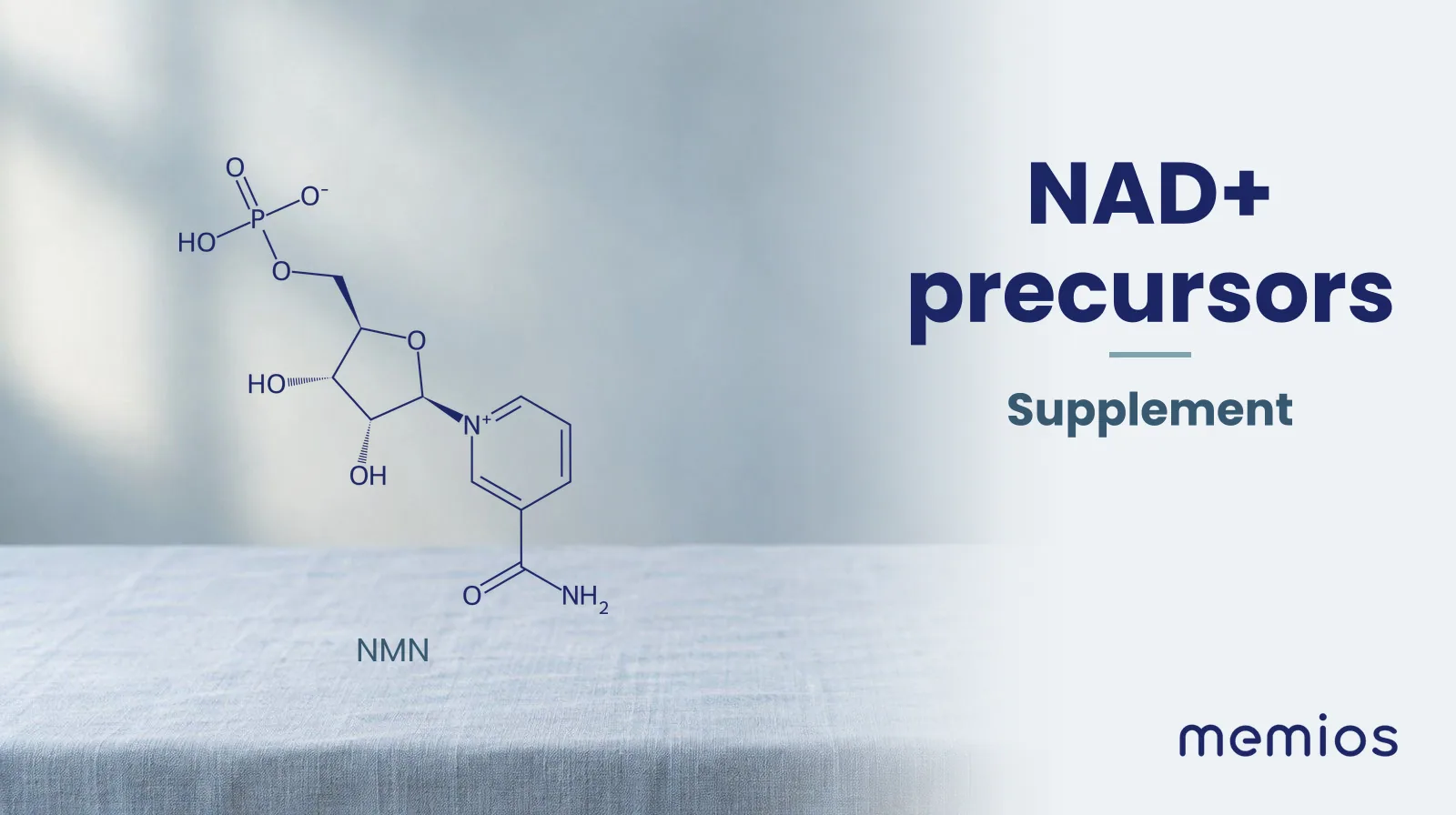
NMN and nicotinamide riboside are small molecules that the body converts into nicotinamide adenine dinucleotide (NAD+), a coenzyme required across cellular metabolism. Both belong to the vitamin B3 family: the NIH Office of Dietary Supplements names nicotinamide riboside as one of the derivatives covered by the generic term niacin. NMN also occurs naturally in foods such as edamame and avocado, at well under 2 mg per 100 g. Supplement trials have used 250 to 2,000 mg/day, hundreds of times the amount present in food.
What the research says
Short human trials show these compounds are well tolerated but have not shown consistent clinical benefit. A 2026 meta-analysis of fifteen NMN trials found no clear increase in adverse events and no broad metabolic benefit; a separate meta-analysis found only a small diastolic blood pressure reduction of about 2 mmHg, with systolic pressure unchanged except in people aged 60 and over. A 12-week randomised trial of nicotinamide riboside at 2,000 mg/day in obese men found no improvement in insulin sensitivity at all. The most substantial safety signal is indirect: in three cohorts, blood levels of the terminal metabolites of excess niacin were associated with higher three-year cardiovascular event risk.
Evidence grade: Limited evidence.
What goes wrong
In three cohorts, higher blood levels of the terminal breakdown products of excess niacin were associated with higher three-year risk of major adverse cardiovascular events, and the metabolite 4PY induced vascular inflammation in mice. (Source 1)
- Cohort study, Moderate certainty.
- Size: Discovery cohort n = 1,162; US validation n = 2,331; European validation n = 832.
- Who: Stable cardiac patients undergoing elective diagnostic cardiac evaluation.
- How long: 3 years of follow-up for major adverse cardiovascular events.
- Result: Adjusted HR for 2PY: 1.64 (1.10–2.42) and 2.02 (1.29–3.18); for 4PY: 1.89 (1.26–2.84) and 1.99 (1.26–3.14)
- Funding: not stated.
Collectively, these results indicate that the terminal breakdown products of excess niacin, 2PY and 4PY, are both associated with residual CVD risk.
The US Food and Nutrition Board set a tolerable upper intake level for supplemental niacin based on skin flushing, and notes that large doses of nicotinic acid can worsen insulin resistance and raise blood glucose. (Source 2)
- Official position, Certainty not rated.
- Size: Not applicable; a reference-intake position.
- Who: Healthy infants, children and adults.
- How long: Not applicable.
- Result: Adult UL 35 mg/day of supplemental niacin, set on the level associated with skin flushing.
- Funding: independent (US government body)
Large doses of nicotinic acid can raise blood glucose levels by causing or aggravating insulin resistance and increasing hepatic production of glucose.
What the evidence supports
A meta-analysis of NMN trials found a small reduction in diastolic blood pressure of about 2 mmHg; the reduction in systolic blood pressure was not statistically significant overall, and reached significance only in a subgroup aged 60 and over. (Source 3)
- Meta-analysis, Low certainty.
- Size: 349 participants from 10 RCTs with 11 intervention arms.
- Who: Adults with elevated blood pressure.
- How long: Trial durations pooled across the included RCTs.
- Result: Diastolic BP WMD, −2.15 mmHg; 95% CI: −3.68 to −0.61; systolic BP not statistically significant overall; in those aged 60+, SBP WMD: −3.94 mmHg; 95% CI: −7.06 to −0.82.
- Funding: not stated.
Limit of this finding: The headline systolic result comes from a subgroup analysis, not the main comparison: across all participants the systolic reduction was not statistically significant. Subgroup findings in a pooled analysis of 349 people are hypothesis-generating, not proof that NMN lowers blood pressure in older adults.
Compared with the placebo, NMN supplementation was associated with a statistically significant but modest reduction in resting DBP (WMD, −2.15 mmHg; 95% CI: −3.68 to −0.61). In contrast, the reduction in resting SBP was not statistically significant.
A 2026 compositional review reports NMN in ordinary foods such as edamame and avocado at under 2 mg per 100 g, orders of magnitude below the doses used in supplement trials. (Source 4)
- Expert review, not systematic, Very low certainty.
- Size: Not applicable; a compositional review.
- Who: Foods analysed for NMN content.
- How long: Not applicable.
- Result: Edamame 0.47–1.88 mg/100 g; avocado 0.36 to 1.60 mg/100 g; seafood and raw meats 0.06–0.42 mg/100 g.
- Funding: not stated.
Among plant-based foods, edamame beans and avocados exhibit relatively high NMN concentrations, with edamame containing 0.47–1.88 mg/100 g and avocados ranging from 0.36 to 1.60 mg/100 g.
What the evidence does not support
A 2026 systematic review and meta-analysis of NMN trials found short-term supplementation well tolerated, with no broad metabolic benefit, though the authors point to small changes in diastolic blood pressure and HOMA-IR as preliminary signals. (Source 5)
- Meta-analysis, Low certainty.
- Size: 15 trials included, 10 contributing to safety analyses (383 participants: 230 NMN, 153 control)
- Who: Adults, mostly middle-aged and older, in short randomised trials.
- How long: 14 days to 24 weeks.
- Result: Total adverse events RD = −0.008, 95% CI −0.061 to 0.045; serious adverse events RD = −0.003, 95% CI −0.036 to 0.031; body weight, BMI, fasting glucose, HbA1c, lipids and systolic blood pressure all non-significant.
- Funding: not stated.
Short-term oral NMN or NMN-related supplementation showed favorable tolerability, with no clear increase in adverse events or hepatic biochemical abnormalities. Broad metabolic benefits were not evident, but changes in diastolic blood pressure and HOMA-IR suggest preliminary vascular-metabolic signals, especially in older adults or people with early metabolic risk.
A 12-week randomised trial of nicotinamide riboside at 2,000 mg/day in obese, insulin-resistant men found no improvement in insulin sensitivity or body composition. (Source 6)
- Randomized trial, Moderate certainty.
- Size: 40 healthy sedentary men with BMI >30 kg/m2, aged 40-70.
- Who: Obese, insulin-resistant men.
- How long: 12 weeks.
- Result: Insulin sensitivity, endogenous glucose production, glucose disposal and oxidation, resting energy expenditure, lipolysis, lipid oxidation and body composition all unchanged versus placebo.
- Funding: not stated in the abstract; nicotinamide riboside was supplied as a commercial ingredient.
12 wk of NR supplementation in doses of 2000 mg/d appears safe, but does not improve insulin sensitivity and whole-body glucose metabolism in obese, insulin-resistant men.
A systematic review of NMN randomised trials found physical performance measures were not significantly improved. (Source 7)
- Systematic review, Very low certainty.
- Size: Ten studies, 437 patients, mean age 58.0 years.
- Who: Adults in NMN randomised controlled trials.
- How long: Mean follow-up 9.6 weeks (4 to 12 weeks)
- Result: Mean grip strength 29.9 kg before and 30.5 kg after; skeletal mass index 7.4 kg/m2 before and after; NMN dosages 150 to 1200 mg/day.
- Funding: not stated.
Limit of this finding: This is a systematic review without a meta-analysis. The grip-strength and skeletal-mass figures are simple averages taken from only two studies each, not pooled effect estimates, and no statistical test of the difference was performed.
Therefore, patients taking NMN supplementation demonstrated non-significantly improved physical performance parameters.
Where the evidence is mixed
The US Food and Drug Administration reversed its earlier exclusion of NMN and, in letters dated 29 September 2025, said NMN is not excluded from the dietary supplement definition. (Source 8)
- Official position, Certainty not rated.
- Size: Not applicable; a regulatory position.
- Who: US dietary supplement market.
- How long: Position dated 29 September 2025.
- Result: NMN remains a new dietary ingredient requiring notification; the exclusion was lifted rather than a safety judgement being made.
- Funding: not applicable (law firm summary of FDA letters)
the FDA confirmed that NMN is not excluded from the definition of a dietary supplement, reversing its previous position that had excluded NMN products from the market.
Where the research disagrees
Whether taking extra NAD+ precursors is prudent given what happens to surplus vitamin B3
- Meta-analysis of NMN trials, Nutrients 2026, meta-analysis of 10 trials contributing safety data, 383 participants, 14 days to 24 weeks: Short-term oral NMN or NMN-related supplementation showed favorable tolerability, with no clear increase in adverse events or hepatic biochemical abnormalities. (Source 5)
- Ferrell et al., Nature Medicine 2024, three prospective cohorts totalling over 4,300 cardiac patients, plus mouse experiments: Collectively, these results indicate that the terminal breakdown products of excess niacin, 2PY and 4PY, are both associated with residual CVD risk. (Source 1)
How much
- Reference intake: There is no reference intake for NMN or NR as such. For the parent vitamin, the US Food and Nutrition Board sets RDAs in niacin equivalents, listed in Table 1 of the NIH fact sheet as 16 mg NE/day for adult men and 14 mg NE/day for adult women. (Source 9)
- Upper limit: No upper level exists for NMN or NR specifically. The Food and Nutrition Board's tolerable upper intake level for supplemental niacin is 35 mg/day for adults, set on the level associated with skin flushing. (Source 10)
- Studied: NMN trials pooled in a 2026 meta-analysis used 250 to 2,000 mg/day for 14 days to 24 weeks. (Source 11)
- Studied: A systematic review found NMN dosages across ten randomised trials ranged from 150 to 1200 mg/day, with mean follow-up of 9.6 weeks. (Source 7)
- Studied: A randomised trial gave obese men nicotinamide riboside at 2000 mg/d for 12 weeks. (Source 6)
A common belief, and what the research shows
The belief: NMN and NR raise NAD+, and raising NAD+ reverses ageing.
What the research shows: Raising a biochemical marker is not the same as changing an outcome. The pooled human trial evidence to date reports that "Broad metabolic benefits were not evident, but changes in diastolic blood pressure and HOMA-IR suggest preliminary vascular-metabolic signals", and the largest randomised trial of nicotinamide riboside concluded that 2,000 mg/day "does not improve insulin sensitivity and whole-body glucose metabolism in obese, insulin-resistant men." No human trial has measured lifespan.
Questions and answers
What is it?
NMN and nicotinamide riboside are two small molecules the body converts into NAD+, a coenzyme every cell uses. Both are forms of vitamin B3 chemistry: the NIH Office of Dietary Supplements lists nicotinamide riboside among the niacin family. They are sold as capsules at doses far above ordinary dietary intakes. (Source 12)
What does it do in the body?
In the body they feed the NAD+ salvage pathway, and NAD+ is required for energy metabolism and for enzymes that repair DNA and regulate metabolism. What that does to health outcomes is much less clear: a 2026 meta-analysis of fifteen NMN trials found tolerability was good but broad metabolic benefits were not apparent. (Source 5)
Is it good or bad for you?
In the short term these supplements look safe: pooled adverse event rates did not differ from placebo. But the benefits reported so far are small and inconsistent, and a large randomised trial of nicotinamide riboside at 2,000 mg/day found no improvement in insulin sensitivity. Separately, terminal breakdown products of excess niacin have been linked to higher cardiovascular event risk in three cohorts. (Source 6)
How do you get more of it?
NAD+ precursors come from niacin in ordinary food and, at much higher amounts, from supplements. Trials of NMN have used 250 to 2,000 mg/day over periods from two weeks to twenty-four weeks; NMN also occurs naturally in foods such as edamame and avocado at well under 2 mg per 100 g. (Source 7)
If it is harmful, what reduces it?
These are water-soluble B-vitamin derivatives, cleared through methylated urinary metabolites rather than stored. The concern with excess is those metabolites themselves: 2PY and 4PY were associated with higher three-year cardiovascular event risk, and the Food and Nutrition Board's upper level for supplemental niacin is set on flushing. (Source 1)
Why might someone be low in it or missing it?
Low niacin status is mostly about intake and conversion. The NIH Office of Dietary Supplements lists undernutrition, poverty, alcohol use disorder, AIDS, inflammatory bowel disease and liver cirrhosis as risk settings, and notes that low riboflavin, vitamin B6 or iron reduce the conversion of tryptophan to niacin. Tuberculosis drugs interfere with the same pathway. (Source 13)
Which whole foods contain it or feed it?
Poultry, beef and fish supply roughly 5 to 10 mg of niacin per serving as NAD and NADP, and nuts, legumes and grains supply about 2 to 5 mg per serving. NMN itself is present in edamame at 0.47 to 1.88 mg per 100 g and avocado at 0.36 to 1.60 mg per 100 g, and nicotinamide riboside occurs in milk. (Source 14)
What happens if you do not have it?
There is no known consequence of not taking an NMN or NR supplement. Severe deficiency of the parent vitamin, niacin, is a different matter: it causes pellagra, with a photosensitive rash, digestive changes and neurological symptoms. That is a deficiency of dietary vitamin B3, not of a supplement. (Source 15)
How can you test for it?
There is no validated clinical test of NAD+ status. For the underlying vitamin, the NIH Office of Dietary Supplements says blood niacin levels are unreliable and the sensitive measure is urinary excretion of two methylated metabolites, with thresholds of 17.5 and 5.8 micromol/day. Research NAD+ assays in blood exist but have no reference range for judging supplementation. (Source 16)
References
- Nature Medicine. A terminal metabolite of niacin promotes vascular inflammation and contributes to cardiovascular disease risk. 2024. PMID 38374343, DOI 10.1038/s41591-023-02793-8. Read the source
- NIH Office of Dietary Supplements. Niacin - Health Professional Fact Sheet. 2022. Read the source
- Nutrients. Effects of Nicotinamide Mononucleotide Supplementation on Blood Pressure: A Systematic Review and Meta-Analysis of Randomized Controlled Trials. 2026. DOI 10.3390/nu18060890. Read the source
- Journal of Food Composition and Analysis. Unraveling nicotinamide mononucleotide (NMN): A critical review of health implications, synthesis pathways, and analytical techniques. 2026. DOI 10.1016/j.jfca.2026.109027. Read the source
- Nutrients. Safety and Metabolism-Related Outcomes of Oral Nicotinamide Mononucleotide Supplementation in Adults: A Systematic Review and Meta-Analysis. 2026. DOI 10.3390/nu18142251. Read the source
- The American Journal of Clinical Nutrition. A randomized placebo-controlled clinical trial of nicotinamide riboside in obese men: safety, insulin-sensitivity, and lipid-mobilizing effects. 2018. PMID 29992272, DOI 10.1093/ajcn/nqy132. Read the source
- Cureus. Improved Physical Performance Parameters in Patients Taking Nicotinamide Mononucleotide (NMN): A Systematic Review of Randomized Control Trials. 2024. PMID 39221308, DOI 10.7759/cureus.65961. Read the source
- Venable LLP (reporting FDA letters of 29 September 2025). FDA Declares Nicotinamide Mononucleotide Is a Dietary Supplement. 2025. Read the source
- NIH Office of Dietary Supplements. Niacin - Health Professional Fact Sheet. 2022. Read the source
- NIH Office of Dietary Supplements. Niacin - Health Professional Fact Sheet. 2022. Read the source
- Nutrients. Safety and Metabolism-Related Outcomes of Oral Nicotinamide Mononucleotide Supplementation in Adults: A Systematic Review and Meta-Analysis. 2026. DOI 10.3390/nu18142251. Read the source
- NIH Office of Dietary Supplements. Niacin - Health Professional Fact Sheet. 2022. Read the source
- NIH Office of Dietary Supplements. Niacin - Health Professional Fact Sheet. 2022. Read the source
- NIH Office of Dietary Supplements. Niacin - Health Professional Fact Sheet. 2022. Read the source
- NIH Office of Dietary Supplements. Niacin - Health Professional Fact Sheet. 2022. Read the source
- NIH Office of Dietary Supplements. Niacin - Health Professional Fact Sheet. 2022. Read the source