Medications · September 29, 2026 · Memios · 17 min read
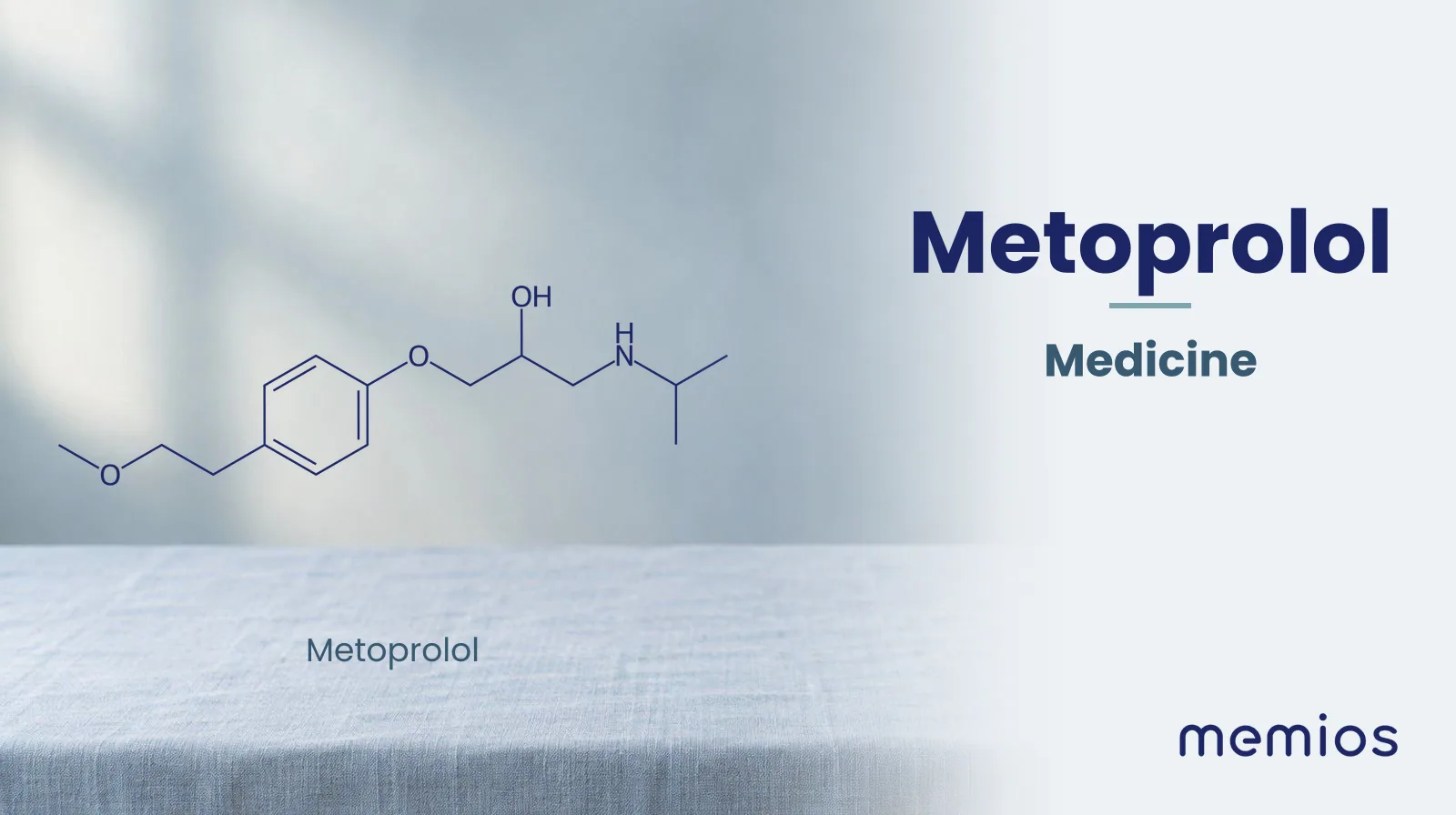
Metoprolol
Well established. The strength of the evidence depends heavily on why it is prescribed.
TLDR
- Boxed warning: Following abrupt cessation of therapy with certain beta-blocking agents, exacerbations of angina pectoris and, in some cases, myocardial infarction have occurred.
- Well established. The strength of the evidence depends heavily on why it is prescribed.
- What it is: Metoprolol is a beta-blocker, a prescription drug that blunts the effect of adrenaline-type hormones on the heart.
- Main use: Heart failure with reduced ejection fraction (metoprolol succinate CR/XL) (well supported).
- Other approved uses: After a heart attack (secondary prevention) (disputed); First-line treatment of uncomplicated high blood pressure (disputed); Angina pectoris (evidence not rated).
- Uses NOT supported by research: Starting before non-cardiac surgery to prevent heart complications; Rate control and prognosis in heart failure with atrial fibrillation.
- Recommended dose (official position): Dosing is set by the prescriber. As a position, the metoprolol succinate label (2017) says heart failure doses are doubled every two weeks up to the highest tolerated level or 200 mg.
- Studied dose (a trial dose, not a recommendation): MERIT-HF: metoprolol CR/XL started at 12.5 mg or 25 mg once daily and titrated over 8 weeks to a target of 200 mg once daily. Findings citing that trial: 1 for.
- Upper limit: The label states that dosages above 400 mg per day have not been studied (hypertension); for heart failure the label target is up to 200 mg.
- What goes wrong: 5 findings on harm. In POISE, extended-release metoprolol started just before non-cardiac surgery reduced heart attacks but increased total deaths compared with placebo.
- Interactions: 2 recorded, including CYP2D6 inhibitors (quinidine, fluoxetine, paroxetine, propafenone), Albuterol and other beta2-agonist inhalers.
- Common myth: Beta-blockers commonly cause depression.
What it is
Metoprolol is a beta-blocker, a prescription drug that blunts the effect of adrenaline-type hormones on the heart. It comes as extended-release metoprolol succinate, taken once daily and the form tested in the MERIT-HF heart failure trial, and as immediate-release metoprolol tartrate. The succinate label lists hypertension, angina and stable symptomatic heart failure as approved uses.
What the research says
The strength of the evidence depends heavily on why it is prescribed. In heart failure with reduced ejection fraction, extended-release metoprolol succinate cut deaths by about a third in the MERIT-HF trial. After a heart attack, older trials support beta-blockers, but recent trials in people whose heart pumping is preserved found no benefit, and very early intravenous use increased cardiogenic shock. As a first choice for uncomplicated high blood pressure, a Cochrane review found beta-blockers (mostly atenolol) had little or no effect on mortality and were inferior to other drug classes. Started just before non-cardiac surgery, it prevented heart attacks but increased strokes and deaths (POISE). Fatigue and a slow heart rate are the main everyday side effects. Stopping suddenly can worsen angina, which is the subject of the label's boxed warning.
Evidence grade: Well established.
How it works
Drug class: Beta1-selective (cardioselective) beta-adrenergic blocker
Metoprolol blocks beta1 receptors, mainly in the heart, so the heart beats more slowly and less forcefully. The label says the blood-pressure-lowering mechanism is not fully worked out; proposed routes are reduced cardiac output, reduced nervous-system drive, and suppression of renin, a hormone that raises blood pressure. (Source 1)
Boxed warning
Following abrupt cessation of therapy with certain beta-blocking agents, exacerbations of angina pectoris and, in some cases, myocardial infarction have occurred. When discontinuing chronically administered metoprolol succinate extended-release, particularly in patients with ischemic heart disease, gradually reduce the dosage over a period of 1 to 2 weeks and monitor the patient.
(Source 1)
What it is used for
- In MERIT-HF, metoprolol CR/XL on top of standard therapy lowered all-cause mortality from 11.0% to 7.2% per patient-year. A later individual-patient meta-analysis found beta-blockers did not reduce mortality in heart failure patients who also had atrial fibrillation. Evidence: established. (Source 2)
- Benefit was established in the pre-reperfusion era. In COMMIT, early intravenous-then-oral metoprolol reduced reinfarction and ventricular fibrillation but increased cardiogenic shock, with no effect on death. Recent trials in patients with preserved ejection fraction (REDUCE-AMI, REBOOT) found no reduction in death or new heart attack. Evidence: disputed. (Source 3)
- Cochrane found beta-blockers as first-line therapy gave modest cardiovascular reductions and little or no effect on mortality, and were inferior to other antihypertensive drugs. Three-quarters of patients in these trials took atenolol, not metoprolol. Evidence: disputed. (Source 4)
- The label lists long-term angina treatment as an approved use. We did not retrieve outcome trials specific to metoprolol in stable angina in this run. Evidence: unknown. (Source 1)
- In POISE (8,351 patients), extended-release metoprolol started 2 to 4 hours before surgery reduced heart attacks but increased total deaths and strokes. Evidence: not-supported. (Source 5)
- An individual-patient meta-analysis found beta-blockers reduced mortality in heart failure patients in sinus rhythm but not in those with atrial fibrillation. Evidence: not-supported. (Source 6)
Interactions
- CYP2D6 inhibitors (quinidine, fluoxetine, paroxetine, propafenone) (pharmacokinetic study): These drugs block the liver enzyme that breaks down metoprolol, raising its levels; quinidine tripled S-metoprolol concentrations in healthy volunteers. (Source 1)
- Albuterol and other beta2-agonist inhalers (label): Beta-blockers can block the airway-opening effect of beta2-agonists and may provoke bronchospasm in people with asthma; this label warning comes from the albuterol label. (Source 7)
Stopping it
- The label advises tapering over 1 to 2 weeks rather than stopping abruptly, because abrupt cessation has been followed by worsening angina and heart attacks. (Source 1)
- In the Rotterdam cohort, stopping beta-blockers overall was not linked to heart attack, but stopping selective beta-blockers (such as metoprolol) was, for up to 180 days. This is observational evidence. (Source 8)
- The label notes that because coronary disease may be unrecognised, abrupt stopping should be avoided even in people taking it only for blood pressure. (Source 1)
What goes wrong
In POISE, extended-release metoprolol started just before non-cardiac surgery reduced heart attacks but increased total deaths compared with placebo. (Source 5)
- Randomized trial, High certainty.
- Size: 8,351 patients in 190 hospitals, 23 countries.
- Who: People with, or at risk of, atherosclerotic disease having non-cardiac surgery.
- How long: 30 days.
- Result: Deaths 129 (3.1%) vs 97 (2.3%), HR 1.33; myocardial infarction 176 (4.2%) vs 239 (5.7%), HR 0.73.
- Funding: Mainly public funders (Canadian Institutes of Health Research, NHMRC Australia, Spanish and UK bodies) plus AstraZeneca.
However, there were more deaths in the metoprolol group than in the placebo group (129 [3·1%] vs 97 [2·3%] patients; 1·33, 1·03—1·74; p=0·0317).
In POISE, strokes roughly doubled with perioperative metoprolol. (Source 5)
- Randomized trial, High certainty.
- Size: 8,351 patients.
- Who: People having non-cardiac surgery.
- How long: 30 days.
- Result: Stroke 41 (1.0%) vs 19 (0.5%); HR 2.17.
- Funding: Mainly public funders plus AstraZeneca.
More patients in the metoprolol group than in the placebo group had a stroke (41 [1·0%] vs 19 [0·5%] patients; 2·17, 1·26—3·74; p=0·0053).
Across placebo-controlled beta-blocker trials, fatigue was modestly more common, about 1 extra report per 57 patients treated per year; depressive symptoms were not significantly increased. (Source 9)
- Meta-analysis, Moderate certainty.
- Size: 15 trials, more than 35,000 subjects.
- Who: Patients in MI, heart failure and hypertension trials.
- How long: At least 6 months.
- Result: Fatigue +18 per 1000 patients per year (95% CI 5 to 30); sexual dysfunction +5 per 1000 (2 to 8); depressive symptoms +6 per 1000 (-7 to 19, not significant)
- Funding: not stated.
beta-Blockers were associated with a small significant annual increase in risk of reported fatigue (18 per 1000 patients; 95% CI, 5-30), equivalent to 1 additional report of fatigue for every 57 patients treated per year with beta-blockers.
Stopping a selective beta-blocker (the class metoprolol belongs to) was associated with a higher risk of heart attack over the following 180 days in an older population cohort. (Source 8)
- Cohort study, Low certainty.
- Size: Beta-blocker users within the Rotterdam Study (7,983 people aged 55 and over)
- Who: Older adults.
- How long: Up to 180 days after stopping.
- Result: RR 2.70 (95% CI 1.06 to 6.89) within 30 days; RR 2.44 (1.07 to 5.59) at 30 to 180 days; no increase for beta-blockers overall.
- Funding: not stated.
cessation of selective β-blockers was associated with an increased risk of myocardial infarction during the first 180 days after discontinuation
The label lists tiredness, dizziness, depression, diarrhoea, shortness of breath, bradycardia and rash as the most common (>2%) adverse reactions. (Source 1)
- Official position, Certainty not rated.
- Size: Label summary of clinical trials.
- Who: Hypertension and angina patients.
- How long: Not stated.
- Result: Each >2%.
- Funding: Regulatory label.
The most common (>2%) adverse reactions are tiredness, dizziness, depression, diarrhea, shortness of breath, bradycardia, and rash.
What the evidence supports
In heart failure with reduced ejection fraction, extended-release metoprolol succinate lowered all-cause mortality by about a third compared with placebo; the trial was stopped early for benefit. (Source 2)
- Randomized trial, High certainty.
- Size: 3,991 patients (1,990 metoprolol, 2,001 placebo)
- Who: NYHA class II-IV chronic heart failure, ejection fraction 0.40 or less, on standard therapy.
- How long: Mean follow-up 1 year (stopped early)
- Result: Deaths 145 (7.2% per patient-year) vs 217 (11.0%); relative risk 0.66 (95% CI 0.53 to 0.81); sudden deaths 79 vs 132; worsening heart failure deaths 30 vs 58.
- Funding: Not stated in the fetched abstract; trial stopped early, which can overestimate effect.
All-cause mortality was lower in the metoprolol CR/XL group than in the placebo group (145 [7·2%, per patient-year of follow-up]) vs 217 deaths [11·0 %], relative risk 0·66 [95% CI 0·53–0·81]
What the evidence does not support
A Cochrane review found that starting hypertension treatment with a beta-blocker had no effect on all-cause mortality compared with placebo, and was worse than calcium-channel blockers for mortality and stroke; most trial patients took atenolol. (Source 4)
- Systematic review, Moderate certainty.
- Size: 13 RCTs; 40,245 participants on beta-blockers.
- Who: Adults with hypertension.
- How long: Trials from the 1970s to 2000s.
- Result: All-cause mortality vs placebo RR 0.99 (95% CI 0.88 to 1.11); vs CCBs RR 1.07 (1.00 to 1.14); stroke vs CCBs RR 1.24 (1.11 to 1.40)
- Funding: independent (Cochrane)
There was no difference in all-cause mortality between beta-blockers and placebo (RR 0.99, 95% CI 0.88 to 1.11), diuretics or RAS inhibitors, but it was higher for beta-blockers compared to CCBs (RR 1.07, 95% CI 1.00 to 1.14).
The Cochrane authors judged beta-blocker effects as first-line hypertension therapy to be inferior to those of other antihypertensive drugs, and noted most trials were at high risk of bias. (Source 4)
- Systematic review, Moderate certainty.
- Size: 13 RCTs.
- Who: Adults with hypertension.
- How long: Not applicable.
- Result: Conclusion statement.
- Funding: independent (Cochrane)
Current evidence suggests that initiating treatment of hypertension with beta-blockers leads to modest CVD reductions and little or no effects on mortality. These beta-blocker effects are inferior to those of other antihypertensive drugs.
In the modern reperfusion era, the REDUCE-AMI trial (metoprolol or bisoprolol) found no reduction in death or new heart attack after a heart attack with preserved ejection fraction. (Source 10)
- Randomized trial, Moderate certainty.
- Size: 5,020 patients.
- Who: Patients after myocardial infarction with LVEF 50% or more.
- How long: Median 3.5 years.
- Result: Primary endpoint 7.9% vs 8.3%; HR 0.96 (95% CI 0.79 to 1.16); P = 0.64.
- Funding: not stated in the review excerpt; open-label design.
The primary endpoint event occurred in 199/2,508 (7.9%) patients assigned to BBs and 208/2,512 (8.3%) assigned to no-BBs (hazard ratio [HR] 0.96, 95% confidence interval [CI] 0.79–1.16; P = 0.64).
The REBOOT trial, in post-heart-attack patients with ejection fraction above 40%, likewise found no difference with beta-blockers in its composite endpoint of death from any cause, new heart attack or heart failure hospitalisation. (Source 11)
- Randomized trial, Moderate certainty.
- Size: 8,438 patients analysed (of 8,505 randomised)
- Who: Patients after myocardial infarction with LVEF above 40%.
- How long: Median 3.7 years.
- Result: 316 vs 307 primary events; HR 1.04 (95% CI 0.89 to 1.22); P = 0.63.
- Funding: not stated.
The primary endpoint was a composite of all-cause death, reinfarction, or HF hospitalization. A primary endpoint event occurred in 316 patients in BB group and 307 in no-BB group (HR 1.04, 95% CI 0.89–1.22; P = 0.63).
An individual-patient meta-analysis of beta-blocker heart failure trials found mortality benefit in sinus rhythm but none in patients with atrial fibrillation. (Source 6)
- Meta-analysis, High certainty.
- Size: 18,254 patients; 3,066 with atrial fibrillation.
- Who: Heart failure patients in randomised beta-blocker trials.
- How long: Mean 1.5 years.
- Result: Sinus rhythm HR 0.73 (0.67 to 0.80); atrial fibrillation HR 0.97 (0.83 to 1.14); interaction p=0.002.
- Funding: Investigator-initiated; unrestricted grant from Menarini, data extraction support from GlaxoSmithKline.
Beta-blocker therapy led to a significant reduction in all-cause mortality in patients with sinus rhythm (hazard ratio 0·73, 0·67–0·80; p<0·001), but not in patients with atrial fibrillation (0·97, 0·83–1·14; p=0·73)
The same meta-analysis did not support the belief that beta-blockers commonly cause depression. (Source 9)
- Meta-analysis, Moderate certainty.
- Size: 15 trials, more than 35,000 subjects.
- Who: Patients in MI, heart failure and hypertension trials.
- How long: At least 6 months.
- Result: Depressive symptoms +6 per 1000 per year (95% CI -7 to 19)
- Funding: not stated.
beta-Blocker therapy was not associated with a significant absolute annual increase in risk of reported depressive symptoms (6 per 1000 patients; 95% confidence interval [CI], -7 to 19).
Where the evidence is mixed
The same review found beta-blockers did reduce stroke and total cardiovascular events compared with placebo (low-certainty evidence), but not coronary heart disease. (Source 4)
- Systematic review, Low certainty.
- Size: 4 placebo-controlled RCTs, 23,613 participants.
- Who: Adults with hypertension.
- How long: Trials from the 1970s to 2000s.
- Result: Total CVD RR 0.88 (0.79 to 0.97); stroke RR 0.80 (0.66 to 0.96); CHD RR 0.93 (0.81 to 1.07)
- Funding: independent (Cochrane)
Total CVD was lower for beta-blockers compared to placebo (RR 0.88, 95% CI 0.79 to 0.97; low-certainty evidence), a reflection of the decrease in stroke
In COMMIT, early intravenous then oral metoprolol in acute heart attack did not reduce death, and it increased cardiogenic shock by 11 per 1,000 treated, mostly in the first day, while reducing reinfarction and ventricular fibrillation by 5 per 1,000 each. (Source 3)
- Randomized trial, High certainty.
- Size: 45,852 patients in 1,250 hospitals.
- Who: Patients within 24 hours of suspected acute myocardial infarction (93% ST-elevation or bundle branch block)
- How long: Up to 4 weeks in hospital (mean 15 days)
- Result: Death 7.7% vs 7.8% (OR 0.99); reinfarction 2.0% vs 2.5% (OR 0.82); ventricular fibrillation 2.5% vs 3.0%; cardiogenic shock 5.0% vs 3.9% (OR 1.30)
- Funding: not stated in fetched abstract.
Overall, these reductions were counterbalanced by 11 more per 1000 developing cardiogenic shock (1141 [5·0%] vs 885 [3·9%]; OR 1·30, 1·19–1·41; p<0·00001).
Succinate versus tartrate: in COMET, carvedilol reduced mortality compared with immediate-release metoprolol tartrate at a target of 50 mg twice daily, a formulation and dose different from the succinate proven in MERIT-HF. (Source 12)
- Randomized trial, Moderate certainty.
- Size: 3,029 patients (1,511 carvedilol, 1,518 metoprolol tartrate)
- Who: Chronic heart failure.
- How long: Mean 58 months.
- Result: Deaths 34% carvedilol vs 40% metoprolol tartrate; HR 0.83; P = .002.
- Funding: not stated in the commentary we reached.
Over a mean follow-up of 58 months, 34% of the patients in the carvedilol group died, compared with 40% in the metoprolol tartrate group
Where the research disagrees
Whether beta-blockers should still be routine after a heart attack when heart function is preserved
- Older landmark trials (as described by Zhao et al., 2026), Pre-reperfusion era randomised trials: The landmark trials that established BB therapy after MI were conducted when the therapeutic targets of BB, such as large infarct size, residual ischemia, and MVA, were prevalent. (Source 10)
- REDUCE-AMI investigators (as reported by Zhao et al., 2026), Open-label randomised trial, 5,020 patients: The primary endpoint event occurred in 199/2,508 (7.9%) patients assigned to BBs and 208/2,512 (8.3%) assigned to no-BBs (Source 10)
Beta-blockers as first-line therapy for uncomplicated hypertension
- US label (position), Regulatory approval based on blood-pressure lowering: Metoprolol succinate extended-release tablets are indicated for the treatment of hypertension, to lower blood pressure. (Source 1)
- Cochrane review (Wiysonge et al., 2017), Systematic review of 13 RCTs: These beta-blocker effects are inferior to those of other antihypertensive drugs. (Source 4)
How much
- Reference intake: Dosing is set by the prescriber. As a position, the metoprolol succinate label (2017) says heart failure doses are doubled every two weeks up to the highest tolerated level or 200 mg. (Source 1)
- Upper limit: The label states that dosages above 400 mg per day have not been studied (hypertension); for heart failure the label target is up to 200 mg. (Source 1)
- Studied: MERIT-HF: metoprolol CR/XL started at 12.5 mg or 25 mg once daily and titrated over 8 weeks to a target of 200 mg once daily. (Source 2)
- Studied: POISE: extended-release metoprolol succinate started 2 to 4 hours before surgery and continued for 30 days. (Source 5)
- Studied: COMMIT: up to 15 mg intravenous then 200 mg oral daily. (Source 3)
A common belief, and what the research shows
The belief: Beta-blockers commonly cause depression.
What the research shows: A meta-analysis of 15 placebo-controlled trials in more than 35,000 people found 'There is no significant increased risk of depressive symptoms and only small increased risks of fatigue and sexual dysfunction.'
Questions and answers
What is it?
Metoprolol is a prescription beta-blocker. The extended-release succinate form is approved for high blood pressure, angina and stable symptomatic heart failure; an immediate-release tartrate form also exists. (Source 1)
What does it do in the body?
It blocks beta receptors, mostly in the heart, slowing the heart rate and reducing its workload. The label says the blood-pressure mechanism is not fully known; proposed mechanisms include lower cardiac output, less nervous-system drive and suppression of renin. (Source 1)
Is it good or bad for you?
Strongly beneficial in heart failure with reduced ejection fraction (about a third fewer deaths in MERIT-HF). Weak as a first choice for uncomplicated high blood pressure. Harmful when newly started just before non-cardiac surgery (more strokes and deaths in POISE). (Source 2)
How do you get more of it?
Does not apply: it is a prescription drug and the dose is set by the prescriber. Blood levels rise several-fold in people who are CYP2D6 poor metabolisers or who take CYP2D6-inhibiting drugs. (Source 1)
If it is harmful, what reduces it?
Stopping should not be abrupt. The label advises a gradual taper over 1 to 2 weeks under monitoring, because sudden cessation has been followed by worsening angina and heart attacks. (Source 1)
Why might someone be low in it or missing it?
Does not apply as a deficiency; the body does not make metoprolol. A meta-analysis notes beta-blockers are underused in heart patients, possibly because of concern about side effects. (Source 9)
Which whole foods contain it or feed it?
No food contains metoprolol. We did not find documented supplement or food interactions for metoprolol in the sources we reached in this run. (Source 1)
We searched: Metoprolol succinate label (DailyMed) interaction and pharmacokinetic sections; no supplement or food interaction retrieved
What happens if you do not have it?
For someone with heart failure and reduced ejection fraction, going without it forgoes a proven survival benefit: deaths were 11.0% versus 7.2% per patient-year on placebo versus metoprolol in MERIT-HF. For uncomplicated high blood pressure, other drug classes performed as well or better. (Source 2)
How can you test for it?
Metoprolol blood levels are not routinely measured. Its effect shows in heart rate and blood pressure. Genetic CYP2D6 status strongly affects blood levels, but the label excerpts we reached do not recommend routine genotyping. (Source 1)
References
- U.S. National Library of Medicine DailyMed (FDA-approved labeling). METOPROLOL SUCCINATE E/R - metoprolol succinate tablet, extended release (prescribing information). 2017. Read the source
- The Lancet. Effect of metoprolol CR/XL in chronic heart failure: Metoprolol CR/XL Randomised Intervention Trial in Congestive Heart Failure (MERIT-HF). 1999. PMID 10376614, DOI 10.1016/S0140-6736(99)04440-2. Read the source
- The Lancet. Early intravenous then oral metoprolol in 45 852 patients with acute myocardial infarction: randomised placebo-controlled trial (COMMIT/CCS-2). 2005. PMID 16271643, DOI 10.1016/S0140-6736(05)67661-1. Read the source
- Cochrane Database of Systematic Reviews. Beta-blockers for hypertension (Cochrane Review, Wiysonge CS et al.). 2017. DOI 10.1002/14651858.CD002003.pub5. Read the source
- The Lancet. Effects of extended-release metoprolol succinate in patients undergoing non-cardiac surgery (POISE trial): a randomised controlled trial. 2008. PMID 18479744, DOI 10.1016/S0140-6736(08)60601-7. Read the source
- The Lancet. Efficacy of beta blockers in patients with heart failure plus atrial fibrillation: an individual-patient data meta-analysis. 2014. PMID 25193873, DOI 10.1016/S0140-6736(14)61373-8. Read the source
- U.S. National Library of Medicine DailyMed (FDA-approved labeling). VENTOLIN HFA (albuterol sulfate) inhalation aerosol - prescribing information. 2024. Read the source
- Drug Safety. Discontinuation of beta-blockers and the risk of myocardial infarction in the elderly (Rotterdam Study). 2007. DOI 10.2165/00002018-200730060-00008. Read the source
- JAMA. Beta-blocker therapy and symptoms of depression, fatigue, and sexual dysfunction. 2002. PMID 12117400, DOI 10.1001/jama.288.3.351. Read the source
- Frontiers in Pharmacology. Beta-blockers after myocardial infarction with preserved or mildly reduced ejection fraction: existing evidence, knowledge gaps, and an EF-stratified framework. 2026. DOI 10.3389/fphar.2026.1821921. Read the source
- Frontiers in Pharmacology. Beta-blockers after myocardial infarction with preserved or mildly reduced ejection fraction: existing evidence, knowledge gaps, and an EF-stratified framework. 2026. DOI 10.3389/fphar.2026.1821921. Read the source
- Cleveland Clinic Journal of Medicine. Interpreting the COMET trial (Tang WHW, Militello M, Francis GS). 2003. Read the source