Medications · September 29, 2026 · Memios · 10 min read
Methylphenidate
Cochrane reviews find it may reduce ADHD symptoms in children and modestly reduces self-rated symptoms in adults, but rate the certainty of evidence very low, with mostly short, often industry-sponsored trials.
TLDR
- Boxed warning: Ritalin has a high potential for abuse and misuse, which can lead to the development of a substance use disorder, including addiction.
- Limited evidence. Cochrane reviews find it may reduce ADHD symptoms in children and modestly reduces self-rated symptoms in adults, but rate the certainty of evidence very low, with mostly short, often industry-sponsored trials.
- What it is: Methylphenidate is a central nervous system stimulant taken by mouth (and as a skin patch in some products).
- Main use: ADHD in children and adolescents (limited evidence).
- Other approved uses: ADHD in adults (limited evidence); Narcolepsy (evidence not rated).
- Off-label uses (not on the FDA label): Apathy in Alzheimer disease (limited evidence).
- Recommended dose (official position): Dosing is set by the prescriber. As a position, the Ritalin label (2/2025) states that daily dosage above 60 mg is not recommended in children and that the maximum total daily dosage in adults is 60 mg.
- Studied dose (a trial dose, not a recommendation): Matthijssen 2019: 36 or 54 mg/day extended-release methylphenidate versus gradual withdrawal to placebo. Findings citing that trial: 1 for, 1 against.
- Upper limit: Label position (Ritalin, 2/2025): maximum total daily dosage 60 mg.
- What goes wrong: 5 findings on harm. Longer cumulative use of ADHD medications (not methylphenidate alone) was associated with higher risk of cardiovascular disease, especially hypertension.
- Interactions: 2 recorded, including Alcohol (ethanol), MAO inhibitor antidepressants.
- Common myth: Methylphenidate is fully proven by high-quality long-term trials.
What it is
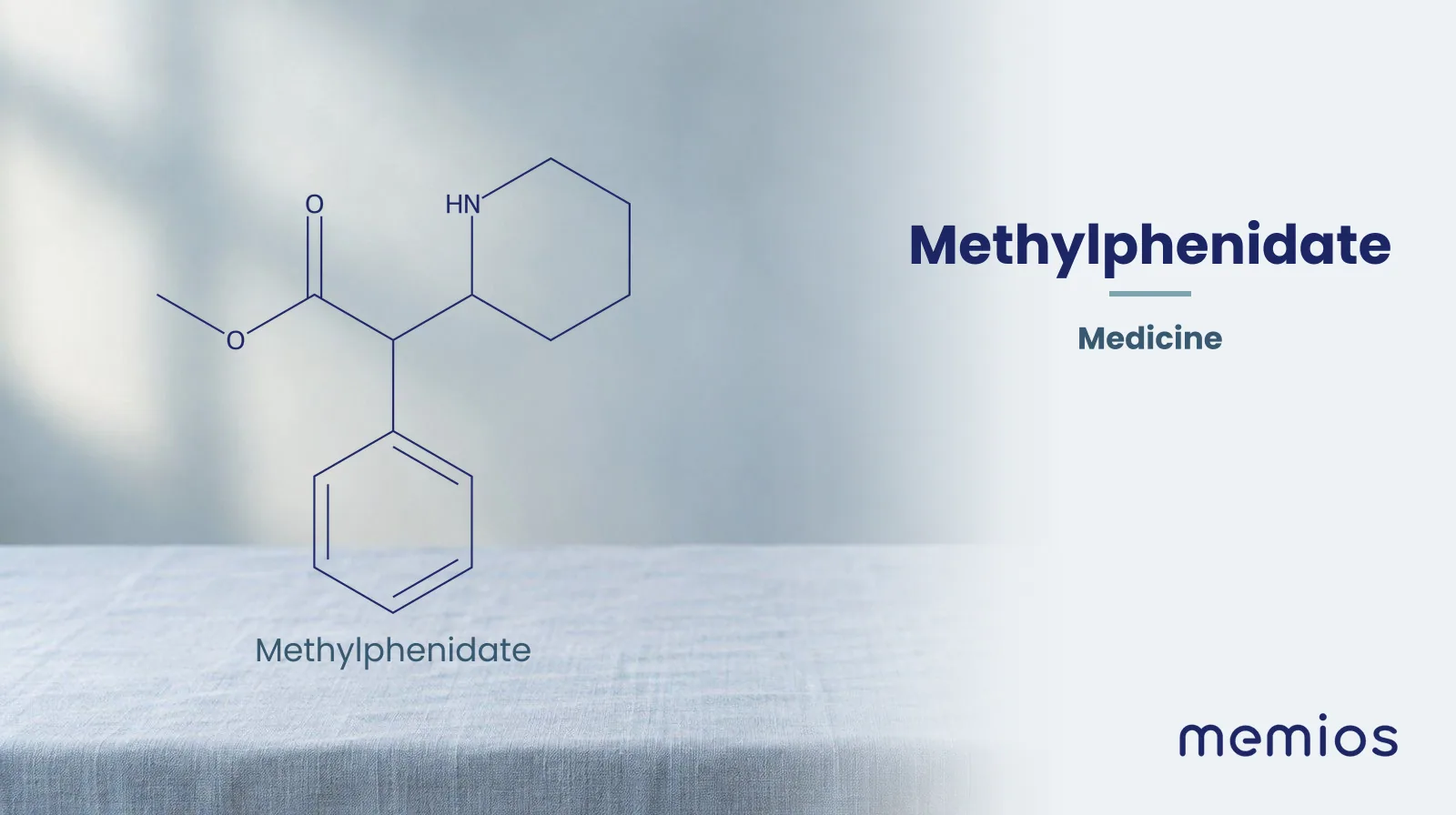
Methylphenidate is a central nervous system stimulant taken by mouth (and as a skin patch in some products). The label states its exact therapeutic mode of action in ADHD and narcolepsy is not known. It is a Schedule II controlled substance in the US.
What the research says
Cochrane reviews find it may reduce ADHD symptoms in children and modestly reduces self-rated symptoms in adults, but rate the certainty of evidence very low, with mostly short, often industry-sponsored trials. It does not seem to improve quality of life in children. It increases non-serious side effects such as sleep problems and reduced appetite, raises blood pressure and heart rate slightly, and long-term ADHD medication use was associated with more cardiovascular disease in a Swedish case-control study.
Evidence grade: Limited evidence.
How it works
Drug class: Central nervous system stimulant
A stimulant of the central nervous system. The label says exactly how it works in ADHD and narcolepsy is not known. (Source 1)
Boxed warning
Ritalin has a high potential for abuse and misuse, which can lead to the development of a substance use disorder, including addiction.
(Source 1)
What it is used for
- Cochrane (2023): may reduce hyperactivity and impulsivity and help concentration; does not seem to affect quality of life; very low certainty evidence. Evidence: limited. (Source 2)
- Cochrane (extended-release): small-to-moderate improvement in self-rated symptoms (SMD -0.37), more adverse events, very low certainty, mostly 8-week industry-sponsored trials. Evidence: limited. (Source 3)
- Listed as an indication on the Ritalin label (a position); we did not retrieve outcome trials for this use within the search budget. Evidence: unknown. (Source 1)
- A news report (NeurologyLive) of the ADMET 2 trial (200 patients, 6 months) described a modest reduction in apathy scores with 20 mg/day, with more serious adverse events numerically in the drug group (17 vs 10); we did not read the trial paper itself. Evidence: limited. (Source 4)
Interactions
- Alcohol (ethanol) (pharmacokinetic study): Alcohol raised blood levels of the active form of methylphenidate during absorption and intensified the "high"; the authors say this may increase abuse liability. (Source 5)
- MAO inhibitor antidepressants (label): Combining with MAOIs can cause a hypertensive crisis. (Source 1)
Stopping it
- The label lists withdrawal symptoms after abrupt stopping or dose reduction following prolonged use: low mood, depression, fatigue, vivid unpleasant dreams, sleeping too little or too much, increased appetite, and slowed movement or agitation. (Source 1)
- In a randomized discontinuation trial after over 2 years of use, gradual withdrawal over 3 weeks led to more worsening than continuing, though many children did not worsen. (Source 6)
What goes wrong
Methylphenidate increases non-serious side effects such as sleep problems and reduced appetite in children; serious harms were not increased over periods up to 6 months. (Source 2)
- Systematic review, Very low certainty.
- Size: Cochrane review.
- Who: Children and adolescents with ADHD.
- How long: Up to 6 months.
- Result: No numbers in the plain language summary we recorded.
- Funding: Not stated in the passage we recorded.
However, it is associated with an increased risk of non-serious unwanted effects like sleeping problems and decreased appetite.
In adults, extended-release methylphenidate increased the risk of any adverse event by about 27%. (Source 3)
- Systematic review, Very low certainty.
- Size: 14 trials, 4,214 participants.
- Who: Adults with ADHD.
- How long: Mostly about 8 weeks.
- Result: RR 1.27 (95% CI 1.19 to 1.37).
- Funding: Mostly industry-sponsored.
increased the risk of experiencing any adverse event (RR 1.27, 95% CI 1.19 to 1.37; 14 trials, 4214 participants).
Longer cumulative use of ADHD medications (not methylphenidate alone) was associated with higher risk of cardiovascular disease, especially hypertension. (Source 7)
- Case-control study, Low certainty.
- Size: 10,388 cases and 51,672 controls from 278,027 people with ADHD.
- Who: Swedish residents aged 6 to 64 with ADHD.
- How long: Up to 14 years.
- Result: Each extra year of use AOR 1.04 (95% CI 1.03-1.05); hypertension >5 years AOR 1.80 (95% CI 1.55-2.08). Association, not proof of cause.
- Funding: Not stated in the abstract.
each 1-year increase of ADHD medication use was associated with a 4% increased risk of CVD (AOR, 1.04 [95% CI, 1.03-1.05])
The label records small average rises in blood pressure and heart rate with stimulants. (Source 1)
- Official position, Certainty not rated.
- Size: Not applicable.
- Who: Label position (Revised 2/2025)
- How long: Not applicable.
- Result: Blood pressure +2 to 4 mmHg; heart rate +3 to 6 beats per minute (label).
- Funding: Manufacturer label approved by FDA.
CNS stimulants cause an increase in blood pressure (mean increase approximately 2 to 4 mmHg) and heart rate (mean increase approximately 3 to 6 beats per minute).
In the ADMET 2 apathy trial in Alzheimer disease, serious adverse events were numerically more frequent with methylphenidate. (Source 4)
- Randomized trial, Low certainty.
- Size: 200 patients (99 methylphenidate, 101 placebo)
- Who: People with Alzheimer disease and apathy.
- How long: 6 months.
- Result: 17 vs 10 serious adverse events (as reported by NeurologyLive).
- Funding: Not stated in the text we read.
Limit of this finding: This finding rests only on a news report (NeurologyLive) describing the ADMET 2 trial; we did not read the trial paper itself, so the numbers are as the news report gave them.
In total, 17 serious adverse events were observed in the methylphenidate group compared with 10 in the placebo group.
What the evidence supports
In children and adolescents with ADHD, methylphenidate may reduce hyperactivity and impulsivity and help concentration, but the evidence is very low certainty. (Source 2)
- Systematic review, Very low certainty.
- Size: Cochrane review (update current to March 2022)
- Who: Children and adolescents with ADHD.
- How long: Trials mostly up to 6 months.
- Result: No numbers in the plain language summary we recorded.
- Funding: Not stated in the passage we recorded.
Methylphenidate might reduce hyperactivity and impulsivity and might help children to concentrate.
In adults, extended-release methylphenidate improved self-rated ADHD symptoms by a small-to-moderate amount; certainty very low and most trials industry-sponsored. (Source 3)
- Systematic review, Very low certainty.
- Size: 16 trials, 3,799 participants (symptom outcome)
- Who: Adults with ADHD.
- How long: Mostly about 8 weeks; one trial 52 weeks.
- Result: SMD -0.37 (95% CI -0.43 to -0.30).
- Funding: Mostly industry-sponsored: 12 trials (76% of participants)
methylphenidate improved self-rated ADHD symptoms (small-to-moderate effect; SMD −0.37, 95% CI −0.43 to −0.30; 16 trials, 3799 participants).
After more than 2 years of use, stopping methylphenidate under placebo led to worsening in more children than continuing. (Source 6)
- Randomized trial, Low certainty.
- Size: 94 children and adolescents.
- Who: Ages 8-18 on methylphenidate in regular care for over 2 years.
- How long: 7 weeks.
- Result: CGI-I worsening in 40.4% after discontinuation vs 15.9% with continuation.
- Funding: Not stated in the text we read.
The CGI-I indicated worsening in 40.4% of the discontinuation group, compared with 15.9% of the continuation group.
What the evidence does not support
Methylphenidate does not seem to improve quality of life in children with ADHD. (Source 2)
- Systematic review, Very low certainty.
- Size: Cochrane review.
- Who: Children and adolescents with ADHD.
- How long: Up to about 6 months.
- Result: No numbers in the plain language summary we recorded.
- Funding: Not stated in the passage we recorded.
Methylphenidate might also help to improve general behaviour, but does not seem to affect quality of life.
Most children in the discontinuation trial did not worsen after stopping, so some can stop without deterioration. (Source 6)
- Randomized trial, Low certainty.
- Size: 94 children and adolescents.
- Who: Long-term users aged 8-18.
- How long: 7 weeks.
- Result: 59.6% of the discontinuation group did not show worsening on CGI-I (derived from 40.4% worsening).
- Funding: Not stated in the text we read.
Some individual patients may, however, be withdrawn from methylphenidate without deterioration.
Where the research disagrees
How strong the evidence for methylphenidate is
- Matthijssen et al. (2019), rct: "Continued treatment with methylphenidate remains effective after long-term use." (Source 6)
- Cochrane adult review (Boesen et al.), systematic-review: "We rated the certainty of the evidence as 'very low' for all outcomes, due to high risk of bias, short trial durations, and limitations to the generalisability of the results." (Source 3)
How much
- Reference intake: Dosing is set by the prescriber. As a position, the Ritalin label (2/2025) states that daily dosage above 60 mg is not recommended in children and that the maximum total daily dosage in adults is 60 mg. (Source 1)
- Upper limit: Label position (Ritalin, 2/2025): maximum total daily dosage 60 mg. (Source 1)
- Studied: Matthijssen 2019: 36 or 54 mg/day extended-release methylphenidate versus gradual withdrawal to placebo. (Source 6)
- Studied: ADMET 2: 5 mg twice daily for 3 days, then 10 mg twice daily (20 mg/day) for 6 months. (Source 4)
A common belief, and what the research shows
The belief: Methylphenidate is fully proven by high-quality long-term trials.
What the research shows: Cochrane reviews rate the evidence very low certainty; in adults "most trials lasted around eight weeks, and only one trial lasted for 52 weeks."
Questions and answers
What is it?
A prescription central nervous system stimulant used for ADHD and narcolepsy, with a boxed warning for abuse and addiction. (Source 1)
What does it do in the body?
It stimulates the central nervous system; the label says the exact mode of action in ADHD is not known. In trials it modestly reduces ADHD symptoms. (Source 3)
Is it good or bad for you?
It may reduce ADHD symptoms, but the evidence is very low certainty, and it raises the risk of non-serious side effects such as sleeping problems and decreased appetite. (Source 2)
How do you get more of it?
Prescription only; the prescriber sets the dose. The Ritalin label gives 60 mg per day as the maximum total daily dosage, as a position. (Source 1)
If it is harmful, what reduces it?
Stopping after prolonged use can bring withdrawal symptoms such as low mood and fatigue; in a trial, withdrawal was done gradually over 3 weeks. (Source 6)
Why might someone be low in it or missing it?
Does not apply: methylphenidate is a medicine, not a nutrient or body component. (Source 1)
We searched: Label, Cochrane summaries and trials read; question does not apply to a drug.
Which whole foods contain it or feed it?
Does not apply: no food contains it. Alcohol taken with it raised blood levels of the active form in a pharmacokinetic study. (Source 5)
What happens if you do not have it?
Does not apply as a deficiency. For long-term users who stop, symptoms worsened in 40% versus 16% who continued in one 7-week trial. (Source 6)
How can you test for it?
No test is used to decide whether someone needs it; we did not source literature on drug-level testing. The label advises monitoring growth in children. (Source 1)
References
- US National Library of Medicine DailyMed / Novartis. RITALIN (methylphenidate hydrochloride) tablets prescribing information (Revised 2/2025). 2025. Read the source
- Cochrane. Is methylphenidate an effective treatment for children and adolescents with ADHD and does it cause unwanted effects? (Plain language summary of Storebø et al., Cochrane CD009885.pub3). 2023. DOI 10.1002/14651858.CD009885.pub3. Read the source
- Cochrane. Extended-release methylphenidate for attention deficit hyperactivity disorder (ADHD) in adults (Boesen et al., Cochrane CD012857), plain-language evidence page. 2022. DOI 10.1002/14651858.CD012857.pub2. Read the source
- NeurologyLive. ADMET 2 Trial Shows Positive Impact With Methylphenidate on Alzheimer Apathy (news report of Mintzer et al., JAMA Neurology 2021). 2021. Read the source
- Drug Metabolism and Disposition. Differential Influences of Ethanol on Early Exposure to Racemic Methylphenidate Compared with Dexmethylphenidate in Humans. 2013. Read the source
- American Journal of Psychiatry. Continued Benefits of Methylphenidate in ADHD After 2 Years in Clinical Practice: A Randomized Placebo-Controlled Discontinuation Study. 2019. DOI 10.1176/appi.ajp.2019.18111296. Read the source
- JAMA Psychiatry. Attention-Deficit/Hyperactivity Disorder Medications and Long-Term Risk of Cardiovascular Diseases. 2024. PMID 37991787, DOI 10.1001/jamapsychiatry.2023.4294. Read the source