Medications · September 30, 2026 · Memios · 10 min read
Methocarbamol
Its own manufacturer's label says its mechanism has not been established in humans and may simply reflect general sedation of the central nervous system rather than a specific muscle-relaxing action. Small randomized trials show modest short-term benefit when combined with an NSAID.
TLDR
- Limited evidence. Its own manufacturer's label says its mechanism has not been established in humans and may simply reflect general sedation of the central nervous system rather than a specific muscle-relaxing action. Small randomized trials show modest short-term benefit when combined with an NSAID.
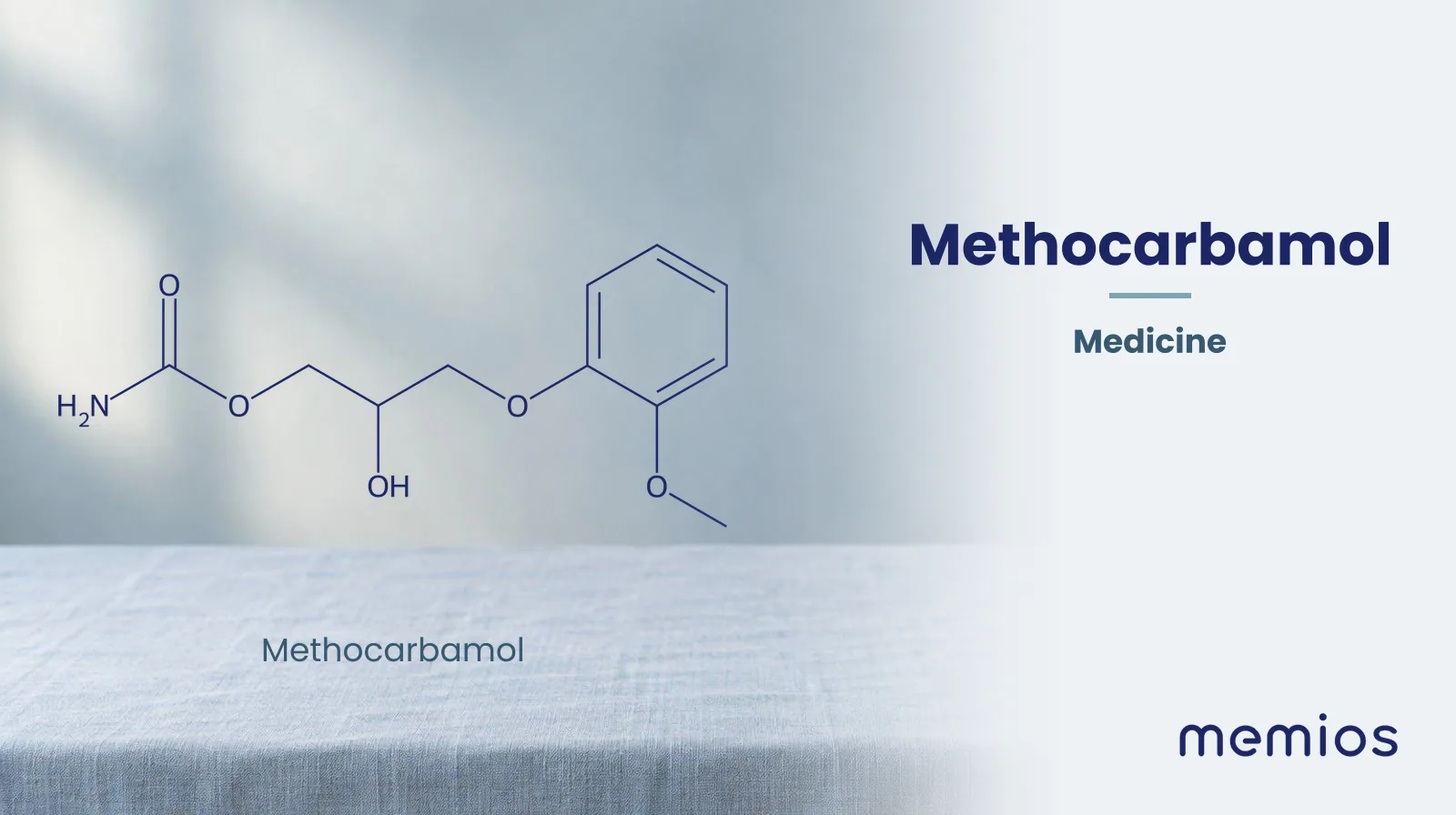
- What it is: Methocarbamol is a synthetic carbamate drug, chemically related to guaifenesin, sold as oral tablets (and an injectable form) and prescribed as an adjunct for acute musculoskeletal pain. It is not a controlled substance and does not act directly on muscle tissue.
- Main use: Adjunct to rest and physical therapy for acute, painful musculoskeletal conditions (limited evidence).
- Recommended dose (official position): Methocarbamol is not a nutrient and has no reference intake.
- Studied dose (a trial dose, not a recommendation): Comparative randomized trials studied methocarbamol combined with naproxen or indomethacin over about 7 days. Findings citing that trial: 1 against.
- Upper limit: The label sets a maximum recommended daily dosage as a regulatory position; this brief does not restate a specific milligram figure for the reader.
- What goes wrong: 1 finding on harm. In the three-arm Friedman trial, side effects of any kind were reported at similar rates on methocarbamol, placebo and orphenadrine; no rate is reported for drowsiness specifically.
- Interactions: 3 recorded, including alcohol, other CNS depressants (opioids, benzodiazepines, sedatives), pyridostigmine bromide (and other anticholinesterase agents used for myasthenia gravis).
- Common myth: Because it is called a 'muscle relaxant,' people often assume methocarbamol works by directly relaxing tense or spasming muscle tissue.
What it is
Methocarbamol is a synthetic carbamate drug, chemically related to guaifenesin, sold as oral tablets (and an injectable form) and prescribed as an adjunct for acute musculoskeletal pain. It is not a controlled substance and does not act directly on muscle tissue.
What the research says
Its own manufacturer's label says its mechanism has not been established in humans and may simply reflect general sedation of the central nervous system rather than a specific muscle-relaxing action. Small randomized trials show modest short-term benefit when combined with an NSAID, but a pooled analysis of randomized data found methocarbamol numerically below placebo on a disability index, and it performed worse than diazepam for pain reduction, so the evidence for a specific muscle-relaxant effect beyond sedation is thin.
Evidence grade: Limited evidence.
How it works
Drug class: Centrally acting skeletal muscle relaxant (carbamate derivative of guaifenesin)
Methocarbamol is thought to work mainly by general depression of the central nervous system rather than by acting on muscle fibers themselves; the manufacturer's label explicitly states it has no direct effect on the contraction machinery of muscle, the nerve-muscle junction, or the nerve fiber. (Source 1)
What it is used for
- Small randomized trials found modest added short-term pain reduction when methocarbamol was combined with an NSAID like indomethacin or naproxen, but a pooled comparison of seven skeletal muscle relaxants found methocarbamol's effect on a validated disability score was numerically the lowest of all agents tested, and the review of skeletal muscle relaxants generally described the evidence base as limited and lower quality. Evidence: limited. (Source 2)
Interactions
- alcohol (label): Because methocarbamol can cause general CNS depression, the label specifically cautions about combined sedative effects with alcohol. (Source 1)
- other CNS depressants (opioids, benzodiazepines, sedatives) (label): Additive sedation can impair the ability to safely perform tasks requiring alertness, such as driving or operating machinery. (Source 1)
- pyridostigmine bromide (and other anticholinesterase agents used for myasthenia gravis) (label): Methocarbamol may blunt pyridostigmine's effect, a specific concern for patients with myasthenia gravis. (Source 1)
Stopping it
- Methocarbamol is labeled and studied as a short-term adjunct for acute musculoskeletal conditions rather than a long-term maintenance drug. No controlled studies of tapering or a withdrawal syndrome on stopping methocarbamol were found in the literature searched for this brief; the label's own framing is around short-term adjunctive use, not around a discontinuation protocol. (Source 1)
What goes wrong
In the three-arm Friedman trial, side effects of any kind were reported at similar rates on methocarbamol, placebo and orphenadrine; no rate is reported for drowsiness specifically. (Source 3)
- Randomized trial, Low certainty.
- Size: 3 studies included in the systematic review; per-group numbers not re-extracted in this session.
- Who: Adults with acute low back pain.
- How long: Short-term (days)
- Result: Side effects of any kind: 19% (95% CI 11-29%) methocarbamol, 17% (95% CI 10-28%) placebo, 9% (95% CI 4-19%) orphenadrine. No percentage is reported for drowsiness, somnolence or any individual symptom.
- Funding: not stated in the summary reviewed.
Limit of this finding: These are rates of side effects of any kind in one three-arm trial, not rates of drowsiness. The review lists drowsiness and somnolence among the central nervous system effects seen on methocarbamol in a separate sentence with no number attached, and that sentence prints 'drowsiness' twice, which appears to be an error in the published paper. Do not read 19% as a drowsiness rate.
side effects were comparable between the groups and were reported by 17% (95%CI: 10, 28%) of placebo patients, 9%(95%CI:4, 19%) of orphenadrine patients, and 19%(95%CI: 11, 29%) of methocarbamol patients
What the evidence supports
Adding methocarbamol to indomethacin produced a significantly greater reduction in pain scores at one week than indomethacin alone in a small randomized trial. (Source 2)
- Randomized trial, Low certainty.
- Size: 3 studies included in the systematic review; this result is from a single trial within it.
- Who: Adults with acute low back pain.
- How long: About 1 week.
- Result: VAS reduction 3.66 ± 3.17 with methocarbamol + indomethacin vs 1.84 ± 1.53 with indomethacin alone (P < 0.001); BPFS 19.44 ± 8.66 vs 4.75 ± 4.35 (p < 0.001)
- Funding: not stated in the summary reviewed.
patients in the Methocarbamol + Indomethacin group experienced significantly greater reductions in VAS scores and improvements in BPFS compared to the Indomethacin alone group (VAS: 3.66 ± 3.17 vs. 1.84 ± 1.53; P < 0.001; BPFS: 19.44 ± 8.66 vs. 4.75 ± 4.35; p < 0.001)
What the evidence does not support
In a head-to-head trial, pain fell slightly more with diazepam than with methocarbamol at 60 minutes in acute low back pain. (Source 2)
- Randomized trial, Low certainty.
- Size: Not stated in the summary reviewed.
- Who: Adults with acute low back pain.
- How long: 60 minutes.
- Result: Mean difference in NRS pain at 60 minutes: −6.1 (95% CI −6.5 to −5.7) for diazepam vs −5.2 (95% CI −5.7 to −4.7) for methocarbamol; p < 0.001.
- Funding: not stated in the summary reviewed.
with a slightly greater reduction in pain in the Diazepam group compared to the Methocarbamol (mean difference: −6.1, 95% CI: −6.5 to −5.7 vs. −5.2, 95% CI: −5.7 to −4.7, respectively; p < 0.001)
In a pooled comparison of randomized trial data on seven skeletal muscle relaxants, methocarbamol showed the smallest average improvement on a validated back-pain disability score, numerically below placebo, and the class overall was described as having limited, heterogeneous, lower-quality evidence. (Source 4)
- Meta-analysis, Low certainty.
- Size: 75 methocarbamol-treated patients in the trial contributing this comparison (part of a larger pooled dataset across 7 relaxants)
- Who: Adults with acute musculoskeletal / low back pain treated with naproxen plus a muscle relaxant or placebo.
- How long: 7 days.
- Result: Mean RMDQ (disability index) improvement of 8.1 (95% CI 6.1-10.1) for methocarbamol, the lowest of all agents compared in the pooled dataset.
- Funding: not stated in the summary reviewed.
Methocarbamol 8.1 (95% CI 6.1–10.1). Any Adverse Event Reported, n/N (%): methocarbamol 14/75 (19%).
Where the research disagrees
Whether methocarbamol provides meaningful pain relief beyond placebo for acute low back pain
- F1000Research systematic review of 3 small RCTs, Conclusions of a systematic review of three small randomised controlled trials: When administered in combination with Indomethacin or Naproxen, Methocarbamol shows potential for improving pain outcomes at one week in ALBP patients. (Source 5)
- Pooled analysis of randomized data on seven skeletal muscle relaxants, pooled comparison of randomized trial data across multiple relaxants: there is mostly limited, heterogeneous, and lower-quality evidence of their clinical efficacy (Source 4)
How much
- Reference intake: Methocarbamol is not a nutrient and has no reference intake. Dosing is set by the prescriber; the label states it is intended as an adjunct to rest and physical therapy for acute, painful musculoskeletal conditions, with the specific regimen a position set by the manufacturer's label, not a recommendation for the reader. (Source 1)
- Upper limit: The label sets a maximum recommended daily dosage as a regulatory position; this brief does not restate a specific milligram figure for the reader. (Source 1)
- Studied: Comparative randomized trials studied methocarbamol combined with naproxen or indomethacin over about 7 days. (Source 4)
- Studied: One trial compared methocarbamol against diazepam for pain reduction at 30 to 60 minutes after dosing in acute low back pain. (Source 2)
A common belief, and what the research shows
The belief: Because it is called a 'muscle relaxant,' people often assume methocarbamol works by directly relaxing tense or spasming muscle tissue.
What the research shows: The manufacturer's own label states plainly that 'It has no direct action on the contractile mechanism of striated muscle, the motor end plate or the nerve fiber,' and that its mechanism 'has not been established, but may be due to general central nervous system (CNS) depression' -- meaning any relief may come from sedation rather than a targeted muscle effect, which is consistent with a pooled trial analysis finding its effect numerically below placebo on a disability index.
Questions and answers
What is it?
Methocarbamol is a prescription oral (or injectable) drug related chemically to guaifenesin, used as an add-on to rest and physical therapy for short-term, painful muscle and joint conditions. It is not a controlled substance in the way opioids or benzodiazepines are. (Source 1)
What does it do in the body?
Its own label admits the mechanism in humans is not established, but it is thought to work through general sedation of the central nervous system rather than a direct action on muscle tissue, the neuromuscular junction, or the nerve itself. (Source 1)
Is it good or bad for you?
In the short term it may modestly help acute low back pain when combined with an NSAID, but in a head-to-head trial pain fell slightly more with diazepam than with methocarbamol at 60 minutes, and in a pooled analysis across seven muscle relaxants methocarbamol was numerically the least effective on a disability score. In the same review, overall side-effect rates on methocarbamol were close to placebo, and drowsiness and somnolence are listed among the central nervous system effects seen with it. (Source 2)
How do you get more of it?
Not applicable in the sense this question is meant for a nutrient someone could be low in. Methocarbamol is a prescription-only drug; the amount and duration are set by the prescriber, not increased by the person taking it. (Source 1)
We searched: Checked the DailyMed label and the trial reports found for any patient-directed dose-adjustment guidance; none exists, as expected for a prescription drug.
If it is harmful, what reduces it?
If the concern is its sedating effect, the documented mitigation is avoiding combination with alcohol and other CNS depressants, which is the specific caution the label gives; beyond that, stopping or reducing the dose is a decision for the prescriber. (Source 1)
Why might someone be low in it or missing it?
Not applicable. Methocarbamol is a synthetic drug, not a substance the body produces or that a person can be naturally low in. (Source 1)
We searched: Searched for any concept of endogenous methocarbamol deficiency; none exists, as expected for a synthetic pharmaceutical.
Which whole foods contain it or feed it?
None. Methocarbamol is a synthetic drug with no dietary source; the only documented lifestyle interaction found in the literature searched was with alcohol, not a food source of the drug itself. (Source 1)
We searched: Searched DailyMed label and the RCTs found for any food source or dietary content of methocarbamol; none exists, as expected for a synthetic pharmaceutical.
What happens if you do not have it?
The trials found compared methocarbamol against other active treatments (indomethacin alone, diazepam, placebo within a naproxen backbone), not against leaving acute musculoskeletal pain completely untreated, so the natural history of untreated pain could not be answered from the sources reviewed. (Source 2)
We searched: Searched the F1000Research systematic review and the seven-relaxants pooled analysis for an untreated (no active comparator) arm; none of the identified trials had one.
How can you test for it?
There is no blood or diagnostic test used in practice to determine whether someone needs methocarbamol or how well it is working. The clinical trials reviewed measured effect using pain-rating scales such as the Visual Analog Scale (VAS), which are outcome-measurement tools for research, not a validated test for an individual's response. (Source 2)
References
- DailyMed (National Library of Medicine) / FDA label. METHOCARBAMOL tablets - Full Prescribing Information. 2023. Read the source
- F1000Research. Effect of Methocarbamol on acute low back pain: A systematic review. 2024. Read the source
- F1000Research. Effect of Methocarbamol on acute low back pain: A systematic review. 2024. Read the source
- Journal of Emergency Medicine. The Relative Efficacy of Seven Skeletal Muscle Relaxants. An Analysis of Data From Randomized Studies. 2022. Read the source
- F1000Research. Effect of Methocarbamol on acute low back pain: A systematic review. 2024. Read the source