Supplements · September 29, 2026 · Memios · 18 min read
Melatonin
Limited evidence. The honest summary is that melatonin's measured effect on sleep is real but small.
TLDR
- Limited evidence. The honest summary is that melatonin's measured effect on sleep is real but small.
- What it is: Melatonin is a hormone the brain releases in response to darkness, and it is involved in timing the body's 24-hour circadian rhythms and in sleep. Light exposure at night suppresses its production. Supplemental melatonin can be made from animals or microorganisms but is usually produced synthetically.
- Main use, supported: Pooled across 19 randomised placebo-controlled trials, melatonin shortened time to fall asleep by about 7 minutes and lengthened total sleep by about 8 minutes. (low certainty)
- Other use, supported: Melatonin is better supported for jet lag than for ordinary insomnia, though the underlying trials are small. (low certainty)
- Claim NOT supported by research: US and Canadian guideline bodies have judged the evidence on melatonin for chronic insomnia too weak to recommend it, and instead point to cognitive behavioural therapy. (low certainty)
- Another claim NOT supported: Trials of melatonin in shift workers were small or inconclusive, with the daytime sleep gain around 24 minutes and the evidence rated low quality. (low certainty)
- Recommended dose: not established. No dietary reference intake, RDA or adequate intake exists for melatonin, because it is a hormone the body makes rather than an essential nutrient; in the United States it is regulated as a dietary supplement.
- Studied dose (a trial dose, not a recommendation): The 19 trials pooled in the 2013 meta-analysis used a range of doses and durations; meta-regression found that longer trials and higher doses produced larger reductions in sleep latency. Findings citing that trial: 1 for, 1 mixed.
- Upper limit: No tolerable upper intake level has been set.
- What goes wrong: 7 findings on harm. In a 2023 analysis of US over-the-counter melatonin gummies, 88% of products were inaccurately labelled and actual melatonin ranged from 74% to 347% of the declared amount.
- Common myth: Melatonin is a reliable sleeping pill, and the dose printed on the bottle is the dose you get.
What it is
Melatonin is a hormone the brain releases in response to darkness, and it is involved in timing the body's 24-hour circadian rhythms and in sleep. Light exposure at night suppresses its production. Supplemental melatonin can be made from animals or microorganisms but is usually produced synthetically. In the United States it is sold as a dietary supplement, while several other countries treat it as a prescription drug.
What the research says
The honest summary is that melatonin's measured effect on sleep is real but small. Pooled across randomised trials in primary sleep disorders, people fell asleep about 7 minutes sooner and slept about 8 minutes longer than on placebo. The American Academy of Sleep Medicine reviewed the same kind of evidence and issued a recommendation against using melatonin for insomnia, rating the evidence very low quality. The evidence is somewhat better for circadian problems - jet lag and delayed sleep-wake phase disorder - than for ordinary insomnia. Separately, repeated laboratory analyses of US and Canadian products have found that what is in the bottle frequently does not match the label, and poison-centre reports of children swallowing melatonin rose sharply over the 2010s.
Evidence grade: Limited evidence.
What goes wrong
In a 2023 analysis of US over-the-counter melatonin gummies, 88% of products were inaccurately labelled and actual melatonin ranged from 74% to 347% of the declared amount. (Source 1)
- Survey study, Moderate certainty.
- Size: 25 analysed products from 30 eligible brands.
- Who: Melatonin gummy products sold in the US.
- How long: n/a (single laboratory analysis)
- Result: One product contained no detectable melatonin but 31.3 mg of CBD; in the rest melatonin ranged 1.3-13.1 mg per serving; 22 of 25 (88%) inaccurately labelled; only 3 (12%) within plus or minus 10% of the declared quantity; CBD ranged 104% to 118% of label; serotonin was not detected.
- Funding: not stated.
Twenty-two of 25 products (88%) were inaccurately labeled, and only 3 products (12%) contained a quantity of melatonin that was within ±10% of the declared quantity.
An earlier analysis of 31 Canadian melatonin supplements found content ranging from 83% below to 478% above the label claim and serotonin in about a quarter of products. (Source 2)
- Survey study, Moderate certainty.
- Size: 31 supplements spanning 16 brands.
- Who: Melatonin supplements bought in grocery stores and pharmacies in Guelph, Ontario.
- How long: n/a (single laboratory analysis)
- Result: Content missed a 10% margin of label claim in more than 71% of supplements; actual content ranged from 83% less to 478% more than declared; lot-to-lot variability within a product up to 465%; serotonin found in 26% of supplements.
- Funding: Natural Sciences and Engineering Research Council of Canada (per the release)
Results show that melatonin content did not meet within a 10-percent margin of the label claim in more than 71 percent of supplements, with the actual content ranging from 83 percent less to 478 percent more than the concentration declared on the label.
Roughly a quarter of melatonin supplements in one analysis contained undeclared serotonin. (Source 3)
- Survey study, Moderate certainty.
- Size: 31 supplements tested.
- Who: Melatonin supplements sold in grocery stores and pharmacies.
- How long: n/a.
- Result: 26 percent of supplements contained serotonin, which was not on the label.
- Funding: US government agency summary (NCCIH) of a 2017 study.
Also, 26 percent of the supplements contained serotonin, a hormone that can have harmful effects even at relatively low levels.
US poison-centre reports of melatonin ingestions by children and teenagers rose 530% over ten years, to a total of 260,435 reported ingestions, with hospitalisations and more serious outcomes also rising. (Source 4)
- Case series, Moderate certainty.
- Size: 260,435 ingestions reported over 2012-2021; 27,795 patients received care at a health care facility.
- Who: People aged 19 years and younger reported to US poison control centres.
- How long: 10 years (2012-2021)
- Result: Annual ingestions rose 530% over 2012-2021; total 260,435 ingestions reported.
- Funding: US Centers for Disease Control and Prevention (government surveillance)
During 2012–2021, the annual number of pediatric ingestions of melatonin increased 530% with a total of 260,435 ingestions reported.
Of the children and teenagers treated at a health care facility after a melatonin ingestion, about one in seven was hospitalised and 1% needed intensive care; five needed mechanical ventilation and two died. (Source 5)
- Case series, Moderate certainty.
- Size: 27,795 patients who received care at a health care facility (out of 260,435 reported ingestions)
- Who: People aged 19 years and younger reported to US poison control centres.
- How long: 10 years (2012-2021)
- Result: Of 27,795 treated at a facility: 19,892 (71.6%) discharged, 4,097 (14.7%) hospitalised, 287 (1.0%) required intensive care. The report also states 4,555 (1.6%) of all melatonin ingestions resulted in more serious outcomes (see caveat); five children required mechanical ventilation and two died.
- Funding: US Centers for Disease Control and Prevention (government surveillance)
Limit of this finding: The report prints "4,555 (1.6%)" for ingestions with more serious outcomes, but 4,555 is about 1.75% of the 260,435 total ingestions the same report gives, so the 1.6% must have been calculated on a different denominator that the report does not state here. Read 1.6% as the report's own figure, not as a share of 260,435, and do not recompute or combine the two numbers.
Among 27,795 patients who received care at a health care facility, 19,892 (71.6%) were discharged, 4,097 (14.7%) were hospitalized, and 287 (1.0%) required intensive care.
Reported side effects of melatonin in short-term studies have been mild, and long-term safety is not established. (Source 6)
- Systematic review, Low certainty.
- Size: A 2015 safety review of short-term studies; number of studies not stated in the summary.
- Who: Adults, surgical patients and critically ill patients; and children.
- How long: Short-term studies only.
- Result: Reported mild effects in adults: headache, dizziness, nausea, sleepiness; in children: drowsiness, increased bedwetting or urination in the evening, headache, dizziness, agitation.
- Funding: US government agency summary (NCCIH)
A 2015 review on the safety of melatonin supplements indicated that only mild side effects were reported in various short-term studies that involved adults, surgical patients, and critically ill patients.
People with epilepsy and people taking anticoagulants are singled out as needing medical supervision when taking melatonin, and safety data in pregnancy and long-term use are lacking. (Source 7)
- Official position, Low certainty.
- Size: n/a (agency safety summary)
- Who: General adult users of melatonin supplements.
- How long: n/a.
- Result: No effect size; identifies interaction and data-gap concerns, including a recommendation against use in dementia and prolonged activity in older people causing daytime drowsiness.
- Funding: US government agency summary (NCCIH)
In particular, people with epilepsy and those taking blood thinner medications need to be under medical supervision when taking melatonin supplements.
What the evidence supports
Pooled across 19 randomised placebo-controlled trials, melatonin shortened time to fall asleep by about 7 minutes and lengthened total sleep by about 8 minutes. (Source 8)
- Meta-analysis, Low certainty.
- Size: 1,683 subjects across 19 studies.
- Who: Adults and children diagnosed with primary sleep disorders.
- How long: Trial durations varied; meta-regression examined duration as a moderator.
- Result: Sleep latency WMD = 7.06 minutes (95% CI 4.37 to 9.75), Z = 5.15, p<0.001; total sleep time WMD = 8.25 minutes (95% CI 1.74 to 14.75), Z = 2.48, p = 0.013; sleep quality SMD = 0.22 (95% CI 0.12 to 0.32), Z = 4.52, p<0.001.
- Funding: not stated.
Melatonin demonstrated significant efficacy in reducing sleep latency (weighted mean difference (WMD) = 7.06 minutes [95% CI 4.37 to 9.75], Z = 5.15, p<0.001) and increasing total sleep time (WMD = 8.25 minutes [95% CI 1.74 to 14.75], Z = 2.48, p = 0.013).
Melatonin is better supported for jet lag than for ordinary insomnia, though the underlying trials are small. (Source 9)
- Systematic review, Low certainty.
- Size: 142 travellers across 4 studies (eastward); 234 travellers in one sleep-quality study; 90 travellers across 2 studies (westward)
- Who: Air travellers crossing multiple time zones.
- How long: Around the period of travel.
- Result: Melatonin may be better than placebo for overall jet lag symptoms after eastward and westward flights; the sleep-quality finding was rated low-quality evidence.
- Funding: US government agency summary (NCCIH)
Four studies that included a total of 142 travelers showed that melatonin may be better than a placebo (an inactive substance) in reducing overall symptoms of jet lag after eastward flights.
What the evidence does not support
US and Canadian guideline bodies have judged the evidence on melatonin for chronic insomnia too weak to recommend it, and instead point to cognitive behavioural therapy. (Source 10)
- Official position, Low certainty.
- Size: Two clinical practice guidelines (AASM 2017, American College of Physicians 2016)
- Who: Adults with chronic insomnia.
- How long: n/a.
- Result: No pooled estimate given; the judgement is that evidence is insufficient.
- Funding: US government agency summary (NCCIH)
According to practice guidelines from the American Academy of Sleep Medicine (2017) and the American College of Physicians (2016), there's not enough strong evidence on the effectiveness or safety of melatonin supplementation for chronic insomnia to recommend its use.
Trials of melatonin in shift workers were small or inconclusive, with the daytime sleep gain around 24 minutes and the evidence rated low quality. (Source 10)
- Systematic review, Low certainty.
- Size: 263 participants across 7 studies in one 2014 review; 300 participants across 8 studies in a second.
- Who: Shift workers.
- How long: not stated in the summary.
- Result: About 24 minutes longer daytime sleep; time needed to fall asleep may not change; six of eight high-quality studies in the second review had inconclusive results.
- Funding: US government agency summary (NCCIH)
According to two 2014 research reviews, studies on whether melatonin supplements help shift workers were generally small or inconclusive.
Where the evidence is mixed
The authors of that meta-analysis describe the size of the sleep benefit as modest and smaller than other drug treatments for insomnia. (Source 8)
- Meta-analysis, Low certainty.
- Size: 1,683 subjects across 19 studies.
- Who: Adults and children with primary sleep disorders.
- How long: varied.
- Result: Authors' own characterisation of the pooled effect, not a separate analysis.
- Funding: not stated.
The effects of melatonin on sleep are modest but do not appear to dissipate with continued melatonin use.
In children with specific conditions, short-term melatonin shortened time to fall asleep by roughly 7 to 37 minutes, but the trials were small and brief. (Source 11)
- Systematic review, Low certainty.
- Size: 1,021 children across 18 studies.
- Who: Children with autism spectrum disorder, ADHD, atopic dermatitis or chronic sleep-onset insomnia.
- How long: 1 to 13 weeks.
- Result: ASD: asleep 37 minutes earlier, 48 minutes longer sleep; ADHD: 20 minutes earlier, 33 minutes longer; atopic dermatitis: 6.8 minutes earlier, 35 minutes longer; chronic sleep-onset insomnia: 24 minutes earlier, 25 minutes longer.
- Funding: US government agency summary (NCCIH)
Most of the studies were small, and all were relatively brief (1 to 13 weeks).
What official bodies say
The American Academy of Sleep Medicine's 2017 clinical practice guideline recommends that clinicians not use melatonin for sleep onset or sleep maintenance insomnia in adults. (Source 12)
- Official position, Very low certainty.
- Size: Guideline based on a systematic review of randomised controlled trials graded with GRADE.
- Who: Adults with chronic insomnia.
- How long: n/a.
- Result: Recommendation 12, graded WEAK against; melatonin appears in the same 'not recommended' group as trazodone, tiagabine, diphenhydramine, tryptophan and valerian.
- Funding: American Academy of Sleep Medicine.
- We suggest that clinicians not use melatonin as a treatment for sleep onset or sleep maintenance insomnia (versus no treatment) in adults. (WEAK)
Where the research disagrees
Whether melatonin should be used for insomnia at all, given a statistically significant but small measured effect
- Ferracioli-Oda and colleagues (2013 meta-analysis, PLOS ONE), Meta-analysis of 19 randomised placebo-controlled trials, 1,683 subjects: "This meta-analysis demonstrates that melatonin decreases sleep onset latency, increases total sleep time and improves overall sleep quality." - while conceding the effect is modest and smaller than other insomnia drugs (Source 8)
- American Academy of Sleep Medicine task force (2017 clinical practice guideline), GRADE-based systematic review of randomised controlled trials; recommendation graded WEAK against: "12. We suggest that clinicians not use melatonin as a treatment for sleep onset or sleep maintenance insomnia (versus no treatment) in adults. (WEAK)" (Source 12)
How much
- Reference intake: No dietary reference intake, RDA or adequate intake exists for melatonin, because it is a hormone the body makes rather than an essential nutrient; in the United States it is regulated as a dietary supplement. (Source 9)
- Upper limit: No tolerable upper intake level has been set. NCCIH (last updated May 2024) states that for doses above what the body normally produces there is not enough information on side effects to give a clear picture of overall safety. (Source 7)
- Studied: The 19 trials pooled in the 2013 meta-analysis used a range of doses and durations; meta-regression found that longer trials and higher doses produced larger reductions in sleep latency. (Source 8)
- Studied: Laboratory analysis of 25 US over-the-counter melatonin gummy products found measured melatonin of 1.3 mg to 13.1 mg per serving size, regardless of what the label said. (Source 1)
A common belief, and what the research shows
The belief: Melatonin is a reliable sleeping pill, and the dose printed on the bottle is the dose you get.
What the research shows: Both halves are shaky. The pooled effect on falling asleep is measured in single-digit minutes - "Melatonin demonstrated significant efficacy in reducing sleep latency (weighted mean difference (WMD) = 7.06 minutes [95% CI 4.37 to 9.75], Z = 5.15, p<0.001)" - and the AASM guideline concluded "12. We suggest that clinicians not use melatonin as a treatment for sleep onset or sleep maintenance insomnia (versus no treatment) in adults. (WEAK)". On content, a 2023 US analysis found "Twenty-two of 25 products (88%) were inaccurately labeled, and only 3 products (12%) contained a quantity of melatonin that was within ±10% of the declared quantity."
Questions and answers
What is it?
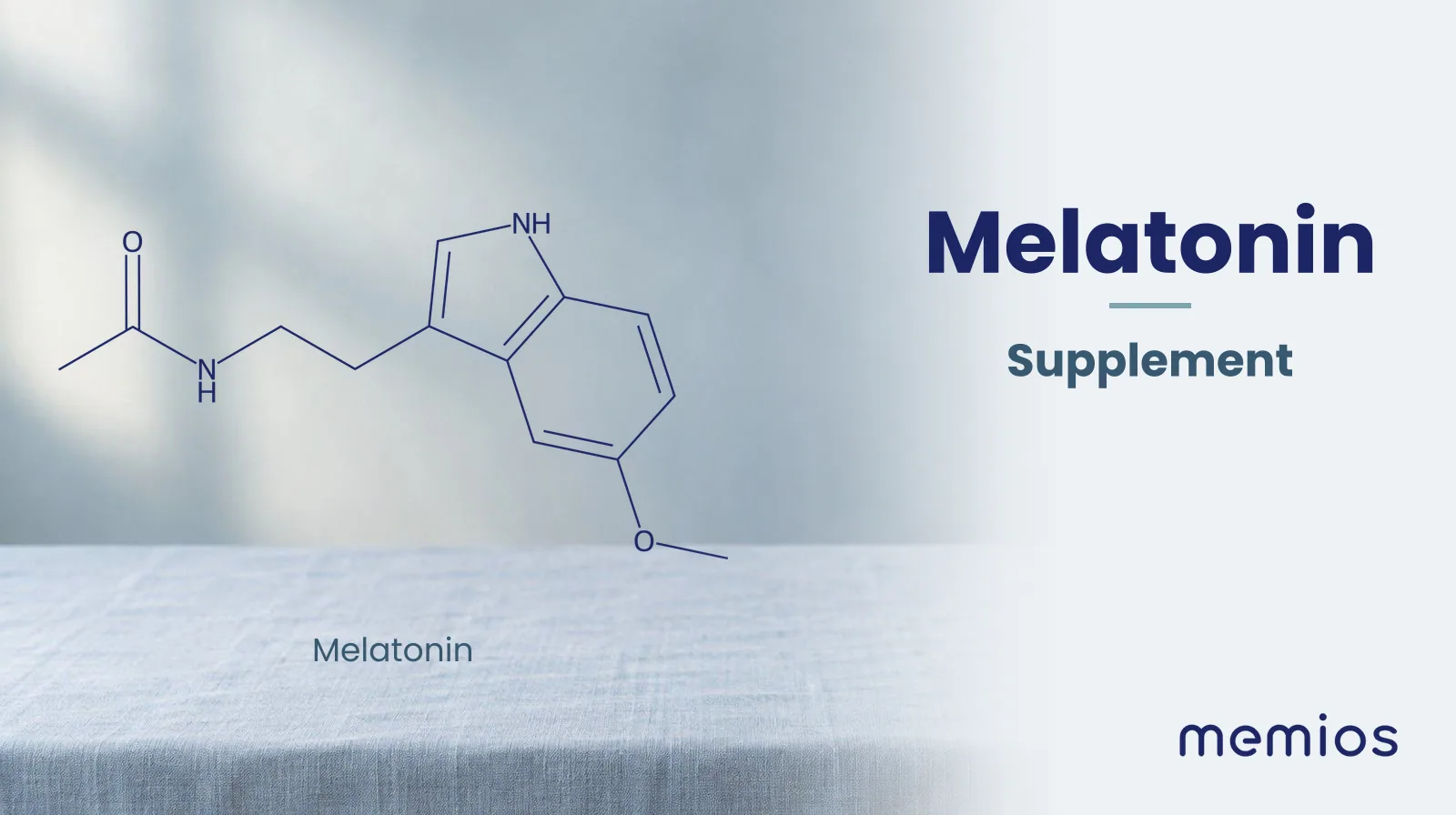
Melatonin (chemical name N-acetyl-5-methoxytryptamine) is a hormone, first isolated from the pineal gland in the brain. It is not only made by animals: it has also been found in plants, insects, fungi and bacteria, which is why small amounts occur in foods. (Source 13)
What does it do in the body?
Melatonin works as the body's chemical signal for darkness: the pineal gland releases it at night, and bright light at night switches production off. Reviews describe it as helping to keep the body clock in sync and to regulate sleep; its antioxidant and nerve-protecting roles come mostly from laboratory and animal work, which a narrative review summarises rather than proves in people. (Source 14)
Is it good or bad for you?
The melatonin your body makes is a normal hormone. For melatonin supplements, a systematic review of 37 randomised controlled trials (doses 0.15 to 12 mg a day, mostly 4 weeks or less) found mostly mild side effects: daytime sleepiness (1.66%), headache (0.74%), dizziness (0.74%) and hypothermia (0.62%). The same review says long-term safety is not established because long trials are scarce, and that only eight of the 37 trials were judged good quality. (Source 15)
How do you get more of it?
The body makes melatonin itself in the dark, and light at night suppresses it. Supplements are the other studied route. Small studies of melatonin-rich foods, summarised in a 2026 narrative review, reported higher urinary melatonin metabolites; in one, middle-aged and elderly people eating a cherry-enriched diet had about three times more of the metabolite at night. These were small, short studies, and a higher metabolite level in urine does not show a health benefit. (Source 14)
If it is harmful, what reduces it?
Largely does not apply, because the melatonin the body makes is not harmful. When people had side effects from melatonin supplements in trials, those side effects went away on their own within days or as soon as they stopped taking it. Light at night also suppresses the body's own production. (Source 15)
Why might someone be low in it or missing it?
The main causes of low melatonin in the literature are light at night, some medicines and age. The beta-blocker atenolol, a blood-pressure drug, suppresses melatonin production (Arendt 2019). On age, a pooled analysis of 179 studies of healthy people found large differences between individuals, only a small fall in peak levels between ages 20 and 50, and the lowest levels after 70. Loss of melatonin in ageing is a real but modest, variable effect. (Source 16)
Which whole foods contain it or feed it?
A review of dietary sources found that, among animal foods, eggs and fish contain the most melatonin, and among plant foods, nuts contain the most. Some mushrooms, cereals and sprouted legumes or seeds also contain it. (Source 13)
What happens if you do not have it?
In mammals, surgically removing the pineal gland makes the night-time melatonin rhythm disappear and blood melatonin usually becomes undetectable. That evidence comes from animal work. In people, a 2026 narrative review (Drăgoi 2026) reports that lower melatonin in old age is linked to more broken sleep and a weaker body clock, but those are associations and do not prove that the lack of melatonin causes them. (Source 17)
How can you test for it?
Melatonin can be measured in saliva or blood, or through its breakdown product in urine. The main clinical and research use is the dim light melatonin onset (DLMO): the evening time, under dim light, when melatonin starts to rise, which shows the timing of the body clock rather than a 'deficiency'. A 2023 analysis of saliva DLMO from 3,579 people in 121 studies (plus plasma DLMO from 818 healthy controls) found that the assay and calculation method made little difference to the DLMO. Because no DLMO reference range existed before, the study built one from a subset of 53 papers (1,749 participants). Peak melatonin levels in blood vary widely between healthy people. (Source 16)
References
- JAMA. Quantity of Melatonin and CBD in Melatonin Gummies Sold in the US. 2023. PMID 37097362, DOI 10.1001/jama.2023.2296. Read the source
- American Academy of Sleep Medicine (news release reporting Erland LAE, Saxena PK, Journal of Clinical Sleep Medicine 2017, doi 10.5664/jcsm.6462). Study finds that melatonin content of supplements varies widely. 2017. PMID 27855744, DOI 10.5664/jcsm.6462. Read the source
- National Center for Complementary and Integrative Health (NCCIH), National Institutes of Health. Melatonin: What You Need To Know. 2024. Read the source
- Morbidity and Mortality Weekly Report (MMWR), US Centers for Disease Control and Prevention. Pediatric Melatonin Ingestions — United States, 2012–2021 (summary box: What is added by this report?). 2022. PMID 35653284, DOI 10.15585/mmwr.mm7122a1. Read the source
- Morbidity and Mortality Weekly Report (MMWR), US Centers for Disease Control and Prevention. Pediatric Melatonin Ingestions — United States, 2012–2021 (Results). 2022. PMID 35653284, DOI 10.15585/mmwr.mm7122a1. Read the source
- National Center for Complementary and Integrative Health (NCCIH), National Institutes of Health. Melatonin: What You Need To Know. 2024. Read the source
- National Center for Complementary and Integrative Health (NCCIH), National Institutes of Health. Melatonin: What You Need To Know. 2024. Read the source
- PLOS ONE. Meta-Analysis: Melatonin for the Treatment of Primary Sleep Disorders. 2013. PMID 23691095, DOI 10.1371/journal.pone.0063773. Read the source
- National Center for Complementary and Integrative Health (NCCIH), National Institutes of Health. Melatonin: What You Need To Know. 2024. Read the source
- National Center for Complementary and Integrative Health (NCCIH), National Institutes of Health. Melatonin: What You Need To Know. 2024. Read the source
- National Center for Complementary and Integrative Health (NCCIH), National Institutes of Health. Melatonin: What You Need To Know. 2024. Read the source
- Journal of Clinical Sleep Medicine / American Academy of Sleep Medicine. Clinical Practice Guideline for the Pharmacologic Treatment of Chronic Insomnia in Adults: An American Academy of Sleep Medicine Clinical Practice Guideline. 2017. PMID 27998379, DOI 10.5664/jcsm.6470. Read the source
- Nutrients. Dietary Sources and Bioactivities of Melatonin. 2017. PMID 28387721, DOI 10.3390/nu9040367. Read the source
- Frontiers in Neuroscience. Rhythms of life: melatonin, nutrition, sleep, and antioxidant strategies for healthy aging. 2026. DOI 10.3389/fnins.2026.1736978. Read the source
- CNS Drugs. Adverse Events Associated with Melatonin for the Treatment of Primary or Secondary Sleep Disorders: A Systematic Review. 2019. DOI 10.1007/s40263-019-00680-w. Read the source
- Sleep. The dim light melatonin onset across ages, methodologies, and sex and its relationship with morningness/eveningness. 2023. DOI 10.1093/sleep/zsad033. Read the source
- Frontiers in Endocrinology. Melatonin: Countering Chaotic Time Cues. 2019. PMID 31379733, DOI 10.3389/fendo.2019.00391. Read the source