Supplements · September 29, 2026 · Memios · 20 min read
Lutein and zeaxanthin
Limited evidence. The evidence is limited and mostly about the eye.
TLDR
- Limited evidence. The evidence is limited and mostly about the eye.
- What it is: Lutein and zeaxanthin are xanthophyll carotenoids - oxygen-containing yellow pigments in the carotenoid family.
- Main use, supported: A Cochrane review found that, in exploratory subgroup analyses of one large trial, replacing beta-carotene with lutein/zeaxanthin was associated with lower hazard ratios for progression to late AMD and to neovascular AMD. (low certainty)
- Other use, supported: In a ten-year observational follow-up of the AREDS2 cohort, people originally randomised to lutein/zeaxanthin had a lower rate of progression to late AMD than those randomised to beta carotene. (low certainty)
- Claim NOT supported by research: In AREDS2, the largest randomised trial of lutein plus zeaxanthin, the primary analysis showed no statistically significant reduction in progression to advanced AMD. (high certainty)
- Another claim NOT supported: The AREDS2 investigators concluded that adding lutein plus zeaxanthin to the AREDS formulation did not further reduce the risk of progression to advanced AMD. (high certainty)
- Recommended dose: not established. No recommended dietary allowance or adequate intake for lutein or zeaxanthin is set by the bodies whose documents we read; a 2020 review instead reports measured average intakes of roughly 1.4 to 1.9 mg a day in German and Canadian adults.
- Studied dose (a trial dose, not a recommendation): AREDS2 randomised participants to lutein/zeaxanthin 10 mg/2 mg daily for a median of about 5 years. No finding here cites that trial.
- Upper limit: EFSA's ANS Panel set an Acceptable Daily Intake of 1 mg per kilogram of body weight per day for lutein (E 161b) in 2010 - about 70 mg a day for a 70 kg adult.
- What goes wrong: 5 findings on harm. A narrative review, summarising the AREDS2 trial in its own words, states that 10 mg a day of lutein for five years produced no adverse health effects other than minor skin yellowing.
- Common myth: Lutein and zeaxanthin supplements are proven to protect the eyes and prevent macular degeneration.
What it is
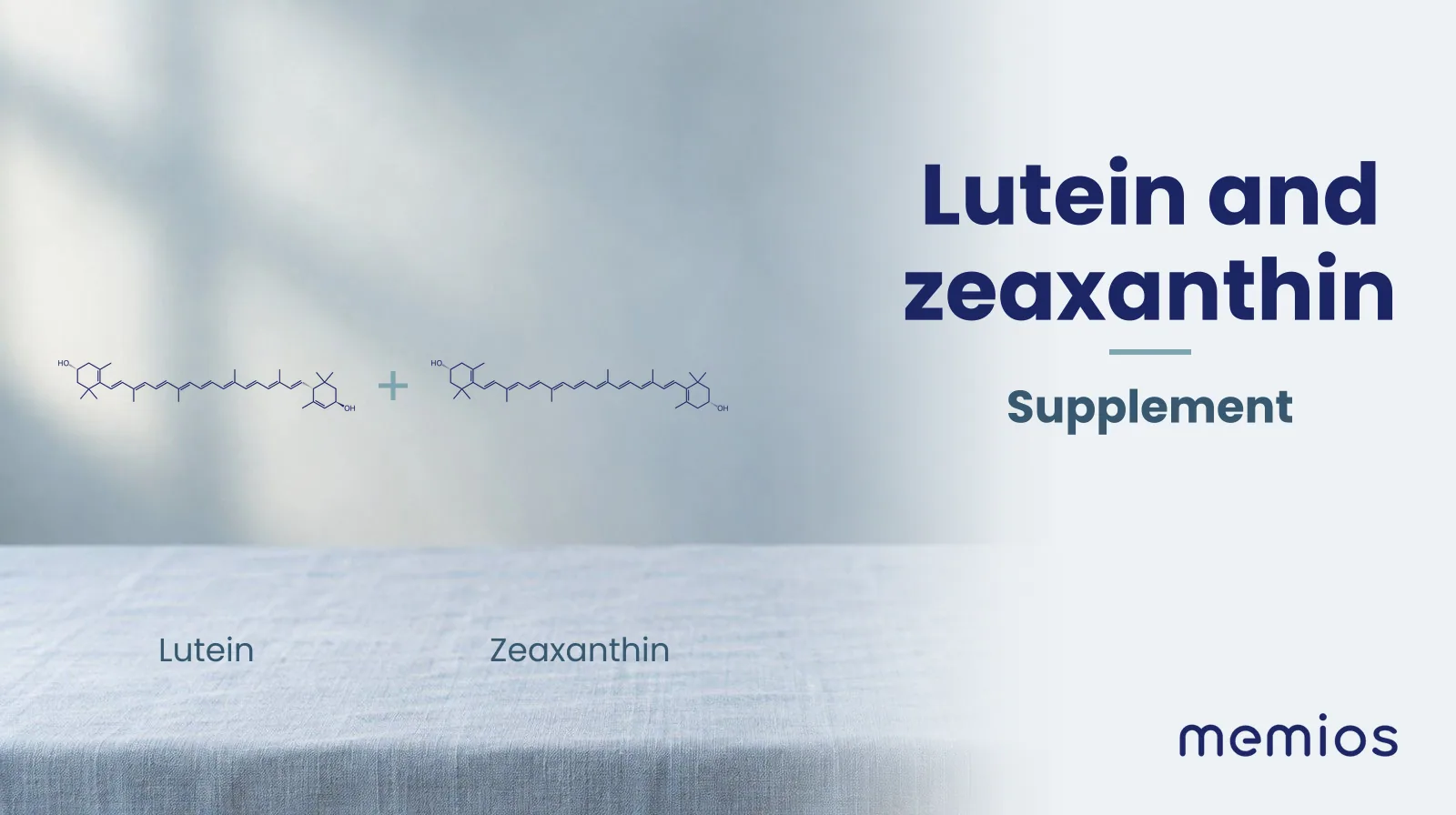
Lutein and zeaxanthin are xanthophyll carotenoids - oxygen-containing yellow pigments in the carotenoid family. They are the pigments concentrated in the macula of the human retina, and humans cannot make them, so all of the body's supply comes from food. Supplements are usually made from marigold (Tagetes erecta) flowers; the same material is authorised in Europe as the food colour lutein (E 161b).
What the research says
The evidence is limited and mostly about the eye. Supplements reliably raise the amount of pigment measured in the macula, but the largest randomised trial (AREDS2) found no statistically significant reduction in progression to advanced age-related macular degeneration in its primary analysis, and no effect on cataract surgery. A 2023 Cochrane review rated the direct lutein/zeaxanthin versus placebo evidence as low certainty and found a result compatible with no benefit; it supported lutein/zeaxanthin mainly as a replacement for beta-carotene in the AREDS formula, because beta-carotene raises lung cancer risk in smokers. Claims about cognition rest on small trials with mixed results.
Evidence grade: Limited evidence.
What goes wrong
A narrative review, summarising the AREDS2 trial in its own words, states that 10 mg a day of lutein for five years produced no adverse health effects other than minor skin yellowing. (Source 1)
- Expert review, not systematic, Low certainty.
- Size: over 4000 patients in the trial being described.
- Who: Patients with age-related macular degeneration.
- How long: 5 years.
- Result: Minor skin yellowing, as the review authors describe the lutein arm of AREDS2; the phrase 'no adverse health effects' is the review's own summary and not a figure reported by AREDS2.
- Funding: not stated.
Limit of this finding: This sentence is the Nutrients review authors' summary of AREDS2, not something AREDS2 itself concluded, and it is broader than AREDS2 supports. AREDS2 did record a safety signal: more lung cancers in the beta carotene group than in the no beta carotene group (23 [2.0%] vs 11 [0.9%], nominal P = .04), and the 10-year follow-up put the odds of lung cancer at 1.82 (95% CI, 1.06-3.12) for beta carotene. That signal belongs to beta carotene, not to lutein and zeaxanthin, whose 10-year odds ratio was 1.15 (95% CI, 0.79-1.66). Read this line as being about the lutein arm only, and do not read it as AREDS2 finding the whole formula free of harm.
which reported no adverse health effects except minor skin yellowing with a daily lutein dose of 10 mg per day persisted for 5 years among over 4000 patients with age-related macular degeneration
A narrative review describes a case in which crystalline deposits appeared in the retina of a woman with very high long-term lutein intake, and only partly resolved after she stopped taking lutein. (Source 2)
- Expert review, not systematic, Very low certainty.
- Size: 1 patient.
- Who: An elderly woman with high supplemental plus dietary lutein intake over about 8 years.
- How long: crystals followed for at least 7 months after stopping lutein.
- Result: Crystals in the right eye dissolved 7 months after discontinuation; the crystal in the left eye persisted.
- Funding: not stated.
Crystals in the inner layers of the foveal region within her right eye eventually dissolved 7 months after discontinuation of lutein, while the crystal in her left eye persisted
The Cochrane review reported gastrointestinal symptoms as the main adverse effect across the supplement trials, noted that most studies were too small to detect rare harms, and found the mortality evidence for lutein/zeaxanthin very uncertain. (Source 3)
- Systematic review, Very low certainty.
- Size: 26 studies, 11,952 participants.
- Who: People with age-related macular degeneration.
- How long: six months to five years.
- Result: Mortality HR 1.06 (95% CI 0.87 to 1.31) for lutein/zeaxanthin, very low-certainty evidence; the confidence interval includes a 31% relative increase in deaths.
- Funding: not stated in the abstract.
Data from larger studies (AREDS/AREDS2) suggested there may be little or no effect on mortality with multivitamin (HR 0.87, 95% CI 0.60 to 1.25; low-certainty evidence) or lutein/zeaxanthin supplementation (HR 1.06, 95% CI 0.87 to 1.31; very low-certainty evidence), but confirmed the increased risk of lung cancer with beta-carotene, mostly in former smokers.
EFSA's food additives panel set an Acceptable Daily Intake for lutein of 1 mg per kilogram of body weight per day in 2010. (Source 4)
- Official position, Certainty not rated.
- Size: not applicable.
- Who: General population (food additive exposure)
- How long: lifetime intake.
- Result: ADI 1 mg/kg body weight per day, derived with an uncertainty factor of 200.
- Funding: public body (EFSA)
the Panel applies an uncertainty factor of 200 and establishes an ADI of 1 mg/kg bw/day.
A published risk assessment identified 20 mg per day as the highest lutein intake with strong evidence of safety, and said the data above that level are not sufficient for a confident long-term safety conclusion. (Source 5)
- Expert review, not systematic, Low certainty.
- Size: not applicable - a review of human and animal safety data.
- Who: General adult population.
- How long: not applicable.
- Result: Observed Safe Level 20 mg/day for lutein and 75 mg/day for lycopene.
- Funding: the authors were affiliated with the Council for Responsible Nutrition, a supplement industry body.
The OSL risk assessment method indicates that the evidence of safety is strong at intakes up to 20 mg/d for lutein, and 75 mg/d for lycopene, and these levels are identified as the respective OSL.
What the evidence supports
A Cochrane review found that, in exploratory subgroup analyses of one large trial, replacing beta-carotene with lutein/zeaxanthin was associated with lower hazard ratios for progression to late AMD and to neovascular AMD. (Source 6)
- Systematic review, Low certainty.
- Size: 26 studies, 11,952 participants in the whole review; this analysis comes from AREDS2.
- Who: People who already have age-related macular degeneration.
- How long: six months to five years.
- Result: HR 0.82 (95% CI 0.69 to 0.96) for late AMD; 0.78 (95% CI 0.64 to 0.94) for neovascular AMD; 0.94 (95% CI 0.70 to 1.26) for geographic atrophy; 0.88 (95% CI 0.75 to 1.03) for vision loss.
- Funding: not stated in the abstract; AREDS2 was funded by the US National Eye Institute.
In exploratory subgroup analyses in the follow-on study to AREDS (AREDS2), replacing beta-carotene with lutein/zeaxanthin gave hazard ratios (HR) of 0.82 (95% CI 0.69 to 0.96), 0.78 (95% CI 0.64 to 0.94), 0.94 (95% CI 0.70 to 1.26), and 0.88 (95% CI 0.75 to 1.03) for progression to late AMD, neovascular AMD, geographic atrophy, and vision loss, respectively.
In a ten-year observational follow-up of the AREDS2 cohort, people originally randomised to lutein/zeaxanthin had a lower rate of progression to late AMD than those randomised to beta carotene; this is a follow-up association, not a randomised comparison against placebo. (Source 7)
- Cohort study, Low certainty.
- Size: 3882 participants, 6351 eyes.
- Who: Participants of the AREDS2 trial with intermediate AMD, followed for a further 5 years after the trial.
- How long: 10 years from randomisation.
- Result: HR 0.85 (95% CI, 0.73-0.98; P = .02) for lutein/zeaxanthin vs beta carotene; HR 0.91 (95% CI, 0.84-0.99; P = .02) for lutein/zeaxanthin vs no lutein/zeaxanthin; HR 0.80 (95% CI, 0.68-0.92; P = .002) restricted to those assigned beta carotene.
- Funding: publicly funded (US National Eye Institute)
A direct analysis of lutein/zeaxanthin vs beta carotene showed the HR for late AMD was 0.85 (95% CI, 0.73-0.98; P = .02).
A 16-week single-arm open-label study in 16 healthy Japanese adults found that a high-dose lutein/zeaxanthin supplement raised macular pigment optical density and skin carotenoid levels; these are tissue-level markers, not clinical outcomes, and there was no control group. (Source 8)
- Blood level study, Very low certainty.
- Size: 16 participants.
- Who: Healthy Japanese adults aged 26 to 57.
- How long: 16 weeks.
- Result: Total MPOD volume within 9 degrees eccentricity increased significantly by week 8 and continued to week 16 (p < 0.0001); skin carotenoid levels increased significantly by week 4.
- Funding: not stated in the material we could read; the supplement was a commercial product.
Total volume of MPOD within 9° eccentricity significantly increased by week 8 and continued to increase until week 16
In the same six-month randomised placebo-controlled trial, the supplemented group improved more than placebo on a measure of visual episodic memory. (Source 9)
- Randomized trial, Low certainty.
- Size: 90 volunteers.
- Who: Adults aged 40 to 75 years with self-reported mild cognitive complaints.
- How long: 6 months.
- Result: Greater improvement than placebo in visual episodic memory (reported p = 0.005) and in visual learning (reported p = 0.001). The p values are given here outside the quotation because the publisher's HTML page and the publisher's PDF of the same abstract typeset them differently (.005 versus 0.005), so the exact printed form could not be settled.
- Funding: not stated in the section we could read; trials of this kind are frequently supported by supplement manufacturers.
Limit of this finding: This is one small trial and two endpoints out of a larger battery separated from placebo, with no stated correction for multiple comparisons, so it is a signal to follow up rather than a demonstration that these carotenoids improve memory.
Compared to the placebo, lutein and zeaxanthin supplementation was associated with greater improvements in visual episodic memory
What the evidence does not support
The same Cochrane review, comparing lutein/zeaxanthin directly with control, found a result compatible with little or no reduction in progression to late AMD, and rated the evidence low certainty. (Source 6)
- Systematic review, Low certainty.
- Size: 1 study, 4176 participants, 6891 eyes.
- Who: People with age-related macular degeneration, most also taking the original AREDS formula.
- How long: six months to five years.
- Result: RR 0.94, 95% CI 0.87 to 1.01 for late AMD; RR 0.92, 95% CI 0.84 to 1.02 for neovascular AMD; RR 0.92, 95% CI 0.80 to 1.05 for geographic atrophy.
- Funding: not stated in the abstract.
People taking lutein/zeaxanthin may have similar or slightly reduced risk of progression to late AMD (RR 0.94, 95% CI 0.87 to 1.01), neovascular AMD (RR 0.92, 95% CI 0.84 to 1.02), and geographic atrophy (RR 0.92, 95% CI 0.80 to 1.05) compared with control (1 study, 4176 participants, 6891 eyes; low-certainty evidence).
Vision-related quality of life did not differ between people given lutein/zeaxanthin and controls. (Source 6)
- Systematic review, Moderate certainty.
- Size: 2 studies, 308 participants.
- Who: People with age-related macular degeneration.
- How long: not stated in the abstract.
- Result: MD 1.21, 95% CI -2.59 to 5.01 on the Visual Function Questionnaire.
- Funding: not stated in the abstract.
Quality of life (Visual Function Questionnaire) was similar between groups (MD 1.21, 95% CI -2.59 to 5.01; 2 studies, 308 participants; moderate-certainty evidence).
In AREDS2, the largest randomised trial of lutein plus zeaxanthin, the primary analysis showed no statistically significant reduction in progression to advanced AMD. (Source 10)
- Randomized trial, High certainty.
- Size: 4203 participants randomised; 1940 study eyes (1608 participants) progressed to advanced AMD.
- Who: Adults aged 50 to 85 years at high risk of progression to advanced AMD.
- How long: median follow-up 5 years.
- Result: HR 0.90 (98.7% CI, 0.76-1.07); P = .12 for lutein + zeaxanthin. Five-year Kaplan-Meier probability of progression 29% with lutein + zeaxanthin vs 31% with placebo.
- Funding: publicly funded (US National Eye Institute); study supplements were donated by manufacturers.
Comparison with placebo in the primary analyses demonstrated no statistically significant reduction in progression to advanced AMD (hazard ratio [HR], 0.90 [98.7% CI, 0.76-1.07]; P = .12 for lutein + zeaxanthin
The AREDS2 investigators concluded that adding lutein plus zeaxanthin to the AREDS formulation did not further reduce the risk of progression to advanced AMD. (Source 11)
- Randomized trial, High certainty.
- Size: 4203 participants.
- Who: Adults aged 50 to 85 years at high risk of advanced AMD.
- How long: median follow-up 5 years.
- Result: No further risk reduction in the primary analysis; lutein + zeaxanthin was nonetheless proposed as a substitute for beta carotene.
- Funding: publicly funded (US National Eye Institute)
Addition of lutein + zeaxanthin, DHA + EPA, or both to the AREDS formulation in primary analyses did not further reduce risk of progression to advanced AMD.
In the AREDS2 cataract report, daily lutein/zeaxanthin had no statistically significant effect on the rate of cataract surgery or on vision loss. (Source 12)
- Randomized trial, Moderate certainty.
- Size: 3159 participants phakic in at least one eye; 1389 of 6027 study eyes had cataract surgery.
- Who: Adults aged 50 to 85 years at risk of advanced AMD.
- How long: median follow-up 4.7 years.
- Result: HR 0.96 (95% CI, 0.84-1.10; P = .54) for cataract surgery; HR 1.03 (95% CI, 0.93-1.13; P = .61) for loss of 3 or more lines of vision. In the lowest quintile of dietary lutein/zeaxanthin intake, HR 0.68 (95% CI, 0.48-0.96; P = .03), a subgroup result.
- Funding: publicly funded (US National Eye Institute)
Daily supplementation with lutein/zeaxanthin had no statistically significant overall effect on rates of cataract surgery or vision loss.
In a six-month randomised placebo-controlled trial in adults with self-reported mild cognitive complaints, none of the remaining cognitive tests or self-report questionnaires showed a statistically significant difference between the supplement and placebo groups. (Source 13)
- Randomized trial, Low certainty.
- Size: 90 volunteers.
- Who: Adults aged 40 to 75 years with self-reported mild cognitive complaints.
- How long: 6 months.
- Result: No statistically significant difference from placebo on the remainder of the cognitive battery or on the self-report questionnaires; the two endpoints that did separate were visual episodic memory and visual learning, reported with p values of 0.005 and 0.001.
- Funding: not stated in the section we could read; trials of this kind are frequently supported by supplement manufacturers.
Limit of this finding: Two endpoints out of a larger battery of cognitive tests and questionnaires came out positive and the rest did not, and the paper does not state any correction for the number of comparisons made. With that many tests, some positive results are expected by chance, so this should be read as a single trial pointing at a possible effect on visual memory, not as evidence that lutein and zeaxanthin improve cognition.
However, there were no other statistically-significant differences in performance on the other assessed cognitive tests or self-report questionnaires.
Where the research disagrees
Whether lutein and zeaxanthin slow age-related macular degeneration
- AREDS2 investigators (primary randomised analysis, 2013), randomised controlled trial, 4203 participants, median 5 years: "Addition of lutein + zeaxanthin, DHA + EPA, or both to the AREDS formulation in primary analyses did not further reduce risk of progression to advanced AMD." (Source 11)
- Cochrane review authors (Evans and Lawrenson, 2023), systematic review with GRADE certainty ratings, 26 studies, 11,952 participants: "Although low-certainty evidence suggested little effect with lutein/zeaxanthin alone compared with placebo, exploratory subgroup analyses from one large American study support the view that lutein/zeaxanthin may be a suitable replacement for the beta-carotene used in the original AREDS formula." (Source 14)
How much
- Reference intake: No recommended dietary allowance or adequate intake for lutein or zeaxanthin is set by the bodies whose documents we read; a 2020 review instead reports measured average intakes of roughly 1.4 to 1.9 mg a day in German and Canadian adults. Quote: "German and Canadian studies reported an average adult's lutein consumption of 1.9 mg and 1.4 mg per day, respectively". (Source 15)
- Upper limit: EFSA's ANS Panel set an Acceptable Daily Intake of 1 mg per kilogram of body weight per day for lutein (E 161b) in 2010 - about 70 mg a day for a 70 kg adult. A separate 2006 risk assessment identified 20 mg a day as the Observed Safe Level for lutein. No US Tolerable Upper Intake Level exists. (Source 4)
- Studied: AREDS2 randomised participants to lutein/zeaxanthin 10 mg/2 mg daily for a median of about 5 years. (Source 16)
- Studied: A 16-week open-label study gave 20 mg/day of lutein and 4 mg/day of zeaxanthin with vitamins C and E, zinc and copper. (Source 8)
- Studied: A 6-month randomised trial gave 10 mg lutein and 2 mg zeaxanthin once daily to adults with cognitive complaints. (Source 13)
A common belief, and what the research shows
The belief: Lutein and zeaxanthin supplements are proven to protect the eyes and prevent macular degeneration.
What the research shows: The largest randomised trial reported that "Comparison with placebo in the primary analyses demonstrated no statistically significant reduction in progression to advanced AMD (hazard ratio [HR], 0.90 [98.7% CI, 0.76-1.07]; P = .12 for lutein + zeaxanthin", and the 2023 Cochrane review found that "People taking lutein/zeaxanthin may have similar or slightly reduced risk of progression to late AMD (RR 0.94, 95% CI 0.87 to 1.01), neovascular AMD (RR 0.92, 95% CI 0.84 to 1.02), and geographic atrophy (RR 0.92, 95% CI 0.80 to 1.05) compared with control (1 study, 4176 participants, 6891 eyes; low-certainty evidence)." The strongest case for these carotenoids is as a substitute for beta-carotene in the AREDS formula, not as a proven eye protector on their own.
Questions and answers
What is it?
Lutein and zeaxanthin are yellow xanthophyll carotenoids. They are the pigments that concentrate in the macula, the central part of the retina. The human body cannot manufacture them, so everything in your tissues came from food. Supplements are usually extracted from marigold flowers. (Source 17)
What does it do in the body?
In the eye they form the macular pigment, which absorbs blue light and has antioxidant properties in laboratory work. Taking supplements measurably raises macular pigment optical density and skin carotenoid levels. Whether raising that pigment changes what happens to your sight is a separate question, and the trial evidence there is weak. (Source 8)
Is it good or bad for you?
Neither clearly. The Cochrane review rated the direct evidence that lutein/zeaxanthin slows macular degeneration as low certainty and compatible with no benefit; the clearest case for them is as a replacement for beta-carotene in the AREDS eye formula, because beta-carotene raises lung cancer risk in smokers. At ordinary doses they are well tolerated; at high long-term doses there are reports of skin yellowing and, in one case, retinal crystals. (Source 14)
How do you get more of it?
From food, the main sources studied are dark green leafy vegetables and egg yolk. In trials, supplements have been given at 10 mg lutein with 2 mg zeaxanthin daily (AREDS2) and at 20 mg lutein with 4 mg zeaxanthin daily in a short open-label study. Because these are fat-soluble pigments, they are absorbed better from foods eaten with fat, which is why egg yolk is a comparatively efficient source. (Source 18)
If it is harmful, what reduces it?
Lutein and zeaxanthin are not generally treated as harmful substances to be removed. The published risk assessment treats 20 mg a day as the highest intake with strong evidence of safety, and says the data above that are not enough for a confident long-term conclusion. In the one reported case of retinal crystals, stopping the supplement was followed by the crystals dissolving in one eye but not the other. (Source 5)
Why might someone be low in it or missing it?
The body makes none of it, so low levels follow a diet low in green vegetables and eggs. Because lutein is fat-soluble it is also stored in body fat, and a review notes that this distribution reduces retinal lutein in obese people. Reported average adult intakes in Germany and Canada are only about 1.4 to 1.9 mg a day, far below the doses used in trials. (Source 19)
Which whole foods contain it or feed it?
Dark green leafy vegetables - kale, spinach, broccoli, peas, lettuce - and egg yolk are the foods most often named in the literature. Egg yolk is a comparatively efficient source for its size because its fat helps absorption. (Source 17)
What happens if you do not have it?
There is no recognised deficiency disease for lutein or zeaxanthin, and no trial has shown that adding them prevents anything in people who are simply low. What the literature shows is the reverse question: giving supplements to people who already have macular degeneration produced results compatible with little or no change in progression. (Source 6)
How can you test for it?
Two measurements exist in research: blood (serum) carotenoid concentration by HPLC, and macular pigment optical density, measured in the eye by autofluorescence imaging; skin carotenoid level can be estimated by reflection spectroscopy. These are research tools with no agreed clinical cut-off for 'low', so a result tells you your pigment level, not whether you have a disease or need a supplement. (Source 8)
References
- Nutrients. Lutein Supplementation for Eye Diseases (full text, dosage and safety section). 2020. DOI 10.3390/nu12061721. Read the source
- Nutrients. Lutein Supplementation for Eye Diseases (full text, report of a crystalline maculopathy case). 2020. DOI 10.3390/nu12061721. Read the source
- Cochrane Database of Systematic Reviews. Antioxidant vitamin and mineral supplements for slowing the progression of age-related macular degeneration.. 2023. PMID 37702300, DOI 10.1002/14651858.CD000254.pub5. Read the source
- European Food Safety Authority (EFSA), Panel on Food Additives and Nutrient Sources added to Food. Scientific Opinion on the re-evaluation of lutein (E 161b) as a food additive. 2010. DOI 10.2903/j.efsa.2010.1678. Read the source
- Regulatory Toxicology and Pharmacology. Risk assessment for the carotenoids lutein and lycopene. 2006. DOI 10.1016/j.yrtph.2006.05.007. Read the source
- Cochrane Database of Systematic Reviews. Antioxidant vitamin and mineral supplements for slowing the progression of age-related macular degeneration.. 2023. PMID 37702300, DOI 10.1002/14651858.CD000254.pub5. Read the source
- JAMA Ophthalmology. Long-term Outcomes of Adding Lutein/Zeaxanthin and ω-3 Fatty Acids to the AREDS Supplements on Age-Related Macular Degeneration Progression: AREDS2 Report 28.. 2022. PMID 35653117, DOI 10.1001/jamaophthalmol.2022.1640. Read the source
- Scientific Reports. Effect of an antioxidant supplement containing high dose lutein and zeaxanthin on macular pigment and skin carotenoid levels. 2020. DOI 10.1038/s41598-020-66962-2. Read the source
- Frontiers in Nutrition. The Effects of Lutein and Zeaxanthin Supplementation on Cognitive Function in Adults With Self-Reported Mild Cognitive Complaints: A Randomized, Double-Blind, Placebo-Controlled Study. 2022. PMID 35252311, DOI 10.3389/fnut.2022.843512. Read the source
- JAMA. Lutein + zeaxanthin and omega-3 fatty acids for age-related macular degeneration: the Age-Related Eye Disease Study 2 (AREDS2) randomized clinical trial. 2013. PMID 23644932, DOI 10.1001/jama.2013.4997. Read the source
- JAMA. Lutein + zeaxanthin and omega-3 fatty acids for age-related macular degeneration: the Age-Related Eye Disease Study 2 (AREDS2) randomized clinical trial. 2013. PMID 23644932, DOI 10.1001/jama.2013.4997. Read the source
- JAMA Ophthalmology. Lutein/zeaxanthin for the treatment of age-related cataract: AREDS2 randomized trial report no. 4.. 2013. PMID 23645227, DOI 10.1001/jamaophthalmol.2013.4412. Read the source
- Frontiers in Nutrition. The Effects of Lutein and Zeaxanthin Supplementation on Cognitive Function in Adults With Self-Reported Mild Cognitive Complaints: A Randomized, Double-Blind, Placebo-Controlled Study. 2022. PMID 35252311, DOI 10.3389/fnut.2022.843512. Read the source
- Cochrane Database of Systematic Reviews. Antioxidant vitamin and mineral supplements for slowing the progression of age-related macular degeneration.. 2023. PMID 37702300, DOI 10.1002/14651858.CD000254.pub5. Read the source
- Nutrients. Lutein Supplementation for Eye Diseases (full text, dietary intake section). 2020. DOI 10.3390/nu12061721. Read the source
- JAMA Ophthalmology. Lutein/zeaxanthin for the treatment of age-related cataract: AREDS2 randomized trial report no. 4.. 2013. PMID 23645227, DOI 10.1001/jamaophthalmol.2013.4412. Read the source
- Nutrients. Lutein Supplementation for Eye Diseases. 2020. DOI 10.3390/nu12061721. Read the source
- Nutrients. Lutein Supplementation for Eye Diseases (full text, dietary sources section). 2020. DOI 10.3390/nu12061721. Read the source
- Nutrients. Lutein Supplementation for Eye Diseases (full text, distribution section). 2020. DOI 10.3390/nu12061721. Read the source