Medications · September 29, 2026 · Memios · 19 min read
Lisinopril
Well established. Lisinopril lowers blood pressure.
TLDR
- Boxed warning: When pregnancy is detected, discontinue lisinopril as soon as possible.
- Well established. Lisinopril lowers blood pressure.
- What it is: Lisinopril is a prescription ACE inhibitor.
- Main use: High blood pressure (well supported).
- Other approved uses: Systolic heart failure (symptoms) (evidence not rated); Within 24 hours of an acute heart attack (evidence not rated).
- Off-label uses (not on the FDA label): High cardiovascular risk without heart failure (ACE inhibitor class) (limited evidence).
- Recommended dose (official position): The dose is set by the prescriber. As a position, the US label (revised 11/2014) gives a recommended starting dose of 10 mg once a day for adults with hypertension, adjusted to blood pressure.
- Studied dose (a trial dose, not a recommendation): ALLHAT gave lisinopril 10 to 40 mg per day. Findings citing that trial: 1 against, 1 on harm.
- Upper limit: The label notes doses up to 80 mg have been used without greater effect.
- What goes wrong: 7 findings on harm. In ALLHAT, lisinopril had higher rates of combined cardiovascular disease, stroke and heart failure than chlorthalidone.
- Interactions: 5 recorded, including Potassium-containing salt substitutes, Potassium salt substitute (trial context), Lithium, NSAIDs, including COX-2 inhibitors.
- Common myth: All blood-pressure pills are interchangeable, so lisinopril equals a diuretic for every outcome.
What it is
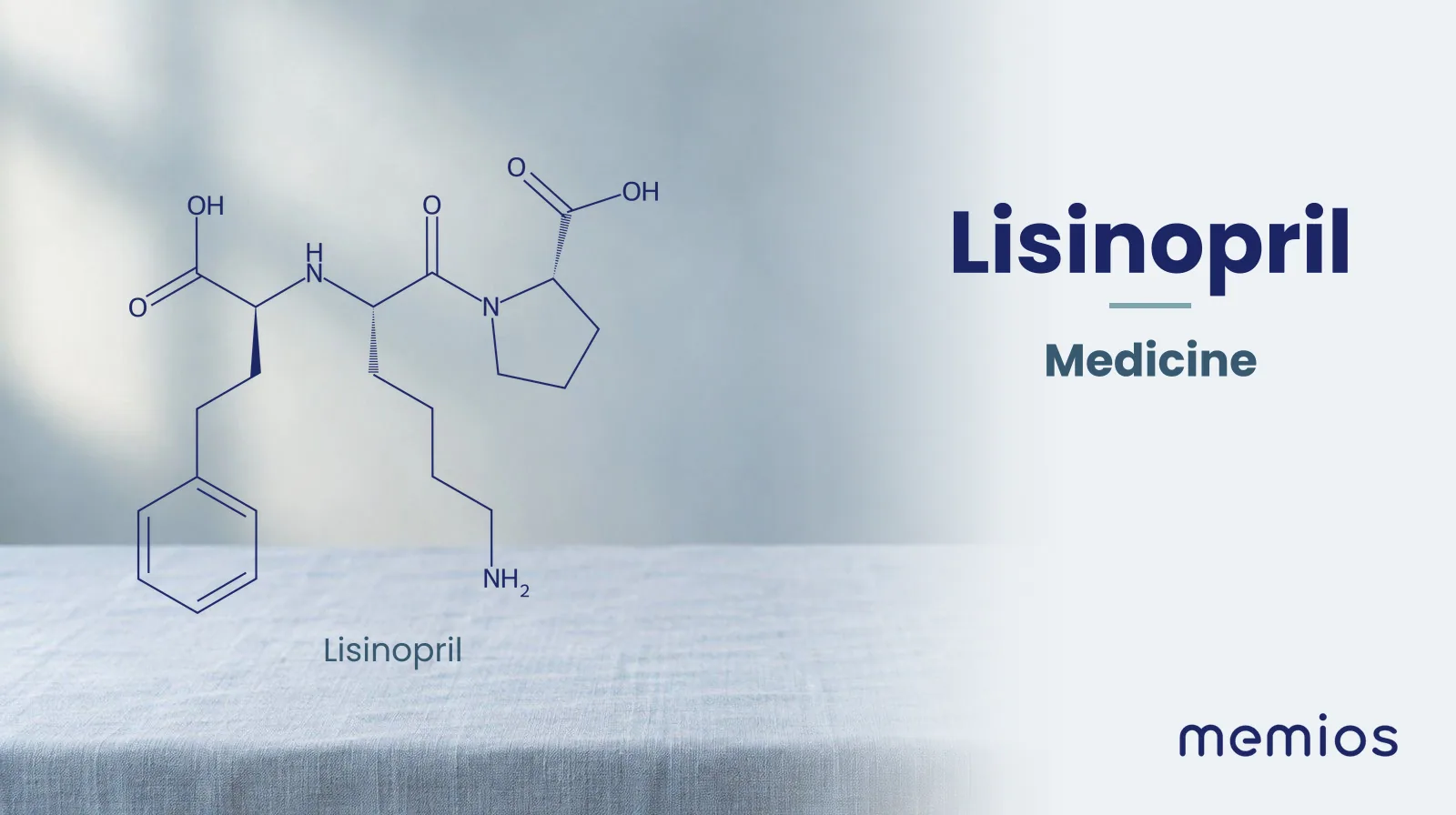
Lisinopril is a prescription ACE inhibitor. It blocks the enzyme that turns angiotensin I into angiotensin II, a hormone that narrows blood vessels.
What the research says
Lisinopril lowers blood pressure. In ALLHAT it matched chlorthalidone on the main coronary outcome but had more stroke, heart failure and combined cardiovascular disease than the diuretic. The strongest placebo-controlled ACE inhibitor outcome evidence (HOPE) used ramipril, a related drug. Dry cough is common. Angioedema is rare but serious and more frequent in Black patients. It can raise potassium, can change kidney function, and carries a boxed warning for fetal toxicity.
Evidence grade: Well established.
How it works
Drug class: Angiotensin-converting enzyme (ACE) inhibitor
Lisinopril blocks angiotensin-converting enzyme, so less angiotensin II (a blood-vessel-narrowing hormone) is made. It works mainly by damping the renin-angiotensin-aldosterone system. (Source 1)
Boxed warning
When pregnancy is detected, discontinue lisinopril as soon as possible.
(Source 2)
What it is used for
- ALLHAT tested lisinopril directly: it did no better than chlorthalidone on fatal coronary disease or heart attack and had more strokes and heart failure. Class-wide meta-analysis shows lowering blood pressure cuts cardiovascular events. Evidence: established. (Source 3)
- HOPE showed an ACE inhibitor cut heart attack, stroke and cardiovascular death against placebo, but it tested ramipril, not lisinopril; carrying it over to lisinopril is a class assumption. Evidence: limited. (Source 4)
- The label lists this use; we did not review the heart failure trials in this pass. Evidence: unknown. (Source 5)
- The label lists this use; we did not review the heart attack trials in this pass. Evidence: unknown. (Source 6)
Interactions
- Potassium-containing salt substitutes (label): The label tells patients not to use potassium-containing salt substitutes without consulting their doctor. (Source 7)
- Potassium salt substitute (trial context) (clinical trial): In a large trial, a salt substitute did not increase serious high-potassium events, but people with kidney disease or at risk of high potassium were excluded, so it does not answer the question for them. (Source 8)
- Lithium (label): The label reports lithium toxicity in people taking lithium with drugs that make the body lose sodium, including ACE inhibitors; it was usually reversible when lithium and the ACE inhibitor were stopped. The label says to monitor lithium levels. (Source 9)
- NSAIDs, including COX-2 inhibitors (label): Can worsen kidney function, especially in older, dehydrated or kidney-impaired people. (Source 10)
- ARBs or aliskiren (dual RAS blockade) (label): More low blood pressure, high potassium and kidney problems than one drug alone. (Source 11)
Stopping it
- A 2025 Cochrane review update in older people (all blood-pressure drugs, not this drug alone) found that stopping blood-pressure drugs may make little or no difference to death, hospital admission or stroke, but may raise blood pressure; effects on heart attack and on side effects were very uncertain. (Source 12)
- The review rated the evidence low to very low certainty, mainly because the studies were small and events were few. (Source 12)
- In the STOP-ACEi trial of people with advanced, progressing chronic kidney disease, stopping ACE inhibitors or ARBs did not slow the fall in kidney function compared with continuing them. (Source 13)
What goes wrong
In ALLHAT, lisinopril had higher rates of combined cardiovascular disease, stroke and heart failure than chlorthalidone. (Source 3)
- Randomized trial, Moderate certainty.
- Size: 33,357 participants.
- Who: adults 55+ with hypertension.
- How long: mean 4.9 years.
- Result: Combined CVD 33.3% vs 30.9% (RR 1.10); stroke 6.3% vs 5.6% (RR 1.15); HF 8.7% vs 7.7% (RR 1.19)
- Funding: not stated in the abstract we read.
For lisinopril vs chlorthalidone, lisinopril had higher 6-year rates of combined CVD (33.3% vs 30.9%; RR, 1.10; 95% CI, 1.05-1.16); stroke (6.3% vs 5.6%; RR, 1.15; 95% CI, 1.02-1.30); and HF (8.7% vs 7.7%; RR, 1.19; 95% CI, 1.07-1.31).
A network meta-analysis of randomised trials found ACE inhibitors roughly doubled the risk of cough against placebo, and were linked to more cough than ARBs or calcium channel blockers. (Source 14)
- Meta-analysis, Certainty not rated.
- Size: 135 RCTs, 45,420 patients.
- Who: patients on eleven ACE inhibitors.
- How long: trial durations varied.
- Result: RR vs placebo 2.21 (2.05-2.39); vs ARB 3.2 (2.91-3.51); vs CCB 5.30 (4.32-6.50). Lisinopril SUCRA 64.7% (mid-ranked).
- Funding: not stated in the abstract we read.
The pooled estimated relative risk (RR) between ACEI and placebo was 2.21 (95% CI: 2.05-2.39). ACEI had more incidences of cough than ARB (RR 3.2; 95% CI: 2.91, 3.51), and pooled estimated of RR between ACEI and CCB was 5.30 (95% CI: 4.32-6.50)
The lisinopril label reports cough 2.5 percentage points more often than placebo in controlled trials. (Source 15)
- Official position, Certainty not rated.
- Size: label trial population.
- Who: hypertension trials.
- How long: not stated.
- Result: Cough excess 2.5%; headache 3.8%; dizziness 3.5%.
- Funding: n/a (regulatory label)
The following adverse reactions (events 2% greater on lisinopril than on placebo) were observed with lisinopril alone: headache (by 3.8%), dizziness (by 3.5%), cough (by 2.5%).
In US veterans starting ACE inhibitors, 0.20% developed angioedema while on the drug, an adjusted risk about 3.6 times that of people starting other blood-pressure drugs; rates were nearly 4-fold higher in Black patients. This is an observational association. (Source 16)
- Cohort study, Low certainty.
- Size: 195,192 ACE inhibitor initiators and 399,889 others.
- Who: US Veterans Affairs patients starting antihypertensives, 1999-2000.
- How long: follow-up to about 1 year+.
- Result: 1.97 vs 0.51 cases per 1000 person-years; adjusted RR 3.56 (2.82-4.44); about 4-fold higher rate in Black patients.
- Funding: not stated in the abstract we read.
Overall, 0.20% of ACE initiators developed angioedema while on the medication and the incidence rate was 1.97 (1.77 to 2.18) cases per 1000 person years. This compares with a rate of 0.51 (0.43 to 0.59) in OAH initiators and the adjusted relative risk estimate was 3.56 (2.82 to 4.44). Fifty five percent of cases occurred within 90 days of first ACE use but risk remained elevated with prolonged use, even beyond 1 year. We estimate that 58.3% of angioedema in patients starting antihypertensives was related to ACE. We also found that angioedema rates were nearly 4-fold higher in blacks, 50% higher in women, and 12% lower in those with diabetes.
The label states that ACE inhibitors have been associated with a higher rate of angioedema in Black than in non-Black patients. (Source 17)
- Official position, Certainty not rated.
- Size: n/a.
- Who: label population.
- How long: n/a.
- Result: No rate in passage.
- Funding: n/a (regulatory label)
ACE inhibitors have been associated with a higher rate of angioedema in Black than in non-Black patients.
The label warns that drugs blocking the renin-angiotensin system can raise blood potassium. (Source 18)
- Official position, Certainty not rated.
- Size: n/a.
- Who: label population.
- How long: n/a.
- Result: No rate in passage.
- Funding: n/a (regulatory label)
Drugs that inhibit the renin angiotensin system can cause hyperkalemia.
SPRINT's more intensive blood-pressure target came with more serious adverse events of low blood pressure, fainting, electrolyte problems and acute kidney injury. (Source 19)
- Randomized trial, Moderate certainty.
- Size: 9,361 participants.
- Who: adults at high cardiovascular risk without diabetes.
- How long: median 3.26 years.
- Result: Higher rates of serious hypotension, syncope, electrolyte abnormalities and acute kidney injury in the intensive group; injurious falls not higher.
- Funding: National Institutes of Health.
Rates of serious adverse events of hypotension, syncope, electrolyte abnormalities, and acute kidney injury or failure, but not of injurious falls, were higher in the intensive-treatment group than in the standard-treatment group.
What the evidence supports
In HOPE, the ACE inhibitor ramipril (not lisinopril) cut the combined rate of heart attack, stroke or cardiovascular death against placebo in high-risk people without heart failure. (Source 4)
- Randomized trial, Moderate certainty.
- Size: 9,297 patients.
- Who: people 55+ with vascular disease or diabetes plus another risk factor.
- How long: mean 5 years.
- Result: Primary outcome 14.0% vs 17.8% (RR 0.78, 0.70-0.86), an absolute difference of 3.8 percentage points.
- Funding: not stated in the abstract we read.
A total of 651 patients who were assigned to receive ramipril (14.0 percent) reached the primary end point, as compared with 826 patients who were assigned to receive placebo (17.8 percent) (relative risk, 0.78; 95 percent confidence interval, 0.70 to 0.86; P<0.001).
Across 48 randomised trials of blood-pressure-lowering drugs of all classes, the rate of major cardiovascular events was lower in treated groups, in people with and without prior cardiovascular disease. (Source 20)
- Meta-analysis, High certainty.
- Size: 344,716 participants in 48 randomised trials.
- Who: adults in blood-pressure-lowering trials, with and without previous cardiovascular disease.
- How long: median 4.15 years.
- Result: Without previous CVD: 31.9 vs 25.9 major CV events per 1000 person-years (comparator vs intervention). With previous CVD: 39.7 vs 36.0 per 1000 person-years. HR per 5 mm Hg systolic reduction 0.91 (0.89-0.94) and 0.89 (0.86-0.92).
- Funding: British Heart Foundation, UK NIHR, Oxford Martin School (independent)
In participants without previous cardiovascular disease at baseline, the incidence rate for developing a major cardiovascular event per 1000 person-years was 31·9 (95% CI 31·3–32·5) in the comparator group and 25·9 (25·4–26·4) in the intervention group.
The same individual-participant meta-analysis found that each 5 mm Hg fall in systolic pressure was linked to about a 10% lower risk of major cardiovascular events, regardless of prior disease; this is a class-wide result, not specific to one drug. (Source 21)
- Meta-analysis, High certainty.
- Size: 344,716 participants in 48 randomised trials.
- Who: adults in blood-pressure-lowering trials.
- How long: median 4.15 years.
- Result: About 10% relative reduction per 5 mm Hg systolic reduction.
- Funding: British Heart Foundation, UK NIHR, Oxford Martin School (independent)
a 5 mm Hg reduction of systolic blood pressure reduced the risk of major cardiovascular events by about 10%, irrespective of previous diagnoses of cardiovascular disease,
In SPRINT, targeting systolic pressure below 120 rather than below 140 mm Hg in high-risk adults without diabetes lowered the rate of the primary cardiovascular outcome; this tests treatment intensity, using any drugs, not this drug specifically. (Source 19)
- Randomized trial, Moderate certainty.
- Size: 9,361 participants.
- Who: adults aged 50+ at high cardiovascular risk without diabetes, systolic 130 mm Hg or higher.
- How long: median 3.26 years (stopped early)
- Result: Primary outcome 1.65% vs 2.19% per year (HR 0.75, 0.64-0.89); all-cause mortality HR 0.73 (0.60-0.90). Absolute difference about 0.54 percentage points per year.
- Funding: National Institutes of Health.
The intervention was stopped early after a median follow-up of 3.26 years owing to a significantly lower rate of the primary composite outcome in the intensive-treatment group than in the standard-treatment group (1.65% per year vs. 2.19% per year; hazard ratio with intensive treatment, 0.75; 95% confidence interval [CI], 0.64 to 0.89; P<0.001).
The Hygia trial reported that taking blood-pressure drugs at bedtime rather than on waking was followed by markedly fewer major cardiovascular events (see the disagreement with the TIME trial). (Source 22)
- Randomized trial, Low certainty.
- Size: 19,084 patients.
- Who: hypertensive patients in Spanish primary care.
- How long: 6.3-year median follow-up.
- Result: Adjusted HR for primary CVD outcome 0.55 (95% CI 0.50-0.61)
- Funding: not stated in the abstract we read.
Routine ingestion by hypertensive patients of ≥1 prescribed BP-lowering medications at bedtime, as opposed to upon waking, results in improved ABP control (significantly enhanced decrease in asleep BP and increased sleep-time relative BP decline, i.e. BP dipping) and, most importantly, markedly diminished occurrence of major CVD events.
What the evidence does not support
In ALLHAT, lisinopril was no better than chlorthalidone for fatal coronary disease or non-fatal heart attack. (Source 3)
- Randomized trial, Moderate certainty.
- Size: 33,357 participants (9,054 on lisinopril)
- Who: adults 55+ with hypertension and another coronary risk factor.
- How long: mean 4.9 years.
- Result: 6-year rate 11.4% lisinopril vs 11.5% chlorthalidone; RR 0.99 (0.91-1.08)
- Funding: not stated in the abstract we read.
The primary outcome occurred in 2956 participants, with no difference between treatments.
The UK TIME trial found no difference in major cardiovascular outcomes between evening and morning dosing of usual blood-pressure drugs. (Source 23)
- Randomized trial, Moderate certainty.
- Size: 21,104 participants.
- Who: adults with hypertension in the UK (90.5% White)
- How long: median 5.2 years.
- Result: Primary endpoint 3.4% evening vs 3.7% morning; unadjusted HR 0.95 (0.83-1.10); p=0.53. Open-label, blinded end-point design.
- Funding: British Heart Foundation.
Evening dosing of usual antihypertensive medication was not different from morning dosing in terms of major cardiovascular outcomes.
Where the evidence is mixed
A Cochrane review found no evidence of a difference between ACE inhibitors and ARBs for death or cardiovascular events in primary hypertension, but slightly fewer people stopped ARBs because of side effects, mainly because ACE inhibitors cause more dry cough. (Source 24)
- Systematic review, Moderate certainty.
- Size: 9 studies, 11,007 participants.
- Who: people with primary hypertension.
- How long: mean 4.1 years for withdrawal outcome.
- Result: Mortality RR 0.98 (0.88-1.10); withdrawal for adverse effects RR 0.83 favouring ARBs, ARR 1.8%, NNT 55 over 4.1 years. Mortality evidence moderate, cardiovascular events low (GRADE).
- Funding: not stated.
There was no evidence of a difference between ACE inhibitors and ARBs for total mortality (risk ratio (RR) 0.98; 95% confidence interval (CI) 0.88 to 1.10), total cardiovascular events (RR 1.07; 95% CI 0.96 to 1.19), or cardiovascular mortality (RR 0.98; 95% CI 0.85 to 1.13). Conversely, a high level of evidence indicated a slightly lower incidence of WDAE for ARBs as compared with ACE inhibitors (RR 0.83; 95% CI 0.74 to 0.93; absolute risk reduction (ARR) 1.8%, number needed to treat for an additional beneficial outcome (NNTB) 55 over 4.1 years), mainly attributable to a higher incidence of dry cough with ACE inhibitors.
Where the research disagrees
Whether taking blood-pressure drugs at bedtime prevents more heart attacks and strokes than morning dosing
- Hermida and colleagues (Hygia Chronotherapy Trial, 2020), randomised endpoint trial, 19,084 patients, one research network: Routine ingestion by hypertensive patients of ≥1 prescribed BP-lowering medications at bedtime, as opposed to upon waking, results in improved ABP control (significantly enhanced decrease in asleep BP and increased sleep-time relative BP decline, i.e. BP dipping) and, most importantly, markedly diminished occurrence of major CVD events. (Source 22)
- Mackenzie and colleagues (TIME study, 2022), randomised, open-label, blinded end-point trial, 21,104 participants: Evening dosing of usual antihypertensive medication was not different from morning dosing in terms of major cardiovascular outcomes. (Source 23)
How much
- Reference intake: The dose is set by the prescriber. As a position, the US label (revised 11/2014) gives a recommended starting dose of 10 mg once a day for adults with hypertension, adjusted to blood pressure. (Source 25)
- Upper limit: The label notes doses up to 80 mg have been used without greater effect. (Source 26)
- Studied: ALLHAT gave lisinopril 10 to 40 mg per day. (Source 3)
A common belief, and what the research shows
The belief: All blood-pressure pills are interchangeable, so lisinopril equals a diuretic for every outcome.
What the research shows: In ALLHAT lisinopril matched chlorthalidone on the main coronary outcome but had more stroke and heart failure: "For lisinopril vs chlorthalidone, lisinopril had higher 6-year rates of combined CVD (33.3% vs 30.9%; RR, 1.10; 95% CI, 1.05-1.16); stroke (6.3% vs 5.6%; RR, 1.15; 95% CI, 1.02-1.30); and HF (8.7% vs 7.7%; RR, 1.19; 95% CI, 1.07-1.31)."
Questions and answers
What is it?
Lisinopril is an ACE inhibitor. It blocks angiotensin-converting enzyme, which makes angiotensin II, a substance that narrows blood vessels. (Source 1)
What does it do in the body?
By blocking that enzyme it damps the renin-angiotensin-aldosterone system, which is how it is thought to work in high blood pressure and heart failure. (Source 1)
Is it good or bad for you?
In the ALLHAT trial of people with high blood pressure, lisinopril had higher 6-year rates of combined cardiovascular disease, stroke and heart failure than the diuretic chlorthalidone. Other benefits and harms are listed in the findings. (Source 3)
How do you get more of it?
The prescriber sets the dose. As a regulatory position, the label gives a recommended starting dose of 10 mg once a day, adjusted according to blood pressure. (Source 25)
If it is harmful, what reduces it?
Its most common side effect is dry cough. A Cochrane review comparing ACE inhibitors with ARBs found slightly fewer people stopped ARBs because of side effects (absolute difference 1.8% over about 4 years), mainly because of less dry cough, with no evidence of a difference in deaths or cardiovascular events. (Source 24)
Why might someone be low in it or missing it?
Does not apply. Lisinopril is a prescription medicine, not a nutrient or a substance the body makes, so there is no deficiency state; the label describes it as a treatment. (Source 27)
We searched: DailyMed label indications and mechanism sections; Cochrane and trial literature on this drug
Which whole foods contain it or feed it?
No food contains lisinopril. The food-related issue is potassium: the label tells patients not to use potassium-containing salt substitutes without consulting their doctor. (Source 7)
What happens if you do not have it?
Nobody needs lisinopril in the way they need a nutrient; it matters only for people it is prescribed to. In a Cochrane review of older people whose blood-pressure drugs were stopped, blood pressure may rise. (Source 12)
How can you test for it?
The sources we read describe no routine test of lisinopril levels. The label says blood potassium should be checked periodically while on it. (Source 18)
References
- US National Library of Medicine, DailyMed (FDA-approved label). Lisinopril tablets USP - prescribing information (DailyMed), revised 11/2014. 2014. Read the source
- US National Library of Medicine, DailyMed (FDA-approved label). Lisinopril tablets USP - prescribing information (DailyMed), revised 11/2014. 2014. Read the source
- JAMA. Major outcomes in high-risk hypertensive patients randomized to angiotensin-converting enzyme inhibitor or calcium channel blocker vs diuretic: The Antihypertensive and Lipid-Lowering Treatment to Prevent Heart Attack Trial (ALLHAT). 2002. PMID 12479763, DOI 10.1001/jama.288.23.2981. Read the source
- New England Journal of Medicine. Effects of an angiotensin-converting-enzyme inhibitor, ramipril, on cardiovascular events in high-risk patients. 2000. PMID 10639539, DOI 10.1056/nejm200001203420301. Read the source
- US National Library of Medicine, DailyMed (FDA-approved label). Lisinopril tablets USP - prescribing information (DailyMed), revised 11/2014. 2014. Read the source
- US National Library of Medicine, DailyMed (FDA-approved label). Lisinopril tablets USP - prescribing information (DailyMed), revised 11/2014. 2014. Read the source
- US National Library of Medicine, DailyMed (FDA-approved label). Lisinopril tablets USP - prescribing information (DailyMed), revised 11/2014. 2014. Read the source
- American College of Cardiology. Salt Substitute and Stroke Study (SSaSS) - American College of Cardiology trial summary of Neal B et al., Effect of Salt Substitution on Cardiovascular Events and Death, NEJM 2021. 2021. DOI 10.1056/NEJMoa2105675. Read the source
- US National Library of Medicine, DailyMed (FDA-approved label). Lisinopril tablets USP - prescribing information (DailyMed), revised 11/2014. 2014. Read the source
- US National Library of Medicine, DailyMed (FDA-approved label). Lisinopril tablets USP - prescribing information (DailyMed), revised 11/2014. 2014. Read the source
- US National Library of Medicine, DailyMed (FDA-approved label). Lisinopril tablets USP - prescribing information (DailyMed), revised 11/2014. 2014. Read the source
- Cochrane Database of Systematic Reviews. What are the effects of stopping blood pressure medications in older people? (Cochrane review CD012572, withdrawal of antihypertensive drugs in older people, 2025 update). 2025. Read the source
- New England Journal of Medicine. Renin-angiotensin system inhibition in advanced chronic kidney disease. 2022. PMID 36326117, DOI 10.1056/NEJMoa2210639. Read the source
- The Journal of Clinical Hypertension. Angiotensin-converting enzyme inhibitor induced cough compared with placebo, and other antihypertensives: A systematic review, and network meta-analysis. 2023. DOI 10.1111/jch.14695. Read the source
- US National Library of Medicine, DailyMed (FDA-approved label). Lisinopril tablets USP - prescribing information (DailyMed), revised 11/2014. 2014. Read the source
- Hypertension. Angioedema incidence in US veterans initiating angiotensin-converting enzyme inhibitors. 2008. PMID 18413488, DOI 10.1161/hypertensionaha.108.110270. Read the source
- US National Library of Medicine, DailyMed (FDA-approved label). Lisinopril tablets USP - prescribing information (DailyMed), revised 11/2014. 2014. Read the source
- US National Library of Medicine, DailyMed (FDA-approved label). Lisinopril tablets USP - prescribing information (DailyMed), revised 11/2014. 2014. Read the source
- New England Journal of Medicine. A Randomized Trial of Intensive versus Standard Blood-Pressure Control. 2015. PMID 26551272, DOI 10.1056/nejmoa1511939. Read the source
- Lancet. Pharmacological blood pressure lowering for primary and secondary prevention of cardiovascular disease across different levels of blood pressure: an individual participant-level data meta-analysis. 2021. PMID 33933205, DOI 10.1016/S0140-6736(21)00590-0. Read the source
- Lancet. Pharmacological blood pressure lowering for primary and secondary prevention of cardiovascular disease across different levels of blood pressure: an individual participant-level data meta-analysis. 2021. PMID 33933205, DOI 10.1016/S0140-6736(21)00590-0. Read the source
- European Heart Journal. Bedtime hypertension treatment improves cardiovascular risk reduction: the Hygia Chronotherapy Trial. 2020. PMID 31641769, DOI 10.1093/eurheartj/ehz754. Read the source
- Lancet. Cardiovascular outcomes in adults with hypertension with evening versus morning dosing of usual antihypertensives in the UK (TIME Study): a prospective, randomised, open-label, blinded end-point clinical trial. 2022. PMID 36240838, DOI 10.1016/S0140-6736(22)01786-X. Read the source
- Cochrane Database of Systematic Reviews. Angiotensin converting enzyme (ACE) inhibitors versus angiotensin receptor blockers for primary hypertension. 2014. PMID 25148386, DOI 10.1002/14651858.CD009096.pub2. Read the source
- US National Library of Medicine, DailyMed (FDA-approved label). Lisinopril tablets USP - prescribing information (DailyMed), revised 11/2014. 2014. Read the source
- US National Library of Medicine, DailyMed (FDA-approved label). Lisinopril tablets USP - prescribing information (DailyMed), revised 11/2014. 2014. Read the source
- US National Library of Medicine, DailyMed (FDA-approved label). Lisinopril tablets USP - prescribing information (DailyMed), revised 11/2014. 2014. Read the source