Medications · September 29, 2026 · Memios · 12 min read
Hydroxyzine
The best evidence is a 2010 Cochrane review of five randomised trials in generalised anxiety disorder: hydroxyzine beat placebo.
TLDR
- Limited evidence. The best evidence is a 2010 Cochrane review of five randomised trials in generalised anxiety disorder: hydroxyzine beat placebo, but the review's authors would not recommend it as a first-line treatment because the trials were at high risk of bias and few and small.
- What it is: Hydroxyzine is a prescription first-generation antihistamine that crosses into the brain. The US prescribing information describes it as a drug whose calming action is not that of a cortical depressant but appears to come from suppressing activity in subcortical parts of the central nervous system.
- Main use: Generalised anxiety disorder / anxiety and tension (limited evidence).
- Other approved uses: Pruritus (itch) from chronic urticaria and allergic dermatoses (disputed); Sedation and premedication around anaesthesia and procedures (evidence not rated).
- Off-label uses (not on the FDA label): Insomnia / sleep (evidence not rated).
- Recommended dose (official position): There is no reference intake for a prescription medicine. Dosing is set by the prescriber.
- Studied dose (a trial dose, not a recommendation): The five randomised trials pooled by Cochrane in generalised anxiety disorder compared hydroxyzine with placebo, benzodiazepines and buspirone in adults; the review reports 884 participants in total. Findings citing that trial: 1 for, 2 mixed, 1 on harm.
- Upper limit: No upper limit exists in the nutrition sense.
- What goes wrong: 2 findings on harm. Hydroxyzine caused more sleepiness and drowsiness than the active drugs it was compared with in the anxiety trials.
- Interactions: 3 recorded, including Alcohol, Opioids, non-narcotic analgesics, barbiturates and other central nervous system depressants, Other QT-prolonging medicines.
- Common myth: Hydroxyzine is a gentle, evidence-backed alternative to benzodiazepines for anxiety.
What it is
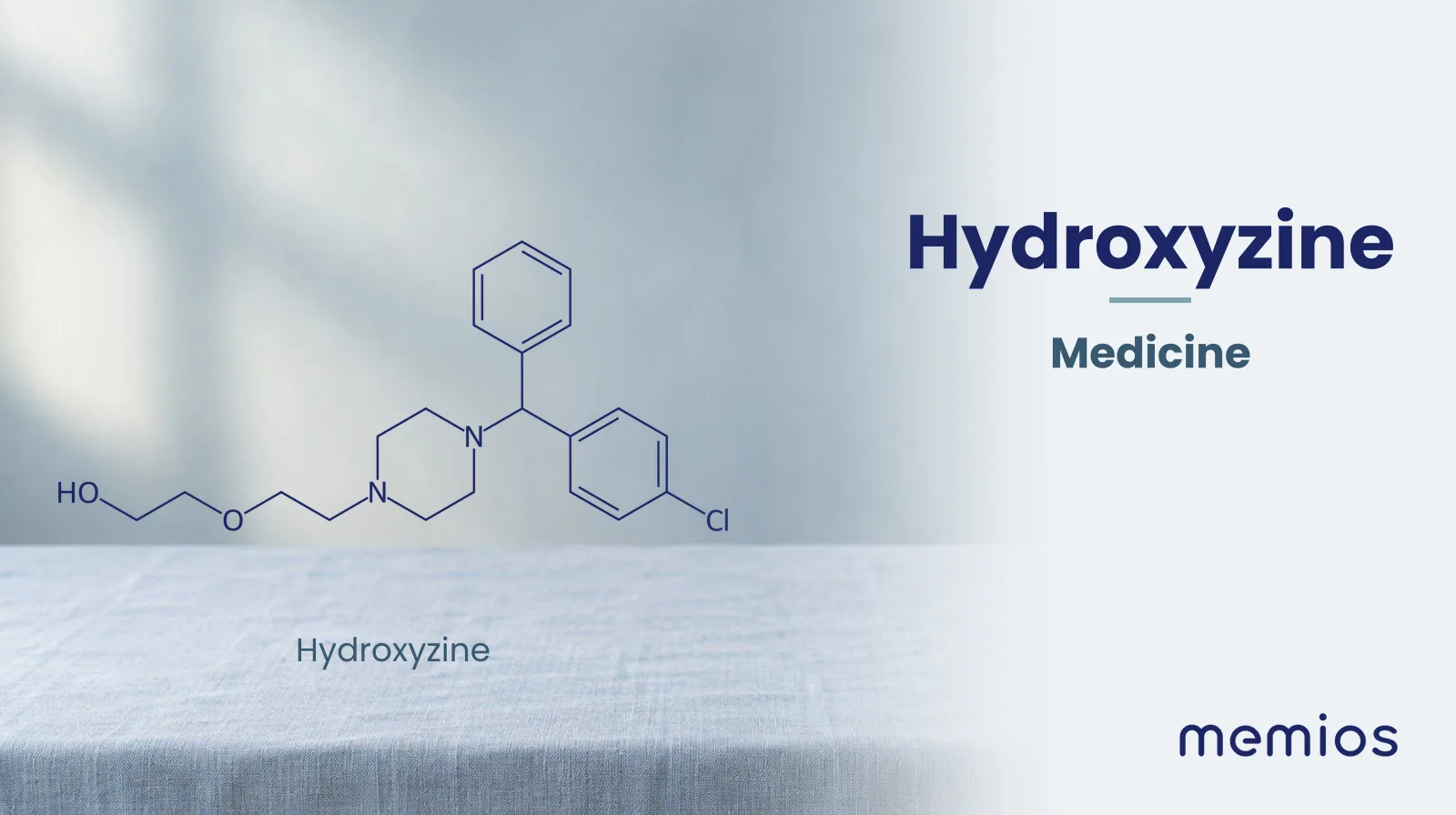
Hydroxyzine is a prescription first-generation antihistamine that crosses into the brain. The US prescribing information describes it as a drug whose calming action is not that of a cortical depressant but appears to come from suppressing activity in subcortical parts of the central nervous system. A 2010 Cochrane review describes it plainly as an antihistamine that has been used to treat anxiety. It is sold as the hydrochloride (tablets, syrup, injection) and as the pamoate salt (capsules).
What the research says
The best evidence is a 2010 Cochrane review of five randomised trials in generalised anxiety disorder: hydroxyzine beat placebo, but the review's authors would not recommend it as a first-line treatment because the trials were at high risk of bias and few and small. For itch and eczema, a 2019 Cochrane review of oral H1 antihistamines added to topical treatment found no consistent benefit over placebo. Its most reliable effect in trials is sedation, which is both the reason it is used off-label for sleep and its commonest adverse effect.
Evidence grade: Limited evidence.
How it works
Drug class: First-generation piperazine H1-receptor antihistamine, used as an anxiolytic, antipruritic and sedative
Hydroxyzine blocks histamine H1 receptors. It also has anticholinergic activity. The label states its calming effect is not cortical depression but suppression of activity in subcortical regions of the brain, which is why drowsiness is the dominant effect people notice. (Source 1)
What it is used for
- Five small randomised trials (884 people) pooled in Cochrane found hydroxyzine more effective than placebo (OR 0.30, 95% CI 0.15 to 0.58) and about equal to benzodiazepines and buspirone, but the reviewers judged the trials at high risk of bias and declined to call it a reliable first-line treatment. Evidence: limited. (Source 2)
- The FDA label lists itch from allergic skin conditions as an approved use (a regulator's position, label revised 2024). The strongest recent synthesis on oral H1 antihistamines added to topical eczema treatment, a 2019 Cochrane review of 25 trials and 3285 people, found no consistent evidence of benefit over placebo. Evidence: disputed. (Source 1)
- Hydroxyzine is widely used off-label as a sleep aid because it is sedating; the Cochrane anxiety review confirms drowsiness is more frequent with hydroxyzine than with active comparators. We could not reach the one systematic review of hydroxyzine for sleep (Burgazli 2023, Human Psychopharmacology) - the publisher blocked access - so we do not report an effect size for this use. Evidence: unknown. (Source 2)
- The label carries sedative/premedication dosing as a regulator's position; we did not locate outcome trials for this use within this search. Evidence: unknown. (Source 1)
Interactions
- Alcohol (label): Alcohol's effects can be increased by hydroxyzine; the combination deepens drowsiness and impairment. (Source 1)
- Opioids, non-narcotic analgesics, barbiturates and other central nervous system depressants (label): Hydroxyzine potentiates these drugs, so their sedative effect is greater than expected. (Source 1)
- Other QT-prolonging medicines (label): The label advises caution when hydroxyzine is combined with other medicines known to lengthen the QT interval, and lists the patient risk factors that raise the danger of a heart-rhythm disturbance. (Source 1)
Stopping it
- We found no trial of stopping or tapering hydroxyzine. The Cochrane review is explicit that the trials it included did not report the full set of outcomes its protocol asked for, and discontinuation and withdrawal effects were not among the outcomes reported. (Source 2)
What goes wrong
Hydroxyzine caused more sleepiness and drowsiness than the active drugs it was compared with in the anxiety trials. (Source 2)
- Systematic review, Very low certainty.
- Size: subset of 884 participants across 5 trials.
- Who: adults with generalised anxiety disorder.
- How long: short-term.
- Result: odds ratio 1.74, 95% CI 0.86 to 3.53 (confidence interval crosses 1, so the difference is not statistically significant)
- Funding: not stated.
hydroxyzine was associated with a higher rate of sleepiness/drowsiness than the active comparators (OR 1.74, 95% CI 0.86 to 3.53)
QT prolongation and torsade de pointes, a potentially fatal heart rhythm disturbance, have been reported after hydroxyzine reached the market; the label states that most of those reports were in people who already had other risk factors for it. (Source 1)
- Official position, Certainty not rated.
- Size: not stated - spontaneous post-marketing reports.
- Who: people taking hydroxyzine; the label states most reported cases had other QT risk factors.
- How long: not applicable.
- Result: no rate given; the FDA label (revised 2024) records the reports, states that the majority occurred in people with pre-existing heart disease, electrolyte imbalances or other arrhythmogenic drugs, and advises caution in people with QT risk factors.
- Funding: not applicable - regulatory document.
Cases of QT prolongation and Torsade de Pointes have been reported during post-marketing use of hydroxyzine. The majority of reports occurred in patients with other risk factors for QT prolongation/TdP (pre-existing heart disease, electrolyte imbalances or concomitant arrhythmogenic drug use).
What the evidence supports
Pooled across five small randomised trials, hydroxyzine produced more treatment response in generalised anxiety disorder than placebo. (Source 2)
- Systematic review, Very low certainty.
- Size: 884 participants across 5 trials.
- Who: adults with generalised anxiety disorder.
- How long: short-term acute-phase trials.
- Result: odds ratio 0.30, 95% CI 0.15 to 0.58 (outcome coded so that OR below 1 favours hydroxyzine)
- Funding: not stated; review notes personal communication with pharmaceutical companies.
hydroxyzine is more effective than placebo for GAD (odds ratio (OR) 0.30, 95% CI 0.15 to 0.58)
What the evidence does not support
Oral H1 antihistamines added to topical treatment for eczema did not consistently beat placebo. (Source 3)
- Systematic review, Low certainty.
- Size: 3285 participants across 25 randomised controlled trials.
- Who: people of all ages with diagnosed eczema.
- How long: varied across trials.
- Result: no consistent benefit on the main comparisons; evidence graded low and moderate quality.
- Funding: not stated.
we did not find consistent evidence that H1 AH treatments are effective as 'add-on' therapy for eczema when compared to placebo
A large nested case-control study of anticholinergic drugs and dementia did not find a significantly increased dementia risk for antihistamines as a class, although several other anticholinergic classes were associated with higher risk. (Source 4)
- Case-control study, Low certainty.
- Size: 58,769 dementia cases and 225,574 matched controls.
- Who: UK primary-care patients aged 55 and over.
- How long: exposure window of 1 to 11 years before diagnosis.
- Result: Overall anticholinergic exposure: adjusted OR rose from 1.06 (95% CI, 1.03-1.09) in the lowest exposure category (1-90 TSDDs) to 1.49 (95% CI, 1.44-1.54) in the highest (>1095 TSDDs), compared with no anticholinergic prescriptions in the 1 to 11 years before the index date. Antihistamines were among the classes with no significantly increased risk; the authors note that for some of those null classes (skeletal muscle relaxants, antiarrhythmics) the numbers were small and the estimates imprecise. The study covered antihistamines as a class, not hydroxyzine specifically.
- Funding: independent - NIHR School for Primary Care Research and University of Nottingham.
There were no significantly increased risks for antihistamines, gastrointestinal antispasmodics, antimuscarinic bronchodilators, antiarrhythmics, or skeletal muscle relaxants, although the numbers of patients prescribed skeletal muscle relaxants and antiarrhythmic drugs were small, giving imprecise estimates.
Where the evidence is mixed
The same review judged the evidence too biased and too small to make hydroxyzine a reliable first-line anxiety treatment. (Source 2)
- Systematic review, Very low certainty.
- Size: 884 participants across 5 trials.
- Who: adults with generalised anxiety disorder.
- How long: short-term.
- Result: no pooled effect; a judgement about risk of bias across all included trials.
- Funding: not stated.
it is not possible to recommend hydroxyzine as a reliable first-line treatment in GAD
Against benzodiazepines and buspirone, hydroxyzine showed no efficacy advantage. (Source 2)
- Systematic review, Very low certainty.
- Size: subset of the 5 included trials.
- Who: adults with generalised anxiety disorder.
- How long: short-term.
- Result: hydroxyzine vs chlordiazepoxide OR 0.75, 95% CI 0.35 to 1.62; hydroxyzine vs buspirone OR 0.76, 95% CI 0.40 to 1.42.
- Funding: not stated.
Compared to other anxiolytic agents (benzodiazepines and buspirone), hydroxyzine was equivalent in terms of efficacy
The regulator's own summary of side effects is that they are usually mild and short-lived, which is a position rather than a measured rate. (Source 1)
- Official position, Certainty not rated.
- Size: not stated.
- Who: people prescribed hydroxyzine hydrochloride.
- How long: not stated.
- Result: no numerator or denominator is given anywhere in the label for these effects.
- Funding: not applicable - regulatory document.
Side effects reported with the administration of hydroxyzine hydrochloride are usually mild and transitory in nature.
Where the research disagrees
Whether hydroxyzine is useful for itch in eczema
- US FDA prescribing information (label revised 2024), position: Useful in the management of pruritus due to allergic conditions such as chronic urticaria and atopic and contact dermatoses and in histamine-mediated pruritus. (Source 1)
- Cochrane reviewers, 2019, systematic-review of 25 randomised trials, 3285 participants: we did not find consistent evidence that H1 AH treatments are effective as 'add-on' therapy for eczema when compared to placebo (Source 3)
How much
- Reference intake: There is no reference intake for a prescription medicine. Dosing is set by the prescriber. The FDA label (revised 2024) is a position, not evidence, and states the approved indications from which dose is chosen. (Source 1)
- Upper limit: No upper limit exists in the nutrition sense. The label's maximum stated adult dose for anxiety is 100 mg four times daily, recorded here as a regulator's position dated 2024, not as a recommendation. (Source 1)
- Studied: The five randomised trials pooled by Cochrane in generalised anxiety disorder compared hydroxyzine with placebo, benzodiazepines and buspirone in adults; the review reports 884 participants in total. (Source 2)
A common belief, and what the research shows
The belief: Hydroxyzine is a gentle, evidence-backed alternative to benzodiazepines for anxiety.
What the research shows: The only pooled evidence is five small, high-risk-of-bias trials. Cochrane's conclusion was that "it is not possible to recommend hydroxyzine as a reliable first-line treatment in GAD", and against benzodiazepines and buspirone "hydroxyzine was equivalent in terms of efficacy" rather than better. It is also more sedating than its active comparators.
Questions and answers
What is it?
Hydroxyzine is a prescription first-generation antihistamine. Unlike modern allergy antihistamines it crosses into the brain, which is why it is sedating. It comes as the hydrochloride and as the pamoate salt. (Source 2)
What does it do in the body?
It blocks histamine H1 receptors and damps activity in deeper parts of the brain rather than acting as a general brain depressant. The practical result is sedation, reduced itch signalling and some anticholinergic effects such as dry mouth. (Source 1)
Is it good or bad for you?
It depends on the use. For short-term anxiety it beat placebo in pooled trials, but those trials were small and at high risk of bias. For eczema itch, antihistamines added to topical treatment did not consistently beat placebo. The commonest downside is drowsiness, and rare heart-rhythm problems have been reported after marketing. (Source 2)
How do you get more of it?
Does not apply in the usual sense. Hydroxyzine is a prescription-only synthetic medicine and there is no food or supplement source of it. Any amount taken is decided by a prescriber within the approved indications. (Source 1)
If it is harmful, what reduces it?
There is no literature we could reach on removing hydroxyzine from the body or on tapering it. The label's only stated stopping instruction relates to driving and to avoiding other sedating drugs while it is on board, not to discontinuation. (Source 1)
Why might someone be low in it or missing it?
Does not apply. Hydroxyzine is not a nutrient or a body constituent, so nobody is deficient in it. A person has it in their system only while taking a prescription for one of its stated uses. (Source 1)
Which whole foods contain it or feed it?
No food contains hydroxyzine. The food-related point that matters is alcohol: the label warns that hydroxyzine can increase alcohol's effects, and the two together deepen sedation. (Source 1)
What happens if you do not have it?
Nothing is lost by not having hydroxyzine; it is a treatment, not something the body needs. Without it, people with generalised anxiety disorder in the trials did worse than those given it, but the difference rests on a small and biased evidence base. (Source 2)
How can you test for it?
There is no routine blood test for hydroxyzine levels in ordinary care and none is described in the sources we reached. The label's only monitoring-relevant statement concerns watching for heart-rhythm risk factors, which would be assessed with an ECG rather than a drug level. (Source 1)
We searched: Searched Europe PMC, DailyMed and the web for hydroxyzine therapeutic drug monitoring, plasma levels and assays; the reachable sources describe post-marketing QT reports and risk factors, not a validated level test.
References
- DailyMed, U.S. National Library of Medicine. HYDROXYZINE HYDROCHLORIDE- hydroxyzine tablet, film coated (FDA prescribing information). 2024. Read the source
- The Cochrane database of systematic reviews. Hydroxyzine for generalised anxiety disorder.. 2010. PMID 21154375, DOI 10.1002/14651858.CD006815.pub2. Read the source
- Cochrane (plain-language summary of Cochrane Database Syst Rev CD012167). Featured Review: Oral H1 antihistamines as 'add-on' therapy to topical treatment for eczema. 2019. PMID 30666626, DOI 10.1002/14651858.CD012167.pub2. Read the source
- JAMA Internal Medicine. Anticholinergic Drug Exposure and the Risk of Dementia: A Nested Case-Control Study. 2019. PMID 31233095, DOI 10.1001/jamainternmed.2019.0677. Read the source