Medications · September 29, 2026 · Memios · 20 min read
Hydrochlorothiazide and Losartan
Well established. The evidence for the two parts is strong but different.
TLDR
- Boxed warning: When pregnancy is detected, discontinue losartan potassium and hydrochlorothiazide as soon as possible.
- Well established. The evidence for the two parts is strong but different.
- What it is: This is a single tablet holding two different blood-pressure medicines.
- Main use: High blood pressure (hypertension) (well supported).
- Other approved uses: Reducing stroke risk in hypertension with left ventricular hypertrophy (limited evidence).
- Off-label uses (not on the FDA label): Slowing aortic root enlargement in Marfan syndrome (losartan) (disputed).
- Recommended dose (official position): There is no dietary reference intake for a prescription medicine. Dosing is decided by the prescriber.
- Studied dose (a trial dose, not a recommendation): The LIFE trial gave losartan-based or atenolol-based treatment once daily for at least four years in 9,193 people. Findings citing that trial: 2 for, 1 against.
- Upper limit: As a position, the US label (DailyMed, revised 5/2026) sets the maximum as one 100 mg/25 mg tablet once daily.
- What goes wrong: 5 findings on harm. Thiazides measurably worsen potassium, uric acid and blood fats.
- Interactions: 6 recorded, including Potassium supplements and potassium-containing salt substitutes, Lithium, NSAIDs (ibuprofen, naproxen, COX-2 inhibitors), Alcohol.
- Common myth: A newer 'combination' blood pressure tablet must protect the heart better than an old water tablet.
What it is
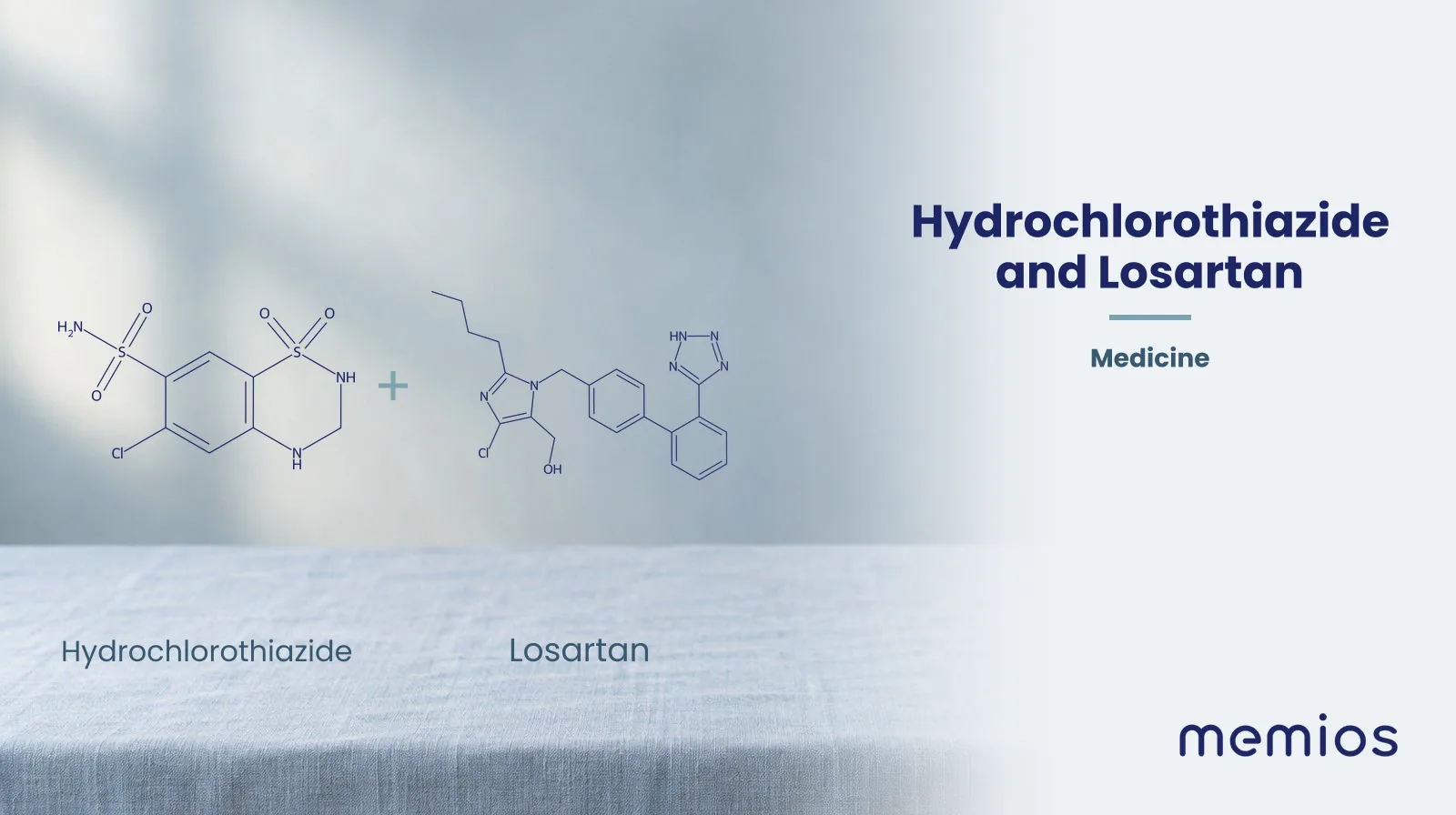
This is a single tablet holding two different blood-pressure medicines. Losartan is an angiotensin II receptor blocker (ARB): it blocks the receptor that the hormone angiotensin II acts on in blood vessel walls. Hydrochlorothiazide is a thiazide diuretic (a 'water tablet') that makes the kidney pass more sodium and chloride into the urine. The combination tablet is licensed for high blood pressure, and the losartan component is also licensed to reduce stroke risk in people with high blood pressure and an enlarged left heart chamber.
What the research says
The evidence for the two parts is strong but different. Hydrochlorothiazide's blood-pressure effect is well quantified by a Cochrane review of 60 double-blind trials, and it is dose-related but modest. Losartan's own outcome evidence rests mainly on the LIFE trial, in which losartan beat atenolol for the combined endpoint and for stroke but not for heart attack or cardiovascular death. The harms are also well documented: hydrochlorothiazide is associated in meta-analysis with more skin cancer, and both components disturb electrolytes. Evidence for the fixed-dose combination itself is mostly blood-pressure evidence rather than outcome evidence.
Evidence grade: Well established.
How it works
Drug class: Fixed-dose combination of an angiotensin II receptor blocker (losartan) and a thiazide diuretic (hydrochlorothiazide)
Angiotensin II is a hormone that tightens blood vessels and raises blood pressure. Losartan sits on the AT1 receptor so angiotensin II cannot act there, and it does this without switching the receptor on itself. Hydrochlorothiazide works in the kidney tubule instead, pushing sodium and chloride out into the urine, which lowers the volume of fluid in the circulation and, over time, blood pressure. The two act on different systems, which is why they are combined. (Source 1)
Boxed warning
When pregnancy is detected, discontinue losartan potassium and hydrochlorothiazide as soon as possible. Drugs that act directly on the renin-angiotensin system can cause injury and death to the developing fetus.
(Source 1)
What it is used for
- Both components lower blood pressure in placebo-controlled trials. In Cochrane's pooled analysis thiazides lowered blood pressure by about 9/4 mmHg versus placebo, and ARBs as a class by about 8/5 mmHg at trough. The combination is licensed to lower blood pressure, but the pivotal evidence is for blood-pressure change rather than for heart attacks or deaths. Evidence: established. (Source 2)
- This rests essentially on one trial, LIFE, in 9,193 people, where losartan-based treatment produced fewer strokes than atenolol-based treatment for the same blood-pressure fall. The same trial found no significant difference in cardiovascular death or myocardial infarction, and the label itself records that the stroke benefit did not appear in Black participants. Evidence: limited. (Source 3)
- A meta-analysis of seven randomised trials in 1,352 patients found a statistically smaller change in aortic root diameter with losartan, a difference of about 0.13 mm, but no difference in the outcomes that matter clinically - aortic surgery, dissection or death. This is an off-label use of losartan and the benefit shown is on a surrogate measure. Evidence: disputed. (Source 4)
Interactions
- Potassium supplements and potassium-containing salt substitutes (label): Losartan reduces the kidney's excretion of potassium, so adding potassium from supplements or 'low-sodium' salt substitutes can push potassium too high. The diuretic half pulls in the opposite direction, which makes the net effect unpredictable rather than safe. (Source 1)
- Lithium (case reports): Both an ARB and a thiazide can raise lithium levels in the blood, and lithium toxicity has been reported when they are taken together. (Source 1)
- NSAIDs (ibuprofen, naproxen, COX-2 inhibitors) (clinical trial): Adding an anti-inflammatory painkiller to an ARB plus a diuretic is the classic 'triple whammy' that can tip the kidneys into acute injury. An observational study put the hospital admission rate for the triple combination at about 8.8 per 1000 users per year. (Source 1)
- Alcohol (label): Alcohol can add to the drop in blood pressure on standing, making dizziness and faintness more likely. (Source 1)
- Liquorice (licorice, glycyrrhizin) in sweets, teas and herbal products (case reports): Liquorice blocks the enzyme that protects the kidney's mineralocorticoid receptor from cortisol, which drives sodium retention, potassium loss and higher blood pressure. That works directly against a blood-pressure tablet and adds to the potassium loss the thiazide already causes. The review names diuretics among the medicines that affect how this shows up. (Source 5)
- Diabetes medicines including insulin (label): Thiazides can nudge blood glucose upwards, so diabetes medicine doses may need changing. (Source 1)
Stopping it
- There is one absolute stopping situation written into the label: pregnancy. The boxed warning tells prescribers to stop the drug as soon as pregnancy is detected because drugs acting on the renin-angiotensin system can injure and kill the fetus. (Source 1)
- For planned withdrawal in older people, a 2026 systematic review of 17 studies found the effects of stopping blood-pressure medicines genuinely uncertain: mortality was no different, but the pooled estimate for heart failure went the wrong way with wide confidence intervals and very few events. (Source 6)
- The same review's overall conclusion is that the evidence base for stopping is thin, with too few events to be confident either way. (Source 6)
What goes wrong
Thiazides measurably worsen potassium, uric acid and blood fats. (Source 2)
- Systematic review, Low certainty.
- Size: 60 trials, 11,282 participants.
- Who: Adults with primary hypertension.
- How long: Mean eight weeks.
- Result: Dose-related falls in potassium and rises in uric acid, total cholesterol and triglycerides; the review says these effects were least for hydrochlorothiazide and that there is a high risk of bias in the metabolic data.
- Funding: independent (Cochrane review)
Thiazides reduced potassium, increased uric acid and increased total cholesterol and triglycerides. These effects were dose-related and were least for hydrochlorothiazide.
Low sodium (hyponatraemia) is a recognised complication of thiazide treatment serious enough to bring people into hospital. (Source 7)
- Cohort study, Low certainty.
- Size: 287 admitted patients (HCTZ 135, indapamide 125, chlorthalidone 27)
- Who: Patients admitted to hospital with thiazide-associated hyponatraemia.
- How long: Retrospective review of hospital registries.
- Result: Groups differed in serum potassium (p = 0.03) and correction of sodium was slower in the chlorthalidone group at 96 hours (p < 0.001); the authors conclude that, except for serum potassium, they observed no significant difference in biochemical and epidemiological profiles between the three drugs. The study describes patients already admitted with hyponatraemia and so cannot give an incidence rate.
- Funding: not stated.
Hyponatremia is a crucial complication of therapy with thiazide diuretics.
In the manufacturer's own double-blind trials the combination caused low potassium about twice as often as placebo. (Source 1)
- Official position, Low certainty.
- Size: not stated in the label text.
- Who: Hypertensive patients in double-blind trials of the combination.
- How long: not stated.
- Result: Hypokalaemia (potassium <3.5 mEq/L) 6.7% on drug vs 3.5% on placebo; hyperkalaemia (>5.7 mEq/L) 0.4% vs 0%.
- Funding: manufacturer data reported in the FDA label.
the incidence of hypertensive patients who developed hypokalemia (serum potassium <3.5 mEq/L) was 6.7% versus 3.5% for placebo; the incidence of hyperkalemia (serum potassium >5.7 mEq/L) was 0.4% versus 0% for placebo.
Combining a renin-angiotensin blocker with a diuretic, with or without an NSAID, carries a measurable rate of hospital admission for acute kidney injury. (Source 8)
- Cohort study, Low certainty.
- Size: 85 hospitalisation episodes over 15 months in a defined population.
- Who: Mostly older adults; 78% were over 70.
- How long: 15-month retrospective observational study.
- Result: Incidence per 1000 users per year: triple combination 8.82 (95% CI 4.4-17.3); ACEI/ARB + diuretic 6.87 (95% CI 4.81-9.82); diuretic alone 3.31 (95% CI 1.39-7.85)
- Funding: not stated.
By categories, these were: NSAIDs + diuretics 8.99 (95% CI: 3.16–25.3); Triple Whammy 8.82 (95% CI: 4.4–17.3); ACEI/ARB-II + diuretics 6.87 (95% CI: 4.81–9.82); and monotherapy with diuretics 3.31 (95% CI: 1.39–7.85).
In a meta-analysis of case-control and cohort studies covering nearly 18 million people, hydrochlorothiazide use was associated with higher odds of squamous cell carcinoma and of melanoma, with the largest association at high cumulative doses of the drug; the matching hazard ratio estimates for squamous cell carcinoma and melanoma did not reach statistical significance. (Source 9)
- Meta-analysis, Low certainty.
- Size: 15 case-control or cohort studies of hydrochlorothiazide (plus 5 each for bendroflumethiazide and indapamide), 17,848,313 participants in total.
- Who: General populations in case-control and cohort studies across several countries.
- How long: Varies by study; the cumulative-dose analyses cover years of use.
- Result: Non-melanoma skin cancer OR 1.16 (95% CI 1.08 to 1.24), HR 1.26 (1.04 to 1.54); squamous cell carcinoma OR 1.32 (1.06 to 1.65), HR 1.61 (0.97 to 2.67); melanoma OR 1.11 (1.02 to 1.20), HR 1.03 (0.93 to 1.14); squamous cell carcinoma at high cumulative dose OR 2.56 (1.43 to 4.57), HR 1.20 (1.00 to 1.45). The squamous cell carcinoma and melanoma hazard ratios both cross 1 and so are not statistically significant. These are observational associations pooled from non-randomised studies and do not establish cause.
- Funding: Not stated in the abstract retrieved.
Limit of this finding: This paper reports two different kinds of number for each cancer, and they do not agree. The odds ratios for squamous cell carcinoma (1.32, 95% CI 1.06 to 1.65) and for melanoma (1.11, 1.02 to 1.20) sit entirely above 1, so those associations were statistically significant. The hazard ratios for the same two cancers, 1.61 (0.97 to 2.67) and 1.03 (0.93 to 1.14), have ranges that run from below 1 to above 1, which means the data are also compatible with no increase in risk at all; neither should be described as a significant increase, and the 1.61 in particular looks large only because its range is very wide. The high-dose squamous cell carcinoma hazard ratio of 1.20 has a lower limit of exactly 1.00, which is right on the borderline. What a reader can take from this is that a link has been seen in some analyses and not confirmed in others, not that the drug has been shown to cause these cancers.
squamous cell carcinoma (SCC) (OR 1.32, 95% CI 1.06–1.65; HR 1.61, 95% CI 0.97–2.67), and melanoma (OR 1.11, 95% CI 1.02–1.20; HR 1.03, 95% CI 0.93–1.14). The increased risks for SCC were associated with high cumulative doses of hydrochlorothiazide (OR 2.56, 95% CI 1.43–4.57; HR 1.20, 95% CI 1.00–1.45).
What the evidence supports
In the LIFE trial, losartan-based treatment produced fewer primary cardiovascular events than atenolol-based treatment at the same blood pressure. (Source 3)
- Randomized trial, Moderate certainty.
- Size: 9,193 participants.
- Who: Adults aged 55-80 with essential hypertension and ECG left ventricular hypertrophy.
- How long: At least 4 years.
- Result: Primary composite endpoint 508 losartan (23.8 per 1000 patient-years) vs 588 atenolol (27.9 per 1000 patient-years); relative risk 0.87, 95% CI 0.77-0.98, p=0.021. That is an absolute difference of about 4.1 events per 1000 patient-years.
- Funding: not stated in the abstract (the trial was sponsored by Merck)
The primary composite endpoint occurred in 508 losartan (23.8 per 1000 patient-years) and 588 atenolol patients (27.9 per 1000 patient-years; relative risk 0.87, 95% CI 0.77-0.98, p=0.021).
In the same trial losartan reduced fatal and non-fatal stroke compared with atenolol. (Source 3)
- Randomized trial, Moderate certainty.
- Size: 9,193 participants.
- Who: Hypertension with left ventricular hypertrophy.
- How long: At least 4 years.
- Result: 232 strokes on losartan vs 309 on atenolol; relative risk 0.75, 95% CI 0.63-0.89, p=0.001.
- Funding: not stated in the abstract.
232 and 309, respectively, had fatal or non-fatal stroke (0.75, 0.63-0.89, p=0.001)
Hydrochlorothiazide lowers blood pressure in a dose-related way, but the average effect is modest. (Source 2)
- Systematic review, High certainty.
- Size: 11,282 participants across 60 randomised double-blind trials.
- Who: Adults with primary hypertension, mean age 55, baseline 158/99 mmHg.
- How long: Mean eight weeks.
- Result: Thiazides overall reduced blood pressure by 9 mmHg systolic (95% CI 9 to 10) / 4 mmHg diastolic (95% CI 3 to 4) versus placebo; for hydrochlorothiazide the effect ran from 4/2 mmHg at 6.25 mg/day to 11/5 mmHg at 50 mg/day.
- Funding: independent (Cochrane review)
Overall, thiazides reduced average blood pressure compared to placebo by 9 mmHg (95% CI 9 to 10, high-quality evidence)/4 mmHg (95% CI 3 to 4, high-quality evidence).
What the evidence does not support
The same trial did NOT show a benefit of losartan over atenolol for myocardial infarction or for cardiovascular death. (Source 3)
- Randomized trial, Moderate certainty.
- Size: 9,193 participants.
- Who: Hypertension with left ventricular hypertrophy.
- How long: At least 4 years.
- Result: Myocardial infarction 198 losartan vs 188 atenolol (1.07, 0.88-1.31, p=0.491); cardiovascular death 204 vs 234 (0.89, 0.73-1.07, p=0.206)
- Funding: not stated in the abstract.
myocardial infarction (non-fatal and fatal) occurred in 198 and 188, respectively (1.07, 0.88-1.31, p=0.491)
For the off-label use of losartan in Marfan syndrome, the drug changed a measurement but not the clinical outcomes. (Source 4)
- Meta-analysis, Low certainty.
- Size: 1,352 patients across seven randomised trials.
- Who: People with Marfan syndrome.
- How long: Average weighted follow-up 37.8 months.
- Result: Aortic root diameter change 0.44 vs 0.58 mm, mean difference -0.13 mm (95% CI -0.24 to -0.02, p = 0.02); composite of aortic surgery, dissection or mortality risk ratio 1.03 (95% CI 0.72-1.49, p = 0.86)
- Funding: not stated in the abstract.
The composite outcome of aortic surgery, dissection or mortality did not differ between the losartan and control groups (risk ratio = 1.03; 95% CI 0.72-1.49, p = 0.86).
No angiotensin receptor blocker has been shown to lower blood pressure better than another, so claims that one ARB is stronger are not supported. (Source 10)
- Systematic review, Moderate certainty.
- Size: 13,451 participants across 46 randomised trials of 9 ARBs.
- Who: Adults with primary hypertension, baseline 156/101 mmHg.
- How long: Short-term trials.
- Result: Class trough effect about -8 mmHg systolic and -5 mmHg diastolic; no meaningful between-drug differences.
- Funding: independent (Cochrane review)
The data do not suggest that any one ARB is better or worse at lowering BP.
Where the evidence is mixed
The same Cochrane review reports that most included trials were at unclear or high risk of bias, and that it could not properly assess harms. (Source 2)
- Systematic review, Low certainty.
- Size: 60 trials, 11,282 participants.
- Who: Adults with primary hypertension.
- How long: Mean eight weeks.
- Result: 54 of 60 trials (90%) judged unclear or high risk of bias; withdrawals due to adverse effects judged at high risk of bias.
- Funding: independent (Cochrane review)
This review does not provide a good assessment of the adverse effects of these drugs because there was a high risk of bias in the reporting of withdrawals due to adverse effects.
The same review found the skin-cancer association only in non-Asian countries and found no meaningful increase for two other thiazides, which cuts against reading it as a simple effect of the whole drug class. (Source 9)
- Meta-analysis, Low certainty.
- Size: 25 case-control or cohort studies in total, 17,848,313 participants.
- Who: Mixed populations analysed by region and by individual thiazide.
- How long: Varies by study.
- Result: Associations of hydrochlorothiazide with non-melanoma skin cancer and melanoma appeared only in non-Asian countries; no meaningful increase in skin cancer risk was associated with bendroflumethiazide or indapamide. Region and drug were analysed as subgroups of observational studies, so confounding by sun exposure and skin type cannot be ruled out.
- Funding: Not stated in the abstract retrieved.
However, the associations of hydrochlorothiazide use with increased risk of NMSC and melanoma only appeared in non-Asian countries.
Where the research disagrees
Whether hydrochlorothiazide really causes skin cancer or whether the association reflects who takes it and how much sun they get
- Authors of the 2022 BMC Medicine meta-analysis, meta-analysis of 25 case-control and cohort studies: Hydrochlorothiazide is associated with an increased risk for NMSC (especially SCC) and melanoma in non-Asian countries, whereas bendroflumethiazide and indapamide are not associated with a meaningful risk for skin cancers. (Source 11)
- The same meta-analysis, on its own limits, subgroup analysis within the same meta-analysis; no randomised evidence exists: However, the associations of hydrochlorothiazide use with increased risk of NMSC and melanoma only appeared in non-Asian countries. (Source 11)
How much
- Reference intake: There is no dietary reference intake for a prescription medicine. Dosing is decided by the prescriber. As a position, the US label (DailyMed, revised 5/2026) states the usual starting dose of the combination tablet. (Source 1)
- Upper limit: As a position, the US label (DailyMed, revised 5/2026) sets the maximum as one 100 mg/25 mg tablet once daily. (Source 1)
- Studied: The LIFE trial gave losartan-based or atenolol-based treatment once daily for at least four years in 9,193 people. (Source 3)
- Studied: Cochrane's thiazide review pooled hydrochlorothiazide doses of 6.25 mg, 12.5 mg, 25 mg and 50 mg per day against placebo. (Source 2)
A common belief, and what the research shows
The belief: A newer 'combination' blood pressure tablet must protect the heart better than an old water tablet.
What the research shows: The measured blood-pressure effects are similar in size: Cochrane puts thiazides at about 9/4 mmHg versus placebo and ARBs as a class at about -8/-5 mmHg, and says "The data do not suggest that any one ARB is better or worse at lowering BP." The one place losartan clearly beat a comparator on outcomes was stroke in LIFE, and even there "myocardial infarction (non-fatal and fatal) occurred in 198 and 188, respectively (1.07, 0.88-1.31, p=0.491)", so heart attacks were not reduced.
Questions and answers
What is it?
It is one tablet containing two blood-pressure medicines. Losartan blocks the AT1 receptor that the hormone angiotensin II uses to tighten blood vessels. Hydrochlorothiazide is a thiazide diuretic that makes the kidney excrete more sodium and chloride. It is a prescription medicine, not a nutrient. (Source 1)
What does it do in the body?
The diuretic acts in the kidney tubule, sending sodium and chloride out in the urine and lowering circulating volume. Losartan sits on the angiotensin II receptor in blood vessel walls so the vessels do not tighten. Together they lower blood pressure by two separate routes. (Source 1)
Is it good or bad for you?
It depends on the person and the reason. In people with high blood pressure and an enlarged left heart chamber, losartan produced fewer strokes than atenolol in the LIFE trial. It did not reduce heart attacks in that trial, and hydrochlorothiazide carries an association with skin cancer that grows with cumulative dose. So it is a medicine with a real but partial benefit and real trade-offs, not a uniformly good or bad thing. (Source 3)
How do you get more of it?
This is not something to get more of. It is a prescription-only medicine and the amount is set by a prescriber; the label records a starting dose and a maximum as the manufacturer's position, not as advice for a reader. There is no food or supplement source of it. (Source 1)
If it is harmful, what reduces it?
Stopping is a medical decision, not a self-help one, and the evidence on planned withdrawal in older people is genuinely uncertain. A 2026 systematic review of 17 studies found no clear difference in death but wide, event-poor estimates for cardiovascular outcomes. The one situation where the label is unambiguous is pregnancy, where it says to stop as soon as pregnancy is detected. (Source 6)
Why might someone be low in it or missing it?
Question does not apply in the nutrient sense - nobody is 'deficient' in this drug. People stop taking it because of side effects such as low potassium or low sodium, because a doctor deliberately withdraws it, or because of pregnancy. The label's own trial data show low potassium happened in 6.7% on the drug against 3.5% on placebo, which is one common reason for stopping. (Source 1)
Which whole foods contain it or feed it?
Nothing you eat contains these two medicines; the food question that matters here is which foods work against them. Licorice is the clearest case in the literature: a meta-analysis of 18 studies in 337 people found that regularly eating products containing glycyrrhizic acid raised systolic blood pressure by 5.45 mm Hg (95% CI 3.51 to 7.39) and diastolic by 3.19 mm Hg (0.10 to 6.29), and was followed by a fall in plasma potassium, reported as 0.33 mmol/l, with a dose-response relationship for blood pressure. Both effects run against what this tablet is for, and a fall in potassium adds to the potassium loss that hydrochlorothiazide itself causes. These studies were done in general populations rather than in people taking losartan and hydrochlorothiazide, so the size of the effect in that group is not known. (Source 12)
What happens if you do not have it?
If someone with high blood pressure is not treated at all, the risk being targeted is stroke and other cardiovascular events - that is what LIFE measured. If treatment is withdrawn in older adults specifically, the honest answer from the 2026 meta-analysis is that the consequences are uncertain, with heart-failure estimates pointing the wrong way on very few events. (Source 6)
How can you test for it?
There is no test for the drug itself in routine care. What is monitored is its effects: blood pressure, and blood tests for sodium, potassium and kidney function, because both components move electrolytes. Low sodium severe enough to need hospital admission is a documented complication of thiazides. (Source 7)
References
- DailyMed, US National Library of Medicine. LOSARTAN POTASSIUM AND HYDROCHLOROTHIAZIDE tablet, film coated - US prescribing information (DailyMed). 2026. Read the source
- Cochrane Database of Systematic Reviews (Cochrane evidence page). Blood pressure-lowering efficacy of monotherapy with thiazide diuretics for primary hypertension. 2014. PMID 24869750, DOI 10.1002/14651858.CD003824.pub2. Read the source
- The Lancet (abstract read on PubMed). Cardiovascular morbidity and mortality in the Losartan Intervention For Endpoint reduction in hypertension study (LIFE): a randomised trial against atenolol. 2002. PMID 11937178, DOI 10.1016/S0140-6736(02)08089-3. Read the source
- Cardiology and Therapy (record read on Rochester Regional Health scholarly repository). Losartan for Preventing Aortic Root Dilatation in Patients with Marfan Syndrome: A Meta-Analysis of Randomized Trials. 2019. PMID 31606871, DOI 10.1007/s40119-019-00149-3. Read the source
- Frontiers in Nutrition. Clinical Risk Factors of Licorice-Induced Pseudoaldosteronism Based on Glycyrrhizin-Metabolite Concentrations: A Narrative Review. 2021. PMID 34434958, DOI 10.3389/fnut.2021.719197. Read the source
- BMC Geriatrics (record read via the DOAJ article API). Deprescribing antihypertensive medications in older people: a systematic review and a meta-analysis. 2026. PMID 41491674, DOI 10.1186/s12877-025-06941-2. Read the source
- The Journal of Clinical Hypertension (record read on DOAJ). Thiazide‐Associated Hyponatremia: A Retrospective Cohort Study Comparing Hydrochlorothiazide Versus Indapamide Versus Chlorthalidone. 2025. DOI 10.1111/jch.70060. Read the source
- Nefrología (English Edition). Acute kidney injury secondary to a combination of renin-angiotensin system inhibitors, diuretics and NSAIDS: "The Triple Whammy". 2015. DOI 10.1016/j.nefroe.2015.05.010. Read the source
- BMC Medicine (read on SpringerLink). Associations of thiazide use with skin cancers: a systematic review and meta-analysis. 2022. PMID 35794547, DOI 10.1186/s12916-022-02419-9. Read the source
- Cochrane Database of Systematic Reviews (Cochrane evidence page). Blood pressure lowering efficacy of angiotensin receptor blockers for primary hypertension. 2008. PMID 18843650, DOI 10.1002/14651858.CD003822.pub2. Read the source
- BMC Medicine (record read on DOAJ). Associations of thiazide use with skin cancers: a systematic review and meta-analysis. 2022. PMID 35787281, DOI 10.1186/s12916-022-02419-9. Read the source
- Journal of Human Hypertension. The association between consistent licorice ingestion, hypertension and hypokalaemia: a systematic review and meta-analysis. 2017. DOI 10.1038/jhh.2017.45. Read the source