Medications · September 30, 2026 · Memios · 19 min read
Hydrochlorothiazide and lisinopril
For blood pressure, the strongest evidence is for the thiazide half: a Cochrane review of first-line drugs found high-quality evidence that low-dose thiazides reduced death and cardiovascular events against placebo.
TLDR
- Boxed warning: When pregnancy is detected, discontinue lisinopril and hydrochlorothiazide as soon as possible.
- Well established. For blood pressure, the strongest evidence is for the thiazide half: a Cochrane review of first-line drugs found high-quality evidence that low-dose thiazides reduced death and cardiovascular events against placebo, with absolute numbers (mortality 11.0% on control versus 9.8% on treatment).
- What it is: This is one tablet containing two different blood-pressure drugs.
- Main use: High blood pressure (hypertension) (well supported).
- Other approved uses: Acute myocardial infarction (lisinopril as a single agent, not this combination) (well supported).
- Off-label uses (not on the FDA label): Reducing urinary calcium (for example in calcium kidney stones or hypercalciuria) (limited evidence).
- Recommended dose: not established. There is no reference intake for a prescription medicine; the dose is set by the prescriber. As a position, the manufacturer's label (DailyMed, revision read October 2023) states that lisinopril monotherapy is effective in once-daily doses of 10 mg to 80 mg.
- Studied dose (a trial dose, not a recommendation): ALLHAT randomised participants to lisinopril 10-40 mg/d, chlorthalidone 12.5-25 mg/d or amlodipine 2.5-10 mg/d. Findings citing that trial: 3 against.
- Upper limit: As a position, the label describes lisinopril in doses of 10 mg to 80 mg once daily and hydrochlorothiazide component strengths of 12.5 to 50 mg; the page read did not print a single combined maximum-daily-dose sentence for the fixed combination.
- What goes wrong: 7 findings on harm. The same overview that found 30-day death fell from 7.6% on control to 7.1% on an ACE inhibitor also found that early ACE inhibitor treatment after myocardial infarction roughly doubled persistent hypotension and renal dysfunction compared with control.
- Interactions: 5 recorded, including Lithium, Potassium supplements, potassium-containing salt substitutes and potassium-sparing diuretics, Non-steroidal anti-inflammatory drugs, including selective COX-2 inhibitors (ibuprofen, naproxen, celecoxib), Alcohol (and barbiturates or narcotic painkillers).
- Common myth: All blood-pressure pills are interchangeable, so it does not matter which one you are on.
What it is
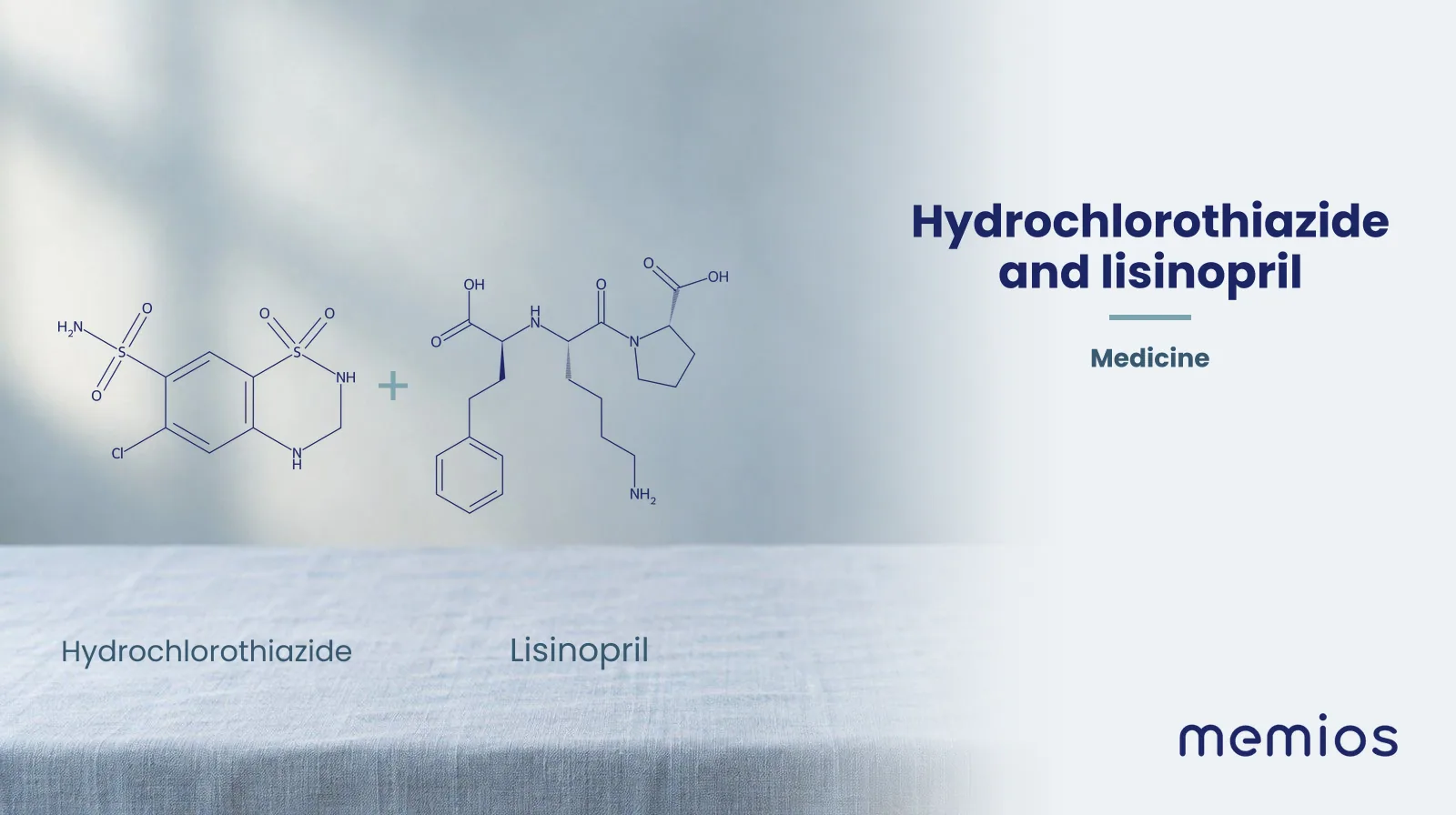
This is one tablet containing two different blood-pressure drugs. Hydrochlorothiazide is a thiazide diuretic, which acts on the kidney tubule: it "increases excretion of sodium and chloride in approximately equivalent amounts", and pharmacology reviews place its action at the sodium-chloride channel of the distal convoluted tubule. Lisinopril is an angiotensin-converting enzyme (ACE) inhibitor, which blocks the enzyme that makes angiotensin II. The fixed combination is approved in the United States only for treating high blood pressure.
What the research says
For blood pressure, the strongest evidence is for the thiazide half: a Cochrane review of first-line drugs found high-quality evidence that low-dose thiazides reduced death and cardiovascular events against placebo, with absolute numbers (mortality 11.0% on control versus 9.8% on treatment). For the ACE inhibitor half, the large ALLHAT trial found lisinopril was no better than a thiazide-type diuretic on the primary heart outcome and was worse on stroke, heart failure and combined cardiovascular disease. Lisinopril on its own (not this combination) has trial evidence after a heart attack. The known harms are electrolyte disturbance, gout, a persistent dry cough, angioedema, fetal toxicity, and an association between long-term hydrochlorothiazide and squamous cell skin cancer.
Evidence grade: Well established.
How it works
Drug class: Fixed-dose combination: thiazide diuretic (hydrochlorothiazide) plus angiotensin-converting enzyme inhibitor (lisinopril)
Lisinopril blocks angiotensin-converting enzyme, so less angiotensin II is made; blood vessels relax and the body holds on to less salt and water. Hydrochlorothiazide acts on the kidney and makes it pass more sodium and chloride into the urine, which lowers the volume of fluid in the circulation. Together they lower blood pressure by two different routes. (Source 1)
Boxed warning
When pregnancy is detected, discontinue lisinopril and hydrochlorothiazide as soon as possible. Drugs that act directly on the renin-angiotensin system can cause injury and death to the developing fetus.
(Source 1)
What it is used for
- Both components lower blood pressure, and the class evidence for low-dose thiazides against placebo shows fewer deaths, strokes and coronary events in absolute terms. In head-to-head randomisation, lisinopril was not better than a thiazide-type diuretic and did worse on stroke and heart failure. Evidence: established. (Source 2)
- In GISSI-3, lisinopril begun within 24 hours of a heart attack reduced 6-week mortality. This indication belongs to lisinopril alone; the fixed combination with hydrochlorothiazide is labelled only for hypertension. Evidence: established. (Source 3)
- Thiazides reduce the amount of calcium passed in the urine, which is the basis for using hydrochlorothiazide off-label in recurrent calcium stones. We did not retrieve stone-recurrence outcome trials in this search, so we report only the pharmacological effect, not an outcome benefit. Evidence: limited. (Source 1)
Interactions
- Lithium (label): Thiazides reduce how fast the kidney clears lithium, so lithium levels can climb into the toxic range. (Source 4)
- Potassium supplements, potassium-containing salt substitutes and potassium-sparing diuretics (label): Added to an ACE inhibitor these can push blood potassium high enough to cause dangerous heart rhythms. (Source 1)
- Non-steroidal anti-inflammatory drugs, including selective COX-2 inhibitors (ibuprofen, naproxen, celecoxib) (label): In the patients the label names - those who are elderly and volume-depleted, including people already on a diuretic, or who have compromised renal function - taking NSAIDs with an ACE inhibitor may worsen kidney function, including possible acute renal failure; the label says these effects are usually reversible. Separately, and without that population restriction, the label says NSAIDs may blunt the blood-pressure-lowering effect. (Source 1)
- Alcohol (and barbiturates or narcotic painkillers) (label): Increases the drop in blood pressure on standing, so dizziness and fainting are more likely. (Source 1)
- Calcium supplements (and vitamin D, which raises calcium absorption) (label): Thiazides make the kidney hold on to calcium, so blood calcium can rise, particularly if calcium is also being taken by mouth. (Source 1)
Stopping it
- The one stopping instruction carried in the boxed warning is about pregnancy: the label directs that the drug be stopped as soon as pregnancy is detected. We did not retrieve antihypertensive deprescribing trials (for example withdrawal trials in older adults) within this search, so nothing here should be read as evidence about routine stopping. (Source 1)
- For the cough specifically, the label records that it almost always goes away after the drug is discontinued. (Source 1)
What goes wrong
Long-term hydrochlorothiazide use was associated with cutaneous squamous cell carcinoma, with a dose-response pattern, but not with basal cell carcinoma or melanoma. (Source 5)
- Cohort study, Low certainty.
- Size: not stated in the passage retrieved (UK primary-care database cohort)
- Who: adults prescribed antihypertensive drugs.
- How long: cumulative-dose analyses over years of use.
- Result: cSCC HR 1.50 (95% CI 1.06-2.11); at cumulative dose >= 100,000 mg HR 4.96 (95% CI 2.51-9.81); BCC HR 1.01 (95% CI 0.91-1.13)
- Funding: not stated in the passage retrieved.
Use of hydrochlorothiazide was associated with an increased risk of cSCC and with evidence of a duration– and dose–response relationship. In contrast, no association was observed for BCC or melanoma.
Thiazides commonly disturb sodium and potassium and can precipitate gout. (Source 4)
- Expert review, not systematic, Low certainty.
- Size: not applicable (textbook chapter summarising class effects)
- Who: people taking thiazide diuretics.
- How long: hyponatremia described as typically appearing in the first 2 to 3 weeks.
- Result: no pooled rates given in the chapter; timing and direction of effect only.
- Funding: not stated.
Hyponatremia typically occurs within the first 2 to 3 weeks of therapy; afterward, the patient reaches a new steady state where further sodium and water losses are unlikely.
Gout can be precipitated by thiazide therapy. (Source 1)
- Official position, Certainty not rated.
- Size: not applicable.
- Who: patients receiving thiazide therapy.
- How long: not stated.
- Result: no rate given on the label.
- Funding: not applicable (manufacturer label)
Hyperuricemia may occur or frank gout may be precipitated in certain patients receiving thiazide therapy.
A persistent dry cough is a class effect of ACE inhibitors and resolves when the drug is stopped. (Source 1)
- Official position, Certainty not rated.
- Size: not given in the label passage.
- Who: people taking any ACE inhibitor.
- How long: not stated.
- Result: no incidence figure in the passage retrieved; the label's adverse-reaction table lists cough at 3.9% for the combination.
- Funding: not applicable (manufacturer label)
Presumably due to the inhibition of the degradation of endogenous bradykinin, persistent nonproductive cough has been reported with all ACE inhibitors, almost always resolving after discontinuation of therapy.
Angioedema from ACE inhibitors occurs more often in Black patients. (Source 1)
- Official position, Certainty not rated.
- Size: not given in the label passage.
- Who: people taking ACE inhibitors.
- How long: not stated.
- Result: no rate given in the passage retrieved.
- Funding: not applicable (manufacturer label)
ACE inhibitors have been associated with a higher rate of angioedema in black than in nonblack patients.
Drugs acting on the renin-angiotensin system can injure or kill a developing fetus, which is the basis of the boxed warning. (Source 1)
- Official position, Certainty not rated.
- Size: not applicable.
- Who: pregnant people.
- How long: not stated.
- Result: no rate given; the label directs discontinuation as soon as pregnancy is detected.
- Funding: not applicable (manufacturer label)
Drugs that act directly on the renin-angiotensin system can cause injury and death to the developing fetus.
The same overview that found 30-day death fell from 7.6% on control to 7.1% on an ACE inhibitor also found that early ACE inhibitor treatment after myocardial infarction roughly doubled persistent hypotension and renal dysfunction compared with control, so these harms sit alongside a net mortality benefit and must not be read on their own. (Source 6)
- Meta-analysis, Moderate certainty.
- Size: 96,712 patients across four trials.
- Who: patients randomised to an ACE inhibitor or control within 0 to 36 hours of acute myocardial infarction.
- How long: four to six weeks of treatment.
- Result: persistent hypotension 17.9% on ACE inhibitor versus 9.4% on control (absolute excess 8.5 percentage points, about 85 extra cases per 1,000 treated); renal dysfunction 1.3% versus 0.6% (absolute excess 0.7 percentage points, about 7 extra cases per 1,000 treated)
- Funding: not stated in the abstract retrieved.
Angiotensin-converting enzyme inhibitor produced definite increases in the incidence of persistent hypotension (17.9% ACEi vs. 9.4% control) and of renal dysfunction (1.3% ACEi vs. 0.6% control)
What the evidence supports
Against placebo, first-line low-dose thiazides reduced deaths, with the absolute rates given by the review. (Source 2)
- Systematic review, High certainty.
- Size: not stated in the passage retrieved; Cochrane review of first-line antihypertensive drug classes.
- Who: adults with moderate to severe primary hypertension.
- How long: trial durations not stated in the passage retrieved.
- Result: mortality 11.0% with control versus 9.8% with treatment; RR 0.89, 95% CI 0.82 to 0.97 (absolute difference 1.2 percentage points)
- Funding: not stated.
High-quality evidence showed that first-line low-dose thiazides reduced mortality (11.0% with control versus 9.8% with treatment; RR 0.89, 95% CI 0.82 to 0.97).
Low-dose thiazides also reduced total cardiovascular events, stroke and coronary heart disease against placebo, with absolute rates reported. (Source 2)
- Systematic review, High certainty.
- Size: not stated in the passage retrieved.
- Who: adults with moderate to severe primary hypertension.
- How long: not stated in the passage retrieved.
- Result: total CVS 12.9% versus 9.0% (RR 0.70, 95% CI 0.64 to 0.76); stroke 6.2% versus 4.2% (RR 0.68, 95% CI 0.60 to 0.77); CHD 3.9% versus 2.8% (RR 0.72, 95% CI 0.61 to 0.84)
- Funding: not stated.
total CVS (12.9% with control versus 9.0% with treatment; RR 0.70, 95% CI 0.64 to 0.76), stroke (6.2% with control versus 4.2% with treatment; RR 0.68, 95% CI 0.60 to 0.77), and coronary heart disease (3.9% with control versus 2.8% with treatment; RR 0.72, 95% CI 0.61 to 0.84).
In a systematic overview of individual patient data from four large trials of early ACE inhibitor treatment after acute myocardial infarction, 30-day death was 7.1% on an ACE inhibitor and 7.6% on control, an absolute difference of 0.5 percentage points and a 7% proportional reduction. (Source 6)
- Meta-analysis, Moderate certainty.
- Size: 96,712 patients with concomitant aspirin data, out of 98,496 randomised in four eligible trials (GISSI-3 among them)
- Who: patients randomly allocated to an ACE inhibitor or control starting in the acute phase of myocardial infarction, 0 to 36 hours from symptom onset.
- How long: treatment continued for four to six weeks; mortality counted at 30 days.
- Result: 30-day mortality 7.1% on ACE inhibitor versus 7.6% on control, a 7% (SD 2%) proportional reduction, 95% CI 2% to 11%, p = 0.004; that is an absolute reduction of about 0.5 percentage points, roughly 5 deaths avoided per 1,000 treated. The reduction was similar with aspirin (6%, SD 3%) and without it (10%, SD 5%), heterogeneity chi-squared 0.4, p = 0.5.
- Funding: not stated in the abstract retrieved; the overview was produced by the ACE Inhibitor Myocardial Infarction Collaborative Group using individual patient data from the trialists.
Overall 30-day mortality was 7.1% among patients allocated to ACEi and 7.6% among those allocated to control, corresponding to a 7% (standard deviation [SD], 2%) proportional reduction (95% confidence interval 2% to 11%, p = 0.004).
A report by the GISSI-3 investigators themselves records that among the 19,394 patients randomised, lisinopril started within 24 hours of acute myocardial infarction and continued for six weeks produced a statistically significant fall in six-week mortality of 7.5 lives saved per 1,000 patients treated. (Source 7)
- Randomized trial, Moderate certainty.
- Size: 19,394 relatively unselected patients with acute myocardial infarction.
- Who: relatively unselected patients admitted with acute myocardial infarction and enrolled in GISSI-3 in Italian coronary care units.
- How long: lisinopril begun within 24 hours and given for six weeks; mortality assessed at six weeks.
- Result: absolute reduction in mortality of 7.5 plus or minus 3.6 lives saved per 1,000 treated, with a 95% confidence interval running from 14.6 down to 0.4 lives saved per 1,000 treated; the cost per additional survivor was $US2080 (1993 values)
- Funding: the analysis was produced by the GISSI-3 investigators (Istituto di Ricerche Farmacologiche Mario Negri and the ANMCO research centre); no commercial sponsor is stated in the summary retrieved.
A statistically significant reduction in 6-week mortality was achieved among patients treated with lisinopril when compared with patients allocated to the control group (absolute reduction in mortality: 7.5 ± 3.6 lives saved per 1000 treated patients).
What the evidence does not support
Lisinopril was not better than a thiazide-type diuretic for the primary outcome of fatal coronary heart disease or non-fatal myocardial infarction. (Source 8)
- Randomized trial, High certainty.
- Size: 33,357 participants randomised; 2,956 primary outcome events.
- Who: people aged 55 or older with hypertension and at least one other coronary risk factor, in North America.
- How long: mean follow-up 4.9 years.
- Result: Primary outcome (fatal CHD or non-fatal MI) in 2956 participants with no difference between treatments; 6-year rates 11.5% chlorthalidone, 11.3% amlodipine, 11.4% lisinopril; RR 0.99 (95% CI, 0.91-1.08) for lisinopril vs chlorthalidone.
- Funding: not stated in the passage retrieved (ALLHAT was funded by the US National Heart, Lung, and Blood Institute)
The primary outcome occurred in 2956 participants, with no difference between treatments. Compared with chlorthalidone (6-year rate, 11.5%), the relative risks (RRs) were 0.98 (95% CI, 0.90-1.07) for amlodipine (6-year rate, 11.3%) and 0.99 (95% CI, 0.91-1.08) for lisinopril (6-year rate, 11.4%).
In the same trial lisinopril did worse than the diuretic on stroke, heart failure and combined cardiovascular disease. (Source 8)
- Randomized trial, High certainty.
- Size: 33,357 participants.
- Who: people aged 55 or older with hypertension and at least one other coronary risk factor.
- How long: 6-year event rates, mean follow-up 4.9 years.
- Result: combined CVD 33.3% versus 30.9% (RR 1.10, 95% CI 1.05-1.16); stroke 6.3% versus 5.6% (RR 1.15, 95% CI 1.02-1.30); heart failure 8.7% versus 7.7% (RR 1.19, 95% CI 1.07-1.31)
- Funding: not stated in the passage retrieved.
For lisinopril vs chlorthalidone, lisinopril had higher 6-year rates of combined CVD (33.3% vs 30.9%; RR, 1.10; 95% CI, 1.05-1.16); stroke (6.3% vs 5.6%; RR, 1.15; 95% CI, 1.02-1.30); and HF (8.7% vs 7.7%; RR, 1.19; 95% CI, 1.07-1.31).
Lisinopril also left systolic blood pressure about 2 mm Hg higher than the diuretic at five years. (Source 8)
- Randomized trial, High certainty.
- Size: 33,357 participants.
- Who: as above.
- How long: 5 years.
- Result: lisinopril 2 mm Hg higher systolic (P<.001); amlodipine 0.8 mm Hg higher (P=.03)
- Funding: not stated in the passage retrieved.
Five-year systolic blood pressures were significantly higher in the amlodipine (0.8 mm Hg, P=.03) and lisinopril (2 mm Hg, P<.001) groups compared with chlorthalidone
Where the evidence is mixed
The confidence interval around GISSI-3's six-week mortality benefit is wide, running from 14.6 lives saved per 1,000 treated down to 0.4, so the size of the benefit is uncertain even though it reached statistical significance. (Source 7)
- Randomized trial, Low certainty.
- Size: 19,394 patients randomised in GISSI-3.
- Who: relatively unselected patients with acute myocardial infarction.
- How long: six weeks of lisinopril begun within 24 hours.
- Result: 95% confidence interval for the absolute mortality reduction: 14.6 to 0.4 lives saved per 1,000 treated patients.
- Funding: GISSI-3 investigators; no commercial sponsor stated in the summary retrieved.
which ranged from 14.6 to 0.4 lives saved per 1000 treated patients
Where the research disagrees
Whether an ACE inhibitor or a thiazide-type diuretic should be the first drug for high blood pressure
- ALLHAT investigators (2002), large double-blind randomised active-controlled trial: Thiazide-type diuretics are superior in preventing 1 or more major forms of CVD and are less expensive. (Source 8)
- Cochrane first-line drugs review (Wright and colleagues, 2018), systematic review of placebo-controlled trials; the review rates the thiazide evidence highest and other classes lower: First-line low-dose thiazides reduced all morbidity and mortality outcomes in adult patients with moderate to severe primary hypertension. (Source 2)
How much
- Reference intake: There is no reference intake for a prescription medicine; the dose is set by the prescriber. As a position, the manufacturer's label (DailyMed, revision read October 2023) states that lisinopril monotherapy is effective in once-daily doses of 10 mg to 80 mg. (Source 1)
- Upper limit: As a position, the label describes lisinopril in doses of 10 mg to 80 mg once daily and hydrochlorothiazide component strengths of 12.5 to 50 mg; the page read did not print a single combined maximum-daily-dose sentence for the fixed combination. (Source 1)
- Studied: ALLHAT randomised participants to lisinopril 10-40 mg/d, chlorthalidone 12.5-25 mg/d or amlodipine 2.5-10 mg/d. (Source 8)
- Studied: GISSI-3 gave lisinopril starting within 24 hours of the onset of acute myocardial infarction symptoms. (Source 3)
A common belief, and what the research shows
The belief: All blood-pressure pills are interchangeable, so it does not matter which one you are on.
What the research shows: Randomisation says otherwise for this pair. In ALLHAT the ACE inhibitor arm had more strokes and more heart failure than the diuretic arm over six years: "For lisinopril vs chlorthalidone, lisinopril had higher 6-year rates of combined CVD (33.3% vs 30.9%; RR, 1.10; 95% CI, 1.05-1.16); stroke (6.3% vs 5.6%; RR, 1.15; 95% CI, 1.02-1.30); and HF (8.7% vs 7.7%; RR, 1.19; 95% CI, 1.07-1.31)." The differences are small in absolute terms but they are real, and the two drugs have completely different harms.
Questions and answers
What is it?
It is a single tablet holding two blood-pressure medicines: hydrochlorothiazide, a thiazide diuretic that acts on the kidney, and lisinopril, an ACE inhibitor. In the United States the combination is licensed for one purpose only. (Source 1)
What does it do in the body?
Lisinopril blocks the enzyme that makes angiotensin II, so blood vessels relax and less aldosterone is released. Hydrochlorothiazide makes the kidney pass more salt and water into the urine. The two effects together lower blood pressure. (Source 1)
Is it good or bad for you?
For people with raised blood pressure the thiazide component has high-quality placebo-controlled evidence of fewer deaths and fewer strokes, with small absolute differences. Against that sit real harms: electrolyte disturbance, gout, cough, angioedema, harm to a fetus, and squamous skin cancer with long thiazide exposure. It is not a drug with a benefit and no cost. (Source 2)
How do you get more of it?
This is a prescription-only medicine, so the only way to take it is on a prescription, and the dose is set by the prescriber. The doses studied in the big outcome trial were lisinopril 10-40 mg a day against chlorthalidone 12.5-25 mg a day. (Source 8)
If it is harmful, what reduces it?
When a specific harm appears, the literature's answer is to stop the drug rather than to counteract it: the ACE inhibitor cough, for example, almost always clears once the medicine is discontinued. Pregnancy is the one situation where the label itself directs immediate discontinuation. (Source 1)
Why might someone be low in it or missing it?
This question is about substances the body makes or takes in; it does not apply to a manufactured medicine. People stop taking it for reasons the evidence does describe, above all the ACE inhibitor cough, which is a class effect and a common reason for switching. (Source 1)
Which whole foods contain it or feed it?
No food contains either drug. Food matters here through interactions instead: potassium-containing salt substitutes act like a potassium supplement and can raise blood potassium dangerously when combined with an ACE inhibitor, and alcohol adds to the drop in blood pressure on standing. (Source 1)
What happens if you do not have it?
Without blood-pressure treatment, the trial evidence describes what the untreated arms experienced: in the placebo groups of the first-line trials, more people died and more had strokes and coronary events than in the treated groups. The absolute differences over the trials were of the order of one to three people in a hundred. (Source 2)
How can you test for it?
There is no routine blood test for the drug itself. What is monitored is its effect and its harms: blood pressure, and blood sodium and potassium, because thiazides drive both down. The pharmacology literature describes potassium monitoring in the first weeks of therapy and hyponatremia appearing in the first two to three weeks. (Source 4)
References
- US National Library of Medicine, DailyMed (manufacturer label; "Revised: October 2023"). LISINOPRIL AND HYDROCHLOROTHIAZIDE TABLETS USP - prescribing information (DailyMed). 2023. Read the source
- Cochrane Database of Systematic Reviews (Wright JM, Musini VM, Gill R). First-line drugs for hypertension (Cochrane Database of Systematic Reviews). 2018. PMID 29667175, DOI 10.1002/14651858.CD001841.pub3. Read the source
- American College of Cardiology, Latest in Cardiology clinical trial summaries (summarising GISSI-3, Lancet 1994). Effects of Lisinopril and Transdermal Glycerol Trinitrate Singly and Together on 6-week Mortality and Ventricular Function after AMI (GISSI-3) - trial summary. 2010. Read the source
- StatPearls Publishing, NCBI Bookshelf (Patel P, Preuss CV). Thiazide Diuretics (StatPearls). 2025. Read the source
- Drug Safety (Rouette J, Yin H, Pottegard A, Nirantharakumar K, Azoulay L). Use of Hydrochlorothiazide and Risk of Melanoma and Nonmelanoma Skin Cancer. 2021. PMID 33104975, DOI 10.1007/s40264-020-01015-1. Read the source
- Journal of the American College of Cardiology (ACE Inhibitor Myocardial Infarction Collaborative Group). Clinical effects of early angiotensin-converting enzyme inhibitor treatment for acute myocardial infarction are similar in the presence and absence of aspirin: systematic overview of individual data from 96,712 randomized patients. 2000. DOI 10.1016/S0735-1097(00)00638-0. Read the source
- PharmacoEconomics Italian Research Articles (Springer); analysis by the GISSI-3 investigators, Istituto di Ricerche Farmacologiche Mario Negri. Analisi costo-efficacia dell'impiego precoce di lisinopril nei pazienti con infarto miocardico acuto (Cost-effectiveness analysis of early lisinopril treatment in patients with acute myocardial infarction). 2000. DOI 10.1007/BF03320573. Read the source
- JAMA (ALLHAT Officers and Coordinators for the ALLHAT Collaborative Research Group). Major Outcomes in High-Risk Hypertensive Patients Randomized to Angiotensin-Converting Enzyme Inhibitor or Calcium Channel Blocker vs Diuretic: The Antihypertensive and Lipid-Lowering Treatment to Prevent Heart Attack Trial (ALLHAT). 2002. PMID 12479763, DOI 10.1001/jama.288.23.2981. Read the source