Medications · September 29, 2026 · Memios · 21 min read
Glipizide
Glipizide lowers blood glucose by making the pancreas release more insulin. Pooled trials show sulfonylureas as a class drop HbA1c by about 1.5 percentage points compared with placebo, which is a large glucose effect.
TLDR
- Well established. Glipizide lowers blood glucose by making the pancreas release more insulin. Pooled trials show sulfonylureas as a class drop HbA1c by about 1.5 percentage points compared with placebo, which is a large glucose effect.
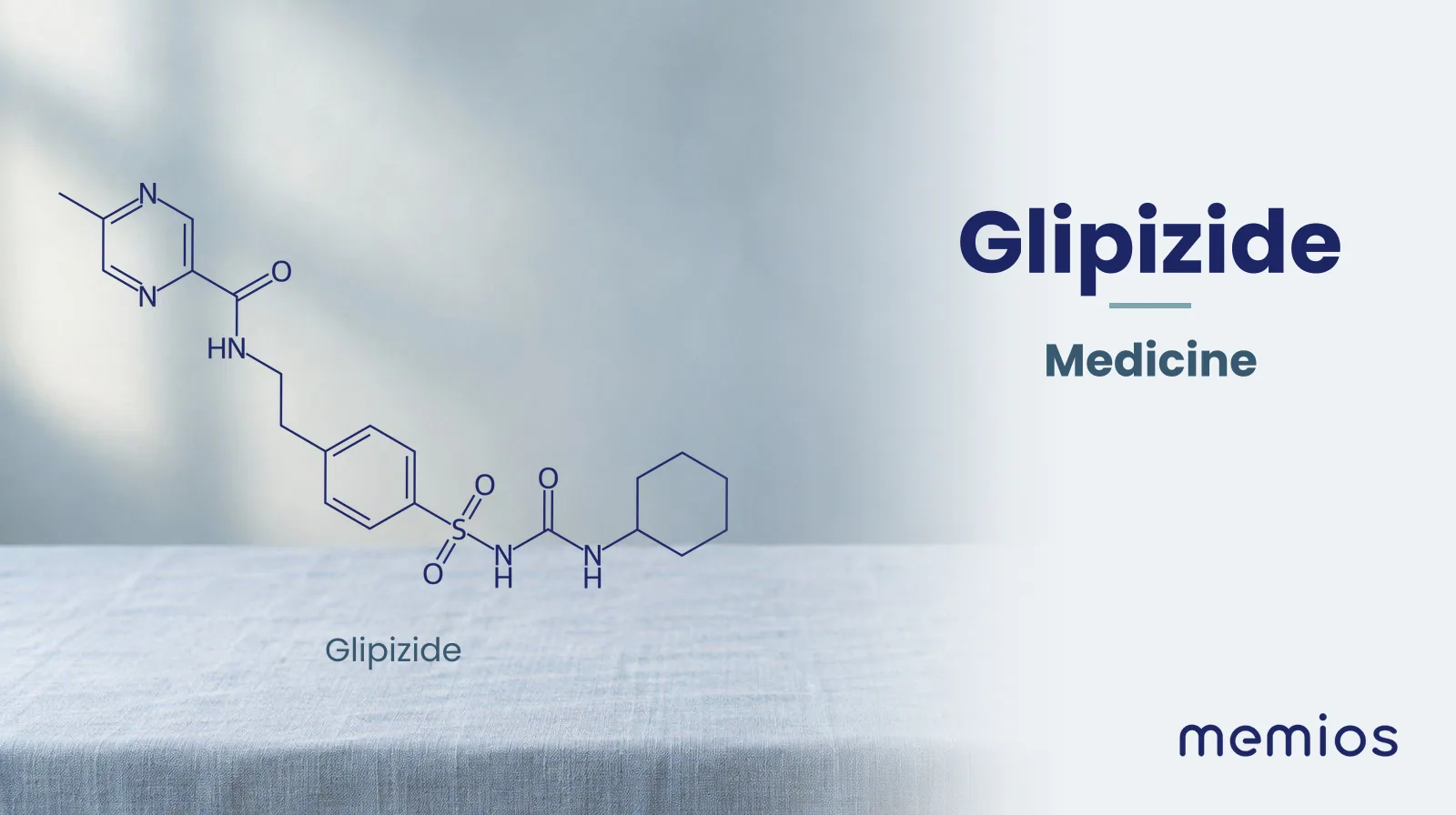
- What it is: Glipizide is a synthetic second-generation sulfonylurea taken as an immediate-release or extended-release tablet for type 2 diabetes.
- Main use: Type 2 diabetes mellitus, to improve glycaemic control alongside diet and exercise (well supported).
- Off-label uses (not on the FDA label): HNF1A and HNF4A maturity-onset diabetes of the young (monogenic diabetes) (limited evidence).
- Uses NOT supported by research: Reducing death or cardiovascular events in type 2 diabetes.
- Recommended dose: not established. There is no reference intake for glipizide; the dose is set by the prescriber. As a position, the 29 June 2026 US label for glipizide immediate-release tablets states a recommended starting dose of 5 mg before breakfast, with 2.5 mg for geriatric patients or those with liver disease.
- Studied dose (a trial dose, not a recommendation): UKPDS randomised newly diagnosed patients to an intensive policy with a sulphonylurea - chlorpropamide, glibenclamide or glipizide - or with insulin, against a conventional diet policy. No finding here cites that trial.
- Upper limit: No nutritional upper limit exists.
- What goes wrong: 8 findings on harm. In a six-year randomised cardiovascular outcome trial, more than a third of people on a sulfonylurea had at least one hypoglycaemic event.
- Interactions: 5 recorded, including Alcohol, Meals and meal timing, Aspirin and other salicylates, NSAIDs, azole antifungals, sulfonamides, quinolones, MAO inhibitors and warfarin-type anticoagulants, Beta-blockers.
- Common myth: Because glipizide brings blood sugar down well, it must be protecting the heart and kidneys as effectively as anything else.
What it is
Glipizide is a synthetic second-generation sulfonylurea taken as an immediate-release or extended-release tablet for type 2 diabetes. It works only if the pancreas still has functioning beta cells. Immediate-release tablets are usually taken before a meal because that is when the extra insulin is needed.
What the research says
Glipizide lowers blood glucose by making the pancreas release more insulin. Pooled trials show sulfonylureas as a class drop HbA1c by about 1.5 percentage points compared with placebo, which is a large glucose effect. What the evidence does not show is a clear benefit on death or heart attack: in UKPDS, intensive control with a sulfonylurea cut microvascular complications by 25% but not macrovascular disease, and head-to-head reviews find no mortality advantage over metformin. The cost is hypoglycaemia - several times more common than with comparator drugs - plus weight gain. One 2022 meta-analysis singled out glipizide as the sulfonylurea with an increased risk of all-cause mortality in sensitivity analysis.
Evidence grade: Well established.
How it works
Drug class: Second-generation sulfonylurea (insulin secretagogue)
Glipizide makes the insulin-producing beta cells of the pancreas release more insulin. It only works if those cells are still functioning, which is why it loses effect as type 2 diabetes progresses. Because the extra insulin is released whether or not you have eaten, blood sugar can fall too low. (Source 1)
What it is used for
- Glucose lowering is well established: pooled trials put sulfonylurea monotherapy at 1.51 percentage points of HbA1c below placebo. In UKPDS, intensive control with a sulfonylurea reduced microvascular endpoints by 25%, but not heart attacks or death. Evidence: established. (Source 2)
- A Cochrane-based review of sulfonylurea versus metformin found no significant effect on all-cause or cardiovascular mortality, and a 2022 meta-analysis of head-to-head trials found higher odds of death and major cardiovascular events versus low-hypoglycaemia comparators, with the mortality signal specific to glipizide in sensitivity analysis. CAROLINA showed glimepiride was non-inferior to linagliptin for cardiovascular outcomes, so the class is not clearly harmful either. Evidence: not-supported. (Source 3)
- Sulfonylureas are the recommended treatment for people with HNF1A or HNF4A mutations, where they work better than they do in ordinary type 2 diabetes. The recommendation rests on small studies and guideline consensus rather than large outcome trials. Evidence: limited. (Source 4)
Interactions
- Alcohol (label): Some older sulfonylureas cause flushing after alcohol. The glipizide label states this is uncommon with glipizide specifically. Alcohol can still cause hypoglycaemia in its own right by blunting the liver's glucose production, which is the same mechanism the label cites for hepatic impairment. (Source 5)
- Meals and meal timing (label): Immediate-release glipizide is absorbed and acts best when taken about half an hour before eating; taken without a meal it can drop blood sugar too far. (Source 6)
- Aspirin and other salicylates, NSAIDs, azole antifungals, sulfonamides, quinolones, MAO inhibitors and warfarin-type anticoagulants (label): These can amplify glipizide's glucose-lowering effect and cause hypoglycaemia, mostly by competing for protein binding or slowing its breakdown. (Source 7)
- Beta-blockers (label): Beta-blockers can mask the warning signs of a low blood sugar, so a hypo can go unnoticed until it is severe. The same applies with age. (Source 8)
- Herbal supplements (St John's wort, ginkgo, bitter melon, fenugreek, cinnamon, gymnema, ginseng, garlic, aloe vera and others) (theoretical): A review of herb-sulfonylurea interactions reports that some herbs speed up or slow the liver enzymes that clear sulfonylureas, and others lower blood glucose themselves so they could add to the drug's effect. The review is a narrative summary of interaction potential rather than a set of measured human pharmacokinetic studies, so the evidence is weak and mostly theoretical. (Source 9)
Stopping it
- There is remarkably little controlled evidence about stopping glucose-lowering drugs. A systematic review looking specifically for deprescribing studies in older adults found only two controlled before-and-after studies, both of very low quality; stopping in nursing home residents produced only a non-significant rise in HbA1c and no significant change in hypoglycaemia. (Source 10)
- The same review concluded that the evidence to guide stopping is simply not there yet, and called for adequately powered trials in older people with clinically important outcomes. (Source 10)
- There is no described withdrawal syndrome from glipizide itself. What returns on stopping is the underlying hyperglycaemia, since the drug works only while it is stimulating insulin release. (Source 1)
What goes wrong
Sulfonylureas caused several times more hypoglycaemia than metformin, including severe episodes. (Source 3)
- Systematic review, Low certainty.
- Size: 14 trials, 4,560 participants.
- Who: Adults with type 2 diabetes.
- How long: trials of varying length.
- Result: Mild hypoglycaemia RR 2.95 (95% CI 2.13 to 4.07); severe hypoglycaemia RR 5.64 (95% CI 1.22 to 26.00); greater weight gain than metformin.
- Funding: independent.
Significantly more patients in the sulfonylurea arm than in the metformin arm had mild hypoglycemia (RR 2.95, 95% CI 2.13 to 4.07) and severe hypoglycemia (RR 5.64, 95% CI 1.22 to 26.00).
In a six-year randomised cardiovascular outcome trial, more than a third of people on a sulfonylurea had at least one hypoglycaemic event. (Source 11)
- Randomized trial, High certainty.
- Size: 6,033 participants treated and analysed.
- Who: Adults with relatively early type 2 diabetes and elevated cardiovascular risk.
- How long: median 6.3 years.
- Result: At least one hypoglycaemic adverse event: 1,132 (37.7%) on glimepiride vs 320 (10.6%) on linagliptin; HR 0.23 (95% CI 0.21-0.26)
- Funding: industry-funded (Boehringer Ingelheim and Eli Lilly)
At least 1 episode of hypoglycemic adverse events occurred in 320 (10.6%) participants in the linagliptin group and 1132 (37.7%) in the glimepiride group (HR, 0.23 [95% CI, 0.21-0.26]).
A 2022 meta-analysis of head-to-head trials found higher odds of death, major cardiovascular events and hypoglycaemia with sulfonylureas, with the mortality signal specific to glipizide. (Source 12)
- Meta-analysis, Low certainty.
- Size: 31 studies, 26,204 patients (11,711 on sulfonylureas)
- Who: Adults with type 2 diabetes in head-to-head trials.
- How long: varied.
- Result: All-cause mortality OR 1.32 (95% CI 1.00-1.75); MACE OR 1.32 (95% CI 1.07-1.61); myocardial infarction OR 1.67 (95% CI 1.17-2.38); hypoglycaemia OR 5.24 (95% CI 4.20-6.55)
- Funding: not stated.
Subsequent sensitivity analysis revealed differences in the effect of sulfonylureas, with an increased risk of all-cause mortality with glipizide but not the other molecules.
Sulfonylurea treatment in UKPDS caused major hypoglycaemic episodes at about 1-1.4% per year and added weight. (Source 13)
- Randomized trial, High certainty.
- Size: 3,867 newly diagnosed patients.
- Who: Newly diagnosed type 2 diabetes.
- How long: 10 years.
- Result: Major hypoglycaemic episodes per year: 0.7% conventional, 1.0% chlorpropamide, 1.4% glibenclamide, 1.8% insulin; mean weight gain 2.9 kg in the intensive group.
- Funding: independent.
The rates of major hypoglycaemic episodes per year were 0·7% with conventional treatment, 1·0% with chlorpropamide, 1·4% with glibenclamide, and 1·8% with insulin.
Gastrointestinal upset is the most common side effect on the glipizide label, and the label says it looks dose-related and may settle if the dose is divided or reduced. (Source 14)
- Official position, Certainty not rated.
- Size: not stated on the label.
- Who: People taking glipizide tablets.
- How long: not stated.
- Result: Nausea and diarrhoea about one in seventy; constipation and gastralgia about one in one hundred; the label describes these as dose-related and as possibly resolving on dividing or reducing the dose.
- Funding: not applicable.
Gastrointestinal complaints were reported with the following approximate incidence: nausea and diarrhea, one in seventy; constipation and gastralgia, one in one hundred. They appear to be dose-related and may disappear on division or reduction of dosage.
Kidney or liver impairment raises glipizide levels and the risk of serious hypoglycaemia; the elderly are especially susceptible. (Source 15)
- Official position, Certainty not rated.
- Size: not applicable.
- Who: Older, frail or malnourished people and those with renal or hepatic impairment.
- How long: not applicable.
- Result: No rate given; a labelling warning.
- Funding: not applicable.
Renal or hepatic insufficiency may cause elevated blood levels of glipizide and the latter may also diminish gluconeogenic capacity, both of which increase the risk of serious hypoglycemic reactions.
Older, frail or malnourished people are especially susceptible to hypoglycaemia from glucose-lowering drugs. (Source 16)
- Official position, Certainty not rated.
- Size: not applicable.
- Who: Elderly, debilitated or malnourished people and those with adrenal or pituitary insufficiency.
- How long: not applicable.
- Result: No rate given; a labelling warning.
- Funding: not applicable.
Elderly, debilitated or malnourished patients, and those with adrenal or pituitary insufficiency, are particularly susceptible to the hypoglycemic action of glucose-lowering drugs.
The glipizide label carries a class warning that oral blood-sugar-lowering drugs have been reported to be associated with higher cardiovascular death than diet alone or diet plus insulin. (Source 17)
- Official position, Very low certainty.
- Size: not stated on the label.
- Who: People taking oral hypoglycaemic drugs, as a class.
- How long: not stated.
- Result: No effect estimate is given in the label sentence itself.
- Funding: not applicable.
Limit of this finding: Read the wording carefully: the label says such an association has been reported, for oral blood-sugar drugs as a class, not that glipizide has been shown to cause cardiovascular death. This is the long-standing class warning that US sulfonylurea labels have carried since an older trial of a different, now-withdrawn drug in this class, and it is an observed association rather than a demonstrated causal effect of glipizide. The randomised evidence summarised elsewhere in this write-up is mixed and does not settle the question: UKPDS reported no adverse cardiovascular effect from the individual drugs, CAROLINA found a sulfonylurea non-inferior to a comparator over a median 6.3 years, while a 2022 meta-analysis of head-to-head trials did raise a safety concern. Nobody should conclude from this label sentence alone either that glipizide raises the risk of cardiovascular death or that it has been cleared of it.
The administration of oral hypoglycemic drugs has been reported to be associated with increased cardiovascular mortality as compared to treatment with diet alone or diet plus insulin.
What the evidence supports
Sulfonylurea monotherapy lowered HbA1c by 1.51 percentage points more than placebo. (Source 2)
- Meta-analysis, Moderate certainty.
- Size: nine trials for the monotherapy comparison.
- Who: Adults with diabetes.
- How long: trials of varying length.
- Result: HbA1c 1.51% (17 mmol/mol) lower than placebo, 95% CI 1.25 to 1.78.
- Funding: not stated.
Sulfonylurea monotherapy (nine trials) lowered HbA1c by 1.51% (17 mmol/mol) more than placebo (95% CI, 1.25, 1.78).
Added to other oral treatment, sulfonylureas lowered HbA1c by a further 1.62 percentage points. (Source 18)
- Meta-analysis, Moderate certainty.
- Size: four add-on trials; 17 insulin add-on trials.
- Who: Adults with diabetes already on other treatment.
- How long: trials of varying length.
- Result: Add-on to oral treatment: HbA1c 1.62% (18 mmol/mol) lower, 95% CI 1.0 to 2.24; add-on to insulin: 0.46% lower, 95% CI 0.24 to 0.69.
- Funding: not stated.
Sulfonylureas added to oral diabetes treatment (four trials) lowered HbA1c by 1.62% (18 mmol/mol; 95% CI 1.0, 2.24) compared with the other treatment
In UKPDS, intensive glucose control with a sulfonylurea or insulin cut microvascular complications by a quarter. (Source 13)
- Randomized trial, High certainty.
- Size: 3,867 newly diagnosed patients.
- Who: Newly diagnosed type 2 diabetes, median age 54.
- How long: 10 years.
- Result: Microvascular endpoints 25% risk reduction (95% CI 7-40, p=0.0099); any diabetes-related endpoint 12% lower (95% CI 1-21, p=0.029)
- Funding: independent (UK Prospective Diabetes Study Group, multiple public and charitable funders)
Most of the risk reduction in the any diabetes-related aggregate endpoint was due to a 25% risk reduction (7–40, p=0·0099) in microvascular endpoints, including the need for retinal photocoagulation.
For HNF1A-MODY specifically, ISPAD/IDF and ADA guidelines recommend sulphonylureas as first-line treatment. (Source 19)
- Official position, Low certainty.
- Size: systematic review of MODY treatment literature.
- Who: People with HNF1A maturity-onset diabetes of the young (the section of the review this sentence comes from)
- How long: not applicable.
- Result: No pooled effect estimate; guideline recommendation based on small studies.
- Funding: not stated.
Limit of this finding: This recommendation is printed in the review's HNF1A-MODY section and applies to that subtype. It does not apply to MODY as a whole. The same review states that treatment is usually unnecessary for people with GCK mutations, another common MODY subtype, so reading this sentence as a general MODY recommendation would point people with GCK-MODY towards a drug they do not need. A companion sentence in the review's abstract extends oral sulphonylureas to HNF4A as well.
The International Society for Pediatric and Adolescent Diabetes/International Diabetes Federation and the American Diabetes Association guidelines recommend sulphonylureas as first-line treatment
What the evidence does not support
Intensive glucose control with a sulfonylurea did not reduce macrovascular disease in UKPDS. (Source 20)
- Randomized trial, High certainty.
- Size: 3,867 newly diagnosed patients.
- Who: Newly diagnosed type 2 diabetes.
- How long: 10 years.
- Result: Any diabetes-related death 10% lower (95% CI -11 to 27, p=0.34); all-cause mortality 6% lower (95% CI -10 to 20, p=0.44); neither significant.
- Funding: independent.
Intensive blood-glucose control by either sulphonylureas or insulin substantially decreases the risk of microvascular complications, but not macrovascular disease, in patients with type 2 diabetes.
Against metformin, sulfonylureas showed no significant effect on all-cause or cardiovascular mortality, on high-risk-of-bias evidence. (Source 3)
- Systematic review, Very low certainty.
- Size: 14 trials, 4,560 participants.
- Who: Adults with type 2 diabetes.
- How long: trials of varying length.
- Result: All-cause mortality RR 0.98 (95% CI 0.61 to 1.58); cardiovascular mortality RR 1.47 (95% CI 0.54 to 4.01); no difference in HbA1c in the random-effects model.
- Funding: independent (Cochrane methodology)
Compared with metformin, sulfonylurea did not significantly affect all-cause mortality (relative risk [RR] 0.98, 95% confidence interval [CI] 0.61 to 1.58) or cardiovascular mortality (RR 1.47, 95% CI 0.54 to 4.01).
The evidence base comparing sulfonylureas with metformin was judged too sparse and inconsistent to settle benefits and harms. (Source 21)
- Systematic review, Very low certainty.
- Size: 14 trials, 4,560 participants.
- Who: Adults with type 2 diabetes.
- How long: trials of varying length.
- Result: All included trials at high risk of bias; data on patient-important outcomes sparse.
- Funding: independent.
In general, the available data were too few and inconsistent to provide firm evidence concerning patient-important outcomes in relation to the benefits and harms of sulfonylurea versus metformin monotherapy.
There is almost no controlled evidence on how to stop or reduce glucose-lowering drugs safely. (Source 10)
- Systematic review, Very low certainty.
- Size: two controlled before-and-after studies.
- Who: Older adults with type 2 diabetes.
- How long: varied.
- Result: Both studies very low quality; cessation in nursing home patients gave a non-significant rise in HbA1c; no significant change in hypoglycaemia rate in the only study reporting it.
- Funding: independent.
We identified two controlled before-and-after studies, both of very low quality.
Where the evidence is mixed
A large randomised cardiovascular outcome trial found a sulfonylurea non-inferior, not superior or inferior, to a DPP-4 inhibitor for major cardiovascular events. (Source 22)
- Randomized trial, High certainty.
- Size: 6,033 participants.
- Who: Adults with type 2 diabetes and elevated cardiovascular risk.
- How long: median 6.3 years.
- Result: Primary composite outcome 12.0% glimepiride vs 11.8% linagliptin; HR 0.98 (95.47% CI 0.84-1.14), non-inferiority p<0.001.
- Funding: industry-funded (Boehringer Ingelheim and Eli Lilly)
356 of 3023 participants (11.8%) in the linagliptin group and 362 of 3010 (12.0%) in the glimepiride group (HR, 0.98 [95.47% CI, 0.84-1.14]; P < .001 for noninferiority)
Where the research disagrees
Whether sulfonylureas increase cardiovascular death
- 2022 meta-analysis of head-to-head trials, meta-analysis of randomised head-to-head trials: Our meta-analysis raises concern about the safety of SUs compared to alternative drugs involved in current analysis. Important differences may exist within the drug class, and glimepiride seems to have best safety profile. (Source 23)
- CAROLINA investigators, randomised, double-blind cardiovascular outcome trial: Among adults with relatively early type 2 diabetes and elevated cardiovascular risk, the use of linagliptin compared with glimepiride over a median 6.3 years resulted in a noninferior risk of a composite cardiovascular outcome. (Source 24)
- UKPDS investigators, randomised controlled trial over 10 years: None of the individual drugs had an adverse effect on cardiovascular outcomes. (Source 20)
How much
- Reference intake: There is no reference intake for glipizide; the dose is set by the prescriber. As a position, the 29 June 2026 US label for glipizide immediate-release tablets states a recommended starting dose of 5 mg before breakfast, with 2.5 mg for geriatric patients or those with liver disease. That figure is for the immediate-release tablet only and does not apply to glipizide extended-release tablets, which are a different product with their own dosing. (Source 25)
- Upper limit: No nutritional upper limit exists. As a position, the 29 June 2026 US label for glipizide immediate-release tablets sets a maximum recommended once-daily dose of 15 mg, says doses above 15 mg should ordinarily be divided and given before meals, and sets a maximum recommended total daily dose of 40 mg. The 40 mg figure is a total across divided doses, not a single dose. (Source 26)
- Studied: UKPDS randomised newly diagnosed patients to an intensive policy with a sulphonylurea - chlorpropamide, glibenclamide or glipizide - or with insulin, against a conventional diet policy. (Source 27)
- Studied: CAROLINA compared glimepiride, a different sulfonylurea, with linagliptin over a median 6.3 years in 6,033 people. (Source 24)
A common belief, and what the research shows
The belief: Because glipizide brings blood sugar down well, it must be protecting the heart and kidneys as effectively as anything else.
What the research shows: Lowering HbA1c and improving outcomes are not the same thing. UKPDS showed intensive control with a sulfonylurea 'substantially decreases the risk of microvascular complications, but not macrovascular disease'. Against metformin, sulfonylureas showed no mortality advantage and 'Significantly more patients in the sulfonylurea arm than in the metformin arm had mild hypoglycemia (RR 2.95, 95% CI 2.13 to 4.07) and severe hypoglycemia (RR 5.64, 95% CI 1.22 to 26.00).' One 2022 meta-analysis found the increased all-cause mortality signal within the class was specific to glipizide.
Questions and answers
What is it?
Glipizide is a manufactured second-generation sulfonylurea tablet for type 2 diabetes, sold in immediate-release and extended-release forms. Its approved role is as an addition to diet and exercise to improve blood glucose control in adults. (Source 28)
What does it do in the body?
It makes the beta cells of the pancreas release more insulin, which lowers blood glucose. It only works while those cells still function, so its effect fades as diabetes progresses. (Source 1)
Is it good or bad for you?
Good for glucose - about 1.5 HbA1c points below placebo - and good for microvascular complications in UKPDS. Less good for hard cardiovascular outcomes, where it shows no clear advantage, and actively risky for hypoglycaemia: more than a third of people on a sulfonylurea in CAROLINA had at least one hypoglycaemic event over six years. (Source 11)
How do you get more of it?
Glipizide is a prescription medicine, so there is no way to get more of it outside a prescription. The immediate-release label's position is a starting dose of 5 mg before breakfast, a maximum of 15 mg in any single daily dose, and a maximum of 40 mg as a total daily dose split across doses given before meals. (Source 26)
If it is harmful, what reduces it?
If glipizide is causing low blood sugars, the exposure is reduced by a prescriber lowering the dose or stopping it. The honest answer about stopping is that the evidence is thin: a systematic review of deprescribing found only two very low quality controlled studies. (Source 10)
Why might someone be low in it or missing it?
Not applicable in the nutritional sense - nobody is deficient in glipizide. What varies is exposure: kidney or liver impairment raises blood levels of the drug, which is a reason the same dose behaves very differently between people. (Source 15)
Which whole foods contain it or feed it?
No food contains glipizide. What food does affect is when it should be taken: the label position is about thirty minutes before a meal, so the extra insulin arrives with the food rather than without it. (Source 6)
What happens if you do not have it?
Without glucose-lowering treatment, blood sugar runs higher and microvascular complications become more likely. In UKPDS, adding intensive control with a sulfonylurea or insulin cut microvascular endpoints by a quarter compared with diet-based conventional care. (Source 13)
How can you test for it?
The effect of glipizide is monitored by blood glucose and by HbA1c, which is what every trial in this monograph used as its outcome - UKPDS reported HbA1c of 7.0% in the intensive group versus 7.9% conventionally. There is no test of glipizide levels in routine care. (Source 13)
References
- DailyMed (REMEDYREPACK INC.); label effective 29 June 2026. GLIPIZIDE tablet - CLINICAL PHARMACOLOGY, mode of action. 2026. Read the source
- Diabetologia. Estimating the effect of sulfonylurea on HbA1c in diabetes: a systematic review and meta-analysis (monotherapy). 2013. PMID 23494446. Read the source
- CMAJ Open. Sulfonylurea versus metformin monotherapy in patients with type 2 diabetes: a Cochrane systematic review and meta-analysis of randomized clinical trials and trial sequential analysis (Results). 2014. Read the source
- Diabetes Therapy. Treatment Options for MODY Patients: A Systematic Review of Literature (abstract). 2020. Read the source
- DailyMed (REMEDYREPACK INC.); label effective 29 June 2026. GLIPIZIDE tablet - alcohol (disulfiram-like reaction). 2026. Read the source
- DailyMed (REMEDYREPACK INC.); label effective 29 June 2026. GLIPIZIDE tablet - timing with meals. 2026. Read the source
- DailyMed (REMEDYREPACK INC.); label effective 29 June 2026. GLIPIZIDE tablet - drugs that may potentiate the hypoglycemic action of sulfonylureas. 2026. Read the source
- DailyMed (REMEDYREPACK INC.); label effective 29 June 2026. GLIPIZIDE tablet - recognition of hypoglycemia. 2026. Read the source
- Journal of Herbmed Pharmacology. Pharmacologically relevant drug interactions of sulfonylurea antidiabetics with common herbs. 2018. DOI 10.15171/jhp.2018.32. Read the source
- Diabetes Therapy. Lack of Evidence to Guide Deprescribing of Antihyperglycemics: A Systematic Review. 2016. Read the source
- JAMA. CAROLINA Randomized Clinical Trial (hypoglycaemia). 2019. PMID 31536101. Read the source
- BMC Endocrine Disorders. Systematic review and meta-analysis of head-to-head trials comparing sulfonylureas and low hypoglycaemic risk antidiabetic drugs (Results). 2022. Read the source
- The Lancet (UK Prospective Diabetes Study Group). UKPDS 33 (Findings). 1998. PMID 9742976. Read the source
- DailyMed (REMEDYREPACK INC.); label effective 29 June 2026. GLIPIZIDE tablet - ADVERSE REACTIONS, gastrointestinal. 2026. Read the source
- DailyMed (REMEDYREPACK INC.); label effective 29 June 2026. GLIPIZIDE tablet - renal or hepatic insufficiency. 2026. Read the source
- DailyMed (REMEDYREPACK INC.); label effective 29 June 2026. GLIPIZIDE tablet - susceptibility to hypoglycemia. 2026. Read the source
- DailyMed (REMEDYREPACK INC.); label effective 29 June 2026. GLIPIZIDE tablet - SPECIAL WARNING ON INCREASED RISK OF CARDIOVASCULAR MORTALITY. 2026. Read the source
- Diabetologia. Estimating the effect of sulfonylurea on HbA1c in diabetes (add-on therapy). 2013. PMID 23494446. Read the source
- Diabetes Therapy. Treatment Options for MODY Patients: A Systematic Review of Literature (guideline position). 2020. Read the source
- The Lancet (UK Prospective Diabetes Study Group). UKPDS 33 (Interpretation). 1998. PMID 9742976. Read the source
- CMAJ Open. Sulfonylurea versus metformin monotherapy in patients with type 2 diabetes (Interpretation). 2014. Read the source
- JAMA. Effect of Linagliptin vs Glimepiride on Major Adverse Cardiovascular Outcomes in Patients With Type 2 Diabetes: The CAROLINA Randomized Clinical Trial (primary outcome). 2019. PMID 31536101. Read the source
- BMC Endocrine Disorders. Systematic review and meta-analysis of head-to-head trials comparing sulfonylureas and low hypoglycaemic risk antidiabetic drugs (Conclusion). 2022. Read the source
- JAMA. CAROLINA Randomized Clinical Trial (conclusions). 2019. PMID 31536101. Read the source
- DailyMed (REMEDYREPACK INC.); label effective 29 June 2026. GLIPIZIDE tablet - DOSAGE AND ADMINISTRATION, starting dose. 2026. Read the source
- DailyMed (REMEDYREPACK INC.); label effective 29 June 2026. GLIPIZIDE tablet - DOSAGE AND ADMINISTRATION, maximum dose. 2026. Read the source
- The Lancet (UK Prospective Diabetes Study Group). Intensive blood-glucose control with sulphonylureas or insulin compared with conventional treatment and risk of complications in patients with type 2 diabetes (UKPDS 33). 1998. PMID 9742976. Read the source
- DailyMed (REMEDYREPACK INC.); label effective 29 June 2026. GLIPIZIDE tablet - INDICATIONS AND USAGE. 2026. Read the source