Medications · September 30, 2026 · Memios · 13 min read
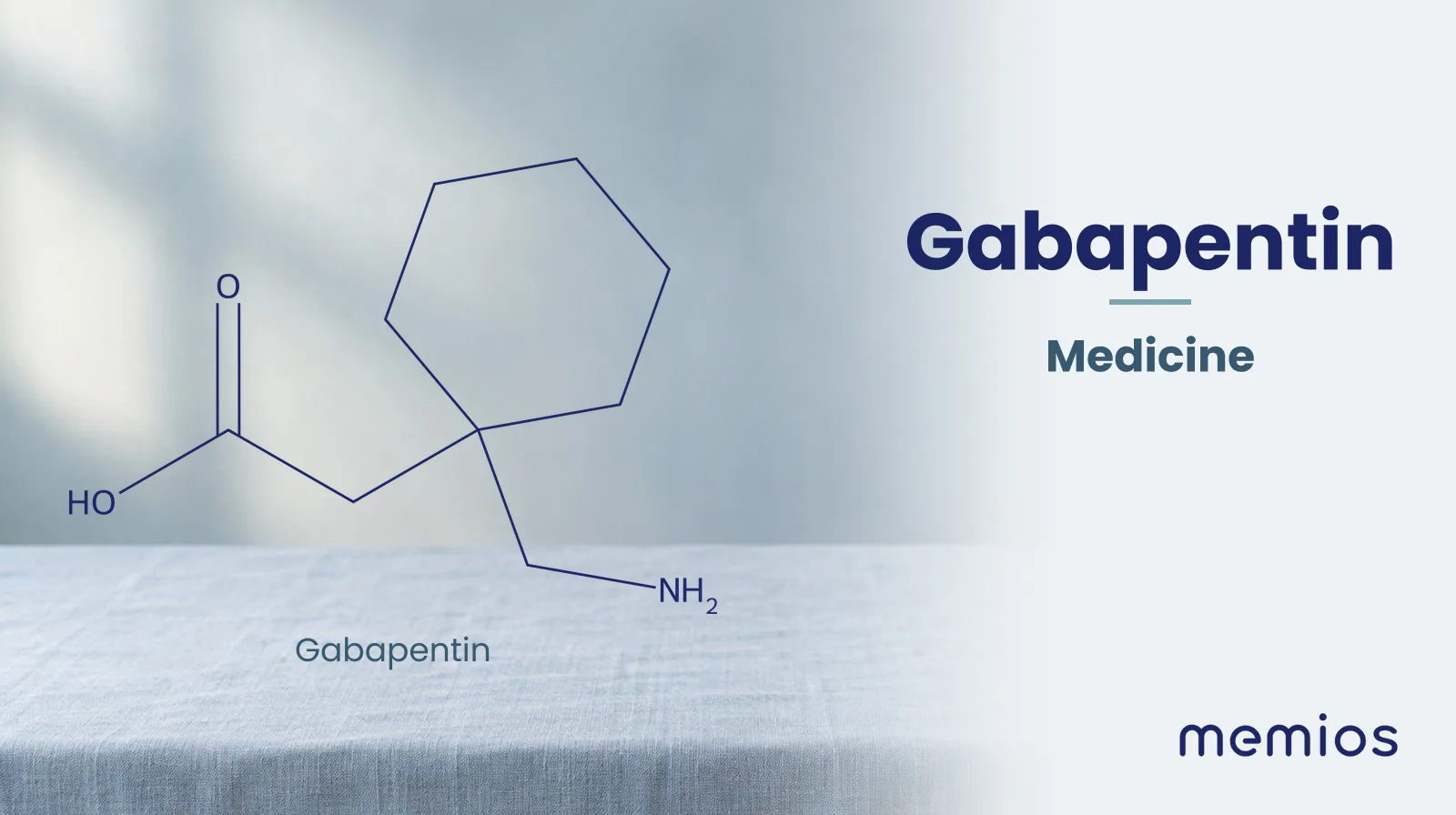
Gabapentin
For postherpetic neuralgia and painful diabetic neuropathy, Cochrane found moderate-quality evidence that roughly 1 more person in 6 or 7 gets substantial pain relief than on placebo.
TLDR
- Limited evidence. For postherpetic neuralgia and painful diabetic neuropathy, Cochrane found moderate-quality evidence that roughly 1 more person in 6 or 7 gets substantial pain relief than on placebo, and more than half of people get no worthwhile relief.
- What it is: Gabapentin is a prescription anticonvulsant.
- Main use: Postherpetic neuralgia (pain after shingles) (well supported).
- Other approved uses: Partial-onset seizures, add-on therapy (well supported).
- Off-label uses (not on the FDA label): Painful diabetic neuropathy (well supported); Other neuropathic pain (limited evidence); Fibromyalgia (limited evidence).
- Uses NOT supported by research: Chronic low back pain.
- Recommended dose (official position): Dosing is set by the prescriber. As a position, the FDA label (revised 4/2025) gives a maintenance dose of 300 mg to 600 mg three times a day for epilepsy in people 12 and older, and titration up to 1,800 mg/day for postherpetic neuralgia.
- Studied dose (a trial dose, not a recommendation): The Cochrane neuropathic pain analyses pooled trials using 1,200 mg daily or more. Findings citing that trial: 2 for, 1 against, 2 mixed.
- Upper limit: The label notes doses up to 2,400 mg/day were given in long-term epilepsy studies.
- What goes wrong: 5 findings on harm. An analysis of Pfizer/Parke-Davis internal documents found selective outcome reporting in industry trials of gabapentin for off-label uses, which inflates the apparent evidence.
- Interactions: 2 recorded, including Opioids and other CNS depressants, Magnesium and aluminium antacids (e.g. Maalox).
- Common myth: Gabapentin is a safe, non-addictive painkiller that works for most kinds of pain.
What it is
Gabapentin is a prescription anticonvulsant. The US label approves it for pain after shingles (postherpetic neuralgia) and as add-on treatment for partial-onset seizures. Most prescribing is off-label, mostly for other kinds of pain.
What the research says
For postherpetic neuralgia and painful diabetic neuropathy, Cochrane found moderate-quality evidence that roughly 1 more person in 6 or 7 gets substantial pain relief than on placebo, and more than half of people get no worthwhile relief. For other nerve pain, fibromyalgia and chronic low back pain, the evidence is very limited or shows no benefit. Much of the early off-label evidence was distorted by the manufacturer's selective reporting, which led to a criminal guilty plea in 2004. Harms include dizziness, drowsiness and falls. Combined with opioids it is linked to a higher risk of opioid-related death. Misuse and withdrawal also occur.
Evidence grade: Limited evidence.
How it works
Drug class: Gabapentinoid (anticonvulsant; α2δ calcium-channel ligand)
Gabapentin binds to a subunit (α2δ) of calcium channels on nerve cells, which is thought to dampen nerve signalling. The label says the exact way this relieves pain or seizures is unknown. (Source 1)
What it is used for
- Moderate-quality Cochrane evidence: 32% had at least 50% pain relief on 1,200 mg/day or more versus 17% on placebo (NNT 6.7). Evidence: established. (Source 2)
- Cochrane found that add-on gabapentin reduced seizures, with low- to moderate-quality evidence. Evidence: established. (Source 3)
- Off-label in the US for gabapentin itself. Moderate-quality Cochrane evidence: 38% vs 21% had substantial relief (NNT 5.9). Evidence: established. (Source 2)
- Cochrane: evidence for other types of neuropathic pain is very limited. Evidence: limited. (Source 2)
- A single small study; Cochrane rated the evidence very low. Evidence: limited. (Source 4)
- Meta-analysis of RCTs found no demonstrated benefit and more adverse effects (very low to moderate GRADE). Evidence: not-supported. (Source 5)
Interactions
- Opioids and other CNS depressants (case reports): Combined use is associated with serious breathing depression and higher odds of opioid-related death. (Source 1)
- Magnesium and aluminium antacids (e.g. Maalox) (pharmacokinetic study): Magnesium/aluminium hydroxide antacids reduce how much gabapentin is absorbed by about 20%. (Source 1)
Stopping it
- The label warns against stopping abruptly in epilepsy because seizures can increase. (Source 1)
- Case reports describe withdrawal symptoms within 12 hours to 7 days of stopping, often in people on high doses; the evidence base is case reports only. (Source 6)
What goes wrong
An analysis of Pfizer/Parke-Davis internal documents found selective outcome reporting in industry trials of gabapentin for off-label uses, which inflates the apparent evidence. (Source 7)
- Survey study, Moderate certainty.
- Size: 20 trials with internal documents; 12 published.
- Who: Industry-sponsored off-label gabapentin trials (migraine, bipolar disorder, neuropathic and nociceptive pain)
- How long: Documents from litigation.
- Result: 8 of 12 published trials changed the primary outcome from the protocol.
- Funding: Authors' work arose from litigation discovery (see Vedula 2013 funding note, not read here in full)
We identified selective outcome reporting for trials of off-label use of gabapentin. This practice threatens the validity of evidence for the effectiveness of off-label interventions.
In Ontario, people on opioids who were also prescribed gabapentin had higher odds of opioid-related death; this is an association in observational data. (Source 8)
- Case-control study, Low certainty.
- Size: 1,256 cases, 4,619 controls.
- Who: Opioid users in Ontario, 1997-2013.
- How long: 120-day exposure window.
- Result: Adjusted OR 1.49 (95% CI 1.18 to 1.88); moderate/high dose aOR about 1.56-1.58.
- Funding: Ontario Ministry of Health (public)
co-prescription of opioids and gabapentin was associated with a significantly increased odds of opioid-related death (odds ratio [OR] 1.99, 95% CI 1.61 to 2.47, p < 0.001; adjusted OR [aOR] 1.49, 95% CI 1.18 to 1.88, p < 0.001)
In older Medicare patients already on opioids, adding a gabapentinoid was associated with more fall-related injuries, while starting both together was not. (Source 9)
- Cohort study, Low certainty.
- Size: About 12,400 concurrent users and 49,500 matched opioid-only users.
- Who: US Medicare beneficiaries aged 65+ with chronic non-cancer pain.
- How long: Median follow-up 9 days.
- Result: aHR 1.69 (1.17 to 2.44) when added to existing opioids; aHR 0.97 (0.71 to 1.34) when started together.
- Funding: AHRQ (public)
However, addition of gabapentinoids to an existing opioid regimen was associated with increased risks for fall.
A review of pharmacovigilance, survey and toxicology studies found gabapentin is misused, especially by people with a history of substance use disorder, though less often than pregabalin. (Source 10)
- Systematic review, Low certainty.
- Size: Multiple observational data sources.
- Who: General population and people with substance use disorders.
- How long: Varied.
- Result: Figures reported from studies the review cites, not the review's own data: lifetime misuse 1.1% for gabapentin in a UK online survey; 15-22% of people with opioid use disorder in other cited studies.
- Funding: not stated.
Studies found that gabapentinoids are abused and misused and that individuals with a history of psychiatric disorders or substance use disorder seem to be at high risk.
Case reports describe gabapentin withdrawal starting within 12 hours to 7 days of stopping, mostly in people on high doses. (Source 6)
- Case series, Very low certainty.
- Size: 18 case reports or series.
- Who: Patients who abused, became dependent on, or withdrew from gabapentin.
- How long: Not applicable.
- Result: Mean dose more than 3,000 mg/day (range 600-8,000)
- Funding: not stated.
Withdrawal, when reported, occurred within 12 hours to 7 days of discontinuation of the medication.
What the evidence supports
In postherpetic neuralgia, gabapentin at 1,200 mg/day or more gave substantial pain relief to more people than placebo. (Source 2)
- Systematic review, Moderate certainty.
- Size: 8 studies, 2,260 participants.
- Who: Adults with postherpetic neuralgia.
- How long: At least 2 weeks (most 4-12 weeks)
- Result: 32% vs 17%; RR 1.8 (1.5 to 2.1); NNT 6.7.
- Funding: Cochrane review (independent); most included trials industry-funded (not quantified in text read)
In postherpetic neuralgia, more participants (32%) had substantial benefit (at least 50% pain relief or PGIC very much improved) with gabapentin at 1200 mg daily or greater than with placebo (17%)
In painful diabetic neuropathy, gabapentin gave substantial relief to more people than placebo. (Source 2)
- Systematic review, Moderate certainty.
- Size: 6 studies, 1,277 participants.
- Who: Adults with painful diabetic neuropathy.
- How long: At least 2 weeks.
- Result: 38% vs 21%; RR 1.9 (1.5 to 2.3); NNT 5.9.
- Funding: Cochrane review.
In painful diabetic neuropathy, more participants (38%) had substantial benefit (at least 50% pain relief or PGIC very much improved) with gabapentin at 1200 mg daily or greater than with placebo (21%)
As add-on treatment for drug-resistant focal epilepsy, gabapentin reduced seizures. (Source 3)
- Systematic review, Moderate certainty.
- Size: Cochrane review of add-on RCTs (count not in text read)
- Who: People with drug-resistant focal epilepsy.
- How long: Trial durations varied.
- Result: Qualitative summary; low to moderate quality evidence.
- Funding: Cochrane review.
The results showed that gabapentin effectively reduced seizures when used as an additional treatment.
What the evidence does not support
For neuropathic pain other than postherpetic neuralgia and diabetic neuropathy, Cochrane found very little evidence. (Source 2)
- Systematic review, Very low certainty.
- Size: Few small studies.
- Who: Adults with other neuropathic pain.
- How long: Varied.
- Result: No reliable estimate.
- Funding: Cochrane review.
Evidence for other types of neuropathic pain is very limited.
For chronic low back pain, gabapentin showed no demonstrated benefit over placebo and caused more dizziness, fatigue, thinking problems and visual disturbance. (Source 5)
- Meta-analysis, Very low certainty.
- Size: 3 gabapentin-placebo RCTs, 185 participants (8 studies overall)
- Who: Adults with chronic low back pain for more than 3 months.
- How long: Trial durations varied.
- Result: NNH 7 dizziness, 8 fatigue, 6 difficulty with mentation, 6 visual disturbance.
- Funding: Independent (CIHR mentoring grant for publication charges)
Existing evidence on the use of gabapentinoids in CLBP is limited and demonstrates significant risk of adverse effects without any demonstrated benefit.
Where the evidence is mixed
Even in the conditions where it works, more than half of people get no worthwhile pain relief. (Source 2)
- Systematic review, Moderate certainty.
- Size: 37 studies, 5,914 participants.
- Who: Adults with chronic neuropathic pain.
- How long: At least 2 weeks.
- Result: About 3-4 in 10 vs 1-2 in 10 on placebo.
- Funding: Cochrane review.
Over half of those treated with gabapentin will not have worthwhile pain relief but may experience adverse events.
For fibromyalgia, a single small study suggested some benefit, but Cochrane rated the evidence very low quality. (Source 4)
- Systematic review, Very low certainty.
- Size: 1 small study.
- Who: Adults with fibromyalgia.
- How long: About 12 weeks.
- Result: 5 in 10 vs 3 in 10 had at least one-third pain reduction.
- Funding: Cochrane review.
We rated the quality of the evidence as very low because there was only a single small study with important study limitations.
Serious adverse events were no more common with gabapentin than with placebo in neuropathic pain trials, though adverse-event withdrawals were. (Source 2)
- Systematic review, Moderate certainty.
- Size: 37 studies, 5,914 participants.
- Who: Adults with chronic neuropathic pain.
- How long: At least 2 weeks.
- Result: Serious AEs 3.2% vs 2.8%.
- Funding: Cochrane review.
Serious adverse events were no more common with gabapentin (3.2%) than with placebo (2.8%)
Where the research disagrees
Was gabapentin's early off-label evidence reliable?
- US Department of Justice (2004 guilty plea), position: The company promoted Neurontin for the treatment of bipolar mental disorder, various pain disorders (Source 11)
- Vedula et al. 2009 (document analysis), cross-sectional: Trials that presented findings that were not significant (P > or = 0.05) for the protocol-defined primary outcome in the internal documents either were not reported in full or were reported with a changed primary outcome. (Source 7)
How much
- Reference intake: Dosing is set by the prescriber. As a position, the FDA label (revised 4/2025) gives a maintenance dose of 300 mg to 600 mg three times a day for epilepsy in people 12 and older, and titration up to 1,800 mg/day for postherpetic neuralgia. (Source 1)
- Upper limit: The label notes doses up to 2,400 mg/day were given in long-term epilepsy studies. It gives 1,800 mg/day as the titrated dose for postherpetic neuralgia. (Source 1)
- Studied: The Cochrane neuropathic pain analyses pooled trials using 1,200 mg daily or more. (Source 2)
A common belief, and what the research shows
The belief: Gabapentin is a safe, non-addictive painkiller that works for most kinds of pain.
What the research shows: It helps a minority of people with specific nerve pains: "Over half of those treated with gabapentin will not have worthwhile pain relief but may experience adverse events." For chronic low back pain a meta-analysis found "significant risk of adverse effects without any demonstrated benefit", and misuse is documented: "gabapentinoids are abused and misused".
Questions and answers
What is it?
Gabapentin is a prescription anticonvulsant. In the US it is approved for pain after shingles and as add-on treatment for partial-onset seizures, and it is widely used off-label for other pain. (Source 1)
What does it do in the body?
It binds to a part of calcium channels on nerve cells (the α2δ subunit), which is thought to calm overactive nerve signalling. The label says exactly how this relieves pain or seizures is unknown. (Source 1)
Is it good or bad for you?
It depends on the condition. For shingles pain and diabetic nerve pain, it helps about 1 extra person in 6 or 7 compared with placebo. For low back pain it showed no benefit and more side effects. Dizziness and drowsiness are common, and it is riskier alongside opioids. (Source 2)
How do you get more of it?
Does not apply in the usual sense. Gabapentin is a prescription medicine whose dose is set and adjusted by a prescriber. The label describes gradual titration. (Source 1)
If it is harmful, what reduces it?
Stopping is done with a prescriber. The label warns against stopping abruptly in epilepsy, and case reports describe withdrawal symptoms within days of stopping. (Source 1)
Why might someone be low in it or missing it?
Does not apply. Gabapentin is not a nutrient or a substance the body makes. Its absorption falls when it is taken with magnesium/aluminium antacids. (Source 1)
Which whole foods contain it or feed it?
Does not apply. No food contains gabapentin. The documented supplement interaction is with magnesium/aluminium antacids, which reduce absorption. We found no specific food-interaction study in this search. (Source 1)
We searched: Neurontin label (DailyMed) interaction sections
What happens if you do not have it?
Not taking it causes no deficiency. For people who have been taking it, stopping suddenly can bring withdrawal symptoms or, in epilepsy, more seizures. (Source 6)
How can you test for it?
Routine blood testing for gabapentin is not part of standard care in the sources we read. Toxicology testing appears in misuse research, but we did not record a source on its reliability. (Source 10)
We searched: Neurontin label; Hägg 2020 review of misuse (Drug Safety)
References
- US FDA label via DailyMed (Viatris). NEURONTIN (gabapentin) prescribing information (Revised 4/2025). 2025. Read the source
- Cochrane Database of Systematic Reviews (repository record, Imperial College Spiral). Gabapentin for chronic neuropathic pain in adults (Cochrane review CD007938). 2017. PMID 28597471, DOI 10.1002/14651858.CD007938.pub4. Read the source
- Cochrane. Gabapentin add-on treatment for drug-resistant focal epilepsy (Cochrane review CD001415), plain language summary. 2021. DOI 10.1002/14651858.CD001415.pub4. Read the source
- Cochrane. Gabapentin for fibromyalgia pain in adults (Cochrane review CD012188), plain language summary. 2017. DOI 10.1002/14651858.CD012188.pub2. Read the source
- PLOS Medicine. Benefits and safety of gabapentinoids in chronic low back pain: A systematic review and meta-analysis of randomized controlled trials. 2017. DOI 10.1371/journal.pmed.1002369. Read the source
- Annals of Pharmacotherapy. Gabapentin: Abuse, Dependence, and Withdrawal. 2016. DOI 10.1177/1060028015620800. Read the source
- New England Journal of Medicine (abstract via ScienceOpen). Outcome Reporting in Industry-Sponsored Trials of Gabapentin for Off-Label Use. 2009. PMID 19907043, DOI 10.1056/NEJMsa0906126. Read the source
- PLOS Medicine. Gabapentin, opioids, and the risk of opioid-related death: A population-based nested case–control study. 2017. DOI 10.1371/journal.pmed.1002396. Read the source
- PLOS Medicine. Concurrent use of prescription gabapentinoids with opioids and risk for fall-related injury among older US Medicare beneficiaries with chronic noncancer pain: A population-based cohort study. 2022. PMID 35231025, DOI 10.1371/journal.pmed.1003921. Read the source
- Drug Safety. Current Evidence on Abuse and Misuse of Gabapentinoids. 2020. DOI 10.1007/s40264-020-00985-6. Read the source
- US Department of Justice. Warner-Lambert to pay $430 million to resolve criminal & civil health care liability relating to off-label promotion (press release #322, 13 May 2004). 2004. Read the source