Medications · September 30, 2026 · Memios · 22 min read
Finasteride
Finasteride lowers DHT, and the downstream effects are real but modest. In benign prostatic hyperplasia it shrinks the prostate, improves urinary flow and symptom scores modestly.
TLDR
- Well established. Finasteride lowers DHT, and the downstream effects are real but modest. In benign prostatic hyperplasia it shrinks the prostate, improves urinary flow and symptom scores modestly, and in the four-year PLESS trial it significantly reduced acute urinary retention and the need for surgery.
- What it is: Finasteride is a synthetic tablet that blocks the enzyme Type II 5-alpha-reductase, which converts testosterone into the more potent androgen dihydrotestosterone (DHT).
- Main use: Benign prostatic hyperplasia (symptomatic) (well supported).
- Other approved uses: Male pattern hair loss (androgenetic alopecia), 1 mg dose (well supported).
- Off-label uses (not on the FDA label): Prevention of prostate cancer (disputed).
- Recommended dose (official position): There is no reference intake for a drug. The dose is set by the prescriber.
- Studied dose (a trial dose, not a recommendation): The Prostate Cancer Prevention Trial randomised 18,882 men aged 55 or older to finasteride or placebo for seven years. Findings citing that trial: 1 for, 1 on harm.
- Upper limit: No maximum dose or upper limit appears in the label passages we recorded.
- What goes wrong: 4 findings on harm. More high-grade prostate cancers were found in the finasteride arm of the Prostate Cancer Prevention Trial than on placebo.
- Interactions: 3 recorded, including Prescription medicines in general, Saw palmetto (Serenoa repens) extracts, Alpha-blockers, ACE inhibitors, NSAIDs, benzodiazepines and other commonly co-prescribed drugs.
- Common myth: Finasteride regrows hair permanently, so once it has worked you can stop taking it.
What it is
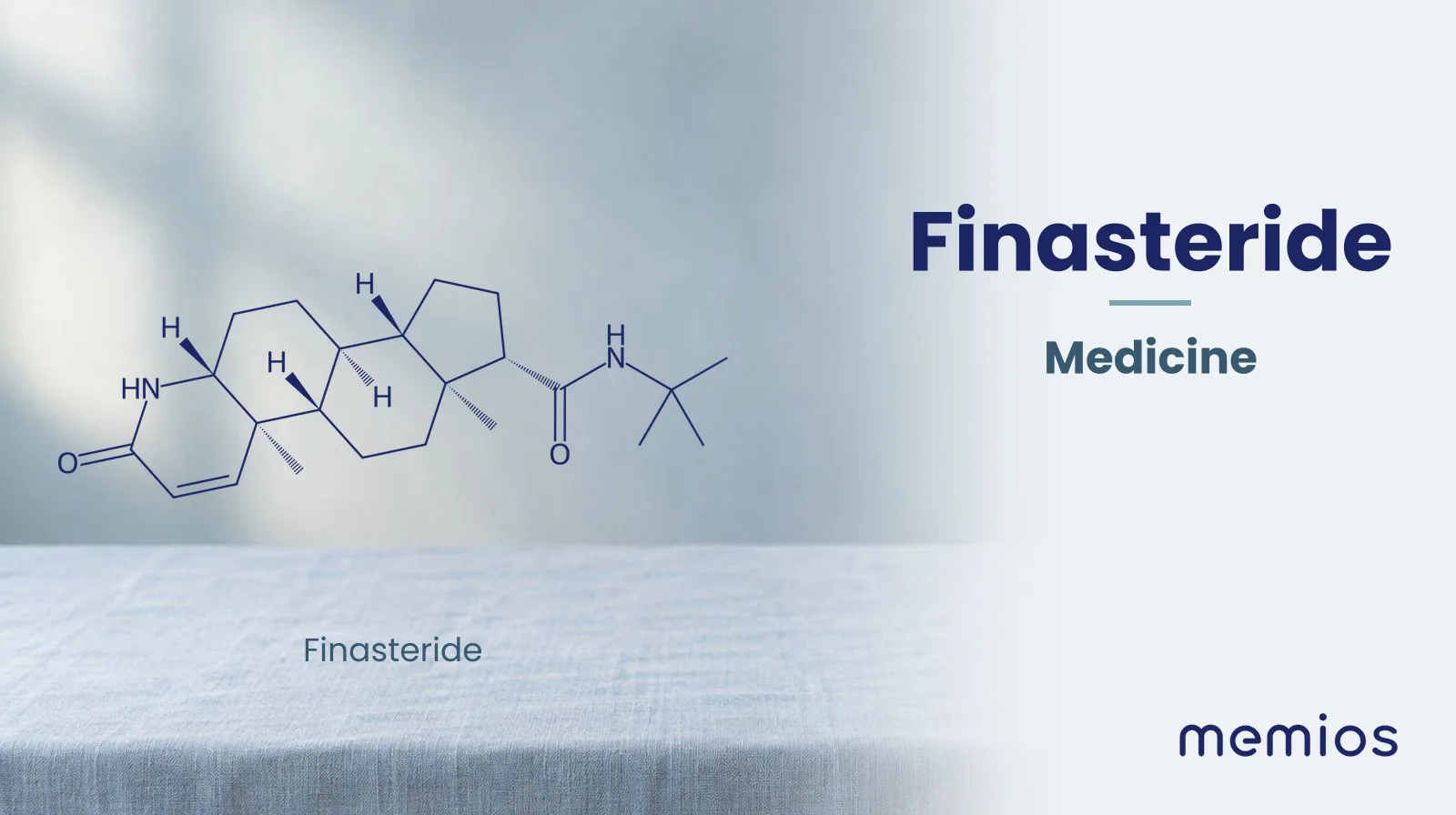
Finasteride is a synthetic tablet that blocks the enzyme Type II 5-alpha-reductase, which converts testosterone into the more potent androgen dihydrotestosterone (DHT). It is sold at two strengths for two different purposes: a 5 mg tablet for benign prostatic hyperplasia and a 1 mg tablet for male pattern hair loss. It does not block testosterone itself and is about a hundred times more selective for the Type II enzyme than for Type I. It has no boxed warning.
What the research says
Finasteride lowers DHT, and the downstream effects are real but modest. In benign prostatic hyperplasia it shrinks the prostate, improves urinary flow and symptom scores modestly, and in the four-year PLESS trial it significantly reduced acute urinary retention and the need for surgery. In male pattern hair loss it increases hair count, though a meta-analysis found dutasteride does more. In the Prostate Cancer Prevention Trial it cut seven-year prostate cancer incidence from 24.4% to 18.4% but more high-grade tumours were found in the finasteride arm. Sexual adverse effects are the commonest complaint, and reports of depression and suicidality have generated a pharmacovigilance signal since 2013.
Evidence grade: Well established.
How it works
Drug class: Type II 5-alpha-reductase inhibitor (androgen synthesis inhibitor)
Testosterone is converted inside cells into a stronger androgen called dihydrotestosterone (DHT) by an enzyme called 5-alpha-reductase. Finasteride blocks the Type II form of that enzyme, which sits in the prostate, seminal vesicles and hair follicles and accounts for about two thirds of the DHT in the blood. With less DHT, the prostate shrinks and the miniaturised hair follicles of a balding scalp are exposed to less of the hormone that drives the miniaturisation. (Source 1)
What it is used for
- Across eleven trials with 13,822 participants, finasteride reduced prostate volume and improved flow rates and symptoms modestly, and in the four-year placebo-controlled PLESS trial it significantly reduced the risk of acute urinary retention and the need for surgery. The review calls the flow-rate and symptom-score gains modest, and greater in men with a prostate of 40 ml or more. Evidence: established. (Source 2)
- Finasteride 1 mg increases hair count and hair density; in the trials pooled against saw palmetto, 68% of finasteride-treated patients had higher hair density scores from baseline. A meta-analysis of three trials in 576 men found dutasteride produced a larger mean gain in total hair count than finasteride (mean difference 28.57 hairs, 95% CI 18.75 to 38.39). The label states the effect reverses within 12 months of stopping. Evidence: established. (Source 3)
- In the Prostate Cancer Prevention Trial, 18,882 men aged 55 or older were randomised; at seven years prostate cancer incidence was 18.4% with finasteride versus 24.4% with placebo, an absolute difference of 6 percentage points. But high-grade (Gleason 7 to 10) cancers were found in 6.4% of finasteride patients versus 5.1% on placebo. The National Cancer Institute adds that the clinical significance of Gleason scoring is uncertain in conditions of androgen deprivation, so how much of that high-grade excess reflects genuinely more aggressive disease is unsettled. Finasteride is not approved for preventing prostate cancer. Evidence: disputed. (Source 4)
Interactions
- Prescription medicines in general (label): The manufacturer's position is that no clinically important drug interactions have been found, because finasteride does not meaningfully affect the liver's cytochrome P450 drug-metabolising system. Tested combinations included warfarin, digoxin, propranolol, theophylline and antipyrine. (Source 5)
- Saw palmetto (Serenoa repens) extracts (clinical trial): Saw palmetto is sold for hair loss and prostate symptoms and is described in the literature as having antiandrogenic properties, so it acts on the same hormonal pathway finasteride targets. No study of the two taken together was found; the head-to-head trial data show saw palmetto is the weaker of the two for hair density. (Source 6)
- Alpha-blockers, ACE inhibitors, NSAIDs, benzodiazepines and other commonly co-prescribed drugs (label): These were taken alongside finasteride during its clinical trials without dedicated interaction studies, and no clinically significant adverse interactions emerged. (Source 5)
Stopping it
- There is no withdrawal syndrome described for finasteride, but the benefit is not kept after stopping. For hair loss the manufacturer states plainly that the effect reverses within 12 months of stopping, which is why continued use is described as necessary to sustain benefit. (Source 7)
- Stopping or taking finasteride irregularly also disturbs PSA interpretation, because the roughly 50% suppression of PSA lifts when the drug is stopped; the label notes that non-compliance can affect PSA test results, and that any confirmed rise from the lowest on-treatment value should be investigated. (Source 8)
What goes wrong
More high-grade prostate cancers were found in the finasteride arm of the Prostate Cancer Prevention Trial than on placebo. (Source 4)
- Randomized trial, Moderate certainty.
- Size: 18,882 men randomised.
- Who: Men aged 55 years or older.
- How long: 7 years.
- Result: Gleason score 7 to 10 cancers in 6.4% of finasteride patients versus 5.1% on placebo, relative risk 1.27 (95% CI 1.07 to 1.50); an absolute difference of 1.3 percentage points. The source states in the same paragraph that the clinical significance of Gleason scoring is uncertain in conditions of androgen deprivation.
- Funding: not stated in the passage recorded.
Limit of this finding: The National Cancer Institute attaches its own hedge to this finding in the sentence immediately before it: it records that the finasteride group had more patients with Gleason grade 7 to 10, but says the clinical significance of Gleason scoring is uncertain in conditions of androgen deprivation - that is, when a drug has lowered androgen activity, as finasteride does. So the relative risk of 1.27 means more Gleason 7 to 10 tumours were found and graded that way in the finasteride arm; it is not settled evidence that finasteride causes more aggressive cancer. A reader should not treat 1.27 as an unqualified harm figure, and should not treat the hedge as a reason to dismiss the signal either - it is the reason this use has never been approved.
The finasteride group had more patients with Gleason grade 7 to 10, but the clinical significance of Gleason scoring is uncertain in conditions of androgen deprivation. High-grade cancers (Gleason score 7–10) were noted in 6.4% of finasteride patients, compared with 5.1% of men who received placebo, yielding a relative risk (RR) of 1.27 (95% CI, 1.07–1.50).
The commonest adverse effects of finasteride in benign prostatic hyperplasia trials were sexual, reported in 1 to 2.1% of patients, with gynaecomastia in 0.4%. (Source 9)
- Systematic review, Moderate certainty.
- Size: Eleven trials, 13,822 participants.
- Who: Men with symptomatic benign prostatic hyperplasia.
- How long: Up to 4 years in placebo-controlled trials, up to 6 years in extensions.
- Result: Sexually related adverse effects 1 to 2.1%; gynaecomastia 0.4%. Rates in the placebo arms are not given in the record we read.
- Funding: not stated.
Most commonly reported adverse effects are sexually related (1 to 2.1 %). Gynaecomastia has been reported in 0.4% of patients.
Reports of suicidal ideation with oral finasteride became disproportionately frequent in the FDA adverse event database from 2013 onwards, after being absent in 2006 to 2011. (Source 10)
- Case series, Very low certainty.
- Size: Spontaneous reports in the FDA Adverse Event Reporting System across three periods (2006-2011, 2013-2018, 2019-2023)
- Who: Males taking oral finasteride; dutasteride analysed as a comparator.
- How long: Three multi-year reporting windows.
- Result: Reporting odds ratio for suicidal ideation 2.8 (p<0.05) in 2013-2018 and 5.0 (p<0.05) in 2019-2023; no signal in 2006-2011; no signal for dutasteride in any period. The authors note the rise may reflect heightened awareness after 2012 rather than a change in risk.
- Funding: not stated.
Limit of this finding: The article gives these figures twice, to different precision. The abstract, which is what is quoted here, prints the rounded reporting odds ratios with a p-value (ROR = 2.8 and ROR = 5.0, p < 0.05); the body of the paper reports the same results to three decimals with confidence intervals instead of p-values (2.827, 95% CI 2.538 to 3.148 for 2013-2018 and 4.956, 95% CI 4.466 to 5.501 for 2019-2023). If an interval is ever shown alongside this claim it should be taken from the body of the paper, not from the abstract. Either way these are reporting ratios from a voluntary adverse event database: they measure how often an event is reported, not how often it happens, and they cannot show that finasteride caused it.
there was a greater likelihood of reporting suicidal ideations in individuals taking oral finasteride during 2013–2018 (ROR = 2.8, p < 0.05) and 2019–2023 (ROR = 5.0, p < 0.05)
Finasteride halves serum PSA, which can mask a prostate cancer if the result is read against untreated reference ranges. (Source 8)
- Official position, Certainty not rated.
- Size: Analysis of more than 3,000 patients in the PLESS trial underpins the label statement.
- Who: Men taking finasteride 5 mg for benign prostatic hyperplasia.
- How long: Effect established within six months of starting treatment.
- Result: Serum PSA falls by approximately 50% within six months; values should be doubled for comparison with untreated men; finasteride can also lower PSA when prostate cancer is present.
- Funding: not applicable.
In clinical studies, PROSCAR reduced serum PSA concentration by approximately 50% within six months of treatment.
What the evidence supports
Finasteride reduced the risk of acute urinary retention and the need for prostate surgery in men with benign prostatic hyperplasia over four years. (Source 2)
- Systematic review, Moderate certainty.
- Size: Eleven trials, 13,822 participants overall; the PLESS trial provided the four-year placebo-controlled outcome data.
- Who: Men with symptomatic benign prostatic hyperplasia.
- How long: Up to 4 years in placebo-controlled trials, up to 6 years in non-comparative extensions.
- Result: The review reports a significant reduction in acute urinary retention and in the requirement for surgical intervention; it does not give the absolute percentages in the record we read.
- Funding: not stated.
Results from the 4-year placebo-controlled PLESS trial show finasteride to significantly reduce the risk of benign prostatic hypertrophy-related acute urinary retention and the requirement for surgical intervention.
In the Prostate Cancer Prevention Trial, finasteride lowered seven-year prostate cancer incidence by about 6 percentage points in absolute terms. (Source 4)
- Randomized trial, Moderate certainty.
- Size: 18,882 men randomised.
- Who: Men aged 55 years or older.
- How long: 7 years.
- Result: Prostate cancer incidence 18.4% with finasteride versus 24.4% with placebo, a relative risk reduction of 24.8% (95% CI 18.6% to 30.6%; P < .001); the absolute difference is 6.0 percentage points, so roughly 17 men would need to be treated for 7 years to avoid one diagnosis.
- Funding: not stated in the passage recorded; the trial was publicly funded by the National Cancer Institute.
At 7 years, the incidence of prostate cancer was 18.4% in the finasteride group versus 24.4% in the placebo group, a relative risk reduction (RRR) of 24.8% (95% confidence interval [CI], 18.6%–30.6%; P < .001).
Finasteride 1 mg produced higher hair density scores than saw palmetto in the trials compared in a systematic review, but neither treatment worked for about one patient in ten. (Source 3)
- Systematic review, Low certainty.
- Size: Five randomised trials and two prospective cohort studies of saw palmetto, including head-to-head data against finasteride.
- Who: Patients with androgenetic alopecia or telogen effluvium.
- How long: Not stated in the abstract recorded.
- Result: 68% of finasteride-treated patients had higher hair density scores from baseline versus 38% of the saw palmetto group (p<0.05); neither treatment was clinically effective in 10% of patients.
- Funding: not stated.
Notably, 68% of patients treated with finasteride had higher hair density scores from baseline as compared to 38% of the SP group (p < 0.05), indicating that SP is inferior to finasteride.
What the evidence does not support
In a one-year comparative trial, finasteride monotherapy was not better than placebo for urinary symptom scores or flow rates, while the alpha-blocker terazosin was. (Source 2)
- Systematic review, Moderate certainty.
- Size: One 1-year comparative trial within a review of eleven trials (two trials of finasteride versus other drugs, n=2,298)
- Who: Men with symptomatic benign prostatic hyperplasia.
- How long: 1 year.
- Result: Terazosin alone and terazosin plus finasteride were significantly more effective than finasteride alone and than placebo for symptom scores and maximum urinary flow; only finasteride-containing arms reduced prostate volume.
- Funding: not stated.
Results of an earlier comparative 1-year trial show terazosin monotherapy and terazosin plus finasteride therapy to be significantly more effective than both finasteride monotherapy and placebo in reducing symptom scores and improving maximum urinary flow rates.
For hair loss, finasteride was outperformed by dutasteride on total hair count and on global photographic assessment in a small three-trial meta-analysis. (Source 11)
- Meta-analysis, Low certainty.
- Size: Three trials, 576 participants.
- Who: Men with androgenetic alopecia.
- How long: 24-week treatment cycle.
- Result: Mean change in total hair count favoured dutasteride by 28.57 hairs (95% CI 18.75 to 38.39, P<0.00001); investigator's global photographic assessment favoured dutasteride at the vertex (MD 0.68, 95% CI 0.13 to 1.23, P=0.02) and frontal (MD 0.63, 95% CI 0.13 to 1.13, P=0.01) views.
- Funding: not stated.
The mean change in total hair count (mean difference [MD], 28.57; 95% CI, 18.75–38.39; P<0.00001)
Disproportionality analysis found no signal for depression or suicide reports with finasteride in the earliest period examined, which weighs against a simple causal reading of the later signal. (Source 10)
- Case series, Very low certainty.
- Size: FDA Adverse Event Reporting System data, 2006 to 2011.
- Who: Males taking oral finasteride.
- How long: 2006 to 2011.
- Result: No significant signals for completed suicide, depression suicidal, suicidal behavior, suicidal ideation or attempted suicide in 2006-2011.
- Funding: not stated.
No significant AEs/signals were detected with oral finasteride from 2006 to 2011 for any of the 5 AEs (completed suicide, depression suicidal, suicidal behavior, suicidal ideation, attempted suicide).
The same meta-analysis found no statistically significant difference between finasteride and dutasteride in erectile dysfunction, altered libido or ejaculation disorders, though the paper prints two different p-values for erectile dysfunction. (Source 12)
- Meta-analysis, Very low certainty.
- Size: Two trials, 435 participants for erectile dysfunction; three trials, 576 participants for altered libido.
- Who: Men with androgenetic alopecia.
- How long: 24-week treatment cycle.
- Result: Erectile dysfunction OR 1.18 (95% CI 0.52 to 2.68), p-value printed as P=0.70 in the results section and as P=0.07 in the abstract; altered libido OR 1.12 (95% CI 0.66 to 2.20, P=0.54); ejaculation disorders OR 0.75 (95% CI 0.28 to 2.05, P=0.58)
- Funding: not stated.
Limit of this finding: This paper disagrees with itself about one number. Its abstract prints "erectile dysfunction (P=0.07)" while its results section prints "an OR of 1.18 and 95% CI of 0.52–2.68 (P=0.70)" for the same comparison, so one of the two is a misprinted decimal in the published paper. Both are quoted here from where each appears and neither has been corrected. Read together with the confidence interval, which runs from 0.52 to 2.68 and therefore includes no difference, the comparison does not show a difference in erectile dysfunction between the two drugs either way; what a reader should not do is treat P=0.07 as a near-significant safety signal, or treat P=0.70 as proof of safety, until the paper's own figures agree. These were only two trials with 435 men in total, which is too small to settle a rare harm.
A fixed-effects model showed an OR of 1.18 and 95% CI of 0.52–2.68 (P=0.70), which showed no significant differences in the ED between the two groups.
Where the evidence is mixed
Finasteride's improvements in urinary flow rate and symptom score in benign prostatic hyperplasia are described by the reviewers themselves as modest. (Source 13)
- Systematic review, Moderate certainty.
- Size: Eleven trials, 13,822 participants (seven versus placebo, n=11,005)
- Who: Men with mild to moderate symptomatic benign prostatic hyperplasia.
- How long: Up to 4 years.
- Result: No pooled numbers given in the record; the authors' own wording is "modest improvements in maximum urinary flow rates and symptom scores", with greater efficacy where the prostate is 40 ml or larger.
- Funding: not stated.
Despite modest improvements in maximum urinary flow rates and symptom scores, finasteride is a first-line treatment option in those with moderate uncomplicated benign prostatic hyperplasia
Where the research disagrees
Whether finasteride causes depression and suicidality
- Gupta and colleagues, disproportionality analysis of FDA adverse event reports (2025), case-series of spontaneous adverse event reports, which cannot establish causation: there was a greater likelihood of reporting suicidal ideations in individuals taking oral finasteride during 2013–2018 (ROR = 2.8, p < 0.05) and 2019–2023 (ROR = 5.0, p < 0.05) (Source 10)
- The same authors, on the earliest reporting period and the dutasteride comparison, case-series over an earlier window, with no signal for the related drug dutasteride in any period: No significant AEs/signals were detected with oral finasteride from 2006 to 2011 for any of the 5 AEs (completed suicide, depression suicidal, suicidal behavior, suicidal ideation, attempted suicide). (Source 10)
Whether finasteride should be used to prevent prostate cancer
- The Prostate Cancer Prevention Trial as summarised by the National Cancer Institute, rct in 18,882 men: At 7 years, the incidence of prostate cancer was 18.4% in the finasteride group versus 24.4% in the placebo group, a relative risk reduction (RRR) of 24.8% (95% confidence interval [CI], 18.6%–30.6%; P < .001). (Source 4)
- The same trial's high-grade tumour finding, rct in 18,882 men; the excess of high-grade tumours is the reason the use has not been approved: The finasteride group had more patients with Gleason grade 7 to 10, but the clinical significance of Gleason scoring is uncertain in conditions of androgen deprivation. High-grade cancers (Gleason score 7–10) were noted in 6.4% of finasteride patients, compared with 5.1% of men who received placebo, yielding a relative risk (RR) of 1.27 (95% CI, 1.07–1.50). (Source 4)
How much
- Reference intake: There is no reference intake for a drug. The dose is set by the prescriber. The manufacturer's label (2022 position) states one 1 mg tablet once daily for male pattern hair loss, with three months or more of daily use before benefit is seen; the benign prostatic hyperplasia product is a 5 mg tablet. (Source 7)
- Upper limit: No maximum dose or upper limit appears in the label passages we recorded. The label instead frames use as continuous, with periodic re-evaluation of whether benefit persists. (Source 7)
- Studied: The Prostate Cancer Prevention Trial randomised 18,882 men aged 55 or older to finasteride or placebo for seven years. (Source 4)
- Studied: The benign prostatic hyperplasia evidence base pooled eleven trials with 13,822 participants, seven of them placebo-controlled (n=11,005), running up to four years with non-comparative extensions to six years. (Source 14)
- Studied: The hair-loss meta-analysis pooled three trials with 576 participants over a 24-week treatment cycle; two of those trials, 435 men, contributed the erectile dysfunction comparison. (Source 11)
A common belief, and what the research shows
The belief: Finasteride regrows hair permanently, so once it has worked you can stop taking it.
What the research shows: The label states the opposite in one sentence: "Withdrawal of treatment leads to reversal of effect within 12 months." The same section makes the ongoing nature of the treatment explicit: "In general, daily use for three months or more is necessary before benefit is observed. Continued use is recommended to sustain benefit, which should be re-evaluated periodically." The effect depends on continued suppression of DHT, not on a permanent change to the follicle.
Questions and answers
What is it?
Finasteride is a synthetic tablet that blocks one specific enzyme, Type II 5-alpha-reductase. That enzyme turns testosterone into dihydrotestosterone (DHT), a stronger androgen. It is sold as a 5 mg tablet for an enlarged prostate and a 1 mg tablet for male pattern hair loss. (Source 1)
What does it do in the body?
By blocking the Type II enzyme it cuts the amount of DHT in the blood and in tissues such as the prostate and scalp. Type II accounts for about two thirds of circulating DHT, so the fall is substantial but not complete. In a balding scalp, which contains miniaturised follicles and more DHT than hairy scalp, lowering DHT interrupts one of the drivers of the hair loss. (Source 15)
Is it good or bad for you?
It depends on what it is being used for and what the person values. For an enlarged prostate it reduced acute urinary retention and the need for surgery over four years, which no other drug had achieved at the time of that review. Against that, the commonest adverse effects in those same trials were sexual, in 1 to 2.1% of men, with gynaecomastia in 0.4%, and in the cancer prevention trial more high-grade tumours were found in the finasteride arm. (Source 9)
How do you get more of it?
Finasteride is a prescription-only synthetic drug; there is no food, plant or supplement that contains it. The hair-loss product is one 1 mg tablet daily, and the label notes that three months or more of daily use is generally needed before any benefit shows. What dose anyone takes is a matter for a prescriber. (Source 7)
If it is harmful, what reduces it?
The way to reduce finasteride's effect is to stop taking it, and the effect on hair reverses within twelve months of stopping according to the manufacturer. Because the drug works by suppressing an enzyme rather than accumulating in tissue, the biology returns towards baseline once dosing ends. Whether some sexual or mood effects persist after stopping is disputed and rests on spontaneous reports rather than controlled trials. (Source 7)
Why might someone be low in it or missing it?
This question does not apply in its usual sense. Finasteride is a manufactured drug, not a nutrient or an organism, so nobody is naturally deficient in it. The thing it acts on is the reverse: people differ in how much DHT their Type II 5-alpha-reductase makes, and it is the hormone, not the drug, that can be high or low. Someone not on finasteride simply has their untreated DHT level. (Source 1)
Which whole foods contain it or feed it?
No whole food contains finasteride. The nearest thing in the food and supplement world is saw palmetto (Serenoa repens), a botanical extract sold for hair loss and prostate symptoms that is described in the literature as antiandrogenic, that is, acting on the same hormonal pathway. In head-to-head data it was the weaker option, with 38% of the saw palmetto group improving on hair density against 68% on finasteride. (Source 6)
What happens if you do not have it?
There is no deficiency state for finasteride. What the evidence shows is what does not happen without it: in men with benign prostatic hyperplasia, the trials found that finasteride reduced disease progression, specifically the incidence of acute urinary retention and the need for surgery, and the reviewers noted that at the time no other drug had been shown to reduce those outcomes. Untreated, symptoms are more likely to progress. (Source 13)
How can you test for it?
There is no routine test for finasteride itself, but there is a test the drug distorts, and it matters. Finasteride roughly halves serum PSA within six months, so a PSA result taken on treatment has to be doubled before it is compared with normal ranges for untreated men, and a new baseline should be set after six months. Importantly, finasteride can lower PSA even when prostate cancer is present, so any confirmed rise from the lowest on-treatment value should be investigated even if it still looks normal. (Source 8)
References
- U.S. Food and Drug Administration (Drugs@FDA label archive). PROPECIA (finasteride) tablets, for oral use - FDA prescribing information, section 12.1 Mechanism of Action. 2022. Read the source
- Drugs (record in Database of Abstracts of Reviews of Effects, Centre for Reviews and Dissemination). Finasteride: an update of its use in the management of symptomatic benign prostatic hyperplasia. 1999. PMID 10235693. Read the source
- Skin Appendage Disorders. Natural Hair Supplement: Friend or Foe? Saw Palmetto, a Systematic Review in Alopecia. 2020. Read the source
- National Cancer Institute (PDQ Screening and Prevention Editorial Board). Prostate Cancer Prevention (PDQ) - Health Professional Version. 2026. Read the source
- U.S. Food and Drug Administration (Drugs@FDA label archive). PROSCAR (finasteride) tablets - FDA prescribing information, Drug Interactions. 2010. Read the source
- Skin Appendage Disorders. Natural Hair Supplement: Friend or Foe? Saw Palmetto, a Systematic Review in Alopecia. 2020. Read the source
- U.S. Food and Drug Administration (Drugs@FDA label archive). PROPECIA (finasteride) tablets, for oral use - FDA prescribing information, section 2 Dosage and Administration. 2022. Read the source
- DailyMed, U.S. National Library of Medicine. PROSCAR (finasteride) tablet, film coated - full prescribing information, Effects on Prostate-Specific Antigen (PSA). 2026. Read the source
- Drugs (record in Database of Abstracts of Reviews of Effects, Centre for Reviews and Dissemination). Finasteride: an update of its use in the management of symptomatic benign prostatic hyperplasia. 1999. PMID 10235693. Read the source
- Journal of Cosmetic Dermatology. Finasteride Use: Evaluation of Depression and Suicide Risk. 2025. DOI 10.1111/jocd.70102. Read the source
- Clinical Interventions in Aging (Dove Medical Press). The efficacy and safety of dutasteride compared with finasteride in treating men with androgenetic alopecia: a systematic review and meta-analysis. 2019. Read the source
- Clinical Interventions in Aging (Dove Medical Press). The efficacy and safety of dutasteride compared with finasteride in treating men with androgenetic alopecia: a systematic review and meta-analysis — Results, Safety subsection (full text). 2019. Read the source
- Drugs (record in Database of Abstracts of Reviews of Effects, Centre for Reviews and Dissemination). Finasteride: an update of its use in the management of symptomatic benign prostatic hyperplasia. 1999. PMID 10235693. Read the source
- Drugs (record in Database of Abstracts of Reviews of Effects, Centre for Reviews and Dissemination). Finasteride: an update of its use in the management of symptomatic benign prostatic hyperplasia. 1999. PMID 10235693. Read the source
- U.S. Food and Drug Administration (Drugs@FDA label archive). PROPECIA (finasteride) tablets, for oral use - FDA prescribing information, section 12.1 Mechanism of Action. 2022. Read the source