Medications · September 30, 2026 · Memios · 12 min read
Ferrous Sulfate
Once swallowed, ferrous iron is absorbed in the small intestine and used by the body to build hemoglobin, correcting iron-deficiency anemia over weeks.
TLDR
- Boxed warning: Keep this product out of the reach of children.
- Well established. Once swallowed, ferrous iron is absorbed in the small intestine and used by the body to build hemoglobin, correcting iron-deficiency anemia over weeks.
- What it is: Ferrous sulfate is an iron salt sold both as an FDA OTC-monograph nonprescription product and in prescription-strength forms, used to treat or prevent iron-deficiency anemia.
- Main use: Treatment of iron-deficiency anemia (well supported).
- Other approved uses: Prevention/supplementation of iron intake in at-risk groups (e.g., low dietary intake, pregnancy) (limited evidence).
- Recommended dose (official position): Position, NIH Office of Dietary Supplements Iron Health Professional Fact Sheet, updated 4 September 2025: Recommended Dietary Allowance for iron of 8 mg for adult men and for women 51 years and older, and 18 mg for women aged 19-50.
- Studied dose (a trial dose, not a recommendation): The pilot isotope study described by the 2024 oral-iron review gave non-anemic iron-deficient young women ferrous sulfate twice per day, daily or every second day. Findings citing that trial: 1 mixed.
- Upper limit: Position, NIH Office of Dietary Supplements Iron Health Professional Fact Sheet, updated 4 September 2025: Tolerable Upper Intake Level for iron of 45 mg for adults.
- What goes wrong: 4 findings on harm. Ferrous sulfate significantly increases gastrointestinal side effects compared with placebo across pooled randomized trials.
- Interactions: 3 recorded, including Calcium supplements, antacids and proton pump inhibitors, Tea, Vitamin C.
- Common myth: Iron supplements are a harmless 'natural' product that can be taken freely without medical guidance.
What it is
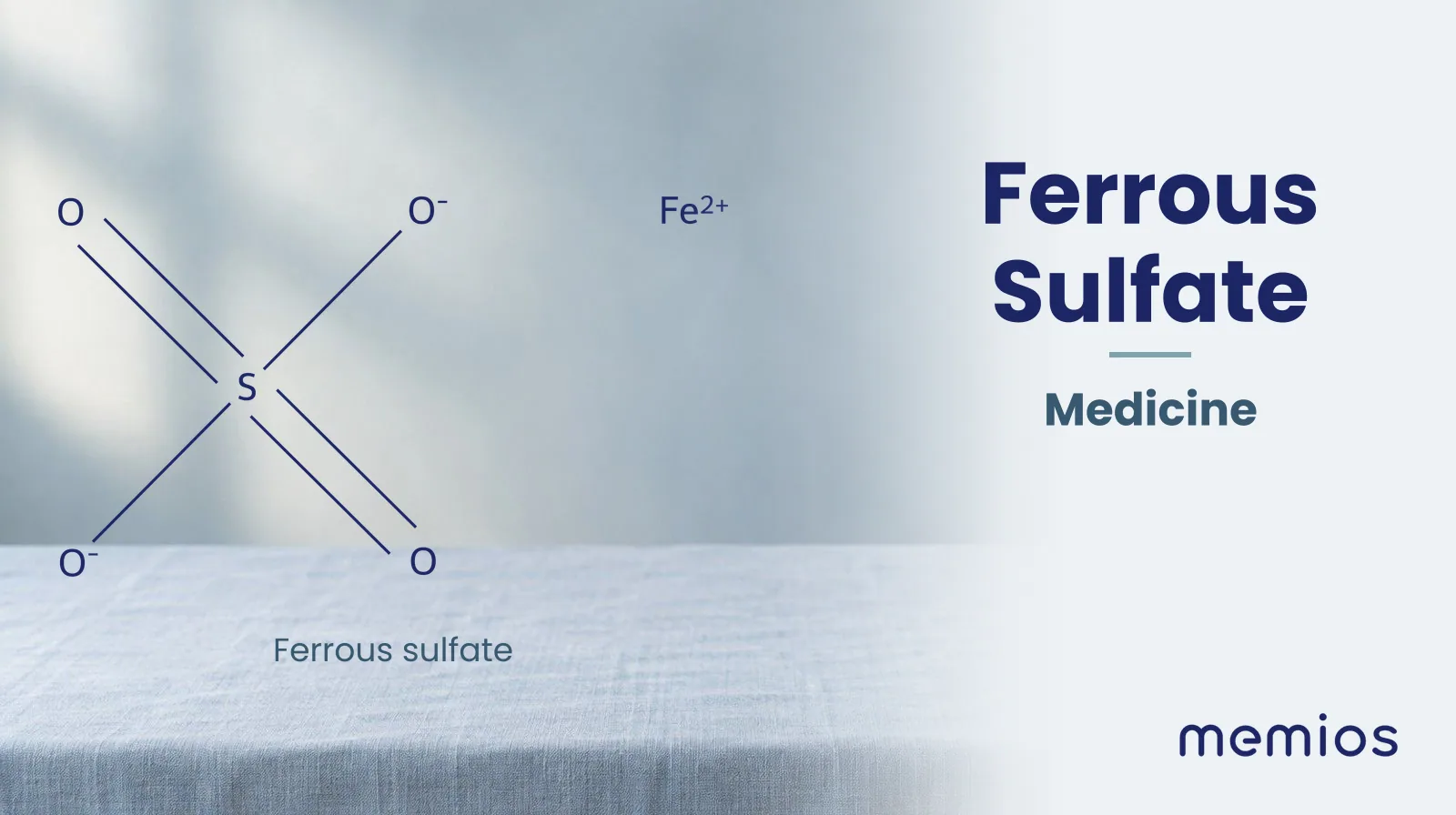
Ferrous sulfate is an iron salt sold both as an FDA OTC-monograph nonprescription product and in prescription-strength forms, used to treat or prevent iron-deficiency anemia. Its own DailyMed label for the OTC product notes it 'has not been found by FDA to be safe and effective' in the formal New Drug Application sense, reflecting its status as a long-marketed monograph ingredient rather than a modern NDA-approved drug.
What the research says
Once swallowed, ferrous iron is absorbed in the small intestine and used by the body to build hemoglobin, correcting iron-deficiency anemia over weeks. The same mechanism that makes it effective also drives its most common problem: a meta-analysis of controlled trials found it roughly doubles the odds of gastrointestinal side effects compared with placebo.
Evidence grade: Well established.
How it works
Drug class: Oral iron salt (ferrous/Fe2+ iron supplement)
Boxed warning
Accidental overdose of iron-containing products is a leading cause of poisoning in children under 6. Keep this product out of the reach of children.
(Source 1)
What it is used for
- Reviews of the oral iron literature describe an expected hemoglobin rise of about 2 g/dL within 3-4 weeks of an effective regimen, though ferrous sulfate carries a well-documented, roughly two-fold increase in GI side effects versus placebo that limits adherence for some patients. Evidence: established. (Source 2)
- Ferrous sulfate is commonly used prophylactically in groups with known higher iron needs, but this research session located general background on causes of deficiency rather than a dedicated prophylactic-use outcome trial. Evidence: limited. (Source 3)
Interactions
- Calcium supplements, antacids and proton pump inhibitors (theoretical): These form insoluble complexes with iron in the gut or reduce the stomach acidity iron needs for absorption, reducing how much iron is absorbed. (Source 4)
- Tea (pharmacokinetic study): Tannins in tea taken with an iron-containing meal reduce nonheme iron absorption by more than a third in a controlled isotope-absorption study; separating tea from the meal by about an hour substantially reduces this effect. (Source 5)
- Vitamin C (clinical trial): Vitamin C is widely believed to meaningfully boost iron absorption, but a pooled analysis of trials adding vitamin C to iron therapy found only a small hemoglobin difference that the authors judged not clinically significant, and did not recommend routine co-supplementation. (Source 6)
Stopping it
- No withdrawal syndrome is described for stopping iron therapy. Reviews instead emphasize continuing treatment past the point hemoglobin normalizes, in order to replete the body's iron stores, since stopping too early can leave stores low even if hemoglobin looks normal. (Source 2)
What goes wrong
Ferrous sulfate significantly increases gastrointestinal side effects compared with placebo across pooled randomized trials. (Source 7)
- Meta-analysis, Moderate certainty.
- Size: 3,168 participants across 20 trials.
- Who: adults given oral ferrous sulfate vs placebo.
- How long: varied across included trials.
- Result: OR 2.32 (95% CI 1.74-3.08, p<0.0001, I2=53.6%); constipation incidence ~12%, nausea ~11%, diarrhea ~8% in the ferrous sulfate arm.
- Funding: not stated in the excerpt reviewed.
Ferrous sulfate supplementation significantly increased risk of GI side-effects versus placebo with an odds ratio (OR) of 2.32 [95% CI 1.74–3.08, p<0.0001, I2 = 53.6%].
A 2024 review reports a systematic review and meta-analysis in which ferrous sulfate roughly doubled the odds of gastrointestinal side effects versus placebo, and tripled them versus intravenous iron. (Source 8)
- Expert review, not systematic, Moderate certainty.
- Size: 43 RCTs involving 6,831 adults (the meta-analysis the review cites)
- Who: adults treated for iron deficiency.
- How long: not applicable (review)
- Result: OR 2.32 (95% CI 1.74-3.08; P<0.0001) versus placebo; OR 3.05 (95% CI 2.07-4.48; P<0.0001) versus intravenous iron; no significant association between odds ratio and ferrous sulfate dose, and no evidence that slow-release formulations were better tolerated.
- Funding: not stated.
A systematic review and meta-analysis investigated the tolerability and adverse effects of ferrous sulfate versus placebo or versus intravenous iron in 43 RCT involving 6,831 adults. The use of ferrous sulfate significantly increased the risk of gastrointestinal side effects versus placebo with an odds ratio of 2.32 (95% confidence interval: 1.74-3.08; P<0.0001), and versus intravenous iron with an odds ratio of 3.05 (95% confidence interval: 2.07-4.48; P<0.0001).
Tea taken with an iron-containing meal reduces nonheme iron absorption by more than a third, but separating tea from the meal by an hour substantially counteracts this. (Source 5)
- Randomized trial, Moderate certainty.
- Size: cohort of healthy UK women (isotope study; exact n not given in excerpt)
- Who: healthy adult women.
- How long: single-meal isotope absorption study.
- Result: tea reduced nonheme iron absorption by ≥37% vs water; a 1-hour gap improved absorption by ≥1.6-fold.
- Funding: not stated.
Tea reduces nonheme iron absorption by ≥37% when compared with water used as a control beverage.
Accidental overdose of iron-containing products, including ferrous sulfate, is a well-recognized cause of poisoning in young children. (Source 1)
- Official position, Certainty not rated.
- Size: not applicable (label warning)
- Who: young children (under 6) with unsupervised access to iron tablets.
- How long: not applicable.
- Result: labeled as a leading cause of pediatric poisoning.
- Funding: not applicable.
Accidental overdose of iron-containing products is a leading cause of poisoning in children under 6.
What the evidence supports
Oral iron therapy is expected to raise hemoglobin by a defined amount within weeks when it is working, per a pharmacology review's synthesis of the treatment-response literature. (Source 2)
- Expert review, not systematic, Moderate certainty.
- Size: not a single trial; narrative synthesis.
- Who: patients with iron-deficiency anemia on oral iron.
- How long: 3-4 weeks to assess initial response; longer to replete stores.
- Result: expected hemoglobin rise of 2 g/dL within 3-4 weeks with an optimal response; a rise of 1 g/dL within 4 weeks is described as reasonable.
- Funding: not stated.
An optimal response to oral iron therapy is expected to increase hemoglobin by 2 g/dL within 3-4 weeks. A hemoglobin increase of 1 g/dL within 4 weeks is considered reasonable.
What the evidence does not support
Adding vitamin C to iron supplementation produced only a small, likely clinically insignificant, increase in hemoglobin, and the review authors did not recommend routinely adding it. (Source 6)
- Meta-analysis, Low certainty.
- Size: 1,930 patients total (10 RCTs, n=1,782, plus 1 cohort, n=148)
- Who: patients with iron deficiency anemia given iron plus vitamin C vs iron alone.
- How long: varied across included studies; substantial heterogeneity noted (I2=86% for hemoglobin)
- Result: hemoglobin mean difference +0.14 g/dL (95% CI 0.08-0.20, P<.01, 10 studies, 1490 patients)
- Funding: not stated.
The results of this study do not support routine supplementation of oral iron therapy with vitamin C in the treatment of IDA.
Where the evidence is mixed
In a pilot isotope study described by a 2024 review, ferrous sulfate doses of 60 mg elemental iron or higher induced hepcidin for up to 24 hours and cut absorption from the next day's dose, which the review says argues against split daily dosing and favours taking iron every second day. (Source 9)
- Expert review, not systematic, Moderate certainty.
- Size: pilot crossover isotope study in non-anemic iron-deficient young women, as described by the review.
- Who: non-anemic iron-deficient young women given ferrous sulfate twice per day, daily, or every second day.
- How long: hepcidin induction for up to 24 h, returning to baseline after 48 h.
- Result: hepcidin induced for up to 24 h after a dose of 60 mg elemental iron or higher, decreasing fractional absorption from the next day's dose; hepcidin back to baseline at 48 h.
- Funding: not stated.
The results showed that ingestion of ferrous sulfate at doses of 60 mg elemental iron or higher triggered induction of hepcidin for up to 24 h, which decreased fractional iron absorption from a subsequent dose the following day. Hepcidin levels returned to baseline after 48 h, restoring efficient iron absorption. These early data seem to disqualify the split dosing of ferrous sulfate two or three times per day, and even favor intermittent intake every second day versus daily dosing, to bypass the hepcidin blockade and increase fractional iron absorption.
How much
- Reference intake: Position, NIH Office of Dietary Supplements Iron Health Professional Fact Sheet, updated 4 September 2025: Recommended Dietary Allowance for iron of 8 mg for adult men and for women 51 years and older, and 18 mg for women aged 19-50. (Source 10)
- Upper limit: Position, NIH Office of Dietary Supplements Iron Health Professional Fact Sheet, updated 4 September 2025: Tolerable Upper Intake Level for iron of 45 mg for adults. (Source 10)
- Studied: The pilot isotope study described by the 2024 oral-iron review gave non-anemic iron-deficient young women ferrous sulfate twice per day, daily or every second day, with doses of 60 mg elemental iron or higher examined for their effect on hepcidin; the gastrointestinal side-effect meta-analysis it cites pooled 43 RCTs in 6,831 adults. (Source 9)
A common belief, and what the research shows
The belief: Iron supplements are a harmless 'natural' product that can be taken freely without medical guidance.
What the research shows: A meta-analysis found ferrous sulfate roughly doubles the odds of gastrointestinal side effects compared with placebo, and its own OTC label warns that accidental overdose of iron products is a leading cause of poisoning in young children, which is why the same label states that treating any anemic condition should be doctor-supervised.
Questions and answers
What is it?
Ferrous sulfate is an iron salt used as an oral iron supplement and medication, sold both as a nonprescription 'natural iron supplement' under an FDA OTC monograph and in higher-strength prescription forms. Treatment for an anemic condition is meant to be supervised by a doctor rather than self-directed. (Source 1)
What does it do in the body?
In the gut, ferrous sulfate supplies ferrous (Fe2+) iron that is absorbed by intestinal cells and delivered into the bloodstream, where the body uses it to build hemoglobin for red blood cells, correcting iron-deficiency anemia over weeks. Absorption is regulated by the hormone hepcidin, which limits how much iron the body takes up at once. (Source 4)
Is it good or bad for you?
Ferrous sulfate is genuinely beneficial for correcting a real iron deficiency, with an expected measurable rise in hemoglobin over a few weeks of effective treatment. It is also the iron form most strongly linked to gastrointestinal side effects in trials, and iron products in general are a leading cause of accidental childhood poisoning, so it is a 'good in the right context, harmful in excess or if mishandled' substance rather than uniformly safe. (Source 7)
How do you get more of it?
Dietary iron, as distinct from the supplement, comes mainly from lean meat and seafood, which supply the better-absorbed heme form, and from nuts, beans and vegetables, which supply nonheme iron. Wheat and other flours are often fortified with iron, so bread, cereal and other grain products are also nonheme sources. The supplement itself is available over the counter or by prescription and is taken as directed rather than increased at will. (Source 10)
If it is harmful, what reduces it?
For iron overload or acute overdose, the specific antidote is a chelating agent, deferoxamine, which binds several iron pools in the blood and tissues (free iron, transferrin-transit iron, hemosiderin, and ferritin) so the bound iron can be excreted in urine and bile; it is used both for acute iron poisoning above a defined blood-iron threshold and for chronic iron overload. (Source 11)
Why might someone be low in it or missing it?
In adults, iron deficiency is most often caused by ongoing blood loss (such as menstrual bleeding or a bleeding source in the digestive tract), reduced absorption from conditions like celiac disease or after bariatric surgery, or increased needs that diet does not meet, such as in pregnancy or early childhood. (Source 3)
Which whole foods contain it or feed it?
Whole-food iron sources include lean meat and seafood, which provide heme iron that the body absorbs relatively efficiently, and nuts, beans and vegetables, which provide nonheme iron that is less well absorbed and more affected by what else is eaten with it. Iron-fortified flours make bread, cereal and other grain products further nonheme sources. (Source 10)
What happens if you do not have it?
Untreated iron deficiency progresses to iron-deficiency anemia, with hemoglobin staying low rather than following the roughly 2 g/dL rise expected within 3-4 weeks of effective oral iron therapy; the underlying cause of blood loss or malabsorption also continues untreated. (Source 2)
How can you test for it?
Iron status is usually tested with serum ferritin (and often serum iron/TIBC) rather than a direct test for ferrous sulfate itself. Ferritin is a useful marker of iron stores but is also an acute-phase reactant, so infection, inflammation or recent surgery can push it up and mask a true underlying iron deficiency, which limits its reliability in sick or inflamed patients. (Source 12)
References
- DailyMed (U.S. National Library of Medicine). Ferrous Sulfate Tablet — OTC Drug Facts label. 2014. Read the source
- Haematologica. Oral iron supplementation: new formulations, old questions — Efficacy of oral iron supplements. 2024. DOI 10.3324/haematol.2024.284967. Read the source
- Merck Manual Consumer Version. Common Causes of Iron Deficiency Anemia. 2025. Read the source
- Haematologica. Oral iron supplementation: new formulations, old questions — Iron physiology, absorption and homeostasis. 2024. DOI 10.3324/haematol.2024.284967. Read the source
- American Journal of Clinical Nutrition. A 1-h time interval between a meal containing iron and consumption of tea attenuates the inhibitory effects on iron absorption: a controlled trial in a cohort of healthy UK women using a stable iron isotope. 2023. Read the source
- Journal article (ScienceDirect). Efficacy of vitamin C with Fe supplementation in patients with iron deficiency anemia: a systematic review and meta-analysis. 2024. Read the source
- PLOS ONE. Ferrous Sulfate Supplementation Causes Significant Gastrointestinal Side-Effects in Adults: A Systematic Review and Meta-Analysis. 2015. DOI 10.1371/journal.pone.0117383. Read the source
- Haematologica. Oral iron supplementation: new formulations, old questions — Tolerability and adverse effects of oral iron supplements, Ferrous salts. 2024. DOI 10.3324/haematol.2024.284967. Read the source
- Haematologica. Oral iron supplementation: new formulations, old questions — Optimal dosage and frequency of oral iron supplementation. 2024. DOI 10.3324/haematol.2024.284967. Read the source
- NIH Office of Dietary Supplements. Iron — Health Professional Fact Sheet. 2025. Read the source
- StatPearls / NCBI Bookshelf. Deferoxamine. 2024. Read the source
- MedlinePlus (National Library of Medicine). Ferritin Blood Test. not stated on page. Read the source