Medications · September 30, 2026 · Memios · 22 min read
Estradiol
The best evidence is that systemic estradiol reliably reduces hot flushes and night sweats and reduces fractures.
TLDR
- Boxed warning: There is an increased risk of endometrial cancer in a woman with a uterus who uses unopposed estrogens.
- Well established. The best evidence is that systemic estradiol reliably reduces hot flushes and night sweats and reduces fractures, and that vaginal oestrogen improves vaginal atrophy symptoms - but the fracture and symptom evidence sits alongside consistent evidence of harm (stroke, venous clots, gallbladder disease, and.
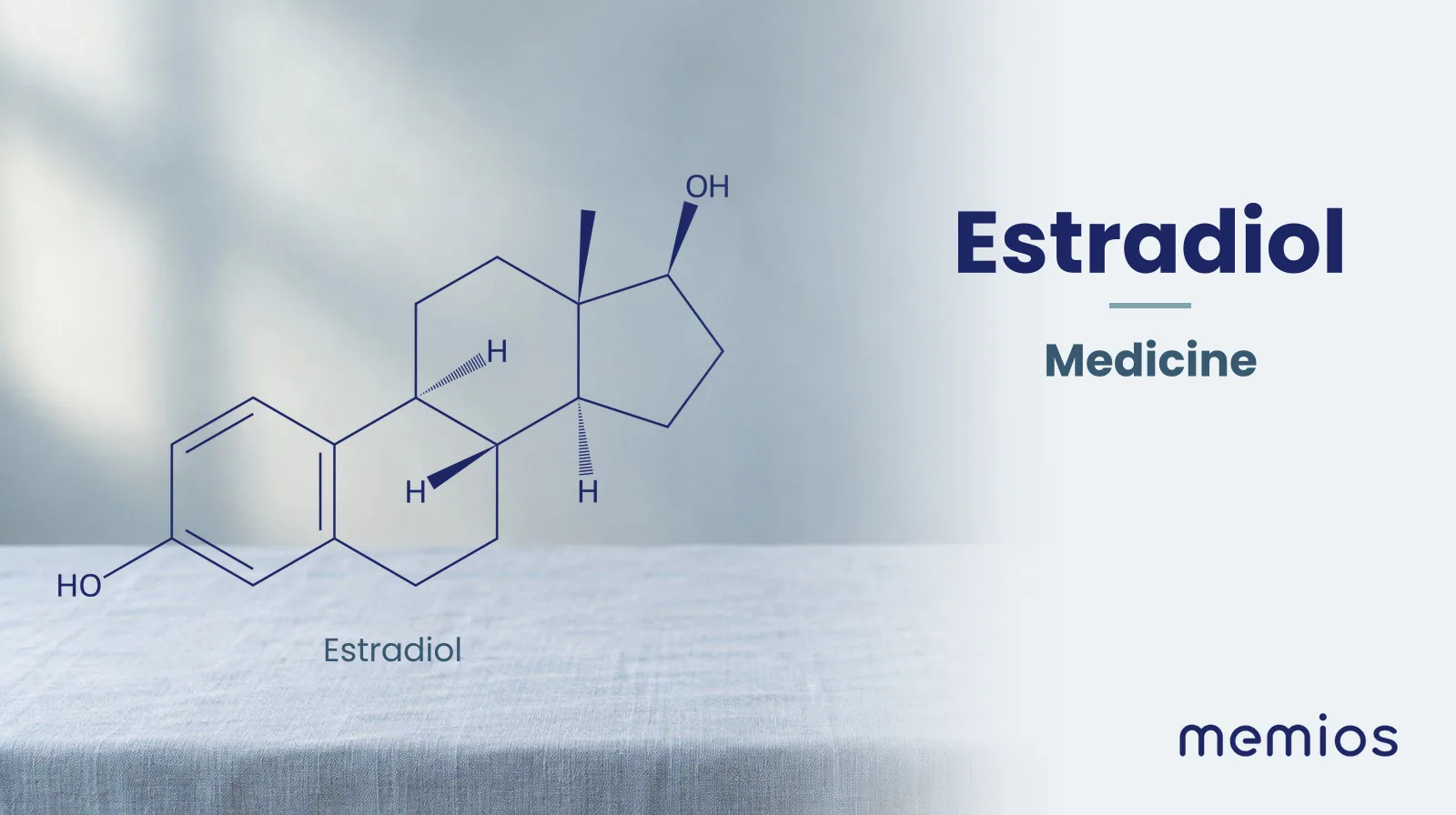
- What it is: Estradiol is the main oestrogen made by the human ovary, given as a medicine in tablets, skin patches, gels, sprays, vaginal creams, tablets and rings, and injections.
- Main use: Moderate to severe hot flushes and night sweats (vasomotor symptoms) of menopause (well supported).
- Other approved uses: Vulvovaginal atrophy / genitourinary syndrome of menopause (local vaginal oestrogen) (well supported); Prevention of postmenopausal osteoporosis / fracture (well supported).
- Off-label uses (not on the FDA label): Feminising gender-affirming hormone therapy (limited evidence).
- Uses NOT supported by research: Prevention of cardiovascular disease or dementia.
- Recommended dose (official position): There is no reference intake for estradiol; it is a prescription medicine and the dose is set by the prescriber.
- Studied dose (a trial dose, not a recommendation): The Women's Health Initiative trials that generate most of the long-term risk data used daily oral conjugated equine oestrogens 0.625 mg, alone or with medroxyprogesterone acetate 2.5 mg - not estradiol. Findings citing that trial: 1 mixed.
- Upper limit: No upper limit is set by a nutrition body.
- What goes wrong: 5 findings on harm. Pooled randomised trials show hormone therapy increases stroke and venous thromboembolism.
- Interactions: 5 recorded, including St John's wort (Hypericum perforatum), St John's wort (Hypericum perforatum) - contraceptive failure, St John's wort - what the study actually did, Grapefruit juice.
- Common myth: Hormone therapy keeps the heart healthy and staves off dementia, so the longer you take it the better.
What it is
Estradiol is the main oestrogen made by the human ovary, given as a medicine in tablets, skin patches, gels, sprays, vaginal creams, tablets and rings, and injections. The regulator's own label describes it as the principal human oestrogen and says it is more potent at the receptor than its metabolites estrone and estriol. Products differ enormously in how much reaches the bloodstream: low-dose vaginal preparations act mainly locally, while oral and transdermal products act throughout the body. Route matters for risk as well as effect - a large UK database study found oral preparations were associated with venous clots while transdermal ones were not.
What the research says
The best evidence is that systemic estradiol reliably reduces hot flushes and night sweats and reduces fractures, and that vaginal oestrogen improves vaginal atrophy symptoms - but the fracture and symptom evidence sits alongside consistent evidence of harm (stroke, venous clots, gallbladder disease, and, with an added progestogen, breast cancer). An umbrella review of 60 systematic reviews rated the overall quality of evidence as only moderate to poor. Eighteen-year follow-up of the Women's Health Initiative found no effect on all-cause mortality in either direction. Hormone therapy is not supported for preventing heart disease or dementia, and in women aged 65 and over randomised trials show more dementia, not less.
Evidence grade: Well established.
How it works
Drug class: Steroid oestrogen; oestrogen receptor agonist (systemic and local menopausal hormone therapy)
Estradiol is the body's main oestrogen. Taken as a medicine it binds oestrogen receptors in tissues such as the brain's temperature-control centres, bone, the vagina and the womb lining, replacing some of the signalling lost after the ovaries stop producing it. It also feeds back on the pituitary gland to lower the raised gonadotrophin levels seen after menopause. (Source 1)
Boxed warning
There is an increased risk of endometrial cancer in a woman with a uterus who uses unopposed estrogens.
(Source 2)
What it is used for
- A Cochrane review of placebo-controlled trials found oral hormone therapy cut weekly hot flushes by about 75% relative to placebo, and an umbrella review found a risk ratio of 0.43 for vasomotor symptom frequency. The placebo groups themselves improved by about 58%, so the drug effect sits on top of a large placebo response. Evidence: established. (Source 3)
- A Cochrane review of 30 randomised trials in 6,235 women found low-quality evidence that intravaginal oestrogen improves atrophy symptoms compared with placebo, with no clear difference between ring, cream and tablet. Evidence: established. (Source 4)
- An umbrella review of randomised trials found hormone therapy reduced all fractures (RR 0.72, 30 trials, 43,188 women). In the WHI oestrogen-only arm the Cochrane plain-language summary puts this at about 141 to 103 women per 1000 over 7 years. The label itself says non-oestrogen medicines should be considered first for this purpose. Evidence: established. (Source 5)
- Randomised trials do not support this. In women aged 65 and over, a 2023 meta-analysis of RCTs found more dementia on hormone therapy (RR 1.38), and 18-year WHI follow-up found no effect on cardiovascular or all-cause mortality. The label explicitly instructs prescribers not to use oestrogen for these purposes. Evidence: not-supported. (Source 6)
- A 2023 systematic review of 46 studies found gender-affirming hormone therapy consistently reduced depressive symptoms and psychological distress, but there were no randomised trials, risk of bias varied widely and small samples limited causal inference. Evidence: limited. (Source 7)
Interactions
- St John's wort (Hypericum perforatum) (pharmacokinetic study): St John's wort speeds up the liver's breakdown of oestrogens. In a study of women taking a low-dose oral contraceptive containing ethinyl estradiol, adding St John's wort cut hormone exposure by 13-15% and increased breakthrough bleeding, follicle growth and probable ovulation. The study used ethinyl estradiol rather than estradiol itself, but both are cleared by the same enzyme pathway. (Source 8)
- St John's wort (Hypericum perforatum) - contraceptive failure (pharmacokinetic study): The same trial concluded that St John's wort increases metabolism of the contraceptive hormones and may reduce contraceptive effectiveness. (Source 9)
- St John's wort - what the study actually did (pharmacokinetic study): The design behind the St John's wort finding: sixteen healthy women took a low-dose oral contraceptive for two cycles, then had St John's wort 300 mg three times daily added for two more cycles, with hormone levels, bleeding diaries and follicle tracking compared between cycles. It is a small single-blind sequential pharmacokinetic study, not an outcome trial. (Source 10)
- Grapefruit juice (pharmacokinetic study): In eight women who had had their ovaries removed, drinking grapefruit juice with a 2 mg dose of micronised estradiol significantly raised estrone levels and total measured oestrogens, apparently by slowing the enzyme breakdown of oestrogens. The effect on estradiol itself did not reach significance. (Source 11)
- Route of administration (oral versus skin) (case reports): Not a drug interaction in the usual sense, but the single biggest modifier of clot risk: in a study of over 80,000 clot cases, oral preparations carried a raised risk and skin patches and gels did not. (Source 12)
Stopping it
- Stopping systemic hormone therapy commonly brings hot flushes back. In a survey of 8,405 WHI participants after the trial stopped, 55.5% of women who had had vasomotor symptoms at randomisation and were assigned oestrogen plus progestin reported moderate or severe vasomotor symptoms after stopping, against 21.3% of the corresponding placebo group. (Source 13)
- The same study found pain and stiffness were also more common after stopping, and its authors framed the finding as a reason to consider duration of treatment carefully rather than as a withdrawal syndrome. (Source 14)
- The label's own position is that oestrogen should be used at the lowest effective dose for the shortest duration consistent with the goals of treatment - a position, dated February 2024, not a trial result. (Source 15)
What goes wrong
Pooled randomised trials show hormone therapy increases stroke and venous thromboembolism. (Source 5)
- Review of reviews, Moderate certainty.
- Size: 17 trials, 37,272 women (stroke); 23 trials, 42,292 women (VTE)
- Who: Perimenopausal and postmenopausal women.
- How long: varied across included trials.
- Result: Stroke RR 1.17 (95% CI 1.05 to 1.29, p = 0.027); VTE RR 1.60 (95% CI 0.99 to 2.58, p = 0.052, 95% PI 1.03 to 2.99)
- Funding: not stated.
harmful for stroke (17 trials, 37,272 women, RR 1.17, 95% CI 1.05 to 1.29, p = 0.027) and venous thromboembolism (23 trials, 42,292 women, RR 1.60, 95% CI 0.99 to 2.58, p = 0.052, 95% PI 1.03 to 2.99)
Combined continuous oestrogen-plus-progestogen therapy increased breast cancer in absolute terms from about 19 to 24 women per 1000. (Source 16)
- Systematic review, Moderate certainty.
- Size: one study, 16,608 women.
- Who: Postmenopausal women with a uterus.
- How long: about 5.5 years of follow-up.
- Result: Breast cancer from about 19 to 24 women in every 1000; stroke from about 13 to 18 per 1000; venous clot from about 10 to 20 per 1000; gallbladder disease needing surgery from about 16 to 27 per 1000.
- Funding: independent (NIH-funded WHI)
increased the chance of developing breast cancer (from about 19 to 24 women in every 1000)
Oestrogen-only therapy increased stroke and gallbladder disease in absolute terms even though it did not increase breast cancer. (Source 17)
- Systematic review, Moderate certainty.
- Size: one study, 10,739 women.
- Who: Postmenopausal women who had had a hysterectomy.
- How long: 7 years of follow-up.
- Result: Stroke from about 24 to 32 women in every 1000; gallbladder disease requiring surgery from about 27 to 47 per 1000.
- Funding: independent (NIH-funded WHI)
increased the chance of having a stroke (from about 24 to 32 women in every 1000) and gallbladder disease requiring surgery (from about 27 to 47 women in every 1000)
Oral hormone therapy was associated with venous thromboembolism in a large UK database study; transdermal preparations were not. (Source 12)
- Case-control study, Moderate certainty.
- Size: 80,396 VTE cases and 391,494 matched controls.
- Who: Women aged 40-79 in UK primary care (QResearch and CPRD)
- How long: 1998-2017.
- Result: Oral HRT adjusted OR 1.58 (95% CI 1.52 to 1.64); estradiol lower risk than conjugated equine oestrogen (0.85, 0.76 to 0.95); transdermal adjusted OR 0.93 (95% CI 0.87 to 1.01)
- Funding: independent (authors report no commercial funding for this analysis)
Transdermal preparations were not associated with risk of venous thromboembolism, which was consistent for different regimens (overall adjusted odds ratio 0.93, 95% confidence interval 0.87 to 1.01).
In randomised trials in women aged 65 and over, hormone therapy increased dementia. (Source 6)
- Meta-analysis, Moderate certainty.
- Size: randomised trials in postmenopausal women aged 65 and older.
- Who: Postmenopausal women aged 65 years and older.
- How long: 4 to 5 years of treatment in the pooled trials.
- Result: Dementia RR 1.38 (95% CI 1.16-1.64, p < 0.001); EPT RR 1.64 (95% CI 1.20-2.25); ET RR 1.19 (95% CI 0.92-1.54, not significant)
- Funding: not stated.
Randomized controlled trials conducted in postmenopausal women ages 65 and older show an increased risk of dementia with HT use compared with placebo
What the evidence supports
Oral hormone therapy cut weekly hot flush frequency by about three quarters compared with placebo. (Source 3)
- Systematic review, Moderate certainty.
- Size: 21 trials in the Cochrane review of oral HT versus placebo.
- Who: Peri- and postmenopausal women with vasomotor symptoms.
- How long: trials of 3 months to 3 years.
- Result: WMD -17.92 hot flushes per week (95% CI -22.86 to -12.99), equivalent to a 75% reduction (95% CI 64.3 to 82.3); symptom severity OR 0.13 (95% CI 0.07 to 0.23)
- Funding: not stated.
There was a significant reduction in the weekly hot flush frequency for HT compared to placebo (WMD -17.92, 95% CI -22.86 to -12.99).
An umbrella review of randomised trials found menopausal hormone therapy reduced all fractures. (Source 5)
- Review of reviews, Moderate certainty.
- Size: 30 trials, 43,188 women (fracture outcome); 60 systematic reviews overall.
- Who: Perimenopausal and postmenopausal women.
- How long: varied across included trials.
- Result: All fracture RR 0.72 (95% CI 0.62 to 0.84, p = 0.002, 95% prediction interval 0.58 to 0.87)
- Funding: not stated.
all fracture (30 trials, 43,188 women, RR 0.72, 95% CI 0.62 to 0.84, p = 0.002, 95% PI 0.58 to 0.87)
Vaginal oestrogen improves symptoms of vaginal atrophy compared with placebo, on low-quality evidence. (Source 18)
- Systematic review, Low certainty.
- Size: 30 RCTs, 6,235 women.
- Who: Postmenopausal women with vaginal atrophy.
- How long: trials mostly 12 weeks to 12 months.
- Result: Oestrogen ring vs placebo OR 12.67 (95% CI 3.23 to 49.66); oestrogen cream vs placebo OR 4.10 (95% CI 1.88 to 8.93)
- Funding: not stated.
there was low-quality evidence that intra-vaginal oestrogenic preparations improve the symptoms of vaginal atrophy in postmenopausal women when compared to placebo
A 2023 systematic review found gender-affirming hormone therapy consistently reduced depressive symptoms, but on non-randomised evidence with variable bias. (Source 7)
- Systematic review, Very low certainty.
- Size: 46 journal articles (6 qualitative, 21 cross-sectional, 19 prospective cohort)
- Who: Transgender people receiving feminising or masculinising hormone therapy.
- How long: varied; mostly months to a few years.
- Result: No pooled effect estimate reported; direction consistent across studies.
- Funding: not stated.
Gender-affirming hormone therapy was consistently found to reduce depressive symptoms and psychological distress.
What the evidence does not support
Eighteen years of follow-up of the Women's Health Initiative trials found hormone therapy was not associated with all-cause, cardiovascular or cancer mortality. (Source 19)
- Randomized trial, High certainty.
- Size: 27,347 women in the two WHI hormone trials.
- Who: Postmenopausal women aged 50-79 at randomisation.
- How long: 5.6 years (CEE+MPA) or 7.2 years (CEE alone) of treatment, 18 years cumulative follow-up.
- Result: All-cause mortality 27.1% hormone vs 27.6% placebo; HR 0.99 (95% CI 0.94-1.03)
- Funding: independent (NIH-funded)
All-cause mortality was 27.1% in the hormone therapy group vs 27.6% in the placebo group (hazard ratio [HR], 0.99 [95% CI, 0.94-1.03]) in the overall pooled cohort
Much of the hot flush improvement seen on hormone therapy also happens on placebo, so uncontrolled reports overstate the drug's effect. (Source 3)
- Systematic review, Moderate certainty.
- Size: Placebo arms of the trials in the Cochrane review.
- Who: Peri- and postmenopausal women with vasomotor symptoms.
- How long: trial duration.
- Result: 57.7% (95% CI 45.1 to 67.7) reduction in hot flushes from baseline in the placebo groups.
- Funding: not stated.
In women who were randomised to placebo treatment, a 57.7% (95% CI 45.1 to 67.7) reduction in hot flushes was observed between baseline and end of study.
No vaginal oestrogen preparation was shown to work better than another. (Source 18)
- Systematic review, Low certainty.
- Size: 30 RCTs, 6,235 women.
- Who: Postmenopausal women with vaginal atrophy.
- How long: trials mostly 12 weeks to 12 months.
- Result: Ring vs cream OR 1.33 (95% CI 0.80 to 2.19); ring vs tablets OR 0.78 (95% CI 0.53 to 1.15)
- Funding: not stated.
There was no evidence of a difference in efficacy between the various intravaginal oestrogenic preparations when compared with each other.
Where the evidence is mixed
Observational studies point the opposite way from the trials on dementia, and even there the reduction reached significance only for midlife oestrogen-only therapy, not for combined therapy. (Source 6)
- Meta-analysis, Very low certainty.
- Size: observational studies pooled in the same 2023 review.
- Who: Postmenopausal women in cohort and case-control studies.
- How long: varies.
- Result: AD RR 0.78 (95% CI 0.64-0.95); all-cause dementia RR 0.81 (95% CI 0.70-0.94); midlife oestrogen-only RR 0.685 (95% CI 0.513-0.915, p = 0.010), but midlife oestrogen-plus-progestogen RR 0.775 (95% CI 0.474-1.266, p = 0.309), not significant.
- Funding: not stated.
Conversely, observational studies indicate a reduced risk of AD [RR = 0.78, 95% C.I. 0.64–0.95, p = 0.013] and all-cause dementia [RR = .81, 95% C.I. 0.70–0.94, p = 0.007] with HT use
The long-term risk evidence rests largely on one trial of oral hormone therapy, which may not represent products used today. (Source 20)
- Systematic review, Low certainty.
- Size: 24 studies, 45,660 participants; most data from two large trials.
- Who: Peri- and postmenopausal women.
- How long: up to about 7 years of treatment.
- Result: No new effect estimate; a stated limitation of the evidence base.
- Funding: not stated.
These results should be interpreted with caution as they are based on one study using oral hormone therapy, which may not represent the risks of the hormone therapy currently used in clinical practice.
The umbrella review rated the overall quality of the systematic reviews behind menopausal hormone therapy as moderate to poor. (Source 5)
- Review of reviews, Low certainty.
- Size: 60 systematic reviews, 102 meta-analyses of RCTs and 38 of observational studies.
- Who: Perimenopausal and postmenopausal women.
- How long: not applicable.
- Result: AMSTAR 2 quality rating of included reviews: moderate to poor.
- Funding: not stated.
The overall quality of included systematic reviews was moderate to poor.
Cochrane's authors' conclusions separate the two regimens: oestrogen-only therapy probably makes little to no difference to breast cancer risk, while combined therapy probably increases it - and Cochrane itself warns the figures rest on a single trial of oral hormone therapy. (Source 21)
- Systematic review, Moderate certainty.
- Size: 24 studies, 45,660 participants.
- Who: Peri- and postmenopausal women.
- How long: up to about 7 years of treatment.
- Result: Narrative GRADE summary; no single pooled estimate.
- Funding: not stated.
It probably makes little to no difference in the risk of breast cancer, and probably reduces the risk of all fractures. Combined hormone therapy may increase the risk of thromboembolism and probably increases the risk of breast cancer. These results should be interpreted with caution as they are based on one study using oral hormone therapy, which may not represent the risks of the hormone therapy currently used in clinical practice.
Where the research disagrees
Whether oestrogen protects the ageing brain or harms it
- Randomised trial evidence in women aged 65 and over, meta-analysis of RCTs: Randomized controlled trials conducted in postmenopausal women ages 65 and older show an increased risk of dementia with HT use compared with placebo (Source 6)
- Observational evidence, protective only for midlife oestrogen-only therapy, meta-analysis of observational studies: Stratified analysis of pooled estimates indicates a 32% reduced risk of dementia with midlife ET [RR = 0.685, 95% C.I. 0.513–0.915, p = 0.010] and non-significant reductions with midlife EPT [RR = 0.775, 95% C.I. 0.474–1.266, p = 0.309]. (Source 6)
Whether the WHI risk figures apply to modern estradiol products
- Cochrane review authors, systematic review: These results should be interpreted with caution as they are based on one study using oral hormone therapy, which may not represent the risks of the hormone therapy currently used in clinical practice. (Source 20)
- QResearch/CPRD database study authors, nested case-control: In the present study, transdermal treatment was the safest type of hormone replacement therapy when risk of venous thromboembolism was assessed. (Source 22)
How much
- Reference intake: There is no reference intake for estradiol; it is a prescription medicine and the dose is set by the prescriber. As a position, the February 2024 US label for one transdermal estradiol product (MINIVELLE) gives, in the section covering treatment of moderate to severe vasomotor symptoms due to menopause, a starting dose of 0.0375 mg per day applied to the skin twice weekly, with dose adjustment to clinical response and an attempt to taper or discontinue at 3 to 6 month intervals. That indication scope is the label's section heading, not part of the dosing sentence. It is a product-specific starting dose for that indication, not a general estradiol dose. (Source 23)
- Upper limit: No upper limit is set by a nutrition body. As a position, that label's marketed strengths run from 0.025 mg/day to 0.1 mg/day, and the boxed warning directs prescribers to the lowest effective dose. (Source 24)
- Studied: The Women's Health Initiative trials that generate most of the long-term risk data used daily oral conjugated equine oestrogens 0.625 mg, alone or with medroxyprogesterone acetate 2.5 mg - not estradiol. (Source 20)
- Studied: The grapefruit interaction study gave a single oral dose of 2 mg micronised 17β-estradiol to ovariectomised women. (Source 11)
A common belief, and what the research shows
The belief: Hormone therapy keeps the heart healthy and staves off dementia, so the longer you take it the better.
What the research shows: Randomised evidence does not support either. Eighteen-year WHI follow-up found hormone therapy 'was not associated with risk of all-cause, cardiovascular, or cancer mortality during a cumulative follow-up of 18 years', and in women 65 and over pooled trials show more dementia, not less. The label's own instruction is 'Do not use estrogen-alone therapy for the prevention of cardiovascular disease or dementia'. The supported uses are symptom relief and fracture prevention, and both come with measurable increases in stroke, clots and gallbladder disease.
Questions and answers
What is it?
Estradiol is the main oestrogen the ovaries make, sold as a medicine in tablets, skin patches and gels, vaginal creams, tablets and rings, and injections. The label calls it the principal human oestrogen and says it is considerably more potent at the receptor than estrone or estriol. Vaginal low-dose products act mostly where they are applied; tablets, patches and gels act throughout the body. (Source 1)
What does it do in the body?
It binds oestrogen receptors in tissues that lose oestrogen signalling after menopause - the brain's temperature control, bone, vagina and womb lining - and damps down the raised pituitary hormone levels of menopause. Clinically that shows up as fewer hot flushes, better vaginal tissue and fewer fractures. (Source 1)
Is it good or bad for you?
Both, depending on what it is used for and in whom. For hot flushes it works well (about a 75% reduction versus placebo in Cochrane's pooled trials) and it reduces fractures. For preventing heart disease or dementia it is not supported, and in women 65 and over trials show more dementia. Across the trials it raises stroke and venous clots, and with an added progestogen it raises breast cancer. (Source 25)
How do you get more of it?
Estradiol is a prescription medicine, not something to top up. The only 'more' the literature describes is a prescriber changing dose, product or route - and the route changes the risk, since in one large database study oral preparations were linked to venous clots and transdermal ones were not. (Source 12)
If it is harmful, what reduces it?
The harms of estradiol are dose- and duration-related, and the label's stated position is to use the lowest effective dose for the shortest time consistent with the treatment goal. Stopping is how exposure is reduced, and the trials show symptoms often return when it stops. (Source 15)
Why might someone be low in it or missing it?
Oestrogen falls naturally at menopause, and abruptly after the ovaries are removed. The trials of vaginal oestrogen were done in postmenopausal women with vaginal atrophy, and the estradiol pharmacokinetic work was done in ovariectomised women - both populations defined by that loss. (Source 11)
Which whole foods contain it or feed it?
No whole food supplies estradiol as a medicine. What the literature does document for food is the other direction: grapefruit juice slowed the breakdown of a dose of estradiol and raised measured oestrogen levels. (Source 11)
What happens if you do not have it?
Without oestrogen many women get hot flushes and night sweats, vaginal dryness and atrophy, and lose bone. The size of those effects is visible in reverse in the trials: giving oestrogen cut weekly hot flushes by about three quarters and cut all fractures by about a quarter. (Source 5)
How can you test for it?
Serum estradiol can be measured, and research studies measure it - the grapefruit study tracked serum 17β-estradiol and estrone over 192 hours. In routine menopause care, symptoms rather than blood levels guide treatment, and we did not find trial evidence that titrating to a blood level improves outcomes. (Source 11)
References
- DailyMed (Noven Therapeutics, LLC); label revision 2/2024. MINIVELLE (estradiol) transdermal system - MECHANISM OF ACTION. 2024. Read the source
- DailyMed (Noven Therapeutics, LLC); label revision 2/2024. MINIVELLE (estradiol) transdermal system - BOXED WARNING, endometrial cancer paragraph. 2024. Read the source
- Cochrane Database of Systematic Reviews. Oral hormone therapy for vasomotor menopausal symptoms (main results). 2004. Read the source
- Cochrane Database of Systematic Reviews. Oestrogen therapy for treating vaginal atrophy in postmenopausal women (main results, included studies). 2016. Read the source
- PLOS Medicine. Menopausal hormone therapy and women's health: An umbrella review. 2021. Read the source
- Frontiers in Aging Neuroscience. Systematic review and meta-analysis of the effects of menopause hormone therapy on risk of Alzheimer's disease and dementia. 2023. Read the source
- Nature Human Behaviour. A systematic review of psychosocial functioning changes after gender-affirming hormone therapy among transgender people. 2023. Read the source
- Contraception. Interaction of St. John's Wort with oral contraceptives (results and conclusion). 2005. PMID 15914127. Read the source
- Contraception. Interaction of St. John's Wort with oral contraceptives (conclusion). 2005. PMID 15914127. Read the source
- Contraception. Interaction of St. John's Wort with oral contraceptives: effects on the pharmacokinetics of norethindrone and ethinyl estradiol, ovarian activity and breakthrough bleeding. 2005. PMID 15914127. Read the source
- Maturitas. Inhibition of 17beta-estradiol metabolism by grapefruit juice in ovariectomized women. 1994. PMID 7715468. Read the source
- BMJ. Use of hormone replacement therapy and risk of venous thromboembolism: nested case-control studies using the QResearch and CPRD databases. 2019. PMID 30626577. Read the source
- JAMA. Symptom Experience After Discontinuing Use of Estrogen Plus Progestin. 2005. PMID 16014592. Read the source
- JAMA. Symptom Experience After Discontinuing Use of Estrogen Plus Progestin (conclusions). 2005. PMID 16014592. Read the source
- DailyMed (Noven Therapeutics, LLC); label revision 2/2024. MINIVELLE (estradiol) transdermal system - BOXED WARNING, dosing statement. 2024. Read the source
- Cochrane Database of Systematic Reviews. Long-term hormone therapy for perimenopausal and postmenopausal women (plain language summary: combined continuous hormone therapy). 2017. Read the source
- Cochrane Database of Systematic Reviews. Long-term hormone therapy for perimenopausal and postmenopausal women (plain language summary: oestrogen-only therapy). 2017. Read the source
- Cochrane Database of Systematic Reviews. Oestrogen therapy for treating vaginal atrophy in postmenopausal women (authors' conclusions). 2016. Read the source
- JAMA. Menopausal Hormone Therapy and Long-term All-Cause and Cause-Specific Mortality: The Women's Health Initiative Randomized Trials. 2017. PMID 28898378. Read the source
- Cochrane Database of Systematic Reviews. Long-term hormone therapy for perimenopausal and postmenopausal women (caveat on evidence base). 2017. Read the source
- Cochrane Database of Systematic Reviews. Long-term hormone therapy for perimenopausal and postmenopausal women (authors' conclusions). 2017. Read the source
- BMJ. Use of hormone replacement therapy and risk of venous thromboembolism (conclusions). 2019. PMID 30626577. Read the source
- DailyMed (Noven Therapeutics, LLC); label revision 2/2024. MINIVELLE (estradiol) transdermal system - section 2.1 DOSAGE AND ADMINISTRATION, Treatment of Moderate to Severe Vasomotor Symptoms due to Menopause. 2024. Read the source
- DailyMed (Noven Therapeutics, LLC); label revision 2/2024. MINIVELLE (estradiol) transdermal system - DOSAGE FORMS AND STRENGTHS. 2024. Read the source
- PLOS Medicine. Menopausal hormone therapy and women's health: An umbrella review (Conclusions). 2021. Read the source