Medications · September 29, 2026 · Memios · 23 min read
Dapagliflozin
This is one of the better-evidenced drugs in modern medicine for its cardiac and kidney uses, resting on large placebo-controlled outcome trials rather than surrogate markers.
TLDR
- Well established. This is one of the better-evidenced drugs in modern medicine for its cardiac and kidney uses, resting on large placebo-controlled outcome trials rather than surrogate markers.
- What it is: Dapagliflozin is a prescription tablet that blocks the SGLT2 protein in the kidney's proximal tubule, the transporter that normally reclaims filtered glucose back into the blood.
- Main use: Heart failure with reduced ejection fraction (well supported).
- Other approved uses: Heart failure with mildly reduced or preserved ejection fraction (well supported); Chronic kidney disease (well supported); Type 2 diabetes, glycaemic control and reduction of heart failure hospitalisation (well supported).
- Off-label uses (not on the FDA label): Type 1 diabetes, as an add-on to insulin (disputed).
- Uses NOT supported by research: Acute COVID-19 in hospitalised patients with cardiometabolic risk factors.
- Recommended dose (official position): There is no reference intake for a prescription drug. Dosing is set by the prescriber.
- Studied dose (a trial dose, not a recommendation): DAPA-HF gave 10 mg once daily to 2,373 patients with heart failure and reduced ejection fraction, on top of recommended therapy. Findings citing that trial: 2 for.
- Upper limit: As a position, the US label’s highest stated dose is 10 mg orally once daily.
- What goes wrong: 6 findings on harm. Genital fungal infection is a clear, high-certainty harm of SGLT2 inhibitors.
- Interactions: 4 recorded, including Insulin and insulin secretagogues (sulfonylureas), Very low-carbohydrate and ketogenic diets, Alcohol, Fasting, including pre-operative fasting.
- Common myth: Dapagliflozin is a diabetes drug, so it is only relevant if your blood sugar is high.
What it is
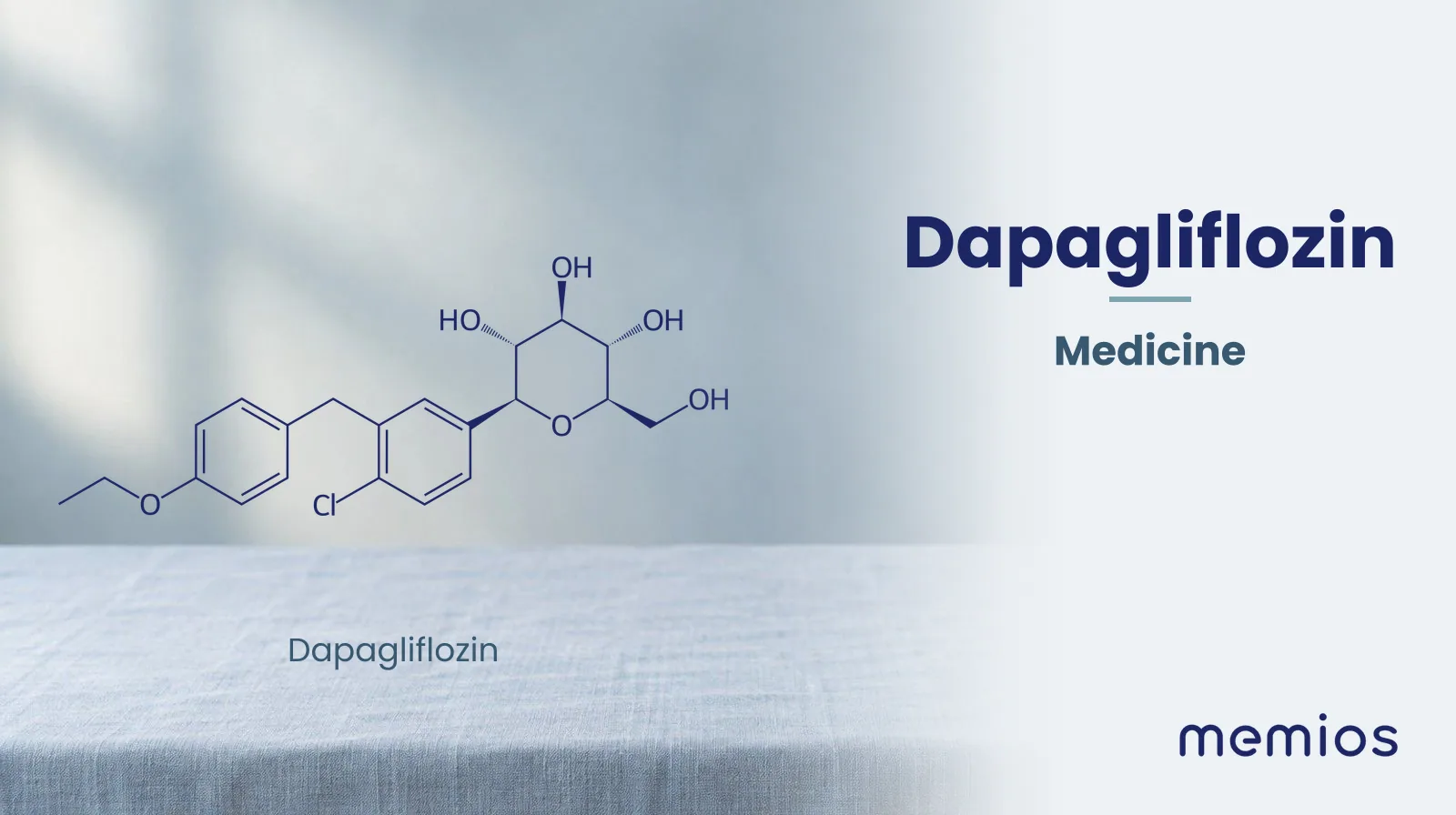
Dapagliflozin is a prescription tablet that blocks the SGLT2 protein in the kidney's proximal tubule, the transporter that normally reclaims filtered glucose back into the blood. Blocking it makes the kidney pass glucose, sodium and water into the urine. It started life as a diabetes drug but is now approved and trialled in people with heart failure and chronic kidney disease whether or not they have diabetes.
What the research says
This is one of the better-evidenced drugs in modern medicine for its cardiac and kidney uses, resting on large placebo-controlled outcome trials rather than surrogate markers. In heart failure with reduced ejection fraction it cut a composite of worsening heart failure or cardiovascular death from 21.2% to 16.3% over a median 18.2 months. In chronic kidney disease, pooled trials show fewer deaths, fewer cardiovascular events and slower kidney decline. The costs are real: genital fungal infections are clearly increased, and in type 1 diabetes, where it is not approved in the United States, it raises the risk of ketoacidosis. Fasting, very-low-carbohydrate diets, heavy alcohol use and surgery can tip people into ketoacidosis even when blood glucose looks normal.
Evidence grade: Well established.
How it works
Drug class: Sodium-glucose cotransporter 2 (SGLT2) inhibitor
Your kidneys filter a large amount of glucose out of the blood every day and then reclaim nearly all of it. Dapagliflozin blocks the main transporter that does the reclaiming, so glucose leaves in the urine, taking sodium and water with it. That lowers blood sugar, reduces blood pressure and fluid overload, and lowers pressure inside the kidney's filtering units, which appears to be why it protects the heart and kidneys even in people without diabetes. (Source 1)
What it is used for
- In DAPA-HF, 4,744 patients were randomised and the primary composite of worsening heart failure or cardiovascular death fell from 21.2% on placebo to 16.3% on dapagliflozin over a median 18.2 months, an absolute difference of 4.9 percentage points, equivalent to about 20 people treated for 18 months to prevent one event. The benefit was the same with or without diabetes. Evidence: established. (Source 2)
- In DELIVER, 6,263 people with ejection fraction above 40% were randomised and the primary composite outcome was reduced, hazard ratio 0.82 (95% CI 0.73 to 0.92). Evidence: established. (Source 3)
- A meta-analysis of 12 randomised trials covering 89,191 patients, of whom 38,949 had an eGFR below 60, found lower all-cause mortality (RR 0.87, 95% CI 0.80 to 0.95), less CKD progression (RR 0.77, 0.68 to 0.88) and less acute kidney injury (RR 0.82, 0.72 to 0.93) with SGLT2 inhibitors. Evidence: established. (Source 4)
- A network meta-analysis found SGLT2 inhibitors lowered all-cause and cardiovascular mortality and kidney failure compared with placebo, with absolute benefits scaling steeply with baseline risk, from about 5 fewer deaths per 1,000 over five years in very low risk patients to 48 fewer in very high risk patients. Evidence: established. (Source 5)
- Trials show glycaemic benefit but at the cost of ketoacidosis, and the US label states the drug significantly increases that risk beyond background in type 1 diabetes. A meta-analysis of 18 placebo-controlled trials in 7,396 participants found DKA risk was strongly modified by body mass index, insulin resistance, how far insulin was cut, and volume depletion. Evidence: disputed. (Source 6)
- The DARE-19 trial tested dapagliflozin in hospitalised COVID-19 patients and did not reach statistical significance on either of its two primary endpoints, in patients with or without type 2 diabetes. Evidence: not-supported. (Source 7)
Interactions
- Insulin and insulin secretagogues (sulfonylureas) (label): Dapagliflozin on its own rarely causes low blood sugar, but combined with insulin or a sulfonylurea the risk of hypoglycaemia rises, so those drugs are often reduced when it is started. (Source 1)
- Very low-carbohydrate and ketogenic diets (case reports): Ketogenic and very-low-carbohydrate eating pushes the body towards making ketones, which is exactly what this drug also does. Together they can accelerate ketoacidosis, and it can happen with normal-looking blood glucose. (Source 8)
- Alcohol (case reports): Heavy drinking is one of the recognised triggers for ketoacidosis in people taking an SGLT2 inhibitor, alongside fasting, vomiting, dehydration and surgery. (Source 8)
- Fasting, including pre-operative fasting (case reports): Going without food while taking an SGLT2 inhibitor drives ketone production hard. A published case describes ketoacidosis arising during routine fasting before surgery. (Source 9)
Stopping it
- There is no withdrawal syndrome, but there is a specific reason to interrupt the drug: several published cases describe ketoacidosis when an SGLT2 inhibitor is continued through pre-operative fasting, and the case authors recommend stopping dapagliflozin at least three days before surgery. (Source 9)
- Stopping for good means giving up the measured benefit. In DAPA-HF the placebo group had 21.2% worsening heart failure or cardiovascular death against 16.3% on the drug, so the difference is what is lost on discontinuation rather than a rebound effect. (Source 2)
What goes wrong
Genital fungal infection is a clear, high-certainty harm of SGLT2 inhibitors. (Source 5)
- Meta-analysis, High certainty.
- Size: Network meta-analysis of randomised trials in type 2 diabetes.
- Who: Adults with type 2 diabetes.
- How long: Varied by trial.
- Result: Increased genital infection versus both placebo and GLP-1 receptor agonists, rated high certainty.
- Funding: not stated.
SGLT-2 inhibitors increased genital infection compared with placebo and GLP-1 receptor agonists (high certainty).
In a national audit of 1,049 people started on dapagliflozin, 7.8% developed a genital fungal infection within 26 weeks, four times more often in women than men. (Source 10)
- Cohort study, Moderate certainty.
- Size: 1,049 patients (476 women, 573 men) from 59 diabetes centres.
- Who: Adults with type 2 diabetes newly treated with dapagliflozin in UK practice.
- How long: 26 weeks.
- Result: 82/1049 (7.8%) overall; 13.2% of women versus 3.3% of men, adjusted OR 4.22 (95% CI 2.48 to 7.19), P < 0.001; prior genital fungal infection 21.6% versus 7.3%, adjusted OR 2.41 (1.04 to 5.57), P = 0.039.
- Funding: not stated.
Patient sex (13.2% women vs 3.3% men) and prior history of genital fungal infection (21.6% vs 7.3%) were found to be associated with occurrence of genital fungal infections after dapagliflozin treatment, adjusted OR 4.22 [95%CI 2.48,7.19], P < 0.001 and adjusted OR 2.41 [95% CI 1.04,5.57], P = 0.039, respectively.
In type 1 diabetes, SGLT2 inhibitors were associated with roughly a tripling of ketoacidosis risk, and a meta-regression using two baseline characteristics alone — body mass index and insulin sensitivity — accounted for 61% of the variation between trials. (Source 6)
- Meta-analysis, Moderate certainty.
- Size: 18 placebo-controlled randomised trials, 7,396 participants, 50% male, mean age 42 years.
- Who: Adults with type 1 diabetes given SGLT2 inhibitors as an adjunct to insulin (5 of the 18 trials used dapagliflozin)
- How long: Varied by trial.
- Result: RR of DKA 2.81 (95% CI 1.97 to 4.01), p < 0.001. In the two-variable meta-regression, baseline BMI β = 0.439 (95% CI 0.211 to 0.666), p < 0.001, and estimated glucose disposal rate β = −0.766 (−1.276 to −0.256), p = 0.001; R2 = 61% for that model. The negative eGDR coefficient means lower insulin sensitivity went with higher ketoacidosis risk.
- Funding: not stated.
Limit of this finding: The 61% belongs to this two-variable model only. A larger model in the same paper, which also includes how much insulin was withdrawn relative to the person’s insulin sensitivity and whether they became volume depleted, reaches 86%; the two figures are not interchangeable. Note also that the two coefficients point in opposite directions — body mass index +0.439 and insulin sensitivity −0.766 — so the plus sign on the first does not carry over to the second. This is a meta-regression across trials, which can show what the differences between trials track, not what causes ketoacidosis in an individual, and the trials ran 52 weeks or less.
In a multivariable meta-regression model, baseline BMI (β = 0.439 [95% CI: 0.211, 0.666], p < 0.001) and estimated glucose disposal rate (eGDR) (β = −0.766 [−1.276, −0.256], p = 0.001) were associated with the RR of DKA (RR: 2.81; 95% CI:1.97, 4.01; p < 0.001, R2 = 61%).
The 86% figure often quoted from this meta-analysis belongs to a larger model that also counts how much insulin was withdrawn relative to insulin sensitivity and whether the person became volume depleted, not to body mass index and insulin sensitivity alone. (Source 11)
- Meta-analysis, Moderate certainty.
- Size: 18 placebo-controlled randomised trials, 7,396 participants.
- Who: Adults with type 1 diabetes given SGLT2 inhibitors as an adjunct to insulin (5 of the 18 trials used dapagliflozin)
- How long: Trials of 52 weeks or less.
- Result: R2 = 86% for the model that adds the insulin dose change-to-baseline insulin sensitivity ratio and volume depletion to baseline BMI and insulin sensitivity, against R2 = 61% for the two baseline variables on their own.
- Funding: not stated.
Limit of this finding: Explanatory power here is about differences between trials, not about individual patients, and adding variables to a model of 18 studies will always raise the figure to some degree. The practical point is the direction: the amount of insulin taken away, judged against how insulin-sensitive the person was, and dehydration both track ketoacidosis risk, on top of body weight and insulin resistance.
A model including also treatment-related parameters (insulin dose change-to-baseline insulin sensitivity ratio and volume depletion) explained 86% of variance across studies in the risk of DKA (R2 = 86%).
Ketoacidosis on an SGLT2 inhibitor can occur with near-normal blood glucose, which is why it is repeatedly missed. (Source 8)
- Expert review, not systematic, Low certainty.
- Size: Not applicable; review with case illustration.
- Who: Patients on SGLT2 inhibitors, including those without diabetes taking them for heart or kidney disease.
- How long: Not applicable.
- Result: No pooled rate given; described as rare but potentially fatal.
- Funding: not stated.
With their rapidly increasing use, there are also increased reports of a rare, often under-recognised and potentially deadly side effect, SGLT-2-inhibitor-induced euglycemic diabetic ketoacidosis (EDKA).
The US label states that in type 1 diabetes dapagliflozin significantly increases the risk of ketoacidosis beyond the background rate. (Source 1)
- Official position, Moderate certainty.
- Size: Not stated in the label passage read.
- Who: Patients with type 1 diabetes mellitus.
- How long: Not stated.
- Result: Described as a life-threatening event; the drug is not approved for type 1 diabetes in the United States.
- Funding: not stated.
In patients with type 1 diabetes mellitus, FARXIGA significantly increases the risk of diabetic ketoacidosis, a life-threatening event, beyond the background rate.
What the evidence supports
In heart failure with reduced ejection fraction, dapagliflozin reduced worsening heart failure or cardiovascular death by 4.9 percentage points in absolute terms over a median 18.2 months. (Source 2)
- Randomized trial, High certainty.
- Size: 4,744 patients randomised (2,373 dapagliflozin, 2,371 placebo)
- Who: Adults with NYHA class II to IV heart failure and ejection fraction 40% or less, with and without type 2 diabetes.
- How long: Median 18.2 months.
- Result: Primary outcome 386/2373 (16.3%) versus 502/2371 (21.2%); hazard ratio 0.74, 95% CI 0.65 to 0.85, P<0.001; absolute risk reduction 4.9 percentage points, about 20 treated for 18 months per event prevented.
- Funding: industry-funded (AstraZeneca-sponsored phase 3 trial)
Over a median of 18.2 months, the primary outcome occurred in 386 of 2373 patients (16.3%) in the dapagliflozin group and in 502 of 2371 patients (21.2%) in the placebo group (hazard ratio, 0.74; 95% confidence interval [CI], 0.65 to 0.85; P<0.001).
The benefit in DAPA-HF did not depend on having diabetes. (Source 2)
- Randomized trial, High certainty.
- Size: 4,744 patients randomised.
- Who: Adults with heart failure and reduced ejection fraction, with and without diabetes.
- How long: Median 18.2 months.
- Result: Consistent effect regardless of diabetes status.
- Funding: industry-funded.
Among patients with heart failure and a reduced ejection fraction, the risk of worsening heart failure or death from cardiovascular causes was lower among those who received dapagliflozin than among those who received placebo, regardless of the presence or absence of diabetes.
Across the whole DELIVER trial population with an ejection fraction above 40%, dapagliflozin reduced cardiovascular death or worsening heart failure by about 18% relative to placebo. (Source 3)
- Randomized trial, High certainty.
- Size: 6,263 participants randomised in DELIVER.
- Who: Adults with symptomatic heart failure and left ventricular ejection fraction above 40% (the whole DELIVER population, not a subgroup)
- How long: Event-driven trial, median follow-up about 2.3 years.
- Result: Overall DELIVER primary-outcome hazard ratio 0.82, 95% CI 0.73 to 0.92, for cardiovascular death, heart failure hospitalisation or urgent heart failure visits.
- Funding: industry-funded (AstraZeneca)
The Dapagliflozin Evaluation to Improve the Lives of Patients With Preserved Ejection Fraction Heart Failure (DELIVER) trial demonstrated that the SGLT2 inhibitor dapagliflozin reduced the risk of cardiovascular death, HF hospitalization or urgent HF visits in patients with HF and an LVEF >40% (HR = 0.82, 95% CI = 0.73–0.92).
In the subgroup whose ejection fraction had recovered from 40% or below to above 40%, the prespecified DELIVER analysis found a reduction in cardiovascular death or worsening heart failure of similar size to the rest of the trial. (Source 12)
- Randomized trial, Moderate certainty.
- Size: 1,151 of 6,263 DELIVER participants (18%) had heart failure with improved ejection fraction.
- Who: Adults in DELIVER whose left ventricular ejection fraction had improved from 40% or below to above 40%.
- How long: Event-driven trial, median follow-up about 2.3 years.
- Result: Primary composite outcome hazard ratio 0.74, 95% CI 0.56 to 0.97; cardiovascular death hazard ratio 0.62, 95% CI 0.41 to 0.96; total worsening heart failure events rate ratio 0.68, 95% CI 0.50 to 0.94; first worsening heart failure events hazard ratio 0.84, 95% CI 0.61 to 1.14.
- Funding: industry-funded (AstraZeneca)
Limit of this finding: The paper lists first worsening heart failure events among the outcomes dapagliflozin “reduced”, but the confidence interval it gives for that component, 0.61 to 1.14, includes 1, which means that component on its own is not statistically significant. The composite outcome and cardiovascular death are significant; the single component is not, and should not be reported as though it were. This is also a subgroup of one trial, prespecified but still a subgroup.
In participants with HFimpEF, dapagliflozin reduced the primary composite outcome (hazard ratio (HR) = 0.74, 95% confidence interval (CI) = 0.56–0.97), first worsening heart failure events (HR = 0.84, 95% CI = 0.61–1.14), cardiovascular death (HR = 0.62, 95% CI = 0.41–0.96) and total worsening heart failure events (rate ratio = 0.68, 95% CI = 0.50–0.94) to a similar extent as for individuals with an EF consistently >40%.
Pooled across 12 randomised trials in 89,191 patients, SGLT2 inhibitors lowered all-cause mortality in people with chronic kidney disease. (Source 4)
- Meta-analysis, Moderate certainty.
- Size: 12 randomised controlled trials, 89,191 patients, including 38,949 with eGFR below 60 ml/min/1.73m2.
- Who: Adults across baseline kidney function groups, with and without diabetes.
- How long: Varied by trial.
- Result: All-cause death RR 0.87 (95% CI 0.80 to 0.95, P = 0.003); CKD progression RR 0.77 (0.68 to 0.88); acute kidney injury RR 0.82 (0.72 to 0.93); heart failure RR 0.67 (0.61 to 0.75)
- Funding: not stated.
SGLT-2 inhibitors were associated with a lower incidence of death from any cause among patients with CKD, compared with placebo: RR 0.87 (95% CI 0.80–0.95; P = 0.003)
A network meta-analysis found the absolute benefit of SGLT2 inhibitors on death depends steeply on a person's baseline risk, ranging from about 5 to 48 fewer deaths per 1,000 over five years. (Source 5)
- Meta-analysis, High certainty.
- Size: Network meta-analysis of randomised trials of SGLT-2 inhibitors and GLP-1 receptor agonists in type 2 diabetes.
- Who: Adults with type 2 diabetes across five cardiovascular risk strata.
- How long: Absolute effects expressed over five years.
- Result: All-cause mortality 5 fewer per 1000 over five years at very low risk up to 48 fewer at very high risk; cardiovascular mortality 2, 7, 12, 16 and 24 fewer per 1000; kidney failure 1, 3, 6, 25 and 38 fewer per 1000.
- Funding: not stated.
5 fewer per 1000 in five years for very low risk patients
What the evidence does not support
Dapagliflozin did not achieve statistical significance on either primary endpoint in hospitalised COVID-19 patients. (Source 7)
- Randomized trial, Moderate certainty.
- Size: DARE-19 randomised trial, prespecified analysis by diabetes status.
- Who: Patients hospitalised with COVID-19 and cardiometabolic risk factors, with and without type 2 diabetes.
- How long: 30-day outcomes.
- Result: Prevention outcome 10.9% versus 13.9% with T2D (HR 0.76, 95% CI 0.49 to 1.18) and 11.5% versus 13.3% without T2D (HR 0.86, 0.55 to 1.35; interaction p = 0.668)
- Funding: industry-funded (AstraZeneca)
The study did not achieve statistical significance for any of the dual primary endpoints.
A network meta-analysis found that, against the widespread assumption, SGLT2 inhibitors probably do not increase ketoacidosis in type 2 diabetes, while the effect on amputation remained very uncertain. (Source 5)
- Meta-analysis, Moderate certainty.
- Size: Network meta-analysis of randomised trials in type 2 diabetes.
- Who: Adults with type 2 diabetes.
- How long: Trial durations varied; absolute effects modelled over five years.
- Result: Diabetic ketoacidosis: probably no increase versus placebo, moderate certainty; amputation and neuropathic pain effects very uncertain.
- Funding: not stated.
SGLT-2 inhibitor treatment and GLP-1 receptor agonist treatment probably did not increase diabetic ketoacidosis compared with placebo or each other (moderate certainty).
Where the research disagrees
How much ketoacidosis risk this drug carries
- BMJ network meta-analysis of trials in type 2 diabetes, 2021, meta-analysis of randomised trials, moderate certainty: SGLT-2 inhibitor treatment and GLP-1 receptor agonist treatment probably did not increase diabetic ketoacidosis compared with placebo or each other (moderate certainty). (Source 5)
- PLOS Medicine meta-analysis in type 1 diabetes, 2020, meta-analysis and meta-regression of 18 placebo-controlled trials, 7,396 participants: In T1DM, the risk of DKA and main therapeutic responses to SGLT2i are modified by baseline BMI and insulin resistance, by total insulin dose reduction-to-baseline insulin sensitivity ratio, and by volume depletion, which may enable the targeted use of these drugs in patients with the greatest benefit and the lowest risk of DKA. (Source 13)
- Journal of Personalized Medicine review, 2024, narrative review with case illustration: With their rapidly increasing use, there are also increased reports of a rare, often under-recognised and potentially deadly side effect, SGLT-2-inhibitor-induced euglycemic diabetic ketoacidosis (EDKA). (Source 8)
How much
- Reference intake: There is no reference intake for a prescription drug. Dosing is set by the prescriber. As a position, the US label (revised 10/2024) states 10 mg orally once daily in adults for the heart failure, chronic kidney disease and heart-failure-hospitalisation indications, and a starting dosage of 5 mg orally once daily for glycaemic control in type 2 diabetes in adults and children aged 10 years and older. (Source 1)
- Upper limit: As a position, the US label’s highest stated dose is 10 mg orally once daily. For glycaemic control the label starts at 5 mg orally once daily and says the dosage can be increased to 10 mg orally once daily for additional glycaemic control. (Source 1)
- Studied: DAPA-HF gave 10 mg once daily to 2,373 patients with heart failure and reduced ejection fraction, on top of recommended therapy. (Source 2)
- Studied: DELIVER randomised 6,263 participants to 10 mg dapagliflozin or placebo daily. (Source 12)
A common belief, and what the research shows
The belief: Dapagliflozin is a diabetes drug, so it is only relevant if your blood sugar is high.
What the research shows: Its largest outcome trials deliberately included people without diabetes, and the benefit did not depend on having it. DAPA-HF concluded that "the risk of worsening heart failure or death from cardiovascular causes was lower among those who received dapagliflozin than among those who received placebo, regardless of the presence or absence of diabetes." The label's first listed indication is not diabetes at all but "To reduce the risk of sustained eGFR decline, end-stage kidney disease, cardiovascular (CV) death, and hospitalization for heart failure in adults with chronic kidney disease at risk of progression." The flip side of the same misconception is dangerous: because people assume ketoacidosis needs high glucose, euglycaemic ketoacidosis on this drug is "often under-recognised and potentially deadly".
Questions and answers
What is it?
Dapagliflozin is a prescription tablet in the SGLT2 inhibitor class. It is a selective blocker of one transporter protein in the kidney. It was developed as a blood-sugar-lowering drug but is now used mainly for its effects on the heart and kidneys. (Source 8)
What does it do in the body?
It stops the kidney from reclaiming glucose that has been filtered out of the blood, so glucose leaves in the urine along with sodium and water. That lowers blood sugar, blood pressure and fluid load, and reduces pressure inside the kidney's filtering units. Those last effects are thought to explain why it helps hearts and kidneys even in people without diabetes. (Source 1)
Is it good or bad for you?
For the conditions it is approved for, the evidence of benefit is among the strongest in cardiology and nephrology: in heart failure with reduced ejection fraction it cut the primary outcome from 21.2% to 16.3% over 18 months. The harms are specific rather than vague: genital fungal infections clearly increase, and ketoacidosis can occur with normal-looking glucose, especially with fasting, very-low-carbohydrate diets, heavy alcohol use or surgery. In type 1 diabetes, where it is not approved in the United States, the ketoacidosis risk is the reason. (Source 2)
How do you get more of it?
This is not something to obtain more of. It is prescription-only and the dose in the outcome trials and in the label is a single fixed daily dose rather than something titrated upwards for effect. There is no food or supplement that supplies it. (Source 1)
If it is harmful, what reduces it?
It is cleared naturally within days of stopping; there is no binding agent or antidote. The situation where the literature actively recommends removing it is around surgery, because fasting plus the drug can produce ketoacidosis. Case reports recommend stopping dapagliflozin at least three days before an operation. (Source 9)
Why might someone be low in it or missing it?
The idea of being low in it does not apply, since it is a drug rather than something the body makes or takes in. The nearest real question is why someone eligible is not on it, and the literature we reached does not study that. (Source 4)
We searched: We searched for dapagliflozin prescribing gaps, treatment inertia and underuse alongside the outcome trials and the CKD meta-analysis; the sources we could reach report efficacy and harms rather than reasons for non-use.
Which whole foods contain it or feed it?
No food contains dapagliflozin. Food matters in the opposite direction: the diets and eating patterns that push the body towards making ketones, meaning very-low-carbohydrate or ketogenic eating, prolonged fasting and heavy alcohol use, are the ones that combine badly with this drug and can accelerate ketoacidosis. (Source 8)
What happens if you do not have it?
Nothing is deficient, because this is a drug and not a nutrient. What the trials measure is what happens to comparable people who do not take it: in DAPA-HF, 21.2% of the placebo group had worsening heart failure or cardiovascular death within a median 18.2 months, against 16.3% on the drug. In chronic kidney disease, pooled trials show higher all-cause mortality and faster kidney decline without SGLT2 inhibition. (Source 4)
How can you test for it?
There is no blood level test for the drug in routine use. What is monitored instead is the effect and the risk: HbA1c if it is being used for glucose, kidney function and eGFR, and blood ketones if someone becomes unwell. The last matters because glucose can look normal while ketoacidosis is developing, which is why the complication is repeatedly missed and why a glucose reading alone is not a reliable test. (Source 8)
References
- DailyMed, US National Library of Medicine (label sponsored by AstraZeneca Pharmaceuticals LP). FARXIGA (dapagliflozin) tablets, for oral use - prescribing information, Revised: 10/2024. 2024. Read the source
- New England Journal of Medicine (repository PDF copy). Dapagliflozin in Patients with Heart Failure and Reduced Ejection Fraction (DAPA-HF). 2019. PMID 31535829, DOI 10.1056/NEJMoa1911303. Read the source
- Nature Medicine. Dapagliflozin in heart failure with improved ejection fraction: a prespecified analysis of the DELIVER trial - Introduction (overall DELIVER trial result). 2022. DOI 10.1038/s41591-022-02102-9. Read the source
- Scientific Reports (Nature Portfolio). SGLT-2 inhibitors improve cardiovascular and renal outcomes in patients with CKD: a systematic review and meta-analysis. 2023. DOI 10.1038/s41598-023-42989-z. Read the source
- The BMJ. Sodium-glucose cotransporter protein-2 (SGLT-2) inhibitors and glucagon-like peptide-1 (GLP-1) receptor agonists for type 2 diabetes: systematic review and network meta-analysis of randomised controlled trials. 2021. PMID 33441402, DOI 10.1136/bmj.m4573. Read the source
- PLOS Medicine. Assessing the risk of ketoacidosis due to sodium-glucose cotransporter (SGLT)-2 inhibitors in patients with type 1 diabetes: A meta-analysis and meta-regression - abstract, Methods and findings: trials included and the baseline-variable meta-regression model (R2 = 61%). 2020. PMID 33373368, DOI 10.1371/journal.pmed.1003461. Read the source
- Cardiovascular Diabetology (Springer Nature). Efficacy and safety of dapagliflozin in patients hospitalized with COVID-19 with and without type 2 diabetes: a prespecified analysis of the DARE-19 randomized trial. 2025. DOI 10.1186/s12933-025-02875-6. Read the source
- Journal of Personalized Medicine (MDPI). From Sweet to Sour: SGLT-2-Inhibitor-Induced Euglycemic Diabetic Ketoacidosis. 2024. DOI 10.3390/jpm14070665. Read the source
- Korean Journal of Family Medicine. Fasting is not always good: perioperative fasting leads to pronounced ketone body production in patients treated with SGLT2 inhibitors: a case report. 2025. Read the source
- Primary Care Diabetes (published copy hosted by the Association of British Clinical Diabetologists). Clinical risk factors predicting genital fungal infections with sodium–glucose cotransporter 2 inhibitor treatment: The ABCD nationwide dapagliflozin audit. 2018. Read the source
- PLOS Medicine. Assessing the risk of ketoacidosis due to sodium-glucose cotransporter (SGLT)-2 inhibitors in patients with type 1 diabetes: A meta-analysis and meta-regression - abstract, Methods and findings: the larger meta-regression model including treatment-related parameters (R2 = 86%). 2020. PMID 33373368, DOI 10.1371/journal.pmed.1003461. Read the source
- Nature Medicine. Dapagliflozin in heart failure with improved ejection fraction: a prespecified analysis of the DELIVER trial. 2022. DOI 10.1038/s41591-022-02102-9. Read the source
- PLOS Medicine. Assessing the risk of ketoacidosis due to sodium-glucose cotransporter (SGLT)-2 inhibitors in patients with type 1 diabetes: A meta-analysis and meta-regression - abstract, Conclusions. 2020. PMID 33373368, DOI 10.1371/journal.pmed.1003461. Read the source