Supplements · September 30, 2026 · Memios · 18 min read
Creatine monohydrate
Creatine is one of the few supplements where the exercise evidence is strong rather than suggestive: meta-analyses of randomised trials show small-to-moderate added gains in lean tissue and strength when it is combined with resistance training, and a European regulator has accepted a cause-and-effect relationship for repeated short, high-intensity efforts.
TLDR
- Well established. Creatine is one of the few supplements where the exercise evidence is strong rather than suggestive: meta-analyses of randomised trials show small-to-moderate added gains in lean tissue and strength when it is combined with resistance training.
- What it is: Creatine is a nitrogen-containing compound that the body makes itself and also obtains from meat and fish; supplemental creatine monohydrate raises the amount stored inside muscle.
- Main use, supported: Added to resistance training in older adults, creatine produced greater gains in lean tissue mass and upper- and lower-body strength than placebo. (moderate certainty)
- Other use, supported: EFSA's Panel accepted a cause-and-effect relationship between creatine and performance in short, high-intensity repeated exercise bouts.
- Claim NOT supported by research: A five-year randomised trial of 10 g/day creatine in early Parkinson's disease was stopped for futility and showed no clinical benefit. (high certainty)
- Another claim NOT supported: Pooled trial data show a small, statistically significant rise in serum creatinine with creatine, including in studies longer than 12 weeks, without a significant change in glomerular filtration rate. (low certainty)
- Recommended dose: not established. No dietary reference intake or RDA has been set for creatine; it is synthesised endogenously and also obtained from meat and fish, and it is regulated as a supplement rather than an essential nutrient.
- Studied dose (a trial dose, not a recommendation): EFSA's authorised claim is based on 3 g of creatine consumed daily by adults performing high-intensity exercise. Findings citing that trial: 1 for, 1 against.
- Upper limit: No tolerable upper intake level has been set by EFSA or the US Institute of Medicine.
- What goes wrong: 2 findings on harm. In a 28-day trial of only 24 people, reported in a preprint that has not been peer reviewed, most participants reported unwanted gastrointestinal or fluid-retention symptoms on creatine.
- Common myth: Creatine damages your kidneys, which is why it raises creatinine on a blood test.
What it is
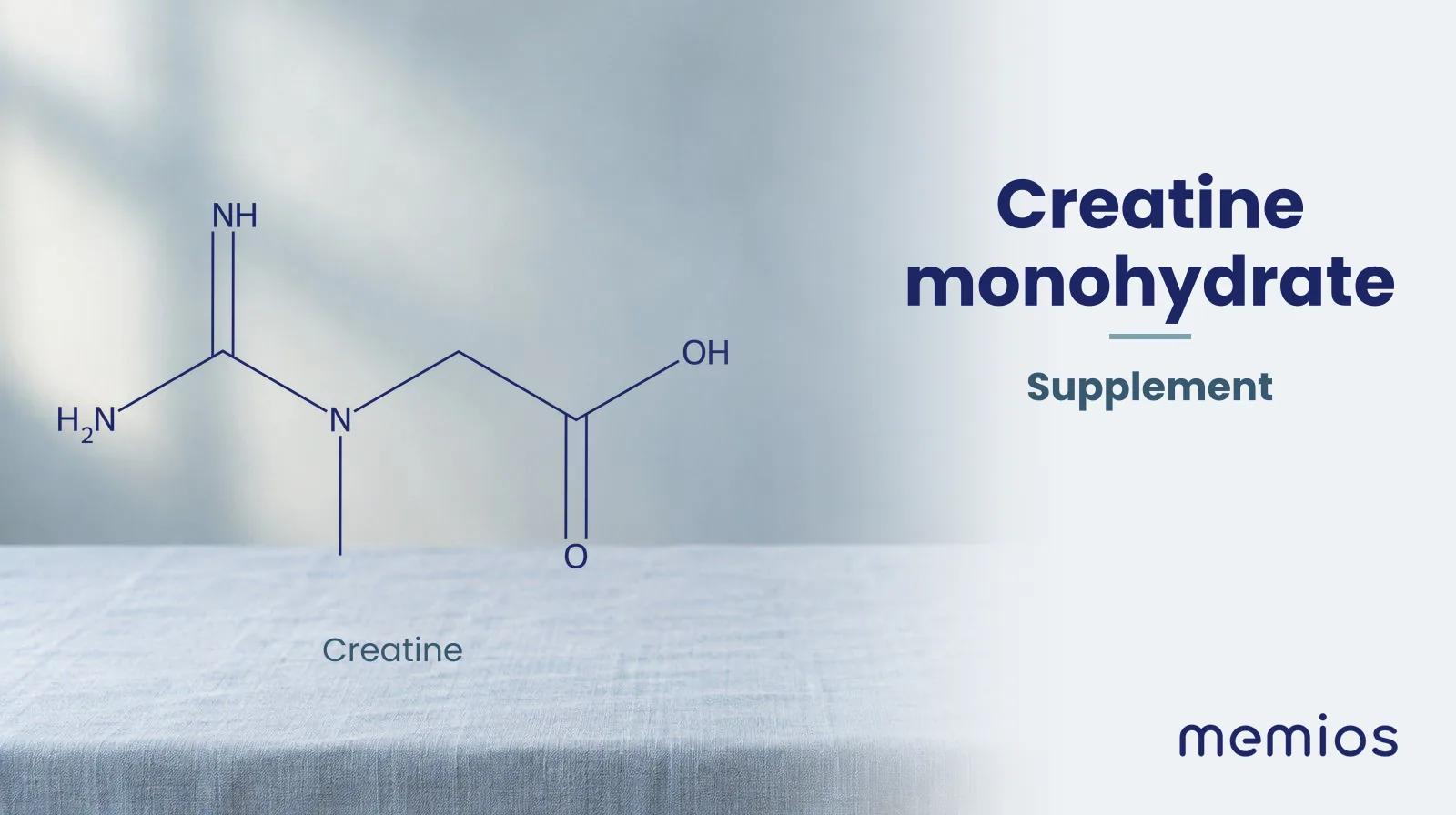
Creatine is a nitrogen-containing compound that the body makes itself and also obtains from meat and fish; supplemental creatine monohydrate raises the amount stored inside muscle. The European Food Safety Authority judged that the substance is well enough defined to assess: its Panel stated that creatine is sufficiently characterised. Trials consistently show that taking it increases intramuscular creatine concentrations, which is the proposed mechanism for its effects on short, hard bouts of exercise.
What the research says
Creatine is one of the few supplements where the exercise evidence is strong rather than suggestive: meta-analyses of randomised trials show small-to-moderate added gains in lean tissue and strength when it is combined with resistance training, and a European regulator has accepted a cause-and-effect relationship for repeated short, high-intensity efforts. The same regulator rejected claims for endurance. Claims about brain function are much weaker and actively contested - one 2024 meta-analysis reported a moderate-certainty effect on memory but no effect on overall cognition or executive function, and a 2026 commentary plus EFSA say that meta-analysis double-counted outcomes. A large five-year trial in Parkinson's disease was stopped for futility. On safety, the much-repeated kidney-damage claim is not supported by the pooled trial data, which show a small rise in serum creatinine without a change in measured filtration; the reliably reported downsides are weight gain and, in some people, gastrointestinal symptoms.
Evidence grade: Well established.
What goes wrong
Weight gain is the side effect most consistently attributed to creatine, with gastrointestinal upset, cramps and heat intolerance reported anecdotally. (Source 1)
- Official position, Certainty not rated.
- Size: Not applicable - agency review of the literature.
- Who: Healthy adults using creatine.
- How long: Short-term and multi-year use.
- Result: 1-2 kg increase in total body weight in a month reported in strength-training studies.
- Funding: independent (US NIH Office of Dietary Supplements)
Anecdotal reactions to creatine use include nausea, diarrhea and related gastrointestinal distress, muscle cramps, and heat intolerance.
In a 28-day trial of only 24 people, reported in a preprint that has not been peer reviewed, most participants reported unwanted gastrointestinal or fluid-retention symptoms on creatine. (Source 2)
- Randomized trial, Very low certainty.
- Size: 24 healthy adults (single-centre, single-blind; preprint, not yet peer reviewed)
- Who: Healthy male and female adults.
- How long: 28 days; 5 g/day versus 20 g/day loading for 14 days then 5 g/day.
- Result: GI symptoms reported by 79.2% of all participants and 81.0% of females; more frequent and more severe in the loading group but not statistically significant; no serious adverse events; no clinically significant laboratory changes.
- Funding: industry-funded (Vireo Systems, Inc.)
Limit of this finding: This is a single small study (24 participants, single-blind, one centre) posted as a preprint and not yet peer reviewed. It was run by a contract research organisation and funded by a company. Symptoms were self-reported and there was no placebo group, so the study cannot show how many of these symptoms were caused by creatine. The difference between the two dosing schedules was not statistically significant.
Undesired GI symptoms were reported by 79.2% of all participants and by 81.0% of females, with bloating, water retention, puffiness, and stomach discomfort being the most frequently cited.
What the evidence supports
Added to resistance training in older adults, creatine produced greater gains in lean tissue mass and upper- and lower-body strength than placebo. (Source 3)
- Meta-analysis, Moderate certainty.
- Size: 721 participants across 22 randomised controlled trials.
- Who: Older men and women, mean age 57-70 years across studies.
- How long: Resistance training 2-3 days/week for 7-52 weeks.
- Result: Lean tissue mass mean difference 1.37 kg (95% CI 0.97-1.76), p<0.00001; chest press SMD 0.35 (0.16-0.53), p=0.0002; leg press SMD 0.24 (0.05-0.43), p=0.01.
- Funding: independent.
Creatine supplementation resulted in greater increases in lean tissue mass (mean difference =1.37 kg [95% CI =0.97–1.76]; p<0.00001), chest press strength (standardized mean difference [SMD] =0.35 [0.16–0.53]; p=0.0002), and leg press strength (SMD =0.24 [0.05–0.43]; p=0.01).
EFSA's Panel accepted a cause-and-effect relationship between creatine and performance in short, high-intensity repeated exercise bouts. (Source 4)
- Official position, Certainty not rated.
- Size: Not applicable - regulatory evaluation of submitted human studies.
- Who: Adults performing high-intensity exercise.
- How long: Not applicable.
- Result: Claim authorised; the Panel specified 3 g of creatine daily to obtain the claimed effect.
- Funding: independent.
The Panel concludes that a cause and effect relationship has been established between the consumption of creatine and an increase in physical performance during short-term, high intensity, repeated exercise bouts.
The International Society of Sports Nutrition's position stand judges creatine safe and well tolerated at doses up to 30 g/day for five years. (Source 5)
- Official position, Certainty not rated.
- Size: Not applicable - narrative position stand citing the trial literature.
- Who: Healthy individuals and patient populations from infants to the elderly.
- How long: Short-term and up to 5 years.
- Result: No dose-related toxicity identified by the panel at the doses reviewed.
- Funding: Industry-linked professional society; several authors report sports-nutrition industry ties.
These studies show that short and long-term supplementation (up to 30 g/day for 5 years) is safe and well-tolerated in healthy individuals and in a number of patient populations ranging from infants to the elderly.
What the evidence does not support
The same EFSA evaluation found the evidence did not establish a benefit of creatine for endurance capacity. (Source 4)
- Official position, Certainty not rated.
- Size: Three human intervention studies from which conclusions could be drawn (endurance capacity); one meta-analysis of 18 studies plus one further study (endurance performance)
- Who: Adults performing endurance exercise.
- How long: Not stated.
- Result: No effect of creatine supplementation on measures of endurance capacity or endurance performance; claims not authorised.
- Funding: independent.
On the basis of the data presented, the Panel concludes that a cause and effect relationship has not been established between the consumption of creatine and an increase in endurance capacity.
A published commentary argues that the 2024 cognition meta-analysis counted multiple non-independent outcomes from the same participants, inflating precision. (Source 6)
- Systematic review, Certainty not rated.
- Size: Re-examination of the 16 trials pooled by Xu et al. 2024.
- Who: Not applicable - methodological critique.
- How long: Not applicable.
- Result: Number of pooled observations exceeds number of unique randomised participants; authors recommend re-analysis with multilevel models or within-study averaging.
- Funding: not stated.
violates the assumption of independent observations and is known to artificially inflate precision and statistical power
EFSA concluded that no conclusions could be drawn from the pooled cognitive data in that meta-analysis. (Source 7)
- Official position, Certainty not rated.
- Size: Not applicable.
- Who: Not applicable.
- How long: Not applicable.
- Result: EFSA judged the pooled sample sizes inflated and declined to draw conclusions.
- Funding: independent.
pooling non-independent cognitive test results in the meta-analysis by Xu et al. (2024) inflated sample sizes. Consequently, the EFSA determined that no conclusions could be drawn based on that data.
A five-year randomised trial of 10 g/day creatine in early Parkinson's disease was stopped for futility and showed no clinical benefit. (Source 8)
- Randomized trial, High certainty.
- Size: 955 participants at the interim analysis, across 45 US and Canadian sites.
- Who: People with early, treated Parkinson disease.
- How long: Minimum 5 years of treatment; median follow-up 4 years.
- Result: Summed ranks 2360 (95% CI 2249-2470) placebo vs 2414 (95% CI 2304-2524) creatine; global statistical test t1865.8 = -0.75, 2-sided P = .45.
- Funding: independent (NIH/NINDS-funded NET-PD network)
Among patients with early and treated Parkinson disease, treatment with creatine monohydrate for at least 5 years, compared with placebo did not improve clinical outcomes.
Pooled trial data show a small, statistically significant rise in serum creatinine with creatine, including in studies longer than 12 weeks, without a significant change in glomerular filtration rate. (Source 9)
- Meta-analysis, Low certainty.
- Size: 21 studies reviewed; 12 studies in the creatinine meta-analysis (177 creatine, 263 control)
- Who: Mixed adult populations taking creatine supplements.
- How long: Follow-up subgrouped as <=1 week, 1-12 weeks, and >12 weeks.
- Result: Serum creatinine MD 0.07 (printed as µmol/L, unit almost certainly an error; 95% CI 0.01 to 0.12; p = 0.03); <=1 week MD 0.12 (0.03 to 0.21); 1-12 weeks MD 0.04 (-0.09 to 0.17), not significant; >12 weeks significant again; GFR difference not statistically significant.
- Funding: independent (funding stated as None)
Limit of this finding: The paper prints the pooled rise in serum creatinine as 0.07 µmol/L. A difference that small in those units is clinically meaningless and far below what a laboratory test can detect, so the unit is almost certainly a printing error (most likely mg/dL, where 0.07 would be a small but measurable rise). Read this as a small, statistically significant rise in the blood creatinine marker, not as a precise figure. Creatine is converted to creatinine in the body, so a higher creatinine reading does not by itself mean kidney damage; the same meta-analysis found no significant change in filtration rate (GFR). The body of the paper also reports that the rise became significant again in studies longer than 12 weeks.
The meta-analysis revealed a non-statistically significant differences in GFR following creatine supplementation compared to control.
Where the evidence is mixed
A 2024 meta-analysis found an effect of creatine on memory but no effect on overall cognitive function or executive function. (Source 10)
- Meta-analysis, Moderate certainty.
- Size: 492 participants across 16 randomised controlled trials.
- Who: Adults aged 20.8-76.4 years, healthy individuals and patients with specific diseases.
- How long: Short-term (<4 weeks) and long-term (>=4 weeks) interventions.
- Result: Memory SMD 0.31 (95% CI 0.18-0.44); no significant improvement in overall cognitive function or executive function; GRADE certainty moderate for memory, low for the rest.
- Funding: independent (National Natural Science Foundation of China, Project No. 72364006)
Limit of this finding: A 2026 commentary in the same journal reports that this meta-analysis pooled non-independent cognitive test results, which inflated its sample sizes, and that EFSA concluded no conclusions could be drawn from it. Treat the memory result as uncertain.
However, no significant improvements were found on overall cognitive function or executive function.
A narrative safety review reports no adverse renal effects in healthy people but flags that evidence is lacking for people with existing kidney disease and for pregnancy. (Source 11)
- Systematic review, Low certainty.
- Size: Not stated - short critical review of the safety literature.
- Who: Healthy individuals; people with pre-existing kidney conditions; pregnant women.
- How long: Not stated.
- Result: No demonstrated link to cancer; no adverse effect on renal function in healthy individuals; gastrointestinal distress reported at high doses.
- Funding: not stated.
In terms of kidney health, studies consistently show no adverse effects on renal function in healthy individuals, though caution is advised for those with pre-existing kidney conditions and pregnant women, as evidence is lacking for these populations.
Where the research disagrees
Whether creatine improves cognition
- Xu et al., Frontiers in Nutrition (2024), meta-analysis of 16 RCTs, 492 participants, GRADE moderate certainty for memory only: Creatine supplementation showed significant positive effects on memory (SMD = 0.31, 95% CI: 0.18–0.44, Hedges's g = 0.3003, 95% CI: 0.1778–0.4228) (Source 10)
- Commentary authors, Frontiers in Nutrition (2026), citing EFSA, methodological commentary and regulatory assessment: pooling non-independent cognitive test results in the meta-analysis by Xu et al. (2024) inflated sample sizes. Consequently, the EFSA determined that no conclusions could be drawn based on that data. (Source 7)
Whether creatine harms the kidneys
- BMC Nephrology meta-analysis (2025), meta-analysis of randomised controlled trials: The meta-analysis revealed a non-statistically significant differences in GFR following creatine supplementation compared to control. (Source 9)
- Frontiers in Nutrition safety review (2025), narrative critical review: though caution is advised for those with pre-existing kidney conditions and pregnant women, as evidence is lacking for these populations (Source 11)
How much
- Reference intake: No dietary reference intake or RDA has been set for creatine; it is synthesised endogenously and also obtained from meat and fish, and it is regulated as a supplement rather than an essential nutrient. EFSA's 2011 opinion states only that 3 g of creatine should be consumed daily to obtain the authorised performance effect in adults performing high-intensity exercise. (Source 4)
- Upper limit: No tolerable upper intake level has been set by EFSA or the US Institute of Medicine. The International Society of Sports Nutrition states that supplementation up to 30 g/day for 5 years has been safe and well tolerated in the trials it reviewed; this is a society position, not a regulatory limit. (Source 5)
- Studied: EFSA's authorised claim is based on 3 g of creatine consumed daily by adults performing high-intensity exercise. (Source 4)
- Studied: NIH ODS describes the common protocol as a loading phase of 20 g/day in four 5 g portions for 5-7 days, followed by 3-5 g/day maintenance. (Source 1)
- Studied: The NET-PD LS-1 Parkinson's trial gave 10 g/day of creatine monohydrate for a minimum of five years. (Source 8)
- Studied: The 28-day tolerability trial compared 5 g/day with 20 g/day loading for 14 days followed by 5 g/day. (Source 2)
A common belief, and what the research shows
The belief: Creatine damages your kidneys, which is why it raises creatinine on a blood test.
What the research shows: Pooled randomised trial data find only a small rise in serum creatinine with no significant change in measured filtration: the meta-analysis reports that creatine supplementation was associated with a small but statistically significant increase in serum creatinine (MD: 0.07 µmol/L; 95% CI: 0.01 to 0.12; p = 0.03), while The meta-analysis revealed a non-statistically significant differences in GFR following creatine supplementation compared to control. Reviewers still note that evidence is lacking for those with pre-existing kidney conditions and pregnant women, so the reassurance applies to healthy people. Separately, a large five-year trial in Parkinson's disease shows that safety is not the same as benefit: creatine monohydrate for at least 5 years, compared with placebo did not improve clinical outcomes.
Questions and answers
What is it?
Creatine is a compound the body makes itself. It is made mainly in the liver and kidneys from two amino acids, arginine and glycine. It is also eaten in meat and fish. Creatine monohydrate is the common supplement form. (Source 12)
What does it do in the body?
Most of the body's creatine is stored in muscle as phosphocreatine. The creatine kinase / phosphocreatine system quickly regenerates the cell's energy currency (ATP) and moves energy from mitochondria to where it is used in the cell. This matters most for short, intense muscle effort. (Source 12)
Is it good or bad for you?
With resistance training, trials show modest benefits. A 2025 meta-analysis of 8 randomised trials (482 older adults) found a small increase in lean tissue mass (SMD 0.27) and a small, borderline increase in lower-limb strength (SMD 0.29; the confidence interval reached zero, p = 0.05). It found no significant gain in upper-body strength. For safety, a 2025 meta-analysis of kidney outcomes found a small rise in blood creatinine but no significant change in kidney filtration (GFR). (Source 13)
How do you get more of it?
The body has to replace roughly 1 to 3 g of creatine a day to keep normal stores, depending on muscle mass. That comes from the body's own production and from meat and fish in the diet. Supplements raise muscle creatine, and people with low stores, such as vegetarians, may see larger gains. For example, a 6-month trial gave women switching to a vegetarian diet 1 g of creatine monohydrate a day. (Source 12)
If it is harmful, what reduces it?
Does not apply in healthy people, because creatine is not considered harmful. The main thing people worry about is the kidneys. A 2025 meta-analysis (21 studies in the review; 12 pooled, 177 creatine and 263 control participants) found a small, statistically significant rise in serum creatinine that the authors attribute to creatine turnover rather than kidney damage. GFR did not change significantly. Note: the paper reports the size of that rise in a unit (micromoles per litre) that would make it far too small to measure, so the unit is probably a printing error; the direction of the finding is clear, but the exact size should not be relied on. (Source 14)
Why might someone be low in it or missing it?
Diet is the main reason, because vegetarian diets contain almost no creatine. In a randomised trial, 40 omnivorous women were assigned to three groups. Those who switched to a vegetarian diet without supplements saw plasma and muscle creatine fall within 3 months. Adding 1 g of creatine a day lessened that fall. Rare inherited disorders of creatine synthesis or transport also cause deficiency (see ifAbsent). (Source 15)
Which whole foods contain it or feed it?
Meat and fish are the dietary sources. The ISSN position stand puts about 1 to 2 g of creatine in a pound (about 450 g) of uncooked beef or salmon. Balanced vegetarian diets contain almost none. (Source 12)
What happens if you do not have it?
Healthy people make their own creatine, so a diet without meat lowers stores but does not cause disease. True absence comes from rare inherited creatine deficiency disorders (GAMT, AGAT or creatine transporter defects). These cause developmental delay, intellectual disability and speech problems. Seizures are also common in GAMT deficiency (more than 70% of those affected). (Source 16)
How can you test for it?
There is no routine test of creatine status in healthy people. Inherited creatine deficiency is diagnosed by genetic testing alongside suggestive biochemical results, such as guanidinoacetate, creatine and creatinine levels in urine, blood or spinal fluid, and brain proton MR spectroscopy. These tests have limits: females carrying a creatine transporter (SLC6A8) variant can have normal urine and brain MRS results. Blood creatinine, a routine kidney test, rises slightly with supplements, which can confuse kidney testing (see getRidOf). (Source 16)
References
- National Institutes of Health, Office of Dietary Supplements. Dietary Supplements for Exercise and Athletic Performance - Health Professional Fact Sheet (creatine, Safety section). 2025. Read the source
- medRxiv (preprint, not peer reviewed). Gastrointestinal and Fluid Retention Symptoms Associated with Creatine Monohydrate With and Without Loading Dose Over 28 Days of Supplementation. 2025. DOI 10.1101/2025.10.07.25337280. Read the source
- Open Access Journal of Sports Medicine. Effect of creatine supplementation during resistance training on lean tissue mass and muscular strength in older adults: a meta-analysis. 2017. PMID 29138605, DOI 10.2147/OAJSM.S123529. Read the source
- EFSA Journal (European Food Safety Authority, Panel on Dietetic Products, Nutrition and Allergies). Scientific Opinion on the substantiation of health claims related to creatine and increase in physical performance during short-term, high intensity, repeated exercise bouts, increase in endurance capacity, and increase in endurance performance pursuant to Article 13(1) of Regulation (EC) No 1924/2006. 2011. DOI 10.2903/j.efsa.2011.2303. Read the source
- Journal of the International Society of Sports Nutrition. International Society of Sports Nutrition position stand: safety and efficacy of creatine supplementation in exercise, sport, and medicine. 2017. PMID 28615996, DOI 10.1186/s12970-017-0173-z. Read the source
- Frontiers in Nutrition. Commentary: The effects of creatine supplementation on cognitive function in adults: a systematic review and meta-analysis. 2026. DOI 10.3389/fnut.2026.1716285. Read the source
- Frontiers in Nutrition. Commentary: The effects of creatine supplementation on cognitive function in adults: a systematic review and meta-analysis (passage reporting the EFSA assessment). 2026. DOI 10.3389/fnut.2026.1716285. Read the source
- JAMA (Writing Group for the NINDS Exploratory Trials in Parkinson Disease (NET-PD) Investigators). Effect of Creatine Monohydrate on Clinical Progression in Patients With Parkinson Disease: A Randomized Clinical Trial. 2015. PMID 25668262, DOI 10.1001/jama.2015.120. Read the source
- BMC Nephrology. Effect of creatine supplementation on kidney function: a systematic review and meta-analysis. 2025. PMID 41199218, DOI 10.1186/s12882-025-04558-6. Read the source
- Frontiers in Nutrition. The effects of creatine supplementation on cognitive function in adults: a systematic review and meta-analysis. 2024. PMID 39070254, DOI 10.3389/fnut.2024.1424972. Read the source
- Frontiers in Nutrition. A short review of the most common safety concerns regarding creatine ingestion. 2025. DOI 10.3389/fnut.2025.1682746. Read the source
- Journal of the International Society of Sports Nutrition. International Society of Sports Nutrition position stand: safety and efficacy of creatine supplementation in exercise, sport, and medicine. 2017. DOI 10.1186/s12970-017-0173-z. Read the source
- European Review of Aging and Physical Activity. The impact of creatine supplementation associated with resistance training on muscular strength and lean tissue mass in the aged: a systematic review and meta-analysis. 2025. DOI 10.1186/s11556-025-00392-9. Read the source
- BMC Nephrology. Effect of creatine supplementation on kidney function: a systematic review and meta-analysis. 2025. PMID 41199218, DOI 10.1186/s12882-025-04558-6. Read the source
- British Journal of Nutrition. Changing to a vegetarian diet reduces the body creatine pool in omnivorous women, but appears not to affect carnitine and carnosine homeostasis: a randomised trial. 2018. DOI 10.1017/S000711451800017X. Read the source
- GeneReviews, NCBI Bookshelf (Mercimek-Andrews S, Salomons GS). Creatine Deficiency Disorders (GeneReviews). 2025. Read the source