Supplements · September 29, 2026 · Memios · 16 min read
Coenzyme Q10
CoQ10 is marketed mainly for two things: protecting muscles from statin side effects, and helping a failing heart.
TLDR
- Disputed. CoQ10 is marketed mainly for two things: protecting muscles from statin side effects, and helping a failing heart.
- What it is: Coenzyme Q10 is a naturally occurring, fat-soluble compound present in all human tissues, with the highest concentrations in the heart, liver, kidneys and pancreas.
- Main use, supported: In the 2021 Cochrane review, CoQ10 probably reduced all-cause mortality and heart failure hospitalisation, but the mortality result rested on a single trial. (moderate certainty)
- Other use, supported: A 2018 meta-analysis of 12 randomised trials reported that CoQ10 reduced statin-associated muscle pain, weakness, cramp and tiredness, while leaving creatine kinase unchanged. (low certainty)
- Claim NOT supported by research: A phase III trial of high-dose CoQ10 in early Parkinson's disease was stopped for futility and showed no clinical benefit. (high certainty)
- Another claim NOT supported: Despite the mortality signal, the Cochrane authors concluded there is no convincing evidence either way for CoQ10 in heart failure. (low certainty)
- Recommended dose (official position): There is no RDA, adequate intake or dietary reference value for coenzyme Q10 - it is not an essential nutrient, since the body makes it. The Norwegian Scientific Committee for Food Safety (2015) records dietary intake in developed countries of about 3 to 6 mg a day, mostly from meat and fish.
- Studied dose (a trial dose, not a recommendation): Q-SYMBIO gave CoQ10 100 mg three times daily (300 mg/day) in addition to standard heart failure therapy, for two years. Findings citing that trial: 1 against, 1 mixed.
- Upper limit: No tolerable upper intake level has been set by EFSA or any comparable body.
- What goes wrong: 3 findings on harm. The Cochrane review found low-quality evidence that CoQ10 may increase the risk of adverse effects, or make little to no difference.
- Common myth: Anyone on a statin should take CoQ10 to prevent muscle pain.
What it is
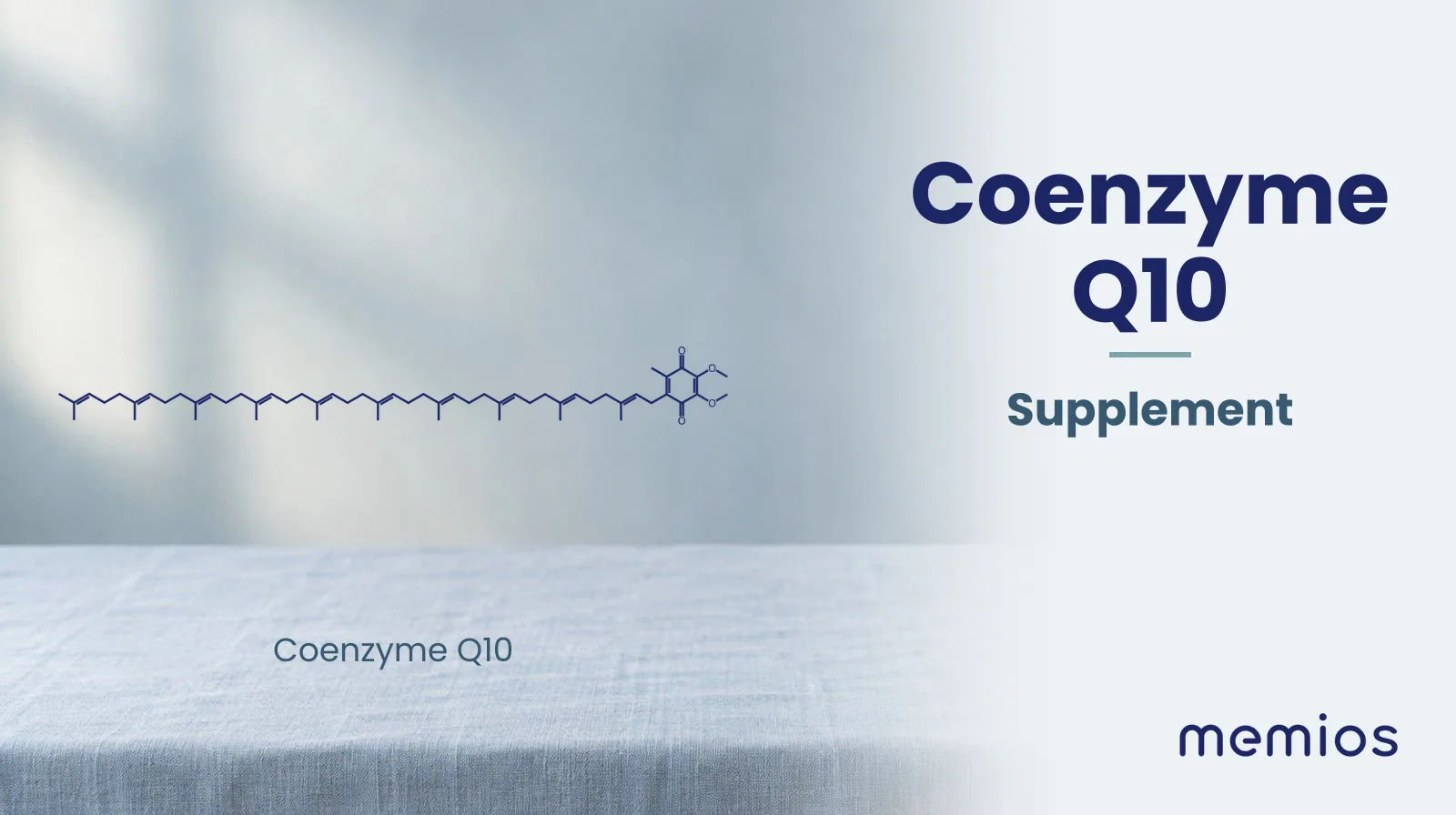
Coenzyme Q10 is a naturally occurring, fat-soluble compound present in all human tissues, with the highest concentrations in the heart, liver, kidneys and pancreas. Ubiquinone is the fully oxidised form and ubiquinol the fully reduced form; it acts as an electron carrier in mitochondria and as a coenzyme for mitochondrial enzymes, and it also has antioxidant properties. Meat and fish are the richest dietary sources, and dietary intake in developed countries is only about 3 to 6 mg a day. It is sold in the United States and Europe as a dietary supplement.
What the research says
CoQ10 is marketed mainly for two things: protecting muscles from statin side effects, and helping a failing heart. The two literatures need to be judged separately and both are unsettled. For statin muscle symptoms, meta-analyses of the same small trials disagree - one 2018 pooled analysis reported clear improvement in muscle pain, weakness, cramp and tiredness, while a 2022 pooled analysis of overlapping trials found no significant benefit, and the US NCCIH's reading of the whole body of work is that it does not support a benefit. For heart failure, one trial (Q-SYMBIO, 420 patients, partly industry-supported) drove a large mortality benefit, and the 2021 Cochrane review rated that moderate-quality evidence while still concluding there is no convincing evidence to support or refute CoQ10 in heart failure. A large NIH-funded trial in early Parkinson's disease at up to 2400 mg/day was stopped for futility. Reported side effects are generally mild, but interactions with warfarin and insulin are flagged.
Evidence grade: Disputed.
What goes wrong
The Cochrane review found low-quality evidence that CoQ10 may increase the risk of adverse effects, or make little to no difference. (Source 1)
- Systematic review, Low certainty.
- Size: 2 studies, 568 participants for the adverse events outcome.
- Who: People with heart failure.
- How long: One to 26 months.
- Result: Adverse events RR 0.70 (95% CI 0.45 to 1.10), very low-quality evidence for the estimate; the review's stated conclusion is that CoQ10 may increase the risk of adverse effects or have little to no difference.
- Funding: Cochrane review; independent of industry.
There is low-quality evidence that coenzyme Q10 may increase the risk of adverse effects, or have little to no difference.
CoQ10 is flagged as interacting with the anticoagulant warfarin and with insulin, and as potentially incompatible with some cancer treatments. (Source 2)
- Official position, Low certainty.
- Size: n/a (agency safety summary)
- Who: General users of CoQ10 supplements.
- How long: n/a.
- Result: No serious side effects reported; mild effects such as insomnia or digestive upsets may occur; interactions listed with warfarin, insulin and some cancer treatments.
- Funding: US government agency (NCCIH), last updated January 2019.
CoQ10 may interact with the anticoagulant (blood thinner) warfarin and the diabetes drug insulin, and it may not be compatible with some types of cancer treatment.
In a Norwegian regulatory risk assessment, adverse effects reported in humans were limited to mild gastrointestinal symptoms, and no studies in children under 10 or in adolescents were identified. (Source 3)
- Systematic review, Low certainty.
- Size: Risk assessment based on previous assessments plus a literature search; human tolerance data up to 900 mg/day over periods up to one month.
- Who: Healthy adults; children 10 to under 14 and adolescents 14 to under 18 assessed by extrapolation.
- How long: Human studies up to one month; a 52-week rat toxicity study used for the NOAEL.
- Result: Adverse effects in a small number of human subjects were mild gastrointestinal symptoms such as nausea and stomach upset; orally ingested CoQ10 well tolerated up to 900 mg/day for up to one month; rat NOAEL 1200 mg/kg bw per day.
- Funding: Norwegian Scientific Committee for Food Safety, at the request of the Norwegian Food Safety Authority (government)
The adverse effects reported in a small number of human subjects were generally limited to mild gastrointestinal symptoms such as nausea and stomach upset.
What the evidence supports
In the 2021 Cochrane review, CoQ10 probably reduced all-cause mortality and heart failure hospitalisation, but the mortality result rested on a single trial. (Source 4)
- Systematic review, Moderate certainty.
- Size: 11 studies, 1,573 participants; the mortality estimate came from 1 study of 420 participants and the hospitalisation estimate from 2 studies of 1,061 participants.
- Who: People with heart failure.
- How long: Follow-up from one to 26 months.
- Result: All-cause mortality RR 0.58 (95% CI 0.35 to 0.95), NNTB 13.3, moderate-quality evidence; heart failure hospitalisation RR 0.62 (95% CI 0.49 to 0.78), NNTB 9.7, moderate-quality evidence.
- Funding: Cochrane review; independent of industry.
Coenzyme Q10 probably reduces the risk of all-cause mortality more than control (RR 0.58, 95% CI 0.35 to 0.95; 1 study, 420 participants; number needed to treat for an additional beneficial outcome (NNTB) 13.3; moderate-quality evidence).
A 2018 meta-analysis of 12 randomised trials reported that CoQ10 reduced statin-associated muscle pain, weakness, cramp and tiredness, while leaving creatine kinase unchanged. (Source 5)
- Meta-analysis, Low certainty.
- Size: 12 randomised controlled trials, 575 patients (294 CoQ10, 281 placebo)
- Who: Statin-treated patients with muscle symptoms.
- How long: Not stated in the abstract; component trials were short.
- Result: Muscle pain WMD -1.60 (95% CI -1.75 to -1.44), P<0.001; muscle weakness WMD -2.28 (95% CI -2.79 to -1.77), P=0.006; muscle cramp WMD -1.78 (95% CI -2.31 to -1.24), P<0.001; muscle tiredness WMD -1.75 (95% CI -2.31 to -1.19), P<0.001; plasma creatine kinase WMD 0.09 (95% CI -0.06 to 0.24), P=0.23.
- Funding: not stated.
Compared with placebo, CoQ10 supplementation ameliorated statin‐associated muscle symptoms, such as muscle pain (WMD, −1.60; 95% confidence interval [CI], −1.75 to −1.44; P<0.001)
What the evidence does not support
Despite the mortality signal, the Cochrane authors concluded there is no convincing evidence either way for CoQ10 in heart failure. (Source 1)
- Systematic review, Low certainty.
- Size: 11 studies, 1,573 participants.
- Who: People with heart failure.
- How long: One to 26 months.
- Result: Myocardial infarction and stroke results inconclusive (low-quality evidence); left ventricular ejection fraction MD 1.77 (95% CI 0.09 to 3.44) on very low-quality evidence; exercise capacity MD 48.23 (95% CI -24.75 to 121.20) inconclusive.
- Funding: Cochrane review; independent of industry.
There is currently no convincing evidence to support or refute the use of coenzyme Q10 for heart failure.
Q-SYMBIO's short-term endpoints - the ones measured at 16 weeks - showed nothing. (Source 6)
- Randomized trial, Low certainty.
- Size: 420 patients.
- Who: Patients with moderate to severe chronic heart failure.
- How long: 16 weeks for the short-term endpoints.
- Result: No significant changes in NYHA functional classification, 6-minute walk test or NT-proBNP.
- Funding: Industry-supported (International Coenzyme Q10 Association, Pharma Nord ApS, Kaneka Corp)
A total of 420 patients were enrolled. There were no significant changes in short-term endpoints.
A 2022 meta-analysis of overlapping trials found no significant benefit of CoQ10 on either creatine kinase or muscle pain in statin-treated patients. (Source 7)
- Meta-analysis, Low certainty.
- Size: 8 studies, 472 statin-treated patients; 6 studies (281 participants) for creatine kinase, 4 studies (220 participants) for muscle pain.
- Who: Patients on statins with statin-induced myopathy.
- How long: Not stated in the abstract.
- Result: Creatine kinase mean difference 3.29 U/L (95% CI -29.58 to 36.17), P = 0.84; muscle pain standardized mean difference -0.59 (95% CI -1.54 to 0.36), P = 0.22.
- Funding: not stated.
The outcomes of this meta-analysis of existing randomized controlled trials showed that supplementation with CoQ10 did not have any significant benefit in improving statin-induced myopathy.
The US National Center for Complementary and Integrative Health's reading of the overall evidence is that CoQ10 does not reduce statin muscle pain. (Source 2)
- Official position, Low certainty.
- Size: n/a (agency evidence summary)
- Who: People taking statins.
- How long: n/a.
- Result: No effect estimate given; the agency also states the evidence on CoQ10 in heart failure is inconclusive and that CoQ10 probably does not meaningfully affect blood pressure.
- Funding: US government agency (NCCIH), last updated January 2019.
Although results of individual studies have varied, the overall scientific evidence does not support the idea that CoQ10 can reduce muscle pain caused by the cholesterol-lowering drugs known as statins.
A phase III trial of high-dose CoQ10 in early Parkinson's disease was stopped for futility and showed no clinical benefit. (Source 8)
- Randomized trial, High certainty.
- Size: 600 participants randomised at 67 North American sites.
- Who: People aged 30 or over diagnosed with Parkinson disease within 5 years, not yet needing dopaminergic therapy.
- How long: Up to 16 months or until disability requiring dopaminergic treatment.
- Result: Adjusted mean worsening in total UPDRS score: 6.9 points (placebo), 7.5 points (1200 mg/d CoQ10, P = .49), 8.0 points (2400 mg/d CoQ10, P = .21); both active groups showed slight adverse trends relative to placebo.
- Funding: Publicly funded (National Institutes of Health / NINDS), ClinicalTrials.gov NCT00740714.
Coenzyme Q10 was safe and well tolerated in this population, but showed no evidence of clinical benefit.
Where the evidence is mixed
Every trial in the Cochrane heart failure review had unclear or high risk of bias in at least one domain, and most were small. (Source 4)
- Systematic review, Moderate certainty.
- Size: 11 studies, 1,573 participants.
- Who: People with heart failure.
- How long: One to 26 months.
- Result: Quality assessment, not an effect estimate; evidence downgraded mainly for risk of bias and imprecision; no included trial measured quality of life on a validated scale or cost-effectiveness.
- Funding: Cochrane review; independent of industry.
All studies had unclear, or high risk of bias, or both, in one or more bias domains.
In Q-SYMBIO, CoQ10 300 mg/day for two years reduced major adverse cardiovascular events in moderate to severe chronic heart failure, but the short-term endpoints were all negative. (Source 6)
- Randomized trial, Low certainty.
- Size: 420 patients enrolled.
- Who: Patients with moderate to severe chronic heart failure on standard therapy.
- How long: 2 years (primary short-term endpoints at 16 weeks)
- Result: No significant changes in the 16-week endpoints (NYHA class, 6-minute walk, NT-proBNP); primary long-term endpoint 15% vs 26%, hazard ratio 0.50 (95% CI 0.32 to 0.80), p=0.003; cardiovascular mortality 9% vs 16%; all-cause mortality 10% vs 18%.
- Funding: Partial support from the International Coenzyme Q10 Association, Pharma Nord ApS (Denmark) and Kaneka Corp (Japan) - i.e. industry-supported.
The primary long-term endpoint was reached by 15% of the patients in the CoQ10 group versus 26% in the placebo group (hazard ratio: 0.50; 95% confidence interval: 0.32 to 0.80;
Where the research disagrees
Whether CoQ10 relieves statin-associated muscle symptoms
- Qu and colleagues (2018 updated meta-analysis, Journal of the American Heart Association), Meta-analysis of 12 randomised controlled trials, 575 patients; component trials small: "Compared with placebo, CoQ10 supplementation ameliorated statin‐associated muscle symptoms, such as muscle pain (WMD, −1.60; 95% confidence interval [CI], −1.75 to −1.44; P<0.001)" (Source 5)
- Zhang and colleagues (2022 meta-analysis, Irish Journal of Medical Science), Meta-analysis of 8 randomised controlled trials, 472 statin-treated patients, overlapping with the trials in the 2018 analysis: "The outcomes of this meta-analysis of existing randomized controlled trials showed that supplementation with CoQ10 did not have any significant benefit in improving statin-induced myopathy." (Source 7)
- US National Center for Complementary and Integrative Health (last updated January 2019), Agency evidence summary of the trial literature: "Although results of individual studies have varied, the overall scientific evidence does not support the idea that CoQ10 can reduce muscle pain caused by the cholesterol-lowering drugs known as statins." (Source 2)
Whether CoQ10 helps people with heart failure
- Q-SYMBIO investigators (Mortensen and colleagues, 2014, JACC Heart Failure; partly supported by Pharma Nord and Kaneka), Single randomised double-blind multicentre trial, 420 patients, 2 years; short-term endpoints were negative: "Long-term CoQ10 treatment of patients with chronic HF is safe, improves symptoms, and reduces major adverse cardiovascular events." (Source 6)
- Cochrane review team (Al Saadi and colleagues, 2021), Systematic review of 11 randomised controlled trials, 1,573 participants, all at unclear or high risk of bias in at least one domain: "There is currently no convincing evidence to support or refute the use of coenzyme Q10 for heart failure." - while also rating the mortality and hospitalisation findings as moderate-quality (Source 1)
- US National Center for Complementary and Integrative Health (last updated January 2019), Agency evidence summary of the trial literature: "Research on the effects of CoQ10 in heart failure is also inconclusive." (Source 2)
How much
- Reference intake: There is no RDA, adequate intake or dietary reference value for coenzyme Q10 - it is not an essential nutrient, since the body makes it. The Norwegian Scientific Committee for Food Safety (2015) records dietary intake in developed countries of about 3 to 6 mg a day, mostly from meat and fish. (Source 3)
- Upper limit: No tolerable upper intake level has been set by EFSA or any comparable body. The Norwegian Scientific Committee for Food Safety (2015) assessed a supplement dose of 100 mg a day and concluded adverse health effects were unlikely in adults, adolescents and children aged 10 and over. (Source 3)
- Studied: Q-SYMBIO gave CoQ10 100 mg three times daily (300 mg/day) in addition to standard heart failure therapy, for two years. (Source 6)
- Studied: The NIH-funded QE3 trial in early Parkinson disease gave 1200 mg/day or 2400 mg/day of CoQ10, with 1200 IU/day of vitamin E in all arms. (Source 8)
- Studied: The Norwegian risk assessment reports that orally ingested CoQ10 was well tolerated in humans at doses up to 900 mg/day over periods up to one month. (Source 3)
A common belief, and what the research shows
The belief: Anyone on a statin should take CoQ10 to prevent muscle pain.
What the research shows: The trials do not settle this, and the two most recent pooled analyses point in opposite directions. A 2018 meta-analysis of 12 trials reported that "CoQ10 supplementation ameliorated statin‐associated muscle symptoms, such as muscle pain (WMD, −1.60; 95% confidence interval [CI], −1.75 to −1.44; P<0.001)", but a 2022 meta-analysis of largely the same small trials concluded that "supplementation with CoQ10 did not have any significant benefit in improving statin-induced myopathy." NCCIH's summary of the whole body of work is that "the overall scientific evidence does not support the idea that CoQ10 can reduce muscle pain caused by the cholesterol-lowering drugs known as statins."
Questions and answers
What is it?
Coenzyme Q10 (ubiquinone) is a fat-soluble compound that the human body makes itself. Because we can make it, it is not classed as a vitamin. Food adds to what the body makes. (Source 9)
What does it do in the body?
CoQ10 helps cells produce energy in the mitochondria, and it may also act as an antioxidant. (Source 10)
Is it good or bad for you?
It is made naturally and is needed, but the benefit of extra supplements is unsettled. A 2021 Cochrane review of 11 trials (1,573 people) found moderate-quality evidence that it probably reduces deaths and hospital stays in heart failure, yet concluded the evidence does not convincingly support or refute its use. For statin muscle pain, a 2015 meta-analysis (302 patients) found no significant benefit. (Source 10)
How do you get more of it?
The body makes CoQ10, and food adds more (see foods). Supplements are the other route that has been studied. In the rare inherited deficiency, GeneReviews describes high-dose oral supplements of 5 to 50 mg per kg of body weight a day. For statin-related muscle pain, a meta-analysis found supplements gave no significant benefit. (Source 11)
If it is harmful, what reduces it?
Does not apply, because CoQ10 is not harmful at normal levels. The Linus Pauling Institute describes strong safety evidence up to 1,200 mg a day. Some people get stomach and bowel symptoms, especially at 200 mg a day or more. It also notes a few reported cases where CoQ10 supplements reduced the effect of the blood thinner warfarin. (Source 9)
Why might someone be low in it or missing it?
In healthy people, the body's own production plus diet is enough to prevent deficiency. Levels fall with age in some tissues, but it is unclear whether that counts as a deficiency. Statins have been shown to lower blood CoQ10, yet there is little evidence this causes their muscle symptoms. Primary deficiency is a rare genetic disorder caused by faults in the genes the body uses to make CoQ10. (Source 9)
Which whole foods contain it or feed it?
Meat, poultry and fish are the richest sources. Soybean, corn, olive and canola oils, nuts and seeds are also good sources. Fruit, vegetables, eggs and dairy provide moderate amounts. Typical intake is about 3 to 6 mg a day. (Source 9)
What happens if you do not have it?
Inherited (primary) CoQ10 deficiency is rare and its effects vary widely. It has traditionally been grouped into five forms: a brain-and-muscle disease (encephalomyopathy), a balance and coordination disorder (cerebellar ataxia), a severe multi-organ disease of infancy, a kidney disorder (steroid-resistant nephrotic syndrome), and a muscle-only disease. GeneReviews says treatment should start as early as possible because it can limit progression and reverse some features. (Source 11)
How can you test for it?
Blood CoQ10 can be measured, but GeneReviews says blood levels mainly reflect diet and cannot diagnose inherited deficiency. Diagnosis is usually made by genetic testing, with biochemical tests such as CoQ10 levels in muscle helping in some cases. A normal CoQ10 level in muscle or in cultured skin cells does not rule the condition out. (Source 11)
References
- Cochrane Database of Systematic Reviews. Coenzyme Q10 for heart failure. 2021. PMID 35608922, DOI 10.1002/14651858.CD008684.pub3. Read the source
- National Center for Complementary and Integrative Health (NCCIH), National Institutes of Health. Coenzyme Q10. 2019. Read the source
- Norwegian Scientific Committee for Food Safety (Vitenskapskomiteen for mattrygghet, VKM), VKM Report 2015:26. Risk assessment of "other substances" – Coenzyme Q10. 2015. Read the source
- Cochrane Database of Systematic Reviews. Coenzyme Q10 for heart failure. 2021. PMID 35608922, DOI 10.1002/14651858.CD008684.pub3. Read the source
- Journal of the American Heart Association (record and abstract in the Directory of Open Access Journals). Effects of Coenzyme Q10 on Statin‐Induced Myopathy: An Updated Meta‐Analysis of Randomized Controlled Trials. 2018. PMID 30371340, DOI 10.1161/JAHA.118.009835. Read the source
- JACC: Heart Failure (PDF copy). The Effect of Coenzyme Q10 on Morbidity and Mortality in Chronic Heart Failure: Results From Q-SYMBIO: A Randomized Double-Blind Trial. 2014. PMID 25282031, DOI 10.1016/j.jchf.2014.06.008. Read the source
- Irish Journal of Medical Science. Effects of coenzyme Q10 supplementation on statin-induced myopathy: a meta-analysis of randomized controlled trials. 2022. PMID 33999383, DOI 10.1007/s11845-021-02651-x. Read the source
- JAMA Neurology (record and abstract in the Johns Hopkins University research portal). A Randomized Clinical Trial of High-Dosage Coenzyme Q10 in Early Parkinson Disease: No Evidence of Benefit. 2014. PMID 24664227, DOI 10.1001/jamaneurol.2014.131. Read the source
- Linus Pauling Institute Micronutrient Information Center, Oregon State University. Coenzyme Q10. 2026. Read the source
- Cochrane Database of Systematic Reviews (plain language summary page, cochrane.org). Coenzyme Q10 for heart failure. 2021. DOI 10.1002/14651858.CD008684.pub3. Read the source
- University of Washington, Seattle (NCBI Bookshelf). Primary Coenzyme Q10 Deficiency Overview (GeneReviews). 2023. Read the source