Supplements · September 30, 2026 · Memios · 16 min read
Choline and citicoline
Choline's necessity is well established, while the supplement claims made for citicoline are not.
TLDR
- Limited evidence. Choline's necessity is well established, while the supplement claims made for citicoline are not.
- What it is: Choline is an essential nutrient present in some foods and sold as a supplement.
- Main use, supported: Withholding dietary choline caused fatty liver or muscle damage in most men and postmenopausal women in a controlled human feeding study. (moderate certainty)
- Other use, supported: A Cochrane review found evidence that CDP-choline improves memory and behaviour in the short to medium term in elderly people with cognitive deficits from chronic cerebral disorders. (low certainty)
- Claim NOT supported by research: In the largest randomised trial in acute ischaemic stroke, citicoline did not improve recovery and the trial was stopped for futility. (high certainty)
- Another claim NOT supported: Citicoline did not improve functional or cognitive status after traumatic brain injury in a phase 3 randomised trial. (high certainty)
- Recommended dose: not established. Adequate Intakes set by the Food and Nutrition Board of the Institute of Medicine in 1998: 550 mg/day for men aged 19 and over, 425 mg/day for women, 450 mg/day in pregnancy and 550 mg/day in lactation. No Estimated Average Requirement was set because data were insufficient.
- Studied dose (a trial dose, not a recommendation): Citicoline 2000 mg/day enterally or orally for 90 days in traumatic brain injury. Findings citing that trial: 1 against.
- Upper limit: Tolerable Upper Intake Level of 3,500 mg/day for adults, set by the Food and Nutrition Board on the basis of hypotension and fishy body odour.
- What goes wrong: 4 findings on harm. Oral choline supplementation raised fasting TMAO more than tenfold and enhanced platelet aggregation in healthy volunteers.
- Common myth: Citicoline is a clinically proven brain-repair and brain-recovery agent, and more choline is straightforwardly good for the heart and brain.
What it is
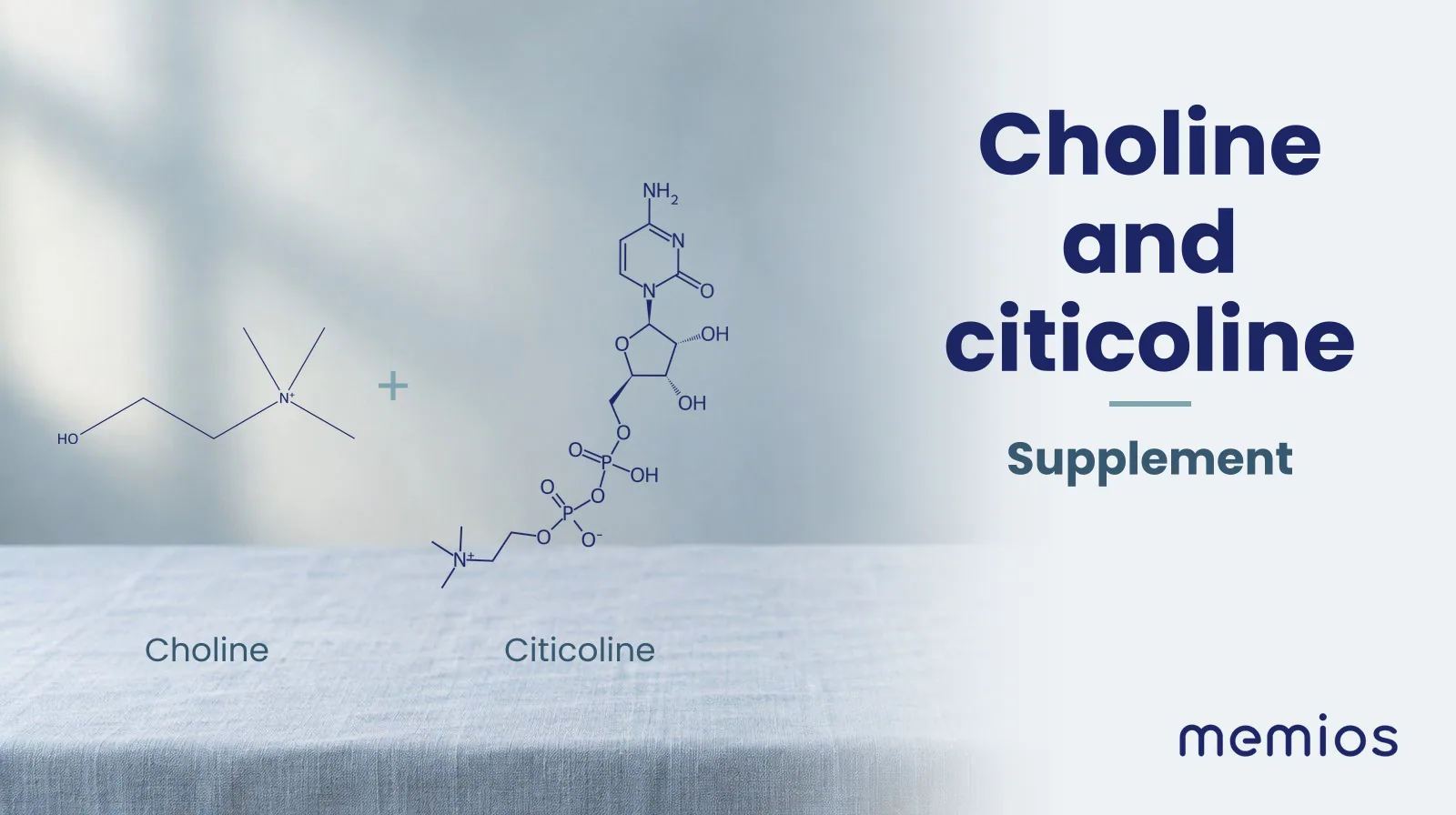
Choline is an essential nutrient present in some foods and sold as a supplement. The body uses it for methyl donation, for membrane phospholipids and for neurotransmission, and can also make some of it by synthesising phosphatidylcholine de novo, a route that is up-regulated by oestrogen. Citicoline, also written CDP-choline or cytidinediphosphocholine, is a related compound that sits in the pathway between choline and phosphatidylcholine and is sold as a supplement and, in some countries, licensed as a stroke drug.
What the research says
Choline's necessity is well established, while the supplement claims made for citicoline are not. Controlled human depletion studies show real organ damage when choline is withheld, and the US Food and Nutrition Board set Adequate Intakes in 1998 specifically to prevent liver damage. For citicoline the picture is worse than the marketing suggests: the two largest, best-designed trials, ICTUS in acute ischaemic stroke and COBRIT in traumatic brain injury, both came out flatly null, while a Cochrane review found short-to-medium-term benefit on memory and behaviour in elderly people with chronic cerebral disorders and a 2023 meta-analysis found pooled benefit but judged the underlying studies poor. Separately, choline supplementation raises TMAO and, in one small mechanistic trial, platelet aggregation, while large cohort studies have found no link between dietary choline and coronary heart disease.
Evidence grade: Limited evidence.
What goes wrong
Oral choline supplementation raised fasting TMAO more than tenfold and enhanced platelet aggregation in healthy volunteers. (Source 1)
- Blood level study, Low certainty.
- Size: 18 participants: healthy vegans/vegetarians (n=8) and omnivores (n=10)
- Who: healthy non-smoking adults without hypertension, diabetes or cardiovascular disease.
- How long: 2 months of supplementation with monthly fasting blood testing.
- Result: greater than 10-fold increases in plasma TMAO at 1 and 2 months (p<0.01 each), with enhanced platelet aggregation responses to submaximal ADP (5 micromolar)
- Funding: not stated.
Limit of this finding: This was an open supplementation study in 18 healthy volunteers measuring blood markers and platelet behaviour, not a randomised trial and not a study of heart attacks or strokes. It shows that choline raises TMAO and changes platelet responses in the laboratory; it does not show that it causes clotting events in people.
Both vegan/vegetarian and omnivore alike showed significant >10-fold increases in plasma TMAO levels at both 1 and 2 month periods (p<0.01 each; Figure 1A), with corresponding enhanced platelet aggregation responses to submaximal adenosine diphosphate (ADP, 5μM) following choline supplementation.
Aspirin blunted both the TMAO rise and the platelet hyperreactivity seen with choline supplementation. (Source 2)
- Blood level study, Low certainty.
- Size: 18 participants in the same study.
- Who: healthy adult volunteers, some on aspirin.
- How long: 1 and 2 months of supplementation.
- Result: TMAO elevation and platelet hyperresponsiveness attenuated by aspirin therapy.
- Funding: not stated.
Limit of this finding: The aspirin comparison is a secondary observation inside the same small uncontrolled study of 18 people. It is not evidence that aspirin should be used against TMAO.
however, both the degree of TMAO elevation and platelet hyperresponsiveness were attenuated by aspirin therapy.
High choline intakes are associated with fishy body odour, vomiting, sweating, salivation, low blood pressure and liver toxicity. (Source 3)
- Official position, Certainty not rated.
- Size: not applicable - agency summary.
- Who: adults and children taking high doses.
- How long: not stated.
- Result: the FNB set the adult UL at 3,500 mg/day based on hypotension and fishy body odour.
- Funding: government agency (NIH Office of Dietary Supplements, updated 2 June 2022)
High intakes of choline are associated with a fishy body odor, vomiting, excessive sweating and salivation, hypotension, and liver toxicity.
Choline intake raises TMAO production in a dose-dependent way, according to the NIH summary of that literature. (Source 3)
- Official position, Certainty not rated.
- Size: not applicable - agency summary.
- Who: adults.
- How long: not stated.
- Result: dose-dependent increase in TMAO production.
- Funding: government agency (NIH Office of Dietary Supplements, updated 2 June 2022)
Choline consumption has been shown to increase production of TMAO, a substance that has been linked to a higher risk of cardiovascular disease, in a dose-dependent manner in adults.
What the evidence supports
Withholding dietary choline caused fatty liver or muscle damage in most men and postmenopausal women in a controlled human feeding study. (Source 4)
- Randomized trial, Moderate certainty.
- Size: healthy men and women; group sizes not stated in the abstract.
- Who: healthy men, premenopausal women and postmenopausal women.
- How long: controlled depletion and repletion feeding periods.
- Result: 77% of men and 80% of postmenopausal women developed fatty liver or muscle damage versus 44% of premenopausal women; six men developed signs while consuming 550 mg/70 kg/day, the AI.
- Funding: not stated.
When deprived of dietary choline, 77% of men and 80% of postmenopausal women developed fatty liver or muscle damage, whereas only 44% of premenopausal women developed such signs of organ dysfunction.
A Cochrane review found evidence that CDP-choline improves memory and behaviour in the short to medium term in elderly people with cognitive deficits from chronic cerebral disorders. (Source 5)
- Systematic review, Low certainty.
- Size: 14 randomized, double-blind, placebo-controlled trials.
- Who: elderly people with cognitive deficits associated with chronic cerebral disorders.
- How long: 20-30 days to 12 months, most no more than 3 months.
- Result: benefit reported on memory and behaviour; no pooled effect size retrieved from the summary page.
- Funding: not stated.
There was evidence of benefit of CDP-choline on memory function and behaviour.
What the evidence does not support
The same Cochrane review found no benefit of CDP-choline on attention. (Source 5)
- Systematic review, Low certainty.
- Size: 14 randomized, double-blind, placebo-controlled trials.
- Who: elderly people with cognitive deficits associated with chronic cerebral disorders.
- How long: 20-30 days to 12 months.
- Result: no evidence of benefit on attention.
- Funding: not stated.
There was no evidence of a beneficial effect of CDP-choline on attention.
In the largest randomised trial in acute ischaemic stroke, citicoline did not improve recovery and the trial was stopped for futility. (Source 6)
- Randomized trial, High certainty.
- Size: 2,298 patients (1,148 citicoline, 1,150 placebo)
- Who: adults with moderate-to-severe acute ischaemic stroke in Spain, Portugal and Germany.
- How long: 6 weeks of treatment, 90-day primary outcome.
- Result: global recovery odds ratio 1.03 (95% CI 0.86-1.25; p=0.364); no significant differences in safety variables or adverse event rates.
- Funding: industry-funded - Ferrer Grupo.
Global recovery was similar in both groups (odds ratio 1·03, 95% CI 0·86-1·25; p=0·364). No significant differences were reported in the safety variables nor in the rate of adverse events.
Citicoline did not improve functional or cognitive status after traumatic brain injury in a phase 3 randomised trial. (Source 7)
- Randomized trial, High certainty.
- Size: 1,213 patients at 8 US level 1 trauma centres.
- Who: patients with complicated mild, moderate or severe traumatic brain injury.
- How long: 90-day treatment regimen, outcomes at 30, 90 and 180 days.
- Result: Glasgow Outcome Scale-Extended improvement 35.4% citicoline versus 35.6% placebo; global OR 0.98 (95% CI 0.83-1.15) at 90 days and 0.87 (95% CI 0.72-1.04) at 180 days.
- Funding: not stated in the abstract.
Conclusion: Among patients with traumatic brain injury, the use of citicoline compared with placebo for 90 days did not result in improvement in functional and cognitive status.
In a large US cohort, higher usual dietary choline and betaine intake was not protective against incident coronary heart disease. (Source 8)
- Cohort study, Low certainty.
- Size: 14,430 middle-aged men and women; 1,072 incident CHD events.
- Who: middle-aged men and women in the biethnic Atherosclerosis Risk in Communities study, intake assessed by semi-quantitative food frequency questionnaire.
- How long: an average of 14 years of follow-up (1987-2002)
- Result: highest versus lowest quartile HR 1.22 (0.91, 1.64) for choline and HR 1.14 (0.85, 1.53) for choline plus betaine, controlling for age, sex, education, total energy intake and dietary folate, methionine and vitamin B6.
- Funding: not stated.
Higher intakes of choline and betaine were not protective for incident CHD.
Where the evidence is mixed
Some people developed signs of organ dysfunction even while eating the officially adequate amount of choline. (Source 4)
- Randomized trial, Moderate certainty.
- Size: 6 men.
- Who: healthy men in a controlled feeding study.
- How long: controlled feeding period.
- Result: 6 men developed fatty liver or muscle damage at 550 mg choline per 70 kg per day, the Adequate Intake.
- Funding: not stated.
Moreover, 6 men developed these signs while consuming 550 mg choline · 70 kg−1 · d−1, the AI for choline.
A 2023 systematic review and meta-analysis found pooled cognitive benefit from citicoline but judged the underlying study quality poor and biased toward the intervention. (Source 9)
- Meta-analysis, Very low certainty.
- Size: seven studies selected, six pooled in the meta-analysis.
- Who: patients with mild cognitive impairment, Alzheimer's disease or post-stroke dementia.
- How long: varies by study.
- Result: pooled standardized mean differences ranging from 0.56 (95% CI: 0.37-0.75) to 1.57 (95% CI: 0.77-2.37) in different sensitivity analyses.
- Funding: independent - the authors state no external funding and no conflict of interest.
Overall, citicoline improved cognitive status, with pooled standardized mean differences ranging from 0.56 (95% CI: 0.37–0.75) to 1.57 (95% CI: 0.77–2.37) in different sensitivity analyses. The overall quality of the studies was poor.
Where the research disagrees
Whether choline intake carries cardiovascular risk through TMAO
- Zhu, Wang, Tang and Hazen, Circulation 2017, open supplementation study in 18 healthy volunteers with blood TMAO and platelet function endpoints: Both vegan/vegetarian and omnivore alike showed significant >10-fold increases in plasma TMAO levels at both 1 and 2 month periods (Source 1)
- Bidulescu and colleagues, ARIC study, BMC Cardiovascular Disorders 2007, prospective cohort of 14,430 adults with 1,072 incident CHD events over 14 years: No association was found between dietary choline intake and incident CHD when correcting for measurement error. (Source 10)
Whether citicoline helps the brain
- Fioravanti and Yanagi, Cochrane review 2005, systematic review of 14 randomised placebo-controlled trials, most under 3 months: There was some evidence that CDP-choline has a positive effect on memory and behaviour in at least the short to medium term. (Source 11)
- Dávalos and colleagues, ICTUS trial, The Lancet 2012, randomised placebo-controlled trial in 2,298 patients, stopped for futility: Under the circumstances of the ICTUS trial, citicoline is not efficacious in the treatment of moderate-to-severe acute ischaemic stroke. (Source 6)
How much
- Reference intake: Adequate Intakes set by the Food and Nutrition Board of the Institute of Medicine in 1998: 550 mg/day for men aged 19 and over, 425 mg/day for women, 450 mg/day in pregnancy and 550 mg/day in lactation. No Estimated Average Requirement was set because data were insufficient, and the AIs were based on preventing liver damage as measured by serum alanine aminotransferase levels. No reference intake exists for citicoline, which is a supplement and in some countries a licensed drug rather than a nutrient. (Source 12)
- Upper limit: Tolerable Upper Intake Level of 3,500 mg/day for adults, set by the Food and Nutrition Board on the basis of hypotension and fishy body odour. The fact sheet states these ULs apply to healthy children and adults but not to people taking high doses of choline under medical supervision. No UL was set for infants for lack of data. No upper limit exists for citicoline. (Source 13)
- Studied: Citicoline 2000 mg/day enterally or orally for 90 days in traumatic brain injury. (Source 7)
- Studied: Citicoline 1000 mg every 12 hours intravenously for 3 days then 500 mg twice daily orally, 6 weeks total, in acute ischaemic stroke. (Source 6)
- Studied: Choline bisulfate 500 mg twice daily, about 450 mg total choline per day, for 2 months in healthy volunteers. (Source 14)
A common belief, and what the research shows
The belief: Citicoline is a clinically proven brain-repair and brain-recovery agent, and more choline is straightforwardly good for the heart and brain.
What the research shows: The two largest rigorous trials were null. In stroke: "Global recovery was similar in both groups (odds ratio 1·03, 95% CI 0·86-1·25; p=0·364)." In traumatic brain injury: "Conclusion: Among patients with traumatic brain injury, the use of citicoline compared with placebo for 90 days did not result in improvement in functional and cognitive status." Even the favourable meta-analysis states "The overall quality of the studies was poor". For the heart, a 14-year cohort found "Higher intakes of choline and betaine were not protective for incident CHD." Choline does matter as a nutrient, though: withholding it caused measurable organ damage in controlled feeding studies.
Questions and answers
What is it?
Choline is an essential nutrient found in some foods and sold as a supplement, often as choline bitartrate, phosphatidylcholine or lecithin. Citicoline, also called CDP-choline, is a related molecule in the same pathway, sold as a supplement and licensed in some countries as a stroke treatment. They are not interchangeable in the evidence: most nutrition research is about choline, most cognitive-claim research is about citicoline. (Source 15)
What does it do in the body?
Choline serves three main jobs: donating methyl groups, building the phospholipids that make up cell membranes, and supplying the raw material for the neurotransmitter acetylcholine. The body can also make some of its own by synthesising phosphatidylcholine, a route that oestrogen increases, which is why requirements differ by sex and menopausal status. (Source 4)
Is it good or bad for you?
Choline is necessary, and too little causes real harm, but more is not automatically better. The Food and Nutrition Board set an upper limit because high intakes have been linked to hypotension and fishy body odour, and the NIH fact sheet also lists vomiting, sweating, salivation and liver toxicity. Citicoline is a separate question, and the largest trials of it were negative. (Source 3)
How do you get more of it?
Food is the ordinary route, and supplements have been studied at defined doses rather than recommended amounts. In the mechanistic study, healthy volunteers were given choline bisulfate 500 mg twice a day, roughly 450 mg of total choline daily, for two months, and their fasting plasma TMAO rose more than tenfold. Citicoline trials used much larger amounts, for instance 2000 mg a day for 90 days after traumatic brain injury. (Source 14)
If it is harmful, what reduces it?
There is no procedure for removing choline, and no reason to in normal circumstances. What exists instead is a ceiling: the Food and Nutrition Board set Tolerable Upper Intake Levels, 3,500 mg a day for adults, on the basis of the amounts linked to low blood pressure and fishy body odour. The fact sheet is explicit that those limits apply to healthy children and adults and not to people taking high doses of choline under medical supervision. Supplemental choline also raises TMAO dose-dependently, so lowering supplemental intake is the described route to lowering that. (Source 13)
Why might someone be low in it or missing it?
Requirement varies far more between people than the single AI figure suggests. In a controlled feeding study, most men and postmenopausal women developed liver or muscle damage when choline was withheld, but fewer than half of premenopausal women did, because oestrogen drives endogenous synthesis. Low intake, pregnancy, genetic differences in choline metabolism and total parenteral nutrition are the other routes to inadequacy listed by NIH. (Source 4)
Which whole foods contain it or feed it?
Most dietary choline in the United States comes from animal foods. Cruciferous vegetables, beans, nuts, seeds and whole grains contribute smaller amounts. Citicoline, by contrast, is not a meaningful food constituent; it is taken as a supplement or a medicine. (Source 16)
What happens if you do not have it?
Sustained lack of choline damages the liver and muscle. The NIH fact sheet states that deficiency can cause muscle damage, liver damage and non-alcoholic fatty liver disease, and the controlled feeding studies behind that statement found these signs in most men and postmenopausal women within weeks of removing choline from the diet. (Source 17)
How can you test for it?
There is no routine test. The NIH fact sheet states plainly that choline status is not routinely measured in healthy people, and gives a plasma choline range of 7 to 20 mcmol/L in healthy adults, narrowing to about 7 to 9.3 mcmol/L in fasting adults according to one study. No cut-off for inadequacy is published alongside it, so a plasma value cannot be read as a verdict on intake. (Source 18)
References
- Circulation. Gut Microbe-Generated Trimethylamine N-Oxide From Dietary Choline Is Prothrombotic in Subjects. 2017. PMID 28438808, DOI 10.1161/CIRCULATIONAHA.116.025338. Read the source
- Circulation. Gut Microbe-Generated Trimethylamine N-Oxide From Dietary Choline Is Prothrombotic in Subjects. 2017. PMID 28438808, DOI 10.1161/CIRCULATIONAHA.116.025338. Read the source
- NIH Office of Dietary Supplements. Choline - Health Professional Fact Sheet. 2022. Read the source
- The American Journal of Clinical Nutrition. Sex and menopausal status influence human dietary requirements for the nutrient choline. 2007. PMID 17490963, DOI 10.1093/ajcn/85.5.1275. Read the source
- The Cochrane Database of Systematic Reviews (summary page on cochrane.org). Cytidinediphosphocholine (CDP-choline) for cognitive and behavioural disturbances associated with chronic cerebral disorders in the elderly. 2005. DOI 10.1002/14651858.CD000269.pub3. Read the source
- The Lancet. Citicoline in the treatment of acute ischaemic stroke: an international, randomised, multicentre, placebo-controlled study (ICTUS trial). 2012. PMID 22691567, DOI 10.1016/s0140-6736(12)60813-7. Read the source
- JAMA (record on the Penn State research portal). Effect of citicoline on functional and cognitive status among patients with traumatic brain injury: Citicoline Brain Injury Treatment Trial (COBRIT). 2012. PMID 23168823, DOI 10.1001/jama.2012.13256. Read the source
- BMC Cardiovascular Disorders. Usual choline and betaine dietary intake and incident coronary heart disease: the Atherosclerosis Risk in Communities (ARIC) Study. 2007. PMID 17629908, DOI 10.1186/1471-2261-7-20. Read the source
- Nutrients. Is Citicoline Effective in Preventing and Slowing Down Dementia?—A Systematic Review and a Meta-Analysis. 2023. DOI 10.3390/nu15020386. Read the source
- BMC Cardiovascular Disorders. Usual choline and betaine dietary intake and incident coronary heart disease: the Atherosclerosis Risk in Communities (ARIC) Study. 2007. PMID 17629908, DOI 10.1186/1471-2261-7-20. Read the source
- The Cochrane Database of Systematic Reviews (summary page on cochrane.org). Cytidinediphosphocholine (CDP-choline) for cognitive and behavioural disturbances associated with chronic cerebral disorders in the elderly. 2005. DOI 10.1002/14651858.CD000269.pub3. Read the source
- NIH Office of Dietary Supplements. Choline - Health Professional Fact Sheet. 2022. Read the source
- NIH Office of Dietary Supplements. Choline - Health Professional Fact Sheet. 2022. Read the source
- Circulation. Gut Microbe-Generated Trimethylamine N-Oxide From Dietary Choline Is Prothrombotic in Subjects. 2017. PMID 28438808, DOI 10.1161/CIRCULATIONAHA.116.025338. Read the source
- NIH Office of Dietary Supplements. Choline - Health Professional Fact Sheet. 2022. Read the source
- NIH Office of Dietary Supplements. Choline - Health Professional Fact Sheet. 2022. Read the source
- NIH Office of Dietary Supplements. Choline - Health Professional Fact Sheet. 2022. Read the source
- NIH Office of Dietary Supplements. Choline - Health Professional Fact Sheet. 2022. Read the source