Medications · September 29, 2026 · Memios · 29 min read
Cholecalciferol
Correcting deficiency is where the evidence is solid: vitamin D sufficiency prevents rickets in children and osteomalacia in adults.
TLDR
- Disputed. Correcting deficiency is where the evidence is solid: vitamin D sufficiency prevents rickets in children and osteomalacia in adults.
- What it is: Cholecalciferol is vitamin D3, the form of vitamin D made in skin when UVB radiation converts 7-dehydrocholesterol to previtamin D3.
- Main use: Prevention and treatment of rickets in children and osteomalacia in adults (nutritional vitamin D deficiency) (well supported).
- Other approved uses: Hypoparathyroidism, vitamin D-resistant (refractory) rickets and familial hypophosphataemia (evidence not rated).
- Off-label uses (not on the FDA label): Fracture prevention with calcium (limited evidence); Prevention of acute respiratory tract infection (limited evidence).
- Uses NOT supported by research: Fracture prevention with vitamin D alone in adults not selected for deficiency; Prevention of cancer and cardiovascular disease; Prevention of falls with high intermittent doses.
- Recommended dose (official position): As a position, the Food and Nutrition Board at the National Academies (Institute of Medicine, 2011) sets Recommended Dietary Allowances for vitamin D by age.
- Studied dose (a trial dose, not a recommendation): VITAL gave 2,000 IU of vitamin D3 daily to 25,871 US adults for a median 5.3 years, with no effect on cancer, cardiovascular events or fractures. Findings citing that trial: 1 for, 1 against.
- Upper limit: As a position, the Food and Nutrition Board set a Tolerable Upper Intake Level for vitamin D that ranges from 25 to 100 mcg (1,000 to 4,000 IU) depending on age.
- What goes wrong: 3 findings on harm. A single annual 500,000 IU dose of cholecalciferol increased falls and fractures in older women compared with placebo.
- Interactions: 5 recorded, including Thiazide diuretics, Mineral oil, Orlistat (Xenical, alli), Statins.
- Common myth: Vitamin D is a vitamin, so more is better and a big occasional dose is a convenient way to get it.
What it is
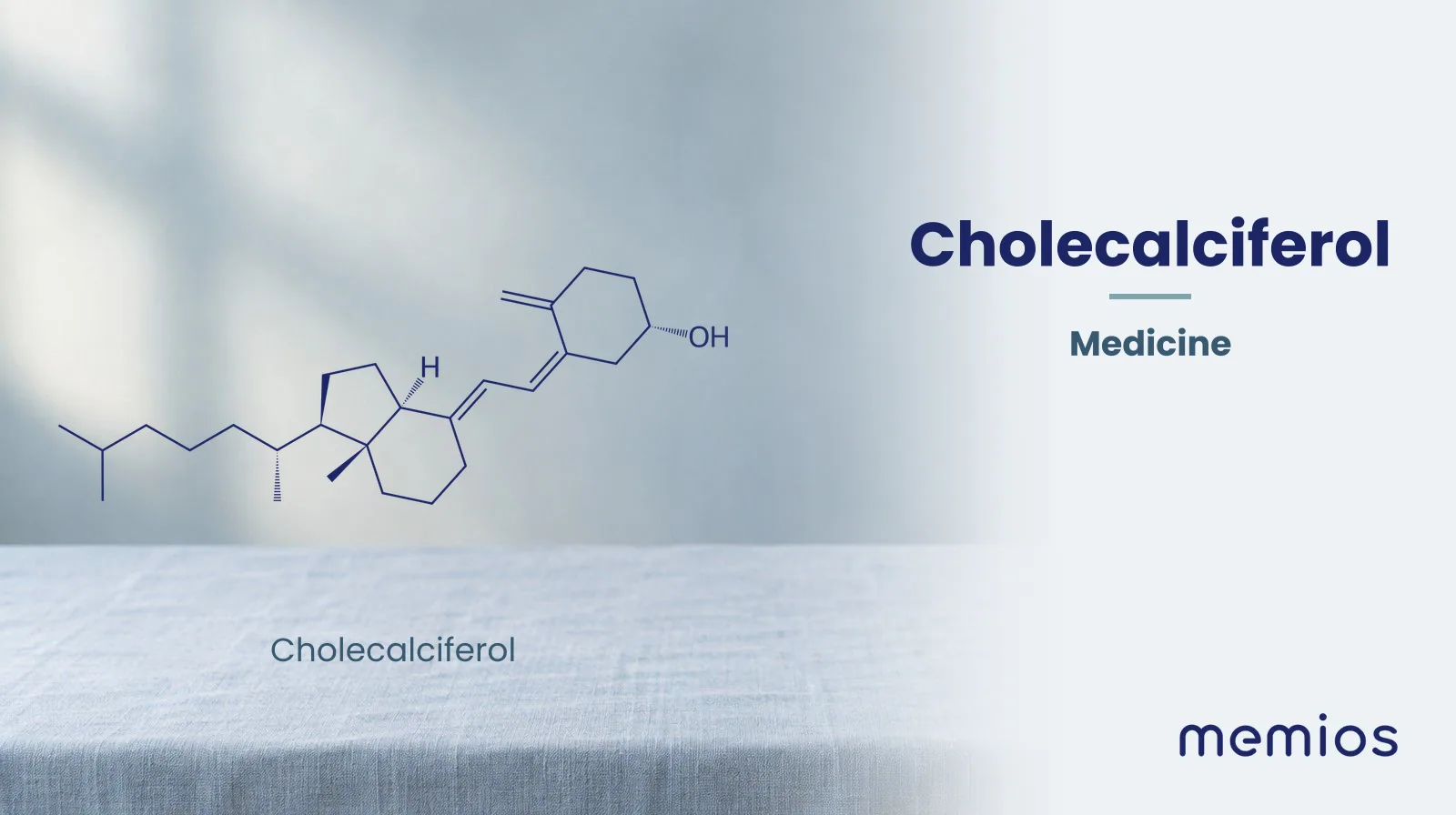
Cholecalciferol is vitamin D3, the form of vitamin D made in skin when UVB radiation converts 7-dehydrocholesterol to previtamin D3. It is sold both as a dietary supplement and, at high strengths such as 50,000 units, as a prescription tablet. One US prescription label lists it for hypoparathyroidism, vitamin D-resistant rickets and familial hypophosphataemia. It is not biologically active until the liver and kidney hydroxylate it.
What the research says
Correcting deficiency is where the evidence is solid: vitamin D sufficiency prevents rickets in children and osteomalacia in adults. Beyond deficiency, the large outcome trials are mostly null. In VITAL, 25,871 adults given 2,000 IU daily for a median 5.3 years had no reduction in invasive cancer (HR 0.96, 95% CI 0.88 to 1.06) or major cardiovascular events (HR 0.97, 95% CI 0.85 to 1.12), and no reduction in fractures (total fracture HR 0.98, 95% CI 0.89 to 1.08). Calcium plus vitamin D together did cut total fractures 15% and hip fractures 30% in a meta-analysis of 30,970 people. Pooled individual data from 25 trials showed a small protective effect against acute respiratory tract infection, concentrated in people who were very deficient and on daily or weekly rather than bolus dosing. High intermittent dosing can do harm: a single annual 500,000 IU dose increased falls and fractures in older women.
Evidence grade: Disputed.
How it works
Drug class: Secosteroid vitamin D prohormone; activated by hepatic and renal hydroxylation to calcitriol, a vitamin D receptor agonist
Vitamin D3 is converted in the liver and then the kidney into its active form, which acts on the vitamin D receptor to increase how much calcium the gut absorbs and to keep blood calcium and phosphate high enough for bone to mineralise normally. This is also why too much of it causes high blood calcium. (Source 1)
What it is used for
- This is the use vitamin D was discovered for and the one the agencies state plainly: sufficiency prevents rickets in children and osteomalacia in adults. Note this is an agency position with a date, not a trial result; the deficiency-disease trial literature predates modern reporting standards and was not retrieved in this run. Evidence: established. (Source 1)
- These are the indications on the US prescription cholecalciferol 50,000 unit label. This is a regulatory position dated 12/2017; no outcome trials for these indications were retrieved in this run, so no evidence grade is asserted. Evidence: unknown. (Source 2)
- A meta-analysis of eight randomised trials in 30,970 people found calcium plus vitamin D reduced total fractures by 15% (SRRE 0.85, 95% CI 0.73 to 0.98) and hip fractures by 30% (SRRE 0.70, 95% CI 0.56 to 0.87). Its own stated limitation is reliance on a subgroup analysis of the Women's Health Initiative. Evidence: limited. (Source 3)
- In the VITAL fracture ancillary study, 2,000 IU daily for a median 5.3 years in 25,871 generally healthy adults had no effect on total, nonvertebral or hip fractures, with no subgroup benefit including by baseline 25-hydroxyvitamin D level. Evidence: not-supported. (Source 4)
- VITAL found no reduction in invasive cancer or major cardiovascular events over a median 5.3 years. The separate D-Health trial of 60,000 IU monthly in 21,315 older Australians found a cardiovascular hazard ratio of 0.91 (95% confidence interval 0.81 to 1.01), an interval that includes no difference and which its own authors described as consistent with a null finding. Evidence: not-supported. (Source 5)
- Pooled individual participant data from 25 randomised trials in 10,933 people found a modest protective effect overall (adjusted odds ratio 0.88, 95% confidence interval 0.81 to 0.96). The effect was concentrated in people on daily or weekly rather than bolus dosing (0.81, 0.72 to 0.91, versus 0.97, 0.86 to 1.10 for bolus-containing regimens) and, within daily or weekly dosing, in those whose baseline 25-hydroxyvitamin D was below 25 nmol/L (0.30, 0.17 to 0.53). Evidence: limited. (Source 6)
- A randomised trial of a single annual 500,000 IU dose in 2,256 older women found more falls and more fractures on vitamin D than on placebo, with the excess concentrated in the three months after each dose. Evidence: not-supported. (Source 7)
Interactions
- Thiazide diuretics (label): In people with hypoparathyroidism taking vitamin D, adding a thiazide diuretic can push blood calcium too high, because thiazides reduce how much calcium the kidney excretes while vitamin D increases how much the gut absorbs. (Source 8)
- Mineral oil (label): Mineral oil, taken as a laxative or in food, blocks absorption of fat-soluble vitamins including vitamin D preparations. (Source 8)
- Orlistat (Xenical, alli) (label): The weight-loss drug orlistat, which blocks fat absorption, also reduces how much vitamin D the body takes up from food and supplements, lowering 25(OH)D levels. (Source 9)
- Statins (theoretical): Because the body builds vitamin D from a cholesterol precursor in the skin, statins may also reduce how much vitamin D the body makes. The fact sheet states this as a possibility rather than a measured effect. (Source 10)
- Calcium supplements (clinical trial): Calcium and vitamin D are usually studied together, and together they reduced fractures in pooled trials, but combining them also raises the calcium load that vitamin D helps absorb, which is the route to hypercalcaemia when vitamin D is excessive. (Source 3)
Stopping it
- No withdrawal syndrome or rebound effect from stopping cholecalciferol was found in the literature we reached. What is documented is that vitamin D status is tracked by measuring serum 25-hydroxyvitamin D, which falls again once supplementation stops and sun exposure is limited, so stopping is monitored rather than tapered. (Source 11)
- For the high-dose prescription form, the label makes dose changes a supervised decision rather than a self-managed taper, and restricts use in kidney disease, bone disease, malignancy and calcium disorders to physician supervision. (Source 12)
What goes wrong
A single annual 500,000 IU dose of cholecalciferol increased falls and fractures in older women compared with placebo. (Source 7)
- Randomized trial, Moderate certainty.
- Size: 2,256 community-dwelling women.
- Who: Community-dwelling women aged 70 and over at high risk of fracture, recruited June 2003 to June 2005.
- How long: Annual dosing for 3 to 5 years, to 2008.
- Result: 171 fractures on vitamin D vs 135 on placebo; falls incidence rate ratio 1.15 (95% CI 1.02-1.30; P = .03); fracture incidence rate ratio 1.26 (95% CI 1.00-1.59; P = .047); falls RR 1.31 in the first 3 months after dosing vs 1.13 in the following 9 months (test for homogeneity P = .02)
- Funding: not stated in the retrieved abstract.
Limit of this finding: Two things to hold in mind. The fracture result sits right on the edge of significance: the confidence interval runs from 1.00 to 1.59 with p = .047, so it only just excludes no difference. And JAMA has published a notice headed "Incorrect Data in" for this article, which could not be read in this pass, so the exact figures should be checked against that correction before they are relied on.
The incidence RR for fracture in the vitamin D group was 1.26 (95% CI, 1.00-1.59; P = .047) vs the placebo group (rates per 100 person-years, 4.9 vitamin D vs 3.9 placebo).
In that trial the excess of falls was measurable and concentrated shortly after each annual dose. (Source 7)
- Randomized trial, Moderate certainty.
- Size: 2,256 women.
- Who: Community-dwelling women aged 70 years or older considered to be at high risk of fracture, given a single dose each autumn to winter for 3 to 5 years; median baseline serum 25-hydroxycholecalciferol 49 nmol/L in a substudy.
- How long: 3 to 5 years of annual dosing.
- Result: 837 women on vitamin D fell 2,892 times (83.4 falls per 100 person-years) versus 769 women on placebo falling 2,512 times (72.7 per 100 person-years); incidence rate ratio 1.15 (95% CI 1.02-1.30; P = .03)
- Funding: not stated in the retrieved abstract.
Limit of this finding: Two things to hold in mind. The fracture result sits right on the edge of significance: the confidence interval runs from 1.00 to 1.59 with p = .047, so it only just excludes no difference. And JAMA has published a notice headed "Incorrect Data in" for this article, which could not be read in this pass, so the exact figures should be checked against that correction before they are relied on.
Women in the cholecalciferol (vitamin D) group had 171 fractures vs 135 in the placebo group; 837 women in the vitamin D group fell 2892 times (rate, 83.4 per 100 person-years) while 769 women in the placebo group fell 2512 times (rate, 72.7 per 100 person-years; incidence rate ratio [RR], 1.15; 95% confidence interval [CI], 1.02-1.30; P = .03).
Excess vitamin D is toxic and causes high blood calcium, high urinary calcium and very high serum 25(OH)D. (Source 13)
- Official position, Certainty not rated.
- Size: Agency synthesis of case reports and intake data.
- Who: People taking excessive vitamin D, usually from supplements rather than food or sun.
- How long: Not applicable.
- Result: Marked hypercalcemia, defined as total calcium greater than 11.1 mg/dL against a normal range of 8.4-10.2 mg/dL, hypercalciuria, and serum 25(OH)D typically above 375 nmol/L (150 ng/mL)
- Funding: US government agency (NIH Office of Dietary Supplements)
Limit of this finding: One unit in the quoted sentence is printed lowercase, "nmol/l", where the rest of the page uses "nmol/L". That is the page's own inconsistency and has been left as printed.
Excess amounts of vitamin D are toxic. Because vitamin D increases calcium absorption in the gastrointestinal tract, vitamin D toxicity results in marked hypercalcemia (total calcium greater than 11.1 mg/dL, beyond the normal range of 8.4–10.2 mg/dL), hypercalciuria, and high serum 25(OH)D levels (typically >375 nmol/l [150 ng/mL]).
What the evidence supports
Pooled individual participant data from 25 randomised trials found vitamin D supplementation modestly reduced the risk of acute respiratory tract infection. (Source 6)
- Meta-analysis, Moderate certainty.
- Size: 25 eligible randomised controlled trials, total 11 321 participants; individual data obtained for 10 933 (96.6%)
- Who: People aged 0 to 95 years in trials of vitamin D versus placebo or lower dose.
- How long: Trial durations to December 2015 search date.
- Result: Overall adjusted odds ratio 0.88 (95% confidence interval 0.81 to 0.96; P for heterogeneity <0.001). The review's authors rated the body of evidence high quality.
- Funding: not stated in the retrieved abstract.
Vitamin D supplementation reduced the risk of acute respiratory tract infection among all participants (adjusted odds ratio 0.88, 95% confidence interval 0.81 to 0.96; P for heterogeneity <0.001).
In the same pooled trials, vitamin D did not increase serious adverse events, and hypercalcaemia and renal stones were rare and evenly distributed between vitamin D and control arms. (Source 14)
- Meta-analysis, Moderate certainty.
- Size: 10,933 participants for the main analysis; 3,850 and 3,841 for hypercalcaemia and renal stones respectively.
- Who: Participants in 25 randomised trials of vitamin D.
- How long: Trial durations as reported.
- Result: Serious adverse events of any cause adjusted odds ratio 0.98 (0.80 to 1.20; 11 224 participants in 25 studies); death from any cause 1.39 (0.85 to 2.27); hypercalcaemia 21/3850 (0.5%); renal stones 6/3841 (0.2%), both evenly represented between arms.
- Funding: not stated in the retrieved abstract.
Limit of this finding: This sentence is from the paper's main text, not from its abstract, and the death-from-any-cause estimate of 1.39 (0.85 to 2.27) is wide enough to include both a benefit and a substantial harm, so it settles nothing about mortality.
Use of vitamin D did not influence risk of serious adverse events of any cause (adjusted odds ratio 0.98, 0.80 to 1.20; 11 224 participants in 25 studies) or death due to any cause (1.39, 0.85 to 2.27; 11 224 participants in 25 studies) (table 4). Hypercalcaemia was detected in 21/3850 (0.5%) and renal stones were diagnosed in 6/3841 (0.2%); both events were evenly represented between intervention and control arms.
A meta-analysis of randomised trials found calcium plus vitamin D together reduced total fractures by 15% and hip fractures by 30%. (Source 3)
- Meta-analysis, Moderate certainty.
- Size: 8 studies, 30,970 participants, 2,231 total fractures and 195 hip fractures.
- Who: Community-dwelling and institutionalised middle-aged to older adults.
- How long: Trial durations as reported in the included RCTs.
- Result: Total fractures SRRE 0.85 (95% CI 0.73-0.98); hip fractures SRRE 0.70 (95% CI 0.56-0.87)
- Funding: Conducted for the National Osteoporosis Foundation; funding not stated in the abstract.
Meta-analysis of all studies showed that calcium plus vitamin D supplementation produced a statistically significant 15 % reduced risk of total fractures (SRRE, 0.85; 95 % confidence interval [CI], 0.73–0.98) and a 30 % reduced risk of hip fractures (SRRE, 0.70; 95 % CI, 0.56–0.87).
VITAL also found no excess of hypercalcaemia or other adverse events at 2,000 IU daily. (Source 5)
- Randomized trial, High certainty.
- Size: 25,871 participants.
- Who: Generally healthy US adults aged 50 and over (men) or 55 and over (women)
- How long: Median 5.3 years.
- Result: No excess risk of hypercalcemia or other adverse events identified.
- Funding: National Institutes of Health and others.
No excess risks of hypercalcemia or other adverse events were identified.
Vitamin D sufficiency prevents rickets in children and osteomalacia in adults. (Source 1)
- Official position, Certainty not rated.
- Size: Agency synthesis.
- Who: Children and adults.
- How long: Not applicable.
- Result: Prevention of the classic deficiency bone diseases.
- Funding: US government agency (NIH Office of Dietary Supplements)
Vitamin D sufficiency prevents rickets in children and osteomalacia in adults.
What the evidence does not support
In the VITAL randomised trial, 2,000 IU of vitamin D3 daily did not reduce invasive cancer or major cardiovascular events over a median 5.3 years. (Source 5)
- Randomized trial, High certainty.
- Size: 25,871 participants including 5,106 Black participants.
- Who: US men aged 50 and over and women aged 55 and over, not selected for vitamin D deficiency.
- How long: Median follow-up 5.3 years.
- Result: Cancer 793 vitamin D vs 824 placebo, hazard ratio 0.96 (95% CI 0.88 to 1.06; P=0.47); major cardiovascular events 396 vs 409, hazard ratio 0.97 (95% CI 0.85 to 1.12; P=0.69); death from any cause hazard ratio 0.99 (95% CI 0.87 to 1.12)
- Funding: National Institutes of Health and others (independent of supplement industry)
Supplementation with vitamin D did not result in a lower incidence of invasive cancer or cardiovascular events than placebo.
In the VITAL fracture study, vitamin D3 2,000 IU daily did not reduce total, nonvertebral or hip fractures in generally healthy adults. (Source 4)
- Randomized trial, High certainty.
- Size: 25,871 participants; 1,991 confirmed incident fractures in 1,551 people.
- Who: US adults not recruited on the basis of vitamin D deficiency, low bone mass or osteoporosis.
- How long: Median follow-up 5.3 years.
- Result: Total fractures 769/12,927 vitamin D vs 782/12,944 placebo, hazard ratio 0.98 (95% CI 0.89 to 1.08; P = 0.70); nonvertebral 0.97 (0.87 to 1.07; P = 0.50); hip 1.01 (0.70 to 1.47; P = 0.96); no modification by baseline 25-hydroxyvitamin D.
- Funding: National Institute of Arthritis and Musculoskeletal and Skin Diseases.
Limit of this finding: One denominator in the source is internally inconsistent: it reports 20.2% Black participants as "5106 of 25,304" while the trial randomised 25,871 people. That is how the paper prints it and it has not been altered. It does not affect the fracture results.
Vitamin D3 supplementation did not result in a significantly lower risk of fractures than placebo among generally healthy midlife and older adults who were not selected for vitamin D deficiency, low bone mass, or osteoporosis.
Where the evidence is mixed
In that pooled analysis the protective effect appeared only with daily or weekly dosing, not with large intermittent bolus doses, and was strongest in people whose baseline vitamin D level was very low. (Source 6)
- Meta-analysis, Moderate certainty.
- Size: 25 randomised controlled trials; individual data for 10 933 participants.
- Who: People aged 0 to 95 in trials of vitamin D versus placebo or lower dose, split by dosing regimen and by baseline 25-hydroxyvitamin D level.
- How long: Trial durations as reported; literature searched to December 2015.
- Result: Daily or weekly vitamin D without additional bolus doses: adjusted odds ratio 0.81 (0.72 to 0.91). Regimens including one or more bolus doses: 0.97 (0.86 to 1.10), which includes no difference. Among those on daily or weekly dosing, baseline 25-hydroxyvitamin D below 25 nmol/L: 0.30 (0.17 to 0.53); 25 nmol/L or above: 0.75 (0.60 to 0.95).
- Funding: not stated in the retrieved abstract.
In subgroup analysis, protective effects were seen in those receiving daily or weekly vitamin D without additional bolus doses (adjusted odds ratio 0.81, 0.72 to 0.91) but not in those receiving one or more bolus doses (adjusted odds ratio 0.97, 0.86 to 1.10; P for interaction=0.05).
That fracture meta-analysis states its own key limitation: it relies on a subgroup analysis of the Women's Health Initiative. (Source 3)
- Meta-analysis, Low certainty.
- Size: 8 studies, 30,970 participants.
- Who: Middle-aged to older adults.
- How long: As reported in included trials.
- Result: Sensitivity and subgroup analyses gave similar estimates, but the pooled result depends on WHI subgroup data.
- Funding: National Osteoporosis Foundation; funding not stated in the abstract.
A limitation is that this study utilized data from subgroup analysis of the Women's Health Initiative.
In the D-Health randomised trial, monthly 60,000 IU vitamin D3 gave a cardiovascular hazard ratio of 0.91 with a confidence interval that includes no difference. (Source 15)
- Randomized trial, High certainty.
- Size: 21 315 randomised (10 662 vitamin D, 10 653 placebo); 21 302 included in the analysis.
- Who: Australian adults aged 60 to 84, excluding those with hypercalcaemia, hyperparathyroidism, kidney stones, osteomalacia or sarcoidosis, or taking more than 500 IU/day supplemental vitamin D.
- How long: Up to five years, 2014 to 2020.
- Result: 1336 major cardiovascular events (vitamin D 6.0%, placebo 6.6%); hazard ratio 0.91 (95% confidence interval 0.81 to 1.01); myocardial infarction 0.81 (0.67 to 0.98); stroke 0.99 (0.80 to 1.23); difference in cumulative incidence at five years -5.8 events per 1000 participants (95% confidence interval -12.2 to 0.5), number needed to treat 172.
- Funding: Investigator-initiated trial; funding not stated in the retrieved abstract text.
Limit of this finding: The source's wording runs ahead of its own numbers. The hazard ratio of 0.91 has a confidence interval of 0.81 to 1.01, which includes 1, meaning no difference; the authors' own conclusion says the interval was "consistent with a null finding". Read this trial as not having shown that vitamin D reduces cardiovascular events. The sentence about people taking cardiovascular drugs is also awkward in the source: it highlights a subgroup and then says the interaction test was not significant, so that subgroup result is not a reliable finding either.
The rate of major cardiovascular events was lower in the vitamin D group than in the placebo group (hazard ratio 0.91, 95% confidence interval 0.81 to 1.01), especially among those who were taking cardiovascular drugs at baseline (0.84, 0.74 to 0.97; P for interaction=0.12), although the P value for interaction was not significant (<0.05).
The D-Health investigators concluded that vitamin D might reduce major cardiovascular events while stating in the same sentence that the confidence interval was consistent with no effect. (Source 16)
- Randomized trial, High certainty.
- Size: 21 315 randomised; 21 302 analysed.
- Who: Australian adults aged 60 to 84, excluding those with hypercalcaemia, hyperparathyroidism, kidney stones, osteomalacia or sarcoidosis, or taking more than 500 IU/day supplemental vitamin D.
- How long: Median intervention period five years, 2014 to 2020.
- Result: The authors' own summary: a possible reduction, a small absolute risk difference, and a confidence interval consistent with a null finding.
- Funding: Investigator-initiated trial; funding not stated in the retrieved abstract text.
Limit of this finding: The source's wording runs ahead of its own numbers. The hazard ratio of 0.91 has a confidence interval of 0.81 to 1.01, which includes 1, meaning no difference; the authors' own conclusion says the interval was "consistent with a null finding". Read this trial as not having shown that vitamin D reduces cardiovascular events. The sentence about people taking cardiovascular drugs is also awkward in the source: it highlights a subgroup and then says the interaction test was not significant, so that subgroup result is not a reliable finding either.
Vitamin D supplementation might reduce the incidence of major cardiovascular events, although the absolute risk difference was small and the confidence interval was consistent with a null finding. These findings could prompt further evaluation of the role of vitamin D supplementation, particularly in people taking drugs for prevention or treatment of cardiovascular disease.
Where the research disagrees
Whether vitamin D supplementation prevents fractures
- Weaver and colleagues for the National Osteoporosis Foundation, Osteoporosis International 2016, Meta-analysis of 8 randomised trials, 30,970 participants, of calcium PLUS vitamin D, relying partly on a WHI subgroup analysis: Meta-analysis of all studies showed that calcium plus vitamin D supplementation produced a statistically significant 15 % reduced risk of total fractures (SRRE, 0.85; 95 % confidence interval [CI], 0.73–0.98) and a 30 % reduced risk of hip fractures (SRRE, 0.70; 95 % CI, 0.56–0.87). (Source 3)
- LeBoff and colleagues, VITAL fracture ancillary study, New England Journal of Medicine 2022, Single large randomised placebo-controlled trial of vitamin D alone, 25,871 participants, 1,991 adjudicated fractures: Vitamin D3 supplementation did not result in a significantly lower risk of fractures than placebo among generally healthy midlife and older adults who were not selected for vitamin D deficiency, low bone mass, or osteoporosis. (Source 4)
Whether high intermittent (bolus) dosing is equivalent to daily dosing
- Martineau and colleagues, BMJ 2017 individual participant data meta-analysis, Individual participant data meta-analysis of 25 randomised trials, 10,933 participants; bolus-containing regimens showed an odds ratio of 0.97 (0.86 to 1.10): Vitamin D supplementation was safe and it protected against acute respiratory tract infection overall. Patients who were very vitamin D deficient and those not receiving bolus doses experienced the most benefit. (Source 6)
- Sanders and colleagues, JAMA 2010 randomised trial of annual 500,000 IU, Randomised, double-blind, placebo-controlled trial in 2,256 older women, showing harm rather than absence of benefit from an annual bolus: The incidence RR for fracture in the vitamin D group was 1.26 (95% CI, 1.00-1.59; P = .047) vs the placebo group (rates per 100 person-years, 4.9 vitamin D vs 3.9 placebo). (Source 7)
How much
- Reference intake: As a position, the Food and Nutrition Board at the National Academies (Institute of Medicine, 2011) sets Recommended Dietary Allowances for vitamin D by age. Table 2 of the NIH Office of Dietary Supplements Vitamin D fact sheet lists 15 mcg (600 IU) a day for ages 19 to 50 and 51 to 70, and 20 mcg (800 IU) a day for ages over 70. Those figures are printed as table cells rather than in the page's prose, so they are recorded here as table values and not as a quotation. They are recommended intakes, not ceilings, and they are not a dose for any individual reader. (Source 17)
- Upper limit: As a position, the Food and Nutrition Board set a Tolerable Upper Intake Level for vitamin D that ranges from 25 to 100 mcg (1,000 to 4,000 IU) depending on age; Table 4 of the NIH Office of Dietary Supplements fact sheet gives 100 mcg (4,000 IU) a day for everyone aged 19 and over. An upper intake level is a ceiling that intake should not exceed, not an amount anyone is advised to take, and it is not a recommended intake. (Source 18)
- Studied: VITAL gave 2,000 IU of vitamin D3 daily to 25,871 US adults for a median 5.3 years, with no effect on cancer, cardiovascular events or fractures. (Source 5)
- Studied: The D-Health trial gave 60,000 IU per month of vitamin D3 to 10,662 older Australian adults for up to five years. (Source 19)
- Studied: The Sanders trial gave a single annual oral dose of 500,000 IU of cholecalciferol to older women for 3 to 5 years, and recorded more falls and fractures than placebo. (Source 20)
- Studied: The respiratory infection pooled analysis compared daily or weekly dosing without bolus doses against regimens including one or more bolus doses, and found benefit only in the daily or weekly group. (Source 6)
A common belief, and what the research shows
The belief: Vitamin D is a vitamin, so more is better and a big occasional dose is a convenient way to get it.
What the research shows: Neither half of that holds. On amount, "Excess amounts of vitamin D are toxic." and the agency-set upper intake level for adults is 100 mcg (4,000 IU) a day. On timing, a randomised trial of a single annual 500,000 IU dose in older women found more harm, not more benefit: "The incidence RR for fracture in the vitamin D group was 1.26 (95% CI, 1.00-1.59; P = .047) vs the placebo group (rates per 100 person-years, 4.9 vitamin D vs 3.9 placebo)." Pooled trial data point the same way on dosing pattern: benefit against respiratory infection appeared with daily or weekly dosing and not with bolus regimens. And in people who are not deficient, 2,000 IU daily for five years changed nothing measurable: "Supplementation with vitamin D did not result in a lower incidence of invasive cancer or cardiovascular events than placebo."
Questions and answers
What is it?
Cholecalciferol is vitamin D3, a fat-soluble secosteroid. The body makes it in skin when UVB light hits a cholesterol precursor, and it is also taken as a supplement or, at 50,000 unit strength, as a prescription tablet. It is inactive as swallowed and must be hydroxylated by the liver and then the kidney before it does anything. (Source 21)
What does it do in the body?
Its main job is calcium handling: it increases how much calcium the gut absorbs and keeps blood calcium and phosphate high enough for bone to mineralise properly. That is also the route to its main harm, because too much of it drives blood calcium too high. (Source 1)
Is it good or bad for you?
Good when it corrects a deficiency, largely inert when it does not, and harmful in excess or in very large intermittent doses. Sufficiency prevents rickets and osteomalacia, and the protective effect against respiratory infection was strongest in people whose baseline level was under 25 nmol/L. But in 25,871 adults not selected for deficiency, 2,000 IU daily for five years did not reduce cancer, cardiovascular events or fractures, and a single annual 500,000 IU dose increased falls and fractures. (Source 5)
How do you get more of it?
Three routes are studied: sunlight on bare skin, food, and supplements or prescription tablets. Trials have used 2,000 IU daily (VITAL), 60,000 IU monthly (D-Health) and 500,000 IU annually (Sanders, which caused harm). Pooled trial data found daily or weekly dosing outperformed regimens that included large bolus doses. The reference-intake bodies set 600 IU a day for adults up to 70 and 800 IU above 70 as recommended intakes, and separately set 4,000 IU a day as a ceiling that intake should not exceed, which is not an amount to aim for. (Source 18)
If it is harmful, what reduces it?
When vitamin D is in excess the problem is high blood calcium, and the route back is stopping the intake and treating the hypercalcaemia under medical care. Toxicity is defined by marked hypercalcaemia, high urinary calcium and serum 25(OH)D typically above 375 nmol/L (150 ng/mL). Because vitamin D is fat-soluble and stored, levels fall slowly rather than immediately. (Source 13)
Why might someone be low in it or missing it?
Low vitamin D usually reflects little UVB reaching the skin, poor fat absorption, or dilution in a larger body mass. The named at-risk groups are breastfed infants, older adults, people with limited sun exposure, people with dark skin, people with conditions limiting fat absorption, and people with obesity or after gastric bypass. Medicines matter too: orlistat reduces absorption and statins may reduce synthesis. (Source 22)
Which whole foods contain it or feed it?
Oily fish and fish liver oils are the richest natural sources, and in the United States most dietary vitamin D actually comes from fortified foods such as milk. Beef liver, egg yolks and cheese contribute small amounts, and mushrooms supply variable amounts of vitamin D2 rather than D3. (Source 23)
What happens if you do not have it?
Sustained deficiency causes the classic bone diseases: rickets in children, where growing bone fails to mineralise, and osteomalacia in adults. The prescription form is also labelled for conditions where vitamin D handling itself is disordered, such as hypoparathyroidism and vitamin D-resistant rickets. What deficiency does not explain is the broader promise: in people who were not deficient, supplementation changed no major outcome in the large trials. (Source 2)
How can you test for it?
The standard test is serum 25-hydroxyvitamin D. Its reliability is the caveat: results vary considerably between laboratory assays, which is why an international standardisation programme exists. That variability means a single borderline number should not be read too precisely. (Source 24)
References
- NIH Office of Dietary Supplements. Vitamin D - Health Professional Fact Sheet - Introduction (two consecutive sentences). 2026. Read the source
- DailyMed, US National Library of Medicine; labeler Pharmin USA, LLC; label revised 12/2017. DECALCITROL - cholecalciferol (vitamin D3) 1.25 mg tablets (50,000 Units), US prescribing information - INDICATIONS AND USAGE (two consecutive sentences; the label itself spells the first word "Colecalciferol" and the second sentence "Cholecalciferol"). 2017. Read the source
- Osteoporosis International - published online 2015 (the year the record and the DOI carry); print citation Osteoporos Int 2016;27(1):367-376. Calcium plus vitamin D supplementation and risk of fractures: an updated meta-analysis from the National Osteoporosis Foundation. 2015. PMID 26510847, DOI 10.1007/s00198-015-3386-5. Read the source
- New England Journal of Medicine. Supplemental Vitamin D and Incident Fractures in Midlife and Older Adults. 2022. PMID 35939577, DOI 10.1056/NEJMoa2202106. Read the source
- New England Journal of Medicine. Vitamin D Supplements and Prevention of Cancer and Cardiovascular Disease (VITAL). 2019. PMID 30415629, DOI 10.1056/NEJMoa1809944. Read the source
- The BMJ (abstract as served by the Semantic Scholar Graph API). Vitamin D supplementation to prevent acute respiratory tract infections: systematic review and meta-analysis of individual participant data - full structured abstract. 2017. PMID 28202713, DOI 10.1136/bmj.i6583. Read the source
- JAMA. Annual high-dose oral vitamin D and falls and fractures in older women: A randomized controlled trial - structured abstract, Results section. 2010. PMID 20460620, DOI 10.1001/jama.2010.594. Read the source
- DailyMed, US National Library of Medicine; labeler Pharmin USA, LLC; label revised 12/2017. DECALCITROL - cholecalciferol (vitamin D3) 1.25 mg tablets (50,000 Units), US prescribing information - PRECAUTIONS / Drug Interactions (two consecutive sentences). 2017. Read the source
- NIH Office of Dietary Supplements. Vitamin D - Health Professional Fact Sheet - Interactions with Medications - orlistat. 2026. Read the source
- NIH Office of Dietary Supplements. Vitamin D - Health Professional Fact Sheet - Interactions with Medications - statins (endnote marker stripped from the end of the sentence). 2026. Read the source
- NIH Office of Dietary Supplements. Vitamin D - Health Professional Fact Sheet - Assessing vitamin D status - the indicator measured. 2026. Read the source
- DailyMed, US National Library of Medicine; labeler Pharmin USA, LLC; label revised 12/2017. DECALCITROL - cholecalciferol (vitamin D3) 1.25 mg tablets (50,000 Units), US prescribing information - WARNINGS - who should not take it without medical supervision (two consecutive sentences). 2017. Read the source
- NIH Office of Dietary Supplements. Vitamin D - Health Professional Fact Sheet - Health Risks from Excessive Vitamin D - toxicity (two consecutive sentences). 2026. Read the source
- The BMJ (author copy hosted at Dartmouth Digital Commons). Vitamin D supplementation to prevent acute respiratory tract infections - the paper's MAIN TEXT, Safety section (not the abstract), read in the author copy hosted at Dartmouth Digital Commons. 2017. PMID 28202713, DOI 10.1136/bmj.i6583. Read the source
- BMJ. Vitamin D supplementation and major cardiovascular events: D-Health randomised controlled trial - structured abstract, Results section. 2023. PMID 37380191, DOI 10.1136/bmj-2023-075230. Read the source
- BMJ. Vitamin D supplementation and major cardiovascular events: D-Health - structured abstract, Conclusions section. 2023. PMID 37380191, DOI 10.1136/bmj-2023-075230. Read the source
- NIH Office of Dietary Supplements. Vitamin D - Health Professional Fact Sheet - Recommended Intakes - the sentence introducing Table 2, which is where the numeric RDAs are printed. 2026. Read the source
- NIH Office of Dietary Supplements. Vitamin D - Health Professional Fact Sheet - Health Risks from Excessive Vitamin D - the Tolerable Upper Intake Level, which is a ceiling and not a recommended intake. 2026. Read the source
- BMJ. Vitamin D supplementation and major cardiovascular events: D-Health - structured abstract, Intervention section. 2023. PMID 37380191, DOI 10.1136/bmj-2023-075230. Read the source
- JAMA. Annual high-dose oral vitamin D and falls and fractures in older women - structured abstract, Intervention section. 2010. PMID 20460620, DOI 10.1001/jama.2010.594. Read the source
- NIH Office of Dietary Supplements. Vitamin D - Health Professional Fact Sheet - Sources of Vitamin D - Sun exposure. 2026. Read the source
- NIH Office of Dietary Supplements. Vitamin D - Health Professional Fact Sheet - Groups at Risk of Vitamin D Inadequacy (two consecutive sentences). 2026. Read the source
- NIH Office of Dietary Supplements. Vitamin D - Health Professional Fact Sheet - Sources of Vitamin D - Food, oily fish. 2026. Read the source
- NIH Office of Dietary Supplements. Vitamin D - Health Professional Fact Sheet - Assessing vitamin D status - assay variability. 2026. Read the source