Medications · September 29, 2026 · Memios · 23 min read
Cephalexin
For the infections it is licensed for, the trial evidence is reasonably good but narrower than the label suggests.
TLDR
- Well established. For the infections it is licensed for, the trial evidence is reasonably good but narrower than the label suggests.
- What it is: Cephalexin is an oral antibacterial drug of the cephalosporin class, a family of beta-lactam antibiotics.
- Main use: Uncomplicated cellulitis (non-purulent skin and soft tissue infection) (well supported).
- Other approved uses: Group A streptococcal pharyngitis (part of the label's respiratory tract infection indication) (limited evidence); Uncomplicated urinary tract infection in women (part of the label's genitourinary tract indication) (limited evidence); Otitis media, bone infections (evidence not rated).
- Off-label uses (not on the FDA label): Acne vulgaris (limited evidence).
- Recommended dose (official position): There is no reference intake for an antibiotic: the dose, the interval and the length of the course are set by the prescriber for the infection being treated. As a position, the Keflex label (revised 12/2018) states the usual adult oral dose.
- Studied dose (a trial dose, not a recommendation): The cellulitis trial gave cephalexin 500 mg four times daily for 7 days. Findings citing that trial: 1 for, 1 against, 1 on harm.
- Upper limit: The Keflex label (revised 12/2018) gives a maximum of 4 grams a day, divided into two to four doses, as a regulatory position rather than a trial-derived ceiling.
- What goes wrong: 5 findings on harm. Gastrointestinal adverse events were the commonest problem in the cellulitis trial, affecting 38.7% of people on cephalexin alone, though most events were mild.
- Interactions: 4 recorded, including Metformin, Probenecid, Alcohol, Alcohol (absorption, animal data only).
- Common myth: If you are allergic to penicillin you can never be given a cephalosporin such as cephalexin.
What it is
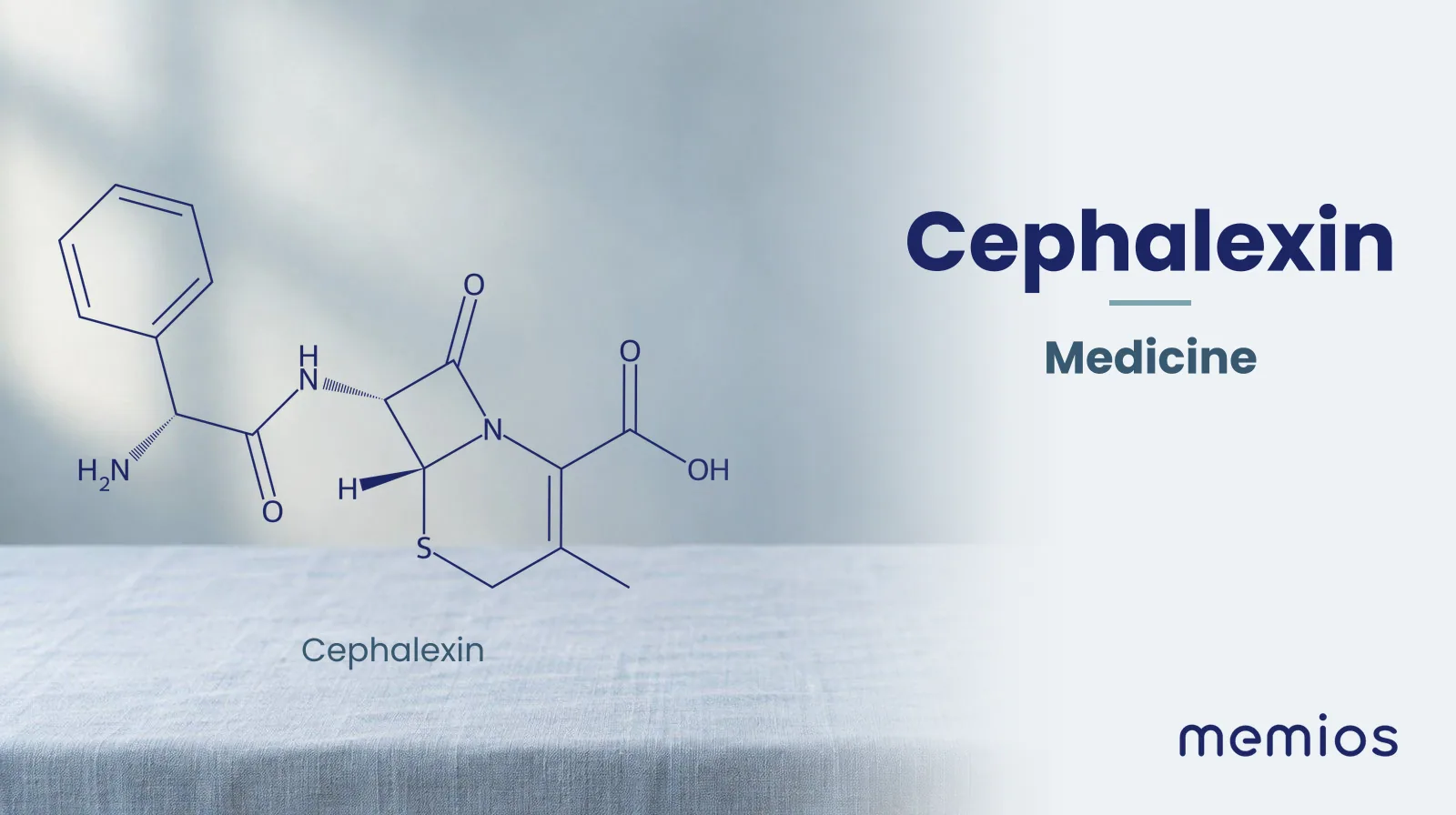
Cephalexin is an oral antibacterial drug of the cephalosporin class, a family of beta-lactam antibiotics. Its FDA label describes it as a cephalosporin antibacterial drug licensed for several bacterial infections. Chemically it is an aminocephalosporin, meaning it carries the same R1 side chain as the aminopenicillins ampicillin and amoxicillin, which is why allergy cross-reactivity studies treat it as a special case. It is a prescription medicine, not a nutrient or supplement, and it has no activity against viruses.
What the research says
For the infections it is licensed for, the trial evidence is reasonably good but narrower than the label suggests. The best modern randomised evidence is in uncomplicated cellulitis, where cephalexin alone cured about 85% of people in the per-protocol analysis of a 500-person double-blind trial, and adding an anti-MRSA drug did not improve that. In streptococcal sore throat, meta-analysis shows cephalosporins (as a class) outperform penicillin on early cure, yet the reviewers still argue penicillin should stay first line because of resistance consequences. In uncomplicated urinary infection the supporting data are observational rather than randomised. Off label it has been tried for acne, where one randomised trial found it worked but was inferior to doxycycline. The main harms are gastrointestinal, an increased risk of Clostridioides difficile infection shared with other cephalosporins, and allergic reactions in people already allergic to penicillin.
Evidence grade: Well established.
How it works
Drug class: First-generation cephalosporin (beta-lactam antibacterial); an aminocephalosporin
The FDA label describes cephalexin as a cephalosporin antibacterial drug, that is, a member of the beta-lactam family, given by mouth to kill susceptible bacteria. We did not retrieve a pharmacology review giving the molecular detail verbatim, so this entry rests on the label's own class description (Keflex label, revised 12/2018) and on the allergy literature, which classifies cephalexin as an aminocephalosporin sharing an identical R1 side chain with a penicillin. (Source 1)
What it is used for
- In a double-blind randomised trial of 500 outpatients, cephalexin alone cured about 85% of people with non-purulent cellulitis in the per-protocol analysis, and adding trimethoprim-sulfamethoxazole for MRSA coverage did not raise the cure rate. The trial had no placebo arm, so it shows cephalexin is not improved by MRSA coverage rather than that it beats no treatment. Evidence: established. (Source 2)
- A meta-analysis of 50 randomised trials found short-course cephalosporin treatment more effective than long-course penicillin for early clinical cure (OR 1.48) and early microbiological cure (OR 1.60). The trials pooled cephalosporins as a class rather than cephalexin specifically, and the reviewers still concluded penicillin V should remain first line. Evidence: limited. (Source 3)
- The evidence retrieved is observational, not randomised. A retrospective cohort of 261 women found no difference in treatment failure between twice-daily and four-times-daily cephalexin (12.7% vs 17%). The authors state explicitly that little data exist on optimal dosing for this use. Evidence: limited. (Source 4)
- One small open-label randomised trial in 100 patients found cephalexin 500 mg three times daily reduced comedone and inflammatory lesion counts over eight weeks, but it was significantly inferior to doxycycline on both counts. The authors framed it as an option only when other oral antibiotics cannot be used. Evidence: limited. (Source 5)
- These sit in the FDA label's indication list, which is a regulatory position dated 12/2018. We did not reach any systematic review or randomised trial of cephalexin for either use in this run, so we record the label position and no evidence grade of our own. Evidence: unknown. (Source 1)
Interactions
- Metformin (label): Cephalexin raises metformin blood levels, which the label says can cause low blood sugar. This reflects competition for the same kidney transport route. (Source 1)
- Probenecid (label): Probenecid blocks the kidney's excretion of cephalexin, so drug levels rise; the label advises against taking them together. (Source 1)
- Alcohol (clinical trial): Cephalexin has no methylthiotetrazole or methylthiodioxotriazine side chain, so it is not one of the cephalosporins linked to disulfiram-like flushing reactions with alcohol. A systematic review found no human evidence of harm; the only signal is a rat study in which a single heavy alcohol exposure reduced cephalexin absorption. (Source 6)
- Alcohol (absorption, animal data only) (pharmacokinetic study): In rats, a single acute alcohol exposure reduced how much cephalexin was absorbed and excreted in urine, while long-term alcohol exposure made no measurable difference. This is animal pharmacokinetic work and has not been shown in people. (Source 6)
Stopping it
- Cephalexin is not a drug people become dependent on and there is no described withdrawal syndrome; the question with an antibiotic is how long the course needs to be. In streptococcal pharyngitis, a meta-analysis of 50 trials found no detectable difference overall between short courses (5 days or fewer) and long courses (7 days or more) for early clinical cure - the confidence interval crosses 1, and the two figures the paper gives for that comparison do not agree with each other (see caveat). (Source 3)
- Shorter courses are not automatically kinder: in the same meta-analysis more people on short courses reported adverse events than on long courses, partly because the short-course arms used broader-spectrum drugs. (Source 3)
- For uncomplicated urinary infection, the cohort evidence retrieved used courses of five to seven days, with no difference in failure between two-a-day and four-a-day schedules. (Source 4)
What goes wrong
Gastrointestinal adverse events were the commonest problem in the cellulitis trial, affecting 38.7% of people on cephalexin alone, though most events were mild. (Source 2)
- Randomized trial, Moderate certainty.
- Size: 496 participants in the modified intention-to-treat population.
- Who: Outpatients with uncomplicated cellulitis.
- How long: 7-day course, adverse events followed through treatment.
- Result: Gastrointestinal events in 38.7% of the cephalexin-alone group and 46.0% of the combination group; approximately 90% of all events graded mild; overall rates not significantly different.
- Funding: not stated.
The most common events were gastrointestinal, which occurred in 46.0% of the cephalexin plus trimethoprim-sulfamethoxazole group and in 38.7% of the cephalexin group.
In people with a skin-test or challenge-proven penicillin allergy, aminocephalosporins such as cephalexin carry a far higher cross-reactivity risk than cephalosporins with dissimilar side chains. (Source 7)
- Meta-analysis, Low certainty.
- Size: 21 observational studies involving 1269 penicillin-allergic patients.
- Who: Patients with IgE- or T-cell-mediated penicillin allergy confirmed by skin test or drug provocation test.
- How long: Not applicable; challenge testing.
- Result: Cross-reactivity 16.45% (95% CI 11.07-23.75) for aminocephalosporins sharing an identical side chain with a penicillin, 5.60% (3.46-8.95) for intermediate similarity, 2.11% (0.98-4.46) for low similarity.
- Funding: not stated.
the risk of cross-reactivity varied with the degree of similarity between R1 side chains: 16.45% (95% CI, 11.07-23.75) for aminocephalosporins, which share an identical side chain with a penicillin
The FDA label records that Clostridium difficile-associated diarrhoea has been reported with cephalexin, as with nearly all antibacterials. (Source 1)
- Official position, Certainty not rated.
- Size: Not applicable.
- Who: All users of the product.
- How long: Not applicable.
- Result: No rate given in the label text retrieved.
- Funding: Manufacturer label submitted to FDA.
Clostridium difficile-associated diarrhea (CDAD) has been reported with use of nearly all antibacterial agents, including KEFLEX.
In the same pooled trials, adverse events were more common in people given short antibiotic courses than long ones. (Source 8)
- Meta-analysis, Moderate certainty.
- Size: 1,211 short-course participants and 893 long-course participants with adverse events, across 50 randomised trials.
- Who: patients with acute streptococcal pharyngitis.
- How long: short course of 5 days or fewer compared with long course of 7 days or more.
- Result: adverse events in 1,211 (17.7%) of the short-course group versus 893 (12.3%) of the long-course group, OR 1.35 (95% CI 1.08 to 1.68)
- Funding: This research received no external funding.
Limit of this finding: The adverse-event counts and odds ratio quoted here are internally consistent, but the same abstract's headline efficacy figure is not: it prints an odds ratio of 0.85 alongside a 95% confidence interval of 0.79 to 1.15, an interval that does not contain its own estimate. Treat any precise effect size taken from this abstract's overall efficacy result with caution; the harm comparison reported in this finding is separate from that error.
In total, 1211 (17.7%) participants assigned to short-course antibiotic therapy, and 893 (12.3%) cases assigned to long-course, developed adverse events (OR 1.35; 95% CI, 1.08 to 1.68).
A meta-analysis of community antibiotic use found cephalosporins among the classes carrying the highest risk of Clostridium difficile infection outside hospital, and its authors put cephalosporins on the list of antibiotics to avoid where a lower-risk option exists. (Source 9)
- Meta-analysis, Low certainty.
- Size: 7 observational studies, identified from 465 articles screened.
- Who: non-hospitalised people exposed to antibiotics in the community.
- How long: not stated; observational exposure windows.
- Result: cephalosporins, monobactams and carbapenems pooled OR 5.68 (95% CI 2.12 to 15.23) versus no antibiotic exposure, compared with clindamycin OR 16.80 (95% CI 7.48 to 37.76), fluoroquinolones OR 5.50 (95% CI 4.26 to 7.11), penicillins OR 2.71 and tetracyclines OR 0.92 (95% CI 0.61 to 1.40), as reported in the DARE structured abstract.
- Funding: not stated on the record we read.
Limit of this finding: This finding is sourced from the DARE structured abstract of the meta-analysis on NCBI Bookshelf, not from the original journal paper, which could not be transcribed verbatim in this run. The quoted sentence is the Authors' conclusions field of that DARE record, which names cephalosporins among the high-risk classes; the record's separate 'Implications of the review for practice' paragraph lists only clindamycin, CMCs and fluoroquinolones, so a reader checking that paragraph instead will not see cephalosporins named. The odds ratios given above are the DARE record's numbers.
Avoidance of high-risk antibiotics (such as clindamycin, cephalosporins, monobactams and CMCs, and fluoroquinolones) in favour of lower-risk antibiotics (such as penicillins, macrolides and tetracyclines) may help reduce the incidence of C. difficile.
What the evidence supports
In a double-blind randomised trial of uncomplicated non-purulent cellulitis, cephalexin alone cured about 85% of patients in the per-protocol analysis, and adding trimethoprim-sulfamethoxazole did not improve cure. (Source 2)
- Randomized trial, Moderate certainty.
- Size: 500 randomised participants; 411 (82.2%) in the per-protocol analysis.
- Who: Outpatients older than 12 years with cellulitis and no wound, purulent drainage or abscess, in 5 US emergency departments.
- How long: 7 days of treatment, follow-up to 7-9 weeks.
- Result: Per-protocol clinical cure 182/218 (83.5%) with cephalexin plus TMP-SMX vs 165/193 (85.5%) with cephalexin alone; difference -2.0%, 95% CI -9.7% to 5.7%, P = .50.
- Funding: not stated.
clinical cure occurred in 182 (83.5%) of 218 participants in the cephalexin plus trimethoprim-sulfamethoxazole group vs 165 (85.5%) of 193 in the cephalexin group
What the evidence does not support
The same trial did not show a benefit from adding MRSA coverage to cephalexin, so it does not support routine dual therapy for uncomplicated cellulitis. (Source 2)
- Randomized trial, Moderate certainty.
- Size: 496 in the modified intention-to-treat analysis, 411 in the per-protocol analysis.
- Who: Adults and adolescents with uncomplicated cellulitis.
- How long: 7 days.
- Result: Modified intention-to-treat cure 189/248 (76.2%) vs 171/248 (69.0%); difference 7.3%, 95% CI -1.0% to 15.5%, P = .07; the authors call the imprecision wide enough that further research may be needed.
- Funding: not stated.
did not result in higher rates of clinical resolution of cellulitis in the per-protocol analysis
In an open-label randomised trial for moderate acne, cephalexin reduced lesion counts but was significantly inferior to doxycycline. (Source 5)
- Randomized trial, Low certainty.
- Size: 100 randomised; 44 completed in the cephalexin arm and 48 in the doxycycline arm.
- Who: Patients with moderate acne vulgaris at a hospital in South India, all also using topical 5% benzoyl peroxide.
- How long: 8 weeks.
- Result: Comedone count 14.5 plus or minus 3.07 (cephalexin) vs 12.9 plus or minus 4.31 (doxycycline), p=0.045; inflammatory lesion count difference p=0.047.
- Funding: not stated.
Although for the first time oral Cephalexin has displayed efficacy against moderate acne vulgaris in a prospective clinical study, it appeared inferior to Doxycycline over eight weeks.
In a retrospective cohort of 261 women treated for uncomplicated urinary tract infection, no difference in treatment failure or in reported adverse events was detected between cephalexin taken twice a day and cephalexin taken four times a day; a look-back study of this size cannot establish that the two dosing schedules perform the same. (Source 10)
- Cohort study, Low certainty.
- Size: 261 patients (twice-daily n = 173; four-times-daily n = 88)
- Who: adult female outpatients treated for symptomatic uncomplicated urinary tract infection with a cefazolin-susceptible urine culture; Escherichia coli was the commonest pathogen at 85.4%.
- How long: 5 to 7 days of cephalexin, with outcomes followed to 30 days.
- Result: treatment failure 12.7% twice-daily versus 17% four-times-daily (P = .343); failure during therapy 2.3% versus 5.7% (P = .438); recurrence within 30 days 10.4% versus 11.3% (P = .438); adverse events 4.6% versus 5.6% (P = .103)
- Funding: Financial support for the publication fees associated with this manuscript were provided by The Saint Mary's Foundation; all authors report no conflicts.
Limit of this finding: Two cautions about this source. First, the published abstract prints the same p-value, P = .438, against two different comparisons (failure during therapy, and recurrence within 30 days), which cannot be right for both, so at least one of them is a misprint; the quote reproduces the abstract as printed rather than correcting it. Second, this is a retrospective look back at records, not a randomised trial, and it is small: 173 patients on the twice-daily schedule against 88 on the four-times-daily one. Finding no difference in a study that size is not the same as showing the two schedules work equally well; a real difference could easily have been missed.
including failure while undergoing therapy (BID 2.3% vs QID 5.7%, P = .438) or recurrence within 30 days (BID 10.4% vs QID 11.3%, P = .438). No differences in reported adverse events (BID 4.6% vs QID 5.6%, P = .103) were observed between groups.
Where the evidence is mixed
The cross-reactivity meta-analysts themselves caution that their pooled risks may be overestimates. (Source 7)
- Meta-analysis, Low certainty.
- Size: 21 cephalosporin studies (1269 patients) and 11 carbapenem studies (1127 patients)
- Who: Proven penicillin-allergic patients.
- How long: Not applicable.
- Result: Carbapenem cross-reactivity 0.87% (95% CI 0.32-2.32) for comparison.
- Funding: not stated.
Although it remains possible that these meta-analyses overestimated the risk of cross-reactivity, clinicians should consider the increased risk of cross-reactivity associated with aminocephalosporins
Holm and colleagues pooled 50 randomised trials in acute streptococcal pharyngitis and, although short courses overall were reported as no less effective than long courses for early clinical cure, the reviewers concluded that long-course penicillin V should remain the first-line antibiotic, because the macrolides and cephalosporins used in the short courses are Highest Priority Critically Important Antimicrobials. (Source 11)
- Meta-analysis, Moderate certainty.
- Size: 50 randomised clinical trials; 1,211 of the short-course group and 893 of the long-course group were counted in the adverse-event comparison.
- Who: patients with acute streptococcal pharyngitis.
- How long: short course of 5 days or fewer compared with long course of 7 days or more.
- Result: the review's stated conclusion is that long-course penicillin V should remain first line; the pooled early clinical cure figure it reports for short versus long courses is printed in the abstract as OR 0.85 (95% CI 0.79 to 1.15), a point estimate and interval that do not agree with each other; subgroups ran in opposite directions, with short-course penicillin worse than long-course penicillin (OR 0.43, 95% CI 0.23 to 0.82) and short-course cephalosporin better than long-course penicillin (OR 1.48, 95% CI 1.11 to 1.96)
- Funding: This research received no external funding.
Limit of this finding: The review's own abstract prints the headline result as an odds ratio of 0.85 with a 95% confidence interval of 0.79 to 1.15. An interval that runs from 0.79 to 1.15 does not contain 0.85, so the published estimate and its interval contradict each other and at least one of the two numbers must be a misprint. Read this only as the review reporting no clear overall difference between short and long courses for early clinical cure; do not take a precise size of effect from those figures. The subgroup results, which are internally consistent, point in opposite directions depending on the drug.
long-course penicillin V should remain as the first line antibiotic for the management of patients with streptococcal pharyngitis
Where the research disagrees
Whether cephalexin alone is enough for uncomplicated cellulitis, or whether MRSA coverage should be added
- Moran et al., per-protocol analysis (pre-specified primary analysis), Pre-specified per-protocol analysis of a double-blind randomised superiority trial, 411 participants: did not result in higher rates of clinical resolution of cellulitis in the per-protocol analysis (Source 2)
- Moran et al., modified intention-to-treat analysis, Modified intention-to-treat analysis of the same trial, 496 participants; difference 7.3%, 95% CI -1.0% to 15.5%: because imprecision around the findings in the modified intention-to-treat analysis included a clinically important difference favoring cephalexin plus trimethoprim-sulfamethoxazole, further research may be needed (Source 2)
Whether the better early cure rates with cephalosporins should change first-line treatment of streptococcal sore throat
- Holm et al., efficacy result, Meta-analysis of 50 randomised controlled trials: short-course cephalosporin was more effective for early clinical cure (OR 1.48; 95% CI, 1.11 to 1.96) and early microbiological cure (OR 1.60; 95% CI, 1.13 to 2.27) in comparison to long-course penicillin (Source 3)
- Holm et al., stewardship conclusion, Authors' conclusion from the same meta-analysis, weighing antimicrobial resistance: long-course penicillin V should remain as the first line antibiotic for the management of patients with streptococcal pharyngitis (Source 3)
How much
- Reference intake: There is no reference intake for an antibiotic: the dose, the interval and the length of the course are set by the prescriber for the infection being treated. As a position, the Keflex label (revised 12/2018) states the usual adult oral dose. (Source 1)
- Upper limit: The Keflex label (revised 12/2018) gives a maximum of 4 grams a day, divided into two to four doses, as a regulatory position rather than a trial-derived ceiling. (Source 1)
- Studied: The cellulitis trial gave cephalexin 500 mg four times daily for 7 days. (Source 2)
- Studied: The urinary tract infection cohort compared cephalexin 500 mg twice daily with 500 mg four times daily for 5 to 7 days. (Source 4)
- Studied: The acne trial gave cephalexin 500 mg three times daily for eight weeks. (Source 5)
A common belief, and what the research shows
The belief: If you are allergic to penicillin you can never be given a cephalosporin such as cephalexin.
What the research shows: The risk depends on the side chain, not on being a cephalosporin. Pooled across 21 studies of people with proven penicillin allergy, cross-reactivity was 2.11% for cephalosporins with dissimilar side chains but much higher for the aminocephalosporin group cephalexin belongs to: the meta-analysis reports that the risk of cross-reactivity varied with the degree of similarity between R1 side chains: 16.45% (95% CI, 11.07-23.75) for aminocephalosporins, which share an identical side chain with a penicillin. So a blanket ban is wrong, but cephalexin is among the cephalosporins where the concern is most real, and the authors add that clinicians should consider the increased risk of cross-reactivity associated with aminocephalosporins.
Questions and answers
What is it?
Cephalexin is a prescription antibiotic, one of the cephalosporins, which are beta-lactam drugs related to penicillin. The FDA label describes it as a cephalosporin antibacterial drug licensed for a defined list of bacterial infections. It is taken by mouth as capsules, tablets or a liquid. It is not a supplement and has no effect on viruses. (Source 1)
What does it do in the body?
It kills susceptible bacteria, which is why it only helps when an infection is actually bacterial and caused by a bug the drug covers. Its label states plainly that it should be reserved for infections proven or strongly suspected to be bacterial, precisely because using it otherwise breeds resistance without helping. We did not retrieve a pharmacology review giving the molecular mechanism verbatim, so the class description here comes from the label. (Source 1)
Is it good or bad for you?
It depends on what it is treating and on what it does to the gut. Cephalexin is a first-generation cephalosporin used for bacterial infections, and a meta-analysis of community antibiotic use, as summarised in its DARE structured abstract, put cephalosporins among the classes with the highest risk of Clostridium difficile infection, pooled with monobactams and carbapenems at an odds ratio of 5.68 (95% CI 2.12 to 15.23) against no antibiotic exposure. The same reviewers concluded that risk varies a lot between antibiotic classes and that lower-risk classes should be preferred where they will work. So the benefit is specific to a bacterial infection that the drug covers, and the cost is a real and measurable risk of C. difficile diarrhoea. (Source 9)
How do you get more of it?
Only by prescription, and only for as long as the prescriber sets. There is no food or supplement source and no reason to seek more of it. What trials actually gave people was 500 mg four times daily for 7 days in cellulitis, 500 mg twice or four times daily for 5 to 7 days in urinary infection, and 500 mg three times daily for 8 weeks in the acne trial. (Source 2)
If it is harmful, what reduces it?
Cephalexin is cleared by the kidneys and leaves the body quickly once the course stops; there is no withdrawal syndrome and no taper. The relevant question is how short a course can be: pooled across 50 trials in streptococcal sore throat, courses of 5 days or fewer matched courses of 7 days or more on early cure. Probenecid, which blocks renal excretion, makes cephalexin linger and the label advises against combining them. (Source 1)
Why might someone be low in it or missing it?
People who might otherwise be given cephalexin often are not, and the commonest reason is a recorded penicillin allergy. That caution is only partly justified: pooled data from 21 studies of proven penicillin allergy put cross-reactivity at about 16% for aminocephalosporins such as cephalexin, which share a side chain with ampicillin and amoxicillin, against about 2% for cephalosporins whose side chains differ. Others stop early because of diarrhoea or other gut effects. (Source 7)
Which whole foods contain it or feed it?
No whole food contains cephalexin. It is a manufactured antibiotic, not a nutrient or a substance the body makes, so there is nothing to eat that supplies it or feeds it. Food does not appear to block it either: the FDA-approved label states that cephalexin is acid stable and may be given without regard to meals, and reports average peak serum levels of about 9, 18 and 32 mcg/mL one hour after 250 mg, 500 mg and 1 g doses. (Source 12)
What happens if you do not have it?
Cephalexin is not something a body can be short of, so the question is what happens when a bacterial infection is not treated with an antibiotic. For sore throat, the 2021 Cochrane review of antibiotics in children and adults found that antibiotics probably reduce the number of people still experiencing sore throat and reduce the likelihood of headache and of some complications, while stressing that the effect on symptoms can be small. Cochrane also notes that the balance between that modest symptom reduction and the hazards of antimicrobial resistance has to be recognised. That review covers antibiotics as a group rather than cephalexin specifically. (Source 13)
How can you test for it?
There is no routine blood level test for cephalexin. The test that matters is microbiological: a culture with susceptibility testing showing the bacterium is sensitive. The urinary tract infection cohort only counted patients whose urine culture was cefazolin-susceptible, which is the laboratory surrogate used for cephalexin, and the label ties use to infections proven or strongly suspected to be bacterial. Cultures take a day or more and are often not obtained in skin infection, where the cellulitis trial instead used ultrasound to rule out an abscess. (Source 2)
References
- US Food and Drug Administration (Drugs@FDA label archive); labeller Pragma Pharmaceuticals. KEFLEX (cephalexin) capsules, for oral use - Highlights of Prescribing Information. 2018. Read the source
- JAMA. Effect of Cephalexin Plus Trimethoprim-Sulfamethoxazole vs Cephalexin Alone on Clinical Cure of Uncomplicated Cellulitis: A Randomized Clinical Trial. 2017. PMID 28535235, DOI 10.1001/jama.2017.5653. Read the source
- Antibiotics (MDPI). Short- vs. Long-Course Antibiotic Treatment for Acute Streptococcal Pharyngitis: Systematic Review and Meta-Analysis of Randomized Controlled Trials. 2020. PMID 33121125, DOI 10.3390/antibiotics9110733. Read the source
- Open Forum Infectious Diseases. Two Times Versus Four Times Daily Cephalexin Dosing for the Treatment of Uncomplicated Urinary Tract Infections in Females. 2023. PMID 37727955, DOI 10.1093/ofid/ofad430. Read the source
- International Journal of Basic & Clinical Pharmacology. A randomized controlled open label comparative clinical study of cephalexin versus doxycycline in patients with acne vulgaris in a hospital based population of South India. 2017. DOI 10.18203/2319-2003.ijbcp20173278. Read the source
- Antimicrobial Agents and Chemotherapy. Fact versus Fiction: a Review of the Evidence behind Alcohol and Antibiotic Interactions. 2020. PMID 31871086, DOI 10.1128/AAC.02167-19. Read the source
- The Journal of Allergy and Clinical Immunology: In Practice. Cross-Reactivity to Cephalosporins and Carbapenems in Penicillin-Allergic Patients: Two Systematic Reviews and Meta-Analyses. 2019. PMID 31170539, DOI 10.1016/j.jaip.2019.05.038. Read the source
- Antibiotics (MDPI), volume 9, issue 11, article 733. Short- vs. Long-Course Antibiotic Treatment for Acute Streptococcal Pharyngitis: Systematic Review and Meta-Analysis of Randomized Controlled Trials. 2020. PMID 33114471, DOI 10.3390/antibiotics9110733. Read the source
- Database of Abstracts of Reviews of Effects (DARE), Centre for Reviews and Dissemination, hosted on NCBI Bookshelf; a third-party structured abstract of the original paper in Antimicrobial Agents and Chemotherapy 2013;57(5):2326-2332, not the paper itself. DARE structured abstract (critical abstract) of: Meta-analysis of antibiotics and the risk of community-associated Clostridium difficile infection. 2013. PMID 23478961, DOI 10.1128/aac.02176-12. Read the source
- Open Forum Infectious Diseases, volume 10, issue 9. Two Times Versus Four Times Daily Cephalexin Dosing for the Treatment of Uncomplicated Urinary Tract Infections in Females. 2023. PMID 37779597, DOI 10.1093/ofid/ofad430. Read the source
- Antibiotics (MDPI), volume 9, issue 11, article 733. Short- vs. Long-Course Antibiotic Treatment for Acute Streptococcal Pharyngitis: Systematic Review and Meta-Analysis of Randomized Controlled Trials (Conclusions of the abstract). 2020. PMID 33114471, DOI 10.3390/antibiotics9110733. Read the source
- DailyMed, US National Library of Medicine (labeler: DIRECT RX). KEFLEX (cephalexin) capsule - full prescribing information, section 12.3 Pharmacokinetics, Absorption. 2016. Read the source
- Cochrane Database of Systematic Reviews 2021, Issue 12, Art. No.: CD000023 (page on cochrane.org). Antibiotics for treatment of sore throat in children and adults (Cochrane review, Authors' conclusions). 2021. DOI 10.1002/14651858.CD000023.pub5. Read the source