Supplements · September 30, 2026 · Memios · 22 min read
Carnitine
Disputed. The honest summary is that the evidence is contested.
TLDR
- Disputed. The honest summary is that the evidence is contested.
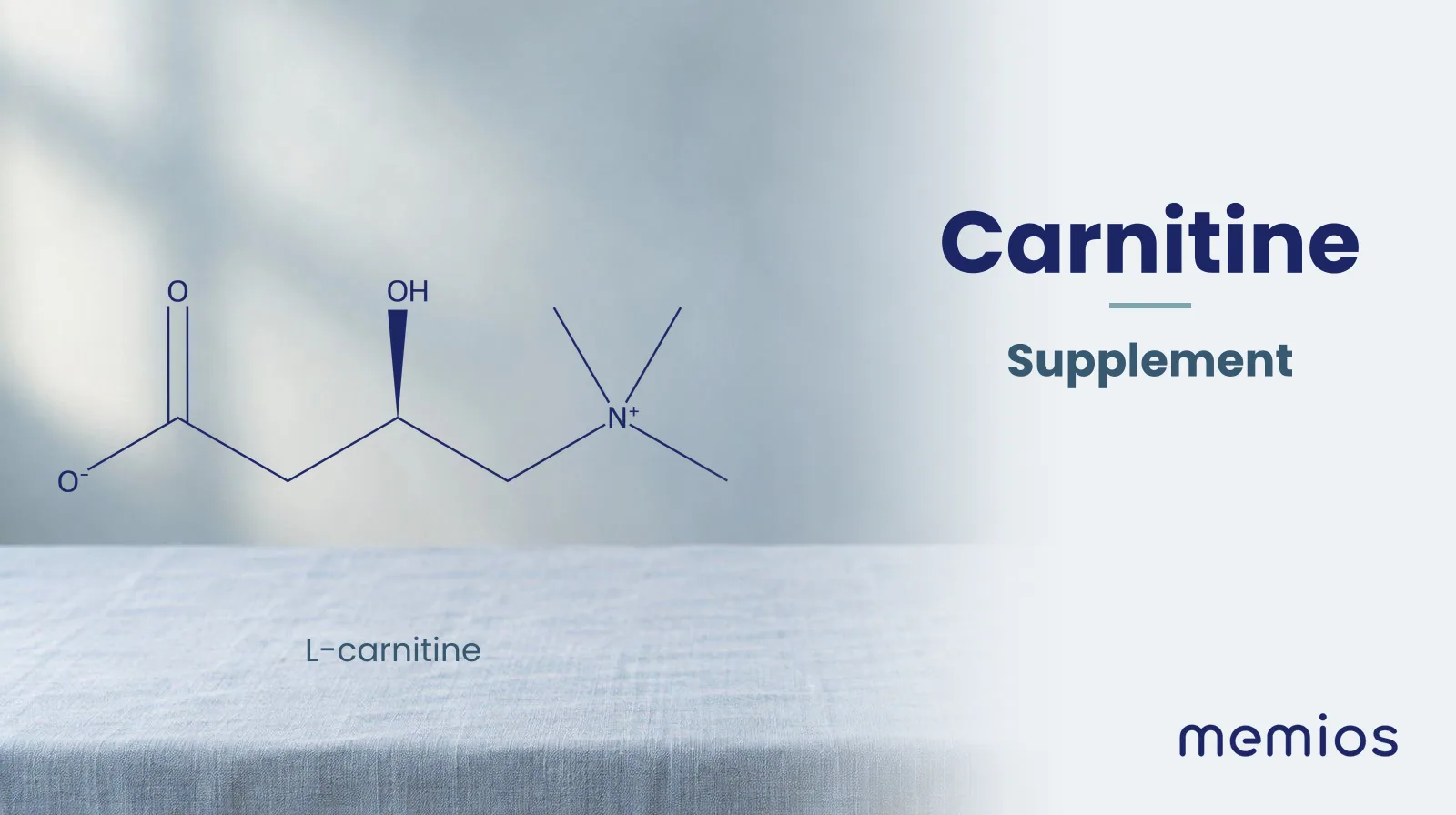
- What it is: Carnitine is a compound derived from amino acids that exists in several related forms sold on labels, including L-carnitine, acetyl-L-carnitine and propionyl-L-carnitine.
- Main use, supported: An umbrella meta-analysis of thirteen interventional meta-analyses reported that L-carnitine supplementation lowered total cholesterol. (low certainty)
- Other use, supported: A systematic review and meta-analysis of trials in acute myocardial infarction reported lower all-cause mortality, fewer ventricular arrhythmias and less angina with L-carnitine.
- Claim NOT supported by research: In that same follow-up, the raised TMAO was not accompanied by adverse changes in lipid profile or circulating leukocyte count. (low certainty)
- Another claim NOT supported: At doses of 1500 mg/day or less, acetyl-L-carnitine made essentially no difference to pain compared with placebo. (very low certainty)
- Recommended dose: not established. No RDA or Adequate Intake has been set for carnitine; the NIH Office of Dietary Supplements (page updated 17 April 2023) states the body needs about 15 mg/day from a combination of dietary sources and endogenous synthesis.
- Studied dose (a trial dose, not a recommendation): Acetyl-L-carnitine 1500 mg/day or 3000 mg/day, and 2000 mg/day, for 6 to 12 months in diabetic peripheral neuropathy trials. Findings citing that trial: 1 against.
- Upper limit: No Tolerable Upper Intake Level has been set for carnitine.
- What goes wrong: 7 findings on harm. More participants stopped high-dose acetyl-L-carnitine than placebo because of adverse events, although the difference was not statistically significant and the evidence was low certainty.
- Common myth: Carnitine is a proven fat-burner and an all-round heart protector, and since the body makes it, taking more is simply topping up.
What it is
Carnitine is a compound derived from amino acids that exists in several related forms sold on labels, including L-carnitine, acetyl-L-carnitine and propionyl-L-carnitine. The body makes it in the liver, kidneys and brain from lysine and methionine, and also takes it in from food, mainly red meat and dairy. The NIH Office of Dietary Supplements puts total daily need at roughly 15 mg from diet plus endogenous synthesis. Inside cells it carries long-chain fatty acids into mitochondria so they can be burned for energy.
What the research says
The honest summary is that the evidence is contested. The strongest pooled data are a 2013 systematic review and meta-analysis of trials in people who had just had a heart attack, which reported reductions in death, ventricular arrhythmias and angina but no reduction in heart failure or reinfarction, and which rests largely on older, mostly small trials; an umbrella meta-analysis found small lipid changes graded low to very low quality. Against that, a Cochrane review found no convincing benefit in dementia, and a Cochrane review of acetyl-L-carnitine for diabetic nerve pain rated its own pain result very low certainty and noted the trials were manufacturer-funded. A separate strand of work shows gut bacteria turn carnitine into TMAO, which is associated with cardiovascular risk in observational data and accelerated atherosclerosis in mice, while other authors argue TMAO is a marker rather than a cause.
Evidence grade: Disputed.
What goes wrong
More participants stopped high-dose acetyl-L-carnitine than placebo because of adverse events, although the difference was not statistically significant and the evidence was low certainty. (Source 1)
- Systematic review, Low certainty.
- Size: 294 participants in one placebo-controlled study.
- Who: people with diabetic peripheral neuropathy taking more than 1500 mg/day.
- How long: 6 to 12 months.
- Result: 6/147 (4.1%) discontinued on ALC versus 2/147 (1.4%) on placebo (P = 0.17); reasons were headache, facial paraesthesia and gastrointestinal disorders.
- Funding: industry-funded.
One placebo‐controlled study reported that six of 147 participants in the ALC > 1500 mg/day group (4.1%) and two of 147 participants in the placebo group (1.4%) discontinued treatment because of adverse events (headache, facial paraesthesia, and gastrointestinal disorders) (P = 0.17).
The Cochrane authors judged the safety evidence for acetyl-L-carnitine too uncertain to draw conclusions from. (Source 2)
- Systematic review, Low certainty.
- Size: four studies, 907 participants.
- Who: people with diabetic peripheral neuropathy.
- How long: 6 to 12 months.
- Result: no usable pooled adverse-event estimate.
- Funding: industry-funded.
The evidence on adverse events is too uncertain to make any judgements on safety.
Around 3 g/day of carnitine supplements can cause gastrointestinal upset and a fishy body odour. (Source 3)
- Official position, Certainty not rated.
- Size: not applicable - agency summary.
- Who: supplement users.
- How long: not stated.
- Result: nausea, vomiting, abdominal cramps, diarrhea and fishy body odour at about 3 g/day.
- Funding: government agency (NIH Office of Dietary Supplements, updated 17 April 2023)
doses of approximately 3 g/day of carnitine supplements can cause nausea, vomiting, abdominal cramps, diarrhea, and a fishy body odor.
Gut bacteria convert dietary L-carnitine to TMAO, and in mice chronic carnitine feeding increased atherosclerosis unless the microbiota was suppressed. (Source 4)
- Animal study, Certainty not rated.
- Size: mouse experiments; numbers not given in the abstract.
- Who: mice with and without intact intestinal microbiota.
- How long: chronic dietary supplementation; duration not stated in the abstract.
- Result: enhanced TMA and TMAO synthesis and increased atherosclerosis, abolished when the microbiota was suppressed.
- Funding: not stated.
Chronic dietary L-carnitine supplementation in mice altered cecal microbial composition, markedly enhanced synthesis of TMA and TMAO, and increased atherosclerosis, but this did not occur if intestinal microbiota was concurrently suppressed.
In a cohort undergoing cardiac evaluation, higher plasma L-carnitine was associated with cardiovascular disease and later cardiac events only among people who also had high TMAO. The study measured an association and was not designed to test whether carnitine itself raises that risk. (Source 4)
- Cohort study, Low certainty.
- Size: 2,595 subjects undergoing cardiac evaluation.
- Who: adults undergoing elective cardiac evaluation.
- How long: incident major adverse cardiac events over follow-up; length not stated in the abstract.
- Result: plasma L-carnitine predicted prevalent CVD and incident myocardial infarction, stroke or death, but only in those with concurrently high TMAO.
- Funding: not stated.
Plasma L-carnitine levels in subjects undergoing cardiac evaluation (n = 2,595) predicted increased risks for both prevalent cardiovascular disease (CVD) and incident major adverse cardiac events (myocardial infarction, stroke or death), but only among subjects with concurrently high TMAO levels.
Six months of L-carnitine-L-tartrate supplementation left plasma TMAO about ten times higher than placebo, though the same study saw no change in lipids or leukocyte count over the following year. (Source 5)
- Randomized trial, Low certainty.
- Size: follow-up of participants who completed a 24-week supplementation protocol; group sizes not stated in the abstract.
- Who: healthy aged women.
- How long: 24 weeks of supplementation, then 4 and 12 months after withdrawal.
- Result: plasma TMAO 33.6 ± 6.7 μM with L-carnitine versus 2.9 ± 0.3 μM with placebo at the end of supplementation; normalised by four months after stopping.
- Funding: not stated.
At the end of the supplementation protocol, the plasma TMAO concentration reached 33.6 ± 6.7 μM in the L-carnitine group, whereas it was 2.9 ± 0.3 μM in the placebo group.
A case report describes an unexpected rise in INR in a man stably anticoagulated with acenocoumarol after he began taking L-carnitine, with the INR settling after he stopped. (Source 6)
- Case report, Very low certainty.
- Size: 1 patient.
- Who: 33-year-old man with a mechanical aortic valve prosthesis on acenocoumarol.
- How long: ten weeks of carnitine 1000 mg/day.
- Result: INR rose to 4.65 from a previously stable range of 1.99 to 2.94; after stopping carnitine, INR returned to 2.4-2.8 for over four months.
- Funding: not stated.
There is one earlier report of potentiation of acenocoumarol by carnitine in the literature, thus confirmed by our observation 10 years later. The mechanism of interaction is still unknown.
What the evidence supports
A systematic review and meta-analysis of trials in acute myocardial infarction reported lower all-cause mortality, fewer ventricular arrhythmias and less angina with L-carnitine. (Source 7)
- Meta-analysis, Certainty not rated.
- Size: 13 controlled trials, 3,629 participants.
- Who: patients in the setting of acute myocardial infarction.
- How long: varies by trial; not stated in the record.
- Result: all-cause mortality odds ratio 0.73 (95% CI 0.54-0.99; P=.05); ventricular arrhythmias RR 0.35 (95% CI 0.21-0.58; P<.0001); angina RR 0.60 (95% CI 0.50-0.72; P<.00001)
- Funding: not stated.
Compared with placebo or control, L-carnitine is associated with a 27% reduction in all-cause mortality, a 65% reduction in VAs, and a 40% reduction in anginal symptoms in patients experiencing an acute myocardial infarction.
An umbrella meta-analysis of thirteen interventional meta-analyses reported that L-carnitine supplementation lowered total cholesterol, triglycerides and LDL-cholesterol by small amounts and raised HDL-cholesterol by a small amount. (Source 8)
- Review of reviews, Low certainty.
- Size: thirteen meta-analyses.
- Who: adults.
- How long: not stated.
- Result: TC ES −1.05 mg/dL (95% CI −1.71, −0.39; p = 0.002); TG ES −2.51 mg/dL (95% CI −3.62, −1.39; p < 0.001); LDL-C ES −4.81 mg/dL (95% CI −6.04, −3.59; p < 0.001); HDL-C ES 0.66 mg/dL (95% CI 0.20, 1.12; p = 0.005)
- Funding: independent - authors declared no commercial or financial relationships.
Limit of this finding: The published sentence is missing its verb: it reads that L-carnitine supplementation 'significantly total cholesterol' instead of saying the level fell. We have quoted it exactly as printed rather than repair it. The direction has to be read off the negative effect sizes, and the changes are small in absolute terms, roughly 1 to 5 mg/dL, so a reader should not read this as a large change in blood lipids.
Our results from thirteen meta-analyses indicated that L-carnitine supplementation significantly total cholesterol (TC) (ES = −1.05 mg/dL, 95% CI: −1.71, −0.39; p = 0.002), triglycerides (TG) (ES = −2.51 mg/dL; 95% CI: −3.62, −1.39, p < 0.001), and low-density lipoprotein-cholesterol (LDL-C) (ES = −4.81 mg/dL; 95% CI: −6.04, −3.59; p < 0.001).
What the evidence does not support
In the same meta-analysis L-carnitine did not reduce heart failure or myocardial reinfarction. (Source 9)
- Meta-analysis, Certainty not rated.
- Size: 13 controlled trials, 3,629 participants.
- Who: patients in the setting of acute myocardial infarction.
- How long: varies by trial; not stated in the record.
- Result: heart failure RR 0.85 (95% CI 0.67-1.09; P=.21); myocardial reinfarction RR 0.78 (95% CI 0.41-1.48; P=.45)
- Funding: not stated.
with no reduction in the development of heart failure (RR, 0.85; 95% CI, 0.67-1.09; P=.21) or myocardial reinfarction (RR, 0.78; 95% CI, 0.41-1.48; P=.45)
At doses of 1500 mg/day or less, acetyl-L-carnitine made essentially no difference to pain compared with placebo. (Source 10)
- Systematic review, Very low certainty.
- Size: two studies, 159 participants.
- Who: people with diabetic peripheral neuropathy.
- How long: 6 to 12 months.
- Result: MD -0.05 (95% CI -10.00 to 9.89; P = 0.99; I² = 0%)
- Funding: industry-funded - see review's funding statement.
At doses of 1500 mg/day or less, the VAS score after ALC treatment was little different from placebo (MD ‐0.05, 95% CI ‐10.00 to 9.89; two studies; 159 participants; P = 0.99; I² = 0%)
A Cochrane review of acetyl-L-carnitine in dementia found scattered positive results that the authors attributed to multiple comparisons, and no benefit on objective measures. (Source 11)
- Systematic review, Certainty not rated.
- Size: sixteen included trials.
- Who: people with mild to moderate dementia or cognitive decline.
- How long: 12, 24 and 52 weeks.
- Result: CGI-I Peto OR 1.90 (95% CI 1.31 to 2.76) at 12 weeks and OR 2.33 (95% CI 1.31 to 4.14) at 24 weeks but OR 0.91 (95% CI 0.58 to 1.43) at 52 weeks; MMSE WMD 0.69 (95% CI 0.09 to 1.29, P = 0.02) at 24 weeks only.
- Funding: not stated.
Given the large number of comparisons made, the statistically significant results may be due to chance. At present there is no evidence to recommend its routine use in clinical practice.
In the dementia trials, adverse events were reported but pooled analyses showed no statistically significant excess over placebo. (Source 11)
- Systematic review, Certainty not rated.
- Size: sixteen included trials.
- Who: people with mild to moderate dementia or cognitive decline.
- How long: 12 to 52 weeks.
- Result: no statistically significant differences between treated and placebo groups in meta-analyses of adverse events.
- Funding: not stated.
Various adverse events were reported, but from the meta-analyses there were no statistically significant differences between treated and placebo groups.
In that same follow-up, the raised TMAO was not accompanied by adverse changes in lipid profile or circulating leukocyte count. (Source 5)
- Randomized trial, Low certainty.
- Size: follow-up of participants who completed a 24-week supplementation protocol.
- Who: healthy aged women.
- How long: 4 and 12 months after withdrawal.
- Result: no modifications in serum lipid profile or circulating leukocyte count.
- Funding: not stated.
The results of this study demonstrate no adverse effects of elevated plasma TMAO, induced by L-carnitine, on the measured parameters at 4 and 12 months after withdrawal of supplementation.
The NIH Office of Dietary Supplements states that the body's own carnitine synthesis is sufficient to meet the needs of healthy people and is not affected by how much carnitine is eaten. (Source 12)
- Official position, Certainty not rated.
- Size: not applicable - agency summary.
- Who: healthy people.
- How long: not applicable.
- Result: a person weighing 165 lb on a strict vegetarian diet synthesises approximately 14.4 mg/day carnitine, against a stated need of about 15 mg/day.
- Funding: government agency (NIH Office of Dietary Supplements, page updated 17 April 2023)
Endogenous carnitine synthesis does not appear to be affected by dietary carnitine intake or carnitine excretion and is sufficient to meet the carnitine needs of healthy people.
Where the evidence is mixed
The same umbrella review rated its own evidence low quality for total cholesterol and triglycerides, moderate for LDL-C and very low for HDL-C. (Source 13)
- Review of reviews, Low certainty.
- Size: thirteen meta-analyses.
- Who: adults in the pooled interventional meta-analyses.
- How long: not stated for the pooled evidence.
- Result: GRADE ratings only: low for TC and TG, moderate for LDL-C, very low for HDL-C.
- Funding: independent.
Grade assessment revealed low quality for TC and TG, but LDL-c and HDL-c have a moderate, and very low quality of evidence, respectively.
A Cochrane review of acetyl-L-carnitine for diabetic peripheral neuropathy found a pain reduction versus placebo but rated the evidence very low certainty. (Source 2)
- Systematic review, Very low certainty.
- Size: four studies, 907 participants (three placebo-controlled studies, 675 participants)
- Who: people with diabetic peripheral neuropathy.
- How long: 6 to 12 months.
- Result: VAS 0-100 mm, MD -9.16 (95% CI -16.76 to -1.57; three studies; 540 participants; P = 0.02; I² = 56%)
- Funding: industry-funded - two studies funded by the manufacturer of ALC, two had a co-author consulting for a manufacturer.
We are very uncertain whether ALC causes a reduction in pain after 6 to 12 months' treatment in people with DPN, when compared with placebo, as the evidence is sparse and of low certainty.
The trials of acetyl-L-carnitine for diabetic neuropathy were funded or advised by manufacturers of the product. (Source 14)
- Systematic review, Certainty not rated.
- Size: four included studies.
- Who: people with diabetic peripheral neuropathy.
- How long: 6 to 12 months.
- Result: no effect size; a statement about the funding of the evidence base.
- Funding: industry-funded.
Two studies were funded by the manufacturer of ALC and the other two studies had at least one co‐author who was a consultant for an ALC manufacturer.
A review argues TMAO may be a marker of disease rather than a cause of it, pointing to reverse causality through kidney function. (Source 15)
- Expert review, not systematic, Certainty not rated.
- Size: not applicable - narrative review.
- Who: human observational and animal studies reviewed.
- How long: not applicable.
- Result: no pooled estimate; the authors describe discrepancies between studies and a directional association from disease to TMAO.
- Funding: not stated in the passages retrieved; a co-author is affiliated with a carnitine manufacturer, which a reviewer should verify.
Along this line, a recent review suggested that elevated TMAO in the circulation could reflect T2D or atherosclerosis mediated renal dysfunction, which reduces TMAO excretion, thereby elevating TMAO plasma concentrations. This suggests that TMAO may be a marker of disease, but not a causative factor.
A 2025 narrative review states that long-term L-carnitine supplementation raises fasting plasma TMAO and treats that as a cardiovascular safety concern set against possible gains in muscle mass and physical performance. (Source 16)
- Expert review, not systematic, Certainty not rated.
- Size: not applicable - narrative review.
- Who: human and animal studies reviewed.
- How long: not applicable.
- Result: no pooled estimate; the review reports that long-term supplementation elevates fasting plasma TMAO levels.
- Funding: not stated.
Limit of this finding: This is a narrative review in a small journal, not a trial and not a systematic review. It reports no pooled numbers of its own, so it shows what some reviewers think the evidence adds up to, not how large any risk is.
Long-term LC supplementation has been shown to elevate fasting plasma TMAO levels, raising concerns about its implications for cardiovascular health, despite its potential benefits in improving muscle mass and physical performance.
Where the research disagrees
Whether the TMAO produced from carnitine by gut bacteria is a cause of cardiovascular disease or only a marker of it
- Koeth and colleagues, Nature Medicine 2013, mouse experiments plus a human cohort of 2,595 adults: Intestinal microbiota may thus contribute to the well-established link between high levels of red meat consumption and CVD risk. (Source 4)
- Papandreou, More and Bellamine, Nutrients 2020, narrative review of observational and animal studies: Discrepancies and inconsistencies of recent investigations and previous studies questioned the role of TMAO in these diseases. (Source 17)
Whether L-carnitine helps after a heart attack
- DiNicolantonio and colleagues, Mayo Clinic Proceedings 2013, meta-analysis of 13 controlled trials, 3,629 participants: Compared with placebo or control, L-carnitine is associated with a 27% reduction in all-cause mortality, a 65% reduction in VAs, and a 40% reduction in anginal symptoms in patients experiencing an acute myocardial infarction. (Source 7)
- The same meta-analysis on other endpoints, meta-analysis of the same 13 trials: with no reduction in the development of heart failure (RR, 0.85; 95% CI, 0.67-1.09; P=.21) or myocardial reinfarction (RR, 0.78; 95% CI, 0.41-1.48; P=.45) (Source 9)
How much
- Reference intake: No RDA or Adequate Intake has been set for carnitine; the NIH Office of Dietary Supplements (page updated 17 April 2023) states the body needs about 15 mg/day from a combination of dietary sources and endogenous synthesis. (Source 18)
- Upper limit: No Tolerable Upper Intake Level has been set for carnitine. The NIH Office of Dietary Supplements (2023) reports that doses around 3 g/day cause nausea, vomiting, abdominal cramps, diarrhea and fishy body odour. (Source 3)
- Studied: Acetyl-L-carnitine 1500 mg/day or 3000 mg/day, and 2000 mg/day, for 6 to 12 months in diabetic peripheral neuropathy trials. (Source 10)
- Studied: L-carnitine-L-tartrate 1500 mg daily for 24 weeks in healthy aged women. (Source 5)
- Studied: L-carnitine 1000 mg/day for ten weeks in the anticoagulation case report. (Source 6)
A common belief, and what the research shows
The belief: Carnitine is a proven fat-burner and an all-round heart protector, and since the body makes it, taking more is simply topping up.
What the research shows: Pooled lipid effects are small and the reviewers rated their own evidence low to very low quality: "Grade assessment revealed low quality for TC and TG, but LDL-c and HDL-c have a moderate, and very low quality of evidence, respectively." In dementia the Cochrane reviewers wrote "At present there is no evidence to recommend its routine use in clinical practice." And supplementing is not the same as topping up endogenous synthesis: in healthy aged women, "At the end of the supplementation protocol, the plasma TMAO concentration reached 33.6 ± 6.7 μM in the L-carnitine group, whereas it was 2.9 ± 0.3 μM in the placebo group."
Questions and answers
What is it?
Carnitine is not a single substance but a family of closely related compounds sold under several label names. The main ones are L-carnitine, acetyl-L-carnitine and propionyl-L-carnitine. The body makes carnitine itself in the liver, kidneys and brain from two amino acids, lysine and methionine, and also absorbs it from food. (Source 19)
What does it do in the body?
Carnitine's core job is transport. It shuttles long-chain fatty acids across the mitochondrial membrane so they can be broken down for energy. That is why it appears in supplements aimed at energy, endurance and fat metabolism, although a metabolic role does not by itself mean supplements change outcomes. (Source 20)
Is it good or bad for you?
It depends on the setting and the timeframe, and the literature pulls both ways. A meta-analysis of trials after heart attack reported fewer deaths, arrhythmias and angina episodes, but the same analysis found no effect on heart failure or reinfarction, and a Cochrane review of acetyl-L-carnitine for nerve pain rated its own pain result very low certainty. Reviewers also flag that long-term supplementation raises fasting TMAO, which they treat as a cardiovascular concern weighed against possible gains in muscle mass and physical performance. (Source 16)
How do you get more of it?
Diet is the main external source, and the gap between diets is large. The NIH Office of Dietary Supplements estimates that an omnivorous diet supplies roughly 24 to 145 mg of carnitine a day for a person weighing 165 pounds, while a vegan diet supplies around 1.2 mg. Supplements in trials have used gram-level doses, far above dietary amounts. (Source 21)
If it is harmful, what reduces it?
Carnitine itself is an essential metabolic carrier and is not something the body needs stripped out. What the literature does describe is reversal of the raised TMAO that supplementation causes: in healthy aged women who had taken 1500 mg/day of L-carnitine-L-tartrate for 24 weeks, plasma TMAO fell back to placebo levels within four months of stopping and stayed there. (Source 5)
Why might someone be low in it or missing it?
Low carnitine usually has a specific cause rather than a dietary one. Genetic primary carnitine deficiency affects the cellular carnitine transporter. Medicines are the other described route: the NIH Office of Dietary Supplements states that treatment with the anticonvulsants valproic acid, phenobarbital, phenytoin and carbamazepine reduces blood levels of carnitine. (Source 22)
Which whole foods contain it or feed it?
Animal foods carry most of the carnitine in a normal diet: the NIH fact sheet's food table is headed by beef steak and ground beef, with smaller amounts in milk, cod and chicken breast. The size of the dietary contribution can be read off the difference between diets, since an omnivorous diet supplies roughly 24 to 145 mg a day against about 1.2 mg on a vegan diet. (Source 21)
What happens if you do not have it?
In healthy people the body's own synthesis covers requirements, so ordinary diets do not produce deficiency. Genetic primary carnitine deficiency is different and serious: GeneReviews describes metabolic decompensation in infancy, typically between three months and two years of age, with hypoketotic hypoglycaemia, poor feeding, irritability, lethargy, hepatomegaly, raised liver transaminases and hyperammonaemia, triggered by fasting or by common illnesses such as a respiratory infection or gastroenteritis. (Source 23)
How can you test for it?
Carnitine status is measured in blood, and there are published cut-offs. The NIH Office of Dietary Supplements treats a plasma free carnitine of 20 micromol/L or less, or total carnitine of 30 micromol/L or less, as abnormally low. Newborn screening programmes quantify free carnitine in dried blood spots to pick up primary carnitine deficiency, and diagnosis is confirmed genetically, so a single blood value is a screen rather than a diagnosis. (Source 24)
References
- The Cochrane Database of Systematic Reviews. Acetyl-L-carnitine for the treatment of diabetic peripheral neuropathy. 2019. PMID 31201734, DOI 10.1002/14651858.CD011265.pub2. Read the source
- The Cochrane Database of Systematic Reviews. Acetyl-L-carnitine for the treatment of diabetic peripheral neuropathy. 2019. PMID 31201734, DOI 10.1002/14651858.CD011265.pub2. Read the source
- NIH Office of Dietary Supplements. Carnitine - Health Professional Fact Sheet. 2023. Read the source
- Nature Medicine. Intestinal microbiota metabolism of L-carnitine, a nutrient in red meat, promotes atherosclerosis. 2013. PMID 23563705, DOI 10.1038/nm.3145. Read the source
- Nutrients. Plasma Trimethylamine-N-oxide following Cessation of L-carnitine Supplementation in Healthy Aged Women. 2019. DOI 10.3390/nu11061322. Read the source
- Swiss Medical Weekly. Interaction of food supplement L-carnitine with oral anticoagulant acenocoumarol. 2004. PMID 15340883. Read the source
- Mayo Clinic Proceedings (authors' structured abstract reproduced in the Database of Abstracts of Reviews of Effects record, NCBI Bookshelf NBK133530). L-carnitine in the secondary prevention of cardiovascular disease: systematic review and meta-analysis. 2013. PMID 23597877, DOI 10.1016/j.mayocp.2013.02.007. Read the source
- Frontiers in Nutrition. The effect of L-carnitine supplementation on lipid profile in adults: an umbrella meta-analysis on interventional meta-analyses. 2023. DOI 10.3389/fnut.2023.1214734. Read the source
- Mayo Clinic Proceedings (authors' structured abstract reproduced in the Database of Abstracts of Reviews of Effects record, NCBI Bookshelf NBK133530). L-carnitine in the secondary prevention of cardiovascular disease: systematic review and meta-analysis. 2013. PMID 23597877, DOI 10.1016/j.mayocp.2013.02.007. Read the source
- The Cochrane Database of Systematic Reviews. Acetyl-L-carnitine for the treatment of diabetic peripheral neuropathy. 2019. PMID 31201734, DOI 10.1002/14651858.CD011265.pub2. Read the source
- The Cochrane Database of Systematic Reviews (summary page on cochrane.org). Acetyl-l-carnitine for dementia. 2003. PMID 12804452, DOI 10.1002/14651858.CD003158. Read the source
- NIH Office of Dietary Supplements. Carnitine - Health Professional Fact Sheet. 2023. Read the source
- Frontiers in Nutrition. The effect of L-carnitine supplementation on lipid profile in adults: an umbrella meta-analysis on interventional meta-analyses. 2023. DOI 10.3389/fnut.2023.1214734. Read the source
- The Cochrane Database of Systematic Reviews. Acetyl-L-carnitine for the treatment of diabetic peripheral neuropathy. 2019. PMID 31201734, DOI 10.1002/14651858.CD011265.pub2. Read the source
- Nutrients. Trimethylamine N-Oxide in Relation to Cardiometabolic Health—Cause or Effect?. 2020. DOI 10.3390/nu12051330. Read the source
- Exploration of Cardiology. Comparison of short-term and long-term effects of peroral L-carnitine intake: clinical implications of elevated TMAO levels in cardiovascular complications. 2025. DOI 10.37349/ec.2025.101250. Read the source
- Nutrients. Trimethylamine N-Oxide in Relation to Cardiometabolic Health—Cause or Effect?. 2020. DOI 10.3390/nu12051330. Read the source
- NIH Office of Dietary Supplements. Carnitine - Health Professional Fact Sheet. 2023. Read the source
- NIH Office of Dietary Supplements. Carnitine - Health Professional Fact Sheet. 2023. Read the source
- Exploration of Cardiology. Comparison of short-term and long-term effects of peroral L-carnitine intake: clinical implications of elevated TMAO levels in cardiovascular complications. 2025. DOI 10.37349/ec.2025.101250. Read the source
- NIH Office of Dietary Supplements. Carnitine - Health Professional Fact Sheet. 2023. Read the source
- NIH Office of Dietary Supplements. Carnitine - Health Professional Fact Sheet. 2023. Read the source
- GeneReviews, University of Washington, Seattle (NCBI Bookshelf NBK84551). Primary Carnitine Deficiency. 2024. PMID 22420015. Read the source
- NIH Office of Dietary Supplements. Carnitine - Health Professional Fact Sheet. 2023. Read the source