Medications · September 29, 2026 · Memios · 20 min read
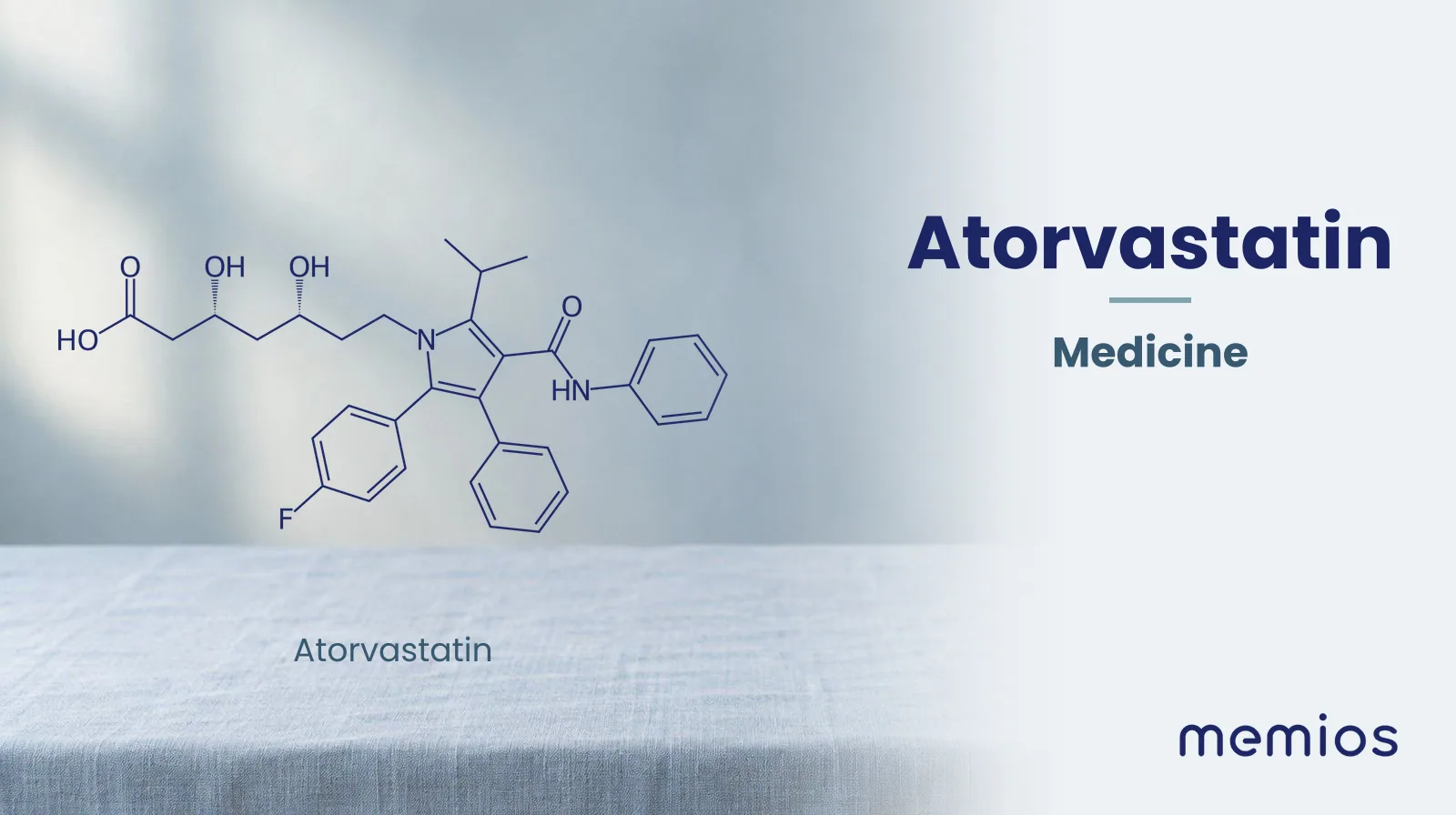
Atorvastatin
The trial evidence that atorvastatin and other statins cut heart attacks and strokes is strong.
TLDR
- Well established. The trial evidence that atorvastatin and other statins cut heart attacks and strokes is strong.
- What it is: Atorvastatin is a prescription statin drug.
- Main use: Secondary prevention (people with existing coronary or other occlusive vascular disease) (well supported).
- Other approved uses: Primary prevention (raised risk, no prior cardiovascular event) (well supported).
- Recommended dose (official position): Dosing is set by the prescriber. As a position, the US label (AvKARE generic label, revised 11/2023) gives a dosage range of 10 mg to 80 mg once daily.
- Studied dose (a trial dose, not a recommendation): ASCOT-LLA gave atorvastatin 10 mg daily versus placebo. No finding here cites that trial.
- Upper limit: The label's maximum is 80 mg once daily (US label, 11/2023).
- What goes wrong: 6 findings on harm. In 19 blinded trials, muscle pain or weakness was reported almost as often on placebo as on a statin. In year 1, the authors calculate that only about 1 in 15 such reports among people on a statin was actually due to the statin.
- Interactions: 2 recorded, including Grapefruit juice, Red yeast rice.
- Common myth: Most people get muscle pain from statins.
What it is
Atorvastatin is a prescription statin drug. The label describes it as an inhibitor of HMG-CoA reductase, the enzyme that controls the rate at which the liver makes cholesterol.
What the research says
The trial evidence that atorvastatin and other statins cut heart attacks and strokes is strong. How much any one person gains depends on their starting risk. For people who already have vascular disease (secondary prevention), a 2016 Lancet review estimates about 10 events prevented per 100 people over 5 years for a 2 mmol/L LDL reduction. For people at raised risk who have not had an event (primary prevention), its estimate is about 5 per 100. The USPSTF review of primary prevention trials found smaller absolute differences: all-cause death was 0.35 percentage points lower and heart attack 0.85 points lower. Blinded trials show that most muscle symptoms people blame on statins happen just as often on placebo. True myopathy is rare. Statins do raise new diabetes diagnoses modestly, mostly in people already near the threshold.
Evidence grade: Well established.
How it works
Drug class: HMG-CoA reductase inhibitor (statin)
Atorvastatin blocks HMG-CoA reductase, the rate-limiting enzyme in the liver's cholesterol production. In animal models it also increases the number of LDL receptors on liver cells, which pull more LDL cholesterol out of the blood. (Source 1)
What it is used for
- Randomised trials and CTT meta-analyses show fewer major vascular events. A 2016 Lancet review estimates about 1000 events prevented per 10,000 patients treated for 5 years at a 2 mmol/L LDL reduction, which is 10% absolute. In CTT's meta-analysis, more intensive regimens cut events by a further 15%. Evidence: established. (Source 2)
- Benefit is real but smaller in absolute terms: about 500 events per 10,000 over 5 years in the 2016 Lancet review's estimate. In the USPSTF review, absolute risk differences were 0.35 percentage points for death, 0.85 for heart attack and 0.39 for stroke. Data for people over 75 are sparse. Evidence: established. (Source 2)
Interactions
- Grapefruit juice (label): The label advises against drinking large quantities of grapefruit juice, more than 1.2 litres a day, with atorvastatin. The passage quoted gives no measured effect on blood levels, and no pharmacokinetic study could be opened. (Source 3)
- Red yeast rice (theoretical): Red yeast rice contains monacolin K, which EFSA says is identical to the statin lovastatin. EFSA concluded that supplement intakes could reach therapeutic lovastatin doses, that severe adverse reactions have been reported at intakes as low as 3 mg a day, and that monacolin K from red yeast rice could cause severe muscle effects, including rhabdomyolysis, and liver effects. Taking it with atorvastatin would mean taking two statins at once. That interaction is inferred, not tested in a study. (Source 4)
Stopping it
- In a French national cohort of adherent 75-year-olds taking statins for primary prevention, stopping was associated with more cardiovascular admissions. This is observational, not proof that stopping caused them. (Source 5)
- The authors of a 2016 Lancet review say statin-attributed muscle symptoms generally resolve rapidly after stopping, and warn that stopping unnecessarily risks heart attacks and strokes. (Source 6)
- In StatinWISE, most people who completed the n-of-1 trial intended to restart statins after seeing their own results. (Source 7)
What goes wrong
In 19 blinded trials, muscle pain or weakness was reported almost as often on placebo as on a statin. In year 1, the authors calculate that only about 1 in 15 such reports among people on a statin was actually due to the statin. (Source 8)
- Meta-analysis, High certainty.
- Size: 19 double-blind trials, about 124,000 participants.
- Who: adults in statin vs placebo trials.
- How long: median 4.3 years.
- Result: 27.1% vs 26.6% reported muscle symptoms (RR 1.03, 1.01-1.06); year 1 excess 11 per 1000 person-years.
- Funding: British Heart Foundation, MRC, Australian NHMRC.
16 835 (27·1%) allocated statin versus 16 446 (26·6%) allocated placebo reported muscle pain or weakness (rate ratio [RR] 1·03; 95% CI 1·01–1·06). During year 1, statin therapy produced a 7% relative increase in muscle pain or weakness (1·07; 1·04–1·10), corresponding to an absolute excess rate of 11 (6–16) events per 1000 person-years, which indicates that only one in 15 ([1·07–1·00]/1·07) of these muscle-related reports by participants allocated to statin therapy were actually due to the statin.
True myopathy and rhabdomyolysis are rare. The authors of a 2016 Lancet review estimate about 5 myopathy cases per 10,000 people treated for 5 years with atorvastatin 40 mg, one of which might progress to rhabdomyolysis if the drug is not stopped. (Source 2)
- Official position, Certainty not rated.
- Size: narrative review drawing on randomised trial evidence; figures are illustrative estimates.
- Who: statin users.
- How long: 5 years.
- Result: about 5 myopathy cases per 10,000 over 5 years; 50-100 new diabetes cases; 5-10 haemorrhagic strokes.
- Funding: not stated in the abstract read; many authors are CTT investigators.
would cause about 5 cases of myopathy (one of which might progress, if the statin therapy is not stopped, to the more severe condition of rhabdomyolysis), 50-100 new cases of diabetes, and 5-10 haemorrhagic strokes.
The label warns that atorvastatin may cause myopathy and rhabdomyolysis, and that kidney injury and rare deaths have occurred as a result of rhabdomyolysis in patients treated with statins. (Source 9)
- Official position, Certainty not rated.
- Funding: label.
Atorvastatin calcium may cause myopathy (muscle pain, tenderness, or weakness associated with elevated creatine kinase [CK]) and rhabdomyolysis. Acute kidney injury secondary to myoglobinuria and rare fatalities have occurred as a result of rhabdomyolysis in patients treated with statins, including atorvastatin.
The label reports rare cases of immune-mediated necrotizing myopathy with statins, an autoimmune muscle disease in which weakness and raised creatine kinase persist despite stopping the statin. (Source 10)
- Official position, Certainty not rated.
- Funding: label.
There have been rare reports of immune-mediated necrotizing myopathy (IMNM), an autoimmune myopathy, associated with statin use, including reports of recurrence when the same or a different statin was administered. IMNM is characterized by proximal muscle weakness and elevated serum creatine kinase that persists despite discontinuation of statin treatment; positive anti-HMG CoA reductase antibody; muscle biopsy showing necrotizing myopathy; and improvement with immunosuppressive agents.
Compared with placebo, low- or moderate-intensity statins raised new diabetes diagnoses by 10% (1.3% vs 1.2% per year) and high-intensity statins by 36% (4.8% vs 3.5% per year). (Source 11)
- Meta-analysis, High certainty.
- Size: 19 placebo-controlled trials (123,940 participants) plus 4 intensity trials.
- Who: adults in statin trials.
- How long: median 4.3 years.
- Result: low/moderate intensity RR 1.10 (1.3% vs 1.2% per year); high intensity RR 1.36 (4.8% vs 3.5% per year)
- Funding: British Heart Foundation, UK MRC, Australian NHMRC.
Compared with placebo, allocation to low-intensity or moderate-intensity statin therapy resulted in a 10% proportional increase in new-onset diabetes (2420 of 39 179 participants assigned to receive a statin [1·3% per year] vs 2214 of 39 266 participants assigned to receive placebo [1·2% per year]; rate ratio [RR] 1·10, 95% CI 1·04–1·16), and allocation to high-intensity statin therapy resulted in a 36% proportional increase (1221 of 9935 participants assigned to receive a statin [4·8% per year] vs 905 of 9859 participants assigned to receive placebo [3·5% per year]; 1·36, 1·25–1·48).
The CTT authors conclude the increase is dose-dependent and consistent with a small upward shift in blood glucose, with most new diagnoses in people whose glucose markers were already close to the diagnostic threshold. (Source 12)
- Meta-analysis, High certainty.
- Size: 19 placebo-controlled trials (123,940 participants) plus 4 intensity trials.
- Who: adults in statin trials.
- How long: median 4.3 years.
- Result: low/moderate intensity RR 1.10 (1.3% vs 1.2% per year); high intensity RR 1.36 (4.8% vs 3.5% per year)
- Funding: British Heart Foundation, UK MRC, Australian NHMRC.
Statins cause a moderate dose-dependent increase in new diagnoses of diabetes that is consistent with a small upwards shift in glycaemia, with the majority of new diagnoses of diabetes occurring in people with baseline glycaemic markers that are close to the diagnostic threshold for diabetes.
What the evidence supports
A 2016 Lancet review (Collins et al.) estimates that lowering LDL by 2 mmol/L with a statin such as atorvastatin 40 mg for 5 years would typically prevent major vascular events in about 10 of every 100 people with existing vascular disease (secondary prevention) and about 5 of every 100 at raised risk without a prior event (primary prevention). These are illustrative estimates, not pooled trial results. (Source 2)
- Official position, Certainty not rated.
- Size: narrative review drawing on randomised trial evidence; figures are illustrative estimates.
- Who: adults with pre-existing occlusive vascular disease, and adults at increased risk without a prior event.
- How long: 5 years (illustrative)
- Result: about 1000 per 10,000 treated (10% absolute benefit) in secondary prevention; about 500 per 10,000 (5%) in primary prevention.
- Funding: not stated in the abstract read; many authors are CTT investigators, and many underlying trials were industry-funded.
For example, lowering LDL cholesterol by 2 mmol/L (77 mg/dL) with an effective low-cost statin regimen (eg, atorvastatin 40 mg daily, costing about £2 per month) for 5 years in 10 000 patients would typically prevent major vascular events from occurring in about 1000 patients (ie, 10% absolute benefit) with pre-existing occlusive vascular disease (secondary prevention) and in 500 patients (ie, 5% absolute benefit) who are at increased risk but have not yet had a vascular event (primary prevention).
In people without prior cardiovascular disease, statins were associated with small absolute reductions in death, stroke and heart attack, which the review reports as absolute risk differences alongside the relative risks. (Source 13)
- Systematic review, Moderate certainty.
- Size: 22 trials, 90,624 participants.
- Who: adults at increased CVD risk without prior CVD events.
- How long: 6 months to 6 years.
- Result: all-cause mortality RR 0.92, ARD -0.35%; stroke RR 0.78, ARD -0.39%; MI RR 0.67, ARD -0.85%; composite CV RR 0.72, ARD -1.28%.
- Funding: US AHRQ-funded review for USPSTF.
Statins were significantly associated with decreased risk of all-cause mortality (risk ratio [RR], 0.92 [95% CI, 0.87 to 0.98]; absolute risk difference [ARD], −0.35% [95% CI, −0.57% to −0.14%]), stroke (RR, 0.78 [95% CI, 0.68 to 0.90]; ARD, −0.39% [95% CI, −0.54% to −0.25%]), myocardial infarction (RR, 0.67 [95% CI, 0.60 to 0.75]; ARD, −0.85% [95% CI, −1.22% to −0.47%])
In ASCOT-LLA, hypertensive patients with average or low cholesterol given atorvastatin 10 mg had fewer primary coronary events than those given placebo. (Source 14)
- Randomized trial, Moderate certainty.
- Size: 10,305 randomised.
- Who: hypertensive adults aged 40-79 with at least three other risk factors, total cholesterol 6.5 mmol/L or less.
- How long: median 3.3 years (stopped early)
- Result: primary events 100 vs 154 (HR 0.64, 95% CI 0.50-0.83); deaths 185 vs 212 (HR 0.87, 0.71-1.06, p=0.16). If arms were about equal, the absolute difference is about 1 percentage point (our calculation; group sizes not in the abstract)
- Funding: not stated in the abstract read.
By that time, 100 primary events had occurred in the atorvastatin group compared with 154 events in the placebo group (hazard ratio 0·64 [95% CI 0·50–0·83], p=0·0005).
CTT's analysis of people at low risk (5-year risk under 10%) estimated an absolute reduction of about 11 major vascular events per 1000 over 5 years for each 1 mmol/L LDL reduction. (Source 15)
- Meta-analysis, High certainty.
- Size: 27 randomised trials, individual data.
- Who: people at low baseline vascular risk.
- How long: 5 years.
- Result: about 11 per 1000 over 5 years per 1 mmol/L LDL reduction (our calculation, not the paper's: roughly 90 treated per mmol/L for 5 years to prevent one event)
- Funding: Study funding (Lancet abstract, per verifier via Europe PMC): British Heart Foundation, UK Medical Research Council, Cancer Research UK, European Community Biomed Programme, Australian NHMRC, National Heart Foundation Australia. The authors disclose that most of the included trials were supported by research grants from the pharmaceutical industry.
each 1 mmol/L reduction in LDL cholesterol produced an absolute reduction in major vascular events of about 11 per 1000 over 5 years.
What the evidence does not support
In the same primary prevention review, the reduction in cardiovascular death was not statistically significant, and data for people older than 75 were sparse. (Source 13)
- Systematic review, Moderate certainty.
- Size: 22 trials, 90,624 participants.
- Who: adults without prior CVD.
- How long: 6 months to 6 years.
- Result: CV mortality RR 0.91 (95% CI 0.81 to 1.02), ARD -0.13%.
- Funding: US AHRQ-funded review for USPSTF.
the association with cardiovascular mortality was not statistically significant (RR, 0.91 [95% CI, 0.81 to 1.02]; ARD, −0.13%). Relative benefits were consistent in groups defined by demographic and clinical characteristics, although data for persons older than 75 years were sparse.
In ASCOT-LLA, the difference in total deaths between atorvastatin and placebo was not statistically significant. (Source 14)
- Randomized trial, Moderate certainty.
- Size: 10,305 randomised.
- Who: hypertensive adults.
- How long: median 3.3 years.
- Result: 185 vs 212 deaths, HR 0.87 (0.71-1.06), p=0.16.
- Funding: not stated in abstract read.
There were 185 deaths in the atorvastatin group and 212 in the placebo group (0·87 [0·71–1·06], p=0·16).
In the SAMSON n-of-1 trial, symptom intensity was similar on statin and placebo months and much lower on no-tablet months. About 90% of the symptom burden on statins also appeared on placebo. (Source 16)
- Randomized trial, Moderate certainty.
- Size: 60 randomised.
- Who: patients who had stopped statins because of side effects.
- How long: 12 months.
- Result: symptom score 16.3 statin, 15.4 placebo, 8.0 no treatment; nocebo ratio 0.90.
- Funding: not stated on the page read.
On average, symptom intensity was similar during placebo or statin months (15.4 and 16.3, respectively), and both were significantly higher (p<0.001) than during no-treatment months (8.0). The nocebo proportion was 0.90, i.e., while patients reported side effects while taking statin tablets, 90% of their symptom burden was also elicited while taking placebo tablets.
In StatinWISE, atorvastatin 20 mg had no overall effect on muscle symptoms compared with placebo in people who had previously reported severe muscle symptoms on statins. (Source 7)
- Randomized trial, Moderate certainty.
- Size: 151 participants in primary analysis.
- Who: people who had stopped or were considering stopping statins because of muscle symptoms.
- How long: series of 2-month periods (n-of-1)
- Result: mean difference -0.11 (95% CI -0.36 to 0.14); withdrawals for muscle symptoms 9% statin vs 7% placebo.
- Funding: not stated on page read.
No overall effect of atorvastatin 20 mg on muscle symptoms compared with placebo was found in participants who had previously reported severe muscle symptoms when taking statins.
Where the evidence is mixed
Stopping statins at age 75 in people taking them for primary prevention was associated with 33% more cardiovascular hospital admissions. This is an observational study, and the authors call for randomised trials. (Source 5)
- Cohort study, Low certainty.
- Size: 120,173.
- Who: adherent 75-year-olds without prior CVD in France.
- How long: mean 2.4 years.
- Result: adjusted HR 1.33 (1.18-1.50) for any CV admission.
- Funding: not stated in abstract read.
Statin discontinuation was associated with a 33% increased risk of admission for cardiovascular event in 75-year-old primary prevention patients. Future studies, including randomized studies, are needed to confirm these findings
Where the research disagrees
How much primary prevention benefits the individual
- Cholesterol Treatment Trialists' Collaboration (2012), individual-participant meta-analysis of 27 trials; the authors disclose that most of the trials were supported by pharmaceutical-industry research grants: This benefit greatly exceeds any known hazards of statin therapy. (Source 15)
- USPSTF evidence review (Chou et al., 2022), systematic review of 22 primary prevention trials, reporting absolute risk differences under 1.3 percentage points: the association with cardiovascular mortality was not statistically significant (RR, 0.91 [95% CI, 0.81 to 1.02]; ARD, −0.13%) (Source 13)
How much
- Reference intake: Dosing is set by the prescriber. As a position, the US label (AvKARE generic label, revised 11/2023) gives a dosage range of 10 mg to 80 mg once daily. (Source 17)
- Upper limit: The label's maximum is 80 mg once daily (US label, 11/2023). (Source 17)
- Studied: ASCOT-LLA gave atorvastatin 10 mg daily versus placebo. (Source 18)
- Studied: StatinWISE used atorvastatin 20 mg versus placebo in n-of-1 periods. (Source 7)
- Studied: CTT defines more intensive regimens as atorvastatin 40-80 mg (or rosuvastatin 20-40 mg) once daily. (Source 8)
A common belief, and what the research shows
The belief: Most people get muscle pain from statins.
What the research shows: Blinded trials say otherwise. In CTT's 2022 analysis of 19 double-blind trials: 'Most (>90%) of all reports of muscle symptoms by participants allocated statin therapy were not due to the statin.' SAMSON found 90% of the symptom burden also occurred on placebo. True myopathy is rare, at about 5 per 10,000 over 5 years.
Questions and answers
What is it?
Atorvastatin is a drug that blocks HMG-CoA reductase, the rate-limiting enzyme in the pathway the body uses to make sterols, including cholesterol. (Source 1)
What does it do in the body?
It blocks HMG-CoA reductase, the enzyme that controls the rate of cholesterol production. In animal models this lowered blood cholesterol and lipoproteins, both by slowing cholesterol production in the liver and by increasing the LDL receptors on liver cells that take LDL out of the blood. The label adds that it reduces LDL production and the number of LDL particles. (Source 1)
Is it good or bad for you?
It depends on a person's starting risk. A 2016 Lancet review estimates that lowering LDL by 2 mmol/L for 5 years would typically prevent major vascular events in about 10 of every 100 people who already have vascular disease, and about 5 of every 100 at raised risk who have not had an event. The review says the only serious harms shown to be caused by long-term statin therapy are myopathy, new-onset diabetes and, probably, haemorrhagic stroke. (Source 2)
How do you get more of it?
As a label position, the dosage range is 10 mg to 80 mg once daily. The prescriber sets the dose; this is not advice to the reader. (Source 17)
If it is harmful, what reduces it?
The authors of a 2016 Lancet review say that the rare cases of myopathy and muscle symptoms attributed to statins generally resolve rapidly when treatment is stopped, and warn that heart attacks or strokes after stopping unnecessarily can be devastating. (Source 6)
Why might someone be low in it or missing it?
Not answered by the sources we read. They describe atorvastatin as a prescribed drug and do not discuss anyone being low in or missing it. (Source 19)
We searched: The atorvastatin label (AvKARE, DailyMed, 11/2023), the CTT meta-analyses and the 2016 Lancet review by Collins et al.
Which whole foods contain it or feed it?
We found no source describing a whole food that contains atorvastatin. Red yeast rice, a fermented rice product sold as a supplement, contains monacolin K, which EFSA says is identical to a different statin, lovastatin. EFSA was unable to identify any intake of monacolins from red yeast rice that does not raise concerns about harm to health. (Source 20)
What happens if you do not have it?
In an observational French cohort, 75-year-olds who stopped statins taken for primary prevention had 33% more admissions for cardiovascular events. This is an association, not proof of cause. (Source 5)
How can you test for it?
Response is checked with a blood LDL cholesterol test. The label says LDL cholesterol can be assessed as early as 4 weeks after starting, with the dose adjusted if necessary. (Source 21)
References
- US FDA-approved label via DailyMed (NLM). Atorvastatin Calcium Tablets prescribing information (AvKARE), revised 11/2023, section 12.1. 2023. Read the source
- The Lancet (Collins R et al.); abstract read on Oxford University Research Archive. Interpretation of the evidence for the efficacy and safety of statin therapy. 2016. DOI 10.1016/S0140-6736(16)31357-5. Read the source
- US FDA-approved label via DailyMed (NLM). Atorvastatin Calcium Tablets prescribing information (AvKARE), revised 11/2023, grapefruit juice statement. 2023. Read the source
- EFSA Journal (EFSA Panel on Food Additives and Nutrient Sources added to Food); PDF read on air.unimi.it repository. Scientific opinion on the safety of monacolins in red yeast rice. 2018. PMID 32626016, DOI 10.2903/j.efsa.2018.5368. Read the source
- European Heart Journal (Giral P et al.). Cardiovascular effect of discontinuing statins for primary prevention at the age of 75 years: a nationwide population-based cohort study in France. 2019. PMID 31362307, DOI 10.1093/eurheartj/ehz458. Read the source
- The Lancet (Collins R et al.); abstract read on Oxford University Research Archive. Interpretation of the evidence for the efficacy and safety of statin therapy. 2016. DOI 10.1016/S0140-6736(16)31357-5. Read the source
- BMJ (Herrett E et al.). Statin treatment and muscle symptoms: series of randomised, placebo controlled n-of-1 trials. 2021. DOI 10.1136/bmj.n135. Read the source
- The Lancet (Cholesterol Treatment Trialists' Collaboration); abstract read on Monash University research portal. Effect of statin therapy on muscle symptoms: an individual participant data meta-analysis of large-scale, randomised, double-blind trials. 2022. PMID 36049498, DOI 10.1016/S0140-6736(22)01545-8. Read the source
- US FDA-approved label via DailyMed (NLM). Atorvastatin Calcium Tablets prescribing information (AvKARE), revised 11/2023, section 5.1. 2023. Read the source
- US FDA-approved label via DailyMed (NLM). Atorvastatin Calcium Tablets prescribing information (AvKARE), revised 11/2023, immune-mediated necrotizing myopathy. 2023. Read the source
- The Lancet Diabetes & Endocrinology (Cholesterol Treatment Trialists' Collaboration); abstract read on Oxford University Research Archive. Effects of statin therapy on diagnoses of new-onset diabetes and worsening glycaemia in large-scale randomised blinded statin trials: an individual participant data meta-analysis. 2024. PMID 38554713, DOI 10.1016/S2213-8587(24)00040-8. Read the source
- The Lancet Diabetes & Endocrinology (Cholesterol Treatment Trialists' Collaboration); abstract read on Oxford University Research Archive. Effects of statin therapy on diagnoses of new-onset diabetes and worsening glycaemia in large-scale randomised blinded statin trials: an individual participant data meta-analysis. 2024. PMID 38554713, DOI 10.1016/S2213-8587(24)00040-8. Read the source
- JAMA (Chou R et al.); full text read on uspreventiveservicestaskforce.org. Statin Use for the Primary Prevention of Cardiovascular Disease in Adults: Updated Evidence Report and Systematic Review for the US Preventive Services Task Force. 2022. PMID 35997724, DOI 10.1001/jama.2022.12138. Read the source
- The Lancet (Sever PS et al.); abstract read on ScienceDirect. Prevention of coronary and stroke events with atorvastatin in hypertensive patients who have average or lower-than-average cholesterol concentrations, in the Anglo-Scandinavian Cardiac Outcomes Trial-Lipid Lowering Arm (ASCOT-LLA): a multicentre randomised controlled trial. 2003. DOI 10.1016/S0140-6736(03)12948-0. Read the source
- The Lancet (Cholesterol Treatment Trialists' Collaboration); abstract read on Monash University research portal. The effects of lowering LDL cholesterol with statin therapy in people at low risk of vascular disease: meta-analysis of individual data from 27 randomised trials. 2012. PMID 22607822, DOI 10.1016/S0140-6736(12)60367-5. Read the source
- European Atherosclerosis Society. Commentary: SAMSON, SAMS and nocebo effects (summarising Wood FA, Howard JP, Finegold JA, et al. N Engl J Med 2020;383:2182-4). Read the source
- US FDA-approved label via DailyMed (NLM). Atorvastatin Calcium Tablets prescribing information (AvKARE), revised 11/2023, section 2.1. 2023. Read the source
- The Lancet (Sever PS et al.); abstract read on ScienceDirect. Prevention of coronary and stroke events with atorvastatin in hypertensive patients who have average or lower-than-average cholesterol concentrations, in the Anglo-Scandinavian Cardiac Outcomes Trial-Lipid Lowering Arm (ASCOT-LLA): a multicentre randomised controlled trial. 2003. DOI 10.1016/S0140-6736(03)12948-0. Read the source
- US FDA-approved label via DailyMed (NLM). Atorvastatin Calcium Tablets prescribing information (AvKARE), revised 11/2023, section 11. 2023. Read the source
- EFSA Journal (EFSA Panel on Food Additives and Nutrient Sources added to Food); PDF read on air.unimi.it repository. Scientific opinion on the safety of monacolins in red yeast rice. 2018. PMID 32626016, DOI 10.2903/j.efsa.2018.5368. Read the source
- US FDA-approved label via DailyMed (NLM). Atorvastatin Calcium Tablets prescribing information (AvKARE), revised 11/2023, section 2. 2023. Read the source