Medications · September 29, 2026 · Memios · 15 min read
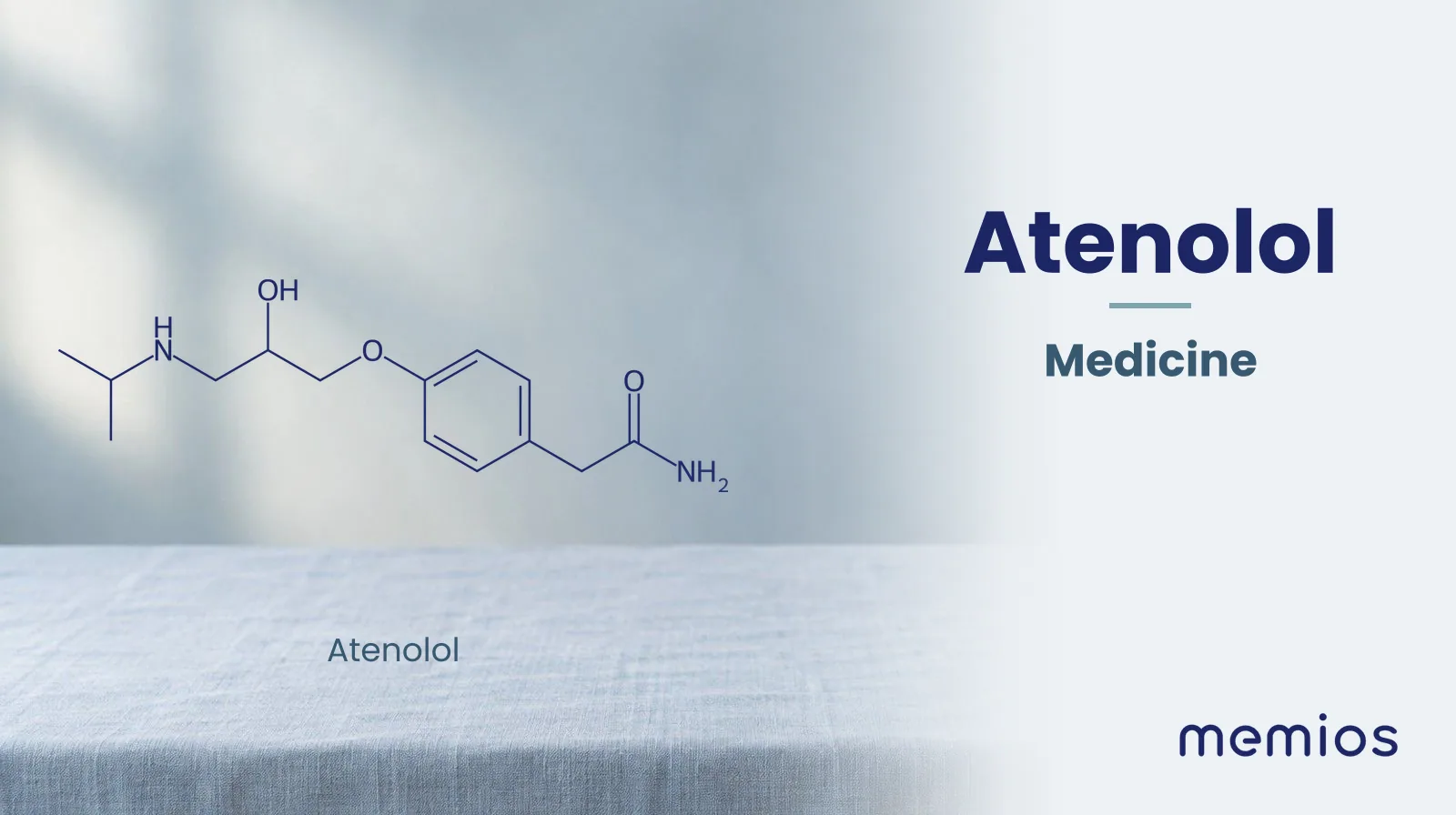
Atenolol
Disputed. Atenolol slows the heart and lowers blood pressure.
TLDR
- Disputed. Atenolol slows the heart and lowers blood pressure.
- What it is: Atenolol is a prescription beta-1 selective adrenergic blocking drug, taken as a tablet.
- Main use: Hypertension (high blood pressure) (disputed).
- Other approved uses: Acute myocardial infarction (to reduce cardiovascular mortality) (well supported); Angina pectoris (long-term management) (limited evidence).
- Recommended dose: not established. There is no reference intake; dosing is set by the prescriber. As a position, the TENORMIN label (FDA, 2023) gives an initial dose of 50 mg once daily for hypertension.
- Studied dose (a trial dose, not a recommendation): ISIS-1 gave atenolol intravenously and then orally early in suspected myocardial infarction to 8,037 patients, against 7,990 controls. No finding here cites that trial.
- Upper limit: There is no upper limit set by a nutrition body.
- What goes wrong: 4 findings on harm. People on beta-blockers stopped treatment because of side effects more often than people on renin-angiotensin system inhibitors, and in older people atenolol was associated with more coronary heart disease than a diuretic.
- Interactions: 4 recorded, including Calcium supplements (and aluminium hydroxide antacids), Orange juice, Orange juice (size of the effect), Calcium-channel blockers as an alternative class.
- Common myth: A blood pressure pill is a blood pressure pill: if it brings the number down it must be protecting you as well as any other.
What it is
Atenolol is a prescription beta-1 selective adrenergic blocking drug, taken as a tablet. It is water-soluble, only about half of an oral dose is absorbed, and it is cleared mainly unchanged by the kidneys, so its half-life lengthens sharply in kidney failure. It is not found in food and is not a nutrient.
What the research says
Atenolol slows the heart and lowers blood pressure. The strongest outcome evidence is in acute myocardial infarction, where a 16,027-patient randomised trial found lower vascular mortality. As a first drug for uncomplicated high blood pressure the evidence is much weaker: a Cochrane review of 13 trials, three-quarters of whose beta-blocker participants took atenolol, found no mortality difference against placebo, a reduction in stroke, and results inferior to other antihypertensive classes, on trials it judged to be at high risk of bias.
Evidence grade: Disputed.
How it works
Drug class: Cardioselective (beta-1 selective) beta-adrenergic receptor blocker
Atenolol blocks beta-1 adrenergic receptors, which sit mostly on the heart. Blocking them slows the heart rate and reduces the force of contraction, so blood pressure and the heart's oxygen demand fall. The drug is water-soluble and largely excreted unchanged by the kidneys rather than broken down by the liver. (Source 1)
What it is used for
- Starting treatment with a beta-blocker lowered total cardiovascular events (RR 0.88) and stroke (RR 0.80) against placebo, both low-certainty, but made no difference to death (RR 0.99). The Cochrane reviewers judge these effects inferior to other antihypertensive drugs and the trials at high risk of bias. Evidence: disputed. (Source 2)
- In ISIS-1, 16,027 patients with suspected acute myocardial infarction were randomised to early atenolol or control; vascular mortality was 3.9% versus 4.6% over days 0-7 and 10.7% versus 12.0% at one year. Evidence: established. (Source 3)
- The label carries this indication, and the same label records that abrupt withdrawal in angina patients has been followed by severe worsening of angina and infarction. We did not find a systematic review isolating atenolol's effect on angina outcomes in this search. Evidence: limited. (Source 4)
Interactions
- Calcium supplements (and aluminium hydroxide antacids) (pharmacokinetic study): Taking calcium or aluminium hydroxide at the same time as atenolol markedly changes how much of the drug is absorbed, so the beta-blocking effect can be blunted. (Source 1)
- Orange juice (pharmacokinetic study): Orange juice cut peak atenolol blood levels by about half and total exposure by about 40% in a crossover study of ten healthy volunteers, and the authors judged this clinically significant. (Source 5)
- Orange juice (size of the effect) (pharmacokinetic study): Peak concentration fell 49% and area under the curve 40%; urinary excretion of atenolol fell 38%, while renal clearance was unchanged, so the effect is on absorption rather than elimination. (Source 6)
- Calcium-channel blockers as an alternative class (clinical trial): This is not a co-administration hazard but a comparative one the member should know: in the Cochrane review, mortality and cardiovascular events were worse on beta-blockers than on calcium-channel blockers. (Source 7)
Stopping it
- The label warns against stopping atenolol abruptly in people with coronary artery disease, because severe worsening of angina, heart attacks and ventricular arrhythmias have followed abrupt beta-blocker withdrawal. (Source 8)
- The same caution is extended to people taking atenolol only for blood pressure, on the reasoning that coronary disease is common and often undiagnosed. (Source 9)
- The label's instruction is that discontinuation should be planned and supervised rather than simply done. (Source 10)
What goes wrong
Atenolol carries a measurable burden of everyday side effects compared with placebo in the manufacturer's own controlled studies. (Source 11)
- Official position, Certainty not rated.
- Size: controlled studies in hypertensive patients; participant numbers not given in this passage.
- Who: people treated for hypertension.
- How long: not stated.
- Result: Label frequency table: tiredness 26% versus 13% placebo, dizziness 13% versus 6%, cold extremities 12% versus 5%, bradycardia 3% versus 0%, diarrhea 3% versus 2%.
- Funding: manufacturer label.
The frequency estimates in the following table were derived from controlled studies in hypertensive patients in which adverse reactions were either volunteered by the patient (US studies) or elicited, e.g., by checklist (foreign studies).
Among beta-blockers, atenolol carried the greatest increase in new-onset diabetes in a meta-analysis of hypertension trials. (Source 12)
- Meta-analysis, Low certainty.
- Size: 12 randomised studies, 94,492 participants.
- Who: adults treated for hypertension.
- How long: not stated in this record.
- Result: Atenolol versus other agents RR 1.35 (95% CI 1.17 to 1.56) across 4 studies for new-onset diabetes mellitus.
- Funding: not stated.
When individual β-blockers were compared, atenolol was associated with the greatest risk of developing new onset DM in comparison with other agents (RR 1.35, 95% CI: 1.17, 1.56; 4 studies).
People on beta-blockers stopped treatment because of side effects more often than people on renin-angiotensin system inhibitors, and in older people atenolol was associated with more coronary heart disease than a diuretic. (Source 7)
- Systematic review, Moderate certainty.
- Size: 13 RCTs; the age subgroup rests on a single trial in people aged 65 and over.
- Who: adults starting drug treatment for hypertension.
- How long: trials conducted between the 1970s and 2000s.
- Result: Discontinuation for adverse events versus RAS inhibitors RR 1.41 (95% CI 1.29 to 1.54); atenolol versus diuretics in those aged 65+ coronary heart disease RR 1.63 (95% CI 1.15 to 2.32).
- Funding: not stated.
In the single trial involving participants aged 65 years and older, atenolol was associated with an increased CHD incidence compared to diuretics (RR 1.63, 95% CI 1.15 to 2.32).
Atenolol crosses the placenta and the label states it can cause fetal harm. (Source 13)
- Official position, Certainty not rated.
- Size: not stated.
- Who: pregnant women.
- How long: exposure from the second trimester onward is the exposure described.
- Result: Association with babies born small for gestational age when atenolol is started in the second trimester; risk in the first trimester untested.
- Funding: manufacturer label.
Administration of atenolol, starting in the second trimester of pregnancy, has been associated with the birth of infants that are small for gestational age.
What the evidence supports
Beta-blockers did reduce total cardiovascular disease compared with placebo, almost entirely through a reduction in stroke, with no effect on coronary heart disease. (Source 7)
- Systematic review, Low certainty.
- Size: 13 RCTs, 40,245 participants on beta-blockers.
- Who: adults starting drug treatment for hypertension.
- How long: trials conducted between the 1970s and 2000s.
- Result: Total CVD RR 0.88 (95% CI 0.79 to 0.97), low certainty; stroke RR 0.80 (0.66 to 0.96), low certainty; coronary heart disease RR 0.93 (0.81 to 1.07), moderate certainty. Against calcium-channel blockers the beta-blocker result was worse, RR 1.18 (1.08 to 1.29).
- Funding: not stated.
Total CVD was lower for beta-blockers compared to placebo (RR 0.88, 95% CI 0.79 to 0.97; low-certainty evidence), a reflection of the decrease in stroke (RR 0.80, 95% CI 0.66 to 0.96; low-certainty evidence) since there was no difference in coronary heart disease (CHD: RR 0.93, 95% CI 0.81 to 1.07; moderate-certainty evidence).
Intravenous then oral atenolol given early in suspected acute myocardial infarction lowered vascular mortality over the first week in a very large randomised trial, by an amount the trial itself reports as imprecise. (Source 14)
- Randomized trial, Moderate certainty.
- Size: 16,027 patients (8,037 atenolol, 7,990 control)
- Who: patients with suspected acute myocardial infarction.
- How long: 7-day treatment period; mortality followed to 1 year.
- Result: Vascular mortality days 0-7 3.9% with atenolol versus 4.6% control (2p<0.04), an absolute difference of about 0.7 percentage points, roughly 1 death avoided per about 140 treated; the trial reports this as a 15% relative difference with wide 95% confidence limits of 1% to 27%. At one year 10.7% versus 12.0% (2p<0.01).
- Funding: not stated.
Vascular mortality during the treatment period (days 0-7) was significantly lower (2p less than 0.04) in the treated group, (3.9% versus 4.6%), but this 15% relative difference had wide 95% confidence limits (from 1 to 27%).
What the evidence does not support
Started as first treatment for high blood pressure, beta-blockers (three-quarters of the trial participants were taking atenolol) made no difference to all-cause mortality compared with placebo. (Source 15)
- Systematic review, Moderate certainty.
- Size: 13 RCTs; 40,245 participants took beta-blockers, three-quarters of them atenolol; 23,613 in the placebo comparisons.
- Who: adults starting drug treatment for hypertension.
- How long: trials conducted between the 1970s and 2000s.
- Result: All-cause mortality beta-blockers vs placebo RR 0.99, 95% CI 0.88 to 1.11; no difference versus diuretics or renin-angiotensin system inhibitors; mortality higher than with calcium-channel blockers, RR 1.07 (1.00 to 1.14). Moderate-certainty evidence.
- Funding: not stated.
There was no difference in all-cause mortality between beta-blockers and placebo (RR 0.99, 95% CI 0.88 to 1.11), diuretics or RAS inhibitors, but it was higher for beta-blockers compared to CCBs (RR 1.07, 95% CI 1.00 to 1.14).
The Cochrane reviewers judge the underlying trials to be of poor quality and conclude that the benefit of starting with a beta-blocker is inferior to other blood-pressure drugs. (Source 2)
- Systematic review, Moderate certainty.
- Size: 13 RCTs.
- Who: adults starting drug treatment for hypertension.
- How long: trials conducted between the 1970s and 2000s.
- Result: The review's own summary judgement: modest cardiovascular reductions, little or no effect on mortality, and effects inferior to other antihypertensive classes.
- Funding: not stated.
Current evidence suggests that initiating treatment of hypertension with beta-blockers leads to modest CVD reductions and little or no effects on mortality. These beta-blocker effects are inferior to those of other antihypertensive drugs.
Where the research disagrees
Whether atenolol is a reasonable first drug for uncomplicated high blood pressure
- TENORMIN label (FDA, 2023), regulatory position: Numerous antihypertensive drugs, from a variety of pharmacologic classes and with different mechanisms of action, have been shown in randomized controlled trials to reduce cardiovascular morbidity and mortality, and it can be concluded that it is blood pressure reduction, and not some other pharmacologic property of the drugs, that is largely responsible for those benefits. (Source 16)
- Cochrane review of beta-blockers for hypertension (2017), systematic review of 13 RCTs, 40,245 participants on beta-blockers, most taking atenolol: These beta-blocker effects are inferior to those of other antihypertensive drugs. (Source 2)
How much
- Reference intake: There is no reference intake; dosing is set by the prescriber. As a position, the TENORMIN label (FDA, 2023) gives an initial dose of 50 mg once daily for hypertension. (Source 17)
- Upper limit: There is no upper limit set by a nutrition body. As a position, the TENORMIN label (FDA, 2023) says in its Hypertension paragraph that increasing the dosage beyond 100 mg a day is unlikely to produce any further benefit. That 100 mg statement belongs to hypertension only and is not a general ceiling for atenolol: the label's Angina Pectoris paragraph goes to 200 mg once a day. (Source 18)
- Studied: ISIS-1 gave atenolol intravenously and then orally early in suspected myocardial infarction to 8,037 patients, against 7,990 controls. (Source 3)
- Studied: The orange juice pharmacokinetic study gave healthy volunteers a single 50 mg dose of atenolol. (Source 19)
- Studied: For angina pectoris the same label describes an initial 50 mg once daily, an increase to 100 mg once daily, and states that some patients may require 200 mg once a day. (Source 20)
A common belief, and what the research shows
The belief: A blood pressure pill is a blood pressure pill: if it brings the number down it must be protecting you as well as any other.
What the research shows: For beta-blockers started as first-line hypertension treatment the Cochrane review found 'no difference in all-cause mortality between beta-blockers and placebo (RR 0.99, 95% CI 0.88 to 1.11)', and worse cardiovascular results than calcium-channel blockers. The benefit that does appear is mostly a reduction in stroke, on low-certainty evidence.
Questions and answers
What is it?
Atenolol is a prescription beta-blocker tablet, sold under names including Tenormin. It is water-soluble, is cleared mostly by the kidneys rather than the liver, and only about half of a swallowed dose is absorbed. It is not a nutrient and nothing in the diet contains it. (Source 1)
What does it do in the body?
It blocks beta-1 adrenergic receptors, mainly on the heart, which slows the heart rate and reduces the force of each beat, lowering blood pressure and the heart's oxygen demand. The degree of heart-rate blockade tracks the blood level of the drug, but the blood-pressure effect does not. (Source 1)
Is it good or bad for you?
It depends entirely on why it is being taken. After a heart attack, a very large trial found fewer vascular deaths. As a first drug for plain high blood pressure the picture is much weaker: no difference in death compared with placebo, a reduction in stroke, and worse results than calcium-channel blockers, on trials the reviewers judged to be at high risk of bias. Side effects such as tiredness are common, and atenolol raises the chance of developing diabetes more than other beta-blockers. (Source 2)
How do you get more of it?
Atenolol is prescription-only and the amount is set by the prescriber; there is no dietary or supplement route to it. The label describes 50 mg once daily as the starting dose for hypertension and says going above 100 mg a day is unlikely to add benefit. (Source 17)
If it is harmful, what reduces it?
Atenolol clears from the body in a day or so in people with normal kidneys, but it is not a drug to walk away from. The label warns that abrupt discontinuation in people with coronary artery disease has been followed by severe worsening of angina, heart attacks and arrhythmias, and that because coronary disease is often unrecognised the same caution applies even to people taking it only for blood pressure. (Source 8)
Why might someone be low in it or missing it?
Nobody is naturally 'low' in atenolol. People are not on it either because it was never indicated, or because another class was chosen: the Cochrane review's judgement is that as a starting drug for hypertension its effects are inferior to other antihypertensive drugs. Absorption is also incomplete, so blood levels vary between people on the same dose. (Source 1)
Which whole foods contain it or feed it?
No food contains atenolol, but food and drink change how much of it gets in. A crossover study in ten healthy volunteers found orange juice cut peak blood levels by 49% and total exposure by 40%. Calcium and aluminium hydroxide taken at the same time also interfere with absorption. (Source 6)
What happens if you do not have it?
For someone after a heart attack, the ISIS-1 trial gives the clearest picture of what not having it looked like: vascular mortality in the untreated group was 12.0% at one year against 10.7% with atenolol. For plain hypertension, the Cochrane evidence is that not starting a beta-blocker costs little or nothing in mortality, and that other drug classes do at least as well or better. (Source 3)
How can you test for it?
Blood levels of atenolol are not measured in ordinary care and would not tell you much about blood pressure anyway: a pharmacokinetic review reports that plasma levels track heart-rate blockade but show no correlation with the blood-pressure-lowering effect. What is monitored instead is pulse, blood pressure and, where kidney function is impaired, renal function, because clearance slows markedly. (Source 1)
References
- European Journal of Drug Metabolism and Pharmacokinetics, 7(2):81-91 (W. Kirch, K. G. Gorg). Clinical pharmacokinetics of atenolol — A review. 1982. DOI 10.1007/BF03188723. Read the source
- Cochrane Database of Systematic Reviews. Beta-blockers for hypertension (Authors' conclusions). 2017. DOI 10.1002/14651858.CD002003.pub5. Read the source
- American College of Cardiology. First International Study of Infarct Survival - ISIS-1 (trial summary, one-year mortality). 2010. Read the source
- US Food and Drug Administration (Drugs@FDA). TENORMIN (atenolol) Tablets label, INDICATIONS AND USAGE (angina pectoris). 2023. Read the source
- European Journal of Clinical Pharmacology. Effects of orange juice on the pharmacokinetics of atenolol (Conclusions). 2005. PMID 15983823, DOI 10.1007/s00228-005-0930-9. Read the source
- European Journal of Clinical Pharmacology. Effects of orange juice on the pharmacokinetics of atenolol (Results). 2005. PMID 15983823, DOI 10.1007/s00228-005-0930-9. Read the source
- Cochrane Database of Systematic Reviews. Beta-blockers for hypertension (Main results, cardiovascular outcomes and withdrawals). 2017. DOI 10.1002/14651858.CD002003.pub5. Read the source
- US Food and Drug Administration (Drugs@FDA). TENORMIN (atenolol) Tablets label, WARNINGS: Cessation of Therapy with TENORMIN. 2023. Read the source
- US Food and Drug Administration (Drugs@FDA). TENORMIN (atenolol) Tablets label, WARNINGS: Cessation of Therapy (unrecognized coronary disease). 2023. Read the source
- US Food and Drug Administration (Drugs@FDA). TENORMIN (atenolol) Tablets label, WARNINGS: Cessation of Therapy (advice against abrupt discontinuation). 2023. Read the source
- US Food and Drug Administration (Drugs@FDA). TENORMIN (atenolol) Tablets label, ADVERSE REACTIONS. 2023. Read the source
- NHS Centre for Reviews and Dissemination (DARE), summarising Am J Cardiol. A meta-analysis of 94,492 patients with hypertension treated with beta blockers to determine the risk of new-onset diabetes mellitus (DARE structured abstract, Results). 2007. PMID 17920367. Read the source
- US Food and Drug Administration (Drugs@FDA). TENORMIN (atenolol) Tablets label, pregnancy. 2023. Read the source
- American College of Cardiology. First International Study of Infarct Survival - ISIS-1 (trial summary, days 0-7 mortality). 2010. Read the source
- Cochrane Database of Systematic Reviews. Beta-blockers for hypertension (Main results, mortality). 2017. DOI 10.1002/14651858.CD002003.pub5. Read the source
- US Food and Drug Administration (Drugs@FDA). TENORMIN (atenolol) Tablets label, INDICATIONS AND USAGE (hypertension). 2023. Read the source
- US Food and Drug Administration (Drugs@FDA). TENORMIN (atenolol) Tablets label, DOSAGE AND ADMINISTRATION (hypertension, initial dose). 2023. Read the source
- US Food and Drug Administration (Drugs@FDA). TENORMIN (atenolol) Tablets label, DOSAGE AND ADMINISTRATION (Hypertension paragraph, ceiling dose). 2023. Read the source
- European Journal of Clinical Pharmacology. Effects of orange juice on the pharmacokinetics of atenolol (Methods). 2005. PMID 15983823, DOI 10.1007/s00228-005-0930-9. Read the source
- US Food and Drug Administration (Drugs@FDA). TENORMIN (atenolol) Tablets label, DOSAGE AND ADMINISTRATION (Angina Pectoris paragraph). 2023. Read the source