Medications · September 29, 2026 · Memios · 22 min read
Aspirin
The strongest evidence is in people who have already had a heart attack or stroke, where pooled individual-patient data from randomised trials show a clear absolute reduction in serious vascular events.
TLDR
- Well established. The strongest evidence is in people who have already had a heart attack or stroke, where pooled individual-patient data from randomised trials show a clear absolute reduction in serious vascular events.
- What it is: Aspirin is acetylsalicylic acid, a small synthetic molecule sold without prescription as plain, coated, chewable and delayed-release tablets, typically 81 mg for antiplatelet use and 325 mg for pain. At low doses it is used as a blood-thinning medicine; at higher doses as a painkiller and anti-inflammatory.
- Main use: Secondary prevention of heart attack and stroke (people who already have vascular disease) (well supported).
- Other approved uses: Primary prevention of cardiovascular disease (people without established vascular disease) (disputed); Pain, fever and inflammation (well supported).
- Off-label uses (not on the FDA label): Prevention of pre-eclampsia in higher-risk pregnancy (well supported); Prevention of colorectal cancer (limited evidence).
- Recommended dose: not established. There is no reference intake for aspirin; dose is set by a prescriber or by the over-the-counter label. As a position, the September 2026 US over-the-counter label for delayed-release aspirin directs adults and children 12 and over to take 1 to 2 tablets every 4 hours while symptoms last.
- Studied dose (a trial dose, not a recommendation): The colorectal cancer follow-up analysed trials using 75-300 mg daily for about 5 years, and found no extra benefit above 75 mg daily. Findings citing that trial: 1 against.
- Upper limit: No nutritional upper limit exists.
- What goes wrong: 7 findings on harm. Aspirin increased major gastrointestinal and extracranial bleeds in primary prevention trials.
- Interactions: 4 recorded, including Other NSAIDs (ibuprofen, naproxen) and other aspirin-containing products, Alcohol, Diabetes medicines, arthritis medicines and gout medicines, Fish oil / omega-3 supplements.
- Common myth: A baby aspirin a day is a sensible precaution for any middle-aged adult.
What it is
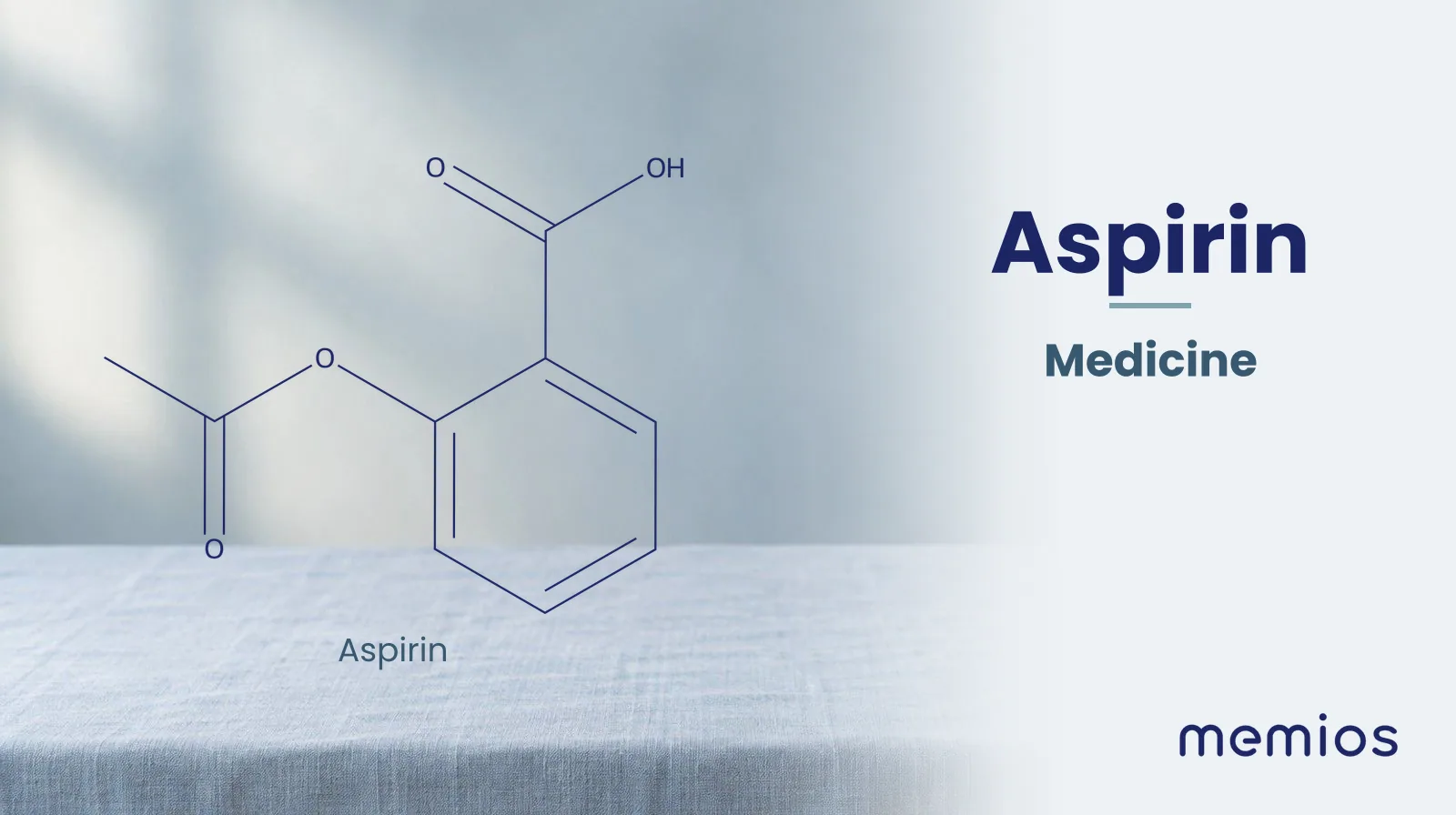
Aspirin is acetylsalicylic acid, a small synthetic molecule sold without prescription as plain, coated, chewable and delayed-release tablets, typically 81 mg for antiplatelet use and 325 mg for pain. At low doses it is used as a blood-thinning medicine; at higher doses as a painkiller and anti-inflammatory. It is unusual among NSAIDs because it blocks its target enzyme permanently rather than temporarily.
What the research says
The strongest evidence is in people who have already had a heart attack or stroke, where pooled individual-patient data from randomised trials show a clear absolute reduction in serious vascular events. In people without established cardiovascular disease the picture is much weaker: the same meta-analysis found a small reduction in events matched against an increase in major bleeding, and the three modern primary-prevention trials (ASPREE, ASCEND, ARRIVE) did not change that balance. Aspirin also reduces preterm pre-eclampsia in higher-risk pregnancy, and long-term follow-up of old trials shows fewer colorectal cancers. Against all of this sits bleeding - gastrointestinal and intracranial - which rises in every population studied.
Evidence grade: Well established.
How it works
Drug class: Non-steroidal anti-inflammatory drug (NSAID); irreversible cyclo-oxygenase inhibitor, used at low dose as an antiplatelet agent
Aspirin permanently switches off an enzyme called cyclo-oxygenase-1 inside platelets by sticking an acetyl group onto it. Platelets cannot make new enzyme, so a single dose disables them for their whole life - roughly ten days - which is why a small daily dose is enough to keep blood less sticky. The same enzyme blockade in other tissues accounts for the pain and inflammation effects, and for the loss of the stomach lining's protection. (Source 1)
What it is used for
- In the Antithrombotic Trialists' pooled analysis of individual patient data, aspirin reduced serious vascular events from 8.2% to 6.7% per year - about 15 events avoided per 1000 people per year. This is the setting where the benefit clearly outweighs the bleeding risk. Evidence: established. (Source 2)
- The absolute benefit is small (0.51% vs 0.57% serious vascular events per year) and is offset by more major bleeding (0.10% vs 0.07% per year). In healthy older adults, extended ASPREE follow-up found no long-term benefit and more major haemorrhage; in diabetes, ASCEND found 8.5% vs 9.6% vascular events against 4.1% vs 3.2% major bleeding. Evidence: disputed. (Source 2)
- The over-the-counter label position is relief of minor aches and pains. The evidence base for analgesia is old and large; the same label carries the stomach-bleeding and Reye's syndrome warnings. Evidence: established. (Source 3)
- A Cochrane review of 60 trials in 36,716 women found antiplatelet agents, mostly low-dose aspirin, cut proteinuric pre-eclampsia by 18% - about 16 fewer women per 1000 treated - with small increases in postpartum haemorrhage. Evidence: established. (Source 4)
- Twenty-year follow-up of five randomised trials found aspirin taken for several years at 75 mg or more reduced colorectal cancer incidence and death, with no extra benefit above 75 mg daily. This is long-term follow-up of trials designed for other endpoints, not a trial designed to test cancer prevention. Evidence: limited. (Source 5)
Interactions
- Other NSAIDs (ibuprofen, naproxen) and other aspirin-containing products (label): Taking another NSAID alongside aspirin raises the chance of severe stomach bleeding. The over-the-counter label states this directly. (Source 6)
- Alcohol (label): Three or more alcoholic drinks a day while taking aspirin is listed on the label as a risk factor for severe stomach bleeding. (Source 7)
- Diabetes medicines, arthritis medicines and gout medicines (label): The label tells people taking prescription drugs for diabetes, arthritis or gout to check before using aspirin; salicylates can potentiate sulfonylureas in particular. (Source 8)
- Fish oil / omega-3 supplements (case reports): Often assumed to add to bleeding risk. A matched retrospective study of 364 patients on aspirin plus clopidogrel found no increase in major or minor bleeding when high-dose fish oil was added. The study was small and not randomised, so this is reassuring rather than definitive. (Source 9)
Stopping it
- Stopping long-term low-dose aspirin was followed by more cardiovascular events in a Swedish national cohort of 601,527 users - about one extra event per year for every 74 people who stopped, and one per 36 among those taking it after established vascular disease. This is observational, so confounding by the reason for stopping cannot be excluded. (Source 10)
- Because aspirin disables platelets permanently, the antiplatelet effect does not stop the moment the tablet stops: it fades as the body makes new platelets, over roughly ten days. (Source 11)
What goes wrong
Aspirin increased major gastrointestinal and extracranial bleeds in primary prevention trials. (Source 2)
- Meta-analysis, High certainty.
- Size: 6 primary prevention trials, 95,000 individuals.
- Who: Adults without known cardiovascular disease.
- How long: mean about 6 years.
- Result: Major gastrointestinal and extracranial bleeds 0·10% vs 0·07% per year (p<0·0001)
- Funding: independent (Antithrombotic Trialists' Collaboration)
Aspirin allocation increased major gastrointestinal and extracranial bleeds (0·10% vs 0·07% per year, p<0·0001), and the main risk factors for coronary disease were also risk factors for bleeding.
In healthy older adults, aspirin raised the rate of major haemorrhage by about a quarter across in-trial and post-trial follow-up. (Source 12)
- Randomized trial, High certainty.
- Size: 19,114 randomised.
- Who: Community-dwelling adults aged 70+ without prior cardiovascular events.
- How long: 4.7 years in trial plus median 4.3 years post-trial.
- Result: Major haemorrhage HR 1.24 (95% CI 1.10, 1.39)
- Funding: independent (NIH and NHMRC funded)
Over the entire period, a higher rate of major haemorrhage was observed in the randomized aspirin group compared with placebo (HR 1.24, 95% CI 1.10, 1.39).
Aspirin in pregnancy probably slightly increases postpartum haemorrhage over 500 mL. (Source 13)
- Systematic review, Moderate certainty.
- Size: trials contributing postpartum haemorrhage data within the 60-trial review.
- Who: Pregnant women at increased risk of pre-eclampsia.
- How long: to delivery and immediate postpartum.
- Result: Postpartum haemorrhage >500 mL RR 1.06 (95% CI 1.00 to 1.12); placental abruption RR 1.21 (95% CI 0.95 to 1.54); evidence downgraded to moderate because blood loss was measured inconsistently across trials.
- Funding: independent.
Aspirin probably slightly increased the risk of postpartum haemorrhage of more than 500 mL, however, the quality of evidence for this outcome was downgraded to moderate, due to concerns of clinical heterogeneity in measurements of blood loss.
Case-control studies historically linked salicylates given during febrile viral illness in children to Reye syndrome. (Source 14)
- Case-control study, Low certainty.
- Size: the historic US case-control series summarised in this review.
- Who: Children with febrile viral infections.
- How long: 1970s-1980s.
- Result: No pooled estimate given in this review; incidence fell from a peak of 555 US cases in 1980 to recent estimates of 0.2 to 1.1 cases per million children under 18.
- Funding: not stated.
case-control studies and other historic data associate use of salicylates during febrile viral infections to the development of Reye syndrome in children.
Stopping long-term low-dose aspirin was associated with a 37% higher rate of cardiovascular events in a Swedish national cohort. (Source 10)
- Cohort study, Low certainty.
- Size: 601,527 aspirin users.
- Who: Swedish adults over 40 on long-term low-dose aspirin (75-160 mg), free from cancer, adherent in year one.
- How long: median follow-up about 3 years.
- Result: Adjusted HR 1.37 (95% CI 1.34-1.41) overall; 1.46 (1.41-1.51) for secondary prevention and 1.28 (1.22-1.34) for primary prevention; numbers needed to harm 74, 36 and 146 per year.
- Funding: not stated (reported via an open-access editorial)
The risk of cardiovascular events was significantly increased in patients who discontinued aspirin [adjusted hazard ratio (HR), 1.37, 95% confidence interval (CI), 1.34–1.41]
US Reye syndrome cases peaked in 1980 and fell steeply as aspirin use in children was discouraged. (Source 15)
- Survey study, Very low certainty.
- Size: national case reports.
- Who: US children and teenagers.
- How long: 1980 onwards.
- Result: 555 reported US cases in 1980, falling to recent estimates of 0.2 to 1.1 cases per million children under 18.
- Funding: not stated.
Peak incidence of Reye syndrome in the United States occurred in 1980, when 555 cases were reported.
The over-the-counter label's position is that children and teenagers with chickenpox or flu-like symptoms should not take aspirin. (Source 16)
- Official position, Certainty not rated.
- Size: not applicable.
- Who: Children and teenagers with chickenpox or influenza-like illness.
- How long: not applicable.
- Result: No effect estimate; a labelling position dated 18 September 2026.
- Funding: not applicable.
Children and teenagers who have or are recovering from chicken pox or flu-like symptoms should not use this product.
What the evidence supports
In people with established vascular disease, aspirin reduced serious vascular events from 8.2% to 6.7% per year. (Source 2)
- Meta-analysis, High certainty.
- Size: 16 secondary prevention trials, about 17,000 individuals.
- Who: People with prior myocardial infarction, stroke or transient ischaemic attack.
- How long: mean about 2-3 years of scheduled treatment.
- Result: Serious vascular events 6·7% vs 8·2% per year (p<0.0001); total stroke 2·08% vs 2·54% per year (p=0·002); coronary events 4·3% vs 5·3% per year (p<0·0001)
- Funding: independent (Antithrombotic Trialists' Collaboration)
In the secondary prevention trials, aspirin allocation yielded a greater absolute reduction in serious vascular events (6·7% vs 8·2% per year, p<0·0001)
In people without established vascular disease, the absolute reduction in serious vascular events was about 0.06% per year. (Source 2)
- Meta-analysis, High certainty.
- Size: 6 primary prevention trials, 95,000 individuals at low average risk.
- Who: Adults without known cardiovascular disease.
- How long: mean about 6 years.
- Result: 0·51% aspirin vs 0·57% control per year (p=0·0001); non-fatal MI 0·18% vs 0·23% per year; vascular mortality unchanged at 0·19% vs 0·19% per year.
- Funding: independent (Antithrombotic Trialists' Collaboration)
In the primary prevention trials, aspirin allocation yielded a 12% proportional reduction in serious vascular events (0·51% aspirin vs 0·57% control per year, p=0·0001)
Low-dose aspirin in higher-risk pregnancy reduces pre-eclampsia by about 16 women per 1000 treated. (Source 17)
- Systematic review, Moderate certainty.
- Size: 36,716 women across 60 trials.
- Who: Pregnant women at increased risk of pre-eclampsia.
- How long: from second trimester to delivery.
- Result: Proteinuric pre-eclampsia RR 0.82 (95% CI 0.77 to 0.88); 16 fewer per 1000 treated; preterm birth 16 fewer per 1000; fetal or neonatal death five fewer per 1000.
- Funding: independent.
Administering low-dose aspirin to pregnant women led to small-to-moderate benefits, including reductions in pre-eclampsia (16 fewer per 1000 women treated), preterm birth (16 fewer per 1000 treated)
Long-term follow-up of randomised trials found aspirin at 75 mg or more taken for several years reduced colorectal cancer incidence and mortality. (Source 18)
- Randomized trial, Moderate certainty.
- Size: 14,033 patients in four trials; 391 colorectal cancers.
- Who: Adults in randomised aspirin trials originally run for vascular endpoints.
- How long: mean 6.0 years of treatment, median 18.3 years of follow-up.
- Result: Colon cancer incidence HR 0.76 (p=0.02), mortality HR 0.65 (p=0.005); absolute 20-year reduction of 1.76% in fatal colorectal cancer after 5 years of 75-300 mg daily.
- Funding: independent.
Aspirin taken for several years at doses of at least 75 mg daily reduced long-term incidence and mortality due to colorectal cancer.
Pooled trials found antiplatelet agents cut proteinuric pre-eclampsia by 18%, on evidence the review rates high quality. (Source 4)
- Systematic review, High certainty.
- Size: 36,716 women, 60 trials.
- Who: Pregnant women at increased risk of pre-eclampsia.
- How long: second trimester to delivery.
- Result: RR 0.82 (95% CI 0.77 to 0.88); the review rates this high-quality evidence.
- Funding: independent.
The use of antiplatelet agents reduced the risk of proteinuric pre-eclampsia by 18% (36,716 women, 60 trials, RR 0.82, 95% CI 0.77 to 0.88; high-quality evidence)
The colorectal cancer analysis followed 14,033 patients from four aspirin trials for a median of 18.3 years. (Source 5)
- Randomized trial, Moderate certainty.
- Size: 14,033 patients; 391 colorectal cancers.
- Who: Adults randomised in aspirin trials run for vascular endpoints.
- How long: mean 6.0 years of treatment, median 18.3 years of follow-up.
- Result: 391 (2.8%) of 14,033 patients developed colorectal cancer.
- Funding: independent.
391 (2·8%) of 14 033 patients had colorectal cancer during a median follow-up of 18·3 years.
What the evidence does not support
Aspirin at 75-300 mg daily cut the 20-year risk of fatal colorectal cancer by 1.76 percentage points, with no additional benefit from doses above 75 mg daily. (Source 19)
- Randomized trial, Moderate certainty.
- Size: 14,033 patients in four trials.
- Who: Adults in randomised aspirin trials.
- How long: median 18.3 years of follow-up.
- Result: Absolute reduction 1·76% (0·61–2·91; p=0·001) in 20-year risk of any fatal colorectal cancer after 5 years of scheduled treatment with 75–300 mg daily; no increase in benefit above 75 mg daily.
- Funding: independent.
There was no increase in benefit at doses of aspirin greater than 75 mg daily, with an absolute reduction of 1·76% (0·61–2·91; p=0·001) in 20-year risk of any fatal colorectal cancer after 5-years scheduled treatment with 75–300 mg daily.
In healthy older adults, aspirin produced no long-term reduction in major cardiovascular events over in-trial plus post-trial follow-up. (Source 12)
- Randomized trial, High certainty.
- Size: 19,114 randomised; 15,668 consented to post-trial follow-up.
- Who: Community-dwelling adults aged 70+ (65+ for US minorities) without prior cardiovascular events, dementia or disability.
- How long: 4.7 years in trial plus a median 4.3 years post-trial.
- Result: MACE HR 1.04 (95% CI 0.94, 1.15) over the whole period; post-trial MACE HR 1.17 (95% CI 1.01, 1.36)
- Funding: independent (NIH and NHMRC funded)
No long-term benefit of randomization to aspirin was observed for MACE for the entire in-trial and post-trial period [hazard ratio (HR) 1.04, 95% confidence interval (CI) .94, 1.15].
Adding high-dose fish oil to aspirin plus clopidogrel did not increase bleeding in a matched retrospective study. (Source 9)
- Cohort study, Very low certainty.
- Size: 182 treated patients and 182 matched controls.
- Who: Mostly patients with coronary artery disease on dual antiplatelet therapy.
- How long: mean 33 months.
- Result: One major bleed in the fish oil group vs none in controls (p = 1.0); minor bleeds 4 (2.2%) vs 7 (3.9%), p = 0.5.
- Funding: not stated; retrospective chart review, small and not randomised.
During a mean follow-up period of 33 months, 1 major bleeding episode occurred in the treatment group and no major bleeding episodes occurred in the control group (p = 1.0).
Where the evidence is mixed
In people with diabetes and no vascular disease, the vascular events prevented were roughly matched by the major bleeds caused. (Source 20)
- Randomized trial, High certainty.
- Size: 15,480 participants.
- Who: Adults with diabetes and no known cardiovascular disease.
- How long: mean 7.4 years.
- Result: Serious vascular events 8.5% aspirin vs 9.6% placebo (p = 0.01); major bleeding 4.1% vs 3.2% (p = 0.003)
- Funding: The trial was supported by Bayer and Mylan with academic coordination; reported here from a trial summary.
The primary safety outcome, major bleeding (intracranial hemorrhage, gastrointestinal [GI] hemorrhage, or sight-threatening eye bleeding), occurred in 4.1% of the aspirin group compared with 3.2% of the placebo group (p = 0.003).
One small Australian case-control study did not find a statistically significant aspirin association, against the weight of the wider case-control literature. (Source 21)
- Case-control study, Very low certainty.
- Size: 49 cases and 94 controls.
- Who: Children admitted to three Australian paediatric hospitals with Reye's syndrome.
- How long: retrospective record review.
- Result: Aspirin or salicylate ingestion in 4 of 49 cases (8%) versus 3 of 94 controls (3%), P>0.05 by chi-square; paracetamol in 12 of 49 cases (24%) versus 39 of 94 controls (41%)
- Funding: not stated.
Limit of this finding: This is a single 1990 case-control study of 49 children at three Australian hospitals. With numbers that small, a difference of 8% against 3% can easily fail to reach statistical significance even if a real association exists, so the study shows an absence of proof rather than proof of absence. The paper's own closing sentence says it 'confirmed a lack of association', which is a stronger claim than 49 cases can carry. The other source in this write-up, a 2009 American Family Physician review, reports that case-control studies historically did link salicylates to Reye syndrome. Read this study as one dissenting result inside a disputed literature, not as a finding that aspirin is safe for children with a febrile viral illness.
Aspirin or salicylate ingestion occurred in only 4 (8%), and paracetamol (acetaminophen) ingestion in 12 (24%) (P>0.05 by chi-square analysis). Of the controls, 3 (3%) had taken aspirin and 39 (41%) had taken paracetamol.
The role of aspirin in causing Reye syndrome remains contested even among those who report the association. (Source 22)
- Expert review, not systematic, Very low certainty.
- Size: not applicable.
- Who: Children.
- How long: not applicable.
- Result: No effect estimate; a statement about causal uncertainty.
- Funding: not stated.
Aspirin's role in the pathogenesis of Reye syndrome is unclear, and some believe the syndrome is caused by a viral infection.
Where the research disagrees
Whether aspirin is worth taking by people who have never had a cardiovascular event
- Antithrombotic Trialists' Collaboration (2009), individual participant data meta-analysis: In primary prevention without previous disease, aspirin is of uncertain net value as the reduction in occlusive events needs to be weighed against any increase in major bleeds. (Source 23)
- ASPREE investigators (extended follow-up, 2025), randomised controlled trial with post-trial follow-up: The finding of no long-term MACE benefit needs to be considered in clinical decision-making if aspirin is being considered for use in this context. (Source 24)
Whether aspirin causes Reye syndrome in children
- American Family Physician review summarising the historic evidence, narrative review of case-control studies: case-control studies and other historic data associate use of salicylates during febrile viral infections to the development of Reye syndrome in children. (Source 14)
- Australian case-control study, single case-control study, 49 cases and 94 controls (aspirin 8% of cases vs 3% of controls, P>0.05): This case control study of Reye's syndrome in Australia confirmed a lack of association between aspirin ingestion and the development of Reye's syndrome. (Source 21)
How much
- Reference intake: There is no reference intake for aspirin; dose is set by a prescriber or by the over-the-counter label. As a position, the September 2026 US over-the-counter label for delayed-release aspirin directs adults and children 12 and over to take 1 to 2 tablets every 4 hours while symptoms last. (Source 25)
- Upper limit: No nutritional upper limit exists. As a position, the same over-the-counter label sets a ceiling of 12 tablets in 24 hours unless a doctor directs otherwise. (Source 25)
- Studied: The colorectal cancer follow-up analysed trials using 75-300 mg daily for about 5 years, and found no extra benefit above 75 mg daily. (Source 19)
- Studied: The Swedish discontinuation cohort studied people on long-term low-dose aspirin of 75-160 mg daily. (Source 10)
A common belief, and what the research shows
The belief: A baby aspirin a day is a sensible precaution for any middle-aged adult.
What the research shows: In people who have never had a cardiovascular event the arithmetic is close to a wash. The pooled trials give 0.51% versus 0.57% serious vascular events per year while major gastrointestinal and extracranial bleeds rise from 0.07% to 0.10% per year, and the trialists concluded aspirin 'is of uncertain net value' in that setting. In healthy adults over 70, extended ASPREE follow-up found no long-term reduction in major cardiovascular events and a 24% higher rate of major haemorrhage. The clear case is in people who already have vascular disease, where events fall from 8.2% to 6.7% per year.
Questions and answers
What is it?
Aspirin is acetylsalicylic acid, a synthetic drug sold over the counter as plain, coated, chewable and delayed-release tablets. Low doses (about 81 mg) are used as a blood thinner; higher doses relieve pain, fever and inflammation. The over-the-counter label lists its use as temporary relief of minor aches and pains. (Source 3)
What does it do in the body?
It permanently acetylates the enzyme cyclo-oxygenase-1 inside platelets, so they can no longer make thromboxane and clump properly. Since platelets cannot make new enzyme, one dose disables them for their remaining life. (Source 1)
Is it good or bad for you?
It depends entirely on who takes it. After a heart attack or stroke the benefit is large and clear - serious vascular events fall from 8.2% to 6.7% per year. In people with no vascular disease the benefit is small and largely cancelled by bleeding, which is why the trialists called its net value uncertain in that group. (Source 23)
How do you get more of it?
Aspirin is a manufactured medicine, so there is no 'getting more' outside taking a tablet. The label sets the over-the-counter dose: 1 to 2 tablets every 4 hours while symptoms last, and no more than 12 tablets in 24 hours unless a doctor directs. (Source 25)
If it is harmful, what reduces it?
Aspirin's effect does not switch off when the tablet stops; it wears away as new platelets are made, over about ten days. Stopping is not risk-free either - a Swedish cohort of 601,527 users found more cardiovascular events after discontinuation. (Source 10)
Why might someone be low in it or missing it?
This does not apply in the nutritional sense - nobody is deficient in aspirin. What the literature does describe is people stopping it: about 15% of long-term users had discontinued by three years in the Swedish cohort. (Source 10)
Which whole foods contain it or feed it?
No whole food supplies aspirin at medicinal doses. Food matters in the other direction: the label warns that three or more alcoholic drinks a day raises the chance of stomach bleeding, and advises taking each dose with a full glass of water. (Source 25)
What happens if you do not have it?
For someone with established vascular disease, not taking aspirin means a higher rate of heart attacks and strokes - the trials show 8.2% serious vascular events per year without it versus 6.7% with it. For someone without vascular disease, not taking it mainly means avoiding the extra bleeding. (Source 2)
How can you test for it?
Platelet function tests and urinary thromboxane metabolites are used in research to show whether aspirin is working, but we did not find randomised evidence that testing and adjusting on that basis improves outcomes in ordinary practice. (Source 2)
We searched: Searched for aspirin resistance / platelet function testing outcome trials and reviewed the Antithrombotic Trialists' pooled analysis and the ASPREE extended follow-up; neither reports an outcome-validated monitoring test.
References
- Thrombosis Journal. The antithrombotic profile of aspirin. Aspirin resistance, or simply failure? (mechanism). 2004. Read the source
- The Lancet (Antithrombotic Trialists' Collaboration). Aspirin in the primary and secondary prevention of vascular disease: collaborative meta-analysis of individual participant data from randomised trials (Findings). 2009. PMID 19482214. Read the source
- DailyMed (Meijer Distribution, Inc.); label effective 18 September 2026. ASPIRIN tablet, delayed release - Drug Facts, Uses. 2026. Read the source
- Cochrane Database of Systematic Reviews. Antiplatelet agents for preventing pre-eclampsia and its complications (main results). 2019. Read the source
- The Lancet. Long-term effect of aspirin on colorectal cancer incidence and mortality: 20-year follow-up of five randomised trials (Results). 2010. PMID 20970847. Read the source
- DailyMed (Meijer Distribution, Inc.); label effective 18 September 2026. ASPIRIN tablet, delayed release - Drug Facts, stomach bleeding warning. 2026. Read the source
- DailyMed (Meijer Distribution, Inc.); label effective 18 September 2026. ASPIRIN tablet, delayed release - Drug Facts, alcohol-related bleeding risk factor. 2026. Read the source
- DailyMed (Meijer Distribution, Inc.); label effective 18 September 2026. ASPIRIN tablet, delayed release - Drug Facts, drug interaction text. 2026. Read the source
- The American Journal of Cardiology. Comparison of Bleeding Complications With Omega-3 Fatty Acids + Aspirin + Clopidogrel Versus Aspirin + Clopidogrel in Patients With Cardiovascular Disease. 2009. PMID 19801023. Read the source
- Journal of Thoracic Disease. Cardiovascular events after discontinuation of low-dose aspirin (editorial describing the Swedish nationwide cohort study). 2018. PMID 29600025. Read the source
- Thrombosis Journal. The antithrombotic profile of aspirin. Aspirin resistance, or simply failure? (duration of effect). 2004. Read the source
- European Heart Journal. Aspirin, cardiovascular events, and major bleeding in older adults: extended follow-up of the ASPREE trial (Results). 2025. Read the source
- Cochrane Database of Systematic Reviews. Antiplatelet agents for preventing pre-eclampsia and its complications (authors' conclusions, harms). 2019. Read the source
- American Family Physician. Aspirin Use in Children for Fever or Viral Syndromes (association with Reye syndrome). 2009. Read the source
- American Family Physician. Aspirin Use in Children for Fever or Viral Syndromes (decline in incidence). 2009. Read the source
- DailyMed (Meijer Distribution, Inc.); label effective 18 September 2026. ASPIRIN tablet, delayed release - Drug Facts, Reye's syndrome warning. 2026. Read the source
- Cochrane Database of Systematic Reviews. Antiplatelet agents for preventing pre-eclampsia and its complications (authors' conclusions, benefits). 2019. Read the source
- The Lancet. Long-term effect of aspirin on colorectal cancer incidence and mortality (Interpretation). 2010. PMID 20970847. Read the source
- The Lancet. Long-term effect of aspirin on colorectal cancer incidence and mortality (dose). 2010. PMID 20970847. Read the source
- American College of Cardiology (trial summary of the ASCEND randomised trial). A Study of Cardiovascular Events in Diabetes (ASCEND) - trial summary, Principal Findings. 2018. Read the source
- Cleveland Clinic Journal of Medicine. Reye's syndrome: a case control study of medication use and associated viruses in Australia. 1990. Read the source
- American Family Physician. Aspirin Use in Children for Fever or Viral Syndromes (uncertainty about causation). 2009. Read the source
- The Lancet (Antithrombotic Trialists' Collaboration). Aspirin in the primary and secondary prevention of vascular disease (Interpretation). 2009. PMID 19482214. Read the source
- European Heart Journal. Aspirin, cardiovascular events, and major bleeding in older adults: extended follow-up of the ASPREE trial (Conclusions). 2025. Read the source
- DailyMed (Meijer Distribution, Inc.); label effective 18 September 2026. ASPIRIN tablet, delayed release - Drug Facts, Directions. 2026. Read the source