Medications · September 29, 2026 · Memios · 14 min read
Amoxicillin
Well established. Amoxicillin kills susceptible bacteria.
TLDR
- Well established. Amoxicillin kills susceptible bacteria.
- What it is: Amoxicillin is a penicillin-family antibiotic taken by mouth.
- Main use: Acute otitis media (middle ear infection) in children (limited evidence).
- Other approved uses: Acute rhinosinusitis in adults (limited evidence); Community-acquired pneumonia in children (dose and duration after hospital discharge) (well supported); Helicobacter pylori eradication (with clarithromycin and lansoprazole, or lansoprazole alone) (evidence not rated).
- Off-label uses (not on the FDA label): Prevention of bacterial endocarditis before dental procedures in at-risk people (evidence not rated).
- Uses NOT supported by research: Acute lower respiratory tract infection (acute cough/bronchitis) when pneumonia is not suspected.
- Recommended dose (official position): Dosing is set by the prescriber and depends on the infection, age, weight and kidney function. As a position, the US label (2024) gives adult regimens up to 875 mg every 12 hours or 500 mg every 8 hours for severe infections.
- Studied dose (a trial dose, not a recommendation): GRACE trial: amoxicillin 1 g three times daily for 7 days versus placebo in adults with acute lower respiratory tract infection. Findings citing that trial: 1 against, 1 on harm.
- Upper limit: The label position for adult severe infections is 875 mg every 12 hours or 500 mg every 8 hours; the H. pylori triple-therapy regimen uses 1 gram twice daily for 14 days.
- What goes wrong: 6 findings on harm. For adult acute sinusitis, 13 more people per 100 had side effects, mostly stomach or intestinal, with antibiotics compared with a dummy drug or no treatment.
- Interactions: 5 recorded, including Warfarin and other oral anticoagulants, Probenecid, Allopurinol, Combined oral contraceptives.
- Common myth: Amoxicillin helps a chest cold or bronchitis get better faster.
What it is
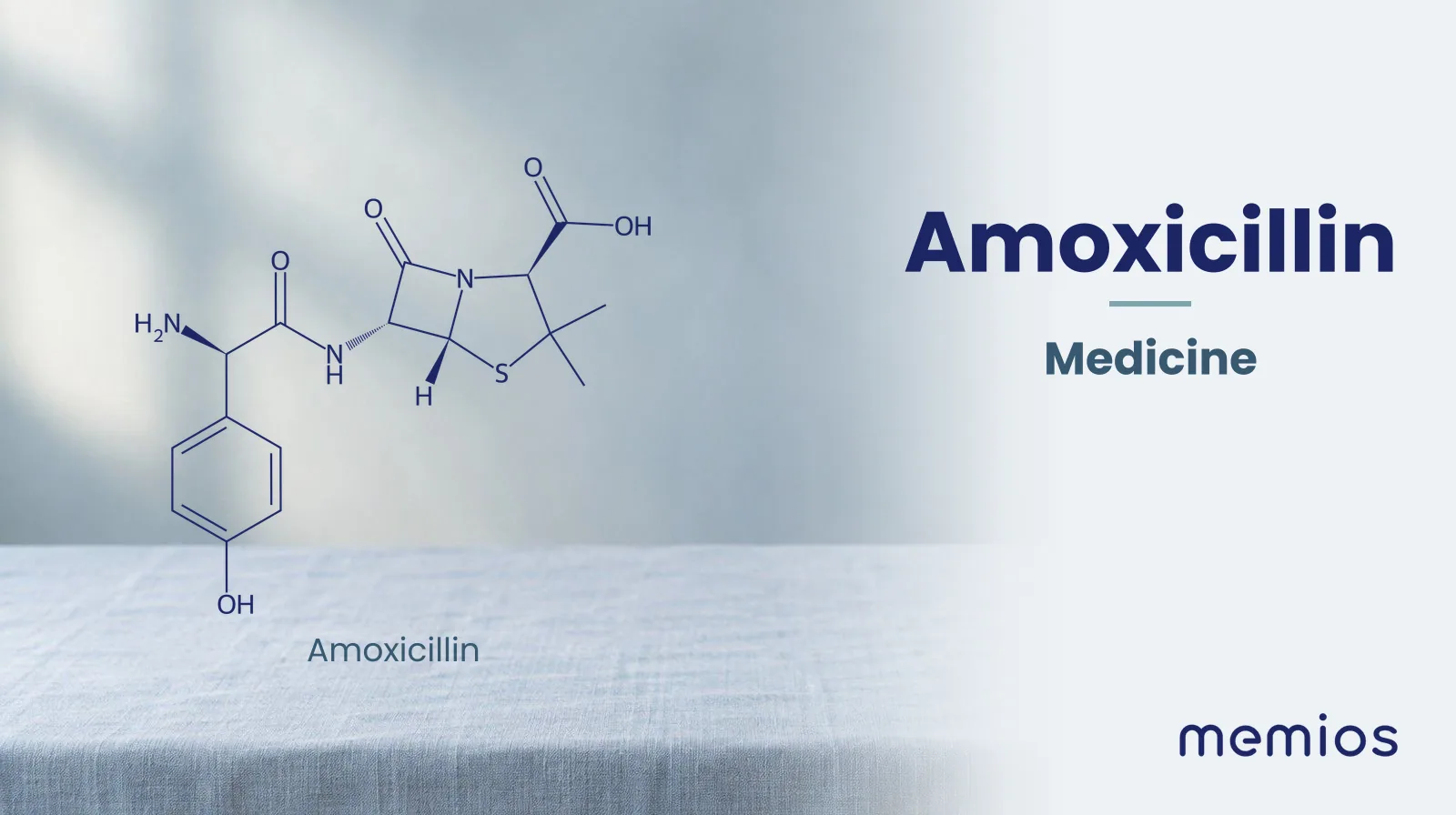
Amoxicillin is a penicillin-family antibiotic taken by mouth. The US label describes its action as similar to penicillin, killing susceptible bacteria by inhibiting cell-wall biosynthesis. It is approved for ear, nose and throat, genitourinary, skin and lower respiratory infections caused by susceptible bacteria, and as part of combination therapy for Helicobacter pylori.
What the research says
Amoxicillin kills susceptible bacteria. Whether that helps a person depends heavily on the illness: in placebo-controlled trials of common primary-care infections (children's ear infections, adult sinusitis, chest infections without pneumonia) the benefit was small or absent, while side effects such as diarrhoea, rash and nausea were measurably more common. Use also raises the chance of carrying antibiotic-resistant bacteria for months afterwards.
Evidence grade: Well established.
How it works
Drug class: Aminopenicillin (beta-lactam antibiotic)
Amoxicillin is a penicillin-type antibiotic. It kills susceptible bacteria while they are multiplying by blocking the building of their cell wall. It does nothing against viruses. (Source 1)
What it is used for
- Cochrane (2023) found antibiotics had no effect on pain at 24 hours and only a slight effect in the following days; about 1 in 14 treated children had an extra adverse event. Most children in high-income countries recover without antibiotics. Evidence: limited. (Source 2)
- Cochrane (2018): 5 to 11 more people per 100 were cured faster with antibiotics, but 13 more per 100 had side effects; the review judged the benefit marginal. Evidence: limited. (Source 3)
- In a 2,061-patient placebo-controlled trial across 12 countries amoxicillin did not shorten symptoms; number needed to harm 21 for nausea, rash or diarrhoea versus number needed to treat 30 to prevent new or worsening symptoms. Evidence: not-supported. (Source 4)
- The CAP-IT trial found 3 days was as good as 7 days, and lower dose as good as higher dose, for need for re-treatment, adverse events and resistant pneumococcal carriage. Evidence: established. (Source 5)
- Approved as part of combination regimens per the label (a position). We did not retrieve eradication trials or reviews in this run, so the strength of evidence is not assessed here. Evidence: unknown. (Source 1)
- Commonly given before dental work to people with certain heart conditions, but not a labeled US indication. A 2022 Cochrane review found no clear evidence either way on whether this prophylaxis works. Evidence: unknown. (Source 6)
Interactions
- Warfarin and other oral anticoagulants (label): INR (a clotting-time measure) has been reported to rise abnormally when amoxicillin is taken with oral anticoagulants. (Source 1)
- Probenecid (label): Probenecid slows kidney clearance of amoxicillin, raising and prolonging blood levels. (Source 1)
- Allopurinol (label): Rash is more common when allopurinol and amoxicillin are taken together. (Source 1)
- Combined oral contraceptives (label): The label states amoxicillin may reduce the effectiveness of combined oral contraceptives through effects on gut flora. The label gives no study for this and we did not retrieve one. (Source 1)
- Bacteriostatic antibiotics (chloramphenicol, macrolides, sulfonamides, tetracyclines) (label): These may interfere with amoxicillin's bacteria-killing effect. (Source 1)
Stopping it
- Shorter courses: in children with pneumonia, stopping after 3 days did as well as 7 days on re-treatment, side effects and resistant pneumococcal carriage (one trial; the full report also noted cough resolved slightly faster with 7 days). (Source 5)
- Amoxicillin is not associated with dependence or a withdrawal syndrome in the sources read. Longer and repeated courses were associated with more resistance. (Source 7)
What goes wrong
About one in 14 children given antibiotics for ear infection had an adverse event (vomiting, diarrhoea or rash) that would not otherwise have occurred. (Source 2)
- Systematic review, Moderate certainty.
- Size: 13 placebo-controlled trials, 3,401 children.
- Who: Children with acute otitis media.
- How long: Varied.
- Result: Number needed to harm about 14.
- Funding: Not stated on the page read.
for every 14 children treated with antibiotics one child experienced an adverse event (such as vomiting, diarrhoea or rash) that would not have occurred if antibiotics were not given.
For adult acute sinusitis, 13 more people per 100 had side effects, mostly stomach or intestinal, with antibiotics compared with a dummy drug or no treatment. (Source 3)
- Systematic review, High certainty.
- Size: 15 trials, 3,057 adults.
- Who: Adults with acute rhinosinusitis.
- How long: 1-2 weeks.
- Result: 13 more per 100 with side effects (number needed to harm about 8)
- Funding: Not stated on the page read.
Thirteen more people per 100 experienced side effects (mostly concerning stomach or intestines) with antibiotics compared to a dummy drug or no treatment.
In the same trial amoxicillin caused more nausea, rash or diarrhoea than placebo (number needed to harm 21), and one case of anaphylaxis occurred. (Source 4)
- Randomized trial, High certainty.
- Size: 2,061 adults.
- Who: Adults with acute lower respiratory tract infection.
- How long: 7 days of treatment.
- Result: NNH 21 (95% CI 11-174), p=0.025; 1 anaphylaxis; NNT 30 to prevent new or worsening symptoms.
- Funding: Not stated in the fetched abstract.
Cases of nausea, rash, or diarrhoea were significantly more common in the amoxicillin group than in the placebo group (number needed to harm 21, 95% CI 11–174; p=0·025), and one case of anaphylaxis was noted with amoxicillin.
People prescribed an antibiotic in primary care were more likely to carry bacteria resistant to it, with the effect greatest in the first month and lasting up to 12 months. (Source 7)
- Meta-analysis, Low certainty.
- Size: 24 studies (19 observational, 5 randomised); 14,348 participants in urinary and 2,605 in respiratory analyses.
- Who: Primary-care patients prescribed antibiotics (not amoxicillin only)
- How long: Up to 12 months.
- Result: Urinary bacteria resistance OR 2.5 (95% CI 2.1-2.9) within 2 months and 1.33 (1.2-1.5) within 12 months; respiratory OR 2.4 (1.4-3.9) and 2.4 (1.3-4.5)
- Funding: Not stated in the fetched text.
Individuals prescribed an antibiotic in primary care for a respiratory or urinary infection develop bacterial resistance to that antibiotic. The effect is greatest in the month immediately after treatment but may persist for up to 12 months.
The US label (2024) warns that serious and occasionally fatal anaphylaxis has been reported with penicillins including amoxicillin. (Source 1)
- Official position, Certainty not rated.
- Size: n/a.
- Who: Label position.
- How long: n/a.
- Result: Frequency not given in the label text read.
- Funding: Manufacturer label.
Serious and occasionally fatal hypersensitivity (anaphylactic) reactions have been reported in patients on penicillin therapy including amoxicillin.
The label (2024) warns that C. difficile diarrhoea, from mild to fatal colitis, has been reported with amoxicillin, and that most people with mononucleosis given amoxicillin develop a rash. (Source 1)
- Official position, Certainty not rated.
- Size: n/a.
- Who: Label position.
- How long: n/a.
- Result: Frequency not given.
- Funding: Manufacturer label.
Clostridium difficile-associated diarrhea (CDAD) has been reported with use of nearly all antibacterial agents, including amoxicillin capsules, and may range in severity from mild diarrhea to fatal colitis.
What the evidence supports
For children discharged from hospital with pneumonia, 3 days of amoxicillin was as good as 7 days, and lower doses as good as higher doses, for re-treatment, side effects and resistant bacteria carriage. (Source 5)
- Randomized trial, High certainty.
- Size: 814 children (as reported in the NIHR report)
- Who: Children older than 6 months, 6-24 kg, with community-acquired pneumonia treated with amoxicillin at discharge, UK and Ireland.
- How long: 3 vs 7 days; 35-50 vs 70-90 mg/kg/day.
- Result: Clinically indicated re-treatment 12.5% in both 3-day and 7-day arms (as reported)
- Funding: Independent: NIHR Health Technology Assessment programme.
Antibiotic retreatment, adverse events and nasopharyngeal colonisation by penicillin-non-susceptible pneumococci were similar with the higher and lower amoxicillin doses and the 3- and 7-day treatments.
What the evidence does not support
In adults with acute chest infection where pneumonia was not suspected, amoxicillin did not shorten the duration or severity of symptoms compared with placebo. (Source 4)
- Randomized trial, High certainty.
- Size: 2,061 adults (1,038 amoxicillin, 1,023 placebo)
- Who: Adults in primary care in 12 European countries with acute lower respiratory tract infection, pneumonia not suspected.
- How long: Amoxicillin 1 g three times daily for 7 days; follow-up about 4 weeks.
- Result: Symptom duration HR 1.06 (95% CI 0.96-1.18); p=0.229; no benefit in those aged 60 or older.
- Funding: Not stated in the fetched abstract.
Neither duration of symptoms rated "moderately bad" or worse (hazard ratio 1·06, 95% CI 0·96–1·18; p=0·229) nor mean symptom severity (1·69 with placebo vs 1·62 with amoxicillin; difference −0·07 [95% CI −0·15 to 0·007]; p=0·074) differed significantly between groups.
Whether antibiotic prophylaxis before dental procedures prevents endocarditis in at-risk people is unknown. (Source 6)
- Systematic review, Very low certainty.
- Size: Not stated on the page read.
- Who: At-risk people undergoing invasive dental procedures.
- How long: n/a.
- Result: No clear evidence of benefit or of no benefit.
- Funding: Not stated on the page read.
There remains no clear evidence about whether antibiotic prophylaxis is effective or ineffective against bacterial endocarditis in at-risk people who are about to undergo an invasive dental procedure.
Where the evidence is mixed
In children with acute otitis media, antibiotics had no early effect on pain compared with placebo and only a slight effect in the following days. (Source 2)
- Systematic review, Moderate certainty.
- Size: 13 placebo-controlled trials, 3,401 children (as reported on the Cochrane summary page)
- Who: Children with acute otitis media, mostly in high-income countries.
- How long: Varied by trial.
- Result: No effect on pain at 24 hours; slight reduction at 2-3 days.
- Funding: Not stated on the page read.
In high-income countries, most children with acute otitis media (AOM) recover spontaneously without complications, and compared with placebo antibiotics have no early effect on pain and only a slight effect on pain in the days following.
For adult acute sinusitis, antibiotics cured 5 to 11 more people per 100 faster than placebo, a benefit the review called marginal. (Source 3)
- Systematic review, High certainty.
- Size: 15 trials, 3,057 adults.
- Who: Adults with short-duration sinus infection in primary care.
- How long: 1-2 weeks follow-up.
- Result: 5-11 more per 100 cured faster; about half cured by one week without antibiotics.
- Funding: Not stated on the page read.
Five (diagnosis based on symptoms described to a doctor) to 11 (diagnosis confirmed by x-ray) more people per 100 were cured faster with antibiotics.
Where the research disagrees
Whether antibiotics should be given routinely for children's ear infections
- Cochrane review authors (Venekamp et al., 2023), systematic review of RCTs: For most children with mild disease in high-income countries, an expectant observational approach seems justified. (Source 2)
- US FDA label (2024), regulatory position: Amoxicillin capsules are indicated in the treatment of infections due to susceptible (ONLY β-lactamase-negative) isolates of Streptococcus species. (Source 1)
How much
- Reference intake: Dosing is set by the prescriber and depends on the infection, age, weight and kidney function. As a position, the US label (2024) gives adult regimens up to 875 mg every 12 hours or 500 mg every 8 hours for severe infections. (Source 1)
- Upper limit: The label position for adult severe infections is 875 mg every 12 hours or 500 mg every 8 hours; the H. pylori triple-therapy regimen uses 1 gram twice daily for 14 days. (Source 1)
- Studied: GRACE trial: amoxicillin 1 g three times daily for 7 days versus placebo in adults with acute lower respiratory tract infection. (Source 4)
- Studied: CAP-IT trial: 35-50 versus 70-90 mg/kg/day for 3 versus 7 days in children with pneumonia after discharge. (Source 5)
A common belief, and what the research shows
The belief: Amoxicillin helps a chest cold or bronchitis get better faster.
What the research shows: In a 12-country placebo-controlled trial, amoxicillin did not shorten symptoms when pneumonia was not suspected: 'amoxicillin provides little benefit for acute lower-respiratory-tract infection in primary care both overall and in patients aged 60 years or more, and causes slight harms.'
Questions and answers
What is it?
Amoxicillin is a prescription antibiotic in the penicillin family. It kills certain bacteria by stopping them building their cell wall. It has no effect on viruses such as colds and flu. (Source 1)
What does it do in the body?
It blocks bacterial cell-wall building, so susceptible bacteria die while they are multiplying. It also affects other bacteria in the body, including gut bacteria. (Source 1)
Is it good or bad for you?
It depends on the infection. For children's pneumonia it works and short courses are enough. For ear infections, sinusitis and chest infections without pneumonia, trials found small or no benefit and measurable side effects such as diarrhoea, rash and nausea. (Source 4)
How do you get more of it?
Does not apply in the usual sense. Amoxicillin is only available on prescription and its dose is set by the prescriber; it is not a nutrient that people need more of. (Source 1)
If it is harmful, what reduces it?
The body clears amoxicillin mainly through the kidneys, which is why probenecid (which slows kidney secretion) raises its blood levels. Harms linked to use, such as resistant bacteria, fade over months after a course ends. (Source 1)
Why might someone be low in it or missing it?
Does not apply. Amoxicillin is a medicine, not something the body makes or needs. People are 'on' it only when a prescriber gives it. (Source 1)
We searched: The label and the reviews read do not frame amoxicillin as something a person can be low in; the question does not apply to an antibiotic.
Which whole foods contain it or feed it?
No whole food contains amoxicillin. The label text we read gave no instruction about food, and we found no documented food interaction in the sources read. (Source 1)
We searched: DailyMed amoxicillin capsule label (2024), Cochrane summaries and trial abstracts listed in references.
What happens if you do not have it?
For many common infections most people recover without it. Without antibiotics, about half of adults with sinusitis were better in a week and two in three by 14 days, and most children with ear infections recovered on their own. (Source 3)
How can you test for it?
There is no routine blood test for amoxicillin levels. Whether it is needed is judged from the illness, sometimes with tests for the bacteria. We did not retrieve studies on penicillin-allergy testing in this run. (Source 1)
We searched: No source read in this run addressed testing; penicillin-allergy testing literature was not retrieved.
References
- US National Library of Medicine DailyMed (FDA-approved labeling). AMOXICILLIN capsule label (Micro Labs Limited), DailyMed. 2024. Read the source
- Cochrane. Antibiotics for acute otitis media in children (Venekamp RP, Sanders SL, Glasziou PP, Rovers MM), Cochrane Database of Systematic Reviews 2023, Issue 11, CD000219 - plain language summary page. 2023. DOI 10.1002/14651858.CD000219.pub5. Read the source
- Cochrane. Antibiotics for acute rhinosinusitis in adults (Lemiengre et al.), Cochrane Database of Systematic Reviews 2018, CD006089 - summary page. 2018. DOI 10.1002/14651858.CD006089.pub5. Read the source
- The Lancet Infectious Diseases (repository copy, ORCA Cardiff University). Amoxicillin for acute lower-respiratory-tract infection in primary care when pneumonia is not suspected: a 12-country, randomised, placebo-controlled trial (Little P et al.). 2013. PMID 23265995, DOI 10.1016/S1473-3099(12)70300-6. Read the source
- NIHR Journals Library, via NCBI Bookshelf. Amoxicillin duration and dose for community-acquired pneumonia in children: the CAP-IT factorial non-inferiority RCT (Health Technology Assessment 25(60)). 2021. PMID 34738518, DOI 10.3310/hta25600. Read the source
- Cochrane. Antibiotic prophylaxis for preventing bacterial endocarditis following dental procedures (Cochrane Database of Systematic Reviews 2022, CD003813) - summary page. 2022. DOI 10.1002/14651858.CD003813.pub5. Read the source
- BMJ. Effect of antibiotic prescribing in primary care on antimicrobial resistance in individual patients: systematic review and meta-analysis (Costelloe C et al.). 2010. DOI 10.1136/bmj.c2096. Read the source