Medications · September 29, 2026 · Memios · 15 min read
Acetaminophen
The evidence is use-specific and does not uniformly support 'it works for pain.' For single-dose acute pain (e.g. after surgery), Cochrane review data give a number needed to treat (NNT) of about 3.6 for a 1000 mg dose.
TLDR
- Boxed warning: Acetaminophen has been associated with cases of acute liver failure, at times resulting in liver transplant and death.
- Disputed. The evidence is use-specific and does not uniformly support 'it works for pain.' For single-dose acute pain (e.g. after surgery), Cochrane review data give a number needed to treat (NNT) of about 3.6 for a 1000 mg dose.
- What it is: Acetaminophen (called paracetamol outside the US) is a synthetic para-aminophenol derivative sold both over the counter alone and combined with other ingredients (including prescription opioid-acetaminophen combinations).
- Main use: Acute pain relief (e.g. postoperative pain), single or repeated dosing (well supported).
- Other approved uses: Knee and hip osteoarthritis pain (limited evidence); Fever reduction (antipyretic use) (well supported).
- Uses NOT supported by research: Acute low back pain.
- Recommended dose (official position): Acetaminophen is a drug, not a nutrient, and has no RDA. The FDA's 2011 safety notice describes a dosing threshold as a regulatory position: most liver-injury cases are associated with intake above 4,000 mg per day, often from combining multiple acetaminophen-containing products.
- Studied dose (a trial dose, not a recommendation): The Cochrane postoperative-pain review examined single doses of 500 mg, 600-650 mg, and 975-1000 mg. Findings citing that trial: 1 for.
- Upper limit: FDA's 2011 notice frames 4,000 milligrams per day as the threshold above which most reported liver-injury cases occurred; this is presented here as the regulatory safety position, not a recommended dose for the reader.
- What goes wrong: 3 findings on harm. In a double-blind, placebo-controlled randomised study, paracetamol raised the INR of patients on stable warfarin.
- Interactions: 4 recorded, including alcohol, warfarin, vitamin K cycle (mechanistic note relevant to warfarin, not a vitamin K supplement interaction on its own), St John's Wort.
- Common myth: Many people assume acetaminophen is a reliably effective, low-risk painkiller for almost any kind of pain, including common low back pain.
What it is
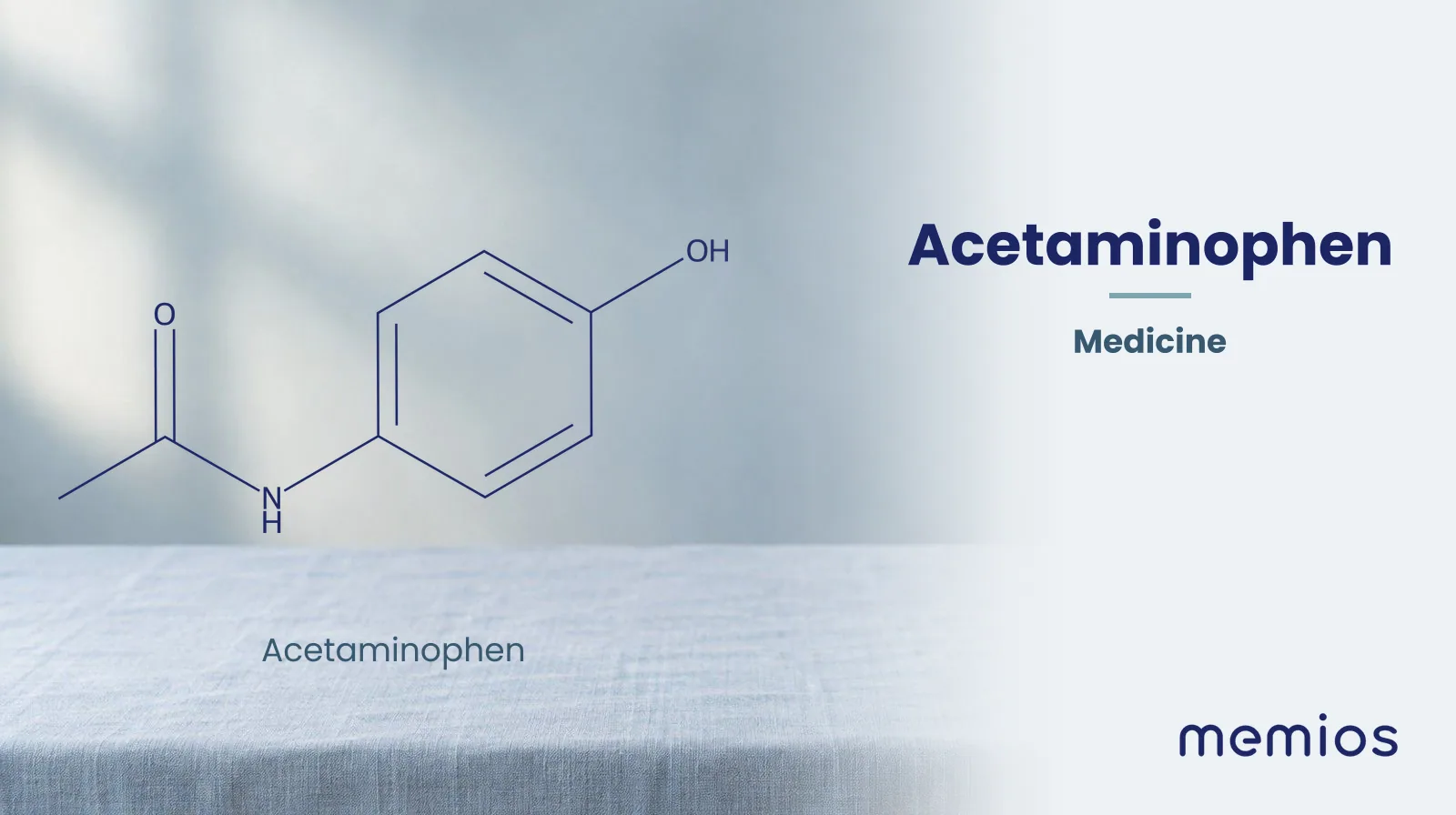
Acetaminophen (called paracetamol outside the US) is a synthetic para-aminophenol derivative sold both over the counter alone and combined with other ingredients (including prescription opioid-acetaminophen combinations). It is one of the most widely used drugs in the world for pain and fever.
What the research says
The evidence is use-specific and does not uniformly support 'it works for pain.' For single-dose acute pain (e.g. after surgery), Cochrane review data give a number needed to treat (NNT) of about 3.6 for a 1000 mg dose. For acute low back pain, a Cochrane review found high-quality evidence that paracetamol is no better than placebo. For knee/hip osteoarthritis, a Cochrane review found a statistically significant but clinically questionable small effect. Its central mechanism is still debated: a 2023 review argues its analgesic action is mediated by a brain metabolite (AM404) rather than by inhibiting cyclooxygenase (COX) centrally. Separately, acetaminophen is well documented as the most common cause of acute liver failure in the US and UK, chiefly through overdose, and it interacts with warfarin to raise INR.
Evidence grade: Disputed.
How it works
Drug class: Non-opioid analgesic and antipyretic; not an NSAID, and its exact mechanism is still debated
Acetaminophen does not work the way an NSAID does. A 2023 pharmacology review describes it being deacetylated in the liver to p-aminophenol, which crosses the blood-brain barrier and is converted in the brain to a metabolite called AM404. AM404 activates the TRPV1 pain-signalling channel, and activating TRPV1 above the spinal cord dampens pain rather than causing it. The review presents paracetamol as a central, COX-independent analgesic rather than a drug that works mainly by blocking cyclooxygenase in the brain. (Source 1)
Boxed warning
Acetaminophen has been associated with cases of acute liver failure, at times resulting in liver transplant and death. Most of the cases of liver injury are associated with the use of acetaminophen at doses that exceed 4,000 milligrams per day, often in combination with other acetaminophen-containing products.
(Source 2)
What it is used for
- A Cochrane review of single-dose trials found a number needed to treat (NNT) of about 3.6 for at least 50% pain relief with a 975-1000 mg dose over 4-6 hours, with adverse events similar to placebo, supporting a real but modest analgesic effect for acute pain. Evidence: established. (Source 3)
- A Cochrane systematic review rated as high-quality evidence found paracetamol (4 g/day) is no better than placebo for pain, disability, quality of life, function, or sleep in acute low back pain, in both the short and longer term. Evidence: not-supported. (Source 4)
- A Cochrane review found a statistically significant reduction in pain versus placebo (about 4 points on a 0-100 scale, a 5% relative improvement) that the review itself describes as of questionable clinical significance, with physical function and stiffness about the same as placebo; NSAIDs performed better on pain than acetaminophen in comparative data. Evidence: limited. (Source 5)
- Antipyretic use is a long-standing approved indication; this brief's searches this session focused on the pain literature and the FDA/regulatory dosing and safety framework rather than fever-specific trials, so this use is reported here based on the approved-label position rather than a dedicated systematic review found in this session. Evidence: established. (Source 6)
Interactions
- alcohol (label): Required US OTC labeling warns that severe liver damage may occur if someone has 3 or more alcoholic drinks every day while using acetaminophen-containing products. (Source 6)
- alcohol (case reports): A critical pharmacology review of the underlying case-series and pharmacokinetic evidence concluded the alleged major toxic interaction between chronic alcohol use and therapeutic-dose paracetamol is not well supported, even though a plausible mechanism (reduced glutathione) exists. (Source 7)
- warfarin (clinical trial): Regular paracetamol at 4 g a day raised the INR of people on stable warfarin in a randomised, double-blind, placebo-controlled study, alongside falls in the vitamin K-dependent clotting factors. (Source 8)
- vitamin K cycle (mechanistic note relevant to warfarin, not a vitamin K supplement interaction on its own) (theoretical): One proposed mechanism for the warfarin interaction is that acetaminophen's toxic metabolite NAPQI interferes with the vitamin K cycle enzymes the body needs to activate clotting factors. (Source 9)
- St John's Wort (theoretical): In a mouse study, St John's Wort worsened acetaminophen-induced liver injury by activating a receptor (PXR) that increases the enzymes producing acetaminophen's toxic metabolite, while also depleting the glutathione that normally detoxifies it. This has not been demonstrated in humans. (Source 10)
Stopping it
- No dependence or withdrawal syndrome for acetaminophen itself was found in the literature searched for this brief. Clinical concern centers on cumulative daily dose rather than on stopping: the FDA's safety notice frames most liver-injury cases around exceeding a daily dose threshold, not around discontinuation effects. (Source 2)
What goes wrong
Acetaminophen (usually via overdose) is the most common single cause of acute liver failure in the United States and United Kingdom. (Source 11)
- Expert review, not systematic, Certainty not rated.
- Size: Aggregated across multiple epidemiological studies cited in the review.
- Who: Patients presenting with acute liver failure in the US and UK.
- How long: Not applicable (epidemiological review)
- Result: Accounts for 39% to 42% of all acute liver failure cases, with suicidal intent in 27% to 44% of cases and unintentional overdose in 48% to 61%.
- Funding: not stated.
Subsequent studies reported acetaminophen overdose to be the most common cause of ALF, accounting for 39% to 42% of all cases, with suicidal intent in 27% to 44% and unintentional overdose in 48% to 61%.
In a double-blind, placebo-controlled randomised study, paracetamol raised the INR of patients on stable warfarin. (Source 8)
- Randomized trial, Low certainty.
- Size: 20 patients on stable warfarin therapy.
- Who: Adults on a stable dose of warfarin, given paracetamol 4 g/day (1 g four times daily) or placebo.
- How long: Up to 15 days per phase, with a washout between phases.
- Result: Mean maximum INR 3.45 ± 0.78 on paracetamol vs 2.66 ± 0.73 on placebo (p = 0.03); maximum increase from baseline 1.20 ± 0.62 vs 0.37 ± 0.48 (p < 0.001)
- Funding: not stated.
The INR values reached a mean maximum of 3.45+/-0.78 with paracetamol versus 2.66+/-0.73 with placebo (p=0.03), corresponding to a maximum increase from baseline of 1.20+/-0.62 with paracetamol versus 0.37+/-0.48 with placebo (p<0.001)
In mice, St John's Wort worsened acetaminophen-induced liver injury by promoting glutathione depletion and increasing toxic metabolite formation. (Source 10)
- Animal study, Very low certainty.
- Size: Mouse model (exact group sizes not re-extracted in this session)
- Who: Mice (animal model, not human data)
- How long: Not re-extracted verbatim in this session.
- Result: Increased APAP-cysteine and APAP-N-acetylcysteinyl protein adducts and worsened liver injury markers when St John's Wort was co-administered with acetaminophen in mice.
- Funding: not stated.
SJW markedly promoted glutathione depletion and increased the levels of the APAP-cysteine and APAP-N-acetylcysteinyl adducts in mice, which enhanced APAP metabolic activation and aggravated APAP-induced liver injury.
What the evidence supports
A single dose of paracetamol/acetaminophen provides at least 50% pain relief over 4-6 hours for a meaningful fraction of people with acute pain, more so at higher doses. (Source 3)
- Systematic review, Certainty not rated.
- Size: Multiple pooled randomized trials (exact pooled n not re-extracted in this session)
- Who: Adults with acute postoperative pain.
- How long: Single dose, 4-6 hour observation window.
- Result: NNT 3.6 (3.4 to 4.0) for 975-1000 mg; NNT 4.6 (3.9 to 5.5) for 600-650 mg; NNT 3.5 (2.7 to 4.8) for 500 mg.
- Funding: not stated in the summary reviewed.
NNTs for at least 50% pain relief over four to six hours following a single dose of paracetamol were as follows: 500 mg NNT 3.5 (2.7 to 4.8); 600 to 650 mg NNT 4.6 (3.9 to 5.5); 975 to 1000 mg NNT 3.6 (3.4 to 4.0).
What the evidence does not support
Paracetamol is no better than placebo for acute low back pain on pain, disability, quality of life, function, or sleep, in the short or longer term. (Source 4)
- Systematic review, High certainty.
- Size: Not re-extracted verbatim in this session (Cochrane review pooled multiple RCTs)
- Who: Adults with acute (non-specific) low back pain.
- How long: Short-term and longer-term follow-up.
- Result: No statistically significant difference from placebo on any primary outcome measured, at a dose of 4 g/day.
- Funding: not stated in the summary reviewed.
high-quality evidence that paracetamol (4 g per day) is no better than placebo for relieving acute LBP in either the short or longer term
Where the evidence is mixed
Acetaminophen reduces osteoarthritis pain slightly more than placebo, but the size of the effect is of questionable clinical significance. (Source 5)
- Systematic review, Certainty not rated.
- Size: Not re-extracted verbatim in this session (Cochrane review pooled multiple RCTs)
- Who: Adults with knee or hip osteoarthritis.
- How long: Not re-extracted verbatim in this session.
- Result: SMD -0.13 (95% CI -0.22 to -0.04); absolute pain change of about 4 points on a 0-100 scale (5% relative improvement); function and stiffness about the same as placebo.
- Funding: not stated in the summary reviewed.
a statistically significant reduction in pain (SMD -0.13, 95% CI -0.22 to -0.04), which is of questionable clinical significance.
A critical pharmacology review concluded there is insufficient evidence that chronic alcohol use meaningfully increases hepatotoxicity risk from therapeutic-dose acetaminophen, despite the biological plausibility. (Source 7)
- Expert review, not systematic, Low certainty.
- Size: Not applicable (narrative/critical review)
- Who: General adult population with chronic alcohol use taking therapeutic-dose paracetamol.
- How long: Not applicable.
- Result: Author's conclusion: plausible mechanism (glutathione synthesis impairment) but insufficient evidence for a major toxic interaction at therapeutic acetaminophen doses.
- Funding: not stated.
Although the possibility remains that chronic consumption of alcohol does increase the risk of paracetamol hepatotoxicity in man (perhaps by impairing glutathione synthesis), there is insufficient evidence to support the alleged major toxic interaction.
Where the research disagrees
Whether chronic or moderate alcohol use meaningfully raises the risk of liver injury from therapeutic-dose acetaminophen
- US OTC drug labeling regulation (FDA, 21 CFR 201.326), regulatory labeling requirement (a position, not a study): Liver warning [heading in bold type]: This product contains acetaminophen. Severe liver damage may occur if you take [bullet] more than [insert maximum number of daily dosage units] in 24 hours, which is the maximum daily amount [optional: 'for this product'] [bullet] with other drugs containing acetaminophen [bullet] 3 or more alcoholic drinks every day while using this product (Source 6)
- Prescott, critical pharmacology review of case series and pharmacokinetic data, narrative/critical review: Although the possibility remains that chronic consumption of alcohol does increase the risk of paracetamol hepatotoxicity in man (perhaps by impairing glutathione synthesis), there is insufficient evidence to support the alleged major toxic interaction. (Source 7)
How much
- Reference intake: Acetaminophen is a drug, not a nutrient, and has no RDA. The FDA's 2011 safety notice describes a dosing threshold as a regulatory position: most liver-injury cases are associated with intake above 4,000 mg per day, often from combining multiple acetaminophen-containing products. There is no single-ingredient prescription acetaminophen product in the US; a boxed hepatotoxicity warning is required only on prescription acetaminophen-combination products, and OTC single-ingredient acetaminophen labeling is governed separately (with its own required liver and alcohol warnings) rather than by that boxed warning. (Source 2)
- Upper limit: FDA's 2011 notice frames 4,000 milligrams per day as the threshold above which most reported liver-injury cases occurred; this is presented here as the regulatory safety position, not a recommended dose for the reader. (Source 2)
- Studied: The Cochrane postoperative-pain review examined single doses of 500 mg, 600-650 mg, and 975-1000 mg. (Source 3)
- Studied: The low back pain Cochrane review examined a regimen of 4 g (4,000 mg) per day. (Source 4)
- Studied: Two separate warfarin-interaction studies are cited: a 2015 meta-analysis of 7 RCTs using acetaminophen doses of 1.3 to 4 g per day, and a separate randomized placebo-controlled trial giving 45 patients acetaminophen 2 g/day or 3 g/day. (Source 9)
A common belief, and what the research shows
The belief: Many people assume acetaminophen is a reliably effective, low-risk painkiller for almost any kind of pain, including common low back pain.
What the research shows: A high-quality Cochrane review concluded 'paracetamol does not produce better outcomes than placebo for people with acute LBP,' and for osteoarthritis the benefit over placebo was rated 'of questionable clinical significance.' At the same time, acetaminophen 'currently is the most common cause of ALF [acute liver failure] in both the United States and United Kingdom,' so its risk is not negligible even though it is sold without a prescription.
Questions and answers
What is it?
Acetaminophen (paracetamol) is a synthetic, non-opioid pain and fever medicine sold both alone (over the counter) and combined with other drugs, including some prescription products. It is one of the most widely used medicines worldwide but is chemically and mechanistically different from NSAIDs like ibuprofen. (Source 12)
What does it do in the body?
A 2023 pharmacology review concludes that paracetamol works centrally rather than through the peripheral anti-inflammatory route NSAIDs use, and that its effect does not depend on inhibiting cyclooxygenase (COX). The review describes paracetamol being deacetylated in the liver to p-aminophenol, which crosses into the brain and is converted to a metabolite called AM404; AM404 in turn activates the TRPV1 pain-signalling channel. (Source 12)
Is it good or bad for you?
It depends heavily on what it's used for and how much is taken. For acute pain like after surgery it has a real, modest effect (NNT about 3.6). For acute low back pain, high-quality evidence found it no better than placebo. For osteoarthritis, the benefit over placebo was rated of questionable clinical significance. And it is the leading single cause of acute liver failure in the US and UK, mostly through overdose, so the amount taken and combining with other acetaminophen-containing products matters a great deal. (Source 11)
How do you get more of it?
Not applicable in the sense meant for a nutrient someone could be low in. Amount and frequency follow the labeled OTC directions or a prescriber's instructions, not something to be increased by the person taking it. (Source 6)
We searched: Checked the OTC labeling regulation for any patient-directed dose-escalation guidance; none exists, and the regulation instead exists to cap intake.
If it is harmful, what reduces it?
In cases of overdose or toxicity, the established medical antidote is N-acetylcysteine, which works because it is a cysteine precursor that the body converts into cysteine, replenishing the glutathione that would otherwise be depleted by acetaminophen's toxic metabolite. This is emergency medical treatment administered by clinicians, not something for self-directed use. (Source 13)
Why might someone be low in it or missing it?
Not applicable. Acetaminophen is a synthetic drug the body does not produce or need; there is no concept of being naturally low in it. (Source 2)
We searched: Searched for any concept of endogenous acetaminophen deficiency; none exists, as expected for a synthetic pharmaceutical.
Which whole foods contain it or feed it?
None. Acetaminophen is a synthetic drug with no whole-food source or dietary equivalent. (Source 12)
We searched: Searched the mechanism, hepatotoxicity, and interaction literature reviewed for any dietary source of acetaminophen; none exists, as expected for a synthetic pharmaceutical.
What happens if you do not have it?
The reviews found compared acetaminophen against placebo or other drugs for specific painful conditions; none of the sources fetched in this session quantified the natural course of untreated pain or fever without any analgesic at all. (Source 4)
We searched: Searched the Cochrane low back pain, osteoarthritis, and postoperative pain reviews for a genuinely untreated (no-intervention) natural-history arm; all comparisons were drug versus placebo or drug versus drug.
How can you test for it?
There is no test to determine whether someone 'needs' acetaminophen. In a suspected overdose, clinicians measure a serum acetaminophen level and liver enzymes to gauge liver injury risk and guide antidote treatment; the concern documented in the literature reviewed is precisely that acetaminophen is the most common single cause of acute liver failure in the US and UK, which is why those tests matter clinically. (Source 11)
References
- Journal of Pain Research (Dove Medical Press). An updated review on the central mechanism of action of paracetamol (AM404-mediated). 2023. Read the source
- U.S. Federal Register / FDA. Prescription Drug Products Containing Acetaminophen; Actions To Reduce Liver Injury From Unintentional Overdose. 2011. Read the source
- Cochrane (plain language summary). Single dose oral paracetamol (acetaminophen) for postoperative pain in adults (CD004602). 2008. Read the source
- Cochrane (plain language summary). Paracetamol for low back pain (CD012230). 2016. Read the source
- Cochrane (plain language summary). Acetaminophen (paracetamol) for osteoarthritis (CD004257 / updated evidence). 2019. Read the source
- U.S. Code of Federal Regulations / FDA. 21 CFR 201.326 — Over-the-counter drug products containing internal analgesic/antipyretic active ingredients; required warnings and other labeling. 2009. Read the source
- European Journal of Clinical Pharmacology (author copy via medbullets.com). Paracetamol, alcohol and the liver. 2000. Read the source
- Haematologica. Interaction between paracetamol and warfarin in patients: a double-blind, placebo-controlled, randomized study. 2006. PMID 17145598. Read the source
- Pharmacy Times. Acetaminophen and Warfarin: The Forgotten Interaction. 2016. Read the source
- Toxicological Sciences (Oxford Academic). St. John's Wort Exacerbates Acetaminophen-Induced Liver Injury by Activation of PXR and CYP-Mediated Bioactivation. 2022. Read the source
- Journal of Clinical Gastroenterology (author copy via University of Florida). Acetaminophen hepatotoxicity and acute liver failure. 2009. Read the source
- Journal of Pain Research (Dove Medical Press). An updated review on the central mechanism of action of paracetamol (AM404-mediated). 2023. Read the source
- Life in the Fast Lane (LITFL) Toxicology Library. N-acetylcysteine. 2021. Read the source